
A low-water backyard does not have to look like someone rage-quit gardening and poured gravel over the evidence.
The best waterwise yards still have shade, texture, movement, useful places to sit, plants that look intentional together, and enough structure to feel designed instead of abandoned. The difference is that the yard is planned around water reality: climate, soil, sun, irrigation zones, plant needs, and how people actually use the space.
This guide explains how to plan a low-water backyard that feels warm, livable, and practical. It is not a plant list, local-code guide, rebate guide, HOA interpretation, or promise that one desert-chic layout works everywhere. Backyards are local. The internet is not.
The Direct Answer
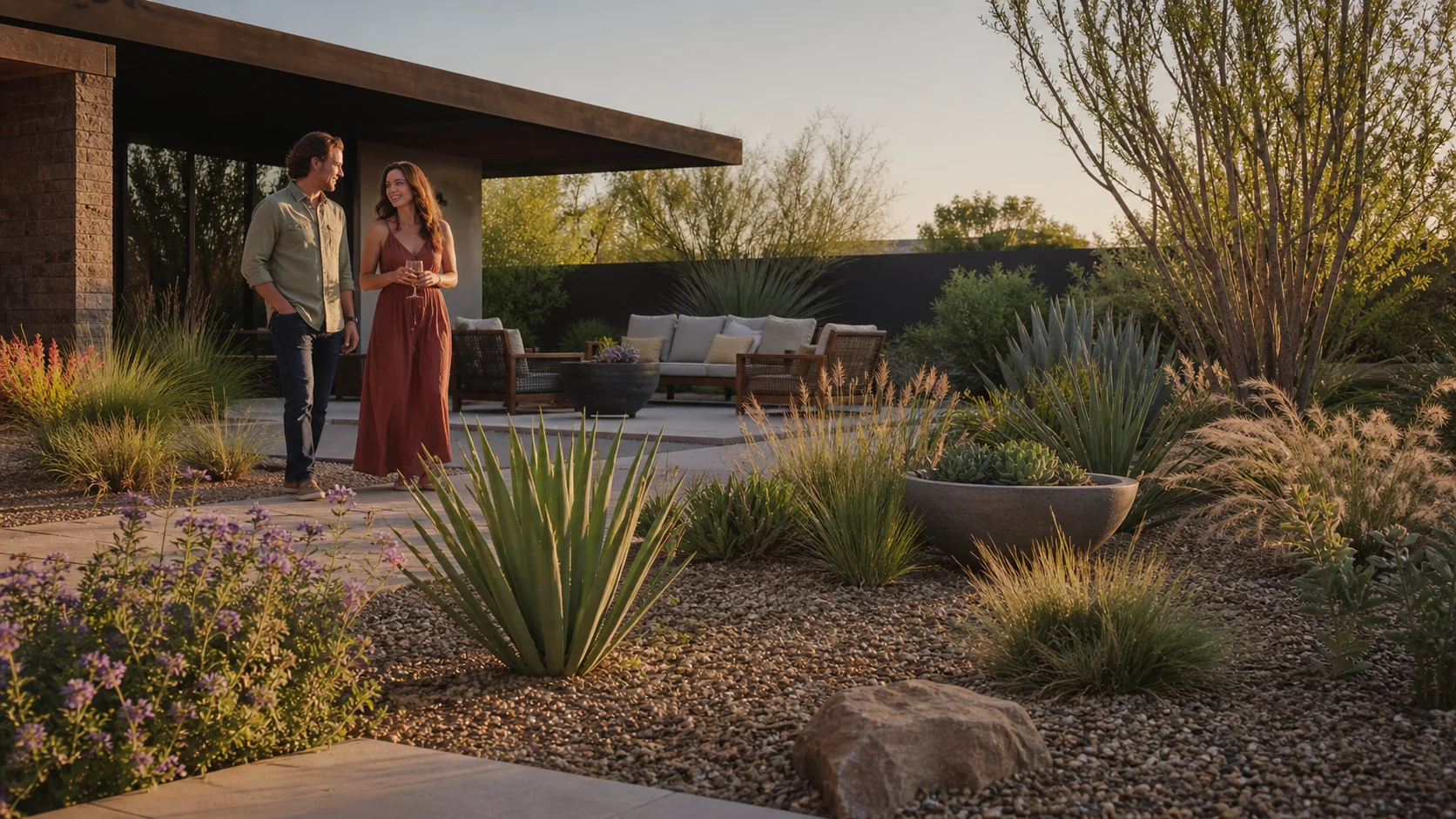
A low-water backyard does not have to look barren. It works best when it is designed around zones, texture, shade, plant grouping, soil, mulch, efficient irrigation, and outdoor rooms people actually want to use.
Instead of asking, "How do I use less water everywhere?" ask:
- Where do people sit, eat, walk, play, garden, cook, or relax?
- Which parts of the yard deserve more comfort and visual attention?
- Which planting areas can be low-water once established?
- Where does shade matter most?
- Which plants have similar water needs?
- Where can patios, paths, gravel, mulch, and planting work together instead of fighting for custody of the yard?
The goal is not a yard with no water, no plants, and no joy. The goal is a smarter landscape where water goes to the right places for the right reasons.
Start With How The Backyard Needs To Function
Design the yard before choosing plants. That sounds obvious until the plant tags start whispering.
Walk the backyard and map the jobs it needs to do:
- Morning coffee
- Outdoor dining
- Kids or pets
- Grilling
- A quiet sitting area
- Garden beds
- A path to the gate
- Shade near the house
- Privacy from neighbors
- A view from inside
- A place that still looks good in August
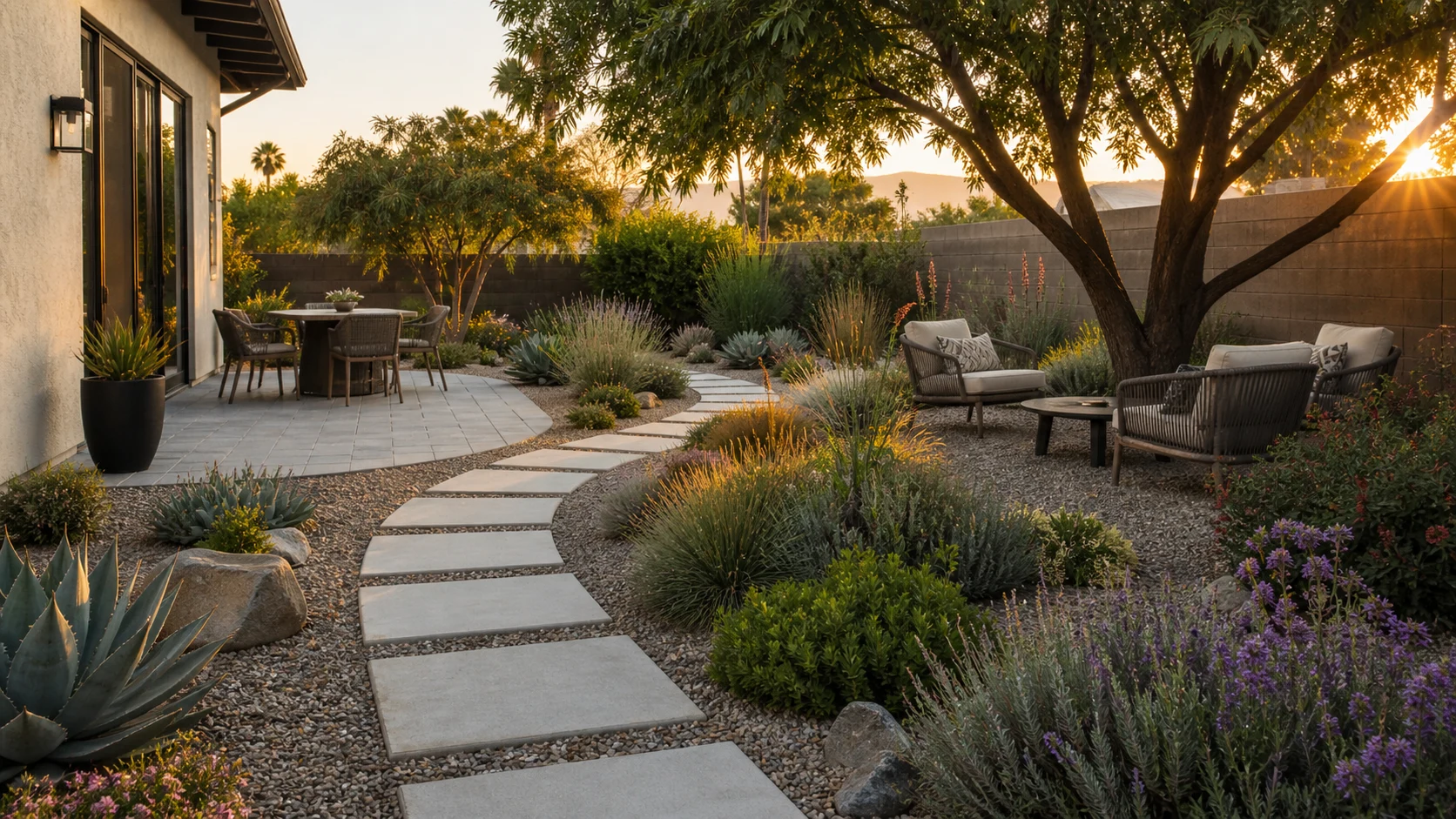
Then separate the yard into rough use zones. A waterwise backyard can include a patio, path, small turf area, planting beds, shade trees, gravel, mulch, raised beds, and seating. It just needs those pieces to earn their keep.
High-use areas usually deserve more design attention. Low-use corners can often become tougher, lower-water planting zones, utility paths, dry creek-style drainage areas, or simple mulch and shrub beds.
Keep Higher-Water Features Small And Purposeful
Waterwise does not always mean zero turf, zero flowers, or zero lushness. It means higher-water features should be intentional.
A small patch of turf may make sense if it is used for kids, pets, games, or cooling a specific outdoor room. A few thirstier plants may be worth it near a seating area or entry point. A vegetable bed may deserve water because it produces something you care about.
What usually fails is spreading high-water expectations everywhere:
- A large lawn nobody uses
- Flower beds watered like turf
- Mixed plantings with one irrigation schedule
- Sprinklers watering gravel, fences, sidewalks, and the occasional surprised lizard
- A "lush" plan with no budget for water, maintenance, or climate reality
Treat higher-water areas like accent lighting. A little can be useful and beautiful. Too much becomes expensive theater.
Group Plants By Water Needs
Hydrozoning means grouping plants with similar water needs so each irrigation zone can be managed more intelligently. It is one of the unglamorous ideas that makes a waterwise yard actually work.
If a thirsty plant and a low-water plant share the same irrigation zone, one of them is probably going to be annoyed. The thirsty plant may be underwatered, or the low-water plant may be overwatered. Sometimes both manage to look offended.
Think in groups:
- Very low-water plants for dry edges, hot slopes, and low-use areas
- Low-water shrubs and perennials for structure and seasonal interest
- Moderate-water plants near patios, entries, or focal areas
- Higher-water features only where they have a clear purpose
- Trees and larger shrubs on irrigation that matches their deeper root needs
Plant grouping also helps the yard look fuller. Instead of scattering one of everything across gravel, repeat plants in clusters. Use drifts, layers, and rhythm. Three to seven of a plant often looks more intentional than twenty unrelated singles auditioning for separate yards.
Use Hardscape As Structure, Not A Substitute For Design
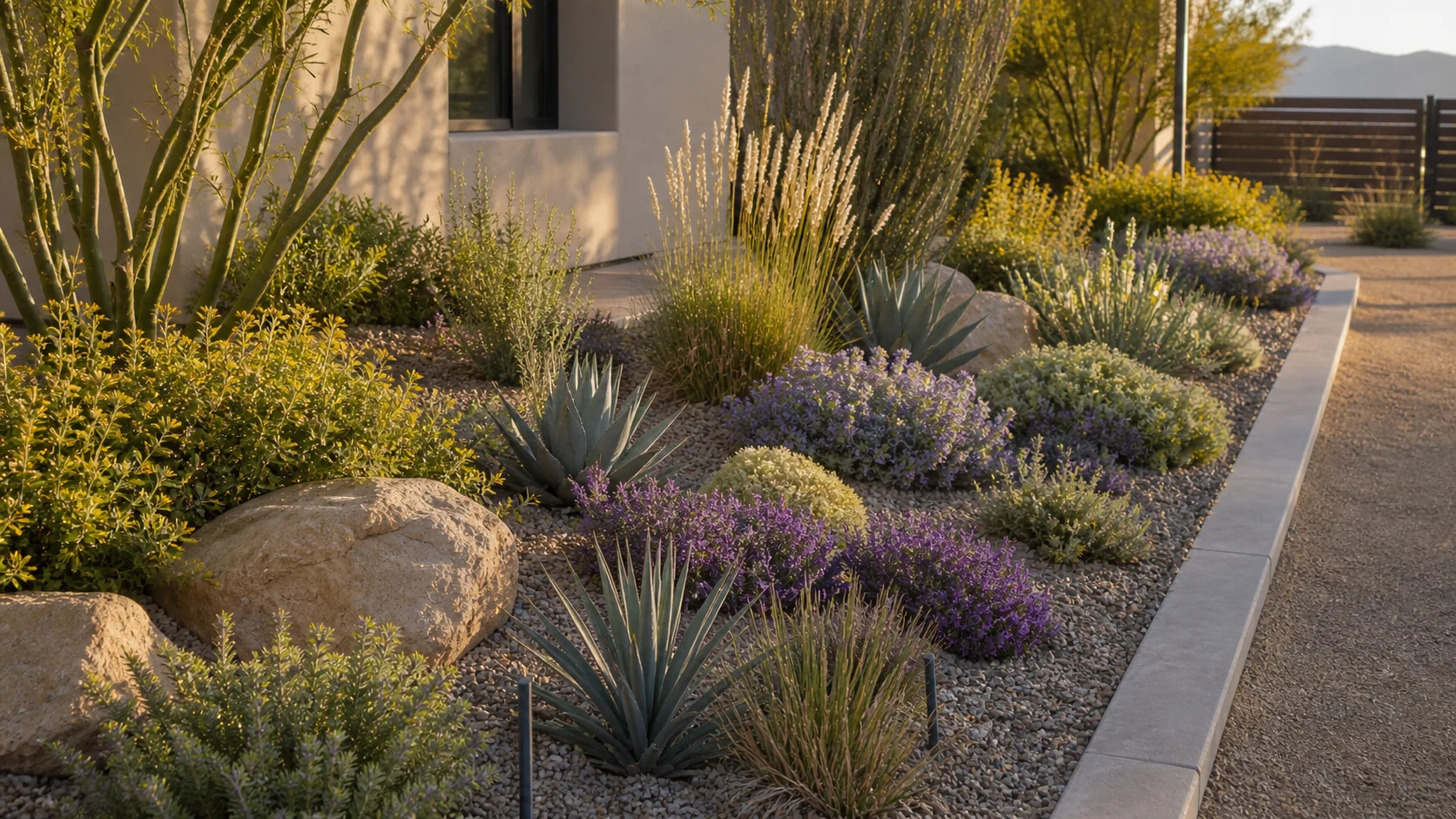
Patios, paths, gravel, stepping stones, pavers, walls, and concrete pads can make a low-water backyard feel organized. They also reduce planted area where planting does not make sense.
But hardscape is not a personality by itself. Too much flat hard surface can create glare, heat, runoff, and a yard that looks finished only in the same way an empty plate is technically clean.
Use hardscape to create structure:
- A patio where people actually sit
- A path that connects real destinations
- A gravel area that frames planting instead of replacing it
- A small pad for a grill or storage
- Stepping stones through a planted bed
- Edging that makes mulch and planting feel deliberate
If you are deciding between patio surfaces, Concrete Pavers vs. Poured Concrete for Backyard Projects can help you compare repairability, drainage posture, maintenance, and design flexibility. If poured concrete is part of the plan, Outdoor Concrete Finish Options for Patios, Paths, and Small Projects explains why traction, texture, finish, and sealing decisions matter outdoors.
Add Shade And Vertical Interest
Low-water yards can look harsh when everything is low, flat, and sun-blasted.
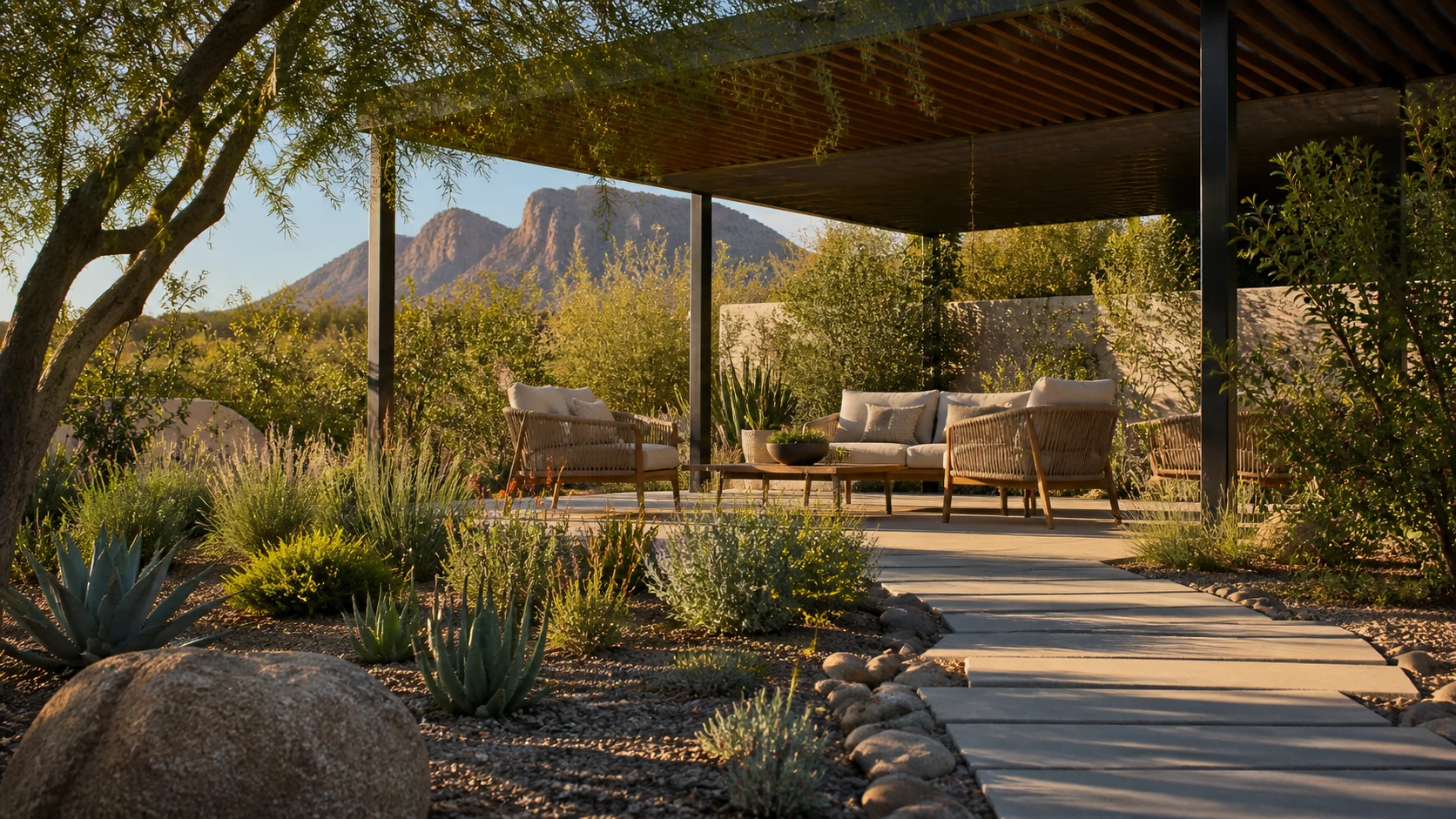
Shade changes how a backyard feels. It can make a sitting area usable, reduce glare, soften hardscape, protect plants from the roughest afternoon exposure, and make the space feel like a place instead of an endurance event.
Possible shade strategies include:
- Regionally appropriate trees
- Open pergolas or shade structures
- Vines where appropriate and manageable
- Tall shrubs or multi-trunk specimens
- Umbrellas in seating areas
- Walls, screens, or architectural features that cast useful shade
Vertical interest also helps a low-water landscape feel fuller. Mix heights: groundcovers, low mounds, medium shrubs, taller grasses, sculptural plants, trees, and architectural elements. The eye wants layers. Gravel alone gives it homework.
Use Mulch And Groundcover Intentionally
Bare soil loses moisture, grows weeds, crusts, compacts, and makes planting beds look unfinished. Mulch helps protect soil and gives the yard a more designed surface.
Mulch can be organic, such as wood chips or shredded bark, or inorganic, such as gravel, decomposed granite, or stone. Both can work when matched to plants, climate, drainage, slope, maintenance, and the visual style of the yard.
Use mulch as part of the design:
- Wood mulch can soften planting beds and gradually add organic matter as it breaks down.
- Gravel or stone can fit desert-adapted planting and modern hardscape.
- Mixed textures can keep the yard from looking like one giant material choice.
- Groundcovers can reduce bare areas where they are regionally appropriate.
- Larger stones, boulders, edging, and plant masses can break up expanses of rock.
The classic mistake is covering everything in one color of decorative rock and adding plants so far apart they need binoculars to socialize. Low-water does not mean low-design.
Plan Irrigation Before Planting
Irrigation should not be the thing you figure out after the plants are in and the hose is already judging you.
Start with the hydrozones. Decide which areas need regular irrigation, occasional establishment water, seasonal support, or little to no supplemental water once plants are established. Trees, shrubs, perennials, turf, vegetable beds, and containers often need different watering approaches.
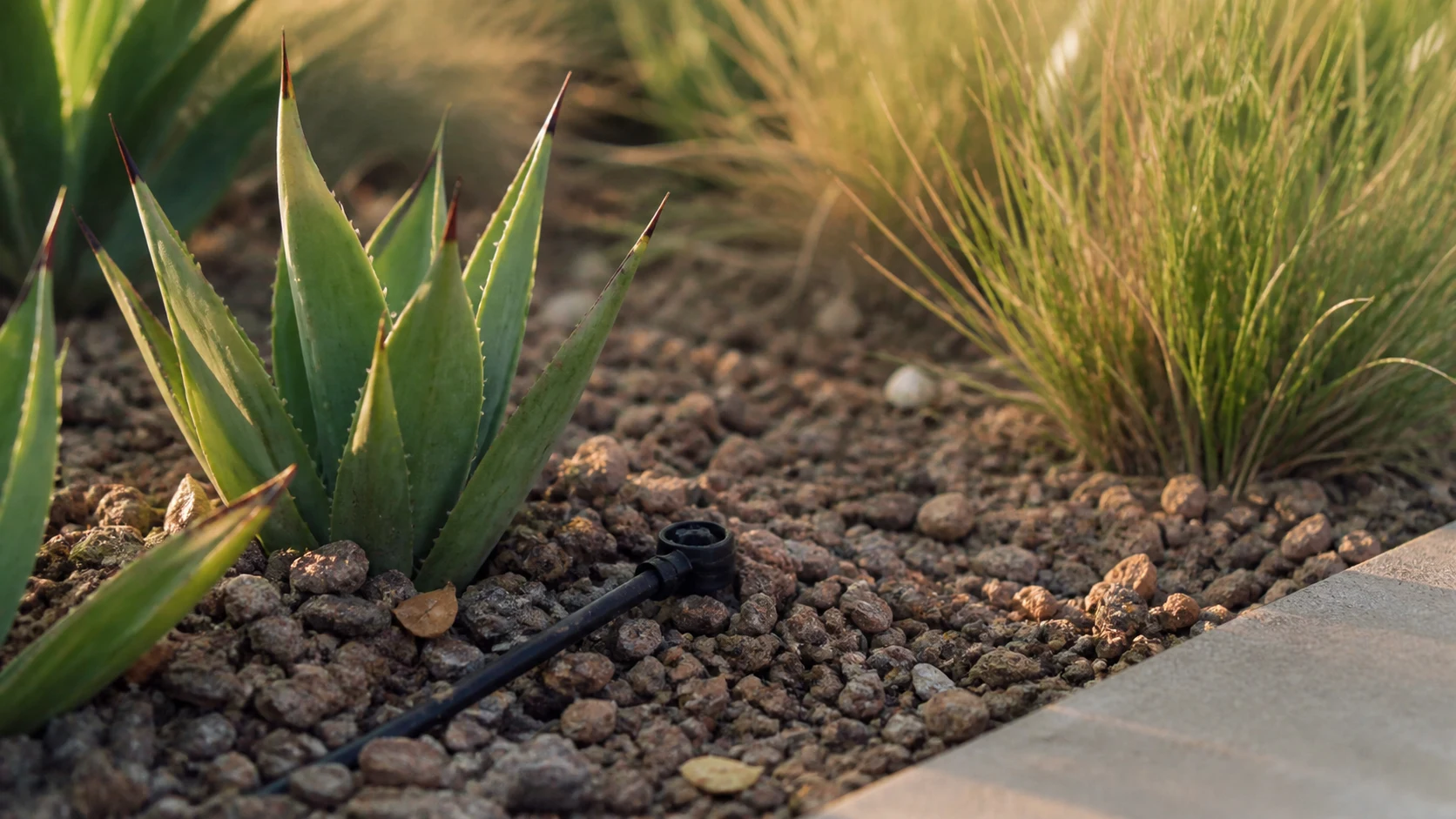
For shrubs, trees, and planting beds, drip or microirrigation can deliver water slowly and closer to the root zone when designed and maintained properly. Spray irrigation may still have a role for turf or certain layouts, but overspray, runoff, wind drift, pressure problems, broken heads, and poorly adjusted timers can waste a lot of water.
Good planning questions:
- Which plants share the same water needs?
- Which areas are sunny, shaded, windy, sloped, or hot?
- Where does water currently pool or run off?
- Will the irrigation system be easy to inspect and maintain?
- Can watering schedules change with the season?
- Are trees and shrubs getting water deeply enough, not just frequently?
- Are sidewalks, fences, patios, and gravel being watered by accident?
Waterwise landscaping does not mean ignoring irrigation. It means making irrigation boringly competent.
Choose Regionally Appropriate Plants
The phrase "drought tolerant" is not a magic spell. A plant still needs the right climate, soil, exposure, mature space, drainage, hardiness, establishment care, and maintenance.
A low-water backyard in Phoenix is not the same as one in Denver, Austin, Albuquerque, San Diego, Boise, Las Vegas, or a windy high-desert neighborhood with clay soil and opinions. Use local extension resources, water utility plant lists, botanical garden guidance, or reputable regional plant references before committing to a palette.
Look for plants that fit:
- Your heat and cold range
- Sun and shade exposure
- Soil texture and drainage
- Mature size
- Water needs after establishment
- Wildlife, thorn, litter, or toxicity concerns
- Maintenance tolerance
- The design mood you actually want
Native plants can be excellent when matched to the site, but "native" does not automatically mean right for every backyard condition. Regionally adapted plants can also have a place when they are noninvasive, climate-suited, and water-appropriate.
Design Mistakes To Avoid
Too Much Gravel
Gravel can be useful. It can also look hot, flat, and unfinished when it becomes the whole concept. Break it up with plant masses, shade, boulders, paths, patios, organic mulch, texture changes, and real outdoor rooms.
Lonely Plants Spaced Too Far Apart
Small nursery plants grow, but a yard can look painfully sparse for years if every plant is isolated. Plan for mature size, but use repetition, grouping, temporary filler, and groundcover strategies so the landscape has structure while it grows in.
No Shade
A low-water yard without shade can become technically efficient and emotionally unusable. Plan shade early, especially near seating, dining, play, and west-facing exposure.
Mixing Plants With Different Water Needs
Do not put thirsty plants and very low-water plants on the same irrigation zone and expect everyone to behave. Hydrozoning protects both the water budget and the plants.
Ignoring Soil And Grading
Poor soil, compaction, slopes, runoff, and drainage issues do not disappear because the plant label says drought tolerant. Fix the basics before planting.
Overusing Decorative Rock Without Texture Contrast
One rock size, one rock color, and one plant shape can make a yard look sterile. Mix texture carefully: foliage, bark, stone, shade, hardscape, boulders, grasses, flowering perennials, and architectural plants.
Assuming Low-Water Means No Maintenance
Waterwise landscapes still need weeding, pruning, irrigation checks, mulch refreshes, plant replacement, pest observation, and seasonal cleanup. The maintenance changes. It does not vanish into the desert like a contractor who underbid drainage.
Practical Homeowner Checklist
Before you buy plants or order rock, walk through this:
- Define the backyard jobs: sit, cook, play, garden, walk, entertain, relax, screen, shade, or simply look good from the kitchen window.
- Map sun, shade, wind, slopes, runoff, downspouts, soil trouble spots, and existing irrigation.
- Decide where higher-water features are truly useful.
- Group plants into hydrozones before choosing final species.
- Reserve hardscape for structure, circulation, and outdoor living rather than blanketing the yard.
- Add shade near the places people will actually use.
- Choose mulch or groundcover strategies for every planting bed.
- Pick plants from regional, climate-appropriate sources.
- Plan irrigation access, maintenance, filters, emitters, heads, and seasonal adjustment.
- Check local rules, HOA requirements, utility guidance, and rebates before major changes.
- Keep product choices, plant claims, and irrigation equipment decisions separate from the design concept until you have local guidance.
- Ask a qualified professional for drainage, grading, retaining walls, electrical, structural shade, large trees, complex irrigation, or work near foundations and utilities.
FAQ
Does A Low-Water Backyard Have To Be Mostly Gravel?
No. Gravel can be useful, especially in dry climates, but it should not be the entire design. A good low-water backyard usually combines planting, shade, paths, patios, mulch, texture, focal points, and usable outdoor rooms. Gravel is a material, not a landscape plan.
Can You Still Have Shade In A Low-Water Backyard?
Yes, and shade is often what makes the yard feel livable. Regionally appropriate trees, tall shrubs, pergolas, vines, umbrellas, and shade structures can all help. The right choice depends on climate, space, roots, maintenance, irrigation, and local conditions.
Is Turf Always Bad In A Waterwise Yard?
Not always. Turf can make sense when it has a real function, such as play, pets, cooling a small area, or visual relief. The problem is large, thirsty, poorly irrigated turf that nobody uses. Keep turf purposeful, shaped for efficient watering, and separated from lower-water planting zones.
What Is Hydrozoning?
Hydrozoning means grouping plants with similar water needs together so they can share an irrigation schedule. It helps avoid watering the whole yard for the thirstiest plant in the bed.
Do Low-Water Landscapes Need Irrigation?
Often, yes. Many low-water plants need regular water while they establish, and some landscapes need supplemental irrigation during hot, dry, windy, or drought periods. The goal is efficient, appropriate watering, not pretending plants survive on compliments.
How Do You Make Xeriscape Look Lush Instead Of Sparse?
Use layers, repetition, shade, texture, seasonal interest, and plant groupings. Mix heights and forms instead of scattering single plants across rock. A waterwise yard can look full without being thirsty if the design uses density and contrast carefully.
The Bottom Line
A beautiful low-water backyard starts with design, not deprivation.
Decide how the yard should function, group plants by water needs, use hardscape to create structure, add shade, protect the soil, plan irrigation before planting, and choose plants that make sense for your region. That is how a yard becomes waterwise without becoming joyless.
Gravel has its place. So do plants, shade, patios, paths, trees, seating, texture, and the very radical idea that a backyard should be pleasant to be in.