
Xeriscaping has a public-relations problem. Too many people hear the word and picture a front yard covered in hot gravel, three lonely plants, and the emotional range of a parking lot.
That is not what xeriscaping has to be.
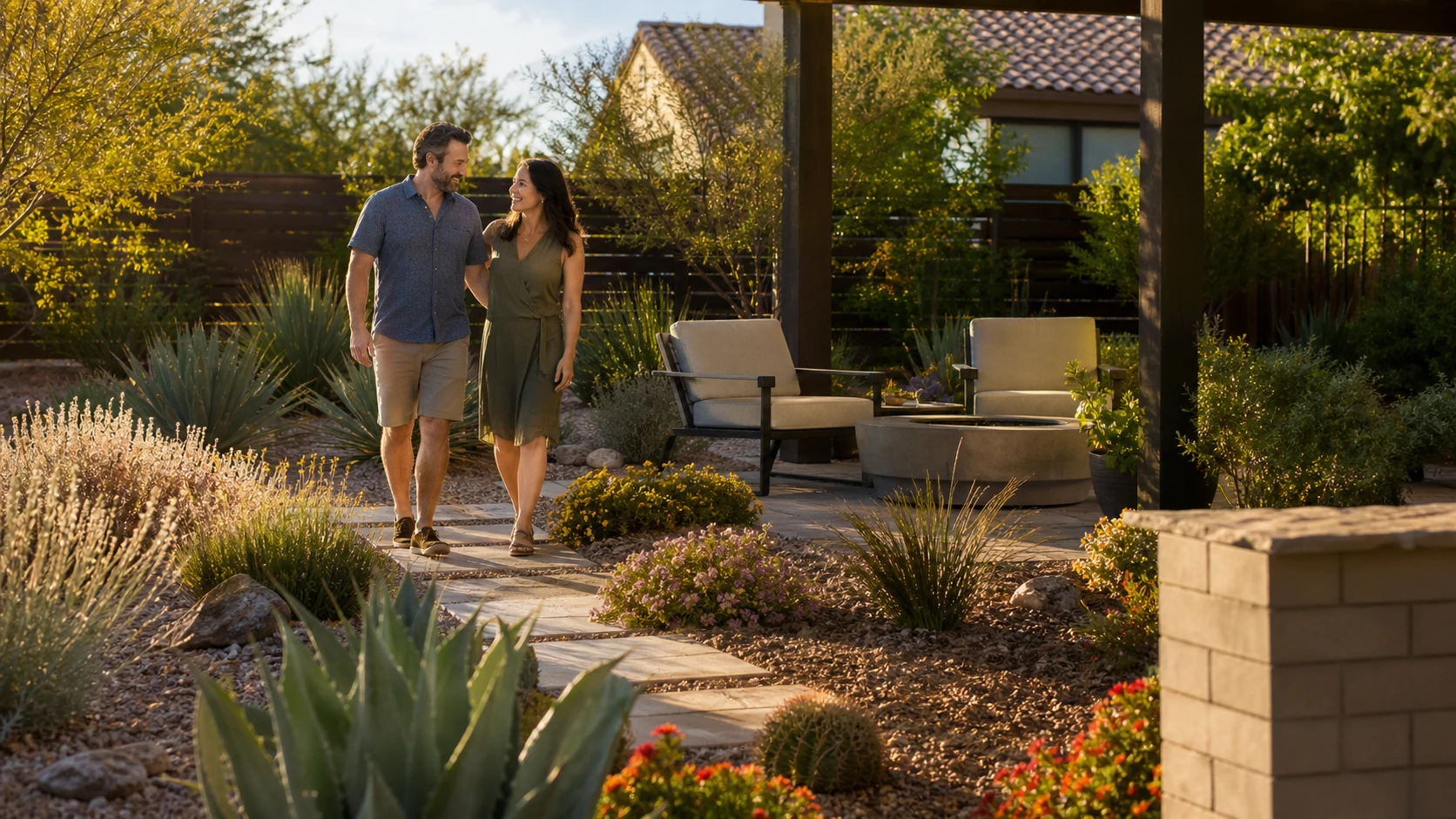
At its best, xeriscaping is a waterwise landscape design approach. It can include shade, seating, texture, flowers, paths, trees, mulch, small purposeful turf areas, and outdoor rooms that feel like places people might actually want to use. The goal is not to punish the yard for needing water. The goal is to design with water reality in mind.
The Direct Answer
Xeriscaping is a landscape design approach that reduces unnecessary water use by planning the yard around climate, soil, plant needs, hydrozones, mulch, efficient irrigation, and maintenance.
It is not a rule that says every yard must become gravel. It is also not a promise that a landscape can be installed once and ignored forever while looking effortlessly magazine-ready. Plants remain alive, which means they continue to have needs. Annoying, but true.
For most homeowners, the useful version of xeriscaping is simple:
- Put the right plants in the right places.
- Group plants with similar water needs.
- Use mulch and soil care to help water stay useful.
- Keep turf small and purposeful if you use it.
- Irrigate efficiently where irrigation is needed.
- Design the yard before buying plants.
- Maintain the landscape so it does not slowly become a museum of good intentions.
If you want the bigger planning framework for a full backyard, start with How to Plan a Low-Water Backyard Without Making It Look Barren. This guide focuses on the definition and decision logic behind xeriscaping.
What Xeriscaping Actually Means
Xeriscaping means designing a landscape to use water more wisely. The word is often associated with dry climates, but the underlying idea is broader than desert style.
A xeriscape plan usually considers:
- How the yard needs to function
- Which areas need more comfort, shade, or visual attention
- Which plants can thrive with less supplemental water once established
- How soil, mulch, and groundcover affect moisture
- Which plants belong together in irrigation zones
- Whether turf has a real purpose
- How irrigation can be designed and adjusted instead of sprayed everywhere like a lawn sprinkler with commitment issues
- What maintenance the homeowner will realistically do
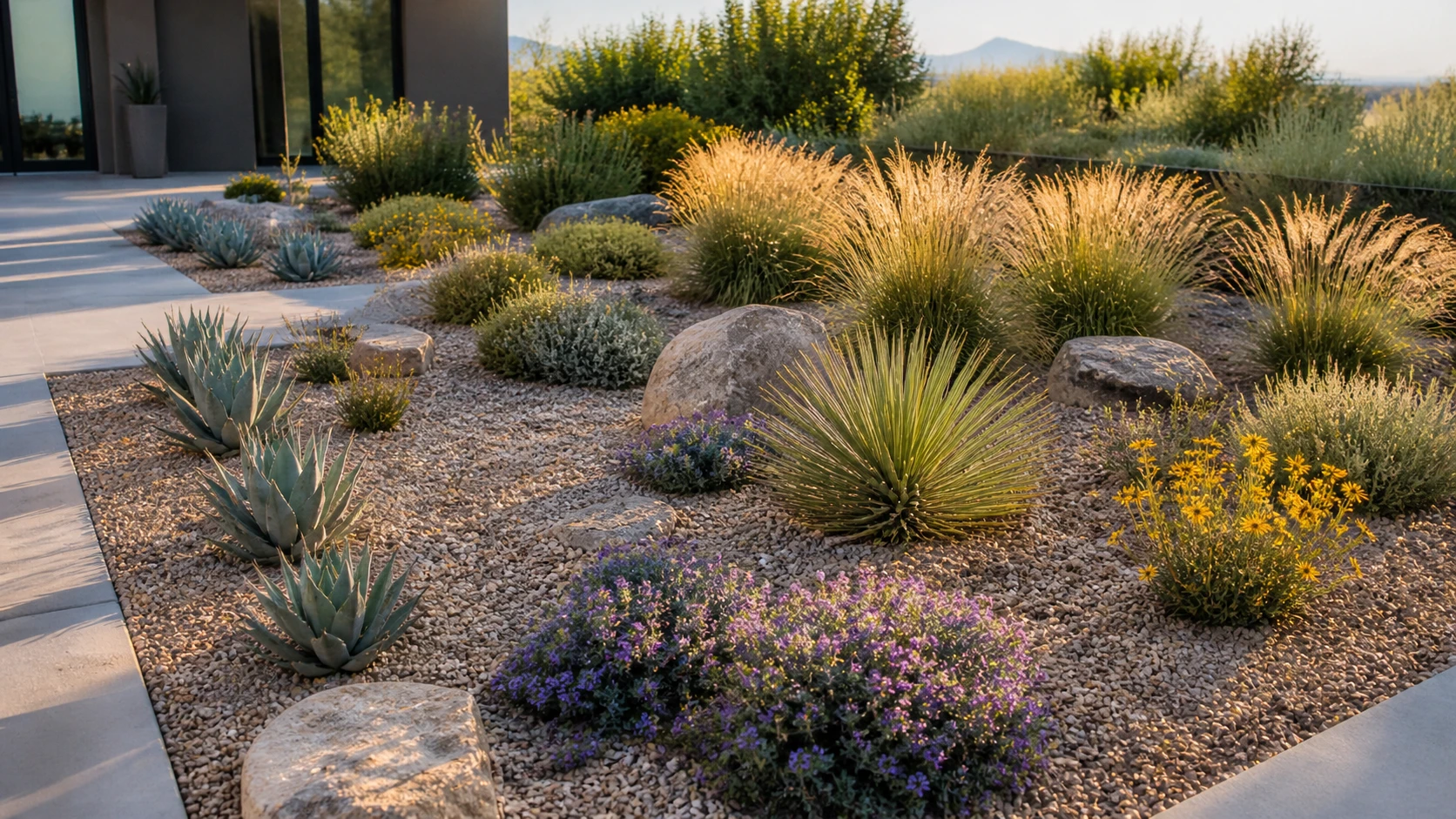
The best xeriscape yards still look designed. They use repetition, layers, shade, paths, focal points, seasonal interest, and texture. The water savings come from planning and plant fit, not from making the yard as joyless as possible.
What Xeriscaping Does Not Mean
Xeriscaping does not mean "rocks and cactus only."
It also does not mean:
- No grass anywhere
- No flowers
- No shade trees
- No irrigation
- No maintenance
- No color
- No outdoor living space
- No regional variation
- No personality
Those are shortcuts, and shortcuts are how yards end up looking like someone ordered landscaping by the pound.
Rock can be useful in the right place. Gravel can frame planting beds, reduce muddy areas, support paths, and fit desert-adapted designs. But too much rock in the wrong place can reflect heat, make planting areas harsher, and create the exact barren look homeowners are trying to avoid.
Xeriscaping is not a material list. It is a design strategy.
Core Principles Of Xeriscaping
Plan The Yard Before Buying Plants
Start with the yard's jobs. Do you need a place to sit, eat, garden, walk, let dogs out, cool the west side of the house, screen a neighbor, or make the view from the kitchen less tragic?
Planning first helps you decide where the yard needs comfort, structure, shade, planting, and open space. It also keeps you from collecting random plants and hoping they form a community.
Good xeriscape design starts with layout:
- Outdoor living zones
- Paths and circulation
- Planting beds
- Shade opportunities
- Turf, if it has a clear purpose
- Irrigation access
- Drainage and slope
- Views from inside the house
Plants come after the plan. The nursery will survive this emotional delay.
Group Plants By Water Needs
Hydrozoning means grouping plants with similar water needs so they can be watered appropriately. It is one of the least glamorous ideas in landscaping, which is rude because it matters a lot.
If low-water plants, turf, trees, and thirstier ornamentals all share one irrigation schedule, someone is probably getting the wrong amount of water. Hydrozoning helps avoid watering the whole yard for the neediest plant in the bed.
Think of the yard in water groups:
- Very low-water areas
- Low-water shrubs and perennials
- Moderate-water focal areas
- Turf or play zones, if used
- Trees and larger shrubs with deeper watering needs
- Containers or vegetable beds that need separate attention
Good hydrozones also consider sun, shade, exposure, slope, soil, and sprinkler or drip type. Same plant, different spot, different water pressure on the design. Backyards enjoy being complicated.
Improve Or Respect Soil Conditions
Soil is not just dirt with better branding. It affects drainage, root growth, compaction, water movement, and plant survival.
Some sites need soil improvement before planting. Others need plant choices that respect the soil already there. Clay, sand, caliche, compaction, slopes, fill, and construction debris can all change what will work.
Before planting, look at:
- Drainage
- Compaction
- Organic matter
- Existing runoff
- Erosion
- Soil depth
- Previous construction disturbance
Do not assume a plant will behave just because the tag says drought tolerant. A drought-tolerant plant in the wrong soil is still a plant having a bad time.
Use Mulch Intelligently
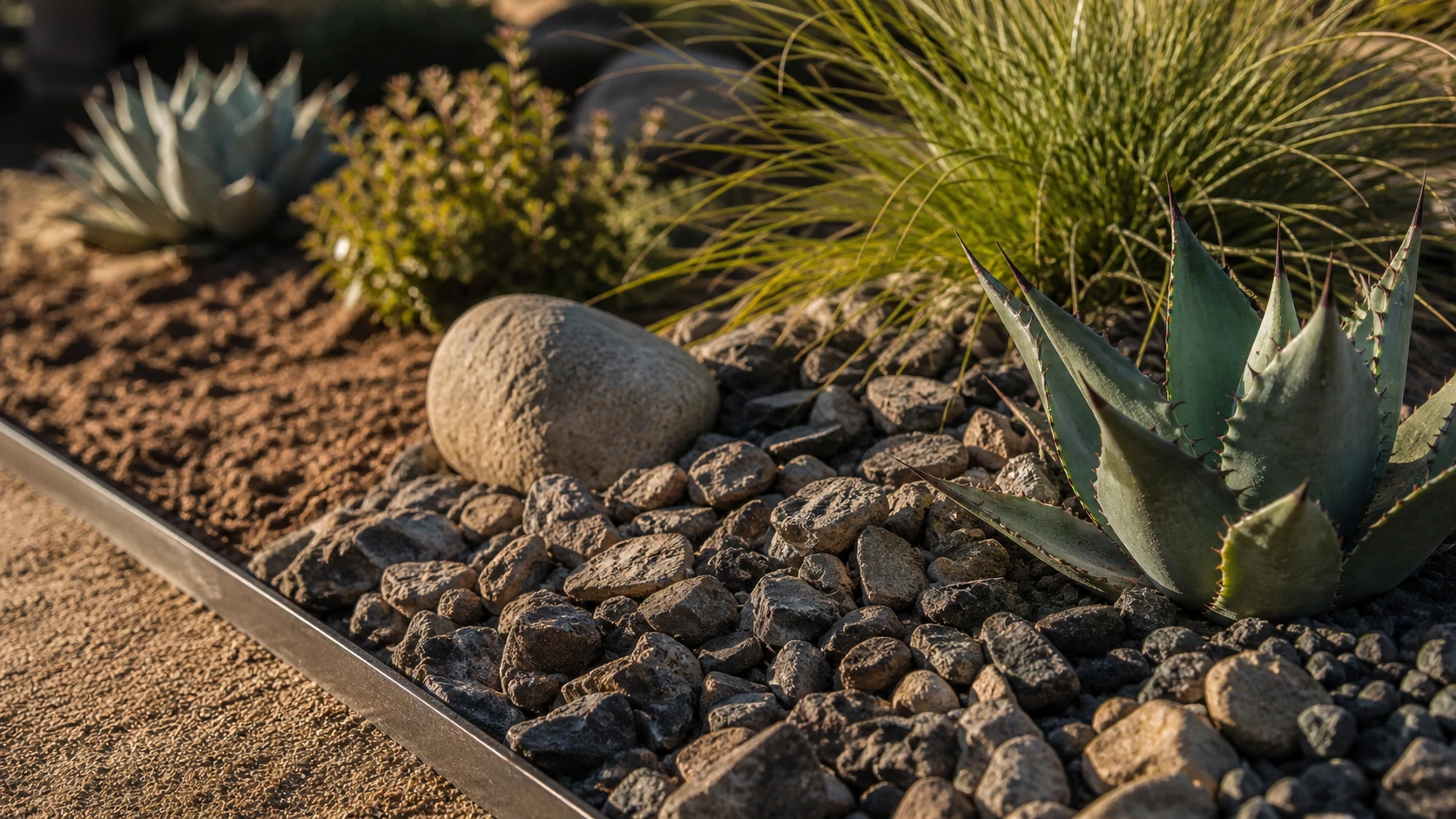
Mulch helps protect soil, reduce evaporation, moderate soil temperature, suppress weeds, and make planting beds look intentional. It can be organic, such as wood chips or bark, or inorganic, such as gravel or stone.
The right mulch depends on climate, plants, drainage, slope, fire considerations, maintenance, and the look you want.
Organic mulch can soften planting beds and gradually add organic matter as it breaks down. Gravel or stone can fit desert-adapted planting and modern hardscape. Mixed textures can help the yard avoid the dreaded one-material landscape.
The caution: rock mulch is not automatically better. In hot sunny areas, rock can radiate heat. Around plants that do not want extra reflected heat, that can make conditions rougher. Use rock where it fits the climate, plant palette, and design rather than treating it as the official uniform of xeriscape.
Keep Turf Purposeful If You Use It
Xeriscaping does not require a personal feud with grass.
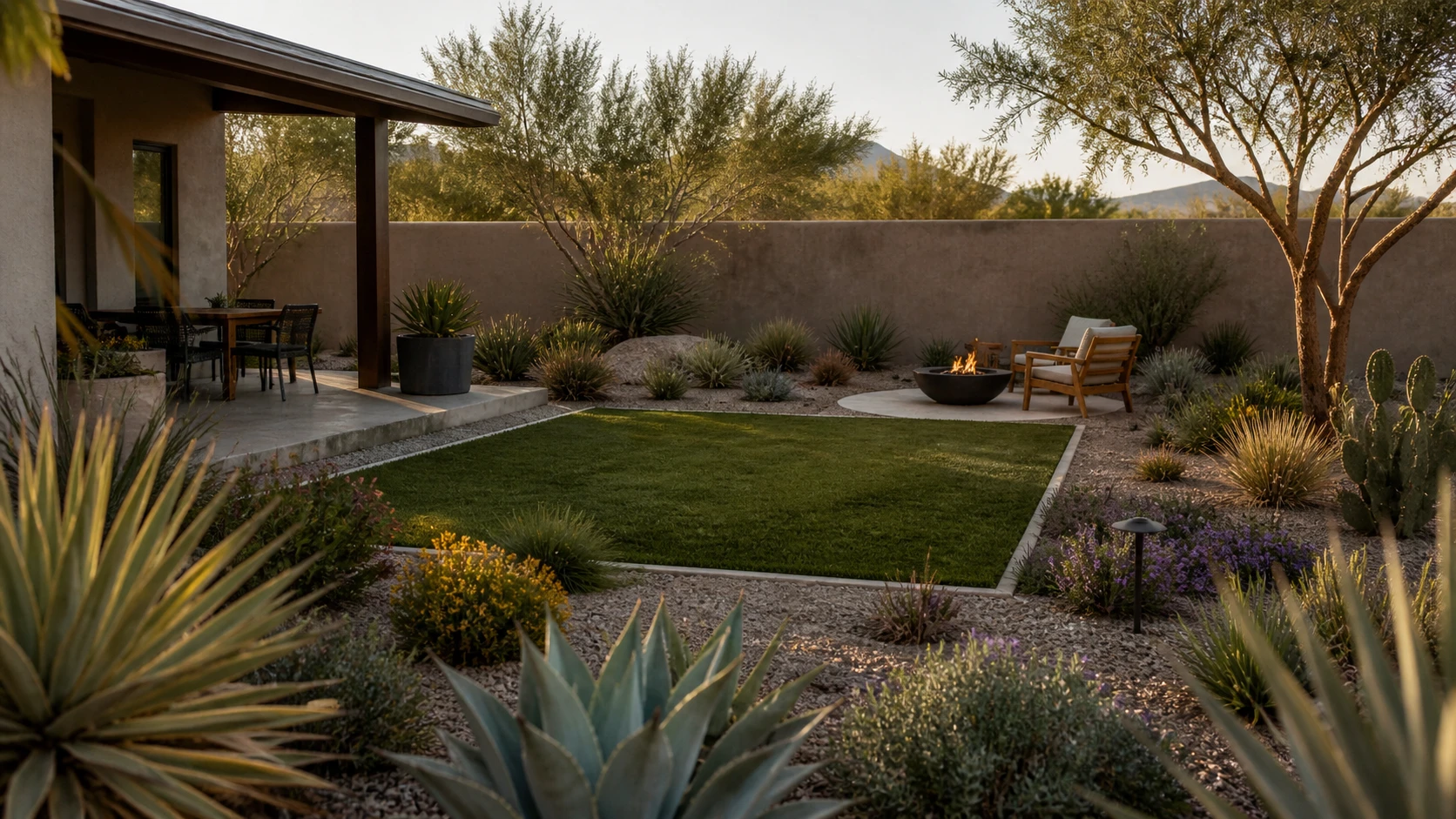
Turf can make sense when it has a real job: kids, pets, games, cooling a small outdoor room, or giving the eye a soft resting place. The problem is not turf existing. The problem is large, thirsty, poorly irrigated turf that nobody uses.
If you keep turf, make it earn the water:
- Keep the shape simple enough to water efficiently.
- Choose grass suited to the region and use.
- Avoid narrow strips that mostly water sidewalks.
- Separate turf irrigation from lower-water planting beds.
- Maintain it according to local climate and seasonal needs.
Turf should be a deliberate feature, not a default carpet.
Irrigate Efficiently
Low-water does not mean no-water, especially during establishment. Many waterwise landscapes still need irrigation, particularly in hot, dry, windy, or drought periods.
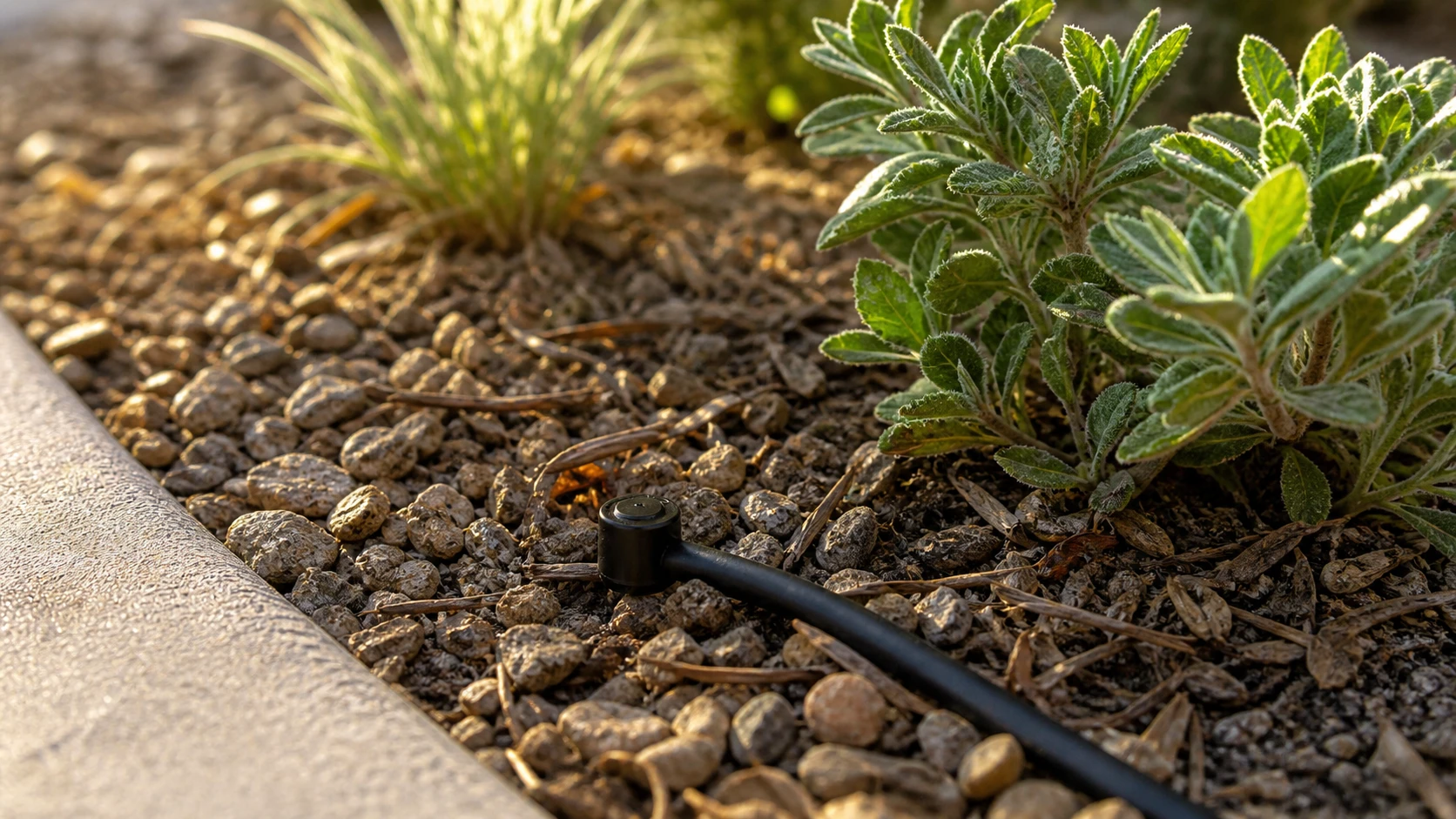
Efficient irrigation means water goes where plants can use it. For planting beds, shrubs, and trees, drip or microirrigation can deliver water slowly and closer to root zones when designed and maintained properly. Spray irrigation may still have a role for turf, but overspray, runoff, wind drift, leaks, pressure problems, and badly timed watering can waste water fast.
Useful questions:
- Is the system watering plants or hardscape?
- Are similar plants grouped together?
- Can watering schedules change by season?
- Are heads, emitters, filters, and lines easy to inspect?
- Is water running off before soaking in?
- Are shaded and sunny areas treated differently?
The goal is not heroic irrigation technology. It is boring competence.
Choose Regionally Appropriate Plants
There is no universal xeriscape plant list. A plant that works beautifully in Tucson may sulk somewhere colder, wetter, windier, saltier, shadier, or more humid.
Use regional plant guidance from local extension services, water utilities, botanical gardens, native plant groups, or qualified local pros. Look for plants that fit:
- Heat and cold
- Sun and shade
- Soil and drainage
- Mature size
- Water needs after establishment
- Maintenance tolerance
- Wildlife, thorns, litter, or toxicity concerns
- The actual look you want
Native plants can be excellent, but native does not automatically mean effortless. Regionally adapted noninvasive plants can also have a place when they fit the site and water goals.
Maintain The Landscape
Xeriscaping can reduce some maintenance, especially mowing and overwatering headaches, but it does not delete maintenance from the calendar.
Expect some combination of:
- Weeding
- Pruning
- Irrigation checks
- Mulch refreshes
- Plant replacement
- Seasonal cleanup
- Pest or disease observation
- Adjusting water as plants establish
The maintenance changes. It does not disappear into a tasteful cloud of decomposed granite.
Is Xeriscaping Right For Your Yard?
Xeriscaping is worth considering if you want to reduce outdoor water demand, make irrigation more intentional, replace unused lawn, design for a dry climate, simplify certain maintenance patterns, or create a yard that fits local conditions better.
It may be especially useful if:
- Your existing lawn is large and underused.
- Water bills or restrictions are pushing better planning.
- The yard has hot, dry, exposed areas.
- You want more planting texture and less mowing.
- You are redesigning a patio, path, or outdoor room.
- You want a landscape that feels more regional and less generic.
It is not automatically the answer to every problem. If your yard has drainage issues, shade problems, compacted soil, tree conflicts, retaining wall needs, or local rule complications, solve those first. Xeriscape is not a spell you cast over bad site conditions.
What Kind Of Yard Do You Want To Live In?
Before choosing plants or rock, decide what the yard should feel like.
Do you want:
- A shaded seating garden?
- A patio wrapped in low-water planting?
- A small turf area with tougher planting around it?
- A desert-modern yard with sculptural plants?
- A softer meadow-like planting style?
- A low-maintenance front yard with seasonal color?
- A backyard that is better for pets, kids, entertaining, or quiet mornings?
That design mood matters. Xeriscaping is more successful when it starts with a yard people want to use, not a list of things being removed.
If patios, paths, or outdoor rooms are part of the plan, hardscape choices can help structure the yard. Concrete Pavers vs. Poured Concrete for Backyard Projects can help compare surface tradeoffs without turning the landscape into a slab convention.
What Are You Trying To Reduce?
"Use less water" is a good goal, but it helps to be more specific.
Are you trying to reduce:
- Outdoor water use?
- Mowing?
- Heat and glare?
- Weeds?
- Mud?
- Dead lawn areas?
- Irrigation chaos?
- Maintenance you secretly hate?
- The feeling that the yard is expensive but still ugly?
Different goals lead to different designs. Reducing mowing might mean a small turf area plus planting beds. Reducing heat might mean shade trees, lighter hardscape, mulch choices, and fewer reflective rock expanses. Reducing irrigation waste might mean hydrozoning and better system design before any dramatic planting change.
Xeriscaping works best when the problem is clearly named.
Common Xeriscaping Mistakes
Gravel Everywhere
Gravel is useful. Gravel everywhere is usually a cry for help. Use it with planting masses, shade, boulders, paths, patios, organic mulch, and texture changes.
Lonely Plants
One plant every six feet across a rock field can look sparse for years. Repeat plants in groups, use layers, plan for mature size, and give the yard a visual rhythm.
No Shade
A low-water yard without shade can be efficient and still unpleasant. Shade makes patios, paths, seating, and planting feel livable.
Wrong Plants For The Climate
"Drought tolerant" does not mean "happy anywhere." Match plants to region, exposure, soil, drainage, hardiness, mature size, and maintenance.
Mixed Water Needs
Do not put thirsty plants and very low-water plants on the same irrigation zone and expect diplomacy. Hydrozoning matters.
Assuming Low-Water Means No Maintenance
Low-water landscapes still need care. If you want low maintenance, design for it honestly instead of hoping the phrase "xeriscape" will do chores.
Ignoring Heat Reflection From Rock
Rock mulch can fit dry-climate landscapes, but large sunny expanses can increase reflected heat. Use rock deliberately, especially near plants, windows, patios, and seating.
Practical Next Steps
Start small and make a plan before buying materials.
- Walk the yard and mark sun, shade, slope, drainage, soil problems, existing irrigation, and areas nobody uses.
- Decide what you want the yard to do.
- Identify any turf that is unused, awkward to water, or mostly decorative.
- Sketch hydrozones before choosing plants.
- Choose mulch and hardscape materials that fit the plant palette and heat exposure.
- Look up local extension, water utility, or botanical garden plant guidance.
- Keep the first phase manageable.
- Ask a qualified professional about drainage, grading, large trees, retaining walls, electrical, structural shade, or local-rule questions.
A good xeriscape plan does not have to be dramatic. Sometimes the smartest first move is one better planting bed, one corrected irrigation zone, or one unused strip of lawn retired with dignity.
FAQ
Is Xeriscaping Just Rocks And Cactus?
No. Xeriscaping is a waterwise design approach, not a requirement to use only rocks and cactus. It can include trees, shrubs, grasses, flowers, mulch, patios, paths, shade, and even small turf areas when they have a real purpose.
Can Xeriscaping Include Grass?
Yes. Turf can be part of a xeriscape or waterwise yard when it is functional, limited, regionally appropriate, and watered separately from lower-water planting beds. The issue is not grass existing. The issue is grass that uses water without serving the design.
Is Xeriscaping The Same As Zero-Water Landscaping?
No. Most new landscapes need water while plants establish, and many low-water landscapes still need supplemental irrigation during hot, dry, windy, or drought periods. Xeriscaping is about using water more wisely, not pretending plants run on optimism.
Does Xeriscaping Reduce Maintenance?
It can reduce some tasks, especially mowing and overwatering problems, but it does not eliminate maintenance. Expect weeding, pruning, irrigation checks, mulch refreshes, seasonal cleanup, and plant replacement when something fails.
Can Xeriscaping Look Lush?
Yes, if it uses layers, repetition, shade, texture, seasonal interest, and plant groupings. Lush does not have to mean thirsty. It means full, intentional, and visually alive.
Is Xeriscaping Only For Desert Climates?
No. Xeriscaping started as a dry-climate idea, but waterwise design principles can help in many regions. The plant palette, mulch choices, turf decisions, and irrigation strategy should change with the local climate.
The Bottom Line
Xeriscaping is not a gravel apology. It is a design method for making a yard use water more intelligently.
Done well, it can make a landscape more comfortable, more regional, more interesting, and less wasteful. Done lazily, it becomes a hot rock blanket with plants placed like punctuation.
Start with the yard you want to live in. Then use waterwise design to make that yard more realistic.