
A gravel yard can look crisp, modern, and waterwise. It can also look like the yard gave up halfway through getting dressed.
The difference is rarely the gravel by itself. It is the design around it: shade, edges, planting layers, texture changes, paths, focal points, and places people actually want to use. Gravel can support a beautiful low-water yard, but it cannot do all the emotional labor alone.
The Direct Answer
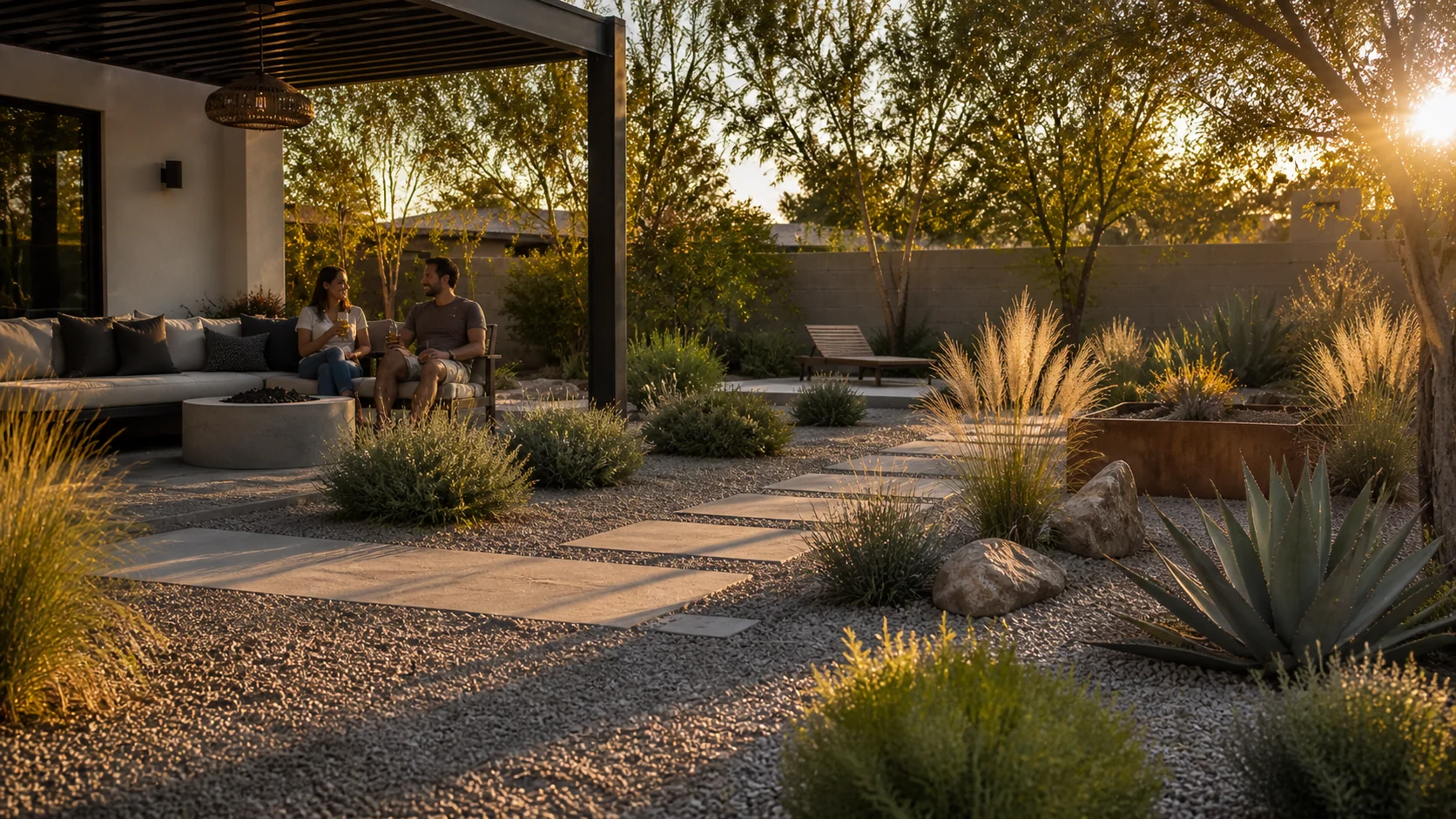
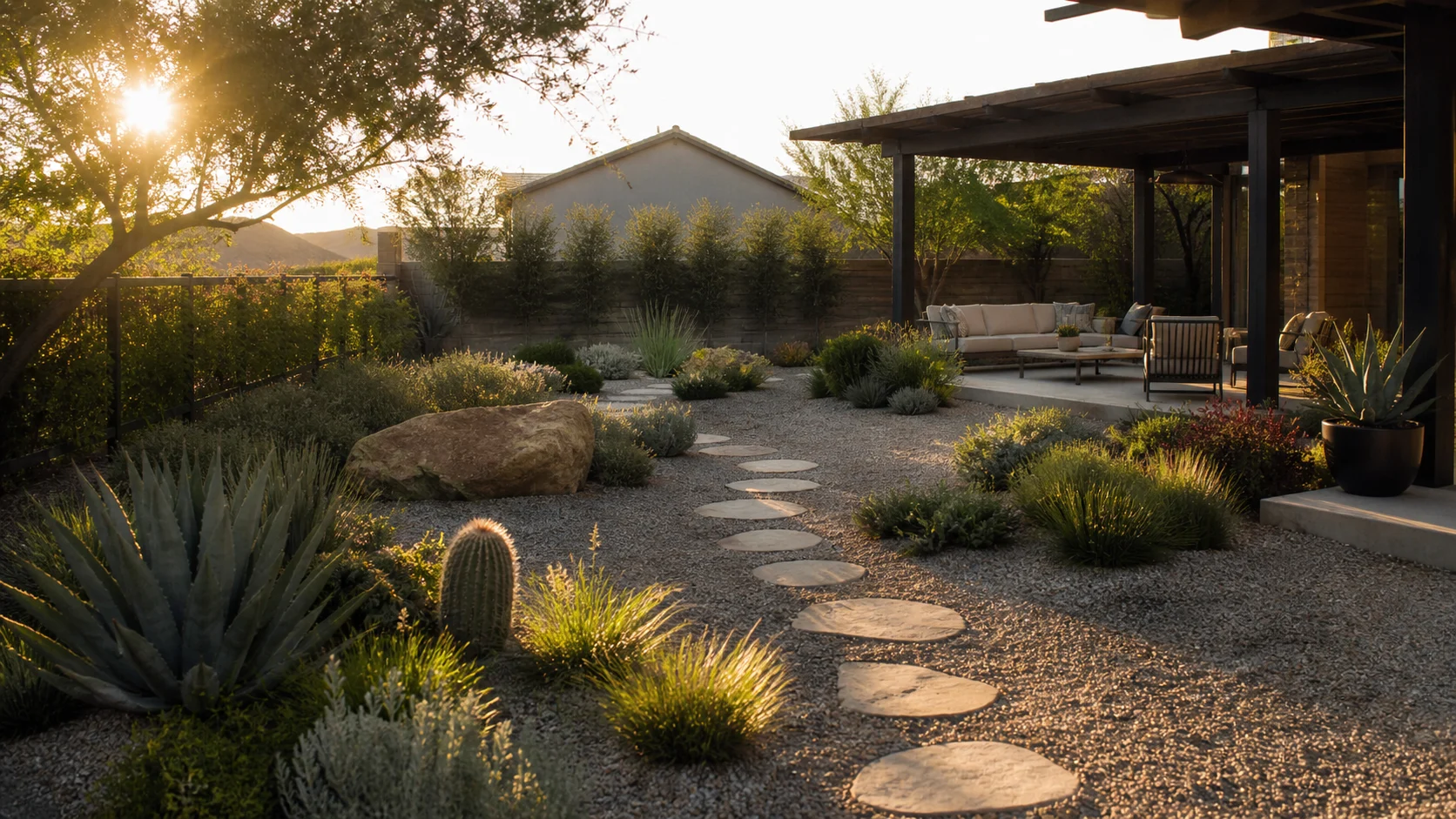
A gravel yard looks designed when it has structure, contrast, shade, planting layers, clean edges, and a reason for every open area.
The goal is not to hide the gravel. The goal is to make it feel like one material in a larger landscape plan. Use gravel for paths, negative space, drainage-friendly zones, and visual calm. Then break it up with plants, seating, boulders used with restraint, mulch, trees, groundcovers, and hardscape that makes the yard feel inhabited instead of abandoned.
If you are planning the whole yard from scratch, start with How to Plan a Low-Water Backyard Without Making It Look Barren. If you are still sorting out the bigger idea behind waterwise yards, read What Is Xeriscaping?. This guide is for the specific problem of making gravel look intentional.
Why Gravel Yards Go Wrong
Gravel is not automatically ugly. Unplanned gravel is.
Most disappointing gravel yards have the same problems:
- Too much uninterrupted rock.
- Too few plants.
- No shade.
- No clear edges.
- No path logic.
- One rock color everywhere.
- Tiny plants spaced so far apart they look like punctuation marks.
- Random boulders with no scale or relationship to the rest of the yard.
- No comfortable destination.
The yard may technically be "low-water," but it does not feel like a landscape. It feels like a surface treatment.
That is the central mistake: treating gravel as the design instead of one part of the design.
Create Zones Before You Add More Stuff
Before buying plants, boulders, furniture, or another truckload of rock, divide the yard into zones.
Ask what each area is supposed to do:
- Walk-through path.
- Seating area.
- Planting bed.
- Dog route.
- Dining space.
- View from inside the house.
- Utility access.
- Drainage or runoff area.
- Buffer between patio and fence.
Once each area has a job, the gravel can support the plan. A path might use compacted gravel with a defined edge. A planting bed might use gravel mulch around desert-adapted plants. A seating area might use pavers, decomposed granite, or another stable surface. Open negative space can stay simple, but it should look intentional.
Without zones, the yard becomes a giant tray of rocks with furniture trying to make conversation.
Add Planting Islands
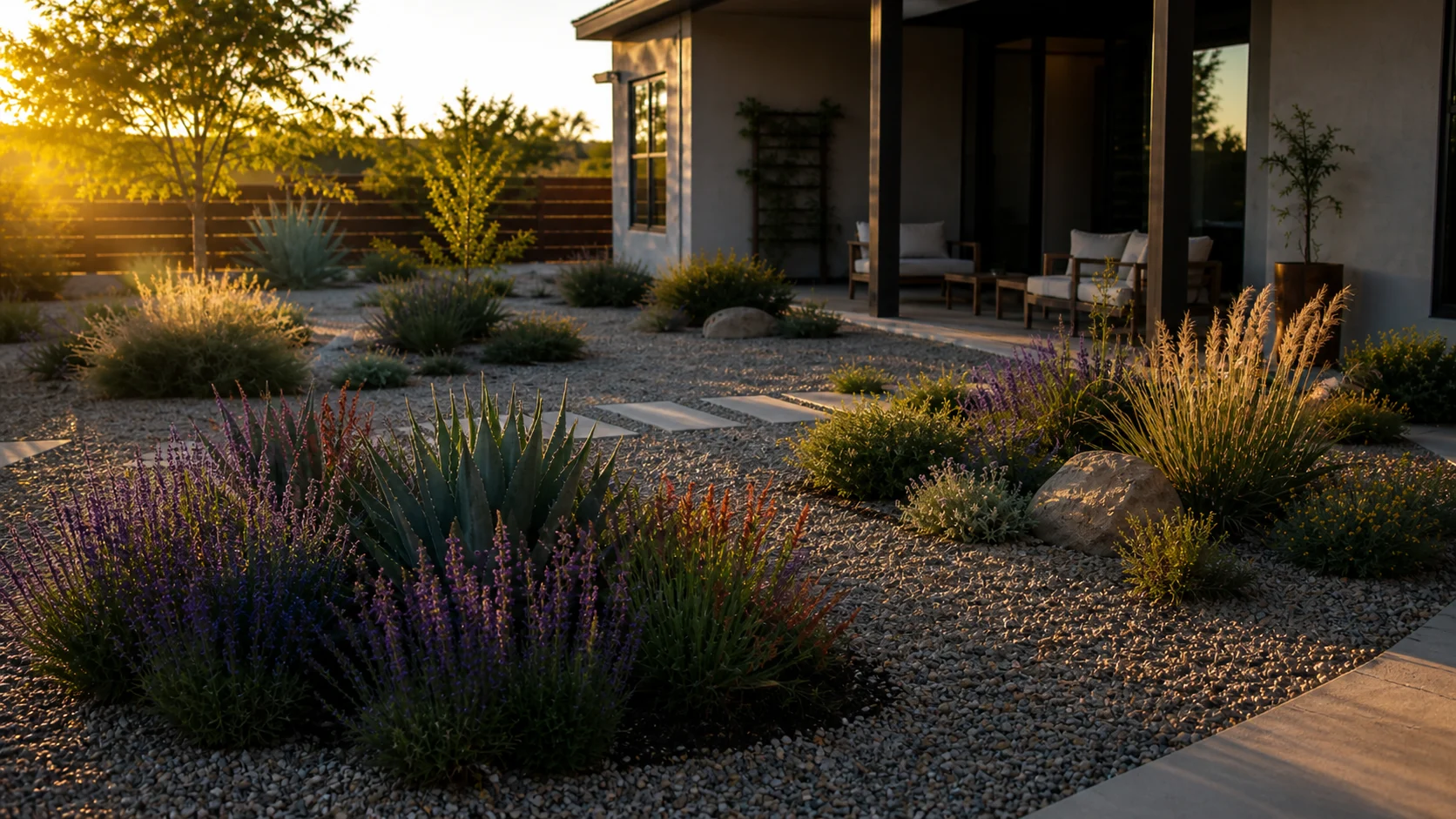
Planting islands are one of the fastest ways to make a gravel yard feel designed. Instead of scattering individual plants across a sea of rock, group plants into beds or clusters that have shape, repetition, and layers.
Good planting islands usually include:
- A clear edge or shape.
- Repeated plant groups.
- A mix of heights.
- A few anchor plants.
- Smaller plants or groundcovers near the front.
- Enough spacing for mature size.
- Mulch or gravel that fits the plants and climate.
This is where waterwise design and visual design work together. Grouping plants by similar water needs helps irrigation make sense, and repeating plants helps the yard look calmer. One plant can look lonely. Three to five repeated in the right place can look like a decision.
Use regionally appropriate plants rather than copying a desert plant palette from a climate that has never met your yard.
Use Texture Changes Carefully
A gravel yard needs contrast, but too many materials can make it look busy.
Useful texture changes include:
- Gravel plus organic mulch in planting beds.
- Smooth concrete or pavers beside loose gravel.
- Larger stone used sparingly as an accent.
- Fine gravel for paths and coarser rock in drainage areas, where appropriate.
- Soft foliage against hard mineral surfaces.
- Upright grasses or shrubs against low groundcover.
The trick is restraint. Two or three material textures can feel intentional. Six can feel like the clearance aisle started a landscape company.
If you are adding patios, stepping zones, or walkways, hardscape should give the yard structure instead of becoming another random patch. For finish and surface ideas, see Outdoor Concrete Finish Options for Patios, Paths, and Small Projects.
Add Edges And Borders
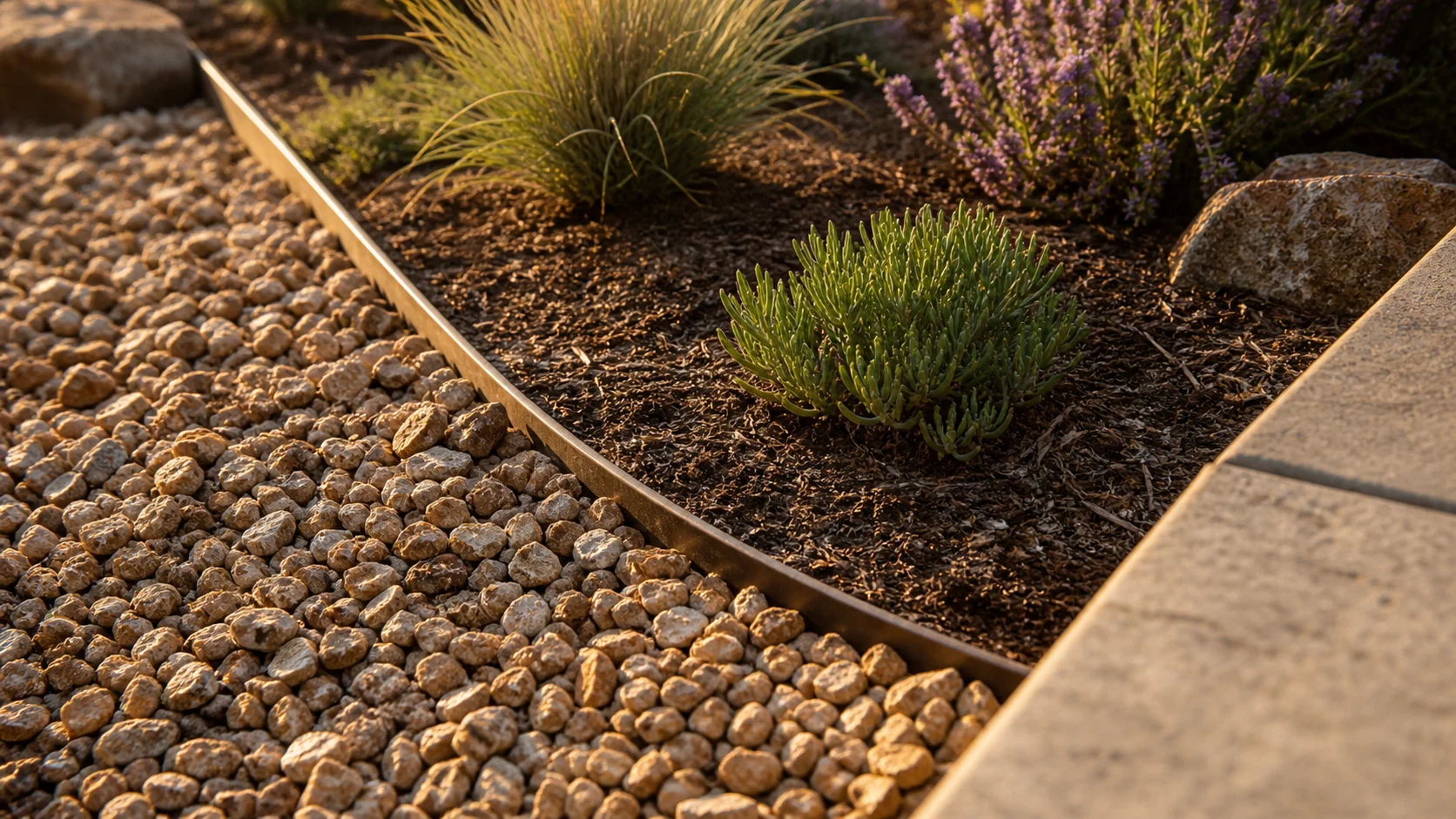
Edges make gravel look deliberate.
Without edging, gravel drifts into planting beds, soil moves into paths, weeds find messy seams, and the whole yard starts looking unfinished. Edges do not need to be fancy. They need to be clear.
Useful edge options can include:
- Steel or aluminum landscape edging.
- Concrete, brick, stone, or paver borders.
- Raised planting beds.
- A clean transition between gravel and mulch.
- A path edge that holds material in place.
- A patio edge that defines where the living area stops.
This is not about making every line rigid. Curves can work beautifully. The point is that the yard should look shaped, not spilled.
Repeat Plant Groups
Repetition is the difference between "designed" and "I bought one of everything."
A gravel yard often looks sparse because each plant is isolated. Instead, repeat a few plant types in groups and let them create rhythm through the yard.
Try repeating:
- One anchor shrub.
- One grass or fine-textured plant.
- One flowering perennial or seasonal accent.
- One sculptural plant where the climate supports it.
- One small tree or large shrub for shade and height.
The exact plant choices should come from local or regional guidance. The design principle is universal enough: repeat forms, colors, and textures so the yard feels connected.
Add Shade
Gravel-heavy yards can feel harsh when everything is low, flat, pale, and exposed.
Shade changes the mood. It makes seating areas more usable, reduces glare, gives plants visual depth, and helps the yard feel like an outdoor room rather than an exhibit on heat.
Shade can come from:
- Regionally appropriate trees.
- Large shrubs.
- Trellises or pergolas.
- Shade sails where appropriate.
- Patio umbrellas.
- Taller planting near seating areas.
Do not plant a tree just anywhere because the yard needs vertical drama. Think about mature size, roots, water needs, debris, views, overhead lines, walls, and how the shade will move. Trees are not throw pillows.
Include A Focal Point
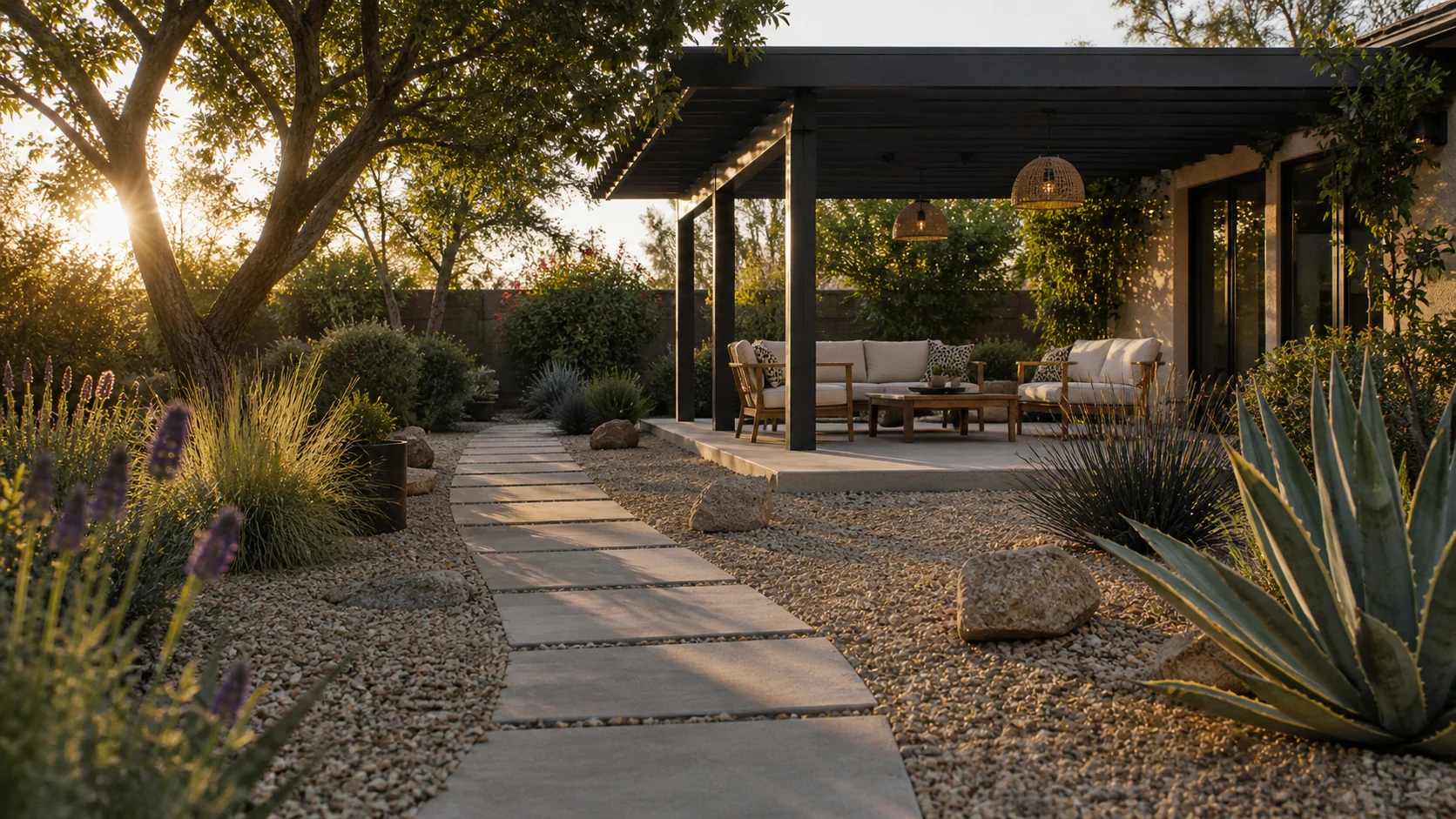
A focal point gives the eye somewhere to land.
In a gravel yard, a focal point might be:
- A small tree.
- A seating area.
- A sculptural boulder group.
- A large planter.
- A fire feature if appropriate and locally allowed.
- A waterwise planting bed.
- A simple path leading to a destination.
- A shaded bench.
The focal point should fit the scale of the yard. One tiny pot in a huge gravel field will not save the scene. Neither will a giant boulder dropped into a corner like it lost a bet.
Use Pathways Intentionally
Paths should explain how people move through the yard.
If a gravel yard has no path logic, people either cut across planting beds or avoid the yard entirely. Use paths to connect doors, patios, gates, seating areas, garden beds, trash access, and utilities.
Good paths usually have:
- A clear start and end.
- Comfortable width for the intended use.
- Stable footing.
- Defined edges.
- Materials that fit the rest of the yard.
- Lighting where needed for safety and comfort.
If the path is decorative only, make that obvious through placement and planting. If it is functional, make it comfortable enough that people actually use it.
Soften Hardscape With Plants
Gravel, concrete, walls, fences, and pavers all become more inviting when plants soften the edges.
Use plants near:
- Patio corners.
- Fence lines.
- Path edges.
- Wall bases.
- Seating areas.
- Utility screens.
- Large blank gravel zones.
The plants do not need to be thirsty to feel lush. Layered foliage, repeated forms, and enough shade can make a waterwise yard feel generous. The key is choosing plants suited to the region, grouping them by water needs, and giving them room to mature.
Keep Gravel Depth And Maintenance Realistic
Gravel does not mean no weeds. It does not mean no maintenance. It does not mean the yard will look exactly the same forever, which is rude but predictable.
Expect to manage:
- Weed seedlings.
- Blown leaves and debris.
- Gravel migration.
- Thin spots.
- Soil or mulch mixing into gravel.
- Irrigation lines that need inspection.
- Plants that outgrow, underperform, or die.
Use appropriate depth for the material and application, and follow local or installer guidance when base prep, drainage, compaction, or slope matters. Too little gravel can look patchy. Too much can bury plant crowns, create awkward footing, or make maintenance harder.
Mistakes To Avoid
Rock Everywhere
A yard covered edge to edge in one rock can look flat and hot. Break it up with planting beds, paths, seating zones, shade, and texture changes.
Black Rock In Full Sun Without Thinking About Heat
Dark rock can look dramatic, but it can also absorb and radiate heat. In hot sunny areas, think carefully before using it around plants, seating areas, pets, or places where people walk barefoot.
Random Boulders With No Scale
Boulders work best when they look related to the design. Use them in groups, partly set into the grade, and scaled to the space. A single undersized boulder floating in gravel can look like a decorative potato.
Tiny Plants Lost In Huge Beds
Small plants can make sense at installation, but the design should account for mature size. If everything is tiny and far apart, the yard may look unfinished for years.
Ignoring Drainage
Gravel is not a magic drainage fix. If water flows toward the house, pools against walls, erodes slopes, or overwhelms planting areas, fix the grading or drainage issue before decorating the problem.
Thinking Gravel Means No Weeds
Gravel can reduce some muddy or bare-soil issues, but weeds can still germinate in dust, debris, and seams. Plan for maintenance instead of being personally betrayed by biology later.
Practical Homeowner Checklist
Use this before you add more rock:
- Decide what each yard zone needs to do.
- Keep open gravel areas shaped and intentional.
- Add planting islands instead of scattered single plants.
- Repeat plant groups for rhythm.
- Use edges to contain and define materials.
- Add shade near places people use.
- Choose gravel color and size for heat, glare, footing, and maintenance.
- Avoid one rock color across the entire yard unless the design has enough contrast elsewhere.
- Group plants by water needs.
- Use local plant guidance instead of copying a universal plant list.
- Check drainage before treating gravel as a solution.
- Plan for weeds, debris, and material refreshes.
Frequently Asked Questions
How do you make a gravel yard look less barren?
Break up large rock areas with planting islands, shade, paths, edging, seating zones, and repeated plant groups. A gravel yard looks barren when it is one flat material with no layers or destinations.
Is gravel good for low-water landscaping?
Gravel can be useful in low-water landscapes, especially for paths, mulch in dry-climate planting areas, and clean transitions around hardscape. It is not automatically the best choice everywhere. In sunny hot areas or around plants that dislike reflected heat, rock can make conditions harsher.
Does a gravel yard need plants?
Usually, yes. Plants give a gravel yard height, shade, softness, texture, seasonal interest, and a sense of design. A few isolated plants may not be enough; grouped, regionally appropriate planting usually looks more intentional.
What color gravel looks best in a backyard?
There is no universal best color. Choose gravel that works with your house, hardscape, climate, glare, heat, and plant palette. Mid-tone natural colors are often easier to blend than very bright white or very dark rock, but the right choice depends on the site.
Does gravel stop weeds?
Gravel can help reduce exposed soil, but it does not stop weeds completely. Seeds can germinate in dust, organic debris, seams, and thin spots. Expect some maintenance.
Can a gravel yard still have shade?
Yes, and it usually should. Shade from trees, shrubs, pergolas, umbrellas, or other structures can make a gravel-based yard more comfortable and visually layered.
The Bottom Line
Gravel works best when it supports a design instead of replacing one.
Use it to create calm, structure, paths, and low-water planting areas. Then add the things that make a yard feel alive: shade, edges, repetition, texture, plants, and places to sit. That is how a gravel yard stops looking deserted and starts looking deliberate.