
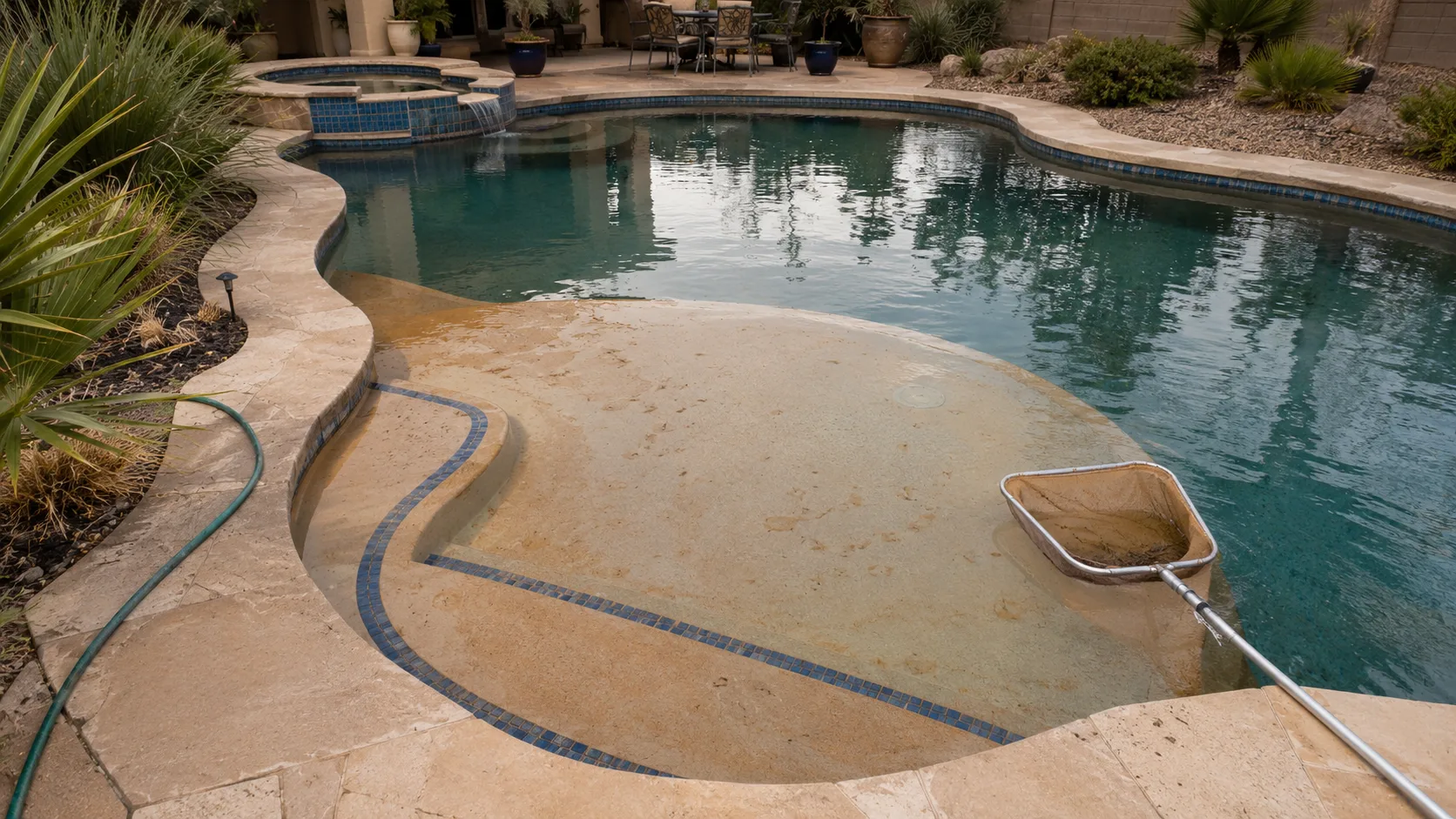
A dust storm can turn a clean backyard pool into a shallow archaeology project. The surface has leaves and flowers. The floor has a brown haze. The skimmer basket is full. The steps feel gritty. And if you live somewhere hot and dry, the whole thing can happen again before you have emotionally recovered from the first round.
The cleanup is not complicated, but the order matters. After a storm, the goal is to remove debris, protect circulation, test the water, clean physically before chasing chemistry, and know when a normal homeowner cleanup has turned into a pool-service problem.
This guide is written for residential pools in dry, windy climates. It is product-neutral. Pool chemical labels, safety data sheets, equipment manuals, pool-surface instructions, and qualified pool professionals still control what you should do for your exact pool.
The Direct Answer
After a dust storm, start with physical cleanup before making big chemical moves:
- Keep swimmers out until the pool is visibly safe and the water tests in range.
- Skim the surface and remove large debris first.
- Empty skimmer baskets and check the pump basket so circulation is not fighting a packed debris load.
- Brush steps, benches, walls, corners, and dusty ledges toward the main drain or cleaner path.
- Run circulation long enough to help the filter catch suspended dust.
- Clean or backwash the filter only according to the filter type, pressure behavior, and manufacturer instructions.
- Test sanitizer and pH before deciding what the water actually needs.
- Call a pro if the water stays cloudy, algae appears, equipment sounds wrong, pressure behaves strangely, or the chemical path is confusing.
If you are still deciding whether to maintain the pool yourself, start with Pool Care Without the Pool Guy. This article is the storm-cleanup add-on for the days when the desert throws the patio into the pool.
First, Make The Pool Safe To Work Around
Storm cleanup starts before the net hits the water.
Do not swim just because the pool is blue enough from the kitchen window. Dust, organic debris, poor visibility, low sanitizer, bad pH, or equipment problems can make the water unsafe even when the pool still looks familiar.
Before you start:
- Keep children and pets away from open equipment areas and chemical storage.
- Avoid handling pool chemicals casually or mixing products.
- Use gloves and eye protection when labels call for them.
- Do not reach into equipment while it is running.
- Stop if you smell strong chemical odor, see damaged containers, find wet chemicals, or are unsure what has been added.
Pool chemicals are useful, but they are not casual household clutter. Keep them dry, separated, labeled, secured, and used only according to the product directions.
Step 1: Remove What Is Floating
Start with the obvious mess.
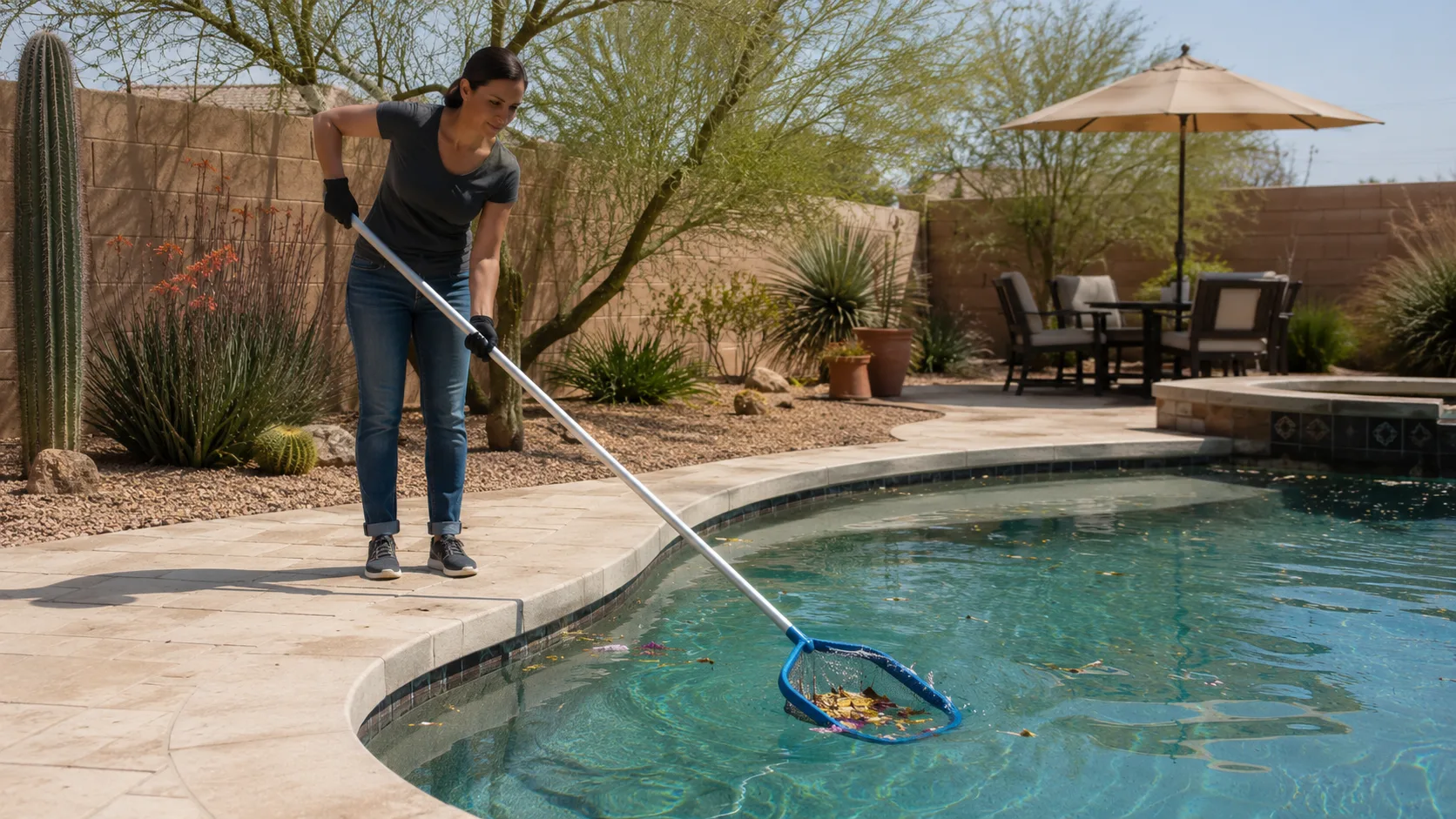
Use a leaf net or skimmer net to remove leaves, flowers, palm debris, bugs, seed pods, and anything else floating on the surface. This is not just cosmetic. The more organic material you leave in the pool, the more work the sanitizer and filter have to do.
Work slowly enough that you are not pushing debris under the surface. Empty the net often. If the pool has a lot of floating material, skim once, wait a few minutes, then skim again after the circulation pattern brings more debris to the surface or skimmer area.
Do not worry about fine dust yet. Fine dust needs a different rhythm.
Step 2: Check Baskets Before You Run Everything Hard
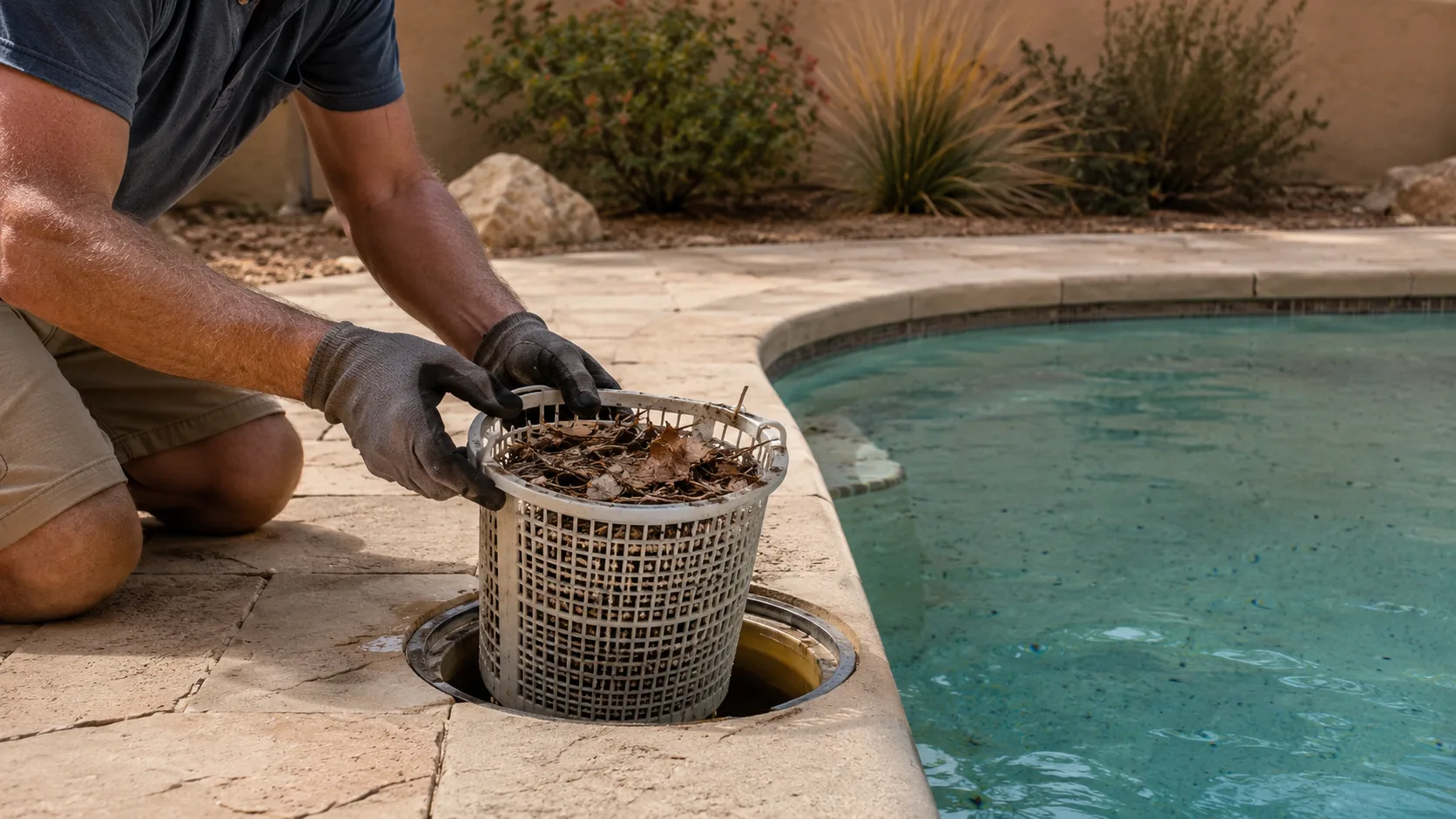
After a wind event, baskets can fill faster than usual.
Check:
- Skimmer baskets
- Pump basket
- Cleaner basket or debris canister, if your setup has one
- Nearby drains, covers, and visible equipment-pad debris
Turn equipment off before opening anything that requires shutdown, and follow the equipment manual for the right sequence. If you are not sure how to open or reseal the pump basket safely, this is a good moment to pause and get help. Air leaks, loose lids, bad seals, and dry-running equipment can turn a cleanup day into a repair day.
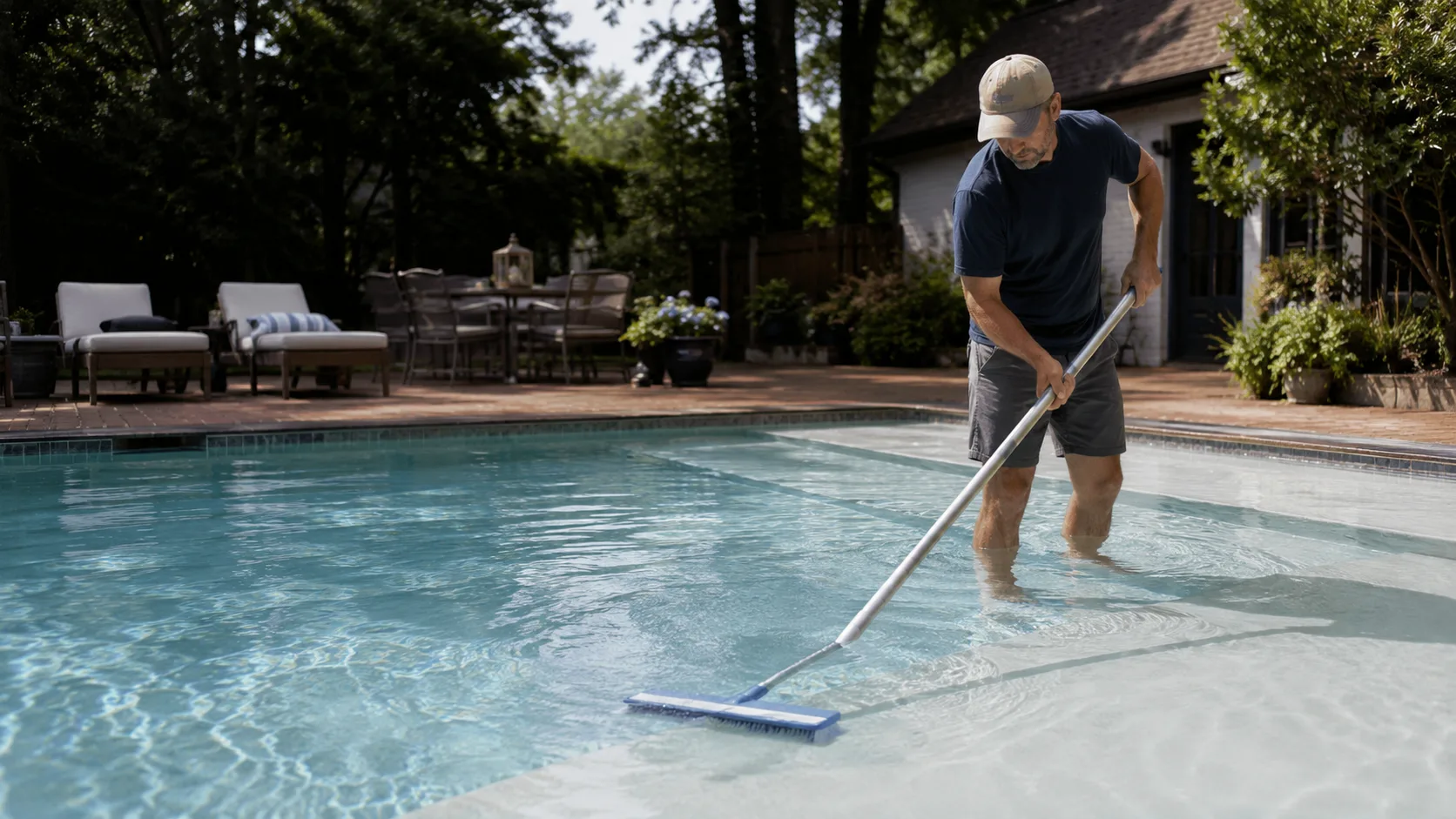
Step 3: Brush Dust Off Steps, Benches, And Corners
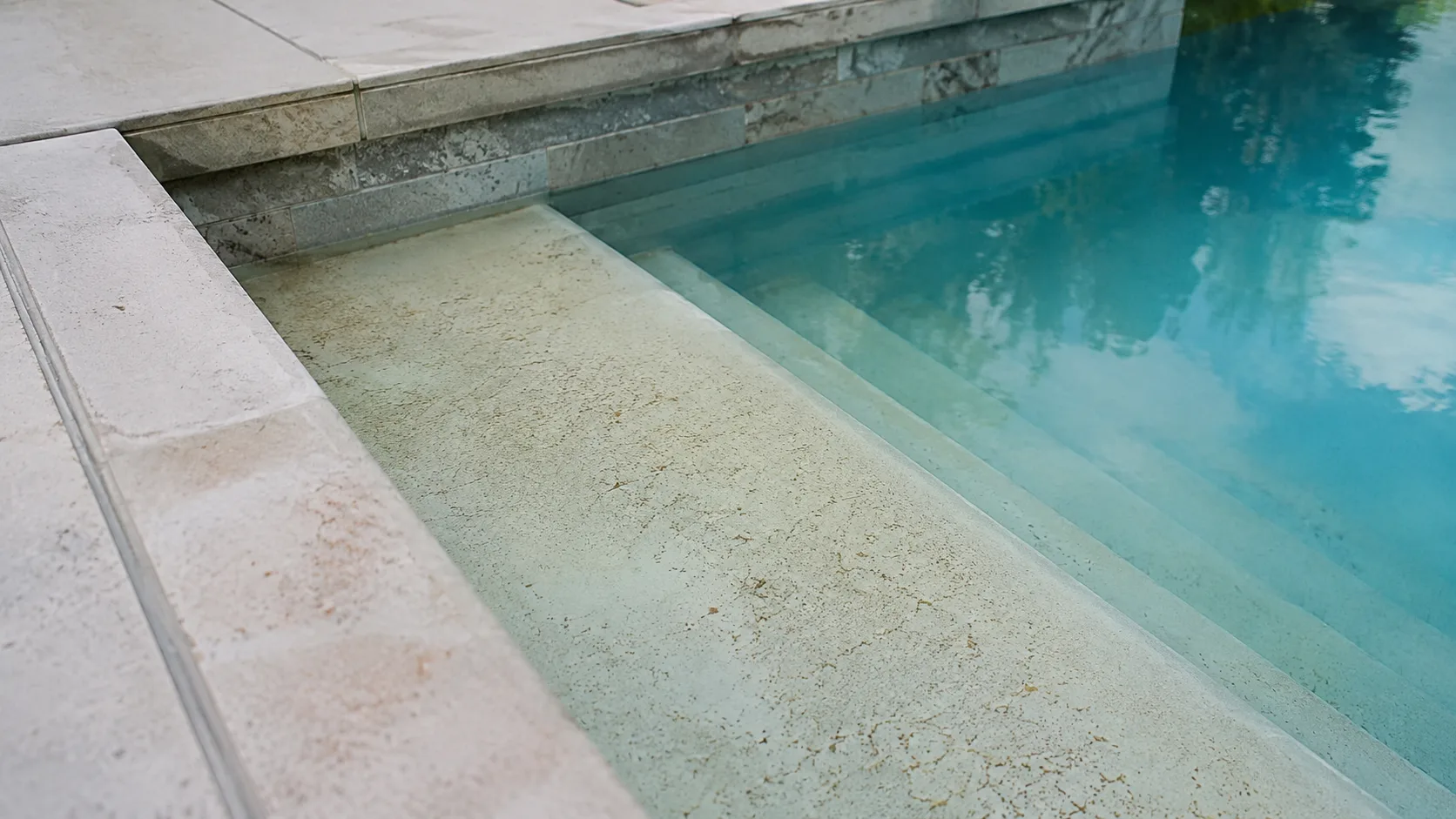
Dust loves places with weak movement:
- Baja shelves
- Steps
- Benches
- Corners
- Behind ladders or rails
- Along the waterline
- Near returns that do not move water evenly
- Low spots on the pool floor
Brush those areas before you decide the cleaner or filter failed. The goal is to move settled material into the water column or toward the cleaner path so the system can actually deal with it.
Use the right brush for the pool surface. If you do not know what your surface allows, check manufacturer or installer guidance before using aggressive tools.
Step 4: Let Circulation And Filtration Do Their Job
After brushing, run the circulation system long enough for the filter to catch suspended material. A dust-heavy pool may need more runtime than a normal day, but exact pump schedules depend on the pool, equipment, filter, weather, and water condition.
Watch for clues:
- Water gradually clearing
- Pressure rising on the filter gauge
- Return flow weakening
- Cleaner movement changing
- Air bubbles or unusual equipment sound
Pressure behavior matters. Some filters need cleaning or backwashing when pressure rises above the clean starting pressure by the amount specified by the manufacturer. Other systems have different service cues. Do not guess if you do not know the filter type or normal pressure range.
Step 5: Test The Water Before Chasing It
A dust storm can bring organic debris, fine particles, pollen, soil, and roof or patio residue into the pool. That does not mean the answer is to throw in whatever chemical is nearby.
Test first. At minimum, homeowners should understand sanitizer and pH because those are core safety readings. Depending on the pool, stabilizer, alkalinity, calcium hardness, salt, or other readings may also matter.
If test results are outside the range on the product label, test-kit instructions, or local professional guidance, respond to the actual reading rather than the feeling that the water looks annoyed.
Avoid these moves:
- Adding multiple chemicals at once without understanding interactions.
- Mixing chemicals in a bucket unless a label specifically directs it.
- Adding chemicals to a pool with poor circulation.
- Swimming before the water is clear enough and test results are appropriate.
- Assuming clear water means safe water.
For broader routine care, the pool-care guide explains how chemistry and physical cleaning work together. Storm cleanup is just a more intense version of that same rhythm.
What Robotic Cleaners Can And Cannot Fix
Robotic cleaners can help after a dust storm, especially with fine floor debris, grit, and heavier material that settles after brushing and circulation. Surface skimmers can help with floating leaves, flowers, bugs, and wind debris.
But automation has limits.
A robot does not:
- Balance sanitizer or pH.
- Clean the filter.
- Empty the skimmer basket.
- Decide whether cloudy water is safe.
- Fix poor circulation.
- Diagnose algae, stains, or equipment trouble.
- Replace judgment after a heavy storm.
Use cleaning equipment as help, not as permission to ignore the rest of the pool.
When The Pool Still Looks Dusty
If the floor looks dusty after one cleaning cycle, do not panic. Fine dust can resettle. It may take a sequence of brushing, circulation, filtration, cleaner runs, and filter attention before the pool looks normal again.
If the same material keeps returning, consider whether:
- Dust is still blowing into the yard.
- The filter needs service.
- The cleaner is missing steps, corners, or ledges.
- Return jets are not moving water well.
- The pool has a dead zone where debris settles.
- The material is not dust but algae, scale, plaster residue, pollen, or stain.
The moment the problem shifts from removable dust to water clarity, algae, stain, surface, or equipment behavior, the risk level changes.
When To Call A Pool Professional
Call a professional if:
- You cannot see the bottom clearly after basic cleanup.
- The water remains cloudy after filtration and testing.
- Algae appears or keeps returning.
- The pump loses prime, runs dry, or sounds abnormal.
- Filter pressure behaves strangely.
- You find metal debris, staining, rust-colored marks, or surface damage.
- You are unsure what chemicals were added.
- Chemical containers are wet, damaged, unlabeled, or mixed.
- You need to open equipment you do not understand.
There is no trophy for turning a storm cleanup into an equipment repair, chemical incident, or surface-damage problem.
A Simple Storm Cleanup Sequence
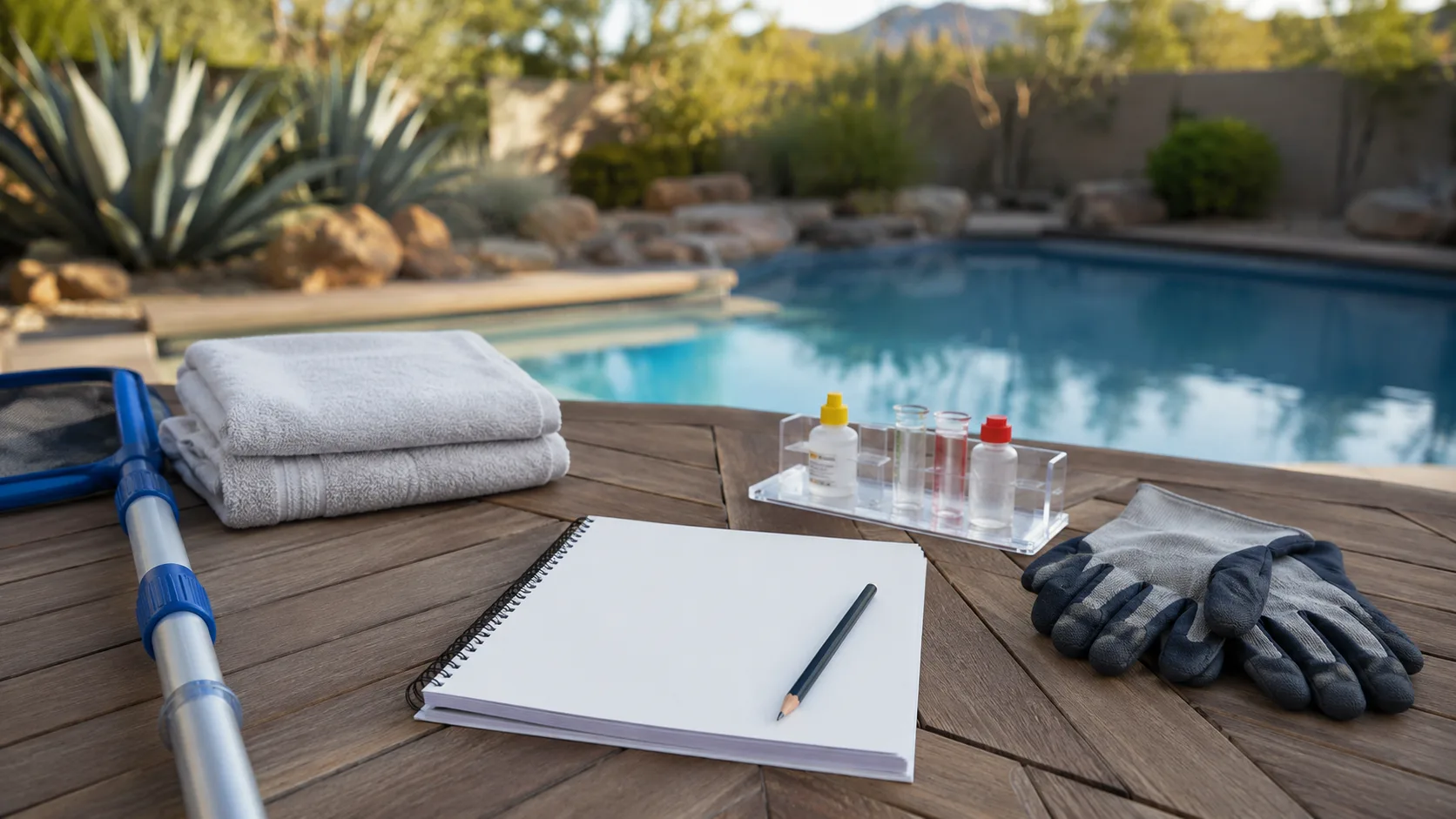
Use this as the homeowner version:
- Keep swimmers out.
- Skim the surface.
- Empty baskets.
- Remove big debris from the pool and deck.
- Brush steps, shelves, benches, corners, and walls.
- Run circulation.
- Test sanitizer and pH.
- Run the cleaner if appropriate.
- Watch filter pressure and flow.
- Clean or backwash the filter only according to the system instructions.
- Retest after the water has circulated.
- Call a pro if clarity, chemistry, equipment, staining, or algae does not make sense.
The Bottom Line
Dust-storm pool care is mostly about sequence and restraint. Remove what you can see, help the system capture what you stirred up, test before adjusting, and do not let automation or guesswork replace basic safety.
The pool does not need drama after every storm. It needs a repeatable cleanup rhythm and a clear line where homeowner maintenance stops and professional help starts.