
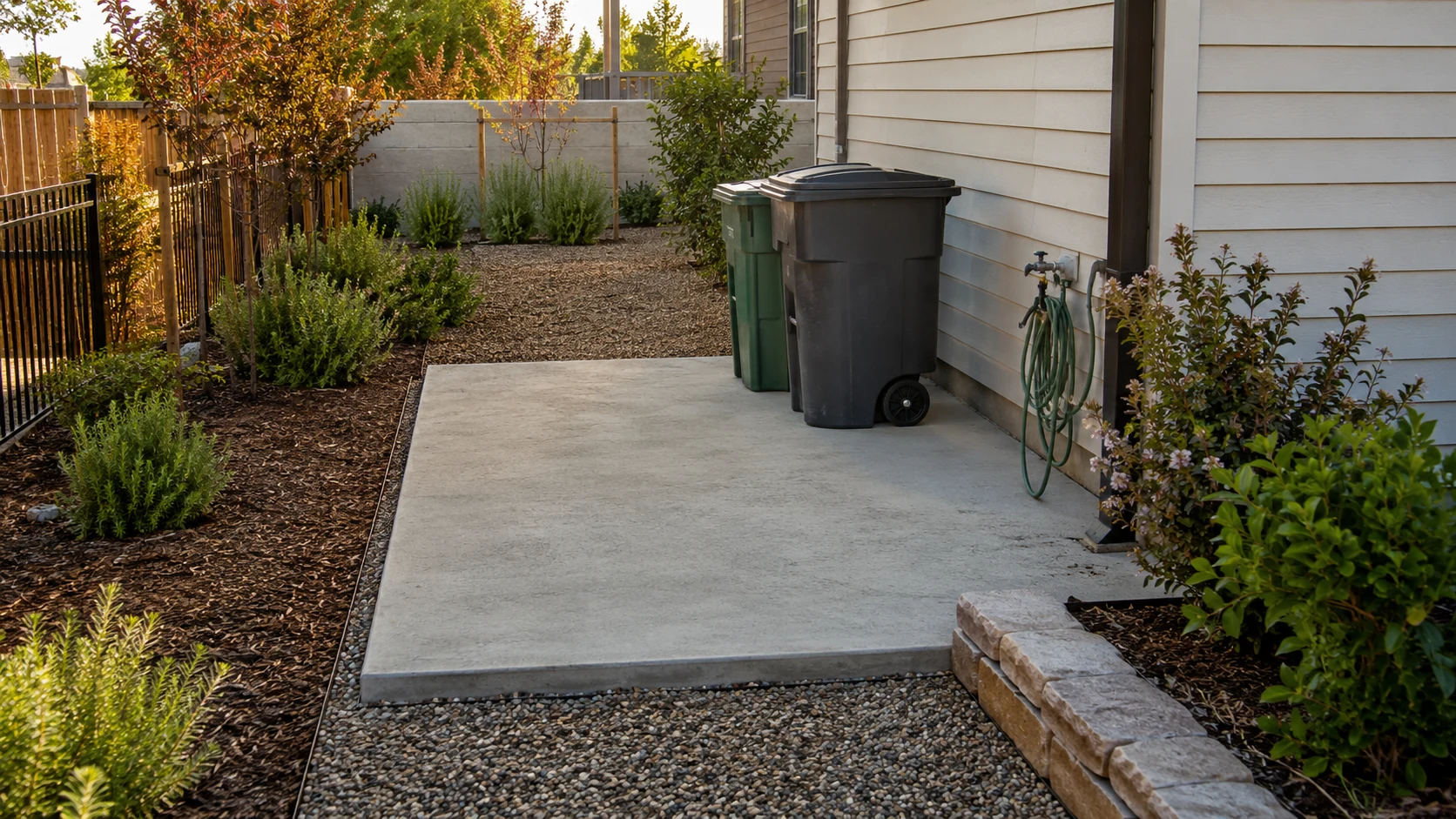
A small concrete pad sounds almost too practical to deserve planning. It is just a little rectangle for trash bins, a hose corner, a potting bench, or the part of the side yard where gravel keeps losing an argument with wheels.
That is exactly why people get into trouble. A utility pad is small, but it still deals with water, slope, base support, curing, edges, foot traffic, rolling bins, irrigation overspray, tree roots, and the ancient homeowner urge to make one tiny project carry the emotional weight of a full patio.
This guide is for homeowner-scale, non-structural concrete pads: small service spots, bin areas, hose bib landings, potting bench zones, and simple transitions between gravel, decomposed granite, mulch, pavers, and existing hardscape. It is not structural engineering advice, a driveway specification, a shed foundation plan, a drainage design, or code guidance.
For broader project selection, start with Concrete Projects for a Weekend Backyard Upgrade. If you are already thinking about timing, keep Concrete Cure Time for DIY Outdoor Projects nearby so "looks dry" does not become the project manager.
Quick Safety Note
Dry cement, silica-containing dust, wet concrete, forms, mixing, lifting, and cleanup deserve respect. Wear eye protection, waterproof gloves, and appropriate dust protection when handling dry materials. Avoid breathing concrete dust. Keep wet concrete off your skin. Read the product label and safety data sheet for every mix, additive, pigment, cleaner, curing product, or sealer you use.
If the pad involves vehicles, heavy equipment, sheds, posts, stairs, utilities, electrical, gas, plumbing, structural loads, drainage correction, steep slopes, tree-root conflicts, foundations, permits, local code, or anything attached to the house, stop treating it like casual weekend DIY and get qualified help.
The Direct Answer
A small concrete utility pad makes sense when it solves a small, practical surface problem without pretending to be a structural slab.
It can be a good fit for trash and recycling bins, hose bib splash areas, potting benches, lightweight service corners, side-yard landings, and transitions from gravel or decomposed granite to a harder surface. It becomes a bad idea when it is asked to support vehicles, sheds, heavy equipment, posts, stairs, drainage fixes, utility work, or anything where failure would be unsafe, expensive, or permit-sensitive.
The best small utility pads are boring in the right ways: placed where they are actually useful, sloped away from trouble, supported by a prepared base, finished with practical texture, protected while curing, and used only after the concrete and product guidance say it is ready.
What A Small Concrete Utility Pad Is
A small concrete utility pad is a modest hard surface for service tasks rather than a full patio or structural slab. Think of it as the yard's utility drawer: not glamorous, but very helpful when it is the right size and in the right place.
Common examples include:
- A trash and recycling bin pad.
- A hose bib landing or splash-prone area.
- A potting bench or small work-zone surface.
- A side-yard landing near a gate.
- A lightweight storage or equipment rest area.
- A transition between gravel, decomposed granite, mulch, pavers, and concrete.
- A small flat spot where wheels, feet, or repeated use keep chewing up softer material.
The point is control. The pad gives one awkward area a durable, cleanable surface so the rest of the yard does not have to absorb constant scraping, puddling, rutting, or tracking.
Where Small Concrete Pads Work Well
A small pad can be useful when the problem is repeated use in a limited area.
Trash And Recycling Bins
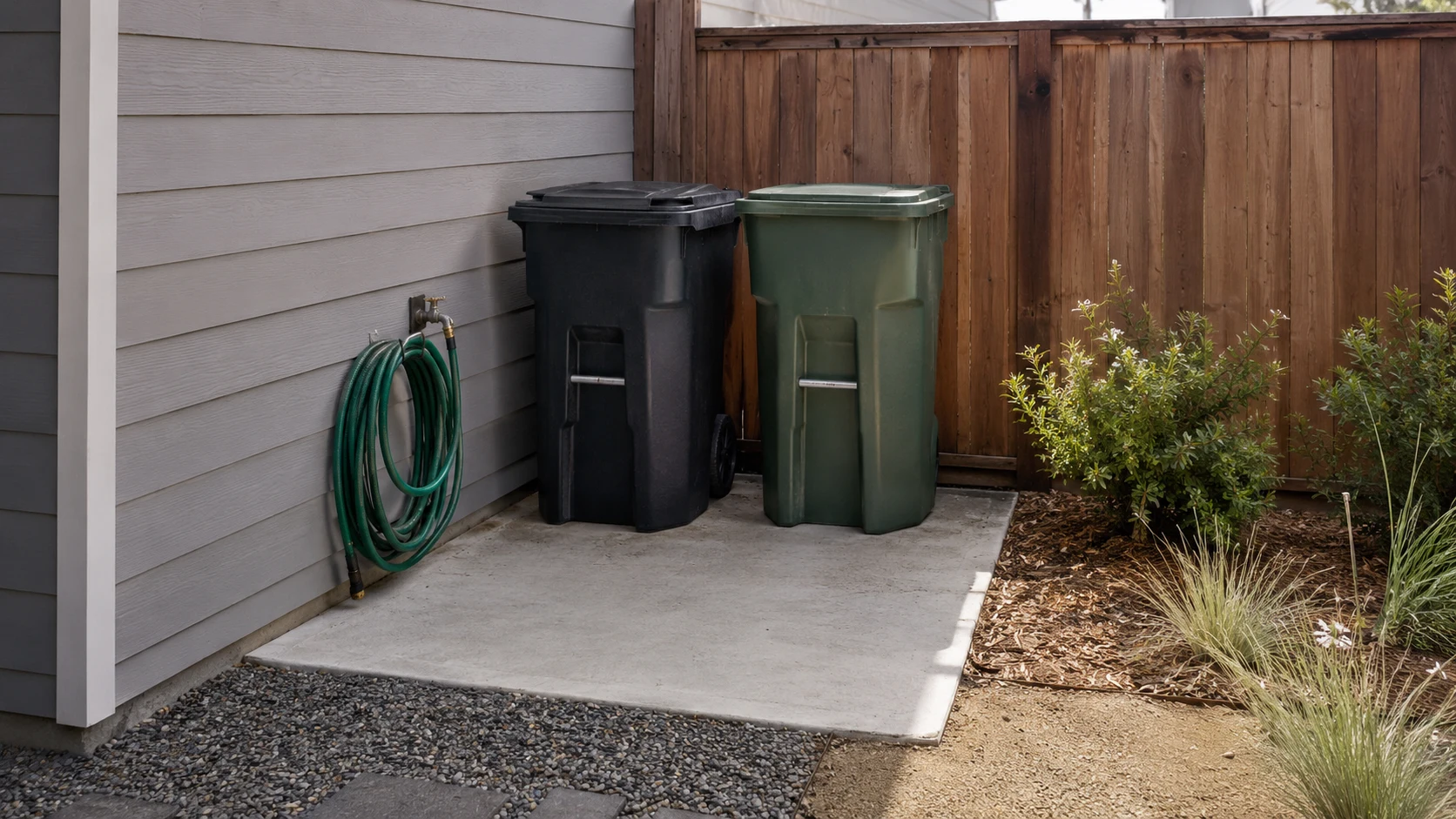
Bins need enough space to sit, roll, turn, and be pulled out without fighting gravel, mulch, mud, or a half-buried paver that has chosen violence. A pad can help keep the bin area cleaner and reduce wheel ruts.
The key is sizing for the real movement, not just the bin footprint. If the pad is barely bigger than the bins, every collection day becomes a tiny obstacle course.
Hose Bib Or Utility Corner
Hose areas collect drips, muddy footprints, coiled hose chaos, and irrigation overspray. A small pad can make the area easier to clean and less likely to become a little swamp with plumbing.
Be careful near walls, foundations, and doors. The pad should not send water toward the house or trap moisture where it causes new problems.
Potting Bench Or Small Work Surface
A potting bench area benefits from a firm, sweepable surface. Soil, leaves, spilled water, and dropped tools are easier to manage on a small pad than in gravel or bark mulch.
This does not mean the pad should support a giant masonry outdoor kitchen with delusions of grandeur. Keep the use lightweight, local, and non-structural.
Side-Yard Landing
Side yards often become the backstage of the house: gates, hoses, bins, utility meters, spare pots, and the occasional thing nobody wants to admit they own. A small pad can create order where foot traffic and wheels keep disturbing loose material.
It is especially useful where decomposed granite or gravel starts tracking into doors. For that material problem, How to Use Decomposed Granite Without Tracking Dust Into the House pairs naturally with this guide.
Transition From Loose Material To Hardscape
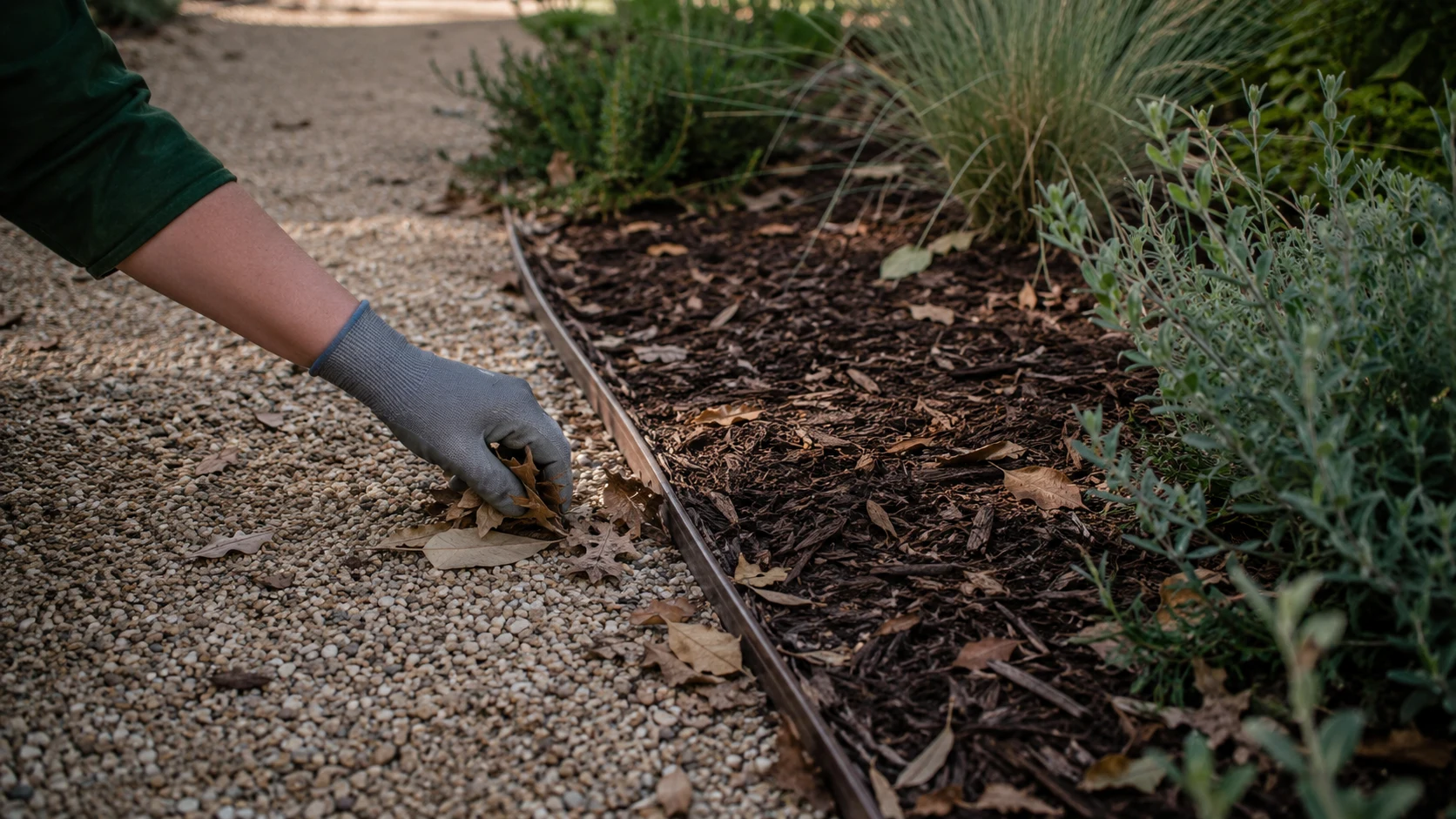
Concrete can work as a small threshold between gravel, mulch, decomposed granite, pavers, and existing paths. The pad gives wheels and feet a stable landing before they move into a softer or looser surface.
The transition matters. A tiny trip edge, awkward height change, or loose gravel spilling over the pad will make the project feel unfinished even if the concrete itself behaves.
Where A Small Pad Is The Wrong Answer
Some jobs are too serious for a casual little pad.
Do not treat a small utility pad as a shortcut for:
- Vehicle parking.
- Driveway extensions.
- Shed slabs or heavy storage foundations.
- Structural pads.
- Stairs or landings tied to code requirements.
- Retaining walls.
- Drainage corrections.
- Utility, electrical, gas, or plumbing work.
- Posts, pergolas, gates, or attached structures.
- Foundation-adjacent work where water movement matters.
- Anything with load-bearing, permit, code, or local-rule implications.
These projects may still use concrete. They just need a different level of design, sourcing, and professional input. A small pad should solve a small surface problem, not quietly volunteer to become infrastructure.
Plan The Location Before You Think About The Pour
The location is the project.
Before thinking about forms, finish, or concrete delivery fantasies, walk the area and ask what the pad actually needs to do.

Check:
- How people will reach it.
- How bins or carts will roll onto it.
- Whether a gate, door, hose, or wall blocks movement.
- Where water currently goes during rain or irrigation.
- Whether the spot is shaded, hot, windy, or regularly wet.
- Whether nearby trees or large shrubs have roots in the area.
- Whether loose material will spill across the edge.
- Whether the pad will create a trip point.
- Whether the area is large enough for the real use, not the imagined tidy version.
If you have to twist bins sideways, step over a hose, roll across loose gravel, and dodge a downspout to use the pad, the concrete is not the problem. The plan is.
Drainage Direction Matters
Water is very patient and very rude.
A small pad should not send water toward the house, pool against a wall, collect near a door, trap water under bins, or create a low spot that turns every rinse into a puddle. Existing slope, downspouts, irrigation overspray, hose use, soil, and nearby hardscape all matter.
Keep this homeowner-level: the pad needs a drainage-aware plan. It does not need you guessing at drainage engineering from a video. If the site already has pooling, erosion, downspout issues, slope problems, or water moving toward the foundation, call a qualified professional before adding concrete.
The pad should make the area easier to live with, not give water a more formal invitation to misbehave.
Think About Size, Access, And Real Movement
Most bad utility pads are either too small or placed like nobody has ever used a trash bin before.
For bins, think about:
- The number of bins.
- Lid clearance.
- Wheel movement.
- Where the bins sit between collection days.
- The path from storage spot to pickup spot.
- Whether bins need to turn, not just park.
For hose areas, think about:
- The hose bib location.
- How the hose coils or reels.
- Where water drips.
- Whether the hose crosses a path.
- Whether the area needs room for a person to stand.
For potting or service areas, think about:
- The bench footprint.
- Sweeping and cleaning.
- Where soil, leaves, and water will go.
- Whether the work surface is truly lightweight and movable.
Do not design for the tidiest day of the year. Design for the day when the bins are full, the hose is tangled, and nobody is in the mood to admire your hardscape.
Base Prep Still Counts
Small does not mean "put concrete on whatever is there and hope."
Outdoor concrete needs support from below. Soft soil, loose organic material, poor compaction, roots, voids, and trapped water can contribute to cracking, settlement, rocking edges, and surface trouble. The exact base approach depends on the project, site, climate, soil, product, and whether the pad is truly non-structural.
For this guide, keep the idea simple:
- Remove loose, soft, or organic material where appropriate.
- Do not pour over mud, roots, mulch, or unstable fill.
- Plan for a stable, compacted support layer suitable for the project.
- Keep forms stable enough that the pad does not wander out of shape.
- Do not use a small pad to hide a drainage or settlement problem.
For crack behavior and support, How to Avoid Cracks in Small DIY Concrete Projects is the companion read.
A Safe High-Level Project Sequence
This is a concept sequence, not a construction specification.
For a small, non-structural utility pad, the planning flow usually looks like this:
- Decide what the pad is for.
- Confirm the use is small, lightweight, and non-structural.
- Choose a location with practical access.
- Check drainage direction, slope, doors, walls, roots, utilities, and material transitions.
- Decide whether the site is simple enough for DIY or needs professional help.
- Prepare the area and base according to the product, site, and appropriate guidance.
- Build stable forms for the shape.
- Place and finish the concrete without rushing.
- Protect the fresh concrete while it cures.
- Wait before loading, sealing, dragging bins, or putting the pad into regular use.
The missing ingredient in many small projects is patience. Concrete may look finished before it is ready to be treated like a service surface.
Finish Choices For A Utility Pad
A utility pad should be practical before it is photogenic.
Broom Finish
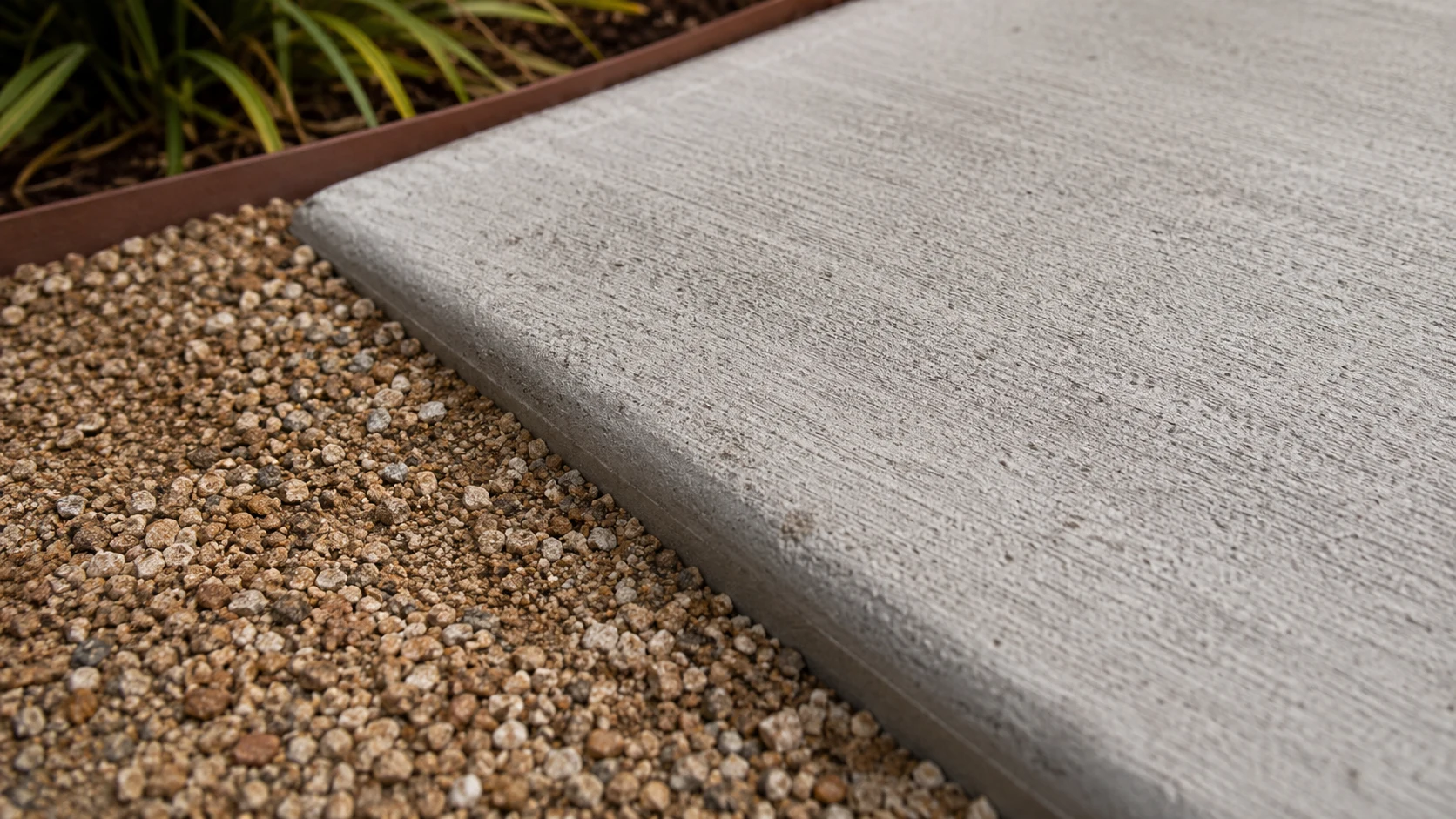
A broom finish is often a sensible choice for a small outdoor utility pad because it gives the surface texture. It is familiar, useful, and usually less slippery than a smooth, glossy finish when wet or dusty.
It can still look sloppy if the broom marks are uneven, the edges are ragged, or the pad shape looks like it was negotiated under duress.
Light Texture
A light texture can help a pad feel less slick without making it hard to sweep. This is useful for hose areas, side-yard landings, and bin pads where water, dust, or leaves may show up.
Edge Treatment
Edges matter because utility pads meet other materials: gravel, decomposed granite, mulch, soil, pavers, or existing concrete. A clean edge can make a small pad look intentional instead of like leftover concrete found a place to retire.
Poor edges can chip, collect debris, create trip points, or let loose material migrate onto the pad.
Skip The Glossy Drama
Glossy or slick finishes are usually the wrong instinct for a utility area. They can look odd next to service uses, show scuffs, and create traction concerns when wet, dusty, or sealed badly.
For finish tradeoffs, see Outdoor Concrete Finish Options for Patios, Paths, and Small Projects. If sealing later becomes part of the plan, read Concrete Patio Sealer: What Homeowners Should Know before assuming sealer is a force field.
Curing And When To Use The Pad
Fresh concrete needs time and protection.
Do not start dragging bins, placing storage, sealing, washing aggressively, or loading the pad just because the surface looks firm. Cure time, drying time, light use, sealing readiness, and heavier use are different questions. The mix, weather, thickness, base support, finish, and product guidance all matter.
General principles:
- Protect fresh concrete from harsh sun, wind, rain, and freezing risk.
- Keep people, pets, bins, hoses, and equipment off the fresh pad.
- Follow the concrete product guidance for curing and use.
- Let the pad gain enough strength before rolling bins over it.
- Wait longer before placing anything heavy, dragging objects, or sealing.
For the full patience lecture, use Concrete Cure Time for DIY Outdoor Projects. It exists because concrete has no respect for your weekend schedule.
Maintenance Reality
A utility pad is easier to maintain than gravel chaos, but it is not maintenance-free.
Expect to:
- Sweep leaves, grit, and debris.
- Rinse or clean stains when appropriate.
- Keep gravel, decomposed granite, mulch, and soil from burying the edges.
- Watch for cracks, settlement, rocking edges, or drainage changes.
- Keep irrigation overspray from constantly soaking the area.
- Revisit sealing only when the surface, exposure, product, and maintenance goals justify it.
If cracks widen, one side lifts, water pools, the surface gets slick, or the pad starts affecting nearby doors, walls, foundations, roots, or utilities, stop treating it as cosmetic.
Common Mistakes
Avoid these:
- Making the pad too small for real bin movement.
- Letting the pad drain toward the house.
- Pouring over soft soil, roots, mulch, or unstable material.
- Ignoring existing slope.
- Creating a trip edge at the transition.
- Choosing a slick finish for a wet utility area.
- Loading the pad too soon.
- Parking vehicles or heavy equipment on a casual pad.
- Treating a shed slab like a bin pad.
- Hiding a drainage problem under concrete.
- Placing the pad where tree roots are already causing trouble.
- Forgetting that irrigation overspray can make utility areas slippery or stained.
- Assuming a small project cannot fail expensively.
The pad is supposed to make the yard less annoying. If it adds puddles, trip hazards, cracks, and awkward bin choreography, it has joined the problem.
When To Call A Professional
Call a qualified professional when the project involves:
- Vehicles or driveway use.
- Sheds, posts, stairs, or structures.
- Heavy equipment or permanent loads.
- Utility, electrical, gas, plumbing, or meter-adjacent work.
- Drainage corrections or water moving toward the house.
- Steep slopes or retaining conditions.
- Tree-root conflicts.
- Foundation-adjacent work.
- Pool-adjacent safety concerns.
- Permits, code, HOA, or local-rule questions.
- Cracks, settlement, or existing concrete failure that affects safety.
This is not a failure of DIY spirit. It is knowing when the project has stopped being a small utility pad and started wearing a tiny contractor hat.
Practical Homeowner Checklist
Before you commit:
- The pad solves a specific surface problem.
- The use is small, lightweight, and non-structural.
- The location has practical access.
- Bins, hoses, benches, or carts can move naturally.
- Water will not drain toward the house, doors, walls, or foundations.
- The area does not depend on guessing around utilities, tree roots, slopes, or code-sensitive work.
- The base and forms can be prepared properly.
- The finish will be textured enough for the use.
- The edge will meet gravel, mulch, DG, pavers, or soil cleanly.
- The concrete can cure undisturbed.
- You know what must wait before loading, sealing, or regular use.
- You know when to call a pro.
FAQ
What is a small concrete utility pad used for?
A small concrete utility pad is used for practical backyard service areas such as trash bins, hose bibs, potting benches, side-yard landings, and transitions from loose material to hardscape. It should stay small, non-structural, and matched to the actual use.
Can I put trash bins on a small concrete pad?
Yes, a small pad can work well for trash and recycling bins if it is sized for the bins and their movement. Plan for rolling, turning, lid clearance, drainage, and the path to the pickup area, not just the parked bin footprint.
Is a small concrete pad good for a shed?
Do not treat a casual utility pad as a shed slab. Sheds can involve loads, anchoring, drainage, permits, and structural expectations. Get qualified guidance before using concrete for shed support.
What finish is best for a utility pad?
A practical textured finish, often a broom finish or light texture, usually makes more sense than a smooth or glossy finish. Utility areas may get wet, dusty, or dirty, so traction and cleaning matter more than drama.
How soon can I use a small concrete pad?
Do not rely on a universal timeline. Use depends on the mix, weather, pad size, base support, finish, and product guidance. Curing, light use, sealing readiness, and regular loading are different milestones.
Should a small concrete pad be sealed?
Maybe, but sealing is not automatic. It depends on the surface, exposure, staining concerns, moisture behavior, product compatibility, traction, and maintenance goals. If sealing is considered, follow manufacturer directions and avoid glossy/slippery choices for utility areas.
Bottom Line
A small concrete utility pad is a good project when it solves a narrow, practical problem: bins that rut the side yard, hose areas that get muddy, a potting bench that needs a sweepable surface, or a loose-material transition that needs a firmer landing.
It is a bad project when it tries to become a driveway, shed foundation, structural slab, drainage fix, utility platform, or permit-sensitive shortcut.
Keep the scope small. Plan the location. Respect drainage. Prepare the base. Use a practical finish. Let the concrete cure. Call a pro when loads, water, utilities, roots, slopes, structures, or local rules enter the chat.