
Decomposed granite can make a waterwise yard feel warm, relaxed, and intentional. It can also follow you into the kitchen like it pays rent.
The tracking problem usually is not random. DG tracks when fine particles stay loose, edges fail, runoff moves material, compaction is weak, or the path sits too close to a door without a transition. The fix is not pretending decomposed granite is a magic dustless surface. The fix is using it where it belongs, installing it seriously, and giving shoes, paws, wheels, and doorways a better plan.

The Direct Answer
To use decomposed granite without tracking dust into the house, keep loose DG away from main doors, compact it well, control edges and runoff, and add a transition before people step indoors.
That transition might be pavers, stepping stones, a small hardscape landing, a gravel-trap zone, a planting buffer, or a simple shoe-and-mat setup that actually matches how your household moves. If the area is a high-traffic slider, pool door, pet route, or kitchen entry, do not rely on loose DG right up against the threshold. That is how a landscape material becomes a floor-cleaning subscription.
For the bigger material overview, start with What Is Decomposed Granite?. If the yard is gravel-heavy overall, How to Make a Gravel Yard Look Designed, Not Deserted helps with the broader design problem.
Why Decomposed Granite Tracks Dust And Grit
Decomposed granite is made of weathered granite particles. That mix usually includes fines: the small dusty particles that help the material bind when compacted, but also love shoes, paws, chair feet, pool water, and door mats.
Tracking gets worse when:
- DG is loose instead of compacted.
- The layer is too shallow or uneven.
- The base is soft or poorly prepared.
- Water runs across the surface and moves fines.
- Edging lets material spread into patios, walkways, or planting beds.
- The path sits directly against a door.
- People drag furniture, roll bins, or walk pets over it constantly.
- Leaf blowers are used aggressively enough to remove the fines that help the surface hold together.
DG is not automatically dusty, but it is a fine mineral material. If you treat it like decorative confetti and pour it wherever the yard looks empty, it will behave accordingly.
Loose, Compacted, And Stabilized DG Are Different Animals
Not all decomposed granite surfaces behave the same way.
Loose DG
Loose DG is the most likely to track. It can work as mineral mulch in some waterwise planting areas, but near doors and high-traffic routes it tends to move, cling, and migrate.
Use loose DG carefully around entries. If the surface feels soft underfoot or you can kick it around easily, expect some of it to come with you.
Compacted DG
Compacted DG is installed and compressed so the fines and small particles knit into a firmer surface. It can be much better for paths, side yards, and informal seating areas.
Compaction is not a decorative suggestion. It is the difference between a path and a tan powder aisle.
Stabilized DG
Stabilized DG uses a stabilizing approach to help the surface hold together better. It may reduce looseness and tracking in some settings, but systems vary by product, installer, climate, drainage, and maintenance.
Keep the decision product-neutral. Follow manufacturer directions, ask local installers what works in your climate, and do not assume the word "stabilized" means permanent, waterproof, weed-proof, or maintenance-free.
Where DG Works Well
Decomposed granite usually works best where people need an informal, natural-looking surface and the site is not asking the material to do too much.
Good candidates include:
- Garden paths away from main doors.
- Side-yard paths with controlled drainage.
- Low-water planting areas where DG is used as mineral texture.
- Secondary seating zones with stable furniture.
- Transitions between planting, gravel, pavers, and concrete.
- Areas where a little surface maintenance will not ruin your week.
It also tends to look better when it is part of a designed yard, not the whole yard. For waterwise planning beyond DG, see How to Plan a Low-Water Backyard Without Making It Look Barren and What Is Xeriscaping?.
Where DG Becomes Annoying
DG gets irritating when it meets doors, water, bare feet, pets, and high-traffic habits without a buffer.
Be cautious near:
- Sliding glass doors.
- Kitchen and mudroom entries.
- Pool doors and wet feet.
- Pet routes and dog doors.
- Outdoor dining areas with chair movement.
- Patios where people move between indoor and outdoor seating all day.
- Trash-bin paths or utility routes.
- Steep or poorly drained side yards.
The closer DG gets to a frequently used doorway, the more important the transition becomes. A beautiful DG path that ends one inch from a slider can still be a dust delivery system.
Installation Basics That Reduce Tracking
This is not a full installation specification. Site conditions, local soil, drainage, climate, material type, and installer guidance matter. But the principles are consistent enough: DG tracks less when it is supported, contained, compacted, and kept out of runoff patterns.
Excavate Enough For The Surface To Have Structure
DG works poorly when it is sprinkled over bare soil like seasoning. The area needs enough excavation for the surface and base approach to make sense. Shallow material over soft soil can rut, loosen, and mix with dirt.
If the area will carry frequent foot traffic, furniture, bins, or pets, treat it like a real surface rather than a topdressing.
Prep The Base
A stable base helps prevent soft spots and low areas that collect fines. The right base depends on the project and local conditions, but the goal is simple: the DG should not be sitting on a squishy, uneven, poorly draining mess.
Soft base, soft surface. Then the dust party begins.
Grade For Drainage
Water should not run across a DG path toward the door. Runoff can move fines, create ruts, loosen the surface, and carry grit into nearby patios or thresholds.
If water concentrates in the area, fix drainage first. DG should not be the polite little blanket you throw over a grading problem.
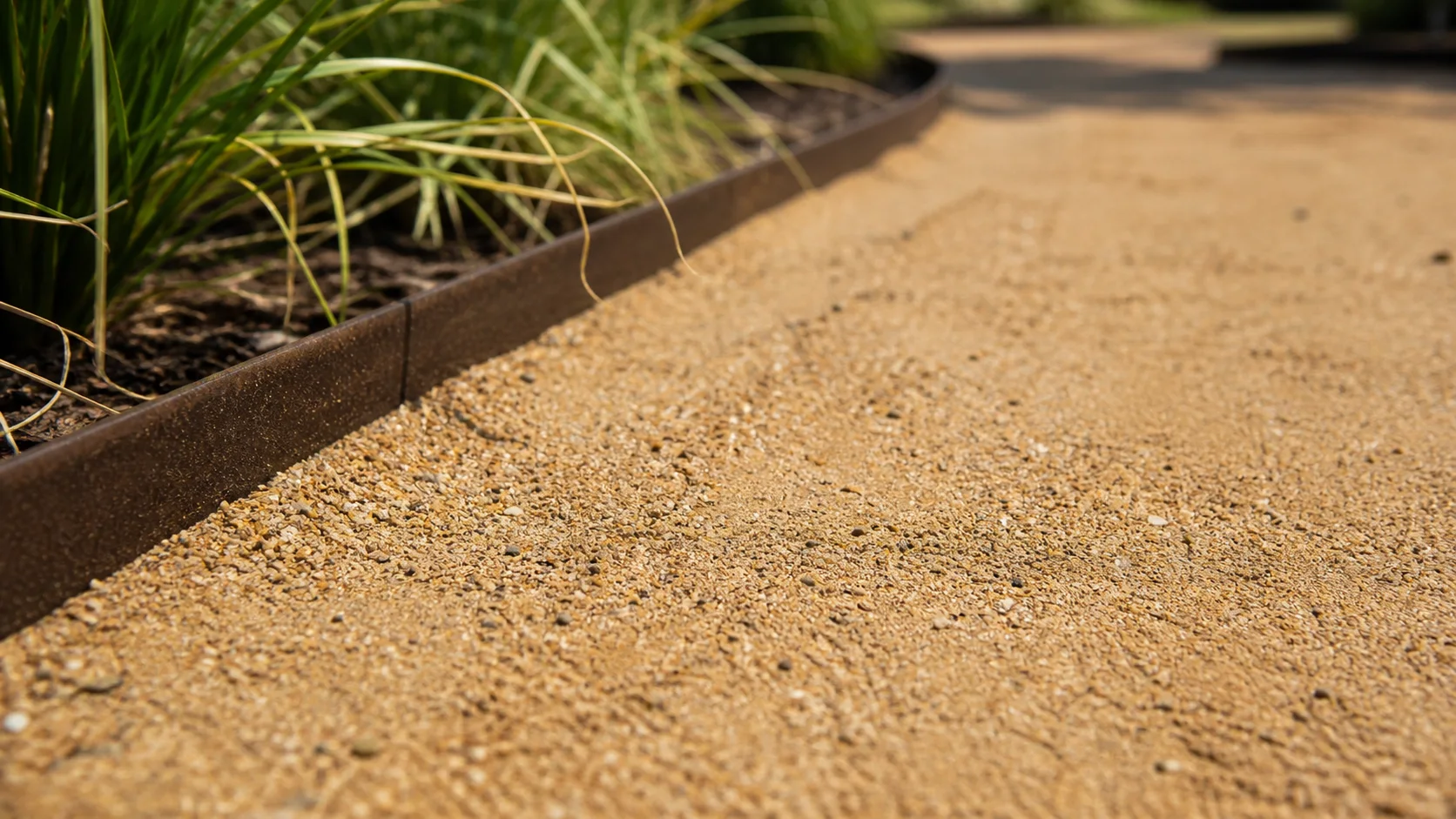
Use Edging
Edging helps keep DG where it belongs. Without it, the material spreads into patios, planting beds, concrete joints, and door-adjacent areas where it is easier to track.
Useful edges can include metal edging, paver borders, concrete edges, stone borders, or another material that fits the design. The point is not fancy. The point is containment.
Water And Compact In Lifts
DG usually performs better when it is placed, moistened, and compacted in manageable layers rather than dumped all at once. Compacting in lifts helps the surface tighten up more evenly.
Do not flood it. Do not leave it fluffy. Do not assume one pass with a hand tamper over a large path will perform like a well-compacted installation. If you are not sure what your material needs, ask the supplier or installer for the recommended approach.
Be Careful With Stabilizers
Stabilizers may help in some situations, especially where homeowners want a firmer path or seating surface. They are not a universal cure.
Compatibility, moisture, installation method, drainage, maintenance, and product directions matter. If a stabilized system is being considered near doors, pools, slopes, or heavy traffic, follow the manufacturer directions and consider local professional input.
No specific stabilizer is recommended here. This article is about surface behavior and homeowner planning, not product selection.
Entry Transition Tactics That Actually Help
The best way to reduce tracking is to avoid making DG the final surface before the house.
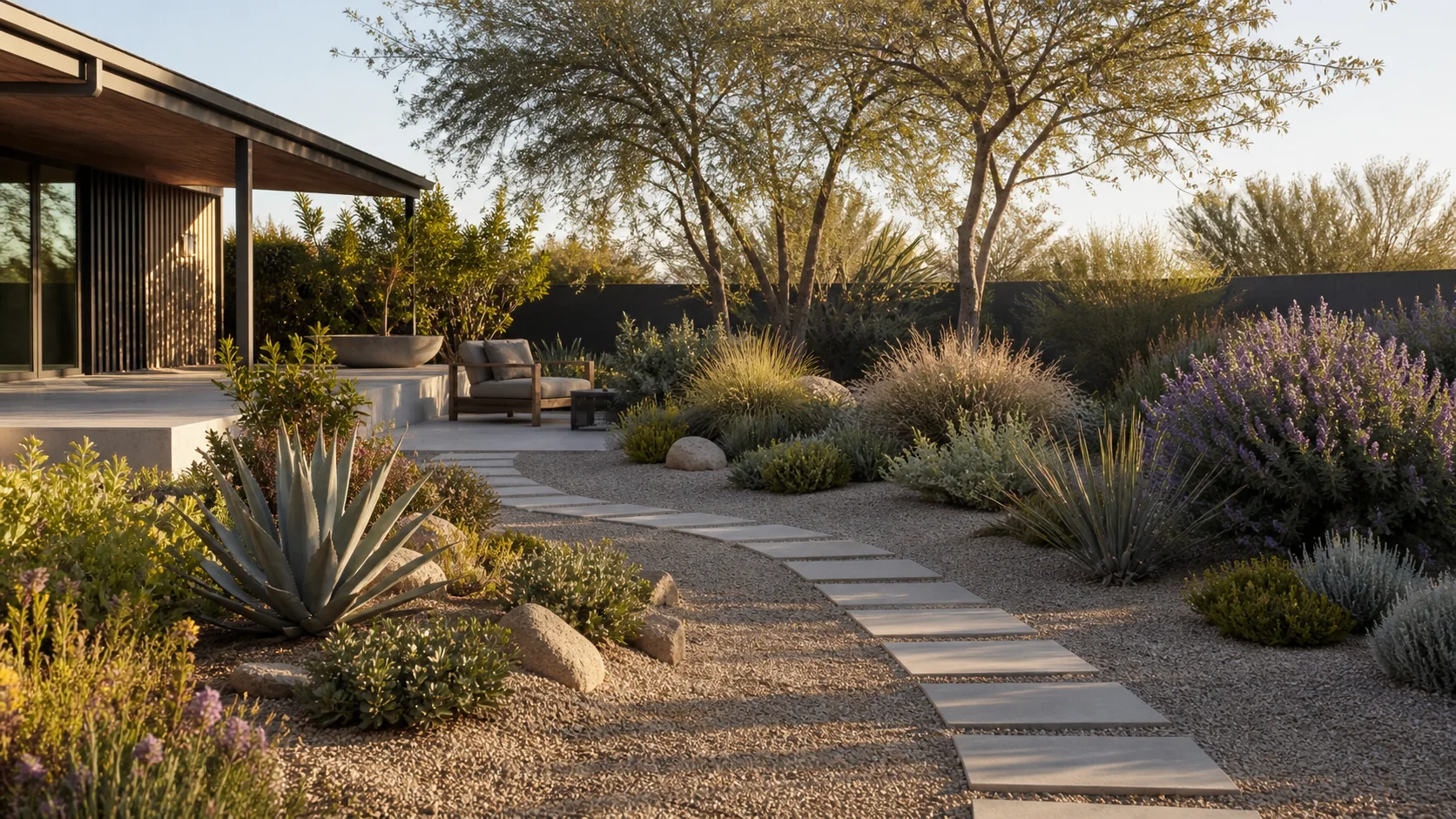
Add Pavers Or Stepping Stones
Pavers and stepping stones give shoes a cleaner, firmer contact point before the door. They also make the path feel intentional instead of like DG was poured until it hit the house.
Use them where people naturally step. Decorative stepping stones that avoid the actual walking line are just yard jewelry.
For hardscape tradeoffs, see Concrete Pavers vs. Poured Concrete for Backyard Projects.
Use A Hardscape Threshold
A small concrete, paver, brick, or stone landing outside a door can do a lot. It gives people a place to pause, wipe shoes, set down bags, or move from outdoor surface to indoor floor.
If you are choosing a hardscape finish for a patio or threshold, Outdoor Concrete Finish Options can help you think through texture, traction, and appearance.
Create A Gravel-Trap Zone
A slightly coarser transition material can catch some fines before they reach the door. This needs to be designed carefully so it does not become another loose mess.
Think of it as a buffer, not a miracle filter.
Use Planting Buffers
Planting can separate DG from the threshold and make the yard look softer at the same time. A planting strip, low-water bed, or defined edge can keep the DG path from running directly into the door.
Choose plants suited to the region and the amount of reflected heat. Do not use plants as tiny decorative guilt tokens in a hostile strip of hot rock.
Make The Doormat And Shoe Zone Real
A good doormat helps, but it cannot compensate for a bad path. Use a mat where people actually step, keep it clean, and consider a shoe zone for the door that gets the most outdoor traffic.
If pets are the main issue, think about paws, water bowls, dog-door location, and whether DG belongs on that route at all.
Avoid Loose DG Against Main Doors
This is the big one. If the door is used constantly, avoid loose DG right against it. Use a firmer transition surface. Your future floor does not need the drama.
Maintenance That Keeps DG From Becoming Dusty Chaos
Even a good DG installation needs maintenance.
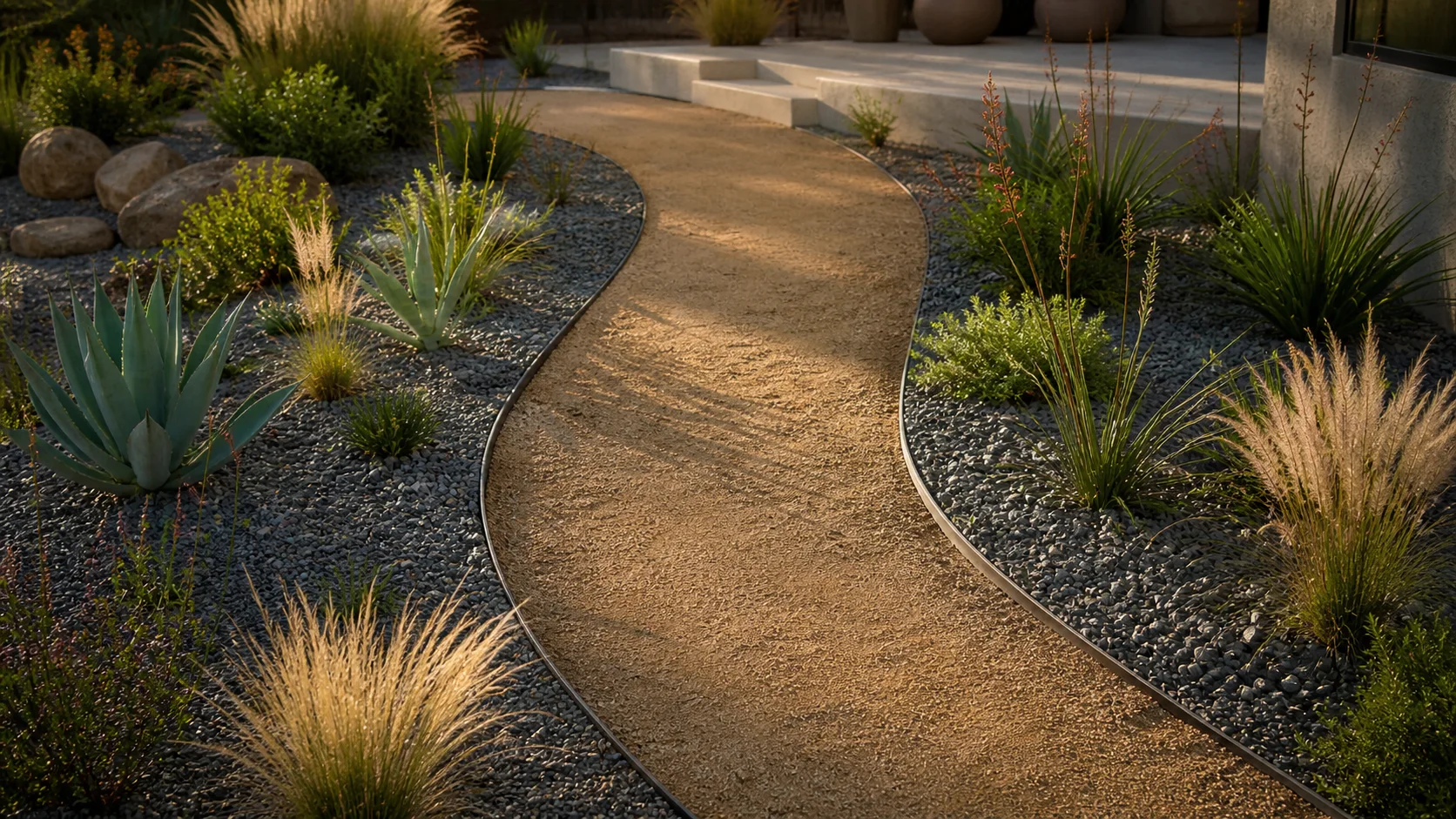
Re-Compact When The Surface Loosens
Traffic, rain, pets, and furniture can loosen the surface over time. Re-compaction may be needed in worn areas, especially near entries and turns.
Top Up Thin Spots
Thin spots expose base material, soil, or uneven texture. Add compatible DG where needed and compact it properly. Do not create a patchwork of mismatched colors and textures unless the goal is "yard with visible repair history."
Rinse Lightly When Appropriate
Light rinsing can settle dust in some conditions, but aggressive water can move fines and create channels. Be gentle and consider where the water goes.
Do Not Blast Away The Fines
Leaf blowers can be useful, but high-force blowing can remove the fine particles that help DG bind. That can leave a looser, grittier surface that tracks more.
Use lower force where possible, remove debris before it decomposes into soil, and avoid turning maintenance into erosion with a battery pack.
Inspect Seasonally
After storms, heavy use, or long dry periods, look for:
- Loose surface material.
- Ruts.
- Low spots.
- Edge failure.
- Runoff channels.
- Fines collecting near doors.
- Material migrating into patios or thresholds.
Small fixes are easier than pretending not to see the path slowly becoming indoor seasoning.
Common Mistakes
Avoid these:
- Pouring loose DG directly against a main door.
- Skipping edging.
- Ignoring drainage.
- Using DG on a steep route without local guidance.
- Treating stabilized DG as maintenance-free.
- Using tiny stepping stones that people do not actually step on.
- Letting pets run through loose DG and then straight inside.
- Blasting the surface with a leaf blower until the fines leave town.
- Using DG under dining chairs that move constantly.
- Assuming dust means the material is bad, when the installation and transitions may be the problem.
When To Choose Another Material Instead
Sometimes the best way to stop DG tracking is not to use DG in that spot.
Choose another material when:
- The surface touches a heavily used door.
- The area gets wet feet from a pool.
- Pets run the same route all day.
- Furniture needs a very stable surface.
- Water flows through the area.
- You want minimal maintenance.
- You need a cleaner threshold for indoor-outdoor traffic.
Possible alternatives include pavers, poured concrete, stepping stones, gravel in the right size and location, mulch in planting beds, or a different hardscape surface. None is universally better. The better choice is the one that matches the use, drainage, maintenance tolerance, and design.
Practical Homeowner Checklist
Before using DG near the house, ask:
- Is this a main door, secondary path, or occasional garden route?
- Will wet feet, pets, kids, or trash bins use it?
- Is water moving across the surface?
- Is there a hard transition before the door?
- Does the DG have clean edging?
- Will the surface be compacted, not just spread?
- Is loose material likely to reach the threshold?
- Can the household maintain it without heroic effort?
- Would pavers, concrete, or stepping stones be cleaner here?
- Does the design still look intentional without running DG right to the door?
Frequently Asked Questions
Does decomposed granite always track dust?
No. DG is more likely to track when it is loose, shallow, poorly compacted, poorly edged, or placed directly against a high-use door. A compacted surface with good transitions can reduce tracking, but it will not behave like indoor flooring.
Is stabilized decomposed granite better near doors?
It can be better in some situations, but it depends on the system, installation, drainage, traffic, and maintenance. Follow product and installer guidance, and do not assume stabilized means dust-free or permanent.
Can I put decomposed granite right up to a sliding glass door?
You can, but it is often asking for grit inside. A hardscape landing, pavers, stepping stones, or another transition usually makes more sense at frequently used sliders.
Does watering decomposed granite stop dust?
Light moisture can help settle fines in some conditions, but water is not a real fix for poor installation, runoff, weak compaction, or loose DG at a doorway. Too much water can move fines and create erosion.
What is the best transition between DG and a house?
For most busy doors, a firm transition is better than loose DG. Pavers, a small concrete or stone landing, stepping stones, or another stable hardscape surface can help keep fines away from the threshold.
Is decomposed granite a good choice for pets?
It depends on the route and the pet. DG can work for some paths, but loose fines can stick to paws and track indoors. If a dog door or high-use pet route is involved, use a firmer transition and expect maintenance.
The Bottom Line
Decomposed granite can be a smart, good-looking surface when it is contained, compacted, drained, and used in the right place.
If you want less dust inside, do not let loose DG be the last thing shoes or paws touch before crossing the threshold. Give the house a buffer, give the DG an edge, and give the installation enough structure to behave like a surface instead of a souvenir.