
Decomposed granite sounds like something a geology professor would say while pointing at a rock with emotional significance.
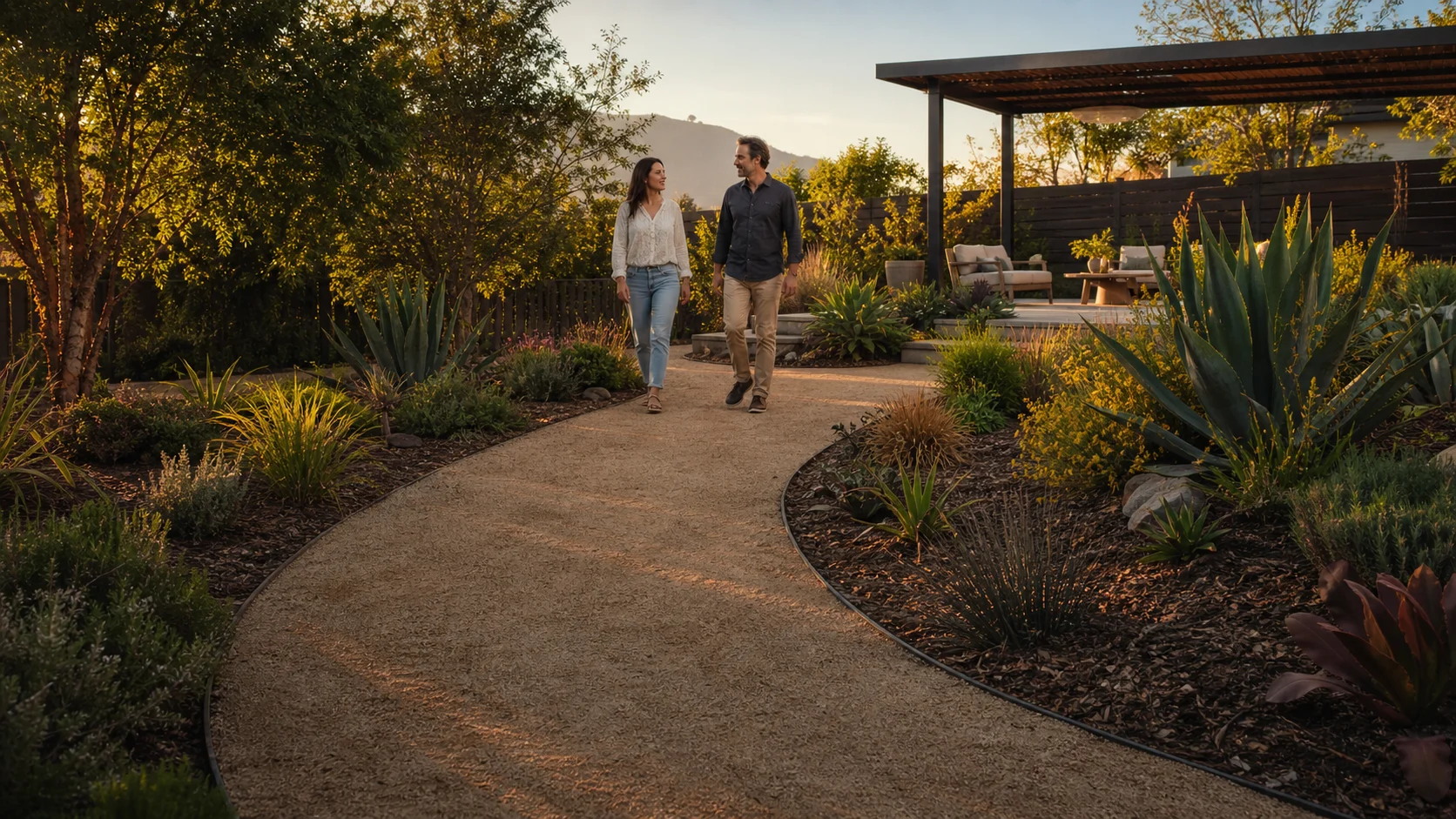
In a yard, though, it is much more ordinary: a fine, gritty, granite-based landscape material used for paths, informal patios, seating areas, side yards, and low-water landscapes. It can look warm, natural, and designed. It can also migrate, get dusty, grow weeds, rut under furniture, or make a yard look like it was paved with beige indecision.
The material is not magic. It needs the right use, edge, base, drainage, compaction, and design context.
The Direct Answer
Decomposed granite is weathered granite broken down into small particles. Landscape DG usually contains a mix of fines and tiny stone pieces, which lets it compact more tightly than many loose gravels.
It is often used for paths, informal patios, seating areas, side yards, and low-water landscapes. It can look great when it is edged, compacted, and designed as part of a larger yard. Used casually, it can become dusty, loose, weedy, uneven, or messy.
If your bigger goal is to make a gravel-heavy yard look more intentional, read How to Make a Gravel Yard Look Designed, Not Deserted. If you are still sorting out the waterwise design philosophy behind it, start with What Is Xeriscaping?.
What Decomposed Granite Actually Is
Decomposed granite starts as granite that has weathered into smaller particles. In landscape use, it usually behaves somewhere between sand, fine gravel, and a compactable path material.
That particle mix is why homeowners like it. DG can feel more natural than poured concrete, calmer than chunky gravel, and softer-looking than a full hardscape installation. It can also blend nicely with desert-adapted planting, casual paths, and low-water yards.
But DG is still a loose or semi-loose landscape material unless it is properly compacted and, in some cases, stabilized. It is not the same thing as a concrete patio. It is not automatically weed-proof. It is not automatically mud-proof. It is not automatically stable just because the photos on the internet look peaceful.
Where Decomposed Granite Works Well
DG works best when the use matches the material.
Paths
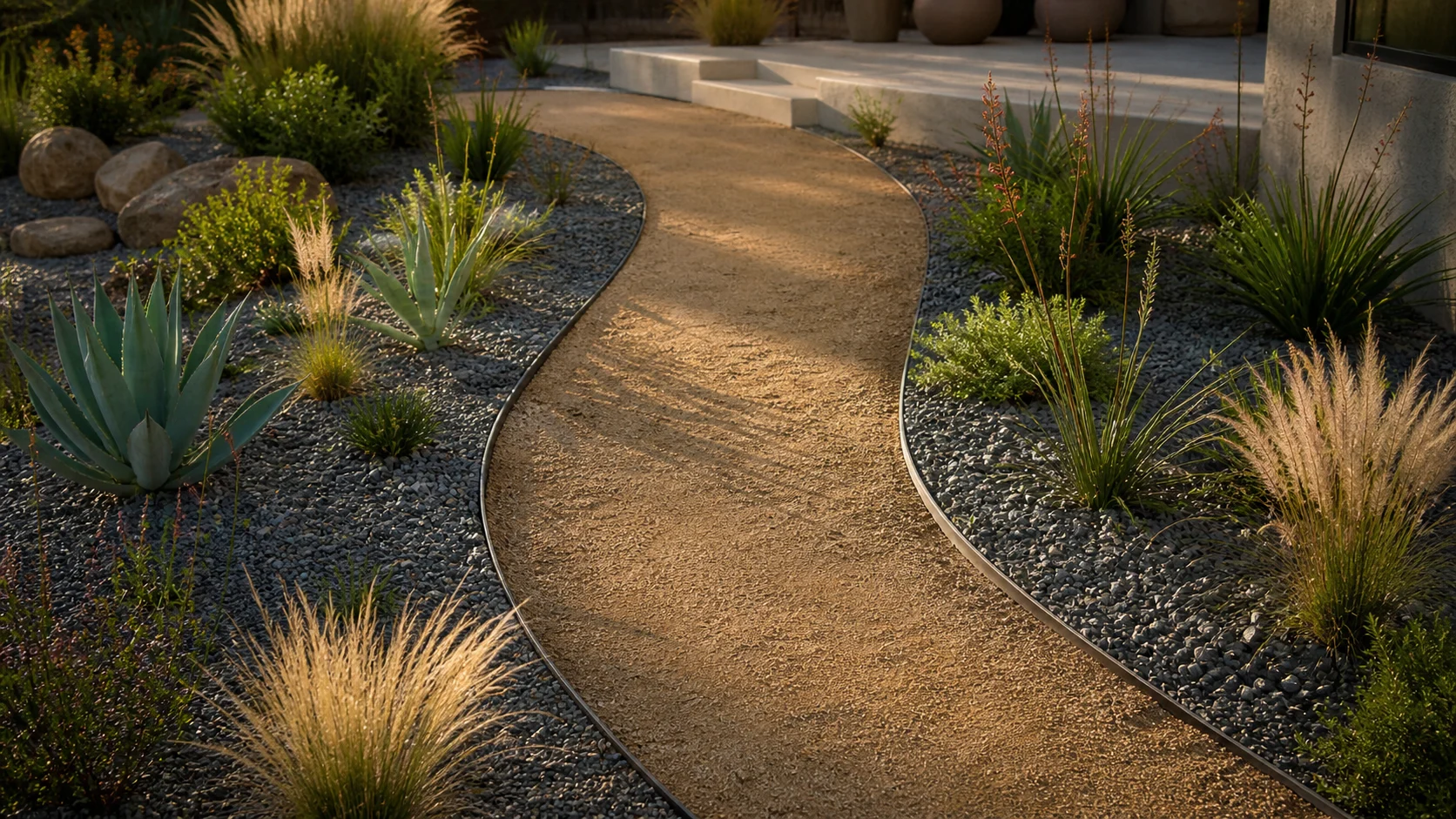
Decomposed granite can work well for garden paths, side-yard paths, and informal routes through waterwise planting areas. It feels more relaxed than poured hardscape and can visually soften transitions between plants, gravel, pavers, and patios.
The path still needs a plan. Edging, base prep, compaction, slope, drainage, and maintenance matter. A DG path without edges can wander. A path in the wrong drainage pattern can rut or wash out.
Informal Patios
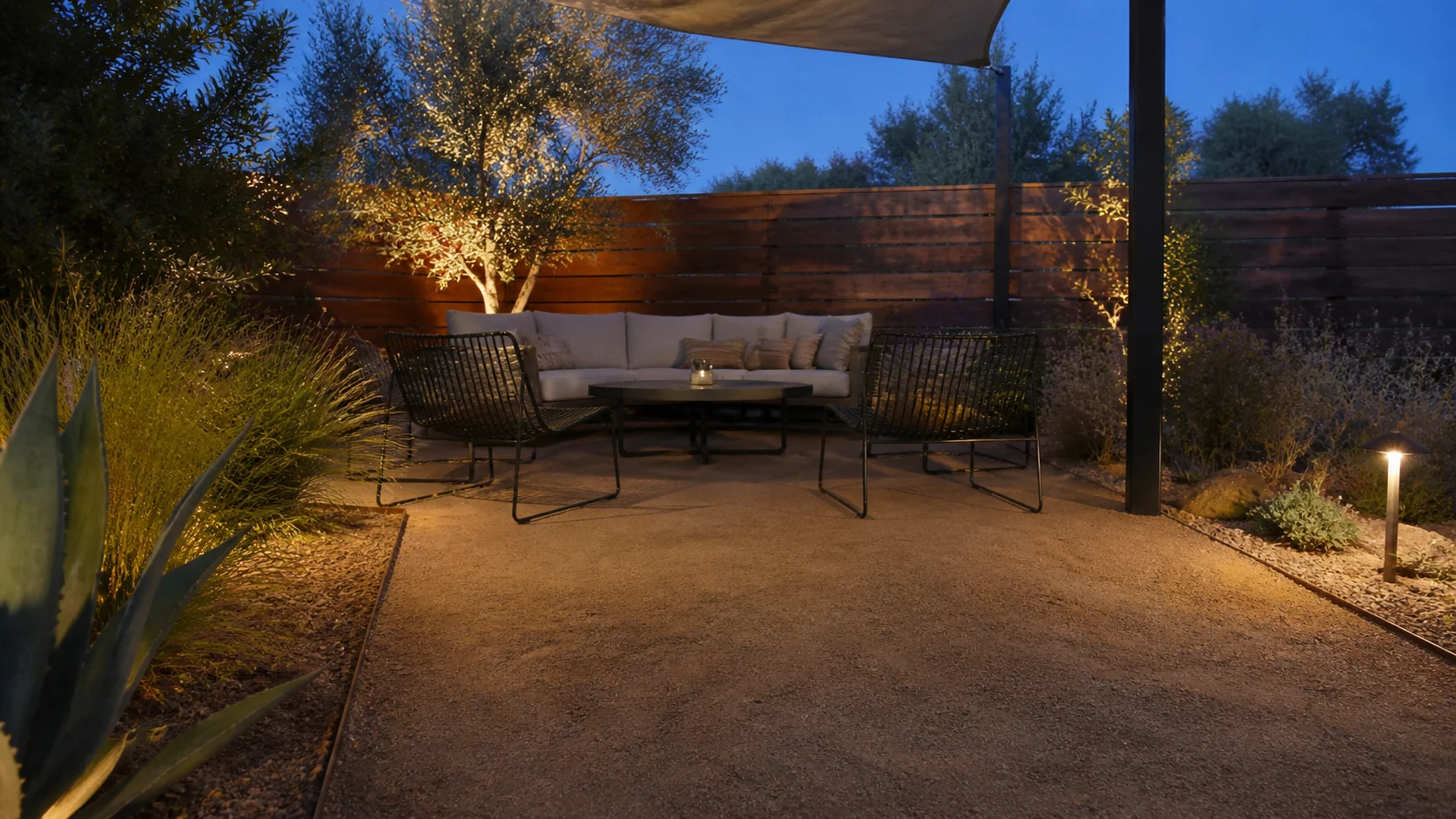
DG can work for casual patios and small sitting areas when the surface is compacted well and the furniture is compatible with the material.
This is where expectations matter. A DG patio is usually more casual than a slab, paver patio, or deck. Chair legs, table feet, dragging furniture, and heavy traffic can disturb the surface. If you want a dining area with tiny chair legs and zero wobble, DG may test your patience.
For more permanent hardscape comparisons, see Concrete Pavers vs. Poured Concrete for Backyard Projects.
Side Yards
Side yards are often narrow, awkward, and under-loved. DG can be useful there because it can create a cleaner walking surface than bare soil while keeping the look softer than a full concrete run.
It still needs attention to drainage and access. If water moves through the side yard during storms, DG should not be used as a decorative bandage over a grading problem.
Seating Zones
DG can help define a small seating zone in a low-water yard, especially when paired with shade, planting, and a clear edge. It works best when the seating area feels intentional rather than dropped into the middle of an endless beige field.
Use furniture that sits well on the surface, and expect some surface maintenance over time.
Low-Water Planting Areas
DG can fit desert-adapted and waterwise planting areas, especially where the design uses mineral texture intentionally. It can help create clean negative space around plant groups, paths, and hardscape transitions.
The caution is heat. Rock and mineral mulches can radiate heat in sunny areas. Around plants that do not want extra reflected heat, that can make conditions harsher. Match the material to the climate and plant palette, not just the mood board.
Transitions Between Hardscape And Planting
DG can be a useful transition material between pavers, concrete, gravel, and planting beds. It can make the yard feel less chopped into separate surfaces.
The transition still needs clean edges. Without them, DG and adjacent materials can mix into one sad landscape trail mix.
Where Decomposed Granite Can Disappoint
DG fails most often when homeowners ask it to behave like something it is not.
Steep Slopes
Loose or lightly compacted DG can migrate on slopes. Heavy rain, foot traffic, and gravity are not sentimental about your design plan.
If the area is sloped, get local guidance before assuming DG will stay put. Terracing, edging, drainage, stabilizers, or a different material may be needed.
Heavy Drainage Areas
DG is not a stormwater solution by itself. If water concentrates in one area, flows toward the house, crosses a side yard, or erodes a path, deal with drainage first.
Compacted surfaces can also change how water moves. Some DG installations may shed more water than homeowners expect, especially if compacted tightly or installed over a base that does not drain well.
High-Traffic Areas Without Proper Base Or Edging
DG can work under foot traffic, but it needs support. A high-use path without edge restraint, base preparation, and compaction can rut, spread, or develop low spots.
If the path will carry frequent traffic, carts, trash bins, pets, or furniture movement, be more serious about the installation.
Areas Where Loose Material Tracks Indoors
DG can track onto shoes, paws, patios, and floors. This is especially true near doorways, pool areas, or places where the material stays loose.
Use transition zones, mats, stepping stones, or another surface near entries if tracking would drive you up the wall.
Under Furniture If It Is Not Compacted Or Stabilized
Furniture can dig into loose DG. Chairs can wobble. Table legs can settle. Dragging furniture can scar the surface.
For seating areas, think about furniture style, foot size, compaction, and whether a more stable hardscape surface would work better.
Around Plants That Dislike Reflected Heat
DG is a mineral material. In full sun, it can add reflected heat around plants. That can be fine for some dry-climate plantings and rough for others.
Use regionally appropriate plants and local guidance. A plant that looks heroic in a desert garden may not enjoy being surrounded by hot rock in a different climate.
Decomposed Granite Vs. Gravel
Decomposed granite and gravel are related in the broad sense that both are mineral landscape materials, but they do not behave the same way.
DG usually has smaller particles and fines. That helps it compact into a firmer surface than many loose gravels. Gravel is often chunkier, looser, and more visually varied depending on the stone type and size.
In practical terms:
- DG can feel smoother underfoot when compacted.
- Gravel can feel looser and more textured.
- DG may track as fine particles.
- Gravel may roll underfoot depending on size and shape.
- DG often suits informal paths and seating areas.
- Gravel often works well as decorative mulch, drainage rock, or texture around planting.
Neither one is automatically better. The right choice depends on use, slope, drainage, maintenance tolerance, climate, plant palette, and the look you want.
Stabilized Vs. Unstabilized Decomposed Granite
Unstabilized DG is the simpler version: compacted decomposed granite without a binding additive. It can look natural and informal, but it may loosen, migrate, dust, or need refreshing depending on use and weather.
Stabilized DG uses a stabilizing approach to help the surface hold together better. That can make it more suitable for paths or seating areas where homeowners want a firmer feel.
Keep this general. Stabilized systems vary, and the right approach depends on the site, climate, drainage, base, installer, and manufacturer directions. This is not the place to freestyle chemistry in the backyard.
If you are considering stabilized DG, ask:
- Is the area sloped or flat?
- Does water flow across it?
- How much traffic will it get?
- Will furniture sit on it?
- How will edges hold the material?
- What maintenance does the system require?
- What do the product and installer directions actually say?
No specific stabilizer is recommended here. Product choice belongs in a separate, approved workflow with current labels, instructions, and evidence.
Design Tips So It Does Not Look Cheap
DG can look refined when it is part of a design. It looks cheap when it is used as a substitute for one.
Use Clean Edging
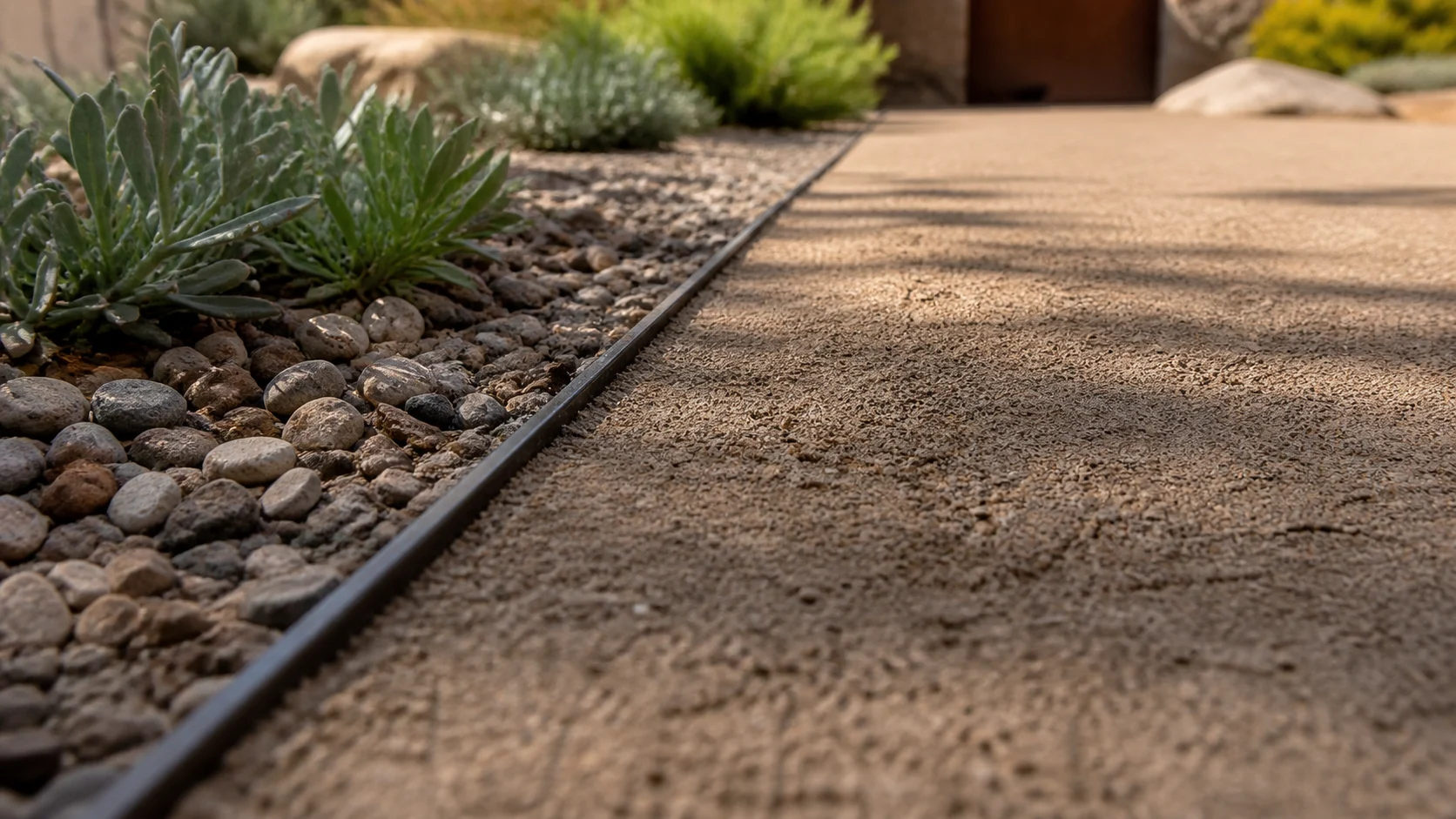
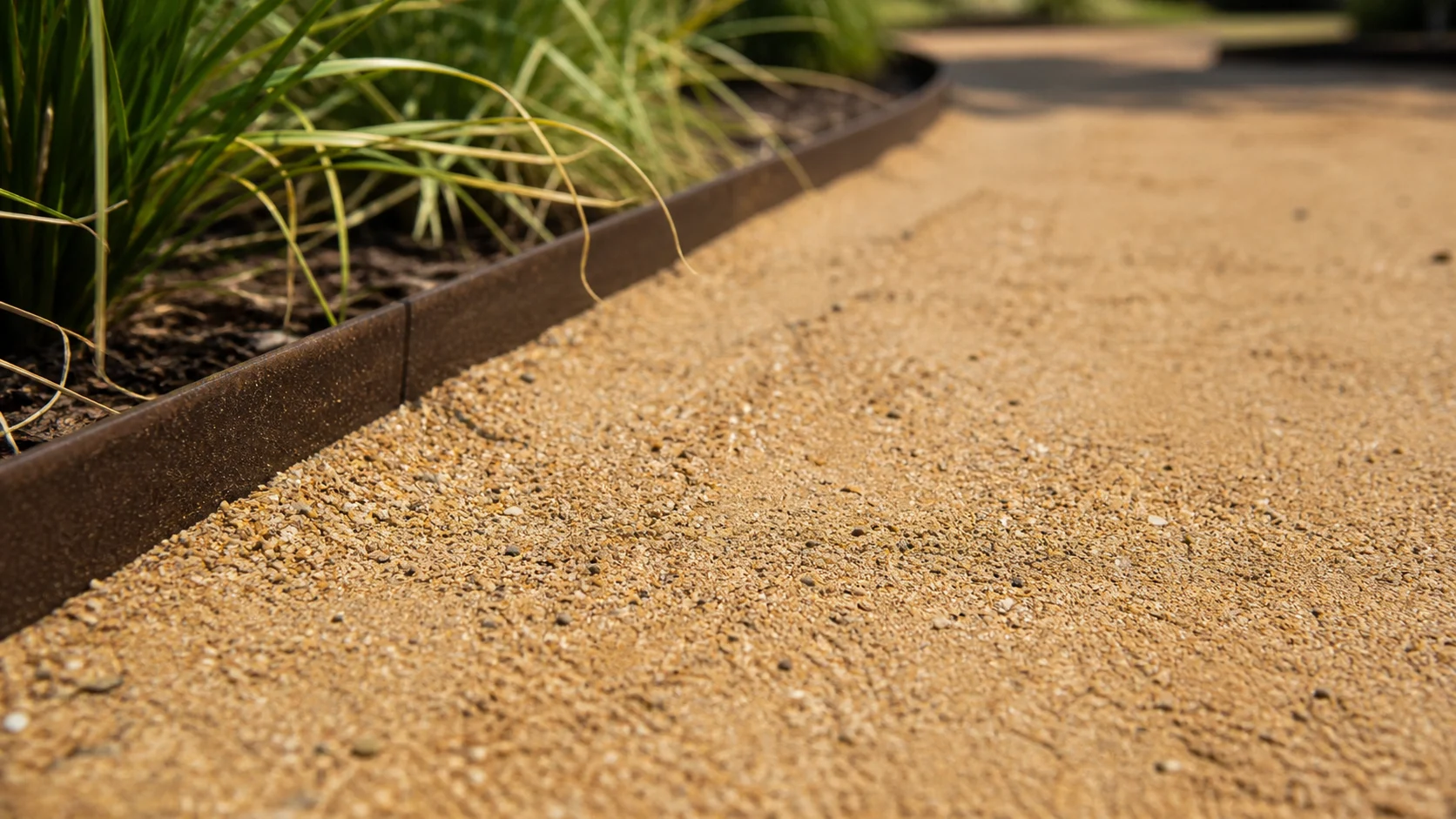
Edges make DG look intentional and help keep it from spreading into planting beds, patios, and adjacent gravel.
Define Zones
Use DG for a path, seating area, side yard, or transition. Avoid turning the whole yard into one flat material unless the planting, shade, and hardscape are strong enough to carry it.
Repeat Plant Groups
Plants should not look sprinkled. Use repeated plant groups to create rhythm and reduce the lonely-plant problem.
Add Shade
DG-heavy spaces can feel exposed. Trees, shrubs, pergolas, umbrellas, and taller planting can make the space more comfortable and less harsh.
Use Texture Contrast
Pair DG with planting, concrete, pavers, organic mulch, boulders, or wood where appropriate. Keep the palette restrained so the yard does not become a materials showroom.
Avoid One Endless Beige Field
DG has a talent for becoming visually flat when it covers too much area. Break it up with paths, planting islands, seating zones, edges, and vertical elements.
Maintenance Realities
Decomposed granite is not maintenance-free. Low-maintenance and no-maintenance are different ideas, and only one of them lives in the real world.
Expect some combination of:
- Weeds in seams, thin spots, or organic debris.
- Raking or smoothing.
- Top-ups where material thins or migrates.
- Edge cleanup.
- Dust or tracking near entries.
- Erosion checks after storms.
- Recompaction or repair in high-use areas.
Good installation can reduce problems, but it cannot remove weather, traffic, gravity, plant debris, or the fact that yards are outdoors.
Practical Homeowner Checklist
Before using decomposed granite, ask:
- What job is this area supposed to do?
- Is it a path, patio, side yard, seating zone, or planting transition?
- Is the area flat, sloped, or crossed by runoff?
- Will furniture sit on it?
- Will pets, kids, trash bins, or carts use it?
- Does the material need edging?
- Will loose fines track indoors?
- Are nearby plants suited to reflected heat?
- Does the design include shade and planting, or just more beige?
- Would concrete, pavers, gravel, mulch, or stepping stones work better?
- Are you comfortable with raking, top-ups, weed control, and periodic repairs?
For bigger layout decisions, use How to Plan a Low-Water Backyard Without Making It Look Barren. For gravel-heavy design fixes, use How to Make a Gravel Yard Look Designed, Not Deserted.
Frequently Asked Questions
Is decomposed granite the same as gravel?
No. Decomposed granite is usually finer and contains small particles that can compact into a firmer surface. Gravel is often chunkier and looser, depending on size, shape, and stone type.
Does decomposed granite get muddy?
It can get messy if drainage is poor, fines collect, or water sits on the surface. A well-planned installation considers slope, base, drainage, compaction, and where water goes during storms.
Does decomposed granite stop weeds?
No. DG can reduce exposed soil in some areas, but weeds can still grow in seams, dust, debris, thin spots, or adjacent planting areas. Expect some maintenance.
Is decomposed granite good for patios?
It can work for informal patios and seating areas, especially when compacted, edged, and matched with the right furniture. For dining areas, heavy furniture, or a very stable surface, pavers or concrete may be more practical.
Does decomposed granite need edging?
Usually, yes. Edging helps define the area, keep material from spreading, and make the installation look intentional. Without edging, DG can migrate into planting beds, paths, and neighboring surfaces.
What is stabilized decomposed granite?
Stabilized decomposed granite uses a stabilizing method or additive to help the surface hold together better than loose DG. Systems vary, so follow product and installer guidance rather than assuming every stabilized surface behaves the same way.
The Bottom Line
Decomposed granite can be a beautiful, practical material for waterwise yards, paths, side yards, and casual seating areas.
It is not a universal fix. Use it where the site, drainage, traffic, furniture, plants, and maintenance expectations make sense. Edge it, compact it, design around it, and give it some shade and planting friends. Otherwise, it can go from warm and natural to dusty and disappointing very quickly.