
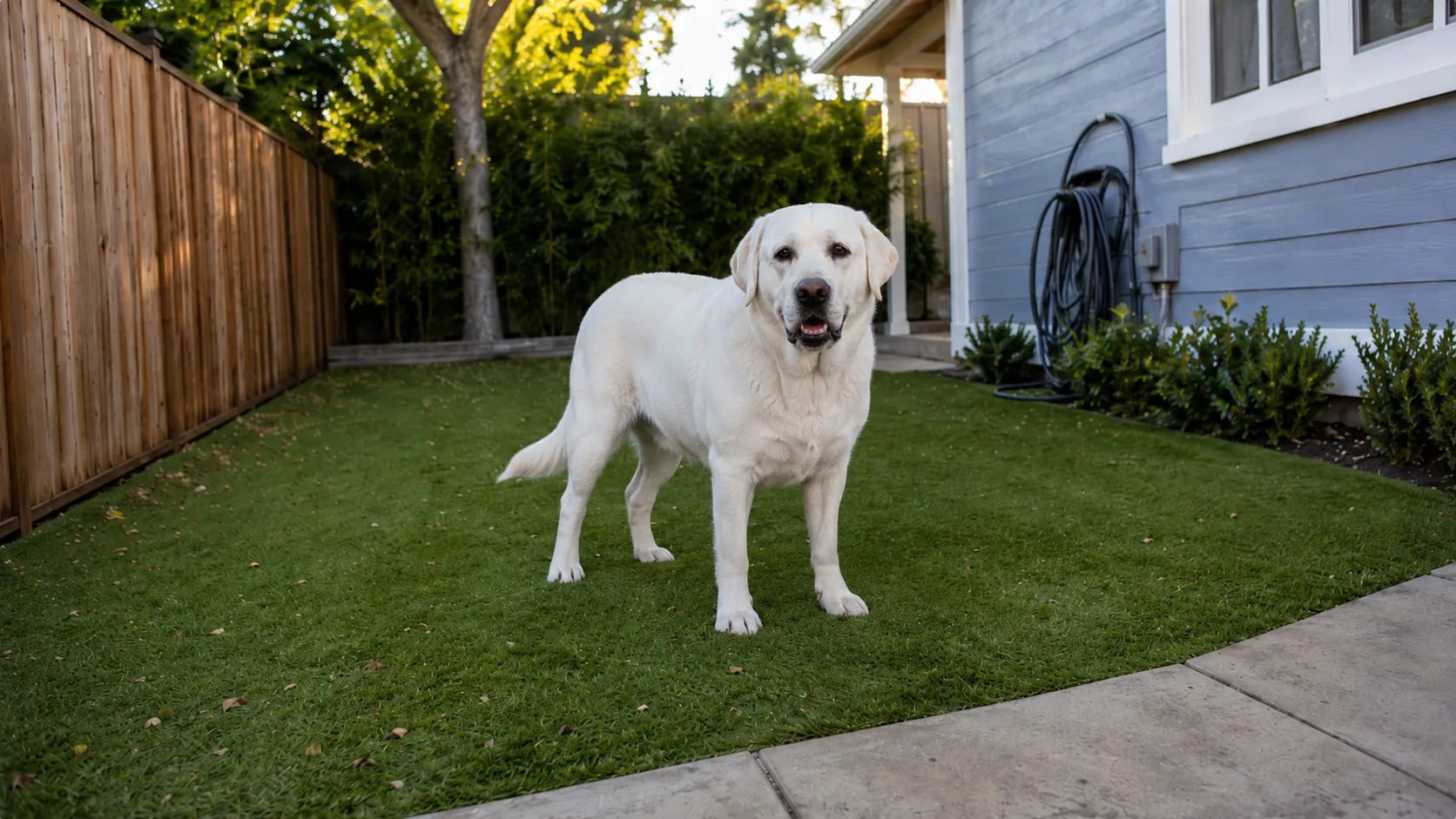
Artificial turf is supposed to make the yard easier. Then the dog picks a favorite spot, summer arrives, and suddenly the patio smells like the yard has a secret it refuses to process.
The good news: plenty of turf odor problems can be improved with steady cleaning, better rinsing, and more honest diagnosis. The less magical news: if urine has soaked into infill, backing, drainage layers, or the base below the turf, a scented spray and a hopeful thumbs-up will not fix the whole situation.
This guide keeps the advice product-neutral. Cleaner labels, turf manufacturer instructions, installer guidance, and pet re-entry directions still control what you should use on your actual turf system.
The Direct Answer
To reduce dog urine smell in artificial turf, start with diagnosis before products:
- Remove solids and debris.
- Rinse the favorite bathroom zones slowly so water moves through the turf and infill.
- Use only a cleaner that is labeled for pet urine or pet areas and compatible with synthetic turf.
- Follow the cleaner label for dilution, dwell time, rinsing, and pet re-entry.
- Brush the turf upright after cleaning.
- Recheck after heat and dog use.
If the smell returns quickly, the odor source may be in the infill, seams, drainage layer, or base below the turf. That is when the job shifts from surface cleaning to deeper diagnosis, and sometimes to professional help.
If the odor is part of a larger side-yard problem, Low-Water Side Yard Ideas That Don't Look Like a Service Alley can help with route, shade, and use planning. If dusty material is tracking through a pet route, How to Use Decomposed Granite Without Tracking Dust Into the House is the closest companion.
Why Artificial Turf Starts Smelling Like Dog Urine
Dog urine odor usually builds when urine residue stays somewhere in the turf system long enough to get unpleasant. That can mean:
- Turf fibers holding residue near the surface
- Infill trapping residue and organic buildup
- Turf backing slowing drainage
- A drainage layer that is clogged or poorly sloped
- A base below the turf that has absorbed repeated urine
- A favorite dog bathroom zone getting hit again and again
Fresh urine is mostly a dilution problem. Old buildup is a residue, drainage, and source-location problem. Treating those the same way is how people end up spraying perfume on a plumbing issue.
Quick Triage: Fresh Urine Vs Old Buildup
Start by figuring out what kind of odor problem you have.
Fresh urine usually smells strongest right after use, improves after a thorough rinse, and has not yet soaked deeply into the system. Old buildup tends to return after cleaning, gets worse in heat, and often concentrates in repeat-use areas, seams, corners, shaded strips, or low spots.
If the odor comes back within a day or two, assume the problem is deeper than the visible blades. That does not mean panic. It means stop cleaning only the top of the turf and start diagnosing the layers underneath.

What You Need Before Cleaning
Before using any cleaner, check the turf manufacturer or installer care guidance if you have it. Some turf systems have specific instructions for cleaners, rinsing, infill, brushing, and pressure washing.
Useful basics:
- A garden hose with gentle, steady flow
- Gloves
- A stiff but turf-safe brush or broom
- A bucket or pump sprayer for diluted cleaner, if label-approved
- A cleaner labeled for pet urine or pet areas and compatible with artificial turf
- Clean towels or rags for nearby hardscape edges
- Time for the cleaner to dwell according to the label
Pet-safe language matters here. Do not assume a product is safe because it has a dog on the label or smells like a spa day for lemons. Follow the product label, keep pets away while cleaning if instructed, rinse when required, and let the area dry before dogs use it again. If a label, safety data sheet, turf warranty, or installer instruction conflicts with general advice, use the more specific guidance.
Step-By-Step Cleaning Process

1. Remove Solids And Debris
Pick up pet waste, leaves, sticks, and anything else sitting on the turf. Odor control gets harder when organic debris is invited to the party.
2. Locate The Main Odor Zones
Smell around repeated bathroom spots, seams, edges, shaded areas, and low spots. If needed, rinse one section at a time and watch where water drains slowly or pools. Mark problem areas mentally before treating the whole yard.
3. Rinse Slowly And Deeply
Use a hose to rinse the affected area long enough for water to move through the turf and infill. The goal is dilution and movement, not blasting the lawn into a tiny green hurricane. Avoid aggressive pressure that displaces infill or damages the turf.
4. Apply A Compatible Pet-Area Cleaner
Use only a cleaner that is labeled for pet urine or pet areas and compatible with artificial turf, then follow the manufacturer label for dilution, dwell time, rinsing, and pet re-entry. Enzymatic cleaners are often marketed for organic odor problems, but Landscapade is not recommending a specific cleaner here. The label and turf compatibility matter more than the category name.
Do not mix cleaners. In particular, do not combine bleach with ammonia, vinegar, acids, or other cleaning products. Do not improvise chemistry in the yard. The turf did not ask to become a lab.
5. Let The Cleaner Dwell
Many cleaners need time in contact with the odor source. If the label says to let it sit, let it sit. If the label says to rinse, rinse. If the turf manufacturer says not to use a type of cleaner, do not use it.
6. Rinse Again If Required
After dwell time, rinse according to the label. For pet areas, the rinse step can help move loosened residue through the turf system and reduce cleaner residue before the dog returns.
7. Brush The Turf Upright
Once the area is clean and partly dry, brush the turf fibers upright with a turf-safe broom. This helps distribute infill and can reduce matted zones where residue collects.
8. Recheck After Heat And Use
Odor often reveals itself when the turf warms up. Recheck the area later the same day or after the next warm afternoon. If the smell returns quickly, move to infill and drainage diagnosis.
How To Treat Infill
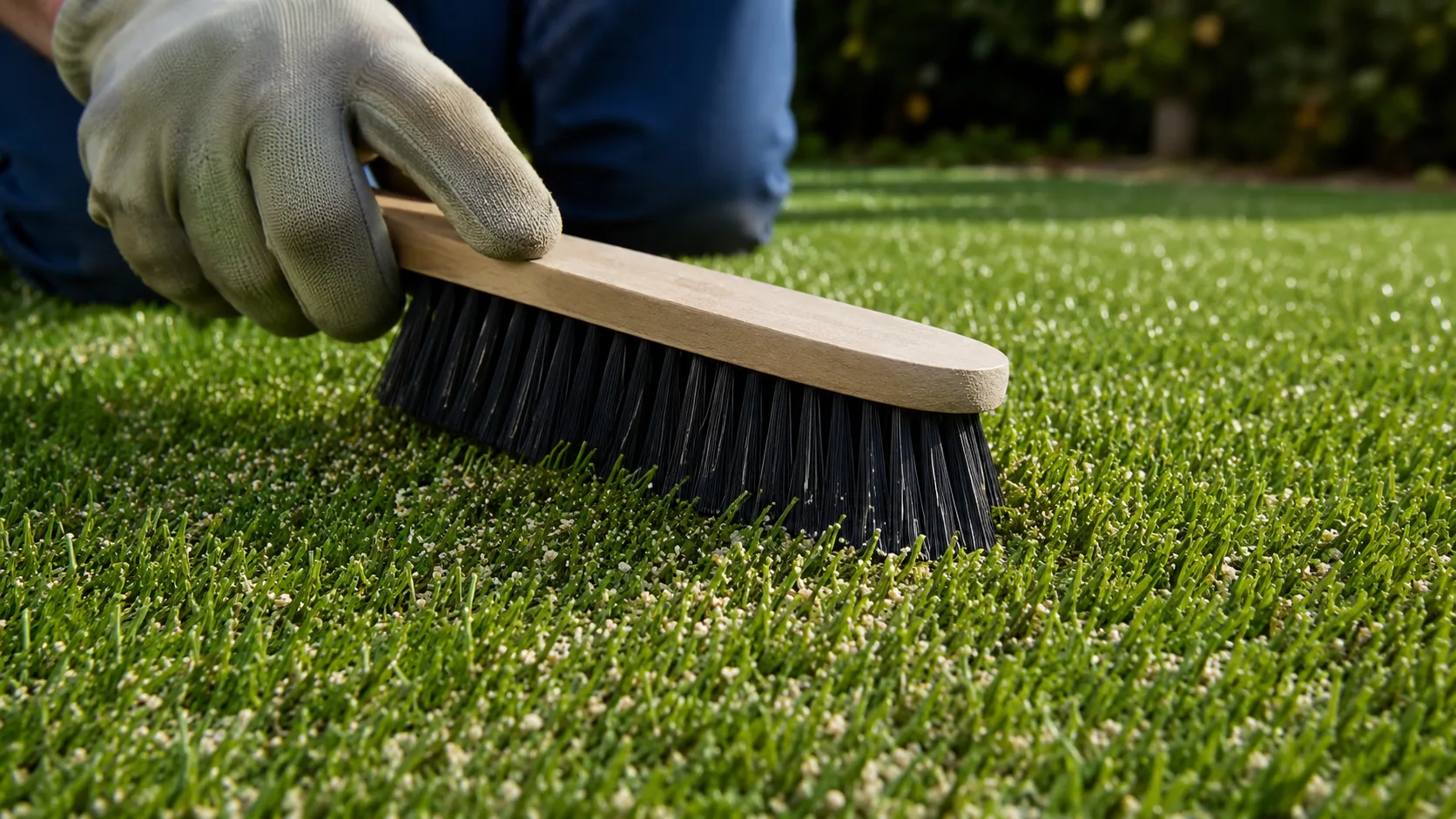
Infill can hold urine residue, especially in repeat bathroom spots. If a surface rinse helps only briefly, the infill may need deeper attention.
Start by brushing the area to loosen compacted infill. Rinse slowly so water reaches below the blades. Apply a compatible pet-area cleaner according to its label, giving it enough dwell time to reach the infill layer. After rinsing, brush again to redistribute material.
If infill is visibly dirty, clumped, compacted, or still smells after repeated cleaning, replacement may be needed in the affected area. That is not a personal failure. It is the turf version of changing a filter instead of yelling at the air conditioner.
Do not add new infill over contaminated infill without understanding the source of the odor. That can bury the problem and make future cleaning harder.
Drainage And Base Problems
If odor keeps returning, the issue may be below the infill.
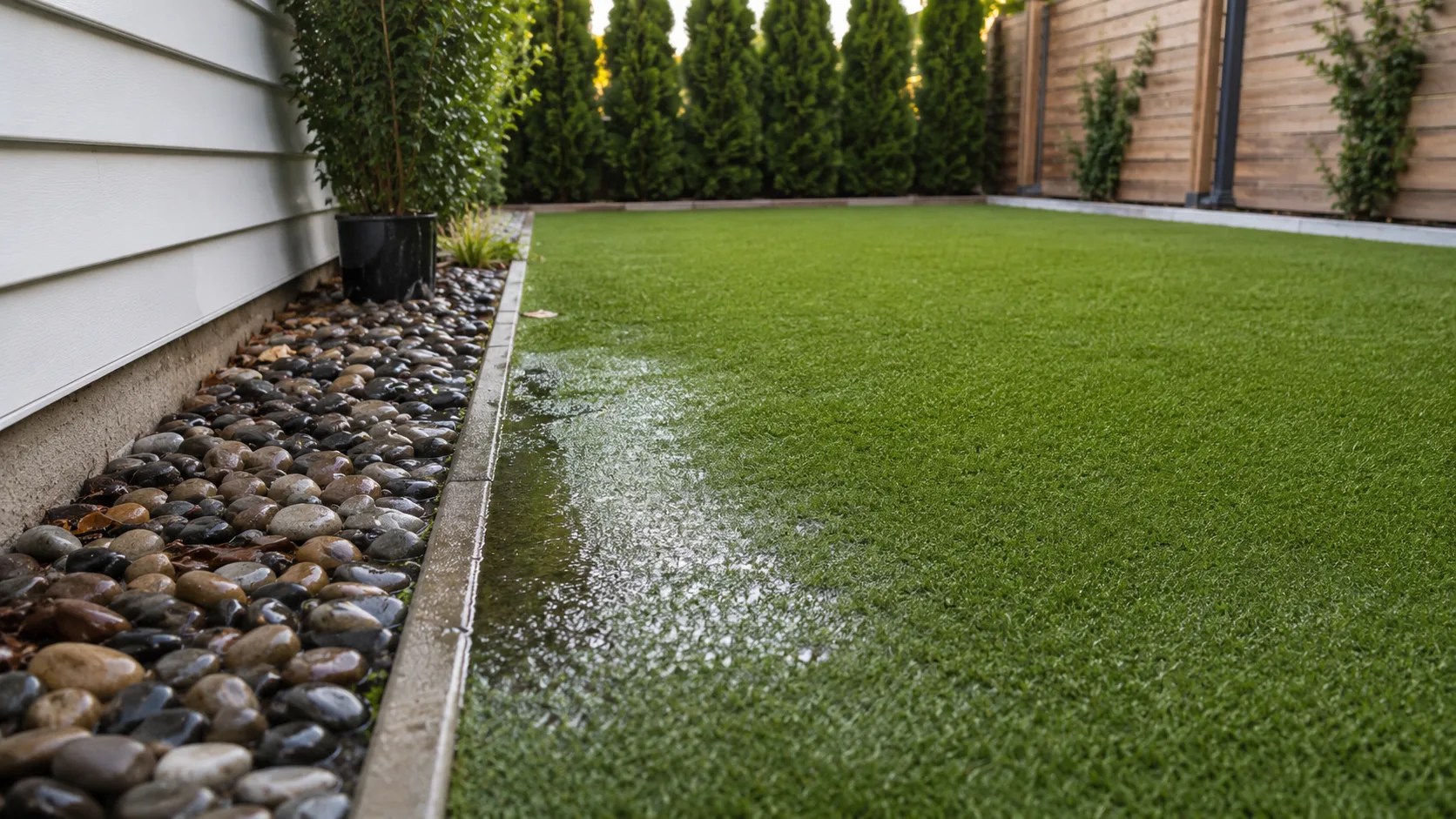
Watch for warning signs:
- Water pools or drains slowly after rinsing
- Odor is strongest near seams, edges, or low spots
- The smell returns soon after cleaning
- The same area smells worse in heat
- Turf feels uneven, soggy, compacted, or sunken
Artificial turf should allow liquid to move through the system. If the backing, drainage layer, or base does not drain well, urine can linger below the surface. In severe cases, cleaning the blades and infill will only provide temporary relief because the odor source is trapped underneath.
Base correction can involve lifting turf, removing contaminated infill, improving drainage, replacing base material, or reinstalling sections. That is usually beyond casual weekend cleaning.
What Not To Use
Avoid harsh or unverified cleaning methods unless the turf manufacturer and product label clearly support them.
Be careful with:
- Bleach, especially mixed with any other cleaner
- Ammonia-based cleaners
- Strong acids or solvents
- Undiluted disinfectants
- Deodorizers that only mask smell
- Pressure washing that displaces infill or damages seams
- Any cleaner that is not compatible with pets or synthetic turf
Harsh chemicals can damage turf fibers, degrade backing, affect infill, discolor nearby surfaces, or create pet safety risks. Also, ammonia-like smells can make some pet odor problems more confusing, because urine already has its own unpleasant aromatic agenda.
When To Call A Pro
DIY cleaning may not be enough when odor is severe, old, or repeatedly returning.
Consider a turf professional, installer, or specialty cleaner when:
- Odor returns within a day or two after careful cleaning
- Multiple dogs use the same area heavily
- Infill smells even after rinsing and cleaner treatment
- Drainage is slow or uneven
- The turf has seams, edges, or low spots collecting urine
- You suspect the base below the turf is contaminated
- The turf needs lifting, infill removal, or base correction
Professional cleaning may include deeper extraction, infill replacement, turf lifting, drainage evaluation, or base repair. The right fix depends on where the odor actually lives.
Prevention Routine
Once the smell is under control, prevention matters more than heroic rescue missions.
- Rinse favorite bathroom spots regularly, especially in hot weather.
- Pick up solids quickly.
- Brush high-use zones so turf does not mat down.
- Clean repeat-use spots before odor gets baked in.
- Watch for drainage changes after storms or heavy rinsing.
- Rotate dog bathroom areas if the yard layout allows it.
- Schedule deeper cleaning during hot seasons or heavy pet use.
For multi-dog homes, small turf runs, shaded side yards, or hot climates, prevention may need to be more frequent. Turf is low maintenance, not no maintenance. The distinction is where many smells are born.
Quick Homeowner Checklist
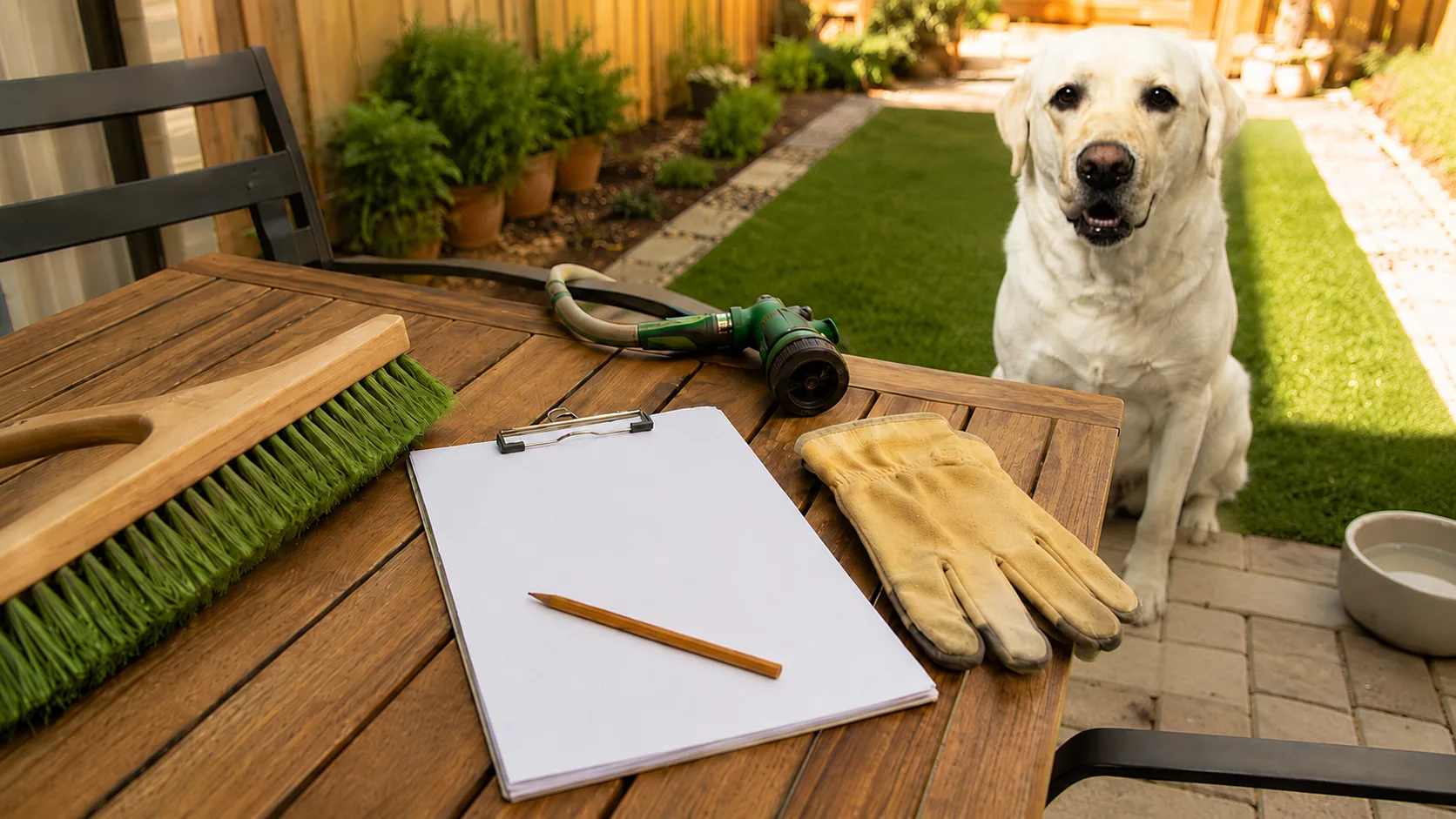
Before calling the job solved, check these:
- The odor area was rinsed slowly, not just misted.
- Cleaner directions were followed exactly.
- Pets stayed off the area until the label or installer guidance allowed re-entry.
- The turf was brushed back up after cleaning.
- Infill was checked for clumping, compaction, or lingering smell.
- Seams, edges, shaded strips, and low spots were checked separately.
- The odor stayed improved after a warm afternoon and another round of dog use.
Product And Affiliate Note
Product recommendations and affiliate links are deferred until verified. Future product recommendations should be added through structured product data, and affiliate status must be confirmed before any affiliate link or commission language appears.
Specific cleaners, deodorizing infills, turf rinses, or professional products should not be presented as recommendations until current labels, pet-safe instructions, turf compatibility, availability, and any affiliate status are verified.