
Side yards have a talent for becoming the least-loved strip of the property. They collect trash bins, hoses, forgotten pots, utility boxes, awkward gravel, dog routes, weeds, and the vague feeling that nobody meant for guests to see this part of the house.
In dry climates, the problem gets louder. A side yard can become hot, dusty, narrow, and joyless: a service alley with a gate at one end and regret underfoot.
It does not have to become a full patio. It probably should not. A good low-water side yard is usually simpler than that: a clean path, controlled materials, a few tough plants, sensible access, enough shade or evening light to feel civilized, and no fantasy that a six-foot-wide strip can do the emotional labor of an outdoor living room.
This guide is about making a side yard useful, attractive, and easier to maintain without overbuilding it. It is not a drainage engineering guide, electrical wiring guide, local-code guide, pet-health guide, plant prescription, or product shopping list.
The Direct Answer
A good low-water side yard starts with the job the space already needs to do.
If it is a passage, make the walking line clean and durable. If it stores bins, give the bins a real landing and enough room to move. If it carries dogs, hoses, tools, or garden traffic, choose surfaces that can handle repeated use. If it is visible from windows, soften it with planting, texture, shade, or a calmer material palette so the view is not just fence, wall, and loose rock.
The best side yards usually combine a stable path, contained gravel or decomposed granite, narrow waterwise planting, targeted irrigation, low edges, and one or two moments that make the space feel intentional.
The worst side yards try to do everything at once. They become path, storage, dog run, planting bed, drainage fix, utility corridor, sculpture garden, and secret patio, all in a space barely wide enough for a wheelbarrow with commitment issues.
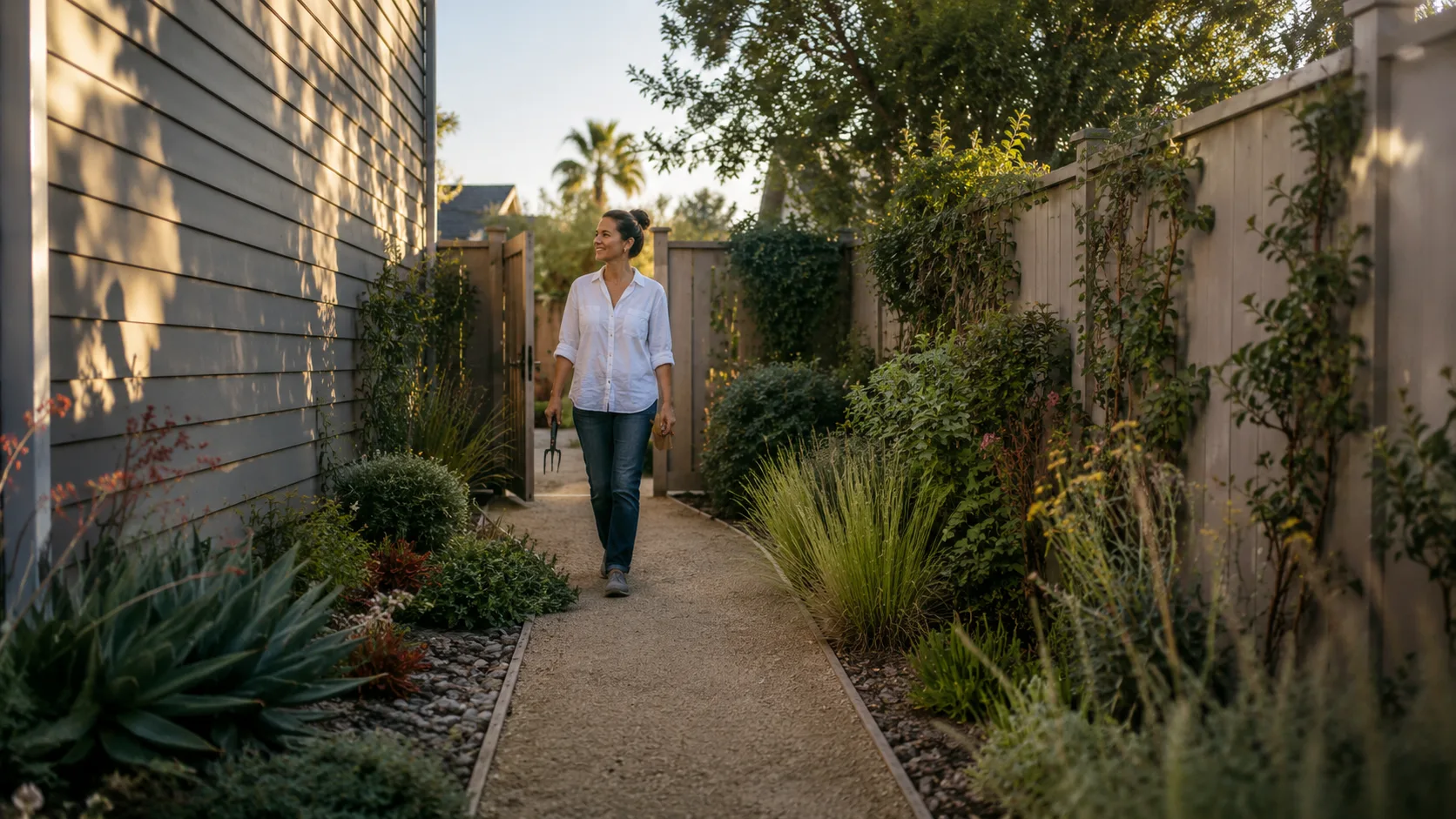
First, Name The Job
Before choosing gravel, plants, pavers, or lighting, decide what the side yard is for.
Common jobs include:
- Access between front and back yard.
- Trash and recycling bin movement.
- Hose, utility, or meter access.
- A dog route.
- Garden storage.
- A narrow planting strip.
- A quiet passage from gate to patio.
- A small destination, only if the space is wide enough.
- A view from a kitchen, office, bedroom, or hallway window.
One side yard can have more than one job. It cannot have every job.
If the route needs to carry bins every week, do not fill it with fragile plants and decorative stepping stones that force a slalom. If it is the dog's daily path, do not design it like a tiny botanical conservatory. If it is mostly a window view, the walking route may be less important than texture, planting, and a clean edge.
This is the first win: stop treating the side yard as leftover space. Leftover space gets leftover decisions.
Three Realistic Side-Yard Scenarios
The Bin Highway
This side yard connects the trash storage spot to the curb route. Every week, bins roll through loose gravel, catch on edging, scrape a gate, and leave little tracks of annoyance.
The fix is not a precious garden path. It is a durable circulation line: compacted decomposed granite, pavers, a small concrete landing where bins park, or another stable surface that handles wheels. Planting can still happen along the edge, but it needs to stay out of the travel lane.
For the hard-surface side of that decision, Small Concrete Utility Pad for Bins, Hoses, and Side Yards is a useful companion.
The Hot Wall Strip
This side yard sits between a stucco wall and a fence. It bakes in afternoon sun, reflects heat, and makes every plant tag look like it lied.
Here, the design has to respect heat and narrow soil volume. Use fewer, tougher plant groups. Keep gravel from becoming one giant heat pan. Look for shade opportunities where appropriate, and avoid forcing delicate plants into a reflected-heat corridor.
Shade in Low-Water Landscapes explains why waterwise should not mean exposed and uncomfortable.
The Window View Nobody Likes
Maybe nobody walks through the side yard often, but everyone sees it from inside the house. The view is fence, utility box, dirt, hose, and one lonely plant trying to negotiate.
This side yard can be designed more like a view corridor: repeated shrubs, a gravel or mulch surface, a clean path for access, a vertical plant or trellis where locally appropriate, and a material palette that looks calm from the window. It does not need to invite a dinner party. It just needs to stop looking like the house forgot that side existed.
Circulation Comes First
Side yards are narrow, so circulation is not a detail. It is the plot.
Walk the route with real-life movements in mind:
- Carry a bag of soil.
- Roll a bin.
- Drag a hose.
- Open the gate.
- Walk beside another person if that happens often.
- Move a dog through without stepping into plants.
- Reach meters, valves, cleanouts, hose bibs, and utility panels.
The path should be obvious. It does not have to be wide and formal, but it should not ask people to guess where their feet belong.
Good side-yard circulation usually means a continuous surface, stable stepping stones, compacted DG, pavers, or a clear gravel path with containment. Random stone pads floating through loose rock can look cute in photos and irritating by Thursday.
If decomposed granite is involved, read How to Use Decomposed Granite Without Tracking Dust Into the House. Side yards often connect to doors, gates, pets, and wheels, which is exactly where loose fines can become indoor grit.
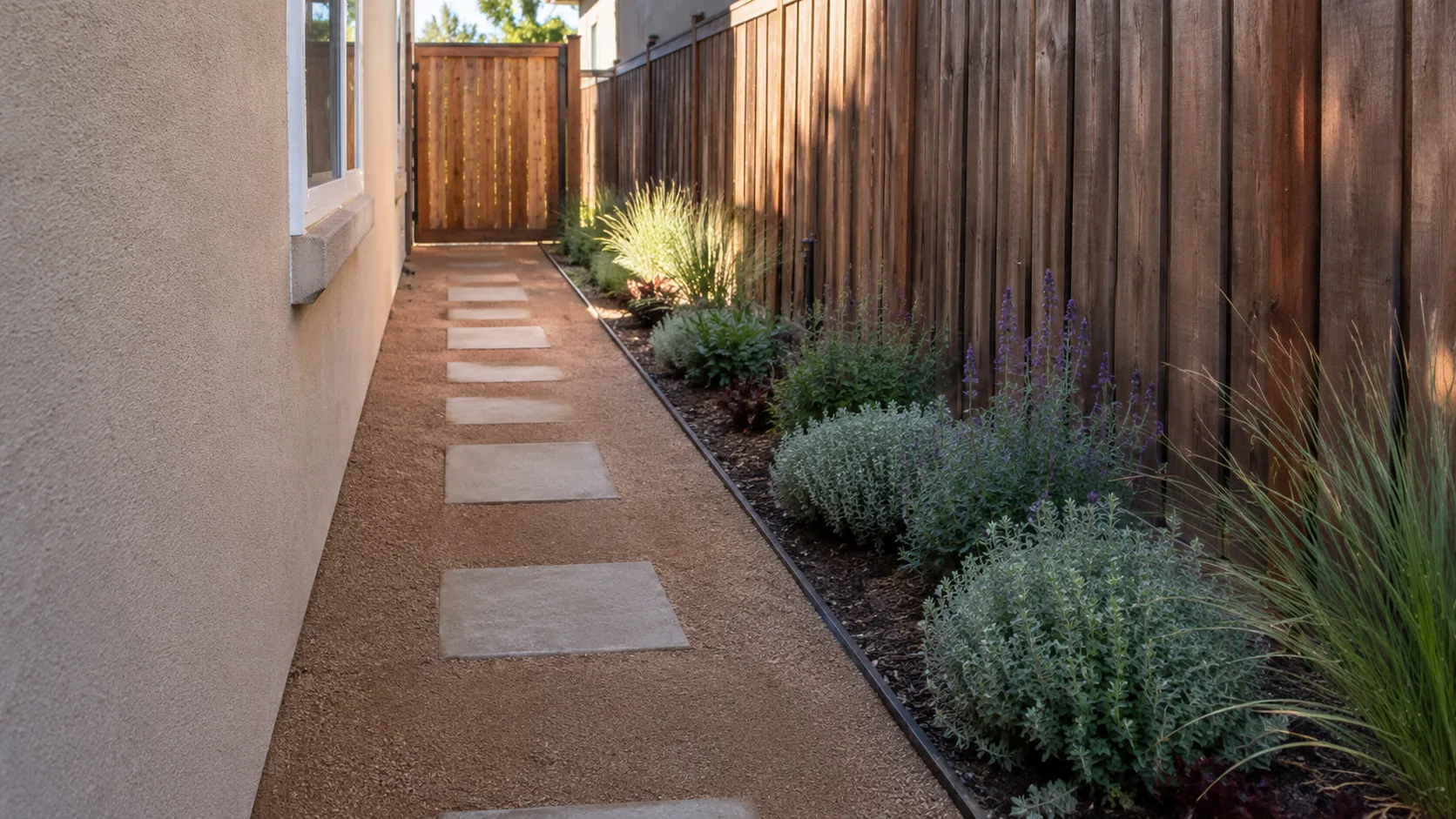
Materials That Work In Side Yards
The material choice should match traffic, drainage, heat, maintenance, doors, pets, and how visible the space is.
Decomposed Granite
DG can be a good side-yard surface when it is compacted, edged, and kept out of runoff paths. It feels warmer and more natural than plain concrete, and it can connect nicely to waterwise planting.
It can also track, soften, wash, and dust if it is loose or poorly contained. It is not magic tan flooring.
Gravel
Gravel can work well in low-traffic side yards, planting edges, and drainage-aware zones where local conditions support it. It looks clean when paired with edging and repeated plants.
But gravel that is too loose, too deep, too round, or too close to doors can become a rolling ankle joke. It also collects leaves and debris in narrow corridors.
For the broader material decision, see Mulch vs Gravel in Low-Water Landscapes.
Pavers Or Stepping Stones
Pavers and stepping stones can make a side yard feel more intentional and easier to walk. They work especially well where people move between a gate, patio, hose area, or storage zone.
Use them in the actual walking line. Decorative stones placed where nobody steps are just hardscape theater.
Concrete Pads And Landings
A small pad can make sense at a gate, bin area, hose bib, side door, or utility corner. Keep it modest and non-structural unless a qualified professional is involved.
Concrete is useful when the problem is repeated use in one spot. It is not the answer to every side-yard discomfort.
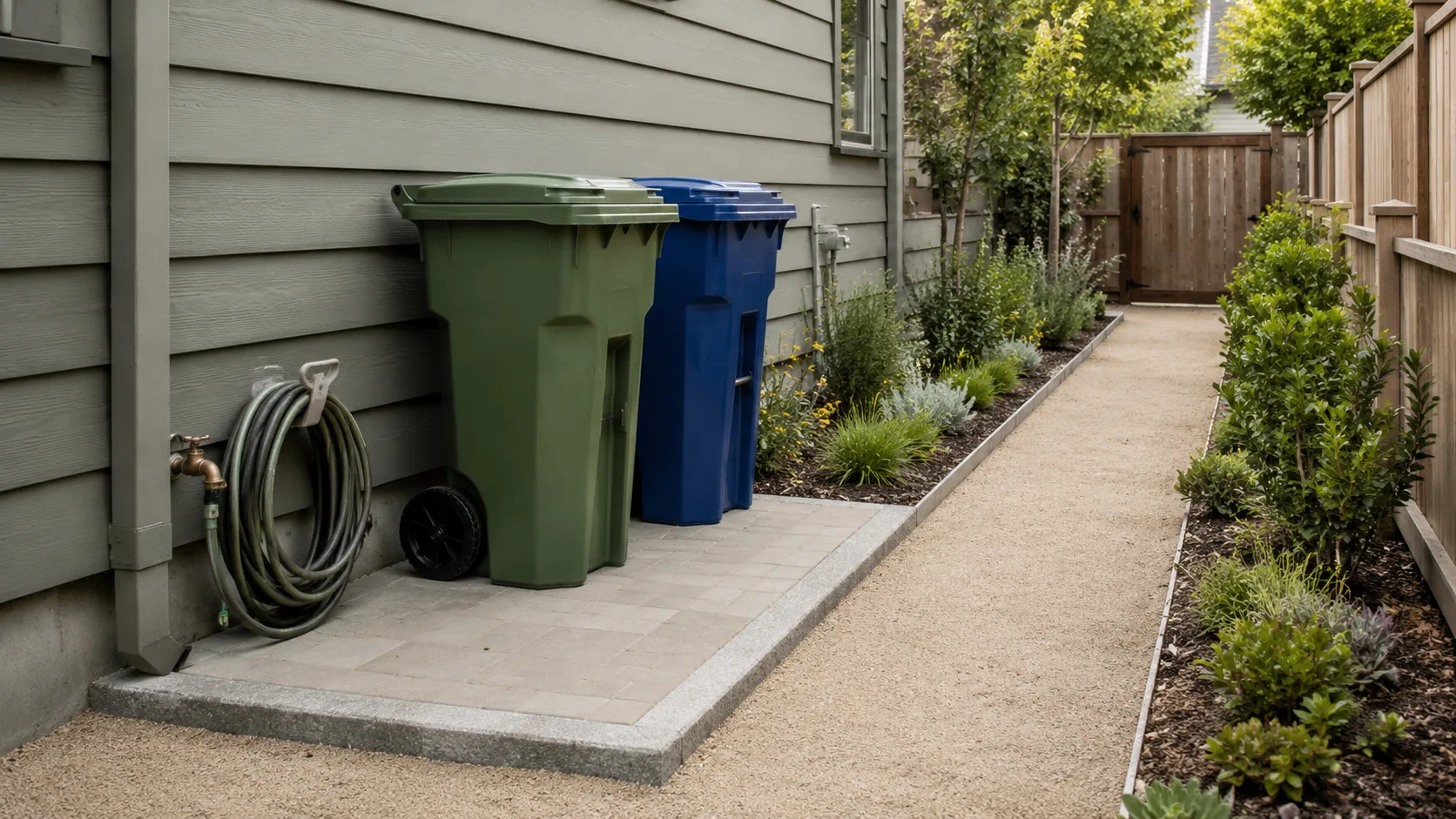
Mulch In Planting Zones
Organic mulch belongs around many plants, not necessarily in the main walking path. In a narrow side yard, use it where it supports roots, reduces bare soil, and softens planting areas.
Keep it contained. Mulch drifting into a narrow path can make the whole space look like it is shedding.
Planting Without Blocking The Route
Side-yard planting should be edited. This is not the place for every plant that looked charming at the nursery.
Good side-yard plants usually need to be:
- Narrow or easily kept in bounds.
- Low-water once established, where regionally appropriate.
- Non-thorny near tight walking routes.
- Not aggressive enough to swallow the path.
- Compatible with sun, shade, reflected heat, wind, and soil.
- Placed with mature size in mind.
Use plants to soften walls and fences, frame the path, create a better window view, and make the passage feel cared for. Repeat a few plants instead of collecting one of everything. A narrow side yard with repetition can feel designed. A narrow side yard with twelve unrelated plant personalities can feel like a hallway argument.
Possible strategies include low-water shrubs, upright ornamental grasses, compact flowering perennials, vines or wall-softening plants where they are appropriate and manageable, and containers where ground planting is difficult.
Avoid thorny, spiny, brittle, messy, or fast-spreading plants right against tight access routes. If people, pets, bins, or hoses brush the plant every week, the plant needs to be polite.
Use local extension guidance, water provider plant lists, botanical garden resources, or qualified regional pros for plant choices. This article will not pretend one plant list fits every dry-climate side yard.
Irrigation: Quiet, Targeted, Maintainable
The side yard is a common place for bad irrigation behavior to hide.
Spray heads hit fences. Overspray stains walls. Water runs across compacted paths. A narrow planting strip gets watered like a lawn it no longer is. Drip tubing disappears under rock, then nobody checks it until a plant gives up dramatically.
Keep the irrigation plan boring and inspectable:
- Group plants by similar water needs.
- Avoid spraying walls, fences, gates, and utility areas.
- Use drip or targeted watering where appropriate.
- Keep irrigation accessible enough to inspect and repair.
- Plan establishment care for new plants.
- Do not mix thirsty plants and very low-water plants in the same tiny strip.
Hydrozoning Basics for Homeowners covers the plant-grouping logic. Drip Irrigation Basics for Low-Water Yards covers the broad irrigation concepts without turning the yard into a parts catalog.
For pressure, valves, backflow, wiring, or local-rule questions, get qualified local help. Side yards often contain utilities, and utilities are not a place for improvisational confidence.
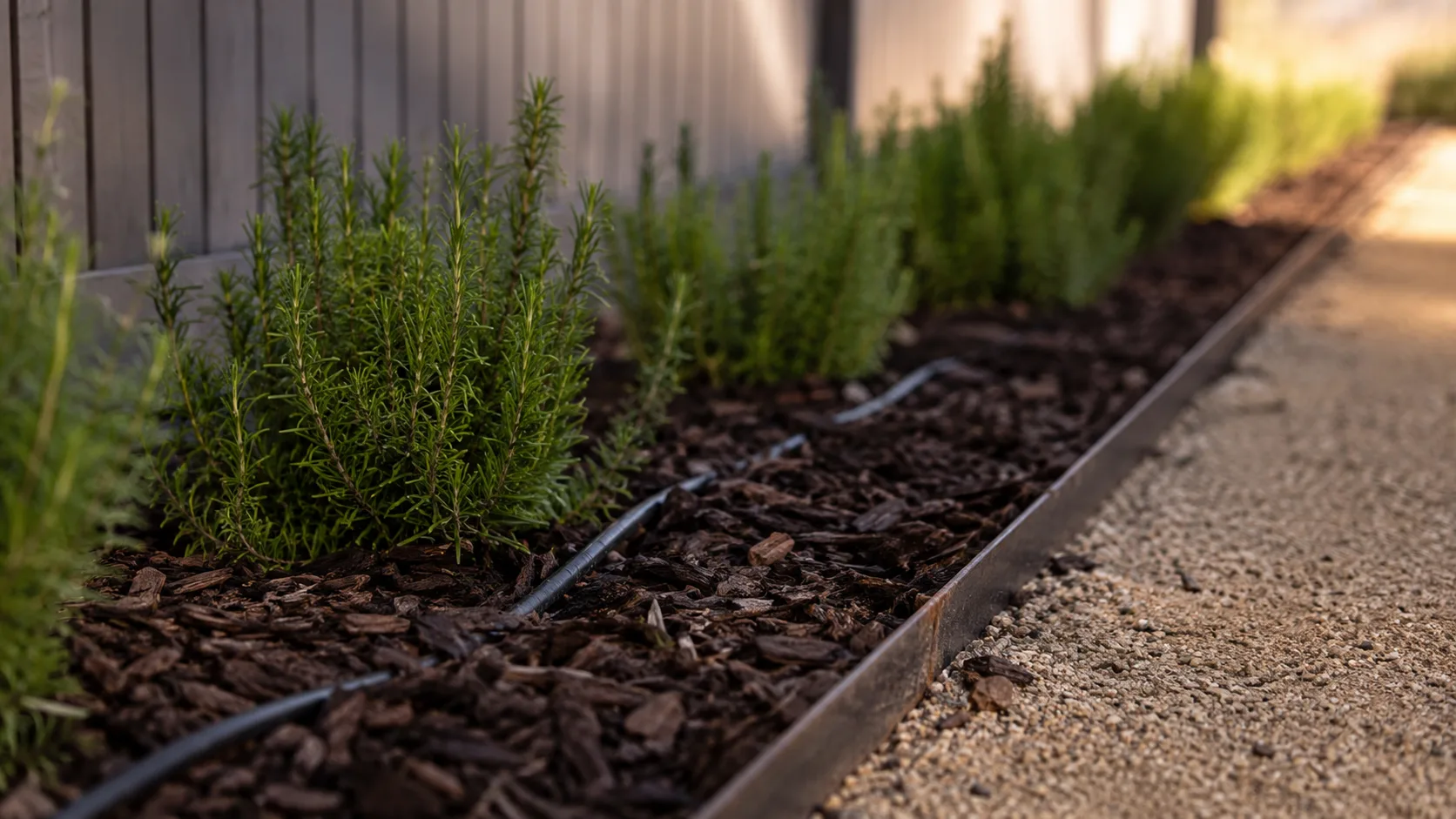
Make The Space Feel Pleasant, Not Precious
A side yard can feel good without pretending to be a courtyard.
Small design moves matter:
- A clear path line.
- One attractive material underfoot.
- A cleaner gate transition.
- A few repeated plants.
- A vine, tall shrub, or vertical element where appropriate.
- A simple view from the window.
- Soft path lighting planned conceptually.
- A small landing where the side yard meets the patio.
- A hose or bin zone that looks intentional instead of apologetic.
The goal is not to make the side yard too fancy to use. That is a real failure mode. If the space needs to carry bins, dogs, hoses, tools, and muddy shoes, design for that. Pretty and useful can share a fence line.
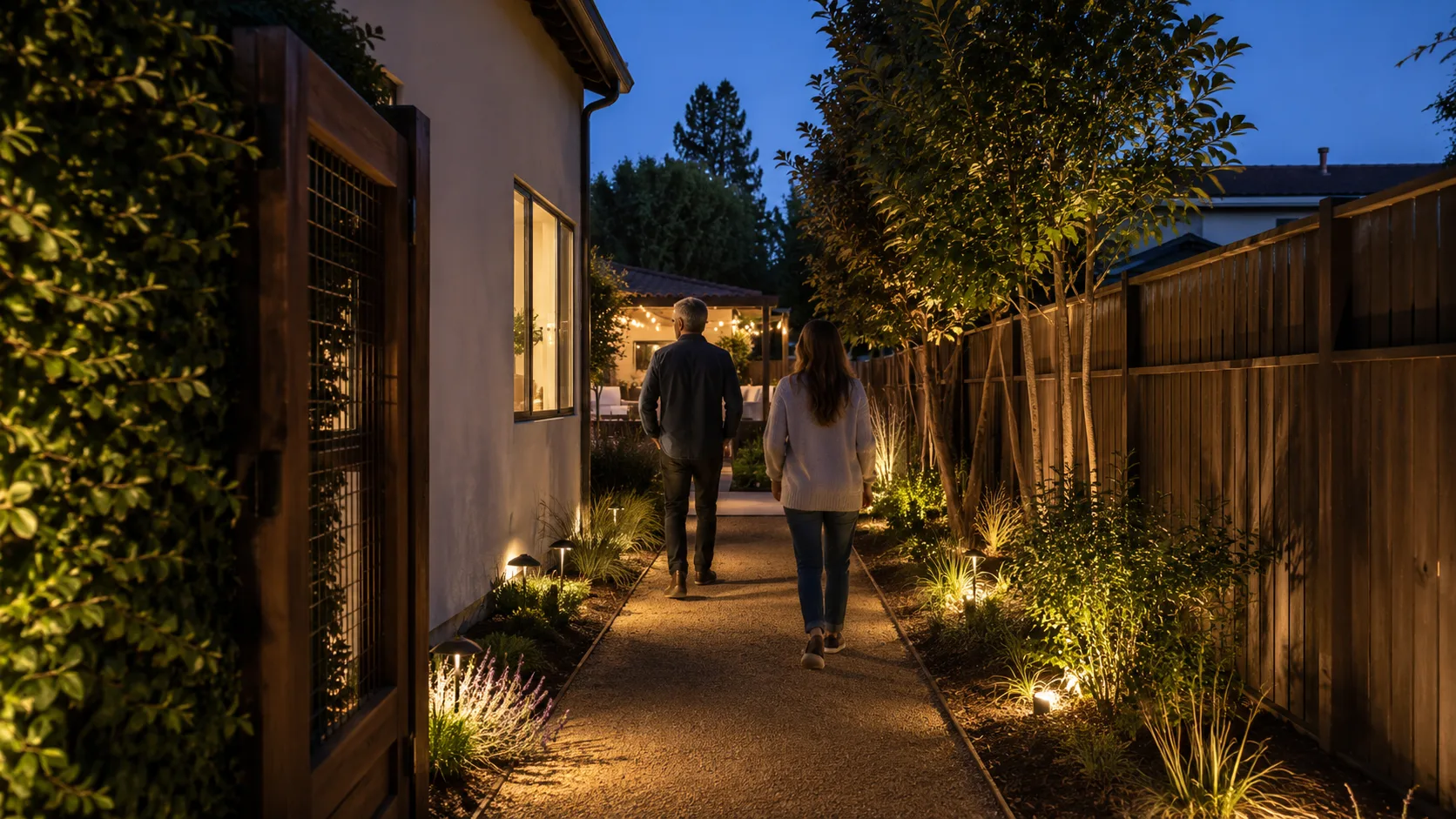
Lighting, Gates, And Evening Use
Some side yards only need to work in daylight. Others are part of the route from driveway to gate, garage to patio, or front yard to backyard. If people use the passage at night, lighting becomes part of safety and comfort.
Keep lighting guidance conceptual:
- Make the path legible.
- Avoid glare into windows.
- Keep gate hardware visible.
- Light changes in surface or direction.
- Do not create dramatic shadows that hide trip edges.
- Use qualified help for electrical work or anything beyond simple approved systems.
No specific products or wiring instructions here. Lighting can make a side yard feel less like a backstage corridor, but electrical work is not a personality test. Use local rules and qualified pros when needed.
Dog Routes, Without The Fairy Tale
Many side yards are dog routes. That affects surfaces, planting, gates, shade, cleanup, and odor.
Keep the path durable. Avoid thorny plants and fragile stems. Think about paw comfort in hot climates, but do not make universal pet-safety claims. Gravel, DG, pavers, mulch, concrete, and planting can all have tradeoffs depending on heat, texture, drainage, cleaning, and the animal.
Also be honest about behavior. If the dog charges the gate, digs in mulch, cuts corners through plants, or treats every vertical surface as a message board, design around the actual dog, not the brochure dog.
For health, toxicity, heat injury, or behavior concerns, use a veterinarian, trainer, or local professional guidance. Landscapade can help with layout thinking; it is not diagnosing the dog.
What Not To Do
Do not block access to gates, meters, valves, cleanouts, hose bibs, utility panels, or emergency routes.
Do not create trip edges in a narrow path. A tiny height change feels bigger when there is no room to recover.
Do not use thorny, spiny, or aggressive plants where people brush past them.
Do not solve a drainage problem with decorative rock and optimism.
Do not run irrigation into walls, fences, foundations, or utility zones.
Do not make the space so precious that nobody can roll a bin through it.
Do not cover everything in gravel with no path shape, no plants, no shade, and no edge. That is not low-water design. That is surrender with receipts.
A Practical Decision Framework
Use this order:
- Define the side yard's main job.
- Protect access to gates, utilities, hoses, meters, and service areas.
- Choose the walking or rolling surface first.
- Decide where planting can happen without narrowing the route too much.
- Pick groundcover based on heat, dust, tracking, drainage, pets, doors, and maintenance.
- Add edging where loose materials need containment.
- Plan irrigation before planting.
- Add shade, vertical softness, or lighting only where it solves a real problem.
- Keep future maintenance possible.
Call a qualified professional when the side yard involves drainage failures, grading, retaining conditions, slope, electrical work, utilities, mature tree roots, foundation-adjacent water movement, code, HOA questions, or structural changes.
FAQ
What is the best low-water surface for a side yard?
There is no single best surface. Compacted decomposed granite, gravel, pavers, stepping stones, concrete landings, and mulch in planting zones can all work when matched to traffic, drainage, doors, pets, heat, and maintenance. Choose the surface based on what the side yard needs to do.
Is decomposed granite good for side yards?
Decomposed granite can work well in side yards when it is compacted, edged, and kept out of runoff paths. It can disappoint near busy doors, pet routes, wheels, or wet areas if it stays loose or dusty. Use a transition before entries when tracking matters.
How do I make a narrow side yard look better?
Give it a clear path, repeat a few plants, contain loose materials, soften fences or walls where appropriate, and remove visual clutter. A narrow side yard usually looks better with fewer stronger decisions than with a dozen tiny ideas competing for attention.
Can I put plants in a very narrow side yard?
Yes, but choose carefully. Use plants that fit the mature width, exposure, water needs, and maintenance access. Avoid thorny, aggressive, brittle, or oversized plants where people, pets, bins, or hoses move through.
Should I add lighting to a side yard?
Lighting can help if the side yard is used at night or connects important routes. Keep the path and gate visible, avoid glare, and get qualified help for electrical work or anything governed by local rules.
How do I keep a side yard from looking like a utility corridor?
Handle the utility needs honestly, then add design discipline: a clean route, one dominant surface, contained edges, repeated low-water plants, a better gate or landing transition, and a view that looks intentional from inside the house.
Bottom Line
A side yard does not need to become a showpiece. It needs to stop being the strip where design goes to avoid eye contact.
Give it a job. Make the path work. Keep utilities accessible. Choose materials that fit the traffic. Add planting where it can survive and stay out of the way. Use lighting, edging, and small landings only where they solve real problems.
The best low-water side yard is not precious. It is useful, good-looking, dry-climate-smart, and calm enough that you can walk through it without feeling like the house has a service entrance for bad decisions.