
Low-water landscaping has a habit of turning every surface decision into a small identity crisis. Organic mulch sounds soft and soil-friendly. Gravel sounds clean, durable, and modern. Then you see one yard where rock mulch looks amazing and another where it appears to be slowly roasting a lonely shrub in public.
The short answer: mulch and gravel both belong in low-water landscapes, but they do different jobs. Organic mulch is usually better around many plants because it helps protect soil, moderate temperature, and break down over time. Gravel and decomposed granite can be excellent for paths, transitions, dry-climate accents, and design structure, but they can add heat, migrate, trap debris, and make plant changes more annoying.
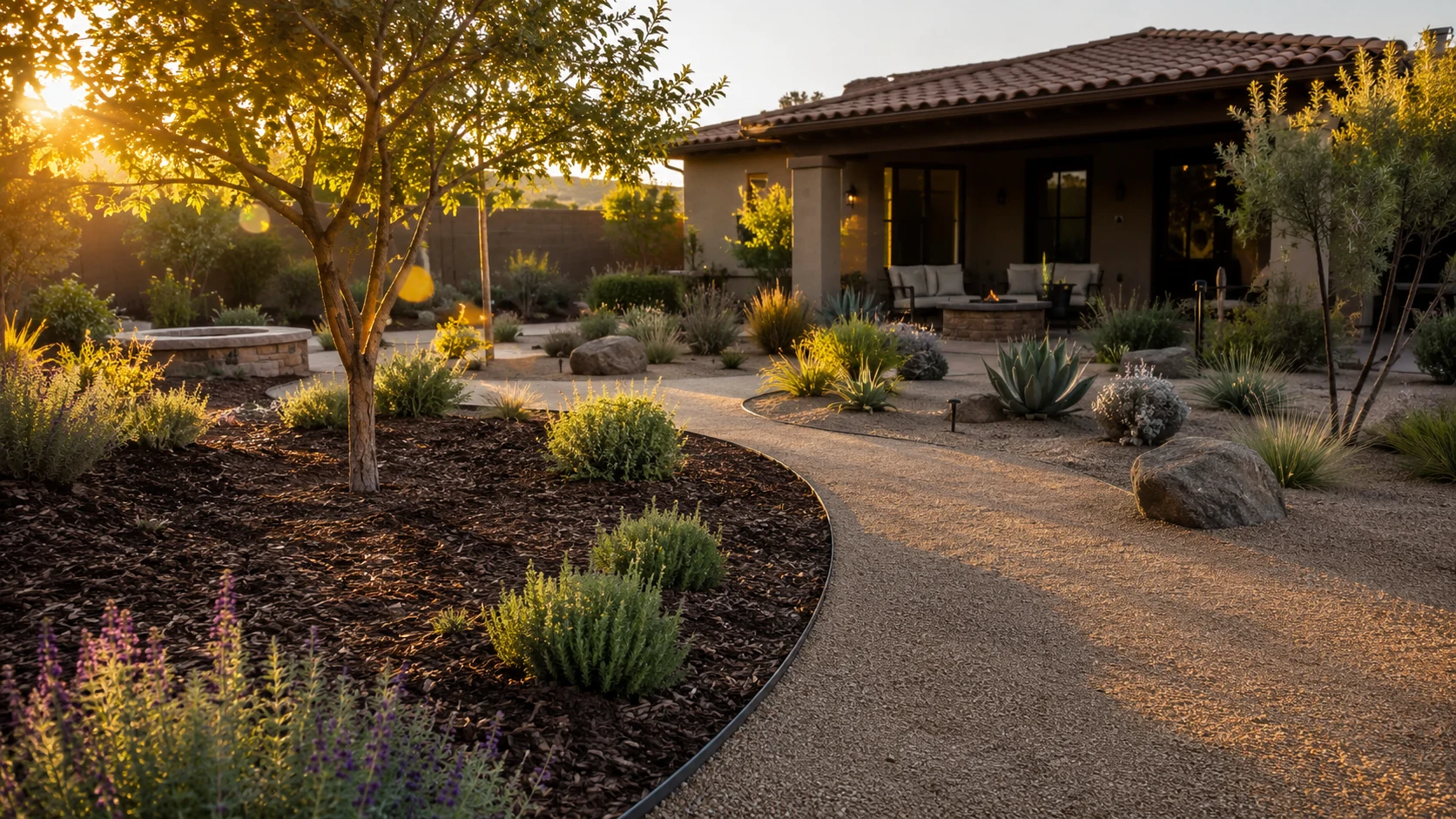
The best low-water yards rarely choose one material everywhere. They use each material where it makes sense, then tie the whole yard together with edges, repeated plants, shade, and a plan that was not assembled by panic at the landscape supply yard.
The Direct Answer
Use organic mulch where plants and soil need protection. Use gravel, crushed rock, or decomposed granite where you need durable structure, paths, low-litter zones, or mineral texture. In many waterwise yards, the strongest answer is a mixed approach: mulched planting beds, gravel or decomposed granite paths, clean edging between materials, and regionally appropriate plants grouped by water needs.
If you are still planning the whole yard, start with How to Plan a Low-Water Backyard Without Making It Look Barren. If you are sorting out the broader waterwise idea, What Is Xeriscaping? gives the bigger frame.
This guide is about the ground layer: what should cover the soil, what should become a path, and what should not be dumped everywhere because the yard felt empty.
What Mulch Means Here
In this guide, mulch mostly means organic mulch: bark, wood chips, arborist chips, composted mulch, leaf litter, shredded plant material, and similar materials used over soil.
Organic mulch does several useful things in planting areas:
- Helps reduce evaporation from exposed soil.
- Moderates soil temperature.
- Helps suppress weeds when used at an appropriate depth.
- Protects soil from crusting and erosion.
- Breaks down over time and contributes organic matter.
- Makes planting beds look finished without turning them into a hot rock pan.
That does not mean every bag of bark belongs in every yard. Organic mulch can blow, float, decompose, fade, collect debris, attract pests when piled badly, and look messy if the wrong texture is used in the wrong place. It also needs refreshing. The phrase "low-water" does not magically cancel maintenance. Rude, but true.
What Gravel Means Here
In this guide, gravel means mineral groundcover: decorative rock, crushed rock, gravel, pea gravel, river rock, decomposed granite, and other stone-based materials used for paths, planting beds, transitions, or design texture.
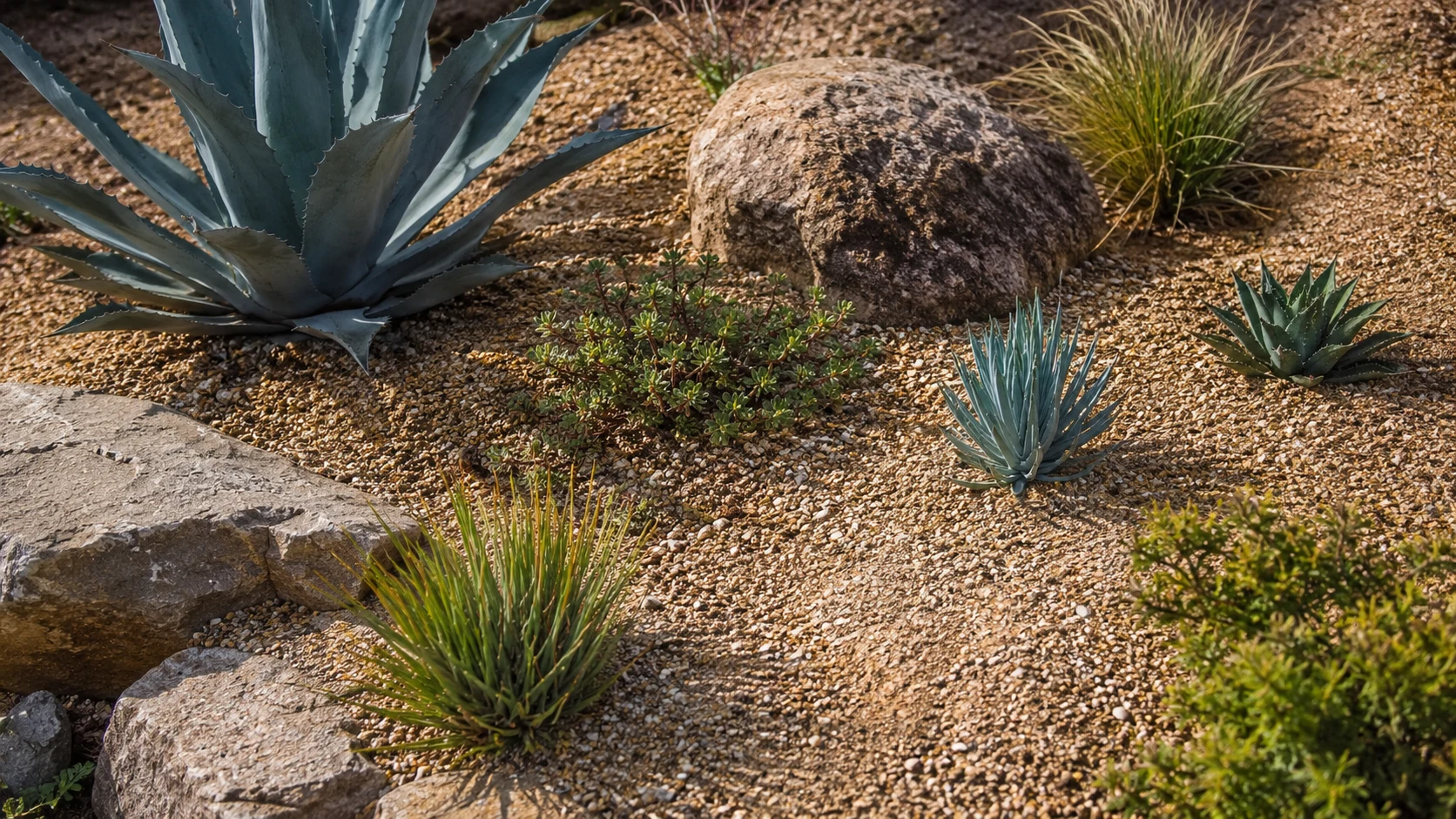
Gravel can be useful because it is durable, crisp, and visually calm when used well. It can help define paths, connect hardscape, reduce exposed soil, and support dry-climate design. In the right context, gravel looks intentional and grown-up. In the wrong context, it looks like the yard was paved with aquarium substrate and hope.
Gravel also has tradeoffs:
- It can reflect and radiate heat.
- It can stress plants that prefer cooler root zones.
- It can migrate into patios, doors, turf, and planting beds.
- It can trap leaves, dust, and debris.
- It can make future planting changes more tedious.
- It can look barren if there are not enough plants, shade, and edges.
If your main problem is a rock-heavy yard that looks unfinished, see How to Make a Gravel Yard Look Designed, Not Deserted. If you are specifically considering decomposed granite, read What Is Decomposed Granite? before treating it like regular gravel with better branding.
The Basic Difference
Organic mulch is plant- and soil-forward. Gravel is structure- and surface-forward.
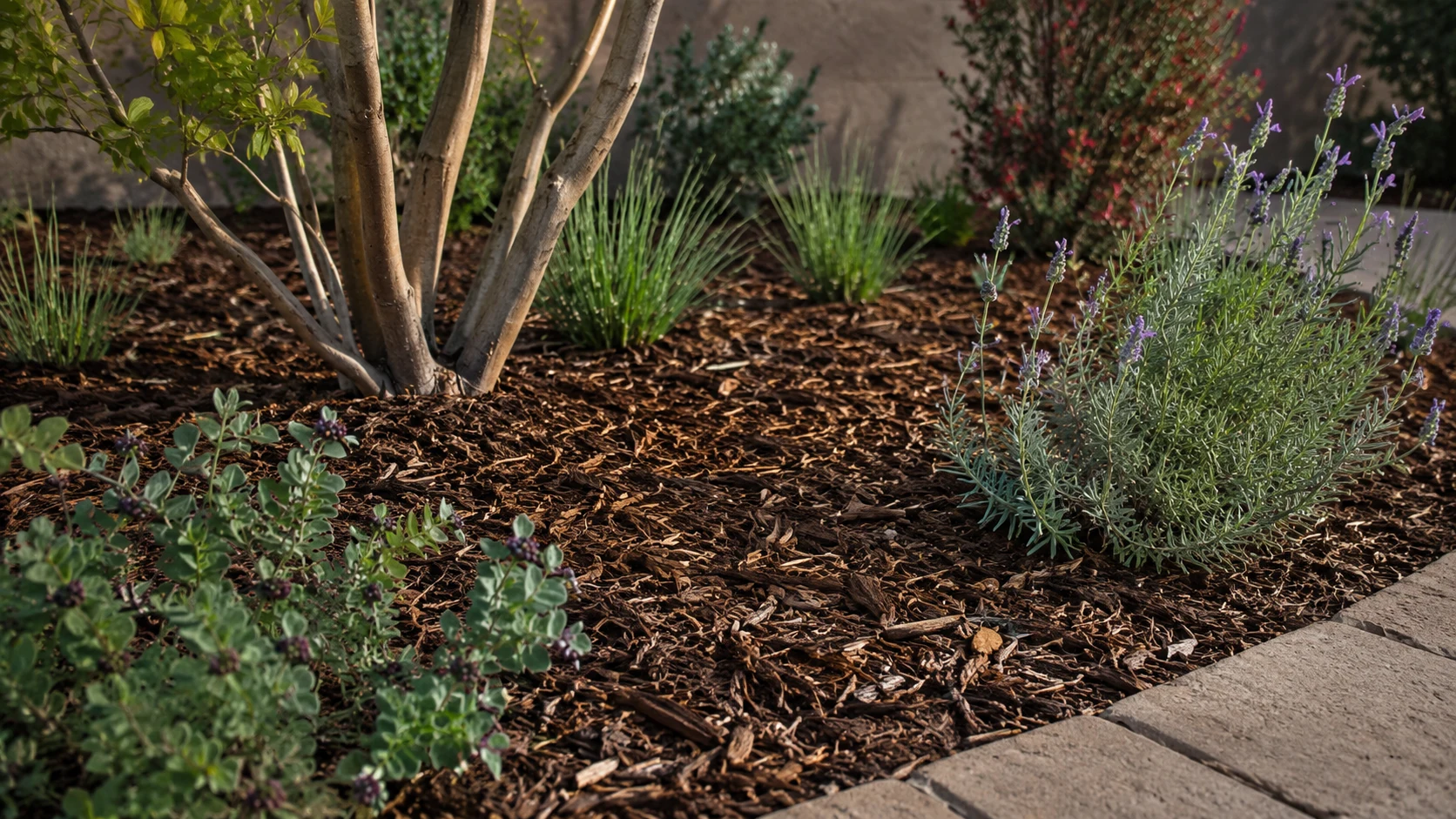
Organic mulch is usually kinder to many planting beds because it covers soil, helps buffer heat, and gradually decomposes. That makes it especially useful around shrubs, trees, perennial beds, and areas where soil improvement matters.
Gravel is tougher and more permanent-looking. It works well where foot traffic, drainage awareness, visual structure, or low-litter design matters. But it does not improve soil as it sits there looking serious. It can also make a hot exposure hotter.
So the decision is not "which material is better?" It is "what is this area supposed to do?"
Where Organic Mulch Works Well
Organic mulch is often the better choice in planting beds where plants need a more forgiving root environment.
It is especially useful for:
- Shrub beds.
- Tree root zones.
- New planting areas where soil protection matters.
- Perennial beds.
- Areas where moisture retention and cooling are important.
- Beds with drip irrigation or hand watering.
- Soil-building zones.
For trees and shrubs, keep mulch off trunks and stems. The goal is a broad, protective layer over soil, not a mulch volcano. Piling mulch against a trunk can hold moisture where it does not belong and create health problems. Trees are already doing enough. They do not need a decorative collar of bad decisions.
Mulch also pairs naturally with Hydrozoning Basics for Homeowners: group plants by water need, then use the groundcover that supports that zone.
Where Gravel Works Well
Gravel works best when it has a clear design job.
Good uses can include:
- Paths and side-yard walkways.
- Transitions between patios and planting areas.
- Drainage-aware zones where local guidance supports the use.
- Dry-climate design accents.
- Low-litter areas near some hardscape.
- Negative space around grouped plantings.
- Areas where organic mulch would blow, float, or look out of place.
Gravel can also help a waterwise yard feel crisp. It gives planting beds contrast, defines movement, and can connect patios, stepping stones, decomposed granite paths, and seating zones.
The danger is using gravel as a substitute for design. Gravel everywhere is not a landscape plan. It is a surface condition with emotional baggage.
Where Mulch Can Disappoint
Organic mulch is not perfect.
It can fail when:
- It is piled too deep.
- It is pushed against trunks or stems.
- It is used where runoff will wash it away.
- It is placed in very windy areas without containment.
- It is used right against doors where it tracks indoors.
- It is allowed to decay into a messy layer without refreshing.
- It is used where local fire or pest guidance recommends a different approach.
Mulch is also not weed-proof. A good layer can reduce weed pressure, but weeds can still sprout in decomposed organic matter, dust, or windblown debris. If a material promises a weed-free yard forever, congratulations, you have met marketing.
Where Gravel Can Disappoint
Gravel disappoints when it is treated like a maintenance-free blanket.
Common problems include:
- Heat buildup around plants.
- Rock migrating into patios, thresholds, turf, and planting beds.
- Leaves and debris getting trapped between stones.
- Weeds growing through dust and organic matter that collect in the rock.
- Tiny plants looking lost in wide mineral beds.
- Decorative rock making future planting changes harder.
- Reflected heat from walls, paving, or full-sun exposures stressing plants.
Rock mulch can be especially harsh around plants that are not adapted to hot, dry, reflective conditions. A plant that wants cooler soil and some organic cover may not appreciate being tucked into a bright rock skillet.
Gravel can be beautiful. It just needs the right plant palette, exposure, depth, edging, and scale.
Heat And Reflected Heat Matter
Heat is one of the biggest differences between mulch and gravel.
Organic mulch generally helps buffer soil temperature. Gravel and rock can absorb and radiate heat, especially in sunny exposures, against walls, near paving, or in areas with little shade.
That does not mean rock is always bad. In dry-climate landscapes with appropriate plants, rock can be part of the design. But it does mean you should think before putting bright or dark rock around every plant in full afternoon sun.
Pay extra attention near:
- West-facing walls.
- South-facing exposures.
- Concrete patios and walkways.
- Gravel-heavy courtyards.
- Young plants.
- Shallow-rooted plants.
- Plants that prefer cooler root zones.
Shade changes the equation. So do mature plant size, irrigation, soil, slope, wind, and the plant's actual climate fit. A low-water yard still has microclimates. The yard does not become one uniform spreadsheet just because you bought gravel.
Soil Health And Plant Establishment
Organic mulch has a soil advantage because it breaks down. Over time, it can contribute organic matter and support a more forgiving planting environment.
Gravel does not do that. It can protect the surface from erosion and reduce bare soil exposure, but it does not feed the soil. If you are establishing trees, shrubs, or perennials, the groundcover choice should support the root zone, not just the photo from the patio.
For new plants, think about:
- Root zone temperature.
- Soil moisture.
- Drainage.
- Irrigation placement.
- Mulch depth.
- Mature plant size.
- How easy it will be to adjust the planting later.
This connects directly to Drip Irrigation Basics for Low-Water Yards. Drip tubing under mulch is easier to inspect and adjust than a system buried under rock and future regret, though any irrigation system still needs maintenance.
Weed Suppression Reality
Mulch and gravel can both reduce weed pressure. Neither makes weeds vanish forever.
Weeds can grow when:
- Seeds blow into the surface.
- Dust and organic matter collect on top.
- Edges are messy.
- The layer is too thin.
- Irrigation overspray supports unwanted growth.
- Fabric fails, tears, or fills with debris.
- Maintenance stops because the homeowner believed in miracles.
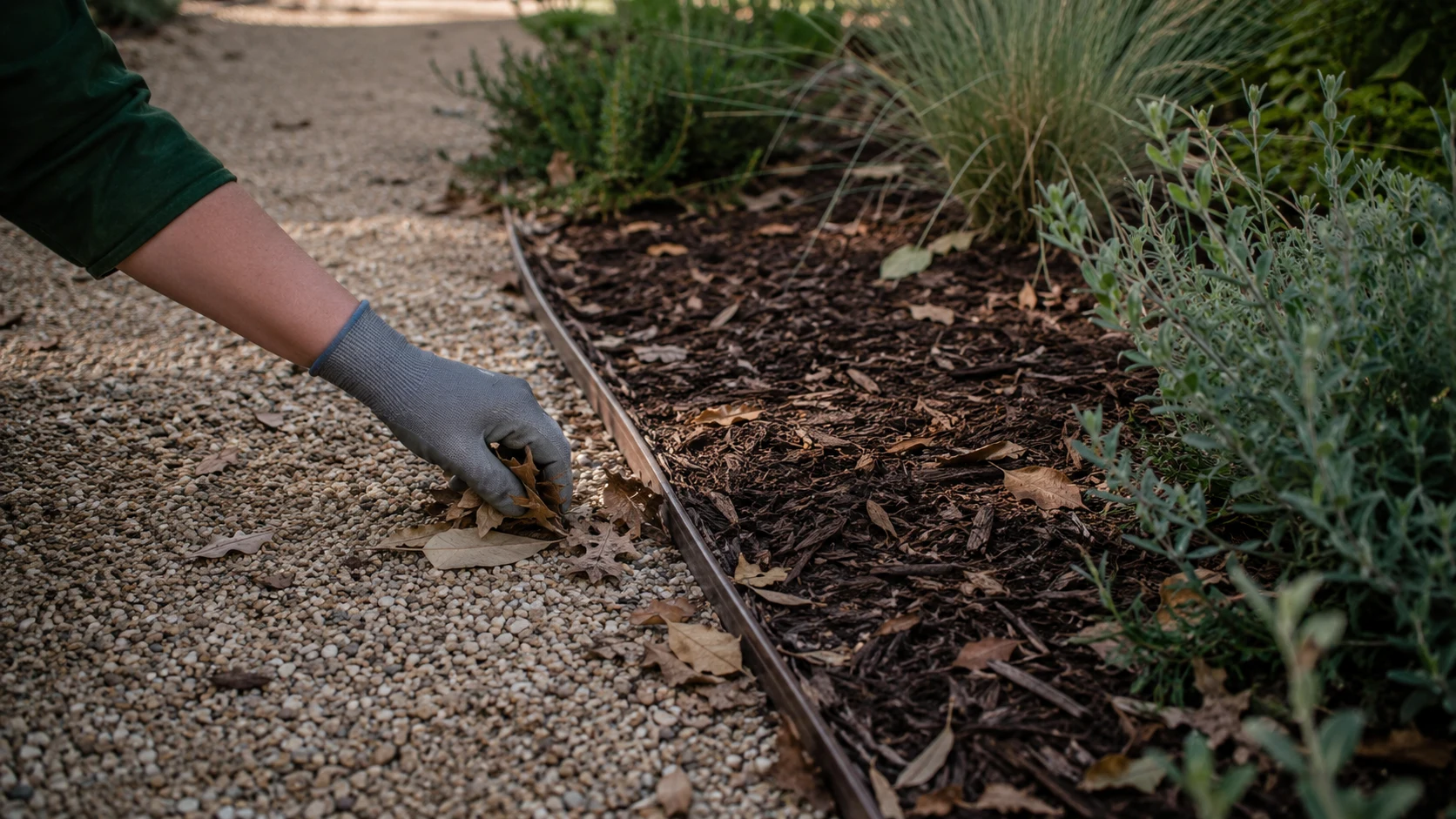
Organic mulch may need topping up as it breaks down. Gravel may need raking, debris cleanup, and occasional refreshing. In both cases, the cleanest yards usually have good edges, sensible irrigation, repeated inspection, and plants that are large enough to compete visually.
Pets, Kids, Doors, And Patios
Groundcover decisions become very real near doors, patios, pools, pet routes, and children's play areas.
Mulch can track, stick to shoes, get kicked into patios, and invite digging in some yards. Gravel can scatter, roll underfoot, get caught in shoes, and migrate indoors. Decomposed granite can be especially track-prone if it is loose, dusty, shallow, poorly edged, or placed right against busy doors.
For entry areas, consider:
- A hardscape threshold.
- Pavers or stepping stones.
- Clean edging.
- A short transition zone before loose material.
- A doormat and shoe-zone logic.
- Keeping loose mulch or gravel away from the most-used doors.
For decomposed granite specifically, see How to Use Decomposed Granite Without Tracking Dust Into the House.
Trees And Shrubs Need Breathing Room
Trees and shrubs are not props. They are living infrastructure.
Around trees, avoid piling mulch against the trunk. A wide mulch area with trunk clearance is usually more useful than a tight decorative ring. Around shrubs, keep material away from stems and crowns.
Rock right up to trunks can also be a poor fit in hot exposures, especially for plants that do not want extra reflected heat. If you are working around existing mature trees, get local extension guidance or a qualified arborist before changing irrigation, grade, or groundcover dramatically.
The simple homeowner rule: protect the root zone, keep trunks and stems clear, avoid extreme heat traps, and do not treat living plants like furniture legs.
Decomposed Granite Is A Special Case
Decomposed granite sits somewhere between gravel, path material, and mineral mulch.
It can look excellent in low-water yards when compacted, edged, and used with planting structure. It can also become dusty, loose, weedy, or messy when used casually. Stabilized decomposed granite may behave differently than loose material, but this article is not here to recommend products or installation formulas.
Use decomposed granite thoughtfully for:
- Paths.
- Informal seating areas.
- Side yards.
- Transitions between patios and planting beds.
- Dry-climate design structure.
Avoid assuming it belongs everywhere just because it looks good in one photo. For the full material breakdown, read What Is Decomposed Granite?.
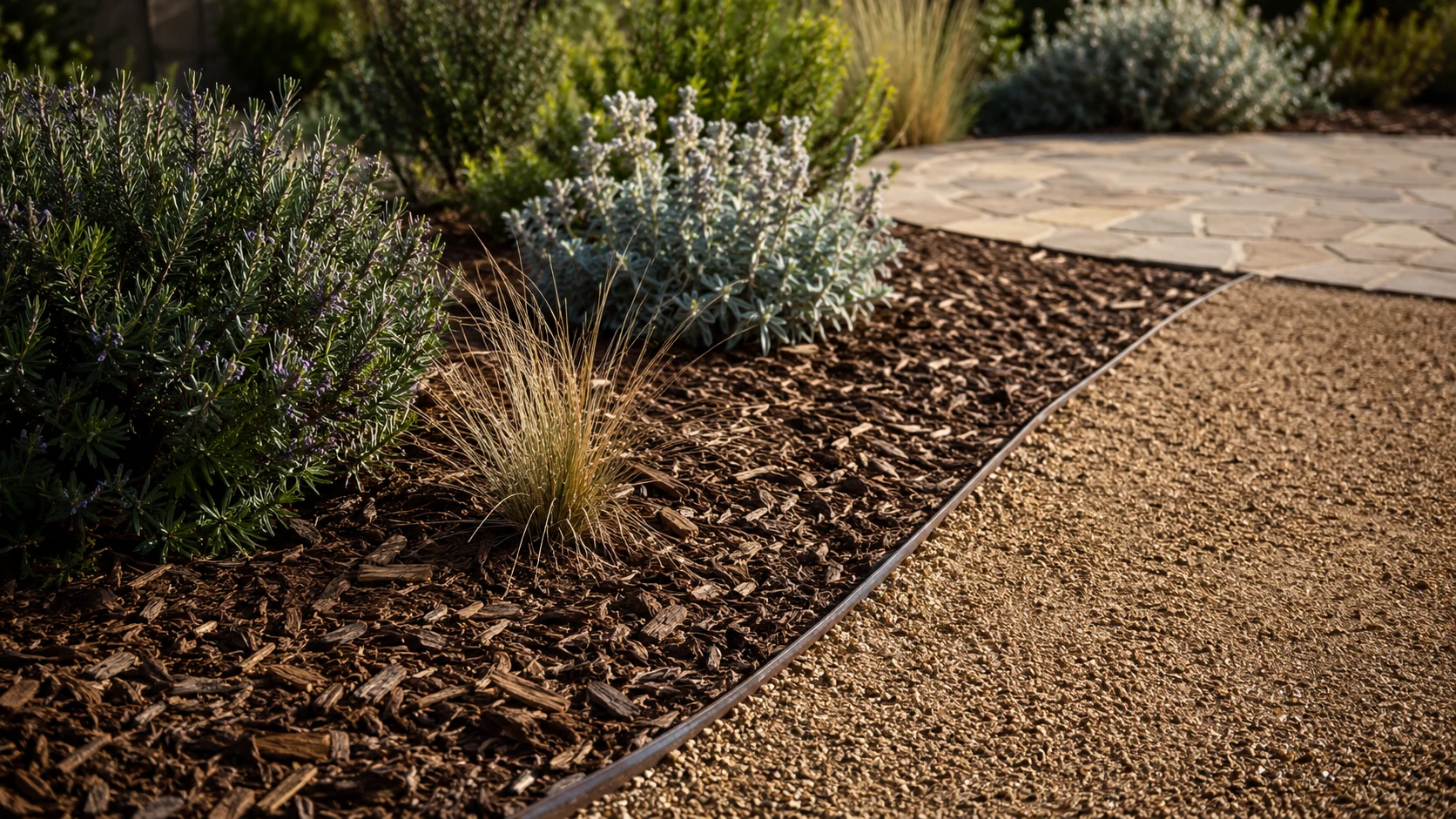
How To Mix Mulch And Gravel Without Chaos
Mixed materials can look intentional if the yard has rules.
Try this:
- Use organic mulch in plant-centered beds where soil cooling and root protection matter.
- Use gravel or decomposed granite for paths, transitions, or mineral design zones.
- Keep clean edges between materials.
- Repeat the same gravel color or mulch texture instead of using six competing surfaces.
- Group plants so each bed has a visual rhythm.
- Add shade where the yard needs comfort.
- Let hardscape define living areas instead of scattering materials randomly.
A mixed yard should feel layered, not confused. Gravel can be the structure. Mulch can be the plant support. Edging can be the referee.
Common Mistakes To Avoid
Avoid these if you want the yard to look designed and behave well:
- Gravel everywhere because "low-water" sounded like "remove all softness."
- Mulch volcanoes around trees.
- Rock mulch around heat-sensitive plants in full sun.
- No edging between mulch, gravel, paths, and planting beds.
- Using one material as a shortcut for an actual design plan.
- Ignoring runoff, slope, and drainage.
- Assuming mulch is weed-proof.
- Assuming gravel is maintenance-free.
- Mixing thirsty plants and low-water plants in the same bed, then blaming the mulch.
- Choosing rock color only by showroom sample instead of thinking about heat and glare.
- Making future plant changes hard by burying every bed in decorative stone.
Most of these mistakes come from treating groundcover as the whole landscape. It is not. It is the floor. The room still needs furniture, circulation, shade, and a reason to exist.
A Practical Homeowner Decision Framework
Use this quick framework before choosing material.
Choose Organic Mulch When:
- Plants are the priority.
- Soil protection matters.
- The area is a tree or shrub root zone.
- Cooling and moisture retention matter.
- You expect to edit the planting over time.
- You want a softer, more garden-like feel.
Choose Gravel Or Rock When:
- The area is a path or transition.
- You want mineral texture as part of the design.
- Organic mulch would blow, float, or look messy.
- The plants are suited to hotter, drier, more reflective conditions.
- You have clean edging and a plan for debris.
- Local site conditions support it.
Choose Decomposed Granite When:
- You want a compactable path or informal seating surface.
- The area has defined edges.
- You can manage tracking, dust, drainage, and maintenance.
- You want a softer-looking mineral surface than larger gravel.
Choose A Mixed Approach When:
- You have planting beds and paths in the same yard.
- You want a designed waterwise look, not one endless material field.
- Different zones have different jobs.
- The yard needs both soil support and clean circulation.
Homeowner Checklist
Before you commit to mulch, gravel, or both, ask:
- What is this area supposed to do?
- Is it a planting bed, path, patio edge, door transition, pet route, or view zone?
- Will plants here prefer cooler soil or tolerate reflected heat?
- Is the area sunny, shaded, windy, sloped, or runoff-prone?
- Will material track indoors?
- Will leaves and debris collect here?
- Is there clean edging?
- Can irrigation be inspected and adjusted?
- Will this material make future planting changes easier or harder?
- Does local fire, tree, water, HOA, or municipal guidance affect the choice?
- Does the material support the yard design, or is it trying to be the design?
If the answer to that last question feels uncomfortable, pause before ordering another load of rock.
FAQ
Is mulch or gravel better for low-water landscaping?
Neither is universally better. Organic mulch is often better around plants because it helps protect soil and moderate temperature. Gravel can be better for paths, transitions, design structure, and some dry-climate plantings. Many low-water yards use both.
Does gravel save more water than mulch?
Not automatically. Water use depends on plant choice, soil, irrigation, shade, exposure, and maintenance. Gravel can reduce exposed soil, but it can also add heat around some plants. Mulch often helps soil hold moisture longer. Do not treat either material as a water-saving guarantee.
Is rock mulch bad for plants?
Rock mulch is not always bad, but it can be a poor fit around plants that dislike reflected heat or hot root zones. It works best with plants suited to the exposure, climate, and soil conditions. In uncertain situations, check local extension guidance.
Can I use mulch and gravel together?
Yes. A common waterwise approach is to use organic mulch in planting beds and gravel or decomposed granite for paths, transitions, and mineral design accents. The key is clean edging and a simple material palette.
Does mulch attract pests?
Mulch can create pest problems when it is piled too deep, kept too wet, or pushed against structures, trunks, or stems. Used thoughtfully, organic mulch is a normal part of many planting beds. Keep it managed and follow local guidance where pest or fire concerns matter.
Does gravel stop weeds?
Gravel can reduce weeds, but it does not stop them forever. Windblown seeds, dust, organic debris, irrigation overspray, and thin coverage can all support weed growth. Plan for maintenance instead of pretending the yard has achieved botanical immunity.
Bottom Line
Use mulch where the yard needs plant support, cooler soil, and organic texture. Use gravel or decomposed granite where the yard needs paths, structure, durability, and mineral contrast. Use both when different parts of the yard have different jobs.
The low-water yard that works best is not the one with the most gravel or the most mulch. It is the one where every surface has a purpose, the plants are grouped intelligently, the edges are clean, and the yard still feels like somewhere a person might actually want to sit.