
Hydrozoning is one of those landscape terms that sounds like it should come with a clipboard and a municipal vest. The idea is much friendlier: put plants with similar water needs together so you are not watering an entire yard for the thirstiest drama queen in the bed.
Most water-wasting yards are not trying to be wasteful. They are just confused. A lawn strip, a shrub, a tomato plant, a succulent, a shade perennial, and a desert-adapted grass all get scattered around the yard, then one irrigation schedule is asked to keep everyone happy. That is not a landscape plan. That is group therapy with sprinklers.
This guide explains hydrozoning in plain homeowner language: what it means, why it matters, how to group plants, how sun and soil change the rules, and how to retrofit a messy yard one bed at a time.
The Direct Answer
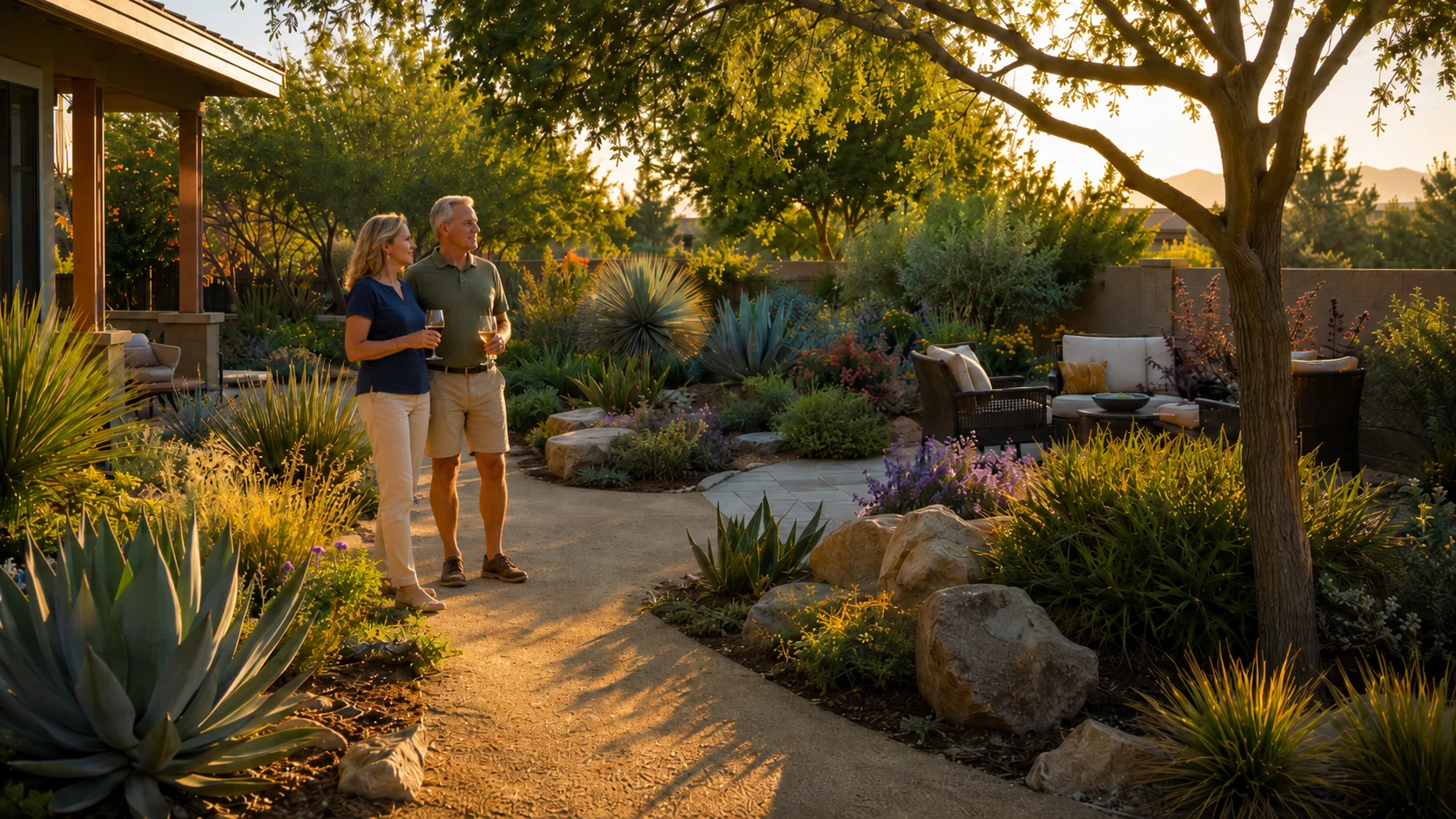
Hydrozoning means grouping plants by similar water needs and site conditions so each area of the yard can be watered more appropriately.
The useful version is not complicated:
- Put higher-water plants together.
- Put moderate-water plants together.
- Put low-water and very low-water plants together.
- Keep lawn, vegetables, annuals, trees, shrubs, and succulents from pretending they all want the same thing.
- Consider sun, shade, slope, soil, reflected heat, wind, and irrigation type before deciding who belongs where.
Hydrozoning does not magically make a yard low-water. It makes the yard legible. Once the plants are grouped sensibly, irrigation can be adjusted by zone instead of soaking everything because one plant is fainting dramatically near the patio.
For the bigger low-water planning framework, start with How to Plan a Low-Water Backyard Without Making It Look Barren. If you are still sorting out the overall idea, What Is Xeriscaping? explains why waterwise design is not just gravel with a guilty conscience.
What Hydrozoning Actually Means
A hydrozone is a group of plants and landscape features with similar watering needs. In a real yard, that usually means grouping by more than plant tag language.
A useful hydrozone considers:
- Plant water needs.
- Sun and shade exposure.
- Soil and drainage.
- Slope and runoff.
- Reflected heat from walls, fences, gravel, patios, or driveways.
- Wind exposure.
- Root depth and mature plant size.
- Irrigation method.
- How often the area is used or maintained.
The point is not to create a perfect scientific map. The point is to stop asking one irrigation zone to serve a lawn, a fruiting vegetable bed, a shade plant, and a cactus like they are all roommates with identical needs.
Why Plant Grouping Matters In Waterwise Yards
Waterwise landscaping depends on matching plants to the site and watering them intelligently. Hydrozoning helps with both.
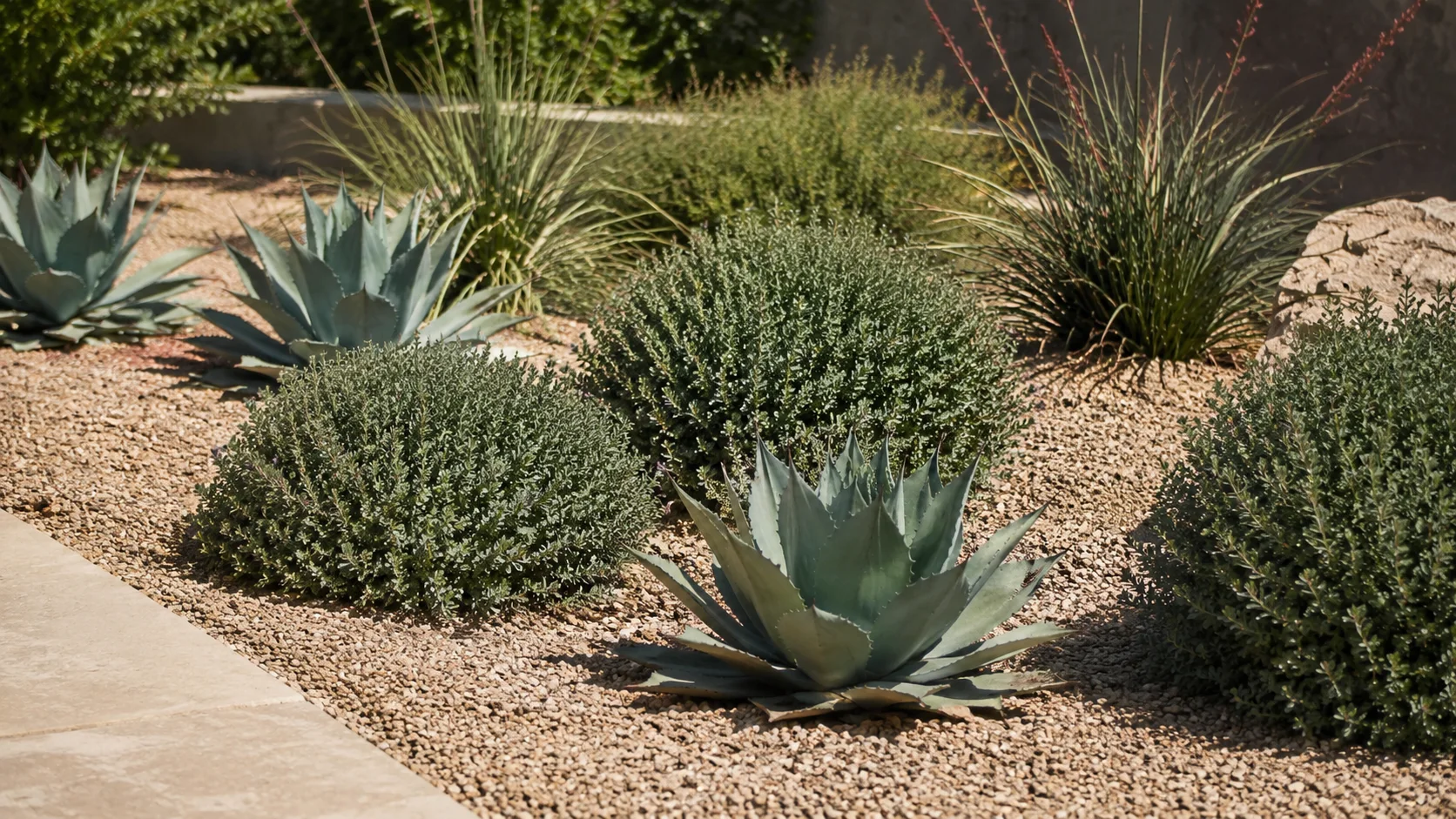
When plants are grouped well:
- Lower-water plants are less likely to be overwatered.
- Thirstier areas can be kept smaller and more purposeful.
- Irrigation schedules can be adjusted by plant group instead of by panic.
- Runoff and overspray are easier to notice.
- Plants have a better chance of surviving establishment and settling into the yard.
- The design often looks calmer because plants are repeated in intentional groups.
When plants are grouped badly, watering becomes a negotiation nobody wins. The thirsty plant gets just enough to keep complaining. The low-water plant gets too much and starts looking offended. The homeowner gets a water bill and a suspiciously crispy shrub.
How Mixed Water Needs Waste Water And Kill Plants
The classic mistake is watering everything for the thirstiest plant in the zone.
That may keep annual flowers or turf alive, but it can overwater low-water shrubs, succulents, ornamental grasses, and desert-adapted plants that need better drainage or less frequent watering once established. Overwatering can also encourage weak growth, shallow roots, disease pressure, or root problems depending on the plant and site.
The opposite mistake is just as common: watering everything like a low-water landscape before higher-water plants are established or before trees, vegetables, turf, or containers have what they need.
Mixed zones create two bad options:
- Water enough for the thirsty plants and stress the low-water plants.
- Water enough for the low-water plants and stress the thirsty plants.
Hydrozoning gives you a third option: stop making those plants share a schedule in the first place.
The Four Basic Water-Need Groups
Every region uses slightly different plant language, so treat these groups as homeowner categories, not a universal technical rating.
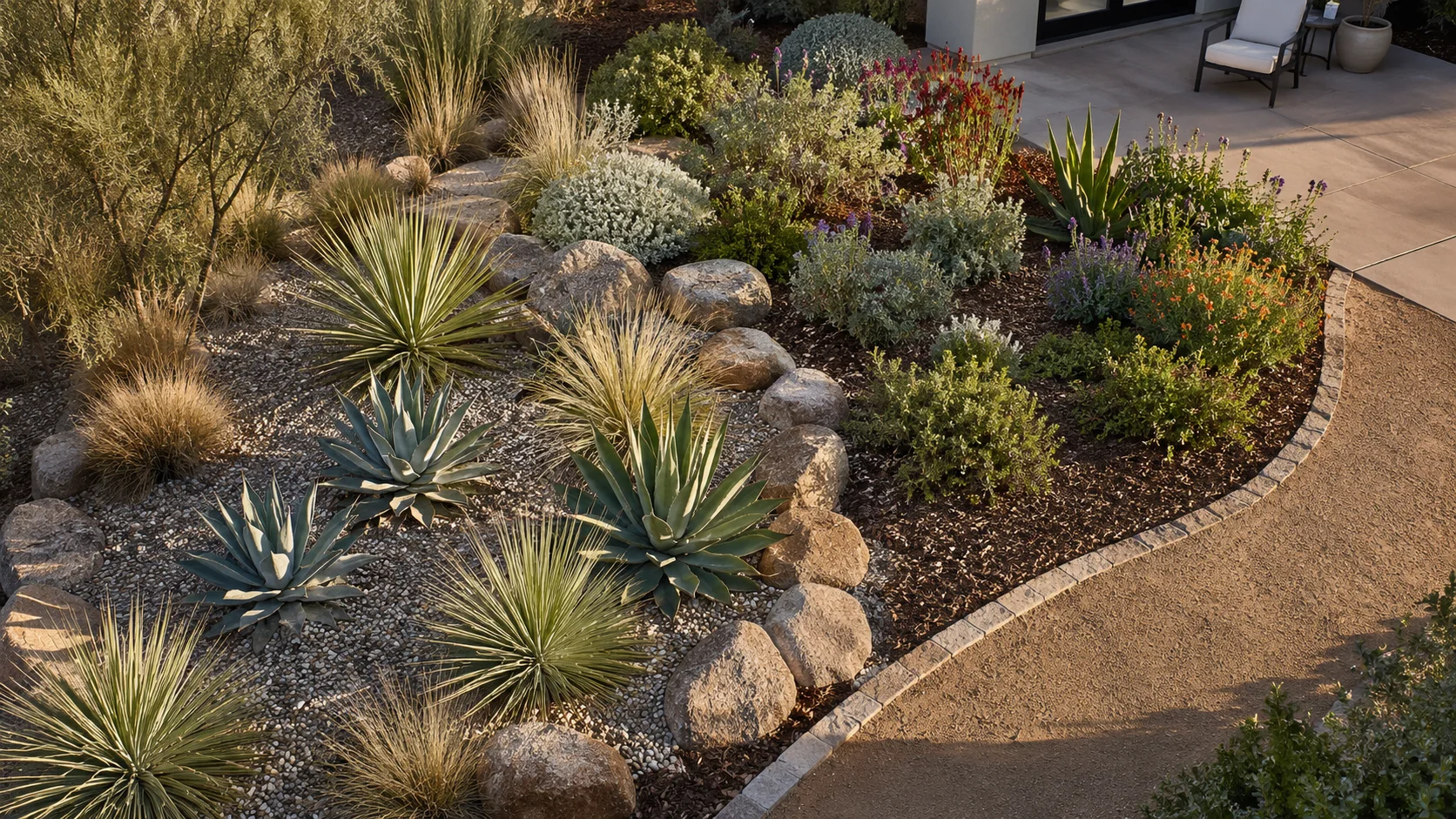
High-Water Zones
High-water zones are for plants or features that need more regular irrigation to perform well.
Examples may include:
- Turf that has a real use.
- Vegetable beds.
- Some annual flowers.
- Containers.
- Newly planted areas during establishment.
- Certain lush focal areas near entries or patios.
Keep these zones small and purposeful. A high-water feature can be worth it when it earns its place. A whole yard watered like a vegetable bed is usually where good intentions go to become utility bills.
Moderate-Water Zones
Moderate-water zones can include plants that need more support than true low-water plants but do not need to be treated like turf.
Examples may include:
- Some flowering perennials.
- Mixed ornamental shrubs.
- Certain shade garden plants.
- Entry beds or patio-adjacent focal beds.
- Regionally adapted plants that still need periodic irrigation.
Moderate zones are often where design temptation gets loud. They can look lush and layered, but they still need to be separated from very low-water areas so the irrigation schedule does not become a compromise with casualties.
Low-Water Zones
Low-water zones are usually the backbone of waterwise planting.
They may include:
- Drought-tolerant shrubs.
- Ornamental grasses.
- Regionally adapted perennials.
- Groundcovers suited to the climate.
- Planting islands in gravel or mulch beds.
- Lower-use areas away from the most comfortable outdoor living zones.
Low-water does not mean no water, especially during establishment. It means the plants are chosen and grouped so they can often need less supplemental water once established, depending on climate, soil, and season.
Very Low-Water Zones
Very low-water zones are for the toughest areas and the toughest plants.
They may include:
- Dry edges.
- Hot slopes.
- Low-use side yards.
- Desert-adapted plantings where climate supports them.
- Areas designed to receive little supplemental irrigation after establishment.
This group is where homeowners most often overdo the gravel-and-spiky-plant routine. Very low-water can still be beautiful, but it needs texture, shade, repetition, and regional plant choices. Otherwise it starts looking less like a landscape and more like a punishment.
Site Conditions Change The Zone
Plant water need is only the first layer. The same plant can behave differently depending on where it is planted.
Sun And Shade
A plant in full afternoon sun may need different support than the same plant in bright shade. Shade can reduce stress and evaporation, but deep shade can also slow growth or make some plants unhappy.
Do not use the plant tag as the whole truth. A west-facing wall in Phoenix and a morning-sun bed in a cooler climate are not spiritually the same place.
Reflected Heat
Walls, fences, gravel, concrete, pavers, and patios can bounce heat back onto plants. Rock mulch in sunny areas can also make the root zone harsher for plants that are not adapted to that treatment.
This matters when grouping plants. A low-water plant that handles reflected heat may belong near gravel or hardscape. A moderate-water shade plant probably does not want to be roasted against a block wall like an unfortunate side dish.
If the yard is gravel-heavy, How to Make a Gravel Yard Look Designed, Not Deserted can help you think about texture, shade, planting islands, and heat without turning the yard into one giant rock decision.
Soil And Drainage
Soil affects how quickly water enters, moves, and stays available to roots. Sandy soil, clay soil, compacted soil, shallow soil, fill, caliche, and construction-disturbed soil can all change how a hydrozone behaves.
Poor drainage can make low-water plants struggle even when the irrigation schedule looks reasonable. Fast-draining soil can make moderate-water plants need more careful establishment and monitoring.
Hydrozoning should respect soil instead of pretending every bed is a blank canvas. Soil enjoys proving people wrong.
Slope And Runoff
Slopes can shed water before plants can use it. Low spots can collect water and stay wetter than expected. Downspouts, roof runoff, and hardscape drainage can also create accidental hydrozones.
Before you plant, watch where water already goes. If water runs across a bed, pools near a wall, or drains toward a door, solve that as a site problem rather than asking plants to improvise.
Wind
Wind dries leaves and soil, stresses plants, and can make watering less efficient. Exposed corners, side yards, slopes, and open fences may need tougher plant choices or different irrigation support than protected beds.
Wind is easy to ignore because it does not appear on the plant tag, which is rude given how much damage it can do.
Different Plant Types Need Different Thinking
Hydrozoning is easier when you stop treating all green things as one category.
Lawn
Turf can be useful when it has a job: play, pets, cooling, or a small visual relief area. It should usually be in its own irrigation zone because turf watering is different from shrub or tree watering.
Avoid narrow strips that are hard to water efficiently. A strip of lawn beside a driveway that mostly waters concrete is not a feature. It is a tiny irrigation scandal.
Trees
Trees deserve special attention. A tree may have different root depth, establishment needs, and long-term watering patterns than nearby perennials or turf. Large trees can be the most valuable shade feature in a waterwise yard, but they should not be treated as afterthoughts.
For mature trees, local extension guidance or a qualified professional can be worth it, especially during lawn conversions, drought stress, or irrigation changes.
Vegetables And Annual Flowers
Vegetables and annual flowers often need more frequent attention than low-water ornamental beds. Keep them separate from low-water plantings so they can be watered and managed without dragging the whole yard into their schedule.
Containers count too. Pots dry out differently than in-ground beds and should not be mentally filed under "the yard will handle it."
Shrubs And Perennials
Shrubs and perennials can form the backbone of waterwise planting when grouped by water need and exposure. Repeat them in clusters, plan for mature size, and keep plants with similar needs together.
This is where hydrozoning becomes design, not just irrigation. Grouped plants usually look better than one of everything scattered across gravel like the nursery sneezed.
Succulents And Desert-Adapted Plants
Succulents and desert-adapted plants often need sharp drainage, less frequent watering once established, and protection from being watered like bedding flowers.
Do not put succulents and thirsty annuals on the same line and expect dignity. One group is likely to suffer while the other writes a strongly worded letter with its leaves.
How Hydrozoning Works With Irrigation
Hydrozoning is not the same thing as installing irrigation, but the two should talk to each other.
Drip And Microirrigation
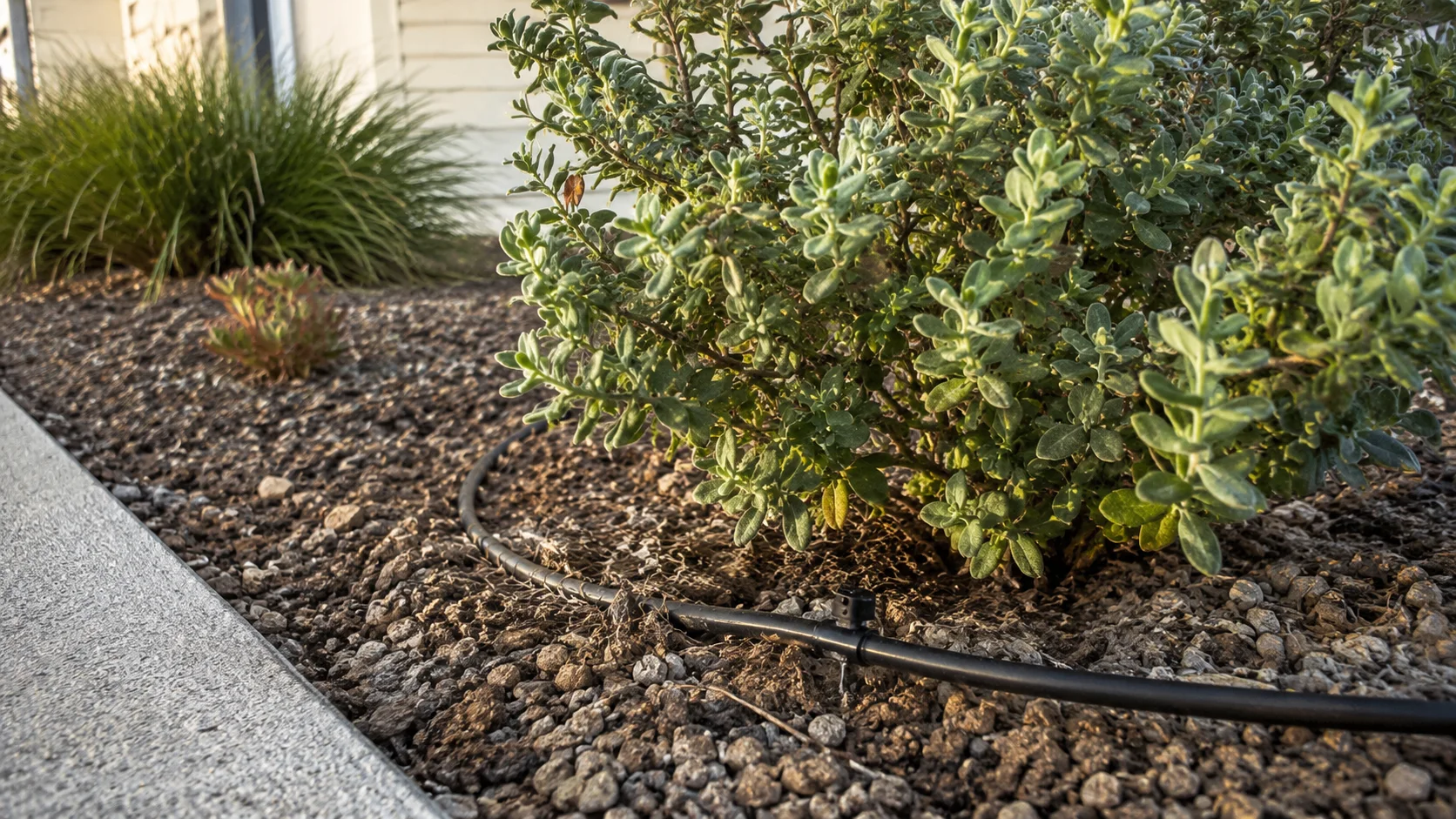
Drip or microirrigation can work well for shrubs, trees, and planting beds when it is designed, maintained, and adjusted properly. It can deliver water slowly and closer to plant root zones, which can reduce runoff and overspray compared with poorly aimed spray irrigation.
Keep the article-level takeaway simple: group similar plants together first, then make the irrigation layout serve those groups. Do not buy parts and hope the water plan assembles itself out of moral pressure.
Spray Irrigation
Spray irrigation may still be used for turf or certain layouts, but it is easier to waste water through overspray, wind drift, pressure problems, broken heads, and runoff.
If spray irrigation waters a lawn, keep that lawn separate from lower-water planting beds where possible. Mixing turf heads and shrub beds into one logic puzzle is how irrigation gets weird fast.
Hand Watering
Hand watering can work for small areas, containers, new plants, or temporary establishment support. It is flexible, but it relies on the homeowner actually doing it.
Be honest about habits. If a plant only survives because you remember a weekly hand-watering ritual in July, that plant may not belong in the far corner where chores go to die.
Existing Irrigation Zones
Many homeowners inherit irrigation zones that do not match the current plants. Before replacing everything, map what each existing valve or zone actually waters.
Look for:
- Turf mixed with shrubs.
- Sunny and shady beds on the same schedule.
- Containers tied to in-ground plants.
- Sprinklers watering gravel, fences, patios, or walls.
- Drip lines feeding plants with very different needs.
- Dead zones, clogged emitters, broken heads, or mystery tubing.
Sometimes the first hydrozoning win is not a redesign. It is simply realizing Zone 3 has been watering a fence, two shrubs, and a philosophical patch of dirt.
What To Do If Your Yard Is Already Mixed Badly
Most yards were not designed in one perfect afternoon by a calm person with a clipboard. They evolved. A plant died, another was added, a hose got dragged around, someone inherited a shrub, and now the irrigation system has opinions.
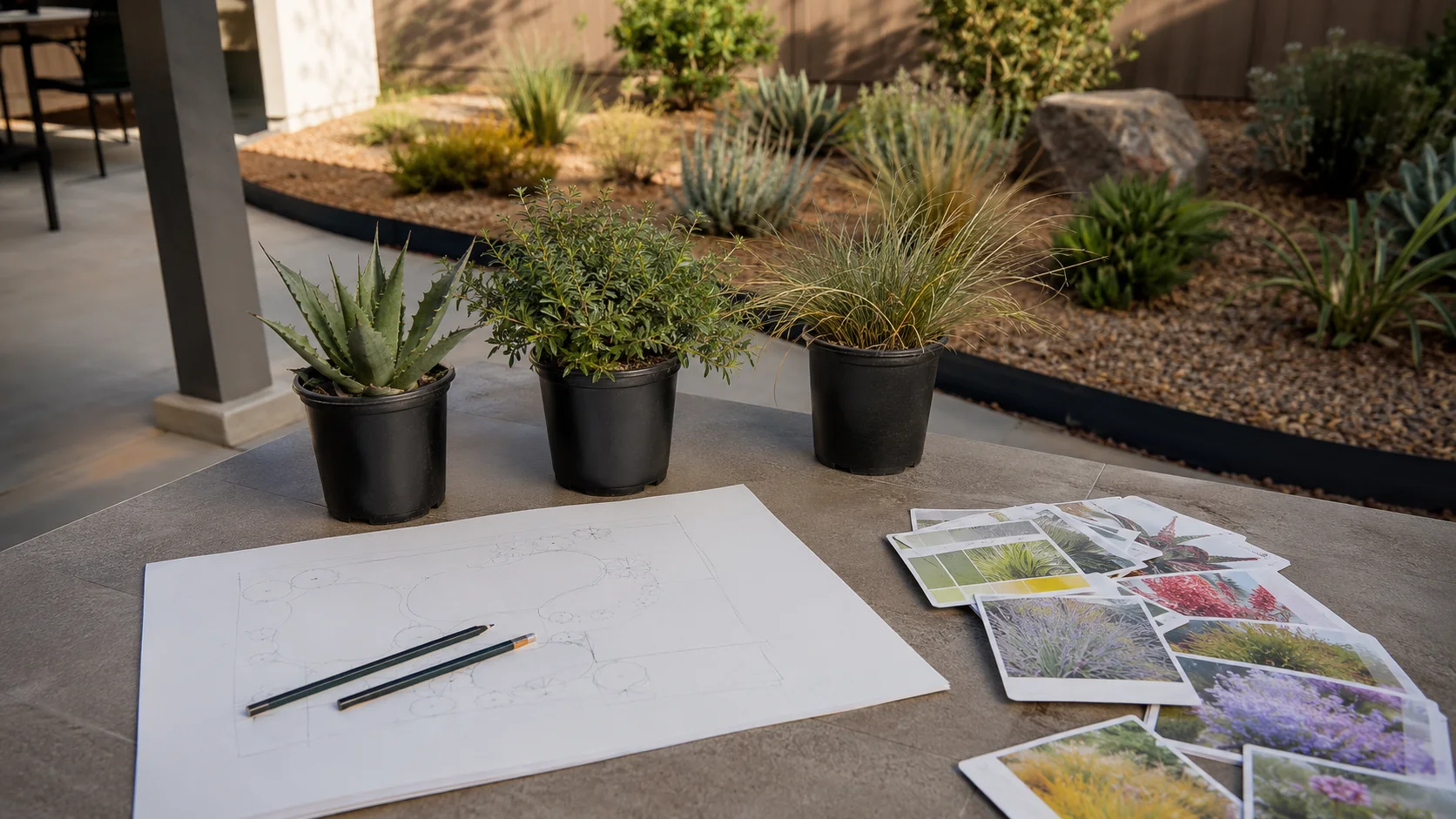
Start by mapping what exists:
- Mark lawn, trees, shrubs, vegetables, annuals, containers, succulents, and bare or mulched areas.
- Note sun, shade, reflected heat, slope, drainage, and wind exposure.
- Turn on each irrigation zone and write down what it actually waters.
- Identify plants that seem stressed, overgrown, crispy, soggy, or weirdly heroic.
- Circle areas where the plant needs clearly do not match the water schedule.
Then choose one small fix. Do not try to achieve enlightenment across the whole yard by Saturday.
Retrofit One Bed Or Side Yard At A Time
Hydrozoning is easier when you make one area coherent instead of trying to perfect the whole property.
Good starter projects include:
- A side yard that already has a clear path.
- A sunny bed full of mixed water needs.
- A gravel-heavy area that needs planting islands.
- A patio-adjacent bed where comfort and appearance matter.
- A lawn edge that is watering nearby low-water shrubs by accident.
- A dry corner where tougher plants would make more sense.
For each area, decide the intended water level, exposure, plants, mulch, and irrigation support. If the area includes decomposed granite or gravel, keep material and planting decisions aligned. The decomposed granite explainer, What Is Decomposed Granite?, can help with material expectations, while How to Use Decomposed Granite Without Tracking Dust Into the House is useful near doors and paths.
Common Hydrozoning Mistakes
Planting Thirsty Plants In The Driest Zone
This often happens when a plant looks great at the nursery and terrible in the yard. If a plant needs more water, shade, or soil support than the zone provides, it is not "adding contrast." It is auditioning for compost.
Mixing Succulents And Annuals On The Same Irrigation Line
Succulents and annual flowers usually do not want the same watering rhythm. Keep them separate unless local guidance and the specific plants say otherwise.
Putting Shade Plants Against Hot West-Facing Walls
Shade plants do not become sun plants because the wall looked empty. Reflected heat can turn a "part shade" dream into a leaf-crisping situation.
Watering Everything For The Thirstiest Plant
This is the big water-waster. If one plant needs more water, solve that plant's placement or zone. Do not let it become the mayor of the entire irrigation schedule.
Ignoring Mature Plant Size
Hydrozoning is not just about water. Plants also need space. A tiny nursery shrub may become a large, thirsty, shaded, root-competing adult with a personality. Plan for the grown-up version.
Trusting Plant Tags Without Considering Microclimate
Plant tags are helpful, not omniscient. They cannot fully account for your west wall, windy side yard, compacted soil, slope, reflected heat, or the fact that one sprinkler head has been living in denial since 2017.
Practical Homeowner Checklist
Use this before planting or reworking a bed:
- Map existing irrigation zones and what each zone actually waters.
- Group plants as high, moderate, low, or very low water.
- Separate lawn, vegetables, annuals, containers, trees, shrubs, and succulents when their needs differ.
- Mark full sun, afternoon sun, shade, reflected heat, wind, slopes, and drainage patterns.
- Check soil and compaction before assuming the plant list is the problem.
- Keep high-water zones small and purposeful.
- Put low-water and very low-water plants where the site supports them.
- Match irrigation method to the plant group, not the other way around.
- Fix one bed or side yard at a time if the whole yard is messy.
- Use local extension, water provider, or qualified professional guidance for plant lists, irrigation changes, mature trees, drainage, or major conversions.
Frequently Asked Questions
Is Hydrozoning Only For Desert Landscapes?
No. Hydrozoning is especially useful in dry climates and waterwise yards, but the basic idea applies anywhere plants have different water needs. A rainy climate can still have sunny slopes, dry foundation beds, wet low spots, containers, turf, and thirsty annuals that should not all be treated the same.
How Many Hydrozones Does A Yard Need?
Most homeowners do not need a complicated map with twenty zones. Start with broad groups: high, moderate, low, and very low water. Then adjust for sun, shade, soil, slope, and irrigation type. The goal is useful grouping, not a landscape spreadsheet that requires snacks.
Can Existing Irrigation Be Hydrozoned?
Sometimes, yes. Start by turning on each zone and writing down what it waters. You may be able to move plants, cap or adjust emitters, separate beds over time, or change how one area is planted. Larger irrigation changes should be checked against local guidance or a qualified pro.
Are Native Plants Always In The Same Hydrozone?
No. Native plants still vary by water need, soil preference, exposure, mature size, and establishment requirements. "Native" does not mean "plant anywhere and ignore." Use local plant guidance and group by actual needs.
Do Low-Water Plants Need Irrigation?
Often, yes, especially during establishment. Some low-water plants may need little supplemental water once established in the right climate and soil, but that depends on region, season, plant type, and site conditions. Low-water does not mean zero-care or zero-water.
What Is The Biggest Hydrozoning Mistake?
Watering the whole yard for the thirstiest plant. That usually wastes water and can stress lower-water plants. If one area needs more water, make it a small, intentional zone instead of letting it run the yard.
The Bottom Line
Hydrozoning is not glamorous, but it is one of the ideas that makes waterwise landscaping work in real yards.
Group plants by water need, then adjust for sun, shade, soil, slope, wind, reflected heat, and irrigation method. Keep higher-water areas purposeful. Let low-water plants live with compatible neighbors. Fix the mess one bed at a time.
Your yard does not need to become a perfect diagram. It just needs to stop asking plants with completely different needs to share the same watering plan and pretend everything is fine.