
Drip irrigation sounds beautifully simple until you are staring at tubing, emitters, filters, pressure regulators, mystery valves, and a timer that behaves like it was programmed during a minor family argument.
The useful idea is simple: drip and microirrigation apply water slowly and close to the plant root zone. That can be a very good fit for shrubs, trees, planting beds, containers, vegetables, and low-water ornamental areas when the system is designed around the plants and maintained like something that exists in the real world.
The trap is treating drip like magic string. It is not magic. It still needs the right zones, clean water, appropriate pressure, good placement, seasonal checks, flushing, and plant observation. Ignore those pieces and the yard can quietly become overwatered, underwatered, clogged, leaky, or weirdly crispy in one corner.
This guide keeps the basics practical. No brand recommendations. No universal run times. No pipe-sizing cosplay. Just the homeowner-level ideas you need before drip irrigation turns into expensive spaghetti under mulch.
The Direct Answer
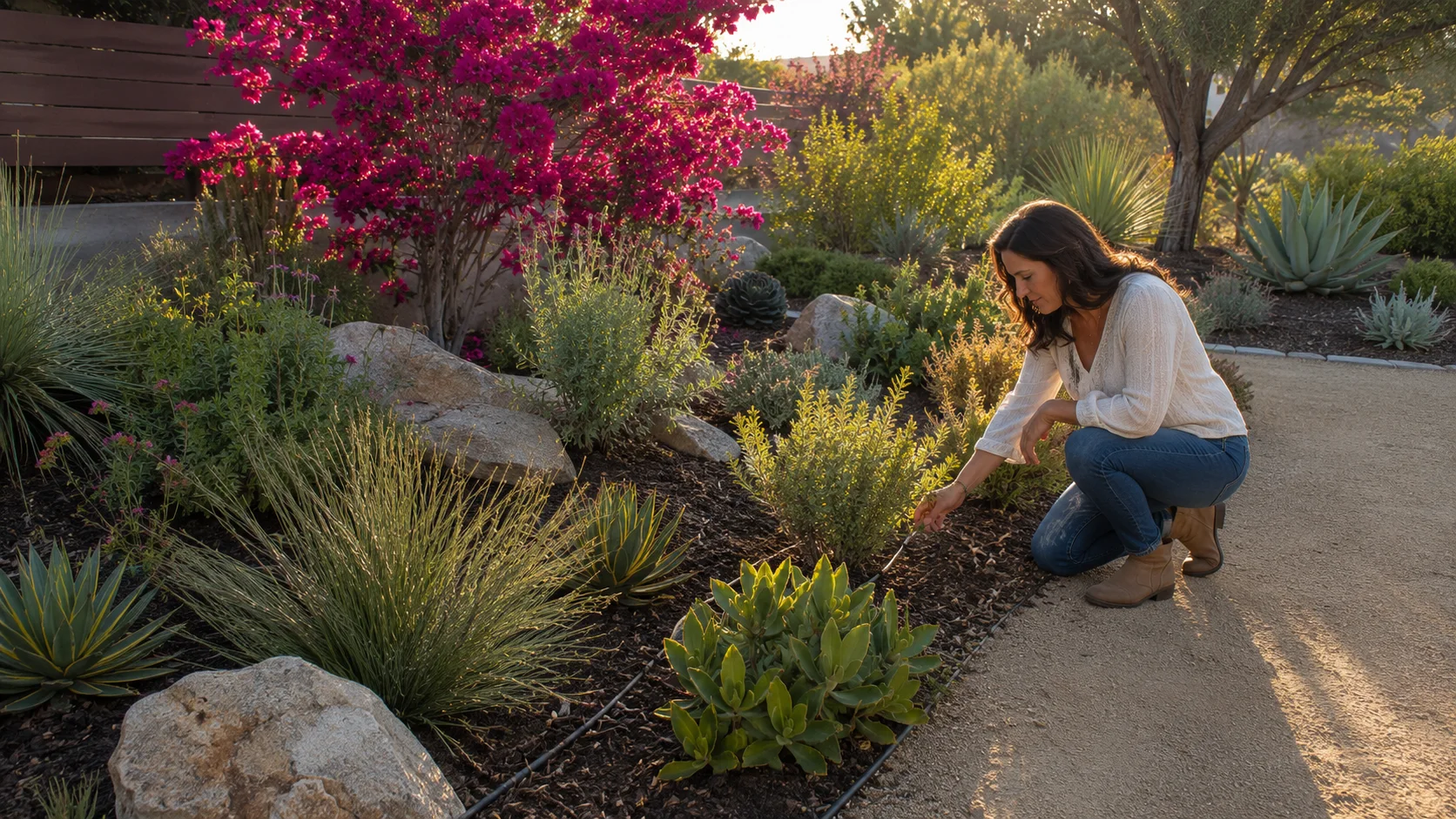
Drip irrigation is a low-flow irrigation approach that delivers water near plants, usually through tubing, dripline, or small emission devices. In a low-water yard, it works best when plants are grouped by similar water needs first, then the drip layout supports those groups.
For most homeowners, the basic order is:
- Plan the planting zones.
- Group plants by water need, sun exposure, soil, slope, mature size, and irrigation method.
- Keep drip zones separate from spray zones where possible.
- Use filtration and pressure regulation where the system requires it.
- Place water where roots can actually use it.
- Inspect, flush, and adjust the system as plants grow.
If that sounds like hydrozoning, good. Drip irrigation works better after you understand Hydrozoning Basics for Homeowners. The tubing should serve the plant plan, not rescue a yard where thirsty flowers, succulents, turf, trees, and vegetables were tossed together and told to get along.
What Drip Irrigation Is Good At
Drip irrigation can be excellent for delivering water slowly and close to targeted plants. That makes it useful in many low-water yards because the water is less likely to be sprayed onto sidewalks, fences, walls, gravel, or the neighbor's patio chair.
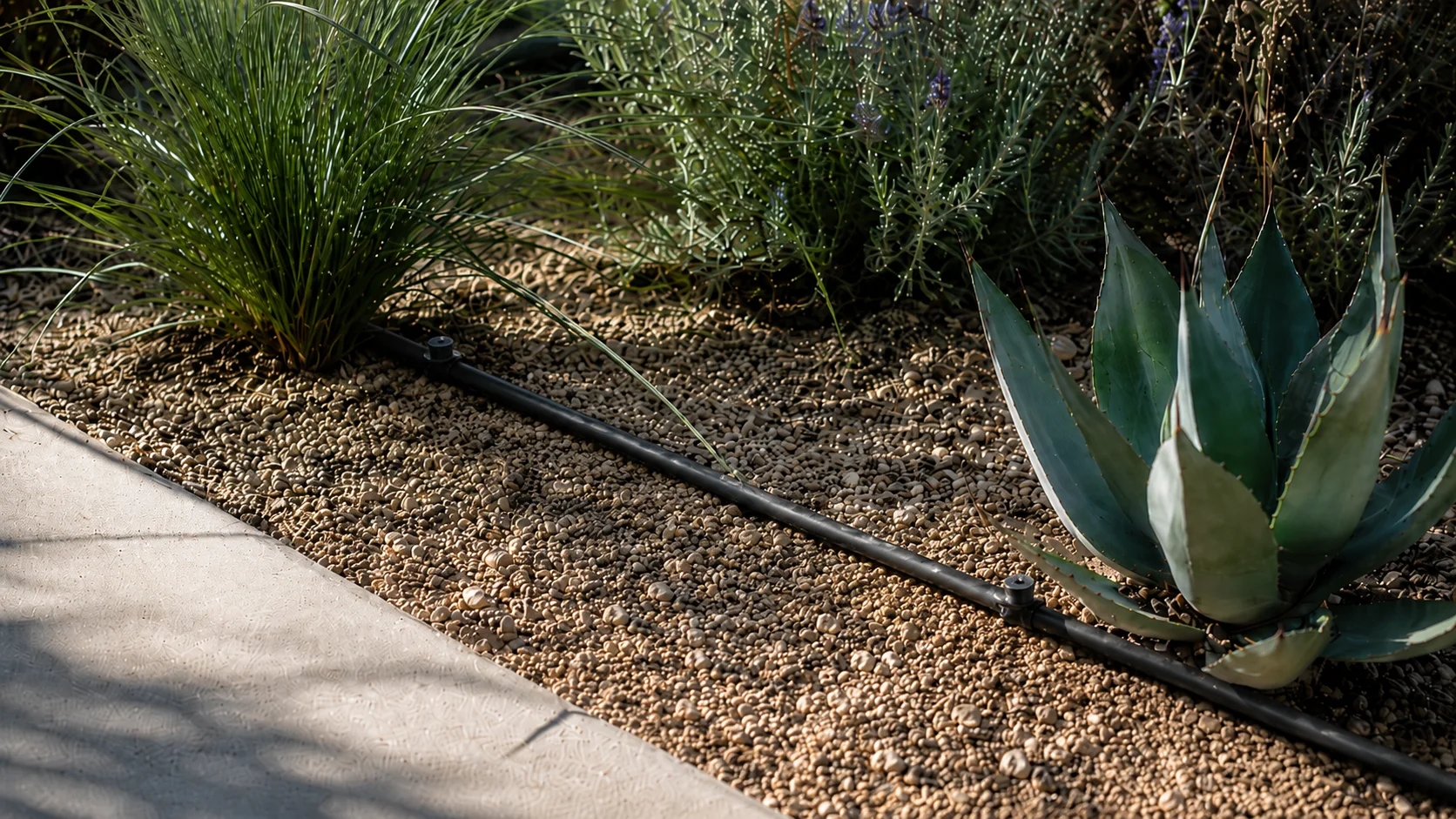
It can work well for:
- Shrub and perennial beds.
- Trees, when designed for the tree's root area and long-term growth.
- Low-water ornamental beds.
- Vegetable beds.
- Containers, with careful monitoring.
- Narrow planting strips where spray irrigation would overshoot.
- Beds with mulch where surface evaporation and overspray are concerns.
Drip can also make the yard feel calmer. No sprinkler heads misting the patio. No wind turning irrigation into performance art. No surprise puddles on the walkway because a spray head decided the concrete looked thirsty.
But drip is only efficient when it is matched to the plants, soil, pressure, filtration, layout, and maintenance. A badly planned drip system can waste water quietly, which is arguably ruder than wasting it loudly.
What Drip Irrigation Is Bad At
Drip irrigation is not the best answer for every surface or every planting situation.
It can disappoint when:
- Plants with very different water needs share one zone.
- Emitters are placed too close, too far away, or in the wrong pattern.
- A young plant gets water at the original root ball but never gets support as the root zone expands.
- Tubing gets hidden under mulch and forgotten until something dies.
- Filters clog and nobody checks them.
- Pressure is too high, too low, or inconsistent.
- Lines are not flushed.
- Animals chew tubing.
- Roots, soil, grit, or mineral buildup reduce flow.
- A timer keeps running the same schedule through different seasons.
Drip is also not automatically better than spray irrigation for turf. Turf generally needs more uniform surface coverage than a shrub bed. Spray irrigation may still make sense for functional lawn areas if it is designed, adjusted, and managed well.
The point is not "drip good, spray bad." The point is "use the method that fits the plants and the area." Revolutionary, I know. Terrible news for anyone hoping to buy one box and become an irrigation philosopher.
Drip Vs. Spray Irrigation
Spray irrigation throws water through the air. Drip irrigation delivers it at or near the soil surface or root zone through low-flow devices.
Spray can be useful for:
- Turf.
- Larger uniform areas.
- Some groundcovers or seed establishment situations, depending on local guidance.
- Areas where broad, even surface coverage is needed.
Spray can waste water when wind, overspray, runoff, misting, broken heads, poor pressure, or bad scheduling send water somewhere plants cannot use it.
Drip can be useful for:
- Planting beds.
- Shrubs.
- Trees.
- Containers.
- Vegetable beds.
- Low-water plantings.
- Narrow strips and targeted zones.
Drip can fail when it is under-designed, clogged, ignored, run too often, or asked to water plants with conflicting needs.
In many low-water yards, the practical answer is a mix: spray only where it truly fits, drip where targeted planting beds need it, and no irrigation where the site and plants can honestly support that after establishment. For the bigger planning frame, see How to Plan a Low-Water Backyard Without Making It Look Barren.
Hydrozoning Comes Before Drip Layout
Before thinking about tubing, think about plant groups.
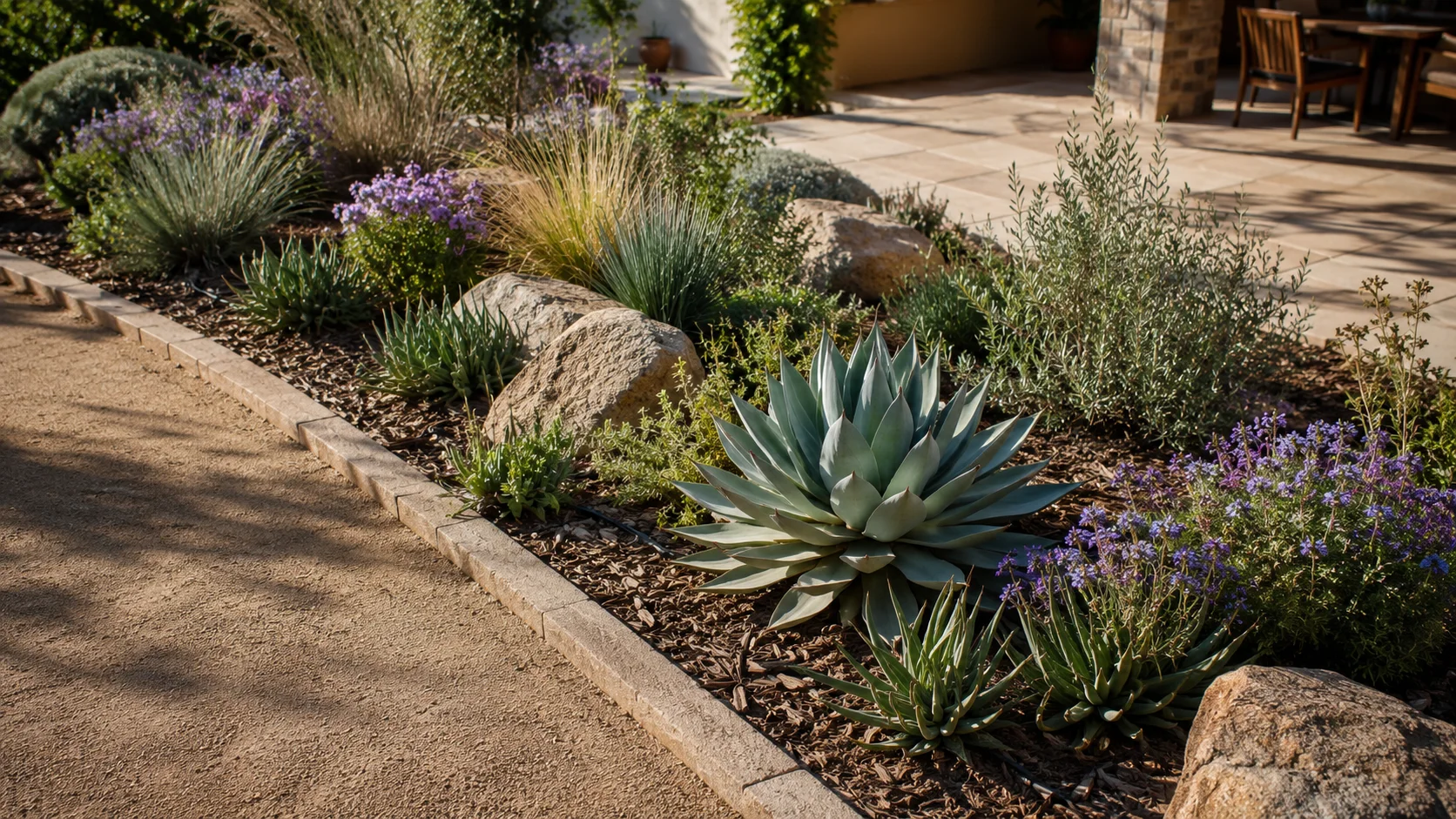
Drip irrigation does not fix a confused planting plan. If you put thirsty annuals, low-water shrubs, succulents, vegetables, a young tree, and a container on the same zone, the system still has to water by one schedule. The thirstiest plants usually win. The lower-water plants lose. The homeowner wonders why the yard has become a slow-motion argument.
Group plants by:
- Water need.
- Sun and shade.
- Reflected heat.
- Soil and drainage.
- Slope and runoff.
- Root depth.
- Mature size.
- Establishment needs.
- Irrigation method.
That may mean one drip zone for shrubs, another for vegetable beds, and a separate approach for trees or containers. It may also mean moving plants before you change irrigation.
The boring order is the smart order: plant logic first, irrigation hardware second.
The Basic Parts Of A Drip System
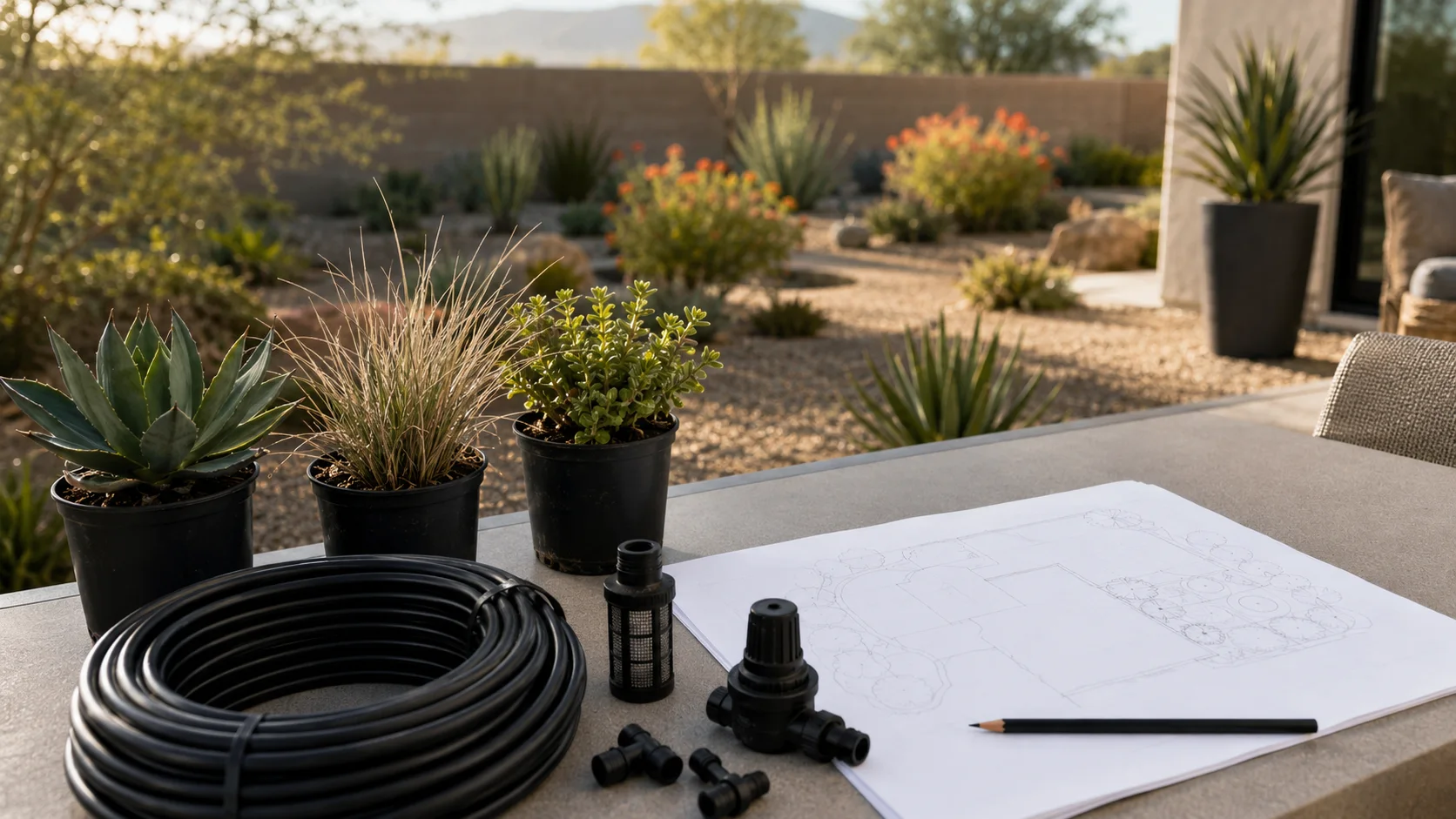
You do not need to memorize every fitting in the aisle. You do need to understand the job each major part is supposed to do.
Water Source Or Valve
The water source may be an irrigation valve, hose bib, or existing system connection. This is where local rules, backflow requirements, pressure, and professional help can become relevant. If the system connects to household or potable water, do not wing the legal and safety side. Check local requirements or use a qualified irrigation or landscape professional.
Filter
Drip devices have small openings. Small openings and dirty water are not soulmates.
Filtration helps keep grit, sediment, and debris from clogging emitters or dripline. Filters still need inspection and cleaning. A filter you never check is less a filter and more a future plot twist.
Pressure Regulation
Drip systems usually operate at lower pressure than many home irrigation systems. Too much pressure can cause fittings to pop, emitters to behave badly, or water distribution to become uneven. Too little pressure can also cause poor performance.
Keep this at homeowner level: pressure matters, and the system components need to be compatible. For complex pressure issues, sloped sites, multi-zone systems, or conversions from spray to drip, get qualified help instead of guessing with plastic parts and optimism.
Mainline, Tubing, And Dripline
Tubing moves water through the planting area. Some systems use blank tubing with separate emitters. Others use dripline with built-in emission points.
The layout should follow the plant zone, not wander through the bed like it got lost. Keep tubing accessible enough to inspect. Burying every possible problem under mulch and memory is how a drip system becomes a mystery novel.
Emitters And Microirrigation Devices
Emitters, dripline, bubblers, and microirrigation devices release water to plants. The right device depends on the plant, soil, slope, layout, and system design.
This guide will not tell you a universal emitter count or flow rate because that would be fake precision. A small shrub, mature tree, container, vegetable bed, and low-water ornamental grass do not all need the same setup.
End Caps And Flush Points
Flush points let you clear debris from lines. They are easy to forget until clogs make the system uneven.
Build maintenance into the layout. If flushing a line requires archaeology, it probably will not happen often enough.
Timer Or Controller
A timer or controller can run irrigation automatically, but automatic does not mean intelligent. A timer keeps doing what it was told, even when the season changes, a plant matures, a line clogs, or rain happens.
Use controllers as tools, not as absentee landlords. Observe the plants and soil. Adjust when conditions change. The timer does not know your west-facing bed is having a bad week.
What Changes The Watering Plan
Drip layout is not just about equipment. Site conditions matter.
Plant Type And Mature Size
A new shrub is not the same as a mature shrub. A young tree is not the same as a large shade tree. Plants often need different support during establishment than they need later.
Plan for the adult plant. Otherwise the system waters the baby version forever, which is a bold strategy for disappointing the grown-up version.
Root Depth
Shallow-rooted annuals, vegetables, shrubs, trees, and succulents can use water differently. Water should reach the active root area without constantly soaking the wrong soil layer.
For trees and larger shrubs, be especially careful. Mature trees can be valuable shade assets in low-water yards, and changing irrigation around them casually can cause real stress. Use local extension guidance or a qualified professional when trees are involved.
Soil
Soil changes how water moves. Sandy soil drains quickly. Clay soil can take water slowly and hold it longer. Compacted soil can reduce infiltration and create runoff. Fill, construction debris, caliche, and shallow soil can all make irrigation behave differently than expected.
Do not blame the tubing for every problem. Sometimes the soil is the villain.
Sun, Shade, And Reflected Heat
A plant in full afternoon sun near a block wall may need different support than the same plant in morning sun. Gravel, decomposed granite, pavers, and concrete can reflect heat and make nearby planting areas harsher.
If you are designing around gravel or decomposed granite, these related guides help with surface expectations: How to Make a Gravel Yard Look Designed, Not Deserted, What Is Decomposed Granite?, and How to Use Decomposed Granite Without Tracking Dust Into the House.
Slope And Drainage
Water can move downhill before plants use it. Pressure can also vary across slopes. Low spots may stay wet. Raised areas may dry faster.
If the yard has meaningful slope, drainage issues, erosion, pooling near structures, or water moving toward doors, treat that as a site problem, not a drip tubing puzzle.
Mulch
Mulch can help protect soil and reduce evaporation, but it also hides irrigation. That is useful until it hides leaks, clogs, disconnected tubing, or animal damage.
Use mulch, but do not let it become a cover story for neglect.
Common Uses In Low-Water Yards
Shrubs
Drip is often a good fit for shrub beds when plants are grouped by similar water needs. Repeat plants in clusters and plan for mature size so the system does not need to be reinvented every time a shrub grows into its adult personality.
Trees
Trees need special care. They may need water distributed over a larger root area, and their needs change as they mature. Do not assume one emitter at the trunk is a tree plan. For valuable mature trees, large conversions, or drought stress, get local guidance.
Planting Beds
Mixed ornamental beds can work well with drip when plants share similar needs. If the bed contains both moderate-water perennials and very low-water succulents, consider whether those plants should be in separate zones or separate beds.
Containers
Containers dry differently than in-ground planting. Drip can help, but pots still need observation because size, material, exposure, plant type, and season all matter.
Vegetable Beds
Vegetable beds often need more regular attention than low-water ornamental beds. Keep them separate from low-water shrubs and succulents so the tomatoes do not become mayor of the whole irrigation schedule.
Low-Water Ornamental Beds
Low-water beds may need irrigation during establishment and less frequent support later, depending on climate, plant choice, soil, and season. Drip can help provide targeted water, but overwatering drought-tolerant plants is still very possible.
Low-water does not mean "set it once and disappear." That is how plants learn disappointment.
Common Drip Irrigation Mistakes
Mixing Plants With Different Water Needs On One Zone
This is the big one. If plants need different watering rhythms, one zone will probably make someone unhappy.
Skipping Filtration
Small openings clog. Water carries debris. Filters exist for reasons other than making the system look more official.
Ignoring Pressure
Pressure that is too high or too low can cause poor performance. Drip components need conditions they can actually handle.
Burying Problems Under Mulch
Mulch is useful. It is not a legal defense. Leave the system inspectable enough that leaks, clogs, and disconnected tubing do not go unnoticed for months.
Putting Emitters In The Wrong Place
Water needs to reach the active root area. Placement should change as plants grow. A setup that made sense on planting day may not be enough years later.
Overwatering Drought-Tolerant Plants
Drought-tolerant plants are not immune to bad irrigation. Too much frequent water can stress plants that prefer sharper drainage or less frequent irrigation after establishment.
Not Flushing Lines
Flush points help clear debris. If you never flush, debris gets a vote.
Not Checking For Clogged Emitters
Drip problems can be quiet. A spray head announces itself by watering the sidewalk. A clogged emitter may simply let a plant decline while pretending nothing happened.
Trusting The Timer More Than The Yard
Timers are convenient, not clairvoyant. Observe plants, soil, weather, and season. Adjust as needed.
Basic Maintenance
Drip irrigation needs regular attention. Not constant fussing, but enough inspection to catch problems before the yard starts sending distress signals.
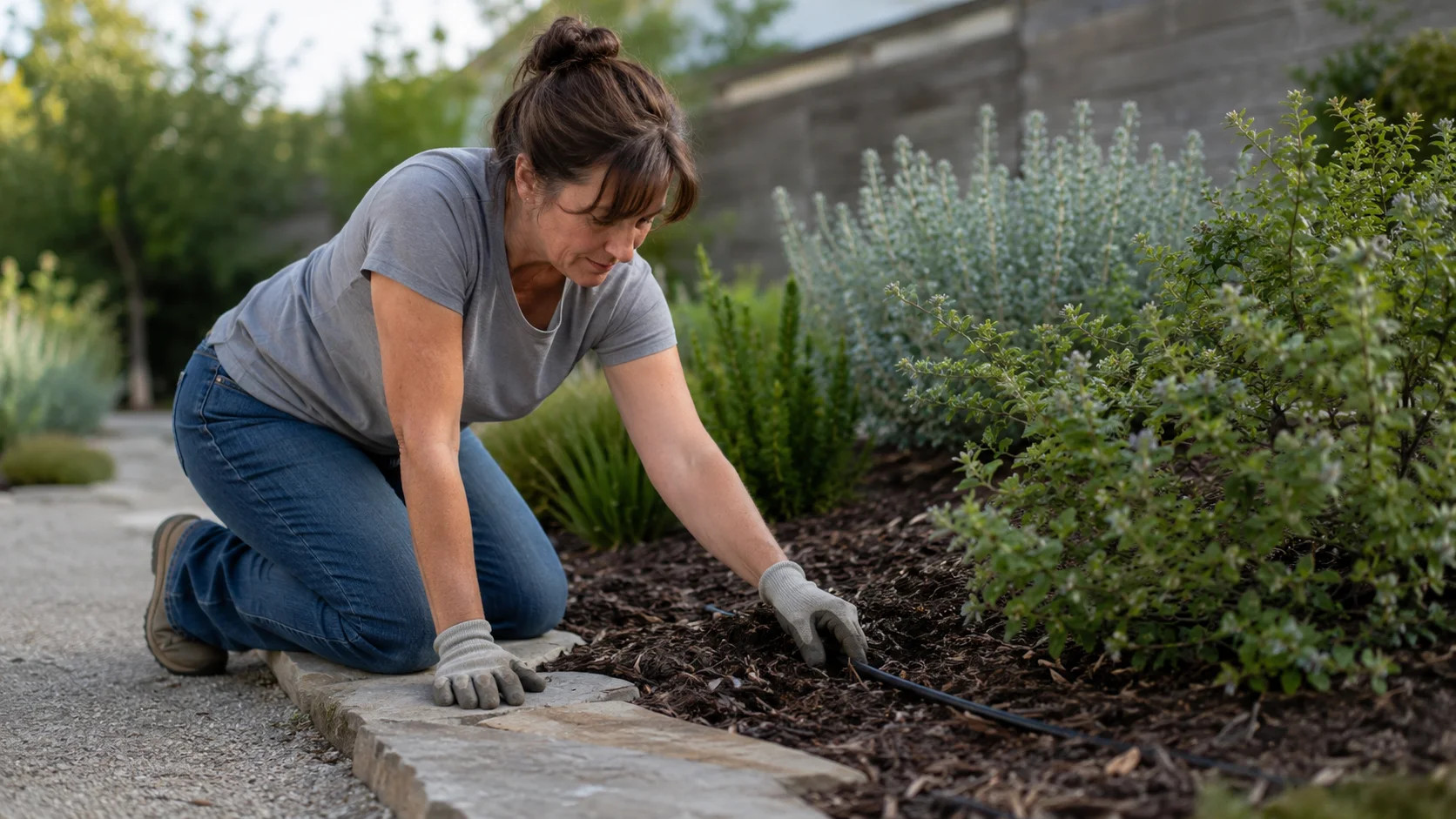
Useful maintenance habits include:
- Walk the system seasonally and after major weather events.
- Look for dry plants, soggy spots, exposed tubing, leaks, disconnected fittings, and animal damage.
- Check filters according to local water conditions and system needs.
- Flush lines when needed and after repairs.
- Check for clogged emitters or uneven plant response.
- Keep mulch deep enough to protect soil, but not so buried that inspection becomes ridiculous.
- Adjust emitter placement or coverage as plants mature.
- Revisit schedules with the season.
The best maintenance tool is not fancy. It is noticing. A low-water yard still wants a homeowner who looks at it occasionally.
When To Call A Professional
Some drip work is reasonable for a careful homeowner. Some of it is where confidence goes to become a wet valve box.
Consider qualified help when you are dealing with:
- Complex valve or pressure issues.
- Backflow or local-code concerns.
- Large spray-to-drip conversions.
- Mature trees.
- Major slope or drainage issues.
- Water moving toward structures.
- Multiple zones with different plant types and exposures.
- Systems that keep clogging, leaking, or performing unevenly.
- Anything involving wiring, controller complexity, or potable water connections you do not understand.
That is not defeat. That is knowing when the job has left the land of "Saturday project" and entered the land of "please do not flood the side yard."
Practical Homeowner Checklist
Before installing or changing drip irrigation, work through this:
- Group plants by water need before planning tubing.
- Separate turf, vegetables, containers, trees, shrubs, and succulents when their needs differ.
- Note sun, shade, reflected heat, slope, wind, soil, and drainage.
- Keep drip zones separate from spray zones where practical.
- Confirm the system has appropriate filtration.
- Confirm pressure is handled appropriately for the drip components.
- Plan accessible flush points.
- Place water where roots can use it, not just where tubing is easiest.
- Keep the system inspectable under mulch.
- Adjust as plants establish and mature.
- Avoid universal run-time advice; use local guidance and observation.
- Call a pro for backflow, pressure, mature trees, major conversions, slope/drainage, or local-rule questions.
Frequently Asked Questions
Is Drip Irrigation Always Better Than Sprinklers?
No. Drip can be excellent for planting beds, shrubs, trees, containers, and low-water ornamental areas. Spray irrigation may still make sense for turf or areas needing broad, even surface coverage. The better option depends on the plants, layout, soil, slope, maintenance, and water schedule.
Can I Put All My Plants On One Drip Zone?
Usually not if the plants have different water needs. A vegetable bed, succulent bed, shrub border, container group, and young tree may all need different support. Hydrozoning first keeps the drip system from becoming one schedule for incompatible plants.
Do Drip Lines Need A Filter?
Drip systems commonly need filtration because small emitters and dripline openings can clog from debris, sediment, or other water-quality issues. The exact setup depends on the water source and system design. Skipping filtration is a classic way to make future maintenance more annoying.
How Often Should I Run Drip Irrigation?
There is no universal schedule that works across climates, soils, plants, seasons, slopes, and systems. Use local extension or water-provider guidance, watch the plants and soil, and adjust seasonally. Be especially careful with new plant establishment and mature trees.
Can Drip Irrigation Be Buried Under Mulch?
It can often sit under mulch for protection and soil-moisture benefits, but do not bury it so completely that leaks, clogs, disconnected tubing, or animal damage become invisible. Hidden does not mean maintenance-free.
Why Are Some Plants Still Dry With Drip Irrigation?
Possible causes include clogged emitters, poor pressure, disconnected tubing, emitters in the wrong location, too little coverage for the root area, slope, soil problems, or a schedule that does not match the plant. Drip problems are often quiet, so visual checks matter.
The Bottom Line
Drip irrigation can be a smart tool for low-water yards, but it is not a personality transplant for a bad planting plan.
Start with hydrozoning. Group plants by water need and site conditions. Use drip where targeted root-zone watering makes sense. Respect filtration, pressure, flushing, maintenance, soil, slope, and mature plant size. Keep the system visible enough to inspect. Adjust when plants and seasons change.
Done well, drip irrigation is calm, practical, and efficient-looking in the best possible way. Done badly, it is just hidden plumbing with opinions.