
A low-water yard can save water and still feel like a punishment if nobody can sit in it after breakfast.
That is the shade problem. Many homeowners remove thirsty lawn, add gravel, choose tougher plants, and technically make the landscape more waterwise. Then the backyard becomes a glare-filled skillet with seating furniture bravely pretending it has a purpose.
Shade is what turns a low-water landscape from "efficient" into livable. It can make patios usable, reduce reflected heat, protect some plants from brutal exposure, soften gravel-heavy spaces, and give the yard a reason to be occupied instead of admired through glass from the air-conditioned side of the door.
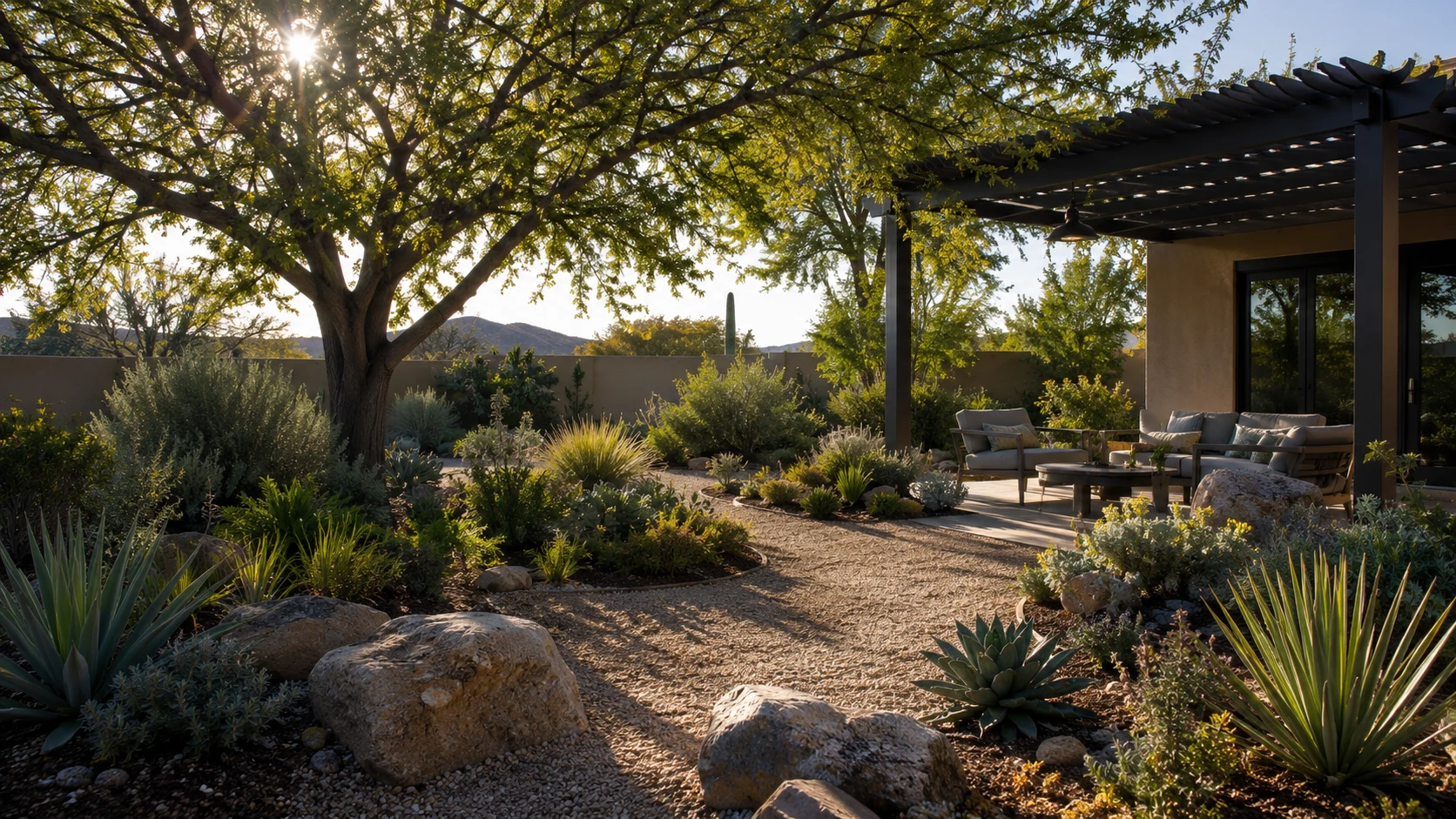
The Direct Answer
Shade belongs in low-water landscapes because waterwise should not mean bare, hot, and unusable.
The best approach usually mixes living shade and built shade: regionally appropriate trees where long-term canopy makes sense, pergolas or patio covers where structure is appropriate, umbrellas for flexible seating, walls or fences that cast useful shade, and planting zones arranged so sun-loving plants and shade-tolerant plants are not forced into the same tiny drama.
Start with comfort zones first: seating areas, doors, west-facing exposures, paths, pet areas, and planting beds near heat-reflective hardscape. Then decide whether living shade, built shade, or a temporary shade solution fits each area.
If the larger yard plan is still fuzzy, start with How to Plan a Low-Water Backyard Without Making It Look Barren. This guide focuses on shade as the missing layer that makes waterwise design feel human.
Waterwise Does Not Mean Exposed
Low-water landscaping is often misunderstood as removing everything soft, green, or comfortable. That is how a yard becomes technically responsible and emotionally abandoned.
Waterwise design is really about matching the landscape to the climate, soil, sun exposure, irrigation reality, plant needs, and how people use the space. Shade fits directly into that. It can help a yard feel cooler, reduce glare, support outdoor rooms, and make plant placement more forgiving when used well.
Bare exposure creates problems:
- Seating areas nobody wants to use.
- Gravel or hardscape that radiates heat.
- Young plants struggling through establishment.
- Pet areas that get too hot.
- West-facing walls and windows that make the yard feel harsher.
- Plant beds where every choice has to tolerate maximum punishment.
The goal is not to create a lush lawn fantasy by another name. The goal is a low-water yard with layers: structure, planting, mulch, gravel where it belongs, and shade where people and plants need relief.
How Shade Changes The Yard
Shade affects more than comfort.
It can influence:
- How long people can use a patio.
- How harsh gravel, decomposed granite, pavers, and concrete feel.
- How quickly soil surfaces dry out.
- Which plants can handle a bed.
- How much reflected heat hits walls, doors, and windows.
- Whether a path feels usable in summer.
- Whether a pet area is reasonable or cruel-by-design.
Shade does not erase the need for good plant choice, irrigation, mulch, and maintenance. It also does not guarantee water savings. A badly chosen tree can create water, root, litter, or placement problems. A badly installed structure can create wind, drainage, permit, or safety problems. Shade is powerful, not magical.
For ground surfaces, shade works hand-in-hand with material choice. Mulch vs Gravel in Low-Water Landscapes explains why gravel and rock can create heat issues in some exposures, while organic mulch can better support many plant root zones.
Living Shade: Trees And Large Plants
Trees are often the most valuable shade in a landscape because they can cool, soften, screen, frame, and make a yard feel alive. They also ask for more planning than a patio umbrella.
A waterwise yard can include trees. In many cases, it should. Removing every tree in the name of xeriscaping is one of those decisions that can make the water bill feel better while making the yard feel worse.
Good tree planning considers:
- Mature size.
- Canopy spread.
- Root zone.
- Establishment water.
- Long-term irrigation needs.
- Local climate and soil.
- Proximity to structures, walls, paving, utilities, and property lines.
- Litter, thorns, fruit, flowers, seed pods, or maintenance.
- Fire, wind, and local rule considerations where relevant.
The small tree in the nursery container is not the adult tree. It is the trailer for the adult tree. Do not plant the trailer next to a wall, patio, sewer line, roof, or walkway as if the sequel is not coming.
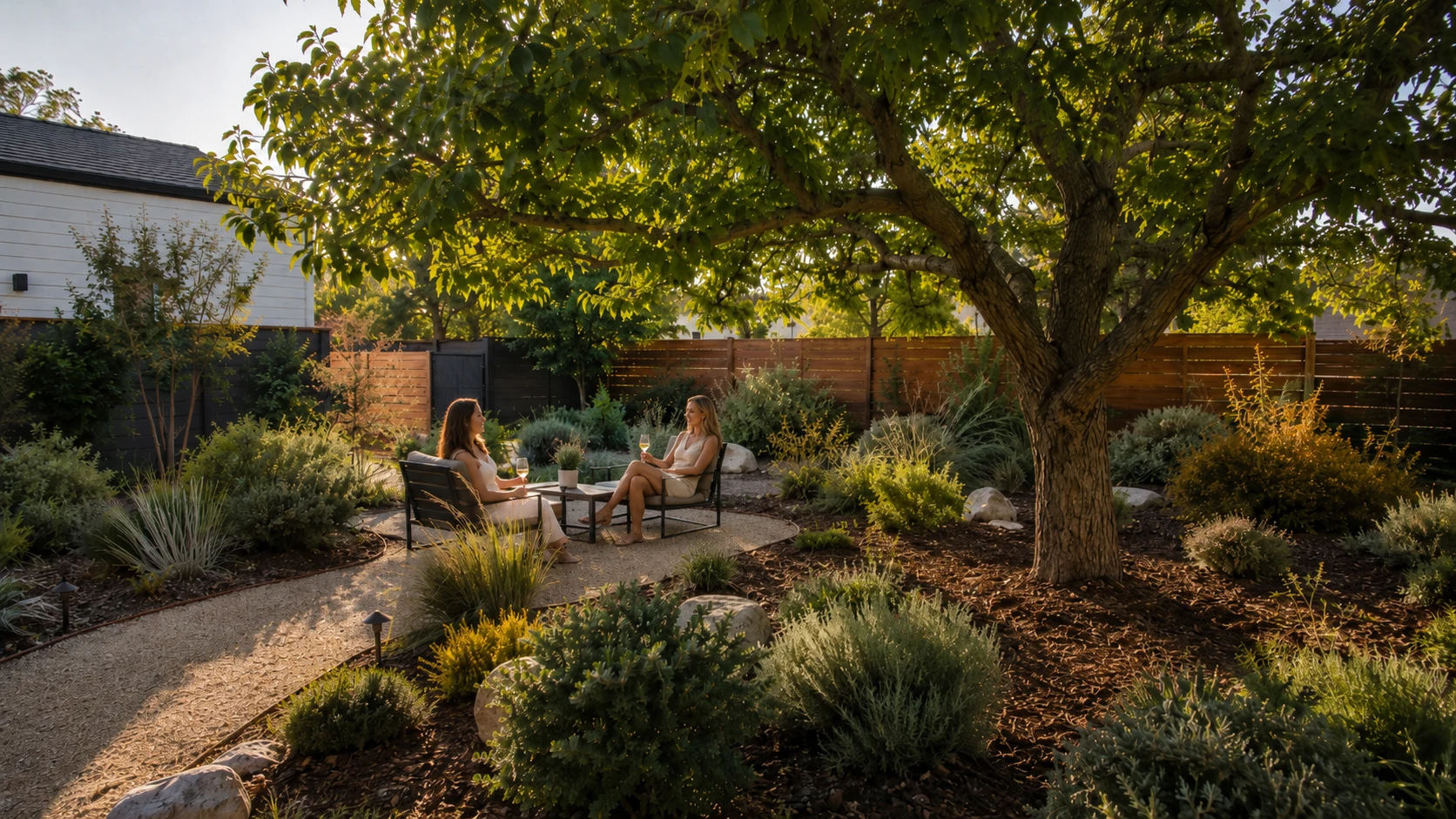
Establishment Water Still Counts
Low-water does not mean no establishment water.
New trees and large shrubs often need consistent support while roots establish. The exact schedule depends on species, nursery stock, soil, climate, season, irrigation method, and local guidance. This is not a place for universal internet watering formulas.
The practical homeowner rule is simple: plan establishment water before planting. If you install a shade tree and then treat it like a cactus with ambitions, it may respond poorly.
For irrigation context, Drip Irrigation Basics for Low-Water Yards explains why plant type, mature size, root depth, soil, sun, slope, and maintenance matter. Trees are not just oversized shrubs with better public relations.
Mature Trees Deserve Extra Caution
Existing mature trees can be the best shade asset in the yard. They can also be damaged by casual changes to grade, soil, irrigation, paving, root zones, or drainage.
Be careful before:
- Removing a mature tree.
- Cutting roots.
- Changing irrigation around an established tree.
- Paving or compacting soil over the root zone.
- Adding a lot of rock around a heat-sensitive tree.
- Regrading or changing drainage near the trunk.
- Building patios, walls, or structures near major roots.
For valuable mature trees, use local extension guidance or a certified arborist. That is not overkill. That is respecting the one thing in the yard that may already be doing years of unpaid climate work.
Built Shade: Pergolas, Ramadas, Sails, Umbrellas, And Covers
Built shade can help where trees are too slow, too large, wrong for the site, or not enough by themselves.
Common built shade options include:
- Pergolas.
- Ramadas or roofed shade structures.
- Shade sails.
- Patio covers.
- Umbrellas.
- Walls and fences that cast useful shade.
- Screens or trellises where appropriate.
Built shade is useful because it can target a seating area, dining zone, door, window, path, or patio. It can also look fantastic when scaled properly. But structures come with responsibilities. Wind, permits, HOA rules, foundations, drainage, utilities, fire considerations, and local building rules may matter.
This guide is not a structural design manual. It will not tell you how to size posts, pour footings, anchor shade sails, run electrical, attach to the house, or pretend wind is a rumor. For permanent or load-bearing shade, check local requirements and use qualified help when needed.
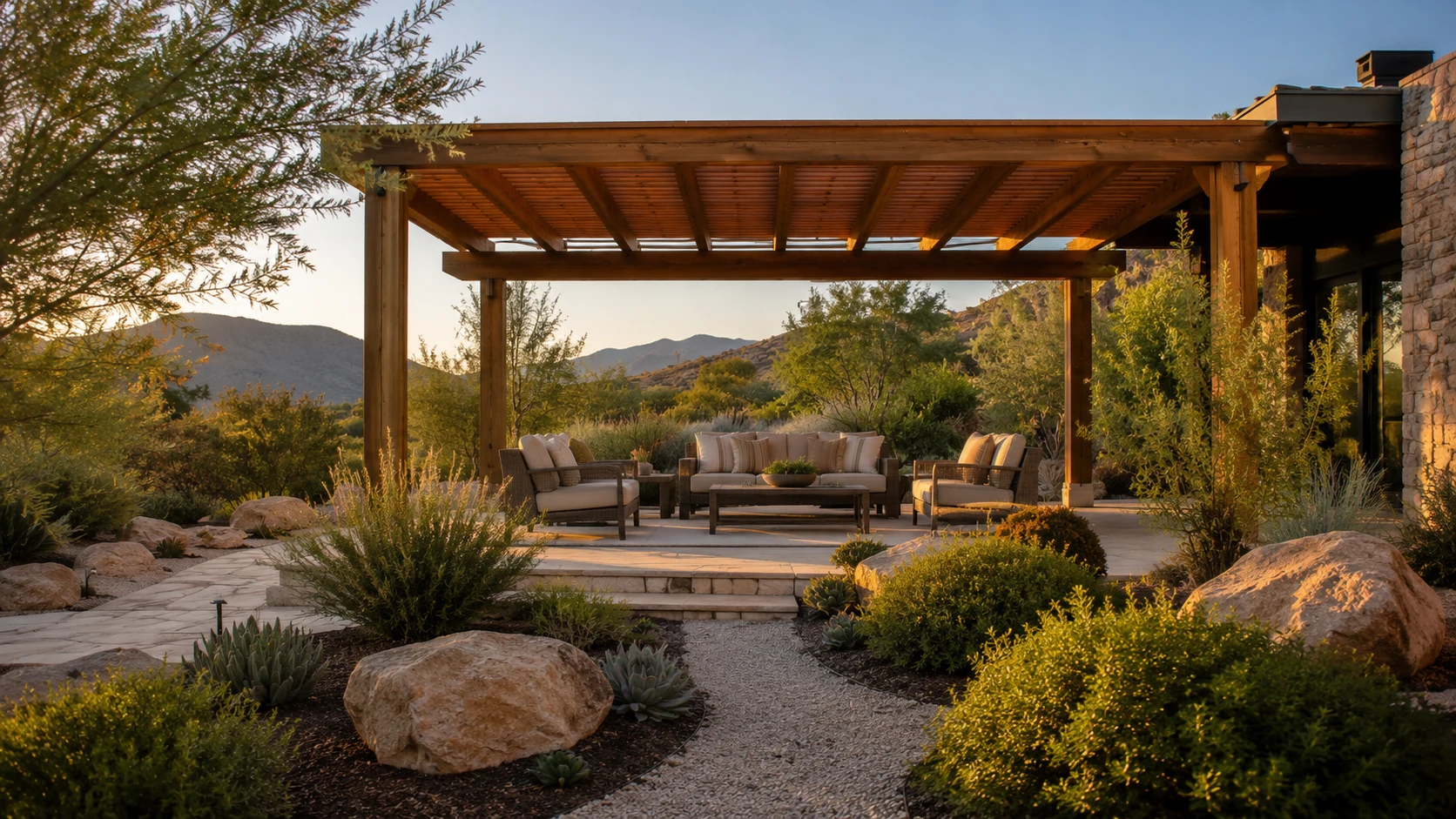
Living Shade Vs Built Shade
Living shade and built shade solve different problems.
Living shade is usually better when you want:
- Long-term canopy.
- Wildlife value where appropriate.
- A softer landscape feel.
- Seasonal change.
- Shade that grows into the design.
- A cooler-feeling planting environment.
Built shade is usually better when you want:
- Faster shade.
- Predictable coverage over a patio.
- Shade where a tree would be too large or too slow.
- A structure attached to an outdoor room.
- Seasonal or adjustable coverage.
- A solution that does not depend on plant establishment.
The best yard may use both. A young tree can become the long-term answer while an umbrella or pergola makes the seating area usable now. That is not cheating. That is acknowledging time, which landscapes insist on doing whether or not the mood board approves.
Shade And Hard Surfaces
Shade is especially important near hardscape and mineral surfaces.
Concrete, pavers, decomposed granite, decorative rock, gravel, walls, and fences can all affect how hot a space feels. Some surfaces absorb heat. Some reflect glare. Some make plants work harder in already harsh exposures.
Use shade near:
- Concrete patios.
- Gravel seating areas.
- Decomposed granite paths.
- West-facing walls.
- Doors and windows.
- Paver walkways.
- Rock-mulched planting beds.
- Dog runs or pet routes.
If you are working with decomposed granite, What Is Decomposed Granite? covers where it works and where it disappoints. If tracking dust near doors is the problem, How to Use Decomposed Granite Without Tracking Dust Into the House gets more specific.
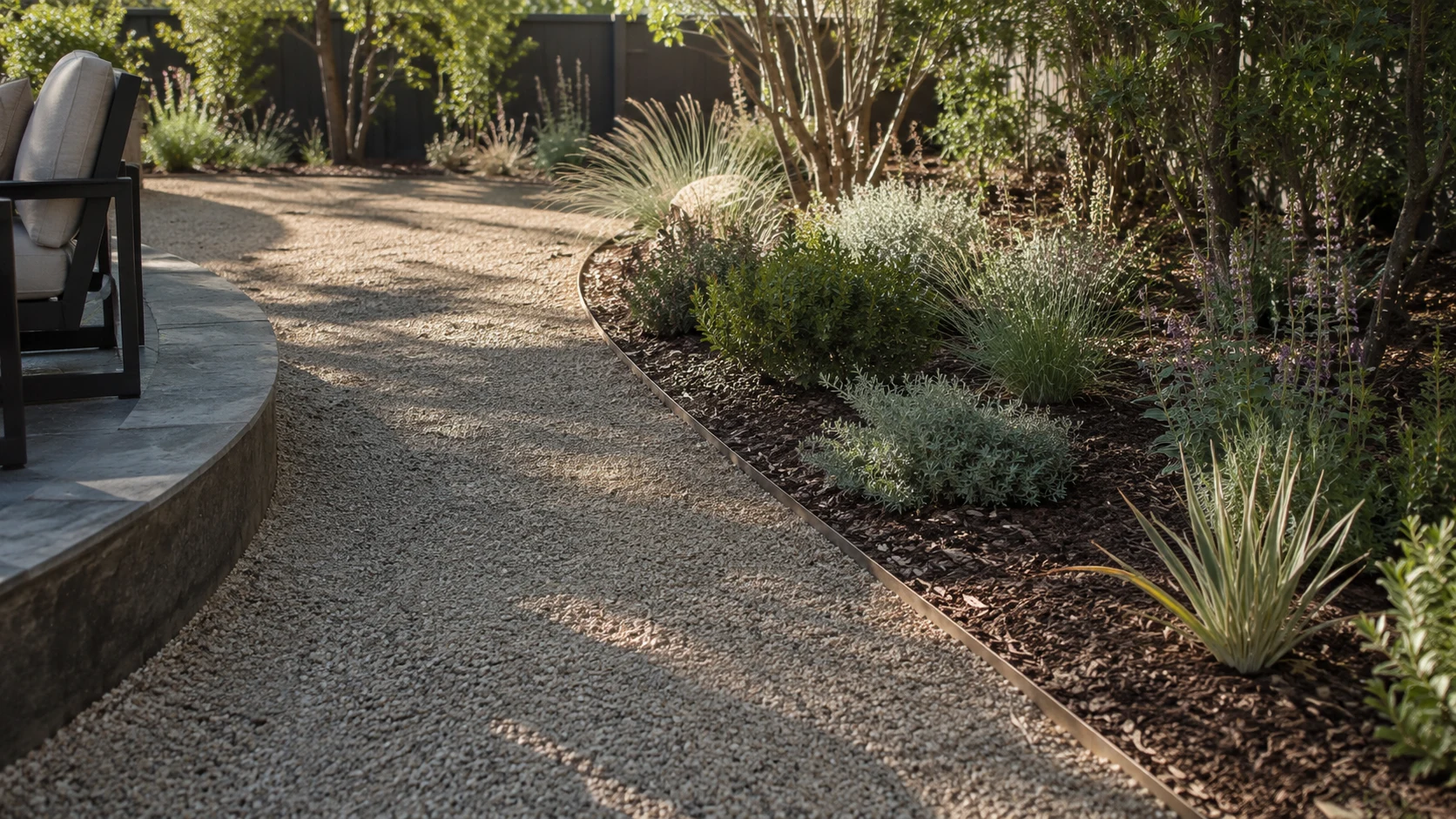
Shade Changes Plant Choice
Shade is not just a comfort feature. It changes the planting plan.
Plants in full sun, part shade, reflected heat, morning sun, and afternoon shade can behave very differently. A plant that looks great in one microclimate may sulk against a hot west-facing wall. Another may stretch, thin out, or bloom poorly in too much shade.
When planning shade, think about:
- Morning sun vs afternoon sun.
- Reflected heat from walls and paving.
- Tree canopy density.
- Seasonal sun angle.
- Mature plant size.
- Root competition near trees.
- Irrigation zones.
- Soil moisture under canopy.
- Leaf litter or debris.
This is where Hydrozoning Basics for Homeowners matters. Do not group plants only by how they look together. Group them by water need, light exposure, soil, drainage, and microclimate. The yard is not impressed by vibes alone.
Create Shade One Zone At A Time
You do not need to solve the whole yard at once.
Start with the zones that affect daily life:
- The main seating area.
- The path from the door to the patio or gate.
- A west-facing exposure that bakes the yard.
- A pet area.
- A planting bed near hardscape.
- A window or door that receives harsh sun.
For each zone, ask:
- Does it need immediate shade or long-term shade?
- Is living shade realistic here?
- Would built shade be safer or more predictable?
- Will wind, drainage, utilities, fire, HOA, or permits matter?
- How will shade change plant choice and irrigation?
- Will the shade solution still make sense in five or ten years?
This is less glamorous than buying the biggest tree or the prettiest pergola. It is also less likely to end with a large expensive object in exactly the wrong place.
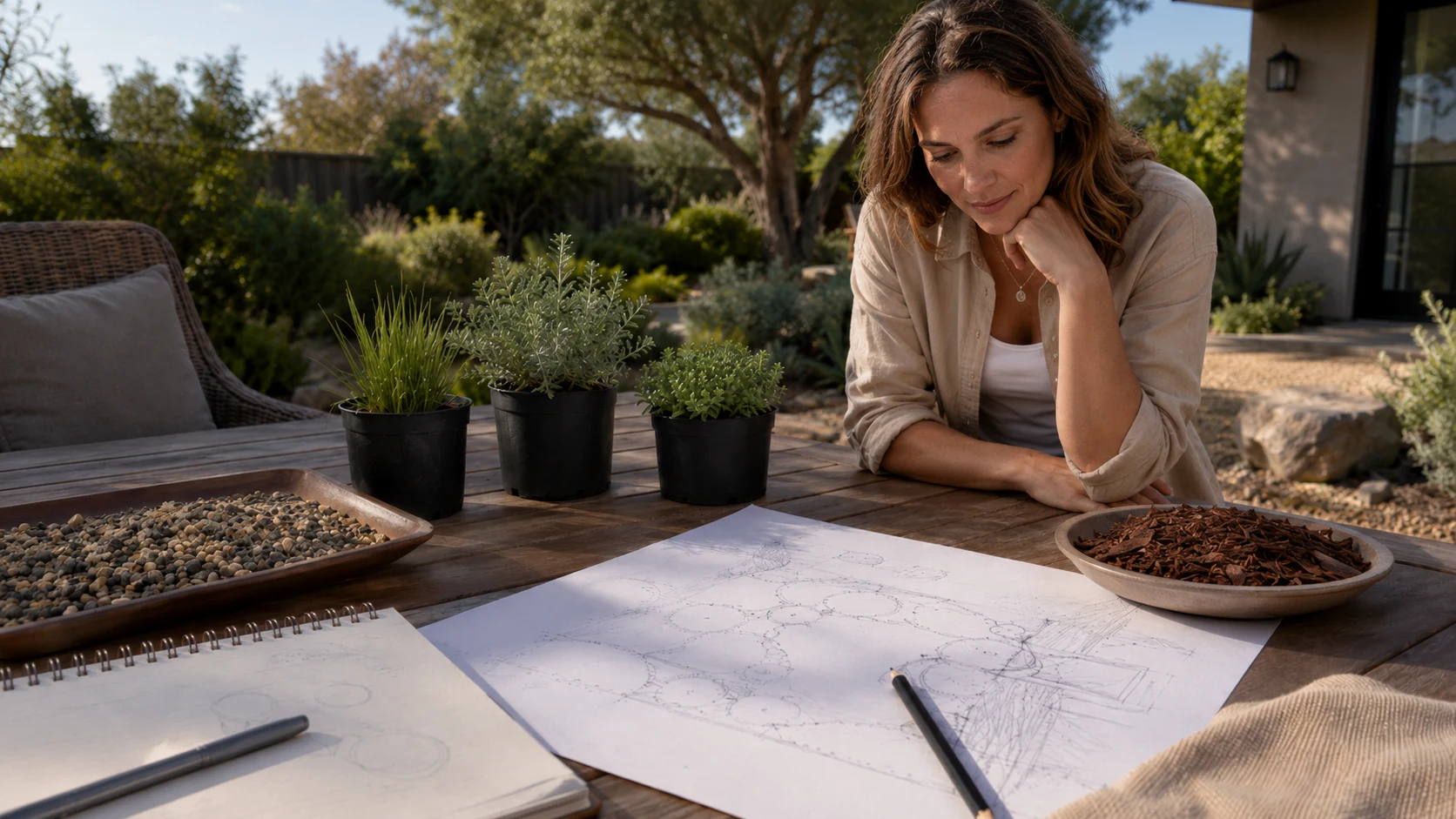
Where Shade Belongs
Shade is most useful where people, plants, or surfaces are getting punished.
Prioritize:
- Seating areas.
- Outdoor dining zones.
- West-facing exposures.
- Paths people actually use.
- Doors and windows.
- Planting beds near concrete, pavers, gravel, or walls.
- Pet areas.
- Utility routes that get walked often.
- Garden work areas.
Not every square foot needs shade. Some low-water plants want full sun. Some open areas benefit from brightness. The trick is deciding where shade creates comfort and where sun is part of the plant strategy.
Common Mistakes To Avoid
Watch for these:
- Removing all trees because the yard is becoming "xeriscape."
- Planting a tiny tree where immediate shade is needed this summer.
- Planting a large tree too close to a house, wall, walkway, utility, or patio.
- Putting shade plants into reflected heat because the plant tag said "part shade."
- Using gravel everywhere with no canopy, vertical structure, or relief.
- Installing shade sails or pergolas without thinking about wind, permits, HOA rules, utilities, drainage, or structural load.
- Choosing a beautiful structure that shades the wrong part of the yard.
- Forgetting establishment water for new trees.
- Assuming built shade has no maintenance.
- Assuming living shade has no long-term size consequences.
Shade should make the yard more usable. If it only makes the yard more expensive, the design has taken a scenic detour into nonsense.
Practical Homeowner Checklist
Before adding shade, ask:
- Where is the yard too hot to use?
- Which areas matter most: seating, paths, doors, windows, pet zones, or planting beds?
- Do you need immediate shade, long-term shade, or both?
- Would a tree fit at mature size?
- How will the tree be watered during establishment?
- Will roots, canopy, litter, or maintenance matter near structures and paving?
- Would a pergola, ramada, umbrella, or shade sail be more appropriate?
- Do wind, permits, HOA rules, utilities, drainage, foundations, or fire/local rules need to be checked?
- How will shade change plant selection?
- Will irrigation zones still make sense?
- Does the shade plan work with gravel, mulch, decomposed granite, and hardscape?
- Is the shade solution making the yard more usable, or just adding a decorative object?
If the yard is already gravel-heavy and exposed, pair shade planning with How to Make a Gravel Yard Look Designed, Not Deserted. Gravel behaves much better when it is not expected to do the work of plants, shade, seating, and emotional support.
FAQ
Do low-water landscapes need shade?
Many do, especially in hot or dry climates. Shade can make patios, paths, doors, pet areas, and planting beds more comfortable and usable. It is not required everywhere, but a low-water yard with no shade can feel harsh fast.
Are trees bad for xeriscaping?
No. Regionally appropriate trees can be an important part of a waterwise yard. The key is choosing suitable trees, planning for mature size, providing establishment water, protecting the root zone, and using local guidance where tree health or placement is complicated.
Is a pergola better than a shade tree?
Not universally. A pergola can provide faster, more predictable shade over a patio, while a tree can provide living canopy, softness, and long-term landscape value. Many yards use both: built shade now, living shade for the future.
Can shade reduce watering needs?
Shade can reduce heat stress and slow surface drying in some areas, but it is not a universal water-saving guarantee. Plant choice, soil, mulch, irrigation, wind, exposure, and establishment needs still matter.
Can I put shade sails anywhere?
No. Shade sails can involve wind loads, anchor points, permits, HOA rules, utilities, drainage, and structural safety. Treat permanent shade sails as built structures, not casual fabric decorations with ambition.
What is the fastest way to add shade to a low-water yard?
For immediate comfort, umbrellas, temporary shade, or a properly planned built shade element may help faster than trees. For long-term comfort, regionally appropriate trees and large shrubs can be valuable, but they need time, establishment water, and good placement.
Bottom Line
Shade is one of the main differences between a low-water yard that looks responsible and a low-water yard people actually use.
Use trees where long-term living canopy makes sense. Use built shade where you need faster or more predictable coverage. Use umbrellas and flexible shade where the layout is still evolving. Keep local rules, wind, structures, utilities, fire guidance, mature tree size, and plant establishment in the decision.
Waterwise design should save water without turning the backyard into a solar endurance test. A little shade planning can make the whole yard feel less like a sacrifice and more like a place.