
Outdoor concrete has a talent for looking ready before it has earned the privilege.
A patio can look dry. A walkway can feel firm. A small pad can seem done. Then someone gets excited, adds sealer too soon, seals over hidden moisture, ignores weather, traps dirt, creates a slick finish, or turns a normal maintenance decision into a shiny mistake with excellent lighting.
This guide is about timing and judgment: when outdoor concrete may be a reasonable candidate for sealing, when to wait, when to skip it, and when the surface needs a qualified pro before anyone opens a can. It is not a product guide, sealer ranking, chemistry lesson, contractor specification, or promise that sealing will fix every patio, path, pad, or courtyard.
If you need a deeper overview of sealer categories and finish tradeoffs, start with Concrete Patio Sealer: What Homeowners Should Know. If the concrete is new, keep Concrete Cure Time for DIY Outdoor Projects nearby. For maintenance before sealing, see Concrete Patio Cleaning and Maintenance Basics.
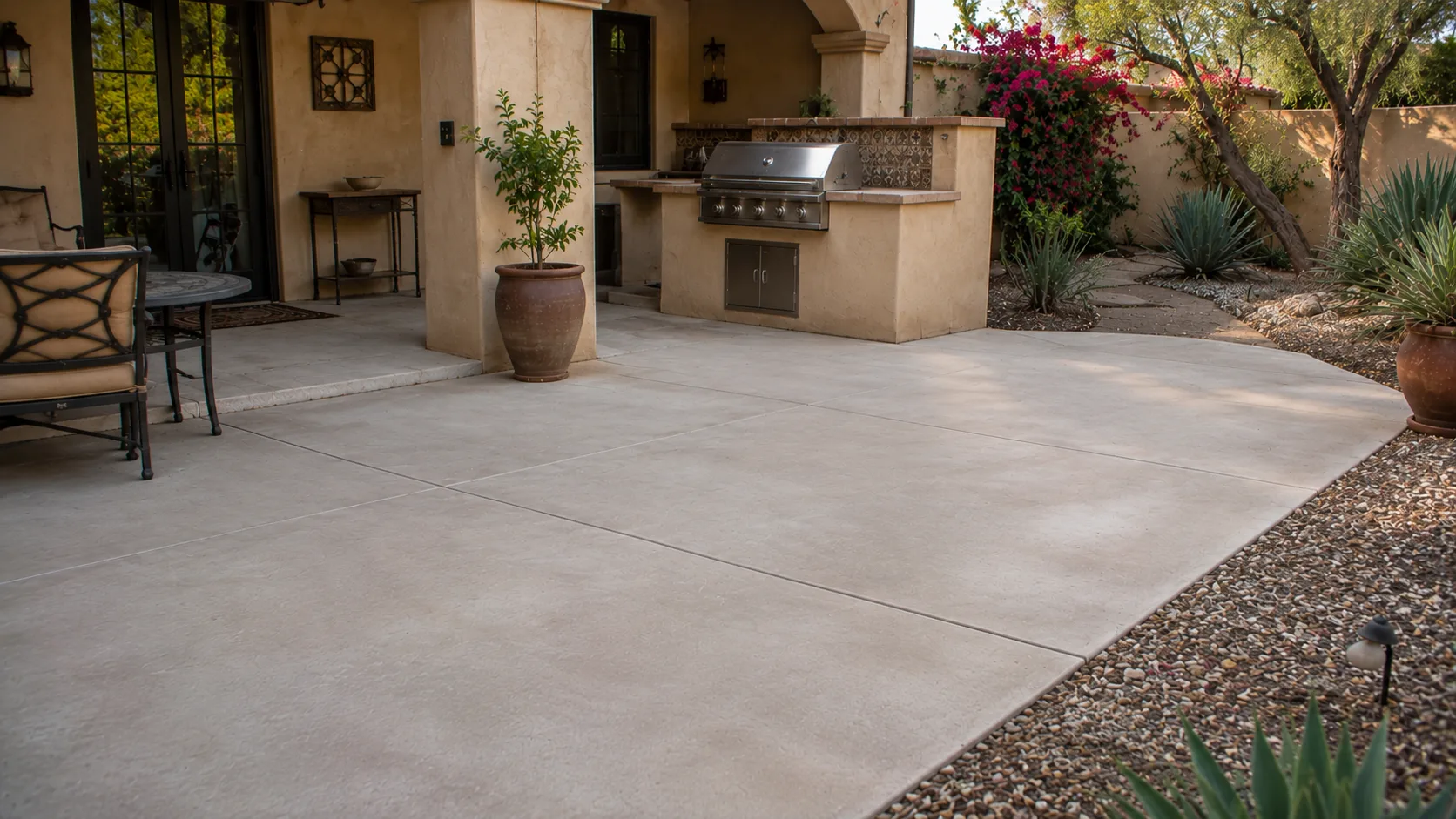
The Short Version
Outdoor concrete is generally not ready for sealer just because it looks dry.
Before sealing, the surface needs the right combination of:
- Appropriate concrete age and cure/dry readiness for the chosen product
- Clean surface condition
- No trapped moisture problem
- No active flaking, scaling, spalling, peeling, or coating failure
- A realistic weather window
- Compatible finish and traction expectations
- A clear reason to seal in the first place
Sealer can help with some surface protection, staining, appearance, dusting, or maintenance goals. It cannot fix bad drainage, active cracking, structural movement, trapped moisture, poor prep, or a surface that is already failing.
When in doubt, slow down. Waiting is usually cheaper than stripping off a bad decision.
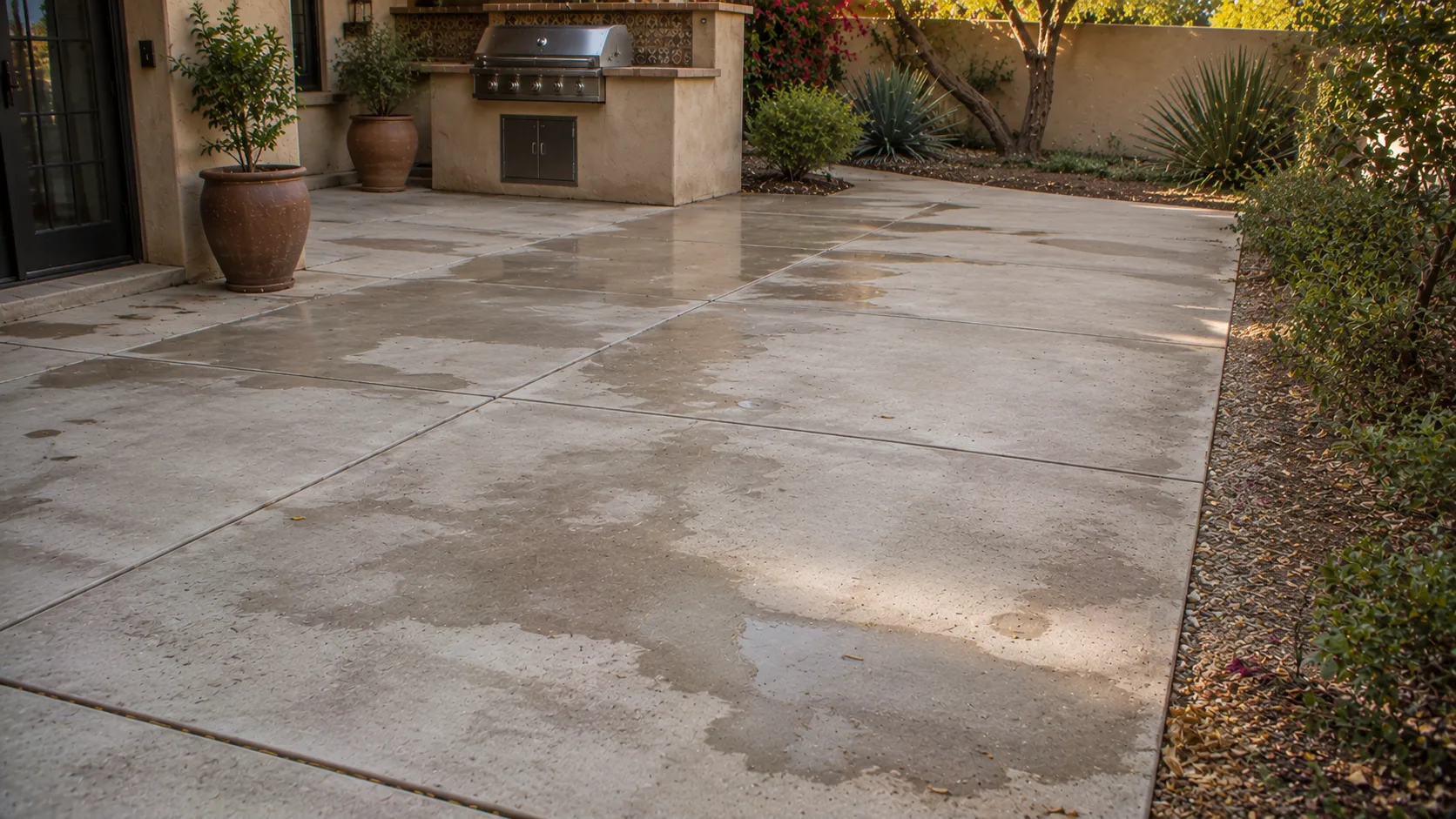
First Ask: Why Are You Sealing?
Do not start with the product aisle. Start with the reason.
Sealing may be worth considering when:
- Water absorbs quickly and stains are becoming a problem.
- The surface is decorative, colored, stamped, stained, or exposed aggregate.
- You want a subtle change in appearance and understand the tradeoffs.
- The concrete dusts, sheds fines, or is hard to keep clean.
- The patio, path, or pad gets regular food, leaf, grill, pool, or irrigation exposure.
- A compatible product, installer, or manufacturer guidance supports sealing that surface.
Skipping sealer may be reasonable when:
- The concrete drains well and cleans up fine.
- You dislike darkening, sheen, or wet-look finishes.
- The area is already slick, sloped, shaded, dusty, or pool-adjacent.
- Moisture appears to be coming from below or staying trapped.
- The surface has active cracking, spalling, scaling, peeling, or coating failure.
- You cannot meet the label's prep, weather, ventilation, or return-to-use requirements.
Sealer is not a prize for owning concrete. It is a maintenance choice with consequences.
New Concrete: Cure, Dry, Then Decide
New concrete creates the most timing confusion.
Curing and drying are related but not the same. Curing is about concrete developing strength and surface quality under suitable moisture and temperature conditions. Drying is about excess moisture leaving enough for a sealer or coating to behave. A surface can look dry while the concrete is still too young, too damp, or too variable for the next step.
The right wait depends on the concrete mix, slab thickness, finish, weather, curing method, moisture movement, site exposure, and the product being used. Some products are designed for certain newer-concrete conditions. Others require a longer wait and a drier surface. The product instructions control that decision.
Use Concrete Cure Time for DIY Outdoor Projects as a planning companion, not a permission slip. If the label, installer, or qualified pro says to wait, wait. Concrete has no sympathy for calendar pressure.
Existing Concrete: Clean Enough To Judge
Older concrete should be cleaned before you decide whether to seal it, but "clean" does not mean attacked.
At a minimum, you need to know whether you are looking at dirt, leaf staining, oil, rust, irrigation minerals, mildew, old sealer, surface wear, or something deeper. Sealing over debris, dust, algae, cleaner residue, grease, or mystery coating is how a small problem becomes a bonded problem.
Before sealing existing outdoor concrete, ask:
- Is the surface plain, broom-finished, stamped, stained, exposed aggregate, painted, or previously sealed?
- Does water soak in evenly, bead, or sit in patches?
- Are stains sitting on top or soaked into the surface?
- Are there areas that stay damp after the rest dries?
- Is old sealer peeling, whitening, bubbling, or uneven?
- Has the surface become slick in shade or near water?
For routine cleaning boundaries, use Concrete Patio Cleaning and Maintenance Basics. If cleaning reveals damage, do not seal it just to make the damage glossier.
Moisture Is The Big Timing Problem
Moisture is one of the main reasons outdoor sealer jobs go wrong.
Concrete can hold moisture from rain, irrigation, cleaning, poor drainage, shaded areas, pool splash, soil contact, vapor movement, or water migrating from adjacent beds and hardscape. If that moisture has nowhere to go, sealer can contribute to haze, whitening, poor bonding, bubbling, peeling, or uneven appearance depending on the product and surface.
Warning signs include:
- Dark patches that return after drying
- Areas that stay cool and damp
- Efflorescence or mineral residue
- Peeling or whitening old coating
- Water pooling near an edge, wall, step, or threshold
- Irrigation overspray hitting the same area
- Soil, mulch, or gravel washing onto the slab
Sealer does not solve moisture movement. Sometimes it argues with it in public.
If moisture behavior is unclear, especially near a house, pool, slope, wall, drain, or old coating, get qualified help before sealing.
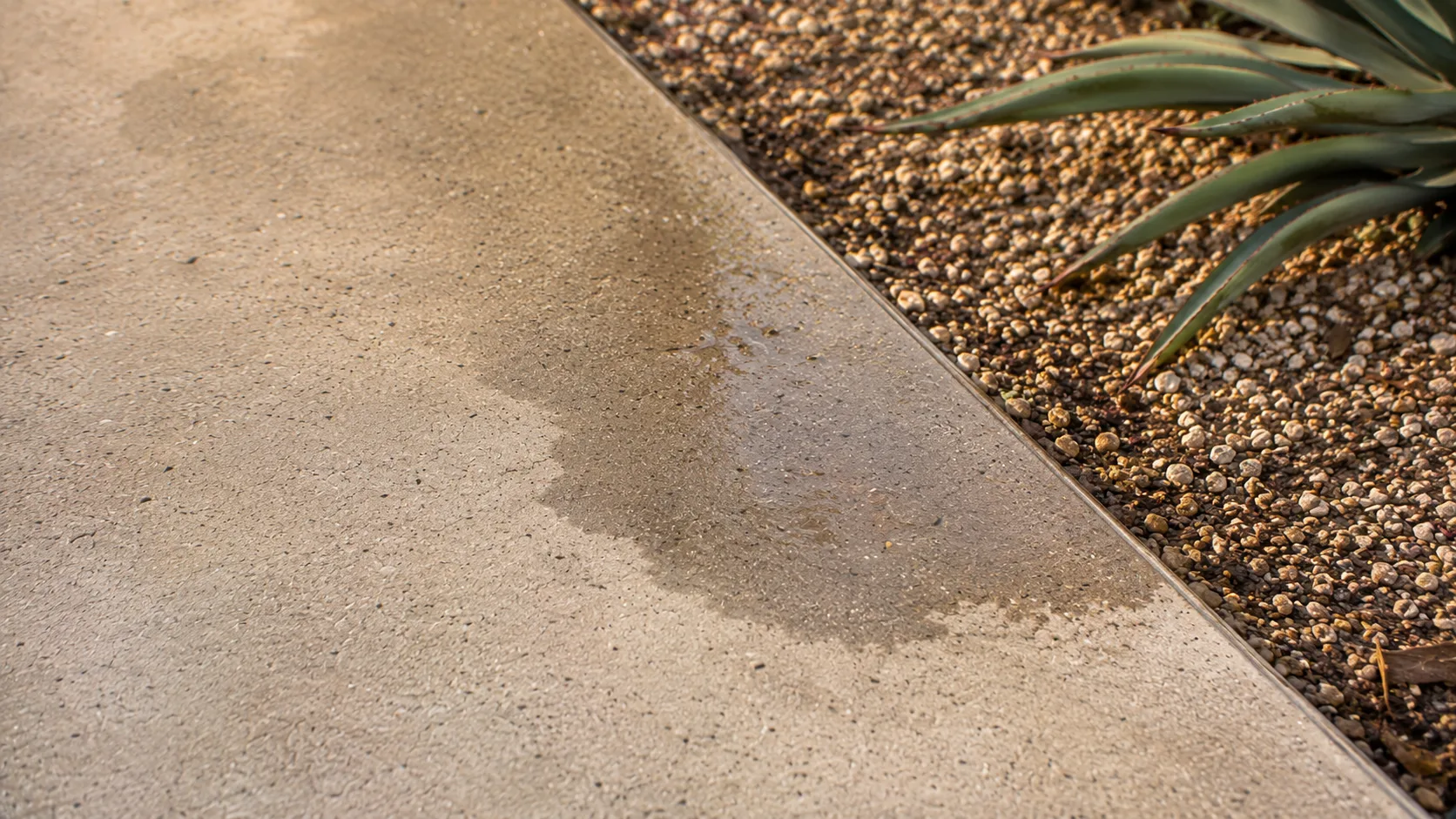
Weather Window: The Patio Does Not Care About Your Weekend
Outdoor sealing depends on weather.
Product labels may specify acceptable surface temperature, air temperature, humidity, rain-free time, sun exposure, wind limits, recoat timing, and return-to-use timing. Those details are not decorative. They are the difference between a sealer getting a fair chance and a patio becoming a complaint.
Be cautious with:
- Hot direct sun that can make products flash off too quickly
- Wind that blows dust, leaves, or debris into wet sealer
- Rain or irrigation in the forecast
- Cold nights that slow curing or drying
- High humidity that extends dry time
- Dusty seasonal weather
- Pool splash or foot traffic too soon
The best day to seal is not always the day you have free. Outdoor concrete rewards boring weather windows. Tragically, boring is often correct.
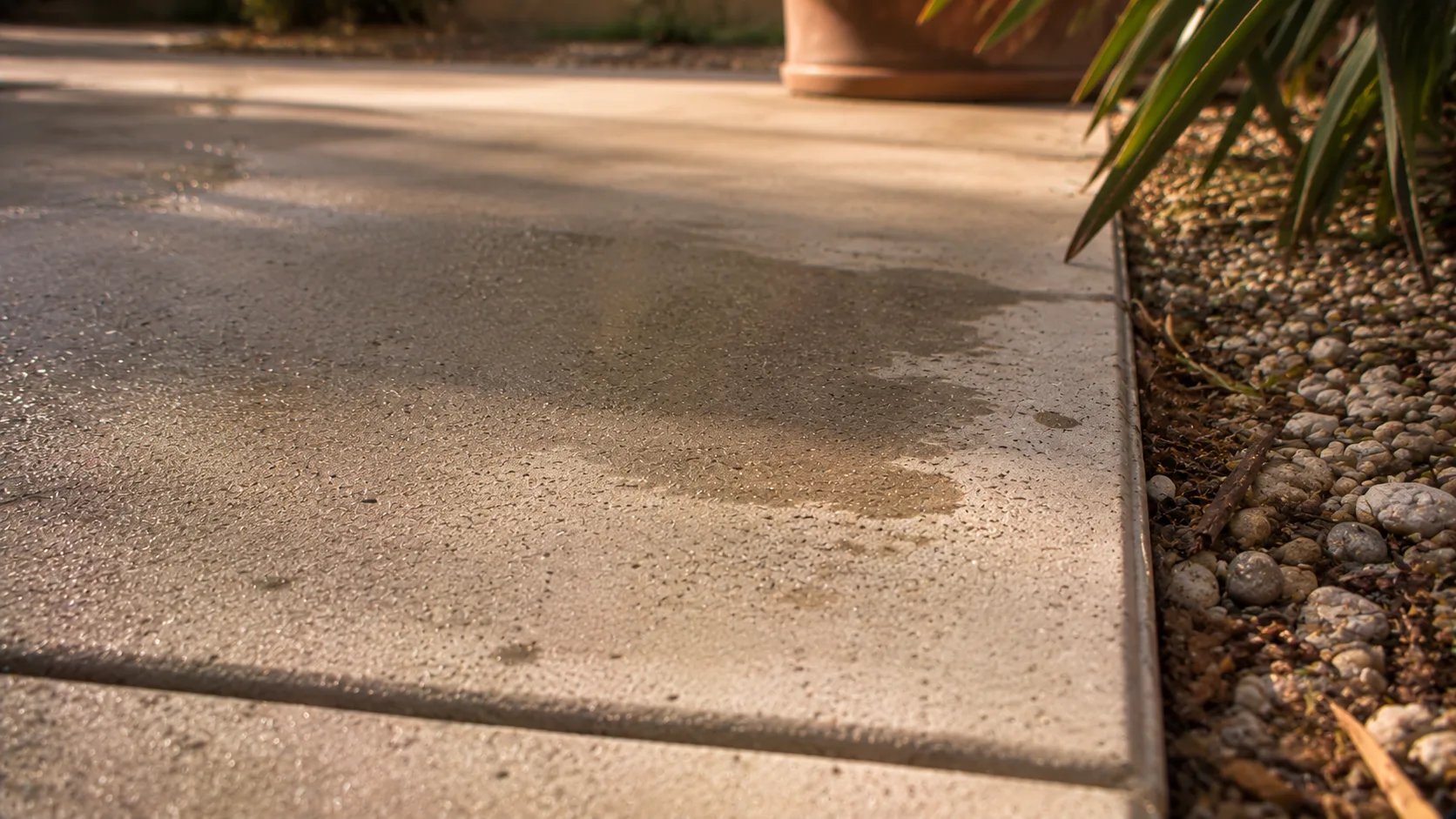
Finish And Traction Matter
Sealer can change how outdoor concrete looks and feels.
On broom-finished concrete, a subtle treatment may preserve a more natural look. On exposed aggregate, some sealers may darken and enrich the stones. On stamped or colored concrete, sealing may be part of the expected maintenance system. On smooth, shaded, sloped, or pool-adjacent concrete, the same decision may raise traction concerns.
Before sealing, think through:
- Will people walk here when the surface is wet?
- Is the concrete near a pool, spa, outdoor shower, hose bib, or irrigation spray?
- Will kids, pets, older adults, or guests use it?
- Is there slope, shade, algae, dust, or leaf buildup?
- Will the desired sheen make the surface look better but behave worse?
- Would a test area reveal darkening, gloss, patchiness, or slip concerns?
For finish context, read Outdoor Concrete Finish Options for Patios, Paths, and Small Projects. Good sealing timing still fails if the chosen finish creates a surface nobody should walk across with wet shoes.
Decorative Concrete Needs Extra Caution
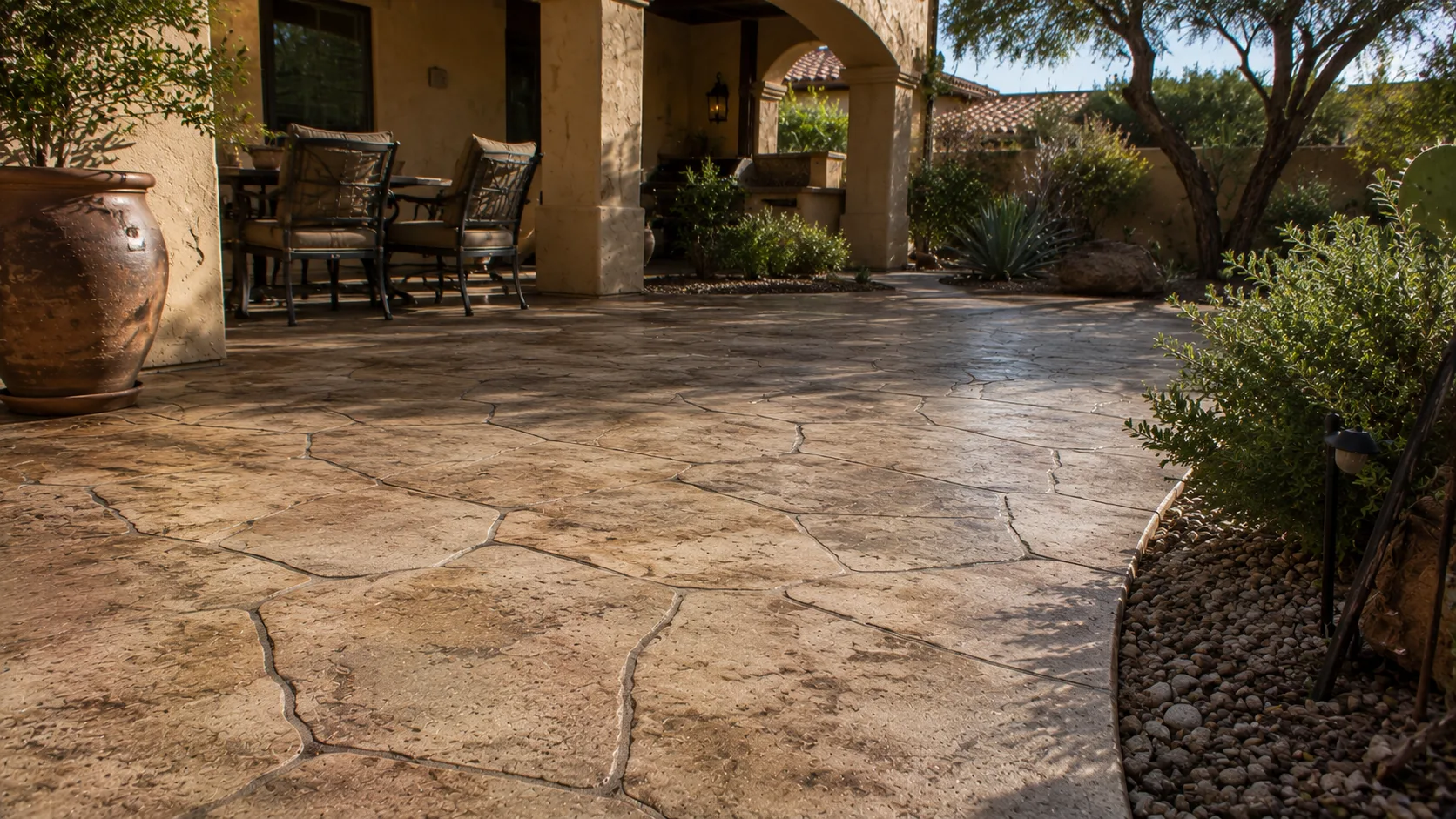
Stamped, stained, colored, exposed aggregate, polished-looking, coated, painted, or previously sealed concrete raises the stakes.
Decorative surfaces can be beautiful, but they also make mistakes more visible. A patchy sealer, trapped moisture, mismatched sheen, incompatible product, old coating failure, or aggressive cleaning mark can announce itself from across the patio.
Be careful when:
- The old sealer type is unknown.
- A previous coating is peeling, whitening, or cloudy.
- Color varies dramatically after cleaning.
- The surface has repairs, overlays, or stain work.
- You are trying to change sheen or color enhancement.
- The patio connects visually to an outdoor kitchen, courtyard, pool deck, or high-visibility entry.
Decorative concrete often deserves installer or specialist guidance. There is no shame in that. Decorative concrete is already opinionated. Let someone qualified help it have better opinions.
Resealing: Do Not Just Add More
Resealing is not always adding another coat.
Some surfaces may need cleaning and a compatible recoat. Others may need old sealer removed, surface testing, scuffing, repair, or a different approach. Too much buildup can create haze, peeling, whitening, bubbles, uneven gloss, and traction issues. Adding more sealer to failed sealer is not maintenance. It is layering suspense.
Before resealing, ask:
- Is the old sealer still bonded?
- Is the surface peeling, cloudy, sticky, worn, or patchy?
- Does water absorb in some areas but bead in others?
- Is the new product compatible with the old system?
- Does the label require a test area or specific prep?
- Would stripping or professional evaluation be safer?
If you cannot identify the old coating or the surface is already failing, pause.
Patio, Path, Pad, And Courtyard Use Cases
Different outdoor concrete areas deserve different sealing decisions.
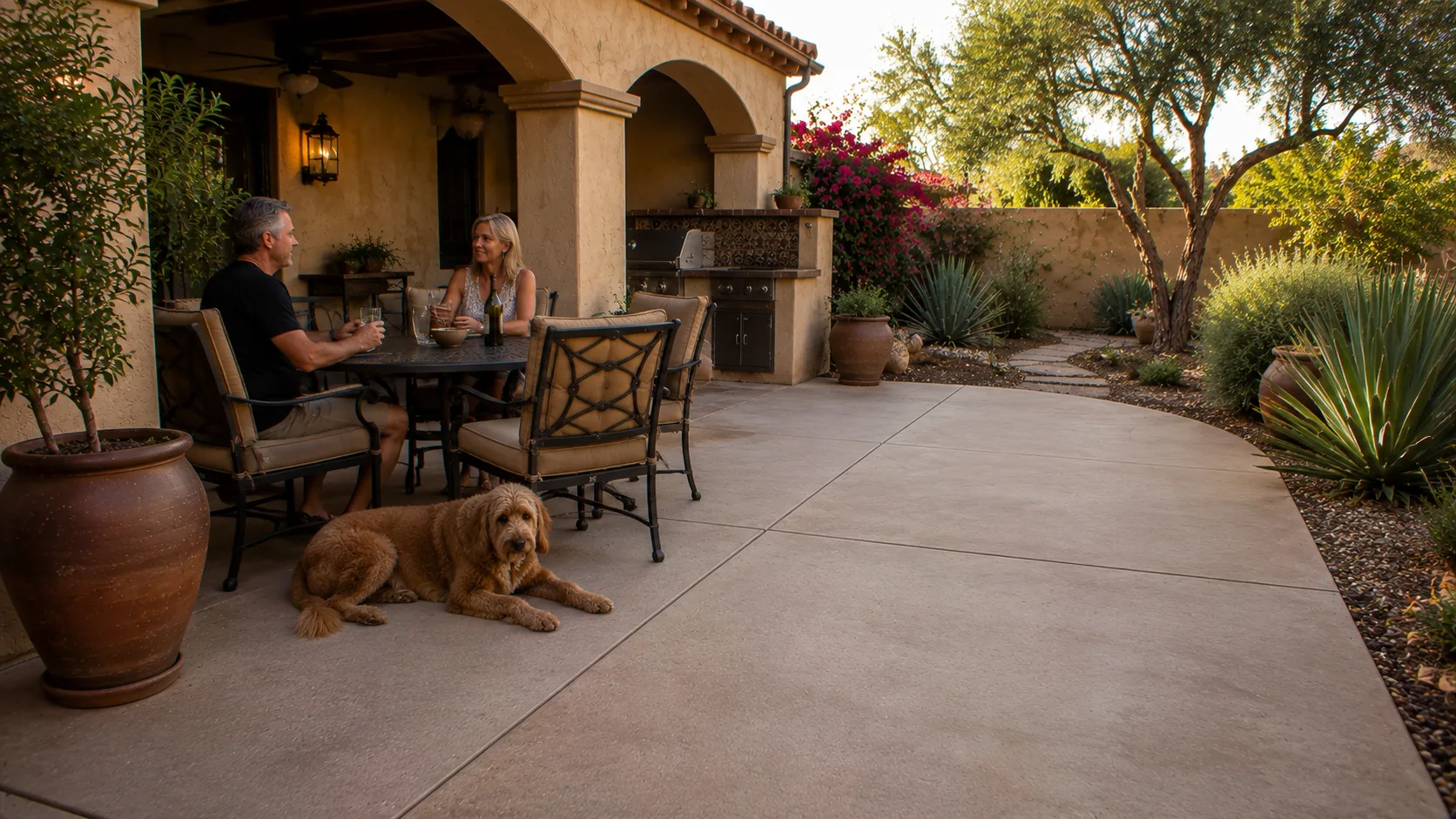
A dining patio may need stain resistance, easier cleanup, and realistic traction around food, drinks, furniture, and guests. A path may prioritize grip, dust control, and how the finish handles irrigation spray or leaf litter. A small utility pad may not need visual drama at all; it may simply need to be clean, durable, and not slick. A decorative courtyard may justify more appearance-focused maintenance, but it also needs a better weather window and more careful prep.
Use matters because sealer changes maintenance. Once you seal, you may be signing up for recoat decisions, cleaner compatibility, sheen monitoring, traction checks, and more careful surface prep later.
For small concrete zones, Small Concrete Utility Pad for Bins, Hoses, and Side Yards helps frame the practical side of concrete placement and use.
When To Wait
Wait before sealing when:
- New concrete has not met product and installer readiness guidance.
- Recent rain, irrigation, cleaning, or pool splash may have left moisture.
- The surface still looks damp, dark, cool, or uneven.
- Weather is too hot, cold, windy, humid, dusty, or rain-prone for the label.
- You have not cleaned and rinsed residue properly.
- Stains, old coating, algae, oil, or mineral buildup are unresolved.
- The surface is actively cracking, flaking, scaling, spalling, or lifting.
- You are unsure what previous coating is on the concrete.
- Traction risk has not been considered.
Waiting is not inaction. It is often the part of the project that prevents the next project.
When To Call A Pro
Bring in qualified help when:
- Moisture appears to be coming through the slab or staying trapped.
- Existing sealer is peeling, whitening, bubbling, sticky, or unknown.
- The surface is stamped, stained, colored, exposed aggregate, polished, painted, or heavily decorative.
- The patio is near a pool, steps, slope, main entry, or high-traffic route where traction matters.
- The concrete has significant cracking, lifting, settlement, scaling, spalling, or surface loss.
- You are considering stripping, grinding, etching, aggressive washing, resurfacing, or changing sealer systems.
- Local runoff, VOC, disposal, pool-water, plant-protection, or safety requirements are unclear.
Professional help is especially smart when the cost of being wrong is more than cosmetic.
FAQ
How do I know if outdoor concrete is ready to seal?
Read the concrete and sealer product guidance, then evaluate age, moisture, cleanliness, weather, finish, traction, and surface condition. The surface looking dry is not enough by itself. If the concrete is new, decorative, damp, damaged, or previously sealed, use extra caution.
Should I seal concrete right after cleaning?
Not automatically. Cleaning can leave moisture in the concrete, especially in textured, shaded, old, or porous surfaces. The surface may need more drying time, and any cleaner residue needs to be rinsed away according to the product guidance before sealing is considered.
Is sealing outdoor concrete always a good idea?
No. Sealing can help certain surfaces, but it can also create sheen, traction, moisture, maintenance, or compatibility problems. A plain, well-draining patio that cleans easily may not need sealer. A damp, damaged, or failing surface should not be sealed just to make it look finished.
Can sealer fix cracks or bad drainage?
No. Sealer is not a structural repair, drainage fix, or base correction. If water moves toward the house, the slab is shifting, or cracks are active, address the underlying issue before thinking about surface treatment.
When should I reseal outdoor concrete?
Resealing depends on the existing sealer, surface wear, appearance, water behavior, traction, and product guidance. Do not simply add more sealer over peeling, cloudy, sticky, incompatible, or unknown coating. Test, clean, and confirm compatibility first, or call a pro.