
Concrete patios are low-drama until they are not.
For months, the slab quietly handles dust, leaves, grill splatter, chair legs, irrigation overspray, muddy shoes, pool splash, plant debris, and the occasional drink that loses its balance. Then one afternoon the whole patio looks tired, the edges are grimy, the furniture leaves ghost marks, and somebody suggests blasting everything with maximum pressure like the patio owes money.
This guide is the calmer version. It explains how to think about concrete patio cleaning and maintenance at the homeowner level: routine sweeping, gentle rinsing, stain awareness, seasonal inspection, drainage clues, shade and reflected heat, furniture wear, pool-adjacent mess, and when a surface deserves professional help. It is not a product recommendation, chemical recipe, sealer guide, pressure-washer specification, structural diagnosis, or promise that every stain can be removed.
If you are still choosing the surface, start with Outdoor Concrete Finish Options for Patios, Paths, and Small Projects. If sealing is on your mind, pair this with Concrete Patio Sealer: What Homeowners Should Know.
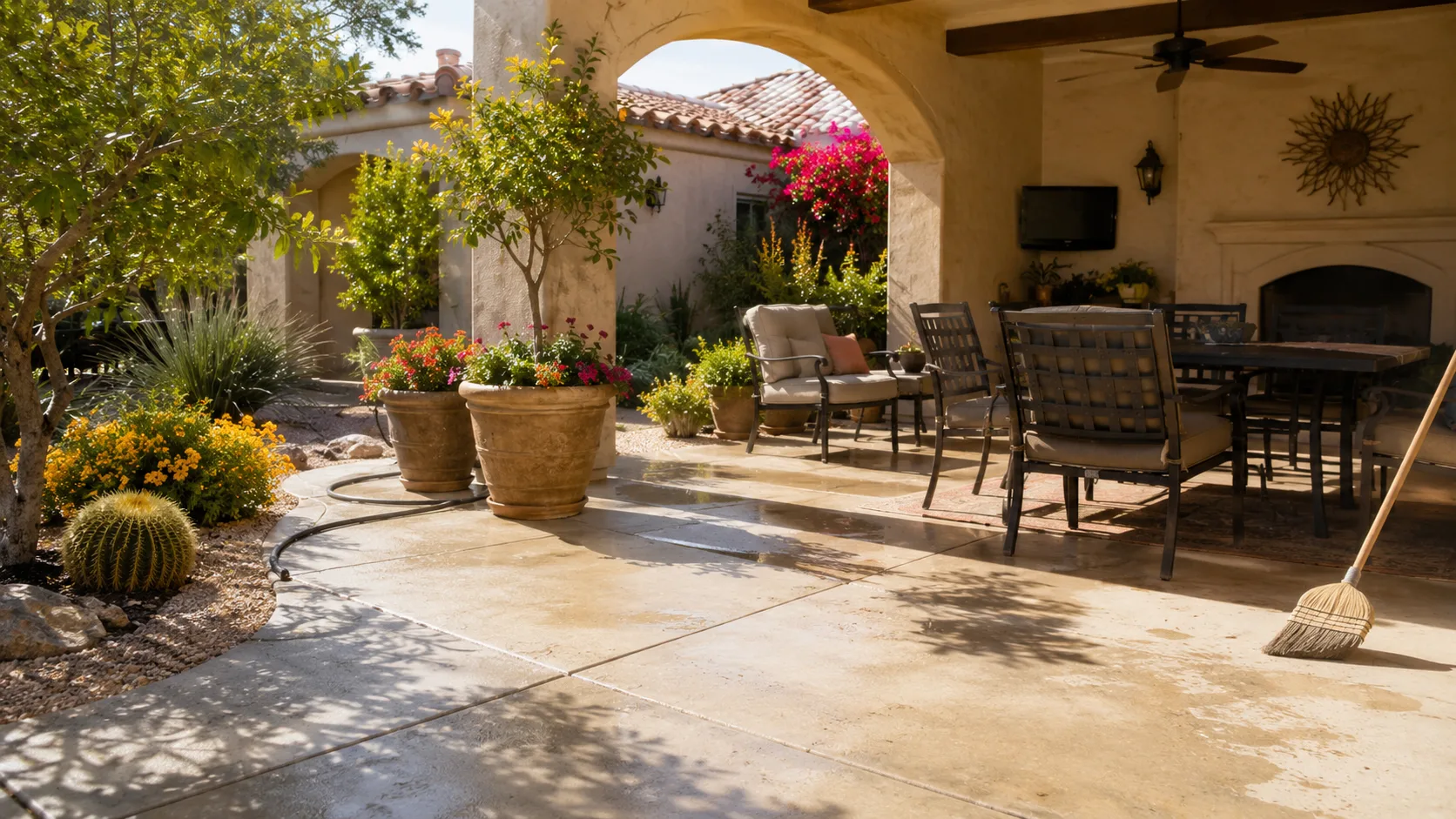
The Short Version
A concrete patio stays easier to live with when cleaning is boring and regular.
Think in layers:
- Remove loose debris before it becomes wet grime.
- Rinse gently before stains get comfortable.
- Treat spills and organic mess early.
- Watch where water, dust, leaves, and furniture marks keep returning.
- Keep joints, edges, and transitions visible.
- Avoid aggressive cleaning until you understand the finish, sealer, stain, and surface condition.
- Call a pro when the problem looks structural, coating-related, slippery, large, chemical-sensitive, pool-adjacent, or drainage-related.
The goal is not a spotless showroom patio. The goal is a patio that looks cared for, drains sensibly, stays pleasant to use, and does not get damaged by overenthusiastic maintenance.
What Routine Cleaning Actually Solves
Routine cleaning does three useful jobs.
First, it keeps the patio usable. Dust, leaves, seed pods, food crumbs, soil, pollen, pet debris, and poolside grit make outdoor rooms feel neglected faster than most homeowners expect. A quick sweep can make the same patio feel intentional again.
Second, it reduces staining time. Many patio stains are not instant disasters. They become annoying because something sat too long: leaves under a chair, grease near the grill, soil in a low spot, rust under a metal leg, or irrigation minerals drying in the same place every day.
Third, it helps you inspect the surface. You cannot notice new cracks, lifting edges, worn sealer, slippery algae, pooling water, or failing joints if the patio is hiding under a thin biography of last month.
Cleaning is not just cosmetic. It is how the patio tells you what is changing.
Start With Dry Debris
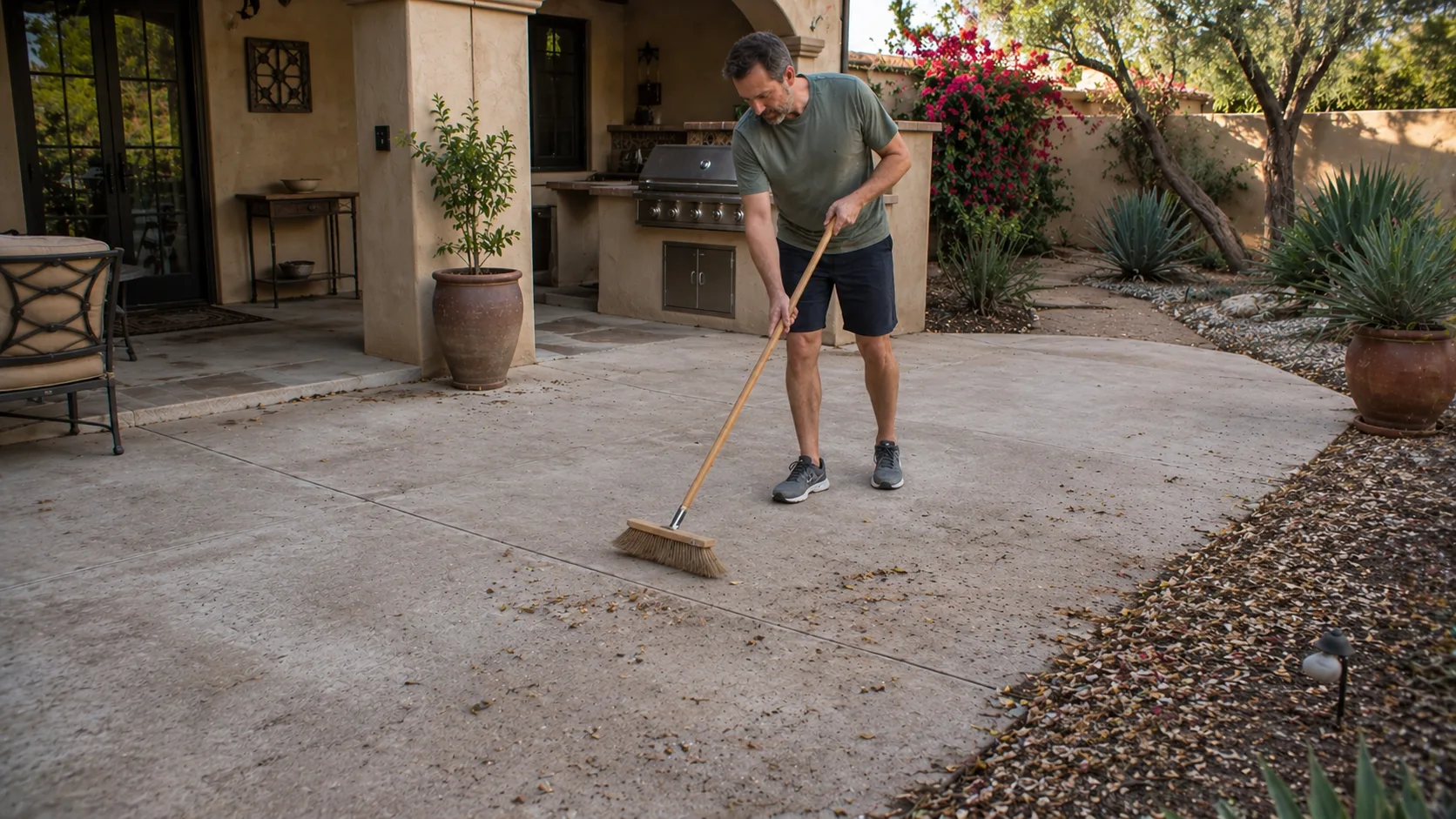
Most patio maintenance should begin dry.
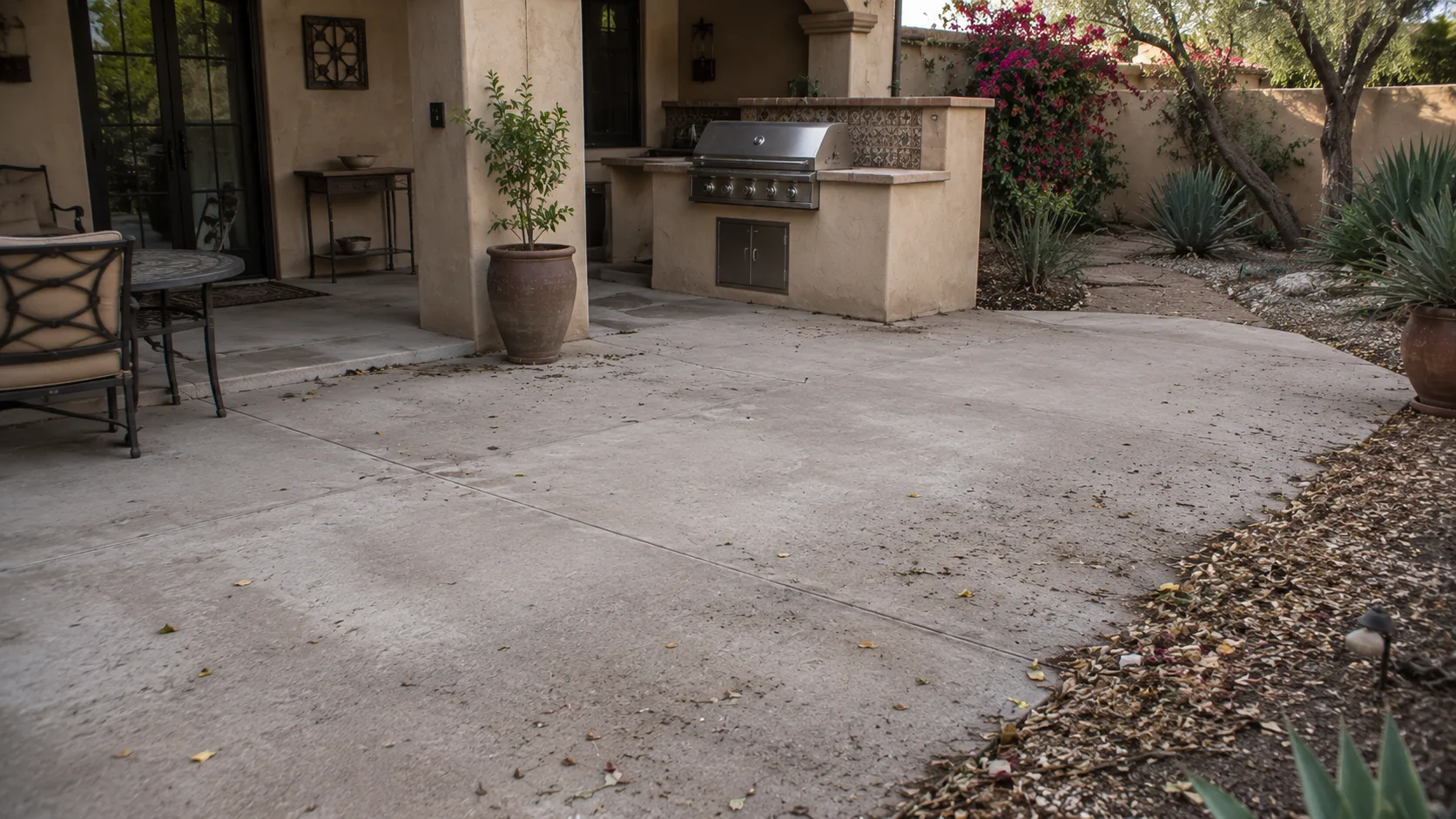
Sweep or blow off loose debris before adding water. Dry dust, leaves, seed pods, gravel, decomposed granite, and plant litter are easier to remove before they turn into paste. This matters in dry-climate yards, where fine dust can settle into surface texture, joint lines, and furniture footprints.
Pay attention to:
- Corners where leaves collect
- Edges near planting beds
- Furniture feet and rug outlines
- Grill and dining zones
- Door thresholds
- Pool or spa splash areas
- Low spots where dust settles after irrigation or rain
This is especially important on textured concrete. Broom finish, exposed aggregate, stamped surfaces, and porous older slabs can hold debris in small surface pockets. A patio does not need to be fragile for debris to be annoying. It only needs texture and gravity.
Rinse With Restraint
Water can help, but more force is not always better.
A regular garden-hose rinse or gentle washdown can remove dust, pollen, light soil, and residue without turning maintenance into a surface test. The important move is to watch where the water goes. If rinse water heads toward the house, collects near a threshold, pools against a wall, carries soil from a planting bed, or leaves a dirty outline after drying, that is useful information.
Avoid treating every dirty patio like it needs aggressive pressure. High force can damage weak concrete, old joints, some decorative finishes, failing coatings, nearby stucco, painted surfaces, wood, plants, pool equipment, and anything already cracked or spalling. It can also drive water where it should not go.
If you do use powered cleaning equipment, follow the equipment and surface guidance, start conservatively, test in a low-visibility area, and stop if the surface starts etching, flaking, lifting, or changing unevenly. A clean scar is still a scar.
Mild Cleaning Concepts
For ordinary grime, think mild first.
That means using gentle cleaning concepts appropriate to outdoor concrete and the specific surface, then rinsing residue thoroughly. It does not mean mixing cleaners, improvising chemistry, or assuming that stronger equals smarter. Some cleaners can discolor concrete, harm adjacent plants, affect pool water, damage metal finishes, or interact badly with existing sealer.
Before using any cleaner:
- Read the label.
- Confirm it is suitable for outdoor concrete.
- Keep it away from plants, pool water, drains, pets, and children unless the label says how to manage those boundaries.
- Avoid mixing products.
- Test a small, less visible area when the surface is decorative, sealed, old, or unknown.
- Rinse residue so the patio does not become sticky, slick, or patchy.
This guide does not provide chemical recipes because patios vary too much. A plain broom-finished slab, sealed stamped concrete, exposed aggregate, old painted concrete, and pool-adjacent patio may need very different caution.
Stain Awareness Without Panic
Concrete stains are not all the same problem.
Food and drink spills are different from grill grease. Leaf tannins are different from rust. Irrigation minerals are different from mildew or algae. Soil and decomposed granite dust are different from oil. Pool splash residue is different from old failed sealer.
Start by asking:
- What likely caused the mark?
- How long has it been there?
- Is the surface sealed, decorative, painted, or plain?
- Is the mark on top of the surface or soaked in?
- Does it appear only where water collects?
- Is the same stain returning after cleaning?
That last question matters. A stain that keeps returning may be less about cleaning and more about a source: a planter draining onto the slab, grill grease landing in the same place, rusty furniture feet, overspray, tree litter, pool splash, or water carrying soil across the patio.
Chasing the mark without fixing the source is how homeowners end up scrubbing the same square foot forever like it has a personal grudge.
Watch The Edges, Joints, And Transitions
Patio edges are where maintenance clues like to gather.
Look where concrete meets gravel, decomposed granite, mulch, turf, planting beds, pool coping, pavers, steps, walls, thresholds, or drains. Edges catch debris, trap moisture, show settlement, and reveal whether adjacent materials are migrating onto the patio.
Keep an eye on:
- Soil or mulch washing onto the slab
- Gravel collecting at a doorway
- Decomposed granite dust tracking across the patio
- Joint filler pulling away
- Edges that hold water after the rest of the patio dries
- Trip edges between patio and adjacent surfaces
- Plant growth creeping into walking space
- Furniture dragging across joints or surface texture
For material boundaries, Concrete Edging for Gravel, Mulch, and Planting Beds is a useful companion. For small utility transitions, see Small Concrete Utility Pad for Bins, Hoses, and Side Yards.
Shade, Heat, And Reflected Light
In hot yards, patio maintenance is not only about dirt.
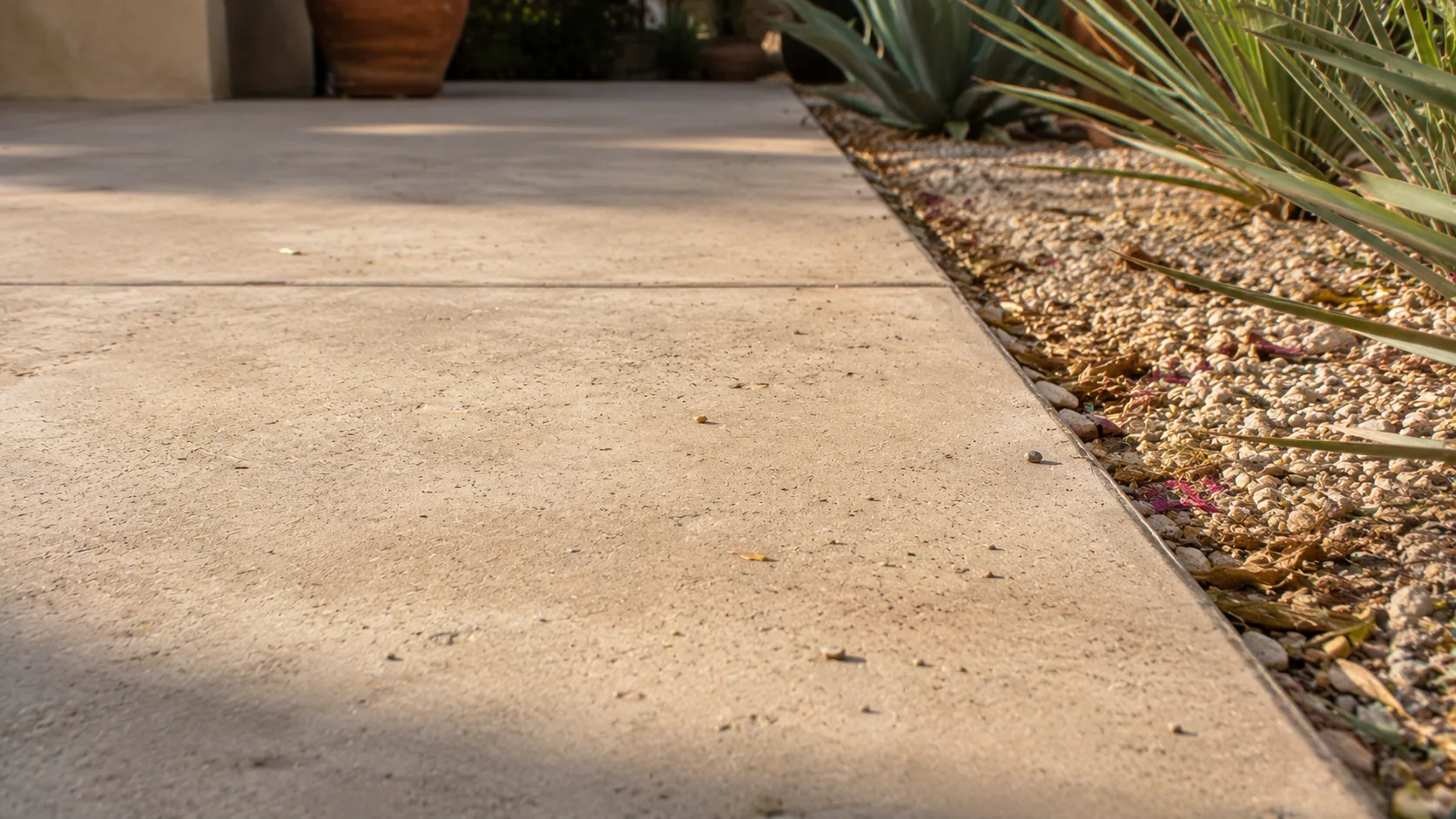
Sun, shade, reflected heat, irrigation overspray, and dust all affect how a concrete patio feels and ages visually. A pale slab may glare in afternoon light. A darkened or sealed surface may feel different underfoot. Shade can make a patio more comfortable, but damp shaded corners can also stay dirty longer or grow slick film in some conditions.
Maintenance questions worth asking:
- Does one area stay dusty because it sits beside gravel or DG?
- Does one corner stay damp because shade and irrigation overlap?
- Does furniture protect the slab unevenly and leave outlines?
- Does reflected heat make the patio unpleasant during peak use hours?
- Would planting, shade, furniture layout, or a rug choice reduce wear patterns without creating new moisture or staining issues?
For outdoor comfort planning, see Low-Water Patio Planting Ideas That Still Feel Lush and Backyard Shade Ideas for Hot Climates. The right maintenance plan should support the way people use the patio, not turn the patio into a surface nobody wants to sit on.
Furniture, Grills, Rugs, And Planters
Patio furniture is useful. It is also excellent at making marks.
Chairs can drag, scrape, or polish high spots. Metal feet can rust. Planters can leave rings, trap moisture, or leach soil. Outdoor rugs can hide dirt, hold water, or create cleaner-looking rectangles that make the rest of the slab look worse by comparison. Grills can add grease, ash, and food splatter. Pool furniture can bring sunscreen, splash, and wet footprints.
Good habits:
- Lift heavy furniture instead of dragging it when possible.
- Check under planters and rugs occasionally.
- Move furniture enough to clean beneath it.
- Watch for rust marks under metal legs.
- Keep grill splatter from becoming a permanent map.
- Avoid trapping wet debris under cushions, mats, or storage boxes.
None of this means a patio should be treated like a museum floor. It means the furniture layout is part of maintenance. Outdoor living creates wear patterns. The trick is noticing them before they become permanent design features.
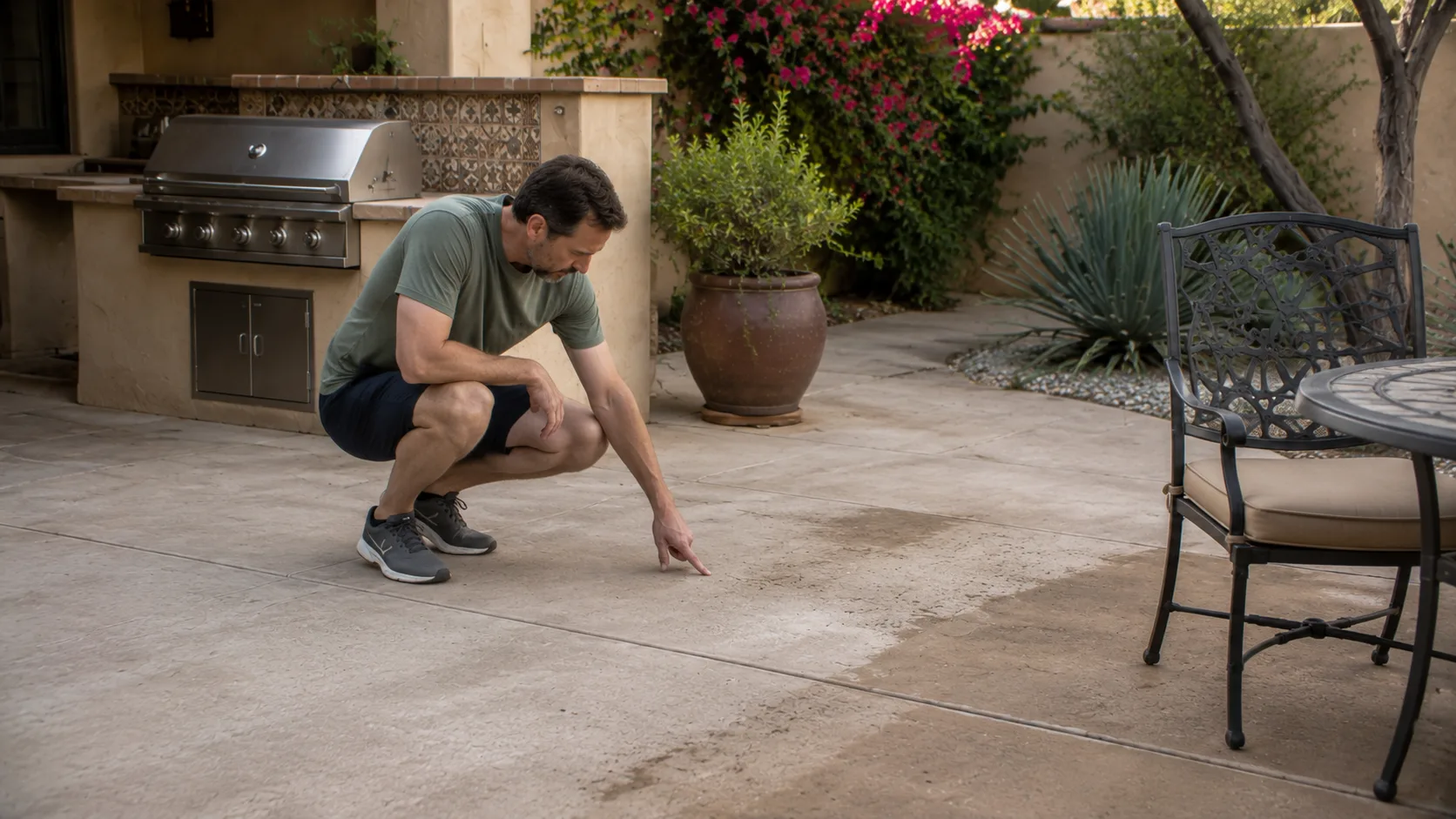
Seasonal Inspection
A few times a year, clean enough to inspect.
You are not looking for perfection. You are looking for change.
Check for:
- New cracks or widening cracks
- Raised edges or settlement
- Areas that stay wet longer than the rest
- Surface scaling, flaking, or dusting
- Slick areas in shade or near water
- Worn paths where people walk
- Stains that return after cleaning
- Sealer that looks cloudy, peeling, patchy, or uneven
- Joint problems
- Drainage patterns that carry soil or debris onto the patio
Small changes do not automatically mean disaster. Concrete moves, ages, stains, and tells stories. But recurring water, active movement, surface failure, and slick conditions deserve more attention than routine grime.
For new or repaired concrete, Concrete Cure Time for DIY Outdoor Projects explains why patience matters before full use, sealing, or heavy loads. If cracking is the concern, read How to Avoid Cracks in Small DIY Concrete Projects as a planning companion, not a diagnosis tool.
When To Avoid Harsh Treatment
Pause before aggressive cleaning when the patio is:
- Stamped, stained, colored, painted, coated, or decorative
- Recently poured, patched, sealed, or repaired
- Flaking, scaling, spalling, or dusting
- Cracked, raised, hollow-sounding, or uneven
- Near a pool, spa, drain, planting bed, or sensitive surface
- Slick, shaded, or algae-prone
- Covered with an unknown old coating
- Surrounded by stucco, wood, metal, glass, or painted finishes that could be damaged
Harsh cleaning can turn a maintenance issue into a repair issue. It can also make decorative surfaces look patchy, open pores, lift coatings, or leave wand marks. If the patio already looks fragile, do not ask it to survive a dramatic cleaning experiment.
When To Call A Pro
Bring in qualified help when:
- Water consistently drains toward the house or pools in a concerning place.
- The patio has significant cracks, lifting, settlement, scaling, spalling, or surface loss.
- A coating or sealer is peeling, whitening, bubbling, or unknown.
- The patio is stamped, stained, polished, painted, or heavily decorative.
- The surface has become slippery near a pool, step, slope, or main walking route.
- Stains involve oil, rust, paint, unknown chemicals, or recurring mineral buildup that gentle cleaning does not resolve.
- You are considering stripping, grinding, acid washing, aggressive pressure washing, or resurfacing.
- Local runoff, disposal, pool-water, plant-protection, or safety questions are unclear.
Professional help is not only for dramatic failures. Sometimes it is for stopping a small maintenance issue before it becomes a very confident mistake.
A Simple Maintenance Rhythm
Use this as a planning rhythm, not a universal schedule.
Often enough to keep the patio pleasant:
- Sweep loose debris.
- Remove leaves, seed pods, and soil from corners.
- Notice spills, grease, and planter rings early.
- Keep furniture feet and rug edges from hiding grime.
When dust, pollen, pool splash, or foot traffic builds up:
- Rinse gently.
- Brush stubborn ordinary grime with restraint.
- Watch where rinse water goes.
- Let the surface dry so you can see what remains.
Seasonally or after storms, heavy use, or outdoor parties:
- Inspect joints, edges, transitions, drainage clues, stains, and slick areas.
- Move furniture enough to clean and inspect beneath it.
- Revisit whether shade, planting, furniture layout, or storage habits are creating recurring mess.
The best concrete patio maintenance plan is not heroic. It is repeatable. If the plan requires a full Saturday of rage-cleaning every time, the patio is training you badly.

FAQ
Can I pressure wash a concrete patio?
Sometimes, but it is not automatically the best first move. Surface age, finish, sealer, cracks, decorative treatment, pressure, nozzle choice, distance, and technique all matter. Start conservatively, test where damage would be less visible, and avoid aggressive cleaning on fragile, decorative, coated, or failing surfaces.
How often should I clean a concrete patio?
There is no universal schedule. A patio under trees, near a pool, beside gravel, or used for grilling may need attention more often than a sheltered sitting area. Clean often enough that debris, spills, and water patterns do not sit long enough to become bigger maintenance problems.
What is the safest cleaner for concrete patio maintenance?
This guide does not recommend specific cleaners. The safer starting point is mild, surface-appropriate cleaning, label directions, a small test area, and thorough rinsing. Avoid mixing products or using harsh treatments on decorative, sealed, old, or fragile concrete without qualified guidance.
Why does my patio look dirty again after I clean it?
The source may still be there. Look for irrigation overspray, soil washing from planting beds, decomposed granite dust, tree litter, grill grease, rusting furniture feet, pool splash, low spots, or shade that keeps areas damp. Cleaning the mark without fixing the source makes the same problem return.
Should I seal my concrete patio after cleaning it?
Maybe, but cleaning and sealing are different decisions. Sealer depends on surface condition, finish, moisture, stain goals, traction, compatibility, weather, and maintenance expectations. Read Concrete Patio Sealer: What Homeowners Should Know before treating sealer as the next automatic step.