
A patio can have good furniture, clean concrete, decent shade, and still feel like someone forgot the living part. Hardscape gives a backyard structure. Planting gives it a reason to stay outside.
The trick is making a patio feel lush without pretending it lives in a greenhouse. In hot or dry climates, that means choosing planting roles carefully: shade-aware containers, beds that soften the edges, tough-but-beautiful texture, realistic irrigation, and enough repetition that the patio looks designed instead of decorated by impulse.
This guide is product-neutral and species-light. Local climate guidance, qualified landscape professionals, reputable regional nurseries, water providers, extension offices, irrigation professionals, arborists, HOA requirements, fire/local restrictions, and plant suitability still control what belongs in your actual yard.
The Direct Answer
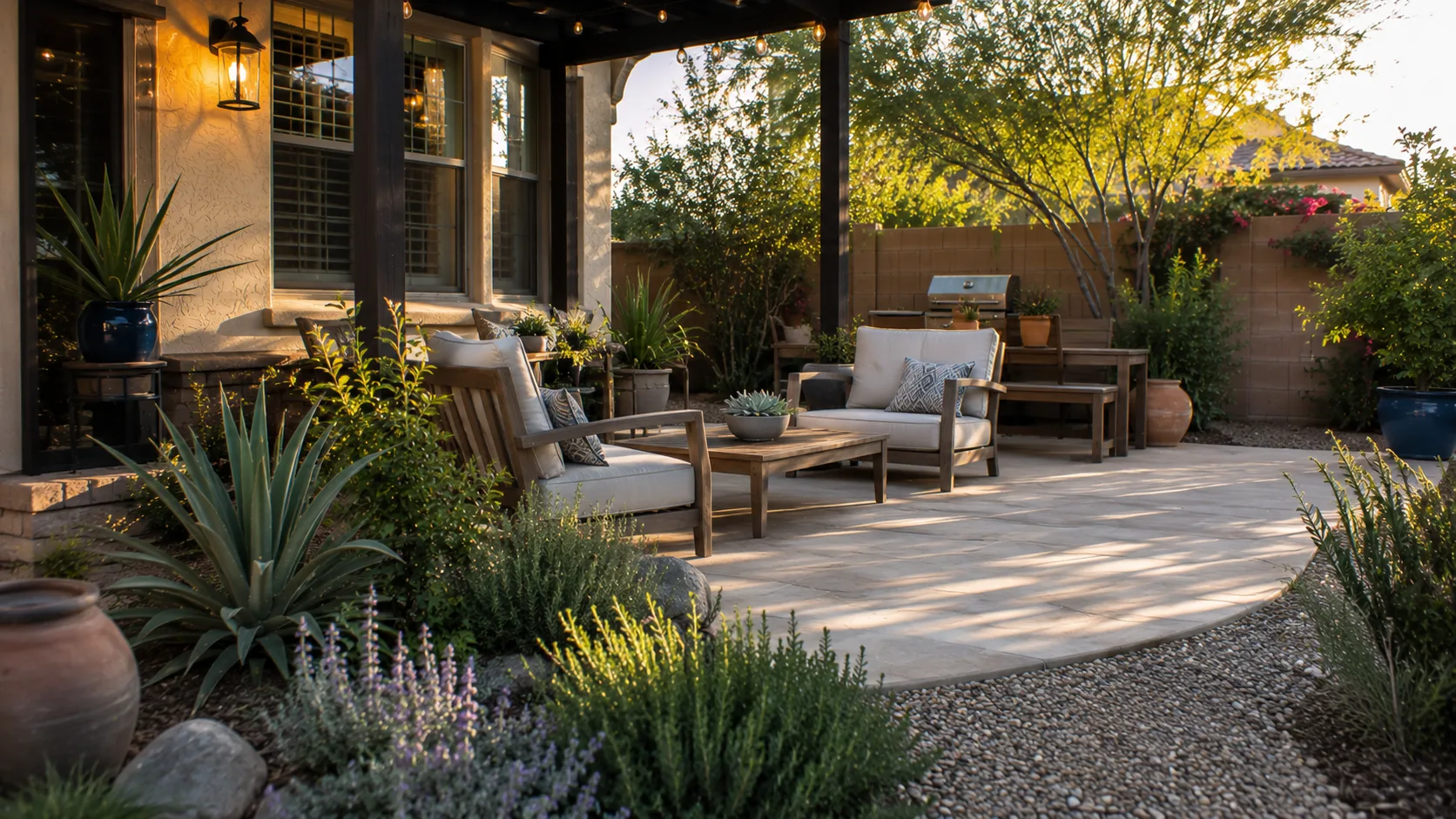
The best low-water patio planting ideas make the patio feel like part of the landscape, not a slab with plants apologizing around the edges.
Start with the patio's jobs:
- Soften hard edges.
- Add shade or filtered enclosure.
- Create privacy without blocking airflow.
- Make seating feel nested.
- Add texture, scent, movement, or seasonal interest.
- Handle reflected heat from walls, concrete, gravel, and pavers.
- Keep containers and beds maintainable.
- Protect pet routes and walking paths.
Then choose the planting type that fits each job: patio-edge beds, containers, raised planters, narrow fence-line beds, larger shrubs, small trees where appropriate, low ground-layer plants, or simple repeated clusters.
If the entire backyard still needs structure, start with How to Plan a Low-Water Backyard Without Making It Look Barren. If the patio feels exposed because the yard is too hot, Backyard Shade Ideas for Hot Climates is the closest companion.
Start With The Patio Experience
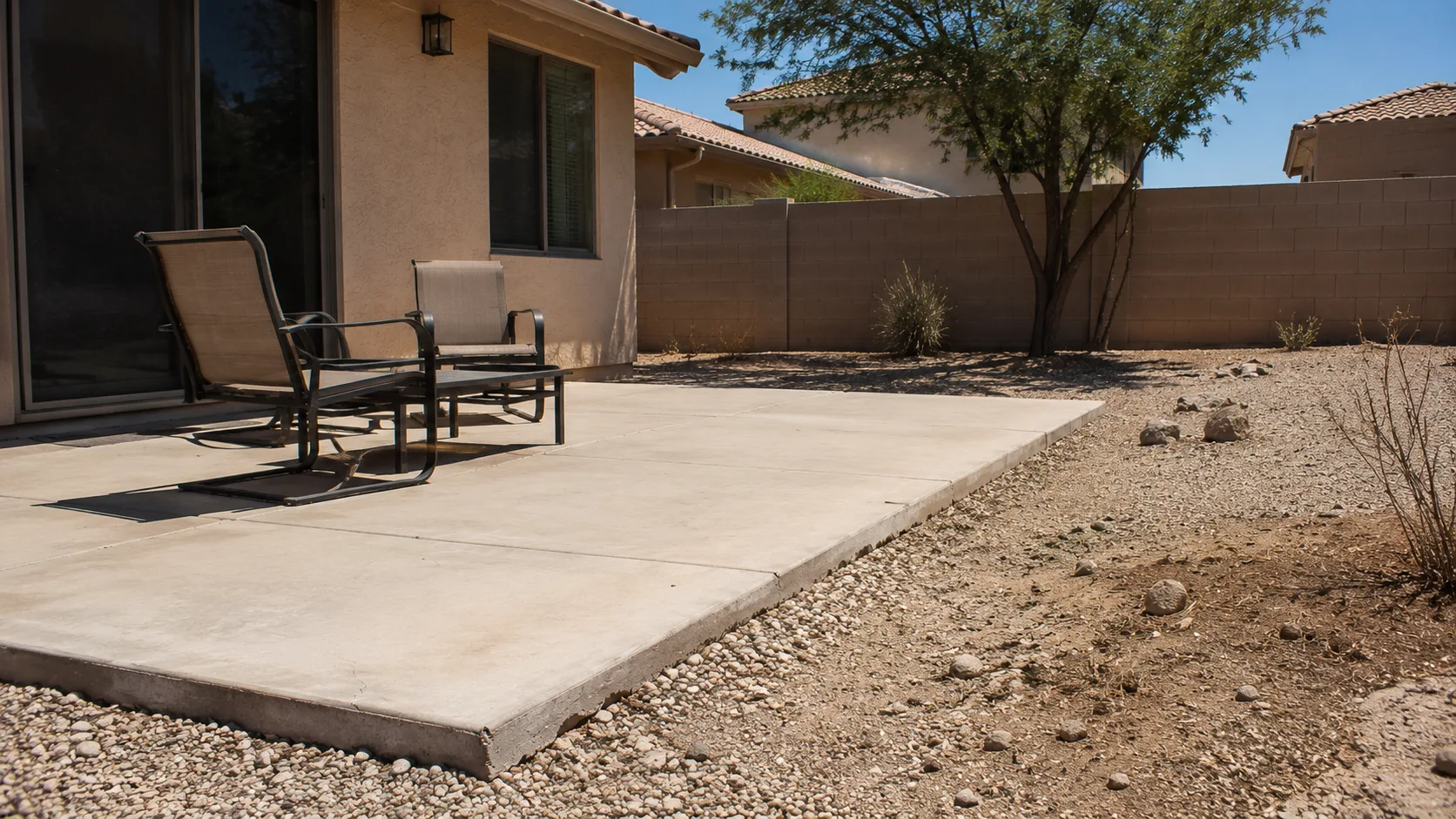
Before choosing plants, sit or stand where the patio is actually used.
Ask:
- Where do people sit?
- Where does the sun hit first?
- Which wall or fence reflects heat?
- Where do guests walk with food or drinks?
- Where does the dog cut through?
- Which view from inside the house needs softening?
- Which edge feels unfinished?
- Where would planting make the patio feel more private without boxing it in?
Planting should solve real patio problems. A pretty container in the wrong spot is still a traffic cone with flowers.
Soften The Patio Edge First
The edge between hardscape and landscape is where many patios feel harsh.
Useful softening moves include:
- A planting bed along one or two patio edges.
- Repeated low-water shrubs or grasses near the seating zone.
- Ground-level planting that spills visually toward the hardscape without blocking the path.
- A small tree or large shrub where mature size, roots, irrigation, and distance from structures make sense.
- A clean mulch, gravel, or decomposed granite transition.
- A defined edge so soil, gravel, and mulch do not wander onto the patio.
You do not need to surround the entire patio with plants. In fact, that can make the space feel trapped. Often one strong planted edge and one open movement edge work better.
For plant role logic, How to Choose Plants for a Low-Water Landscape is the key companion. Choose plants by job first, not by how charming they looked in the nursery.
Use Containers Carefully
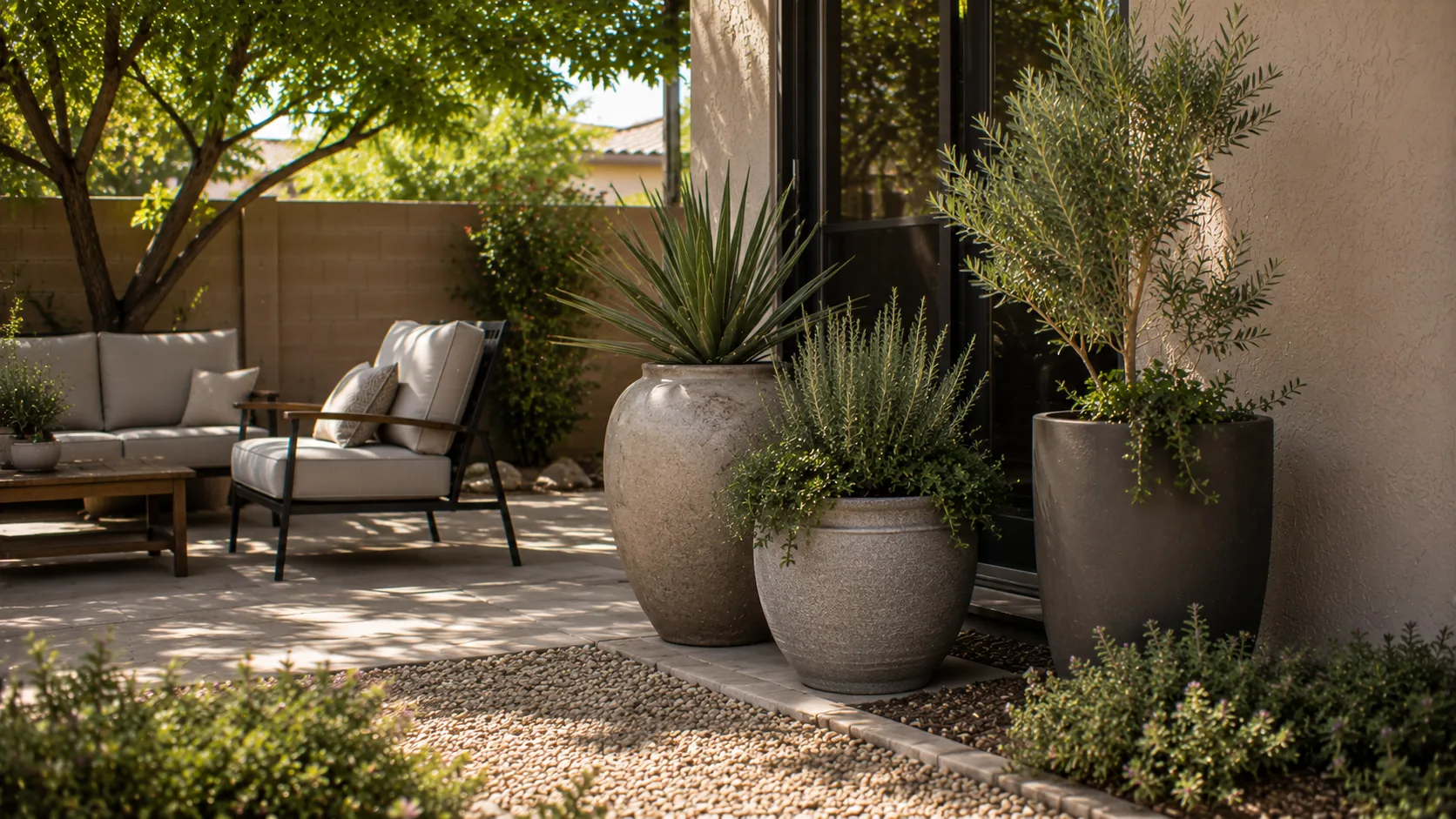
Containers can make a low-water patio feel lush fast. They can also become tiny ovens with roots inside if they are placed badly and watered casually.
Containers work best when they have a clear purpose:
- Marking an entry.
- Framing a seating area.
- Adding vertical interest near a blank wall.
- Bringing scent or texture near chairs.
- Creating seasonal flexibility.
- Testing a plant before committing to a bed.
They need realistic care. Containers dry out faster than in-ground beds, especially in hot, windy, reflective patios. Pot size, material, drainage, soil mix, sun exposure, plant choice, and watering access all matter.
This is not a container product guide. It is a reminder that patio containers are living things in elevated stress boxes. Give them a job, give them enough room, and do not make every container fight full afternoon sun unless local plant guidance says that makes sense.
Think In Layers, Not Plant Confetti
A lush patio does not require a jungle. It needs layers.
Useful layers include:
- Ground-level softness near the patio edge.
- Medium-height plants to create body.
- Taller anchors or shrubs where scale allows.
- Seasonal accents used in clusters, not random singles.
- Texture contrast between foliage, hardscape, mulch, and gravel.
- One or two strong focal points instead of six unrelated plant moments.
The patio should look good from the chair, the door, and the far side of the yard. Repetition helps. A few plant types used confidently usually feel calmer than one of everything gathered around the patio like a botanical networking event.
For a broader version of this design problem, Xeriscaping Without the Sad Gravel Yard Look explains why waterwise landscapes still need shape, rhythm, and comfort.
Match Plants To Reflected Heat
Patios create microclimates.
Plants near concrete, pavers, walls, gravel, glass, or metal can face more reflected heat than the rest of the yard. A plant that handles full sun in open ground may struggle beside a west-facing wall or light-colored patio.
Watch for:
- Afternoon sun against walls.
- Heat bouncing from concrete or pavers.
- Rock mulch around young plants.
- Narrow beds with little soil volume.
- Containers in full sun.
- Wind corridors.
- Roof overhangs that block rain.
- Existing trees that create dry shade and root competition.
Avoid universal plant claims here. Local guidance matters. The safe design principle is simple: match the plant to the actual patio microclimate, not the idealized version of the yard in your head.
Use Mulch, Gravel, And DG Where They Actually Belong
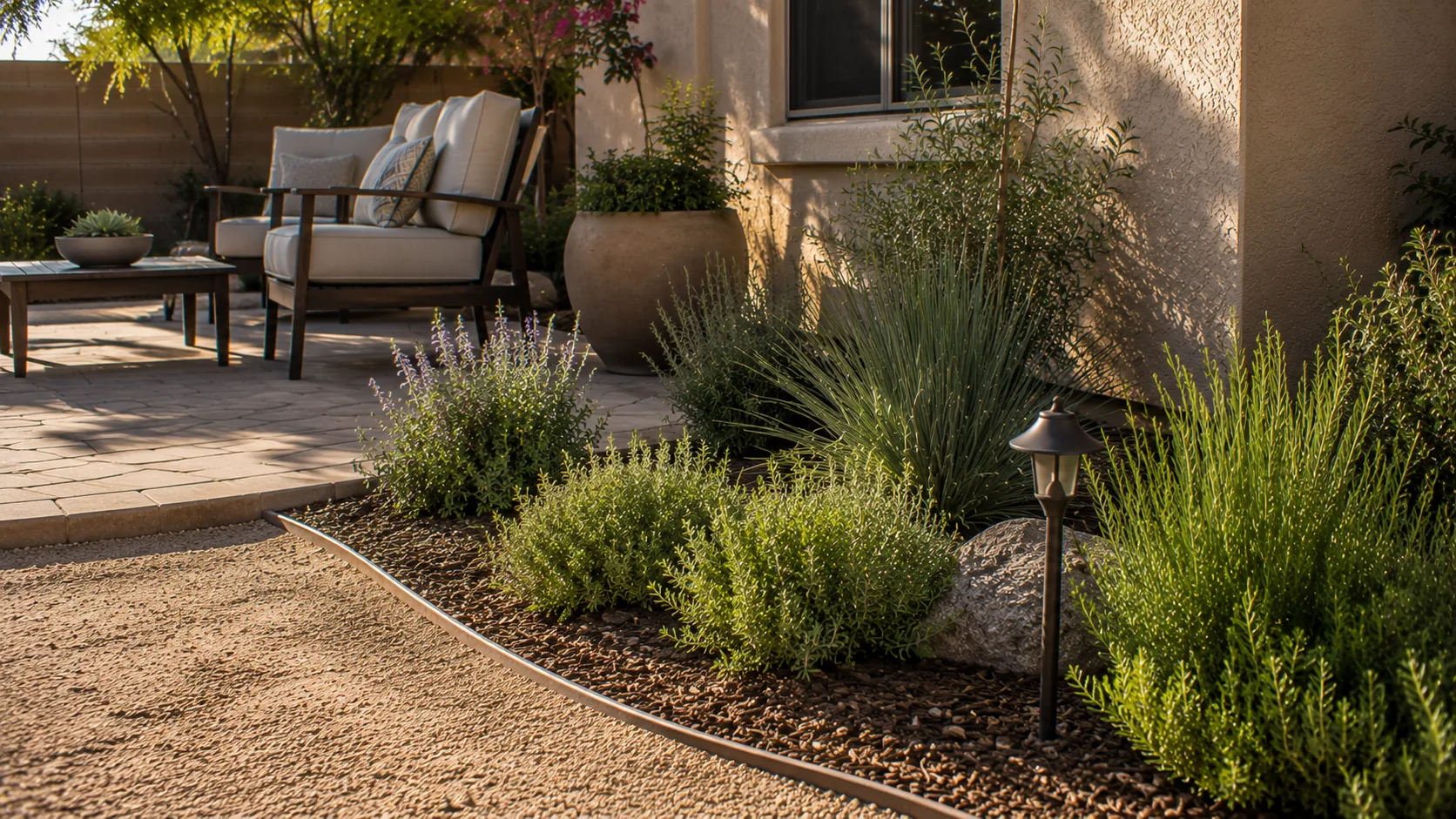
Groundcover around a patio affects comfort, maintenance, and appearance.
Organic mulch often makes sense in planting beds where soil protection and root-zone moderation matter. Gravel or decomposed granite can work well for paths, transitions, dry-climate texture, and areas where crisp mineral structure fits the design. Neither material should be dumped everywhere because the patio felt unfinished.
Think by zone:
- Planting beds may need organic mulch or another soil-protective surface.
- Paths may need gravel, decomposed granite, pavers, or concrete depending on use.
- Door thresholds need cleaner transitions.
- Pet routes need comfort and maintenance realism.
- Seating areas need stable footing.
- Patio edges need materials that do not migrate into every joint.
Mulch vs Gravel in Low-Water Landscapes covers the material choice in more detail. If the yard is already gravel-heavy, How to Cool Down a Gravel Yard Without Starting Over explains how shade, planting islands, and transitions can make it more usable.
Build Privacy Without Killing Airflow
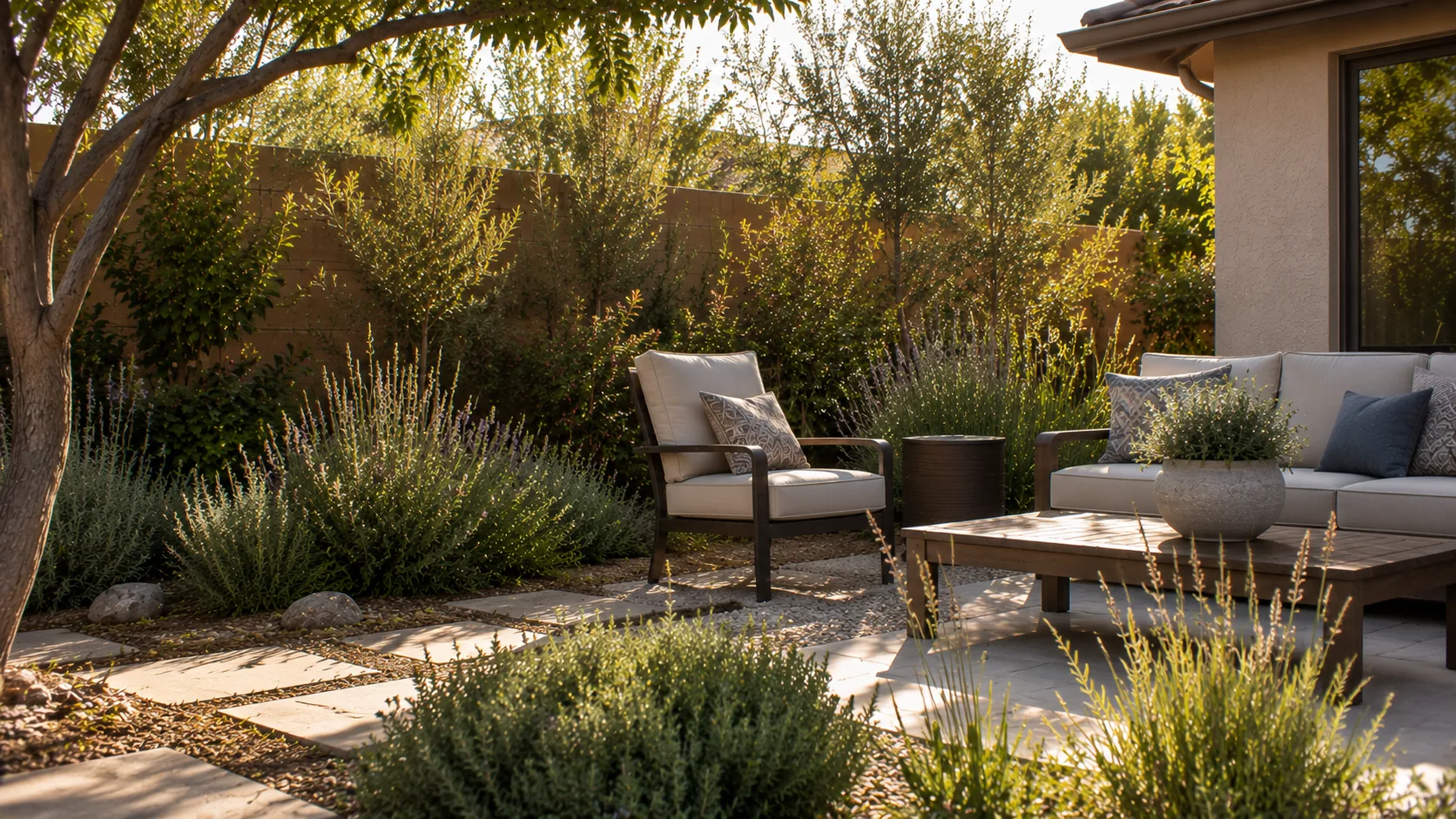
Patio planting often needs to do privacy work. The mistake is turning every privacy need into a solid wall of green.
In hot climates, airflow matters. Dense, badly placed planting can make a patio feel stuffy, trap heat, or block useful breezes.
Better privacy moves may include:
- Layered shrubs with space to mature.
- A small tree or large shrub where appropriate.
- Taller planting near a view line, not everywhere.
- Open-textured plants that filter views.
- Containers used as accents, not barricades.
- Trellises or screens only where local rules, structure, wind, and maintenance make sense.
This article does not provide structural screen, trellis, or attachment instructions. If a privacy solution involves permanent structures, utilities, wind exposure, walls, or property-line issues, use qualified local guidance.
Add Scent And Texture Without Making A Maintenance Trap
Patios are close-up spaces. Texture and scent matter because people sit near them.
Good patio planting can include:
- Fine-textured plants that move in a breeze.
- Larger leaves or sculptural shapes used as anchors.
- Seasonal flowers where water and maintenance fit.
- Fragrant plants near seating only if they suit the climate and do not overwhelm the space.
- Plants that soften walls without blocking paths.
- Repeated forms that make the patio feel intentional.
Be careful with messy, thorny, brittle, or high-litter plants near chairs, pools, doors, and walkways. A plant can be beautiful and still be rude at patio distance.
Keep Pets And Walking Paths In The Plan
If pets use the patio and yard, planting has to respect how they move.
Think about:
- Dog routes from door to yard.
- Plants placed where paws and bodies brush past them.
- Gravel or decomposed granite that tracks indoors.
- Artificial turf next to hot hardscape.
- Shade over pet rest zones.
- Water bowls, gates, and furniture flow.
- Avoiding plant placement that encourages digging or trampling.
Do not make universal pet-safe plant claims from a general article. Plant toxicity, thorns, allergies, chewing, and pet behavior require local, veterinary, and plant-specific caution.
For pet-yard care, A Weekly Artificial Turf Maintenance Routine for Dog Owners and Why Artificial Turf Smells Worse in Summer cover the artificial turf side of the problem.
Be Honest About Irrigation
Low-water does not mean no-water, especially near patios where reflected heat and containers can raise stress.
Ask:
- Will containers be hand-watered or connected to irrigation?
- Can patio-edge beds be grouped by similar water needs?
- Are plants near the patio exposed to more reflected heat?
- Does the patio roof or overhang block rainfall?
- Can irrigation be inspected and adjusted?
- Will the planting need establishment water?
- Is runoff or overspray creating problems on hardscape?
This guide is not an irrigation design manual. Emitter counts, valves, pressure, schedules, controller settings, local water rules, and system design need site-specific guidance.
For the bigger concepts, see Hydrozoning Basics for Homeowners and Drip Irrigation Basics for Low-Water Yards.
A Few Patio Planting Layout Ideas
Use these as layout patterns, not plant lists.
The One-Side Softener
Plant one strong edge of the patio and leave the other side open for movement. This works well when the patio is small or already has furniture, doors, grill access, or a pool route.
The Container Anchor Pair
Use two substantial containers to frame a door, seating edge, or path. Keep them scaled to the patio and realistic to water. Tiny pots scattered everywhere usually look busy and dry out faster than your optimism.
The Shade-And-Planting Corner
Create one comfortable corner with shade, a planted edge, and a clear path. This is often better than sprinkling small plants around the whole patio.
The Patio-To-Gravel Transition
If the patio meets a gravel-heavy yard, use a planting island, edge, or path transition so the patio does not feel like it falls into a rock tray.
The Privacy Filter
Use layered planting to soften a fence, wall, or neighbor view while leaving airflow. Privacy should feel like a filter, not a botanical bunker.
Maintenance Matters More Near The Patio
Patio plants live close to people, so maintenance issues get noticed.
Plan for:
- Pruning.
- Leaf and flower drop.
- Container watering.
- Mulch or gravel refreshes.
- Irrigation checks.
- Pest or disease monitoring.
- Path clearance.
- Pet damage.
- Seasonal cleanup.
The best patio planting is not the most elaborate. It is the one that still looks intentional after real life touches it.
When To Call A Pro
Get qualified help if the project involves:
- Irrigation redesign.
- Drainage problems.
- Large trees or mature root zones.
- Planting near structures, utilities, walls, roofs, or pools.
- Permanent shade structures, trellises, screens, or electrical work.
- Retaining walls or grade changes.
- Fire/local restriction questions.
- HOA, permit, or code uncertainty.
- Plant toxicity concerns for pets or children.
This guide can help frame the decision. It is not a nursery prescription, irrigation plan, structural plan, legal guide, or veterinary reference.
FAQ
Can a low-water patio still feel lush?
Yes, but lush does not have to mean thirsty. A patio can feel lush through layered planting, shade, repeated textures, containers used with restraint, and comfortable edges. The exact plants should come from local guidance.
Are containers good for low-water patios?
They can be, but containers usually need more attention than in-ground plants because they dry out faster. Container size, material, drainage, soil mix, sun exposure, and watering access all matter.
Should I use mulch or gravel near a patio?
Use the material that matches the zone. Organic mulch often works well in planting beds. Gravel or decomposed granite may work for paths and transitions. Near doors and seating, pay attention to tracking, migration, heat, and comfort.
What should I plant near a hot patio wall?
Do not choose from a generic list. Hot walls create reflected heat and microclimates. Use local plant guidance and choose plants that fit the actual exposure, mature size, soil, irrigation, and maintenance realities.
How do I make a patio feel private without closing it in?
Use targeted planting where the view line matters most. Layered shrubs, small trees where appropriate, open-textured planting, and carefully placed containers can soften views without blocking all airflow.
The Bottom Line
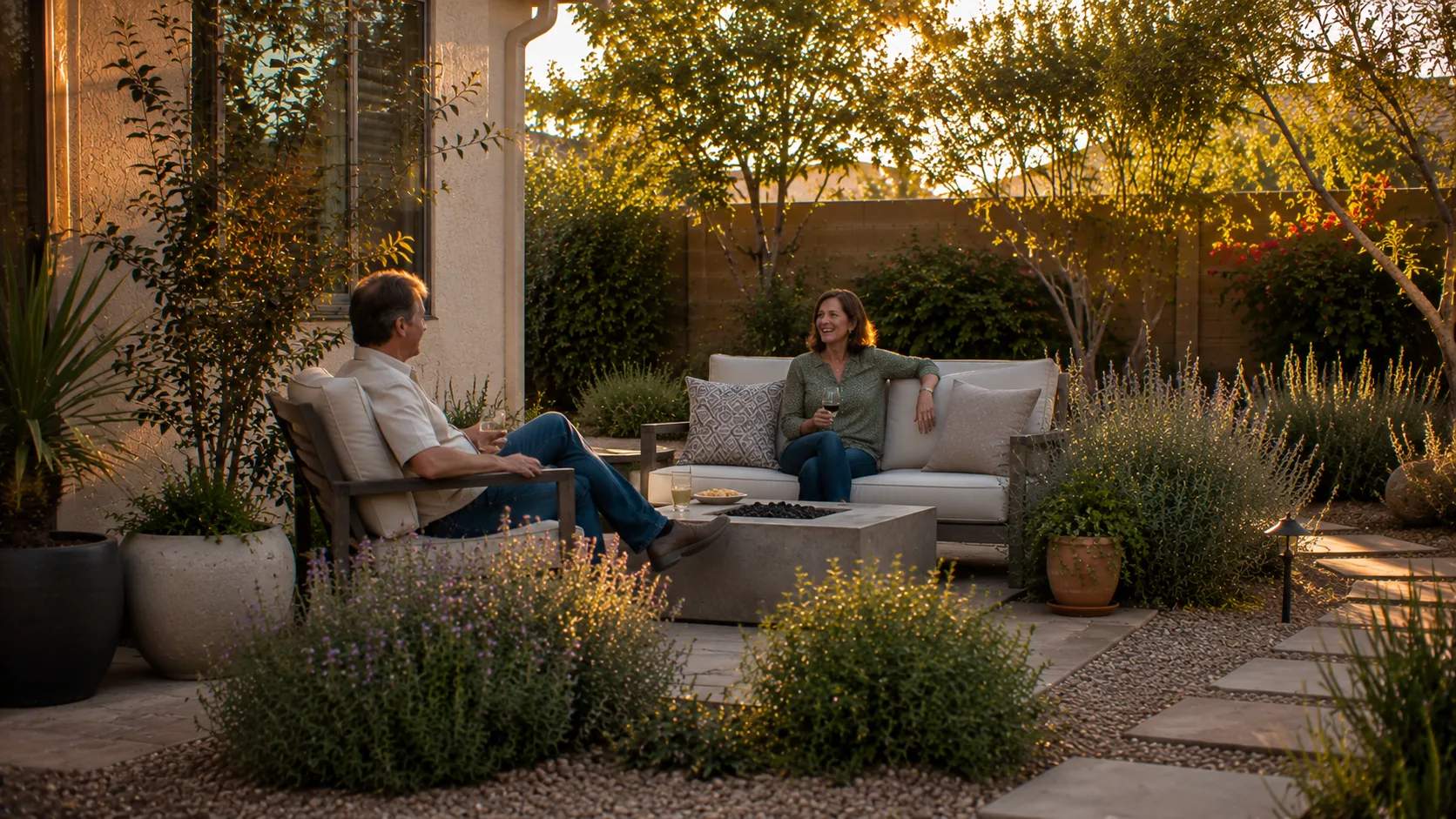
A patio does not need a water-hungry border to feel alive.
It needs planting with jobs: soften the edge, frame the seating, handle heat, create privacy, respect movement, and stay maintainable. Use containers carefully. Use beds where plants need root room. Use shade where people actually sit.
The goal is a patio that feels planted, comfortable, and intentional without pretending your climate is somewhere else.