
Artificial turf odor has a special summer talent: it can seem manageable in the morning and then announce itself by lunch like it paid for the patio.
The heat is not creating the whole problem from nothing. It is exposing residue, dog-use patterns, slow drainage, infill buildup, and low-airflow corners that were already there. Summer just turns the volume up.
This guide is product-neutral. Turf manufacturer instructions, installer guidance, cleaner labels, safety data sheets, pet re-entry directions, local water rules, and qualified turf professionals still control what you should do for your actual turf system.
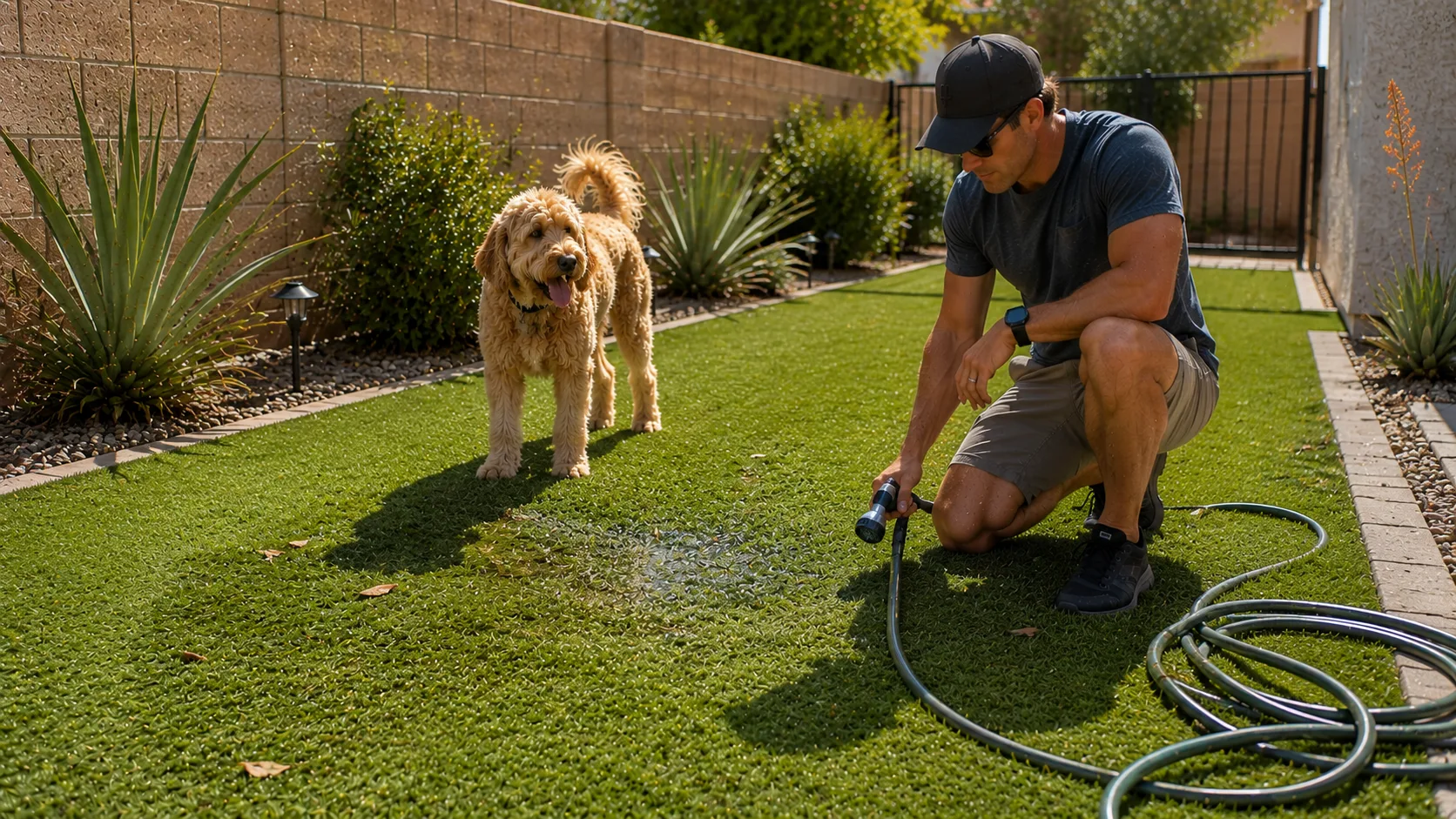
The Direct Answer
Artificial turf often smells worse in summer because heat makes urine residue and organic buildup more noticeable, especially in repeat dog-use areas, compacted infill, low-drainage spots, shaded strips with poor airflow, and edges where debris collects.
Start with this sequence:
- Pick up solids and remove leaves, hair, and organic debris.
- Rinse favorite dog-use zones slowly and more often during hot weather.
- Brush matted turf so water can move through the fibers and infill.
- Use only turf-compatible pet-area cleaners according to the label when water is not enough.
- Recheck after the hottest part of the day, not just right after cleaning.
- Watch seams, edges, low spots, and shaded strips for slow drainage or recurring odor.
- Call a turf installer or pro if the smell returns quickly or seems to live below the surface.
If you need the weekly baseline routine, start with A Weekly Artificial Turf Maintenance Routine for Dog Owners. If the odor is already strong, use How to Remove Dog Urine Smell from Artificial Turf as the deeper cleanup companion.
Heat Makes Existing Residue Louder
Summer odor usually means residue has somewhere to hide.
That can be:
- Urine residue near the blades.
- Infill holding repeated dog use.
- Solids residue that was picked up but not fully cleaned.
- Hair, pollen, leaves, dust, and organic debris settling into the turf.
- Drainage that moves too slowly through the turf system.
- A base layer that has absorbed repeated urine over time.
Cooler weather can make those issues easier to ignore. Heat makes them obvious. A hot afternoon is basically a smell audit with terrible manners.
Favorite Dog Zones Become The Problem Zones
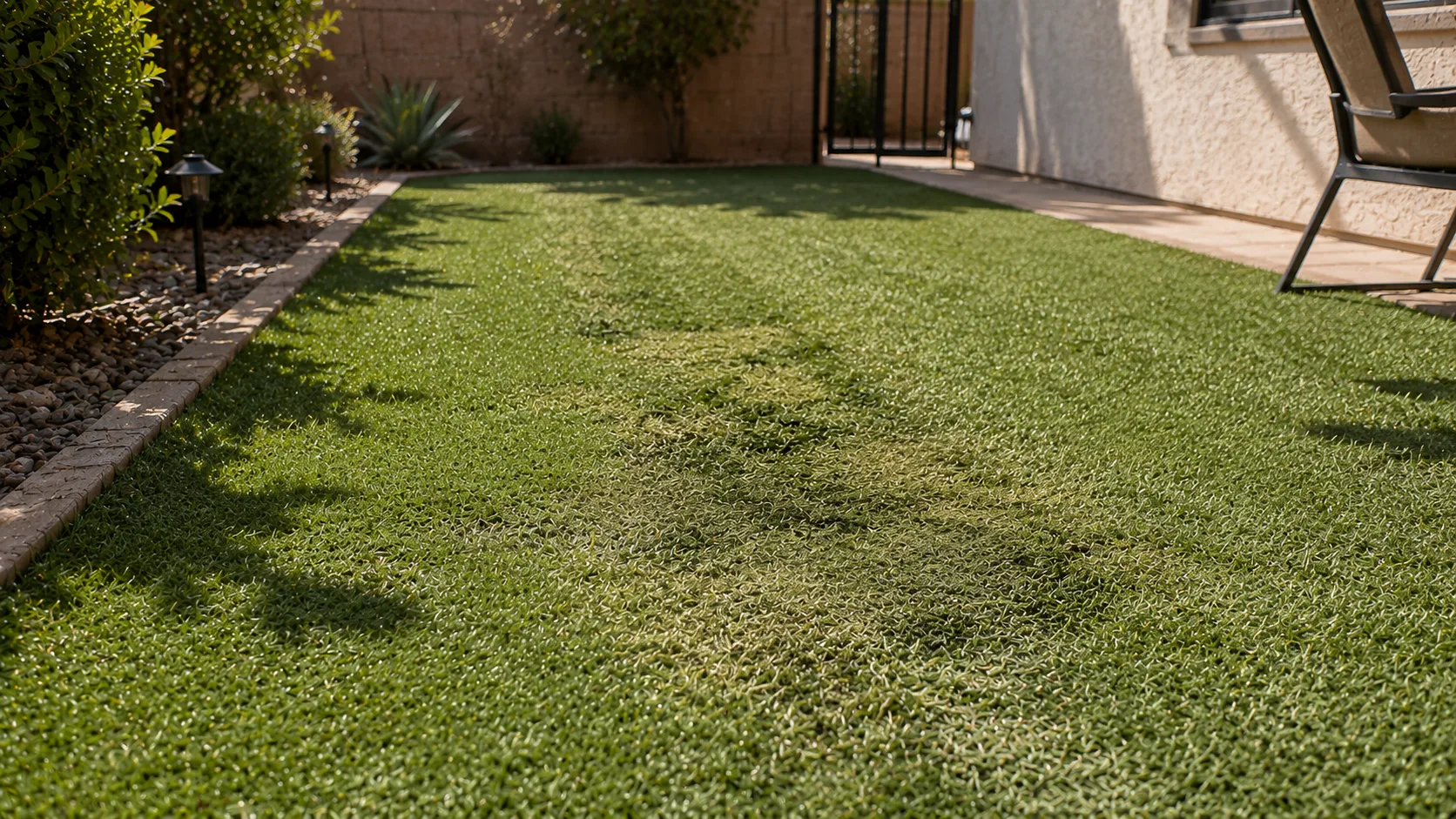
Most dogs do not distribute their bathroom habits like a landscape designer. They pick routes, corners, edges, gates, shaded strips, or one strangely beloved patch and keep using it.
In summer, those repeat-use zones need more attention because residue builds faster and smell reveals itself faster.
Look for:
- The same corner smelling worse every afternoon.
- Turf that looks darker or more matted in one route.
- Edges near patios, walls, gates, or side yards.
- Shaded areas where airflow is weak.
- Spots where water pools, runs sideways, or drains slowly.
Do not treat the whole yard equally if the dog does not use it equally. Aim maintenance at the zones doing the work.
Infill Can Hold Odor
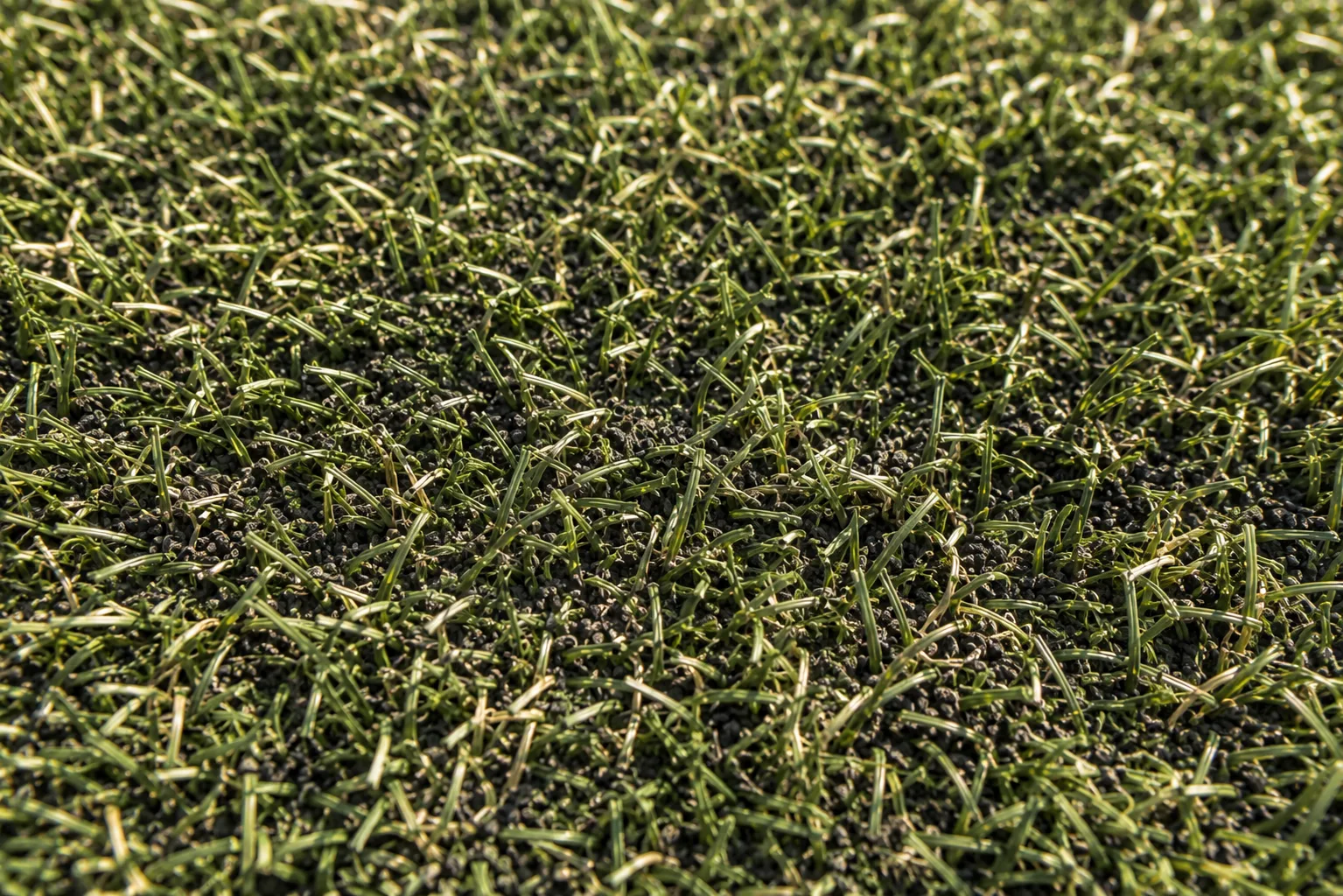
Infill can help artificial turf stand up and feel more natural, but it can also become part of the odor story.
In dog-use areas, infill may collect urine residue, hair, dust, pollen, tiny organic debris, and cleaning residue. If it compacts or clumps, water may not move through evenly. Then the top looks clean while the smell keeps coming back.
Signs the infill may need attention:
- The turf smells soon after rinsing.
- The odor is strongest when the turf warms up.
- The area feels compacted or crusty.
- Fibers stay matted even after brushing.
- Rinsing helps briefly, then the smell returns.
This is where routine brushing and slow rinsing matter. It is also where you stop pretending a scented spray is a structural solution.
Slow Drainage Makes Summer Odor Worse
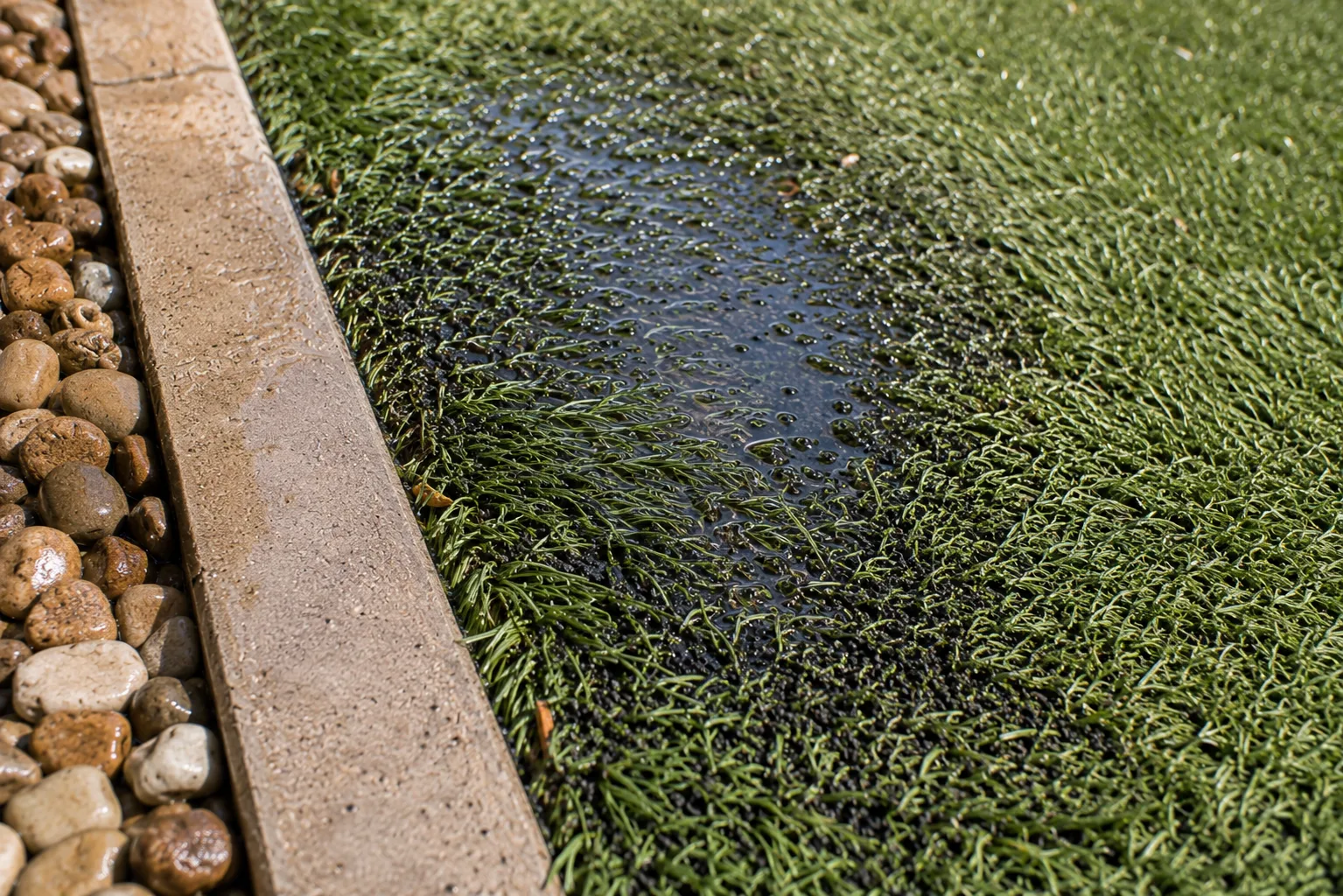
Artificial turf should let liquid move through the system. If liquid lingers, odor has more time to settle in.
Slow drainage can happen around:
- Seams.
- Edges.
- Low spots.
- Compacted infill.
- Poorly draining base material.
- Shaded strips that stay damp longer.
- Areas where debris blocks movement through the turf.
After rinsing, watch what the water does. If it beads, pools, runs sideways, or stays damp in one area long after the rest of the turf dries, that area deserves a closer look.
For side-yard context, Low-Water Side Yard Ideas That Don't Look Like a Service Alley can help with route planning, access, and material transitions. If decomposed granite or dusty edges are part of the mess, How to Use Decomposed Granite Without Tracking Dust Into the House is the better companion.
Shade Helps Comfort But Can Hide Odor
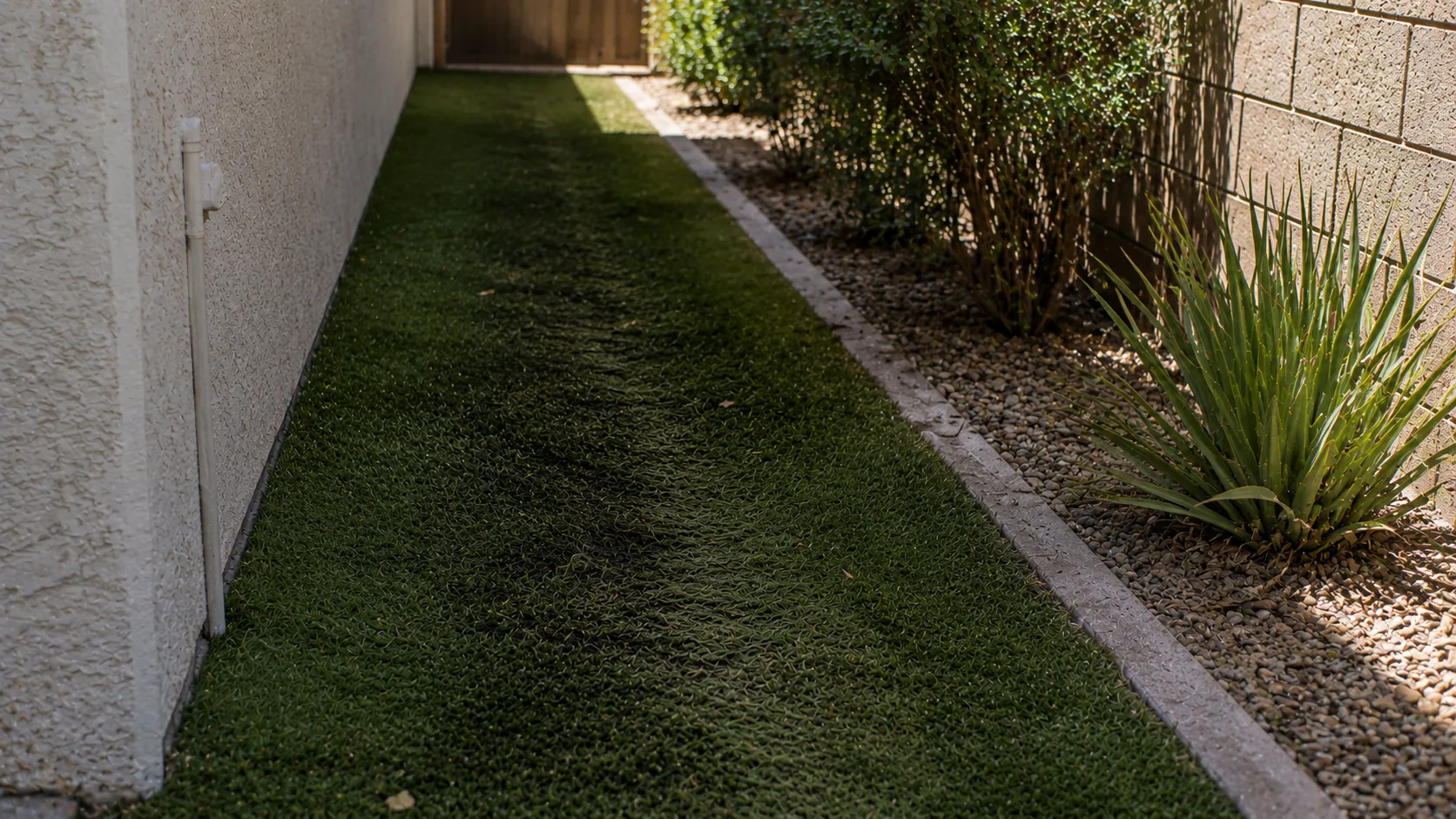
Shade can make a dog area more humane in summer. It can also create low-airflow strips that dry slowly if the layout, drainage, or maintenance routine is weak.
That does not mean shade is bad. In hot climates, shade is often essential for making a yard usable for people and pets. It just means shaded turf needs honest inspection:
- Does the area stay damp?
- Does debris collect there?
- Does the dog use it more often because it is cooler?
- Is airflow blocked by walls, fences, shrubs, or furniture?
- Does it smell better in the morning and worse in the afternoon?
For broader comfort planning, see Shade in Low-Water Landscapes. A pet area should be clean, but it should also be livable.
Rinse More Often, But Rinse Better
In summer, frequency matters. So does technique.
A quick mist over the top is not the same as a slow rinse that moves water through the turf and infill. For repeat dog zones, gentle sustained flow usually matters more than aggressive blasting.
A summer rinse routine should focus on:
- Favorite bathroom spots.
- Edges and corners.
- Shaded strips.
- High-traffic paths.
- Areas that smell after warming up.
Avoid pressure washing unless your turf manufacturer and installer clearly allow it. Aggressive pressure can move infill, damage seams, or create a new problem while pretending to solve the old one.
Cleaner Is Not A Substitute For Diagnosis
When water is not enough, use only cleaners labeled for pet areas and compatible with artificial turf. Follow the label for dilution, dwell time, rinsing, storage, and pet re-entry.
Do not mix cleaners. Do not combine bleach with ammonia, acids, vinegar, or other products. Do not assume a cleaner is safe for every turf system or every pet because the label looks friendly.
If a cleaner helps for one afternoon and the smell returns the next warm day, the issue may be deeper than the surface. That is a diagnosis clue, not a command to use more product.
When The Problem Is Below The Blades
Summer makes below-surface odor harder to ignore.
The problem may be below the visible turf when:
- Odor returns within a day or two after careful cleaning.
- The same area smells worse every hot afternoon.
- Water drains slowly after rinsing.
- Turf feels spongy, uneven, compacted, or sunken.
- Infill smells even after rinsing.
- The smell is strongest at seams, edges, or low spots.
Below-surface problems may involve contaminated infill, backing, drainage layers, or base material. That is usually not fixed by more fragrance or a heroic afternoon with a hose.
If the source is below the turf, a professional may need to evaluate cleaning, infill replacement, drainage correction, turf lifting, base repair, or partial replacement.
A Simple Summer Odor Check
Use this quick check during hot months:
- Walk the turf in the morning.
- Check favorite dog-use zones.
- Remove solids and debris.
- Rinse repeat-use spots slowly.
- Brush matted paths and bathroom zones.
- Recheck during the warmest part of the day.
- Note whether odor returns in the same place.
- Watch how water drains after rinsing.
- Call a pro if the smell keeps coming back from below the surface.
That routine is not glamorous. Neither is a yard that smells like a wet gym sock wearing sunscreen.
When To Call A Turf Pro
Call a turf installer, specialty cleaner, or qualified pro if:
- The smell returns quickly after careful rinsing and cleaning.
- A favorite dog zone stays damp, matted, or sour-smelling.
- Infill smells, clumps, or appears contaminated.
- Water drains slowly or pools.
- Seams, edges, or low spots are involved.
- The base may be holding urine.
- You are considering pressure washing, turf lifting, infill replacement, base correction, or partial replacement.
- You are unsure whether a cleaner is compatible with your turf and pets.
The goal is not to prove you can solve every odor with more effort. The goal is to know when the odor source has moved beyond routine homeowner maintenance.
The Bottom Line
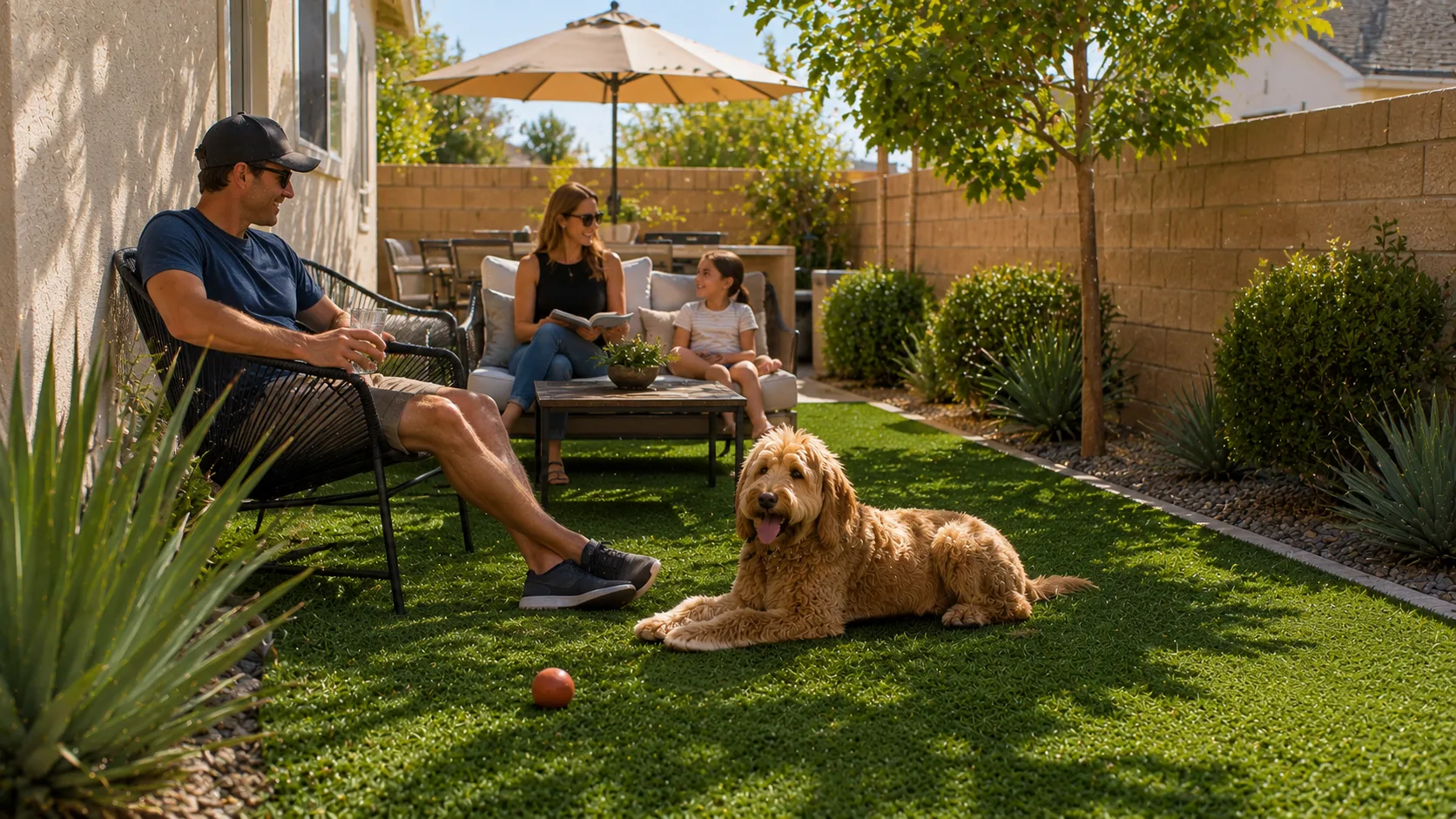
Artificial turf smells worse in summer because heat exposes what is already building up: urine residue, repeated dog zones, organic debris, infill contamination, slow drainage, and low-airflow areas.
The fix is usually a better rhythm first: solids pickup, slow rinsing, brushing, careful label-safe cleaning, heat-aware rechecks, and honest drainage inspection.
If the smell keeps coming back from the same place, stop treating the blades like the whole system. The problem may be lower than you can see.