
Artificial turf can make a dog yard easier. It can also become extremely honest about how often the dog uses the same corner.
The trick is not waiting until the yard smells like a problem with landscaping opinions. A dog-friendly turf area needs a simple maintenance rhythm: pick up solids, rinse the repeat-use spots, brush matted zones, watch heat and drainage, and know when the odor has moved below the blades.
This guide is product-neutral. Turf manufacturer instructions, installer guidance, cleaner labels, safety data sheets, pet re-entry directions, local water rules, and qualified turf professionals still control what you should do for your exact turf system.
The Direct Answer
A practical weekly artificial turf routine for dog owners looks like this:
- Pick up solids quickly.
- Remove leaves, hair, and debris from the dog route.
- Rinse favorite bathroom zones slowly enough for water to move through the turf and infill.
- Brush matted or high-traffic areas upright.
- Use only turf-compatible, pet-area cleaners according to the label when odor needs more than water.
- Keep pets off treated areas until the label or installer guidance says it is safe.
- Check seams, edges, low spots, and shaded strips for slow drainage or recurring odor.
- Call a turf installer or pro if smell returns quickly, the infill is contaminated, drainage is poor, or the base may be holding urine.
If you are already dealing with strong odor, start with How to Remove Dog Urine Smell from Artificial Turf. This article is the maintenance routine that helps keep the yard from getting there in the first place.
Why Dog Turf Needs A Routine
Artificial turf is lower maintenance than living grass in some ways. It does not mean maintenance has left the chat.
Dogs create a few repeat issues:
- Urine concentrates in favorite spots.
- Solids leave residue even after pickup.
- Hair, leaves, dust, and organic debris settle into fibers.
- Infill can compact or hold odor.
- Heat can make smells stronger.
- Poor drainage can trap residue below the visible surface.
A weekly routine keeps small problems small. It also teaches you what normal looks like, so a new smell, slow-draining area, sunken edge, or matted patch does not sneak up on you.
The Weekly Dog-Turf Routine
Think of this as a calm loop, not a yard punishment ritual.
1. Pick Up Solids First
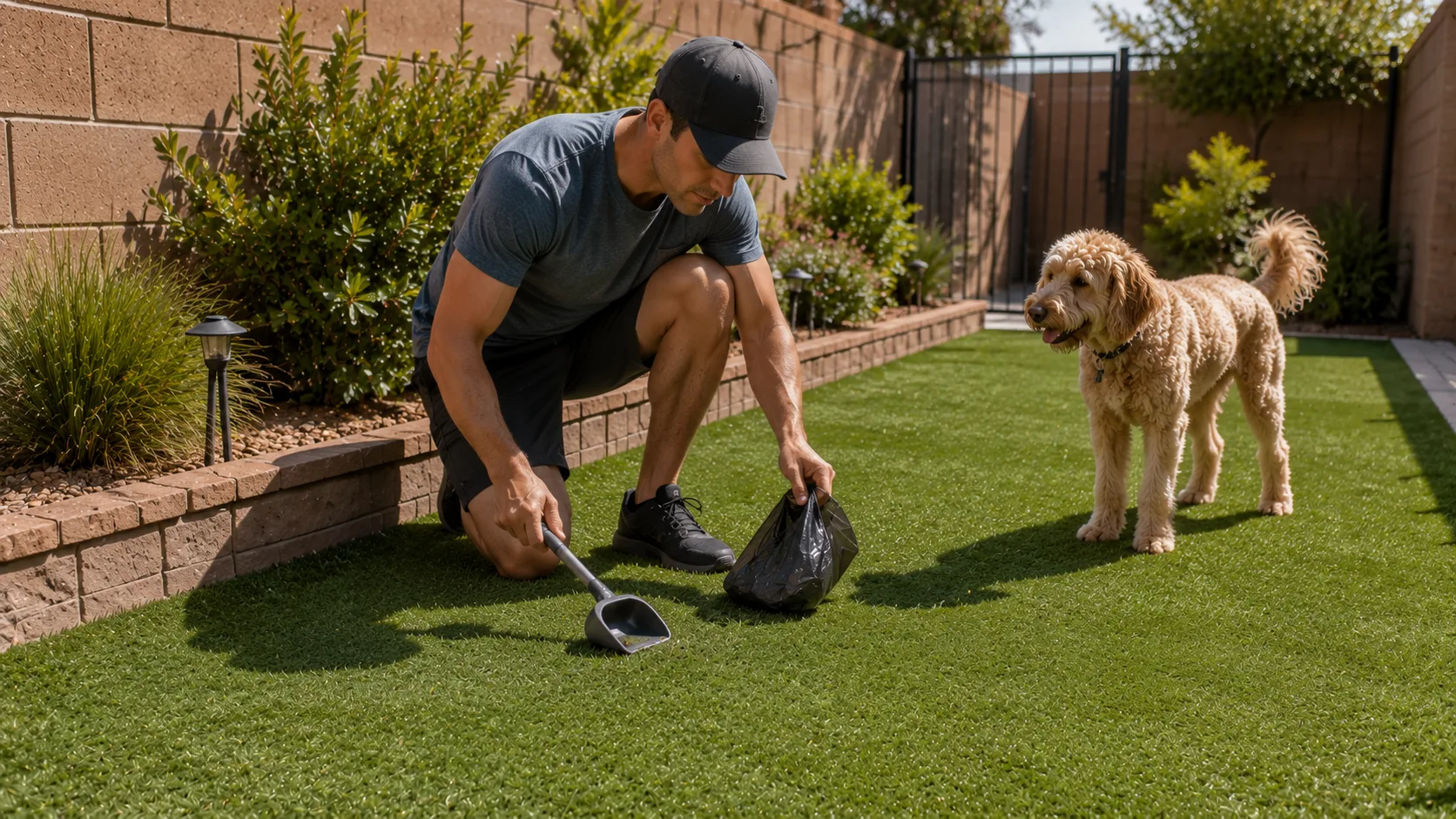
Remove solids as soon as practical. Then check the surrounding turf for residue, especially if the dog stepped in it, the turf fibers are long, or the area is near a seam or edge.
Do not rely on rinsing alone for solids. Rinsing a mess deeper into the turf system is how a small problem applies for a promotion.
2. Clear Loose Debris
Remove leaves, seed pods, hair, sticks, and wind debris from the turf. Organic debris can hold moisture and odor, and it can make urine zones harder to rinse well.
This matters more in side yards, shaded strips, and under plants where debris collects quietly.
3. Rinse The Favorite Bathroom Zones
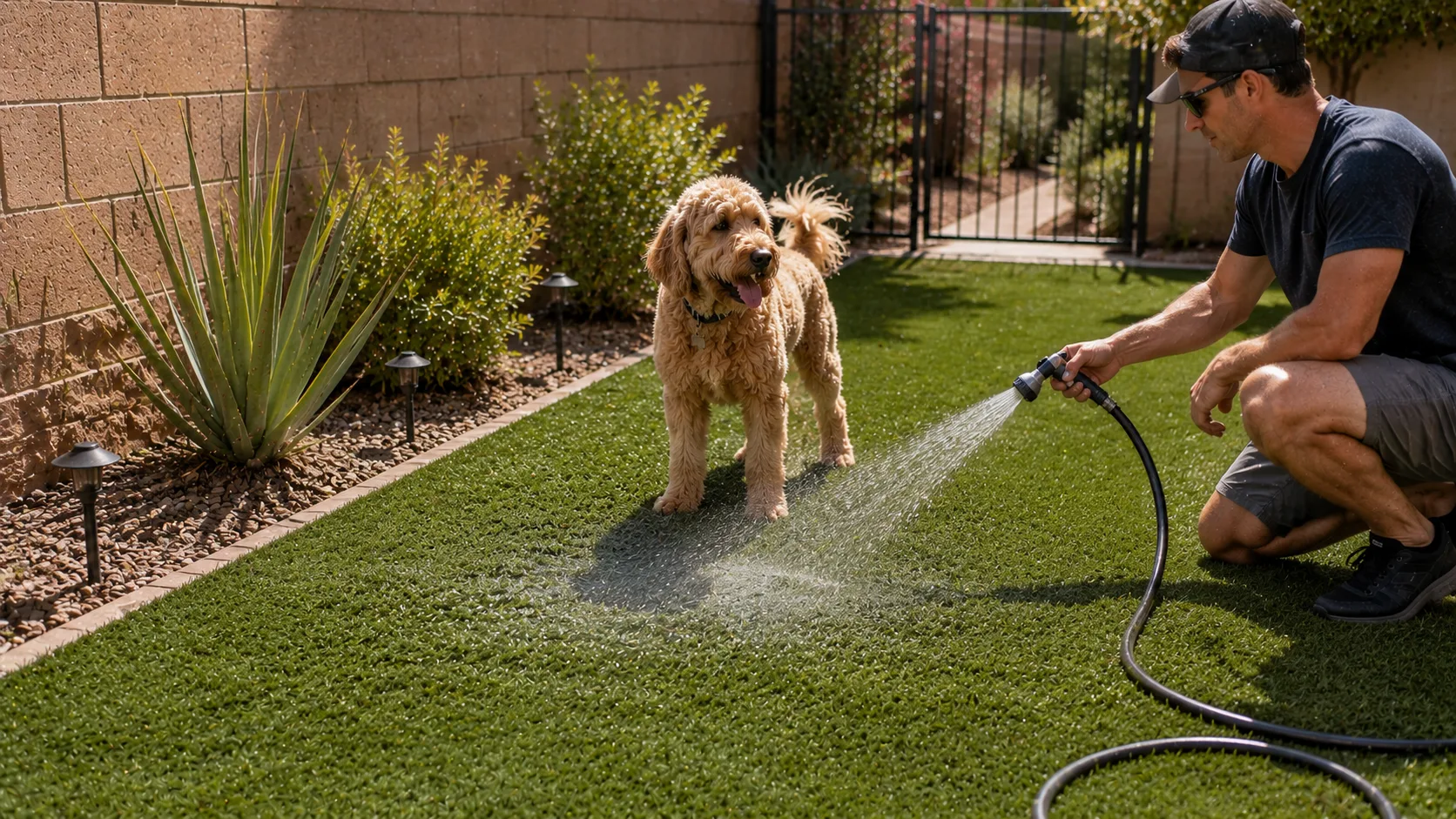
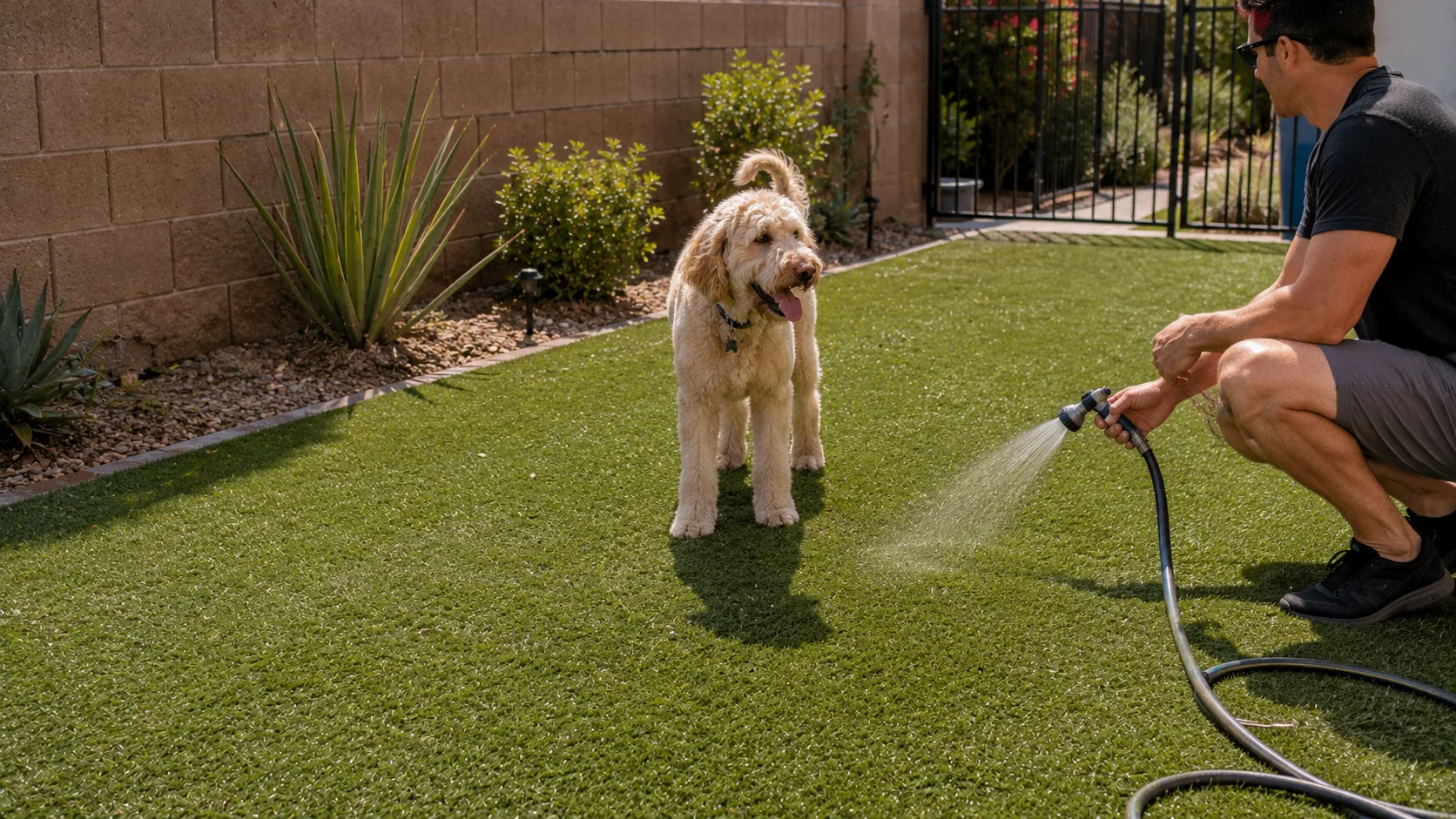
Use gentle, steady hose flow on the dog’s repeat-use areas. The goal is not to blast the blades. The goal is to move water through the turf and infill so fresh urine does not sit near the surface.
Rinse more often during:
- Hot weather.
- Heavy dog use.
- Multi-dog weeks.
- Dry, dusty weather.
- After parties or yard work.
- Anywhere the dog has a favorite corner.
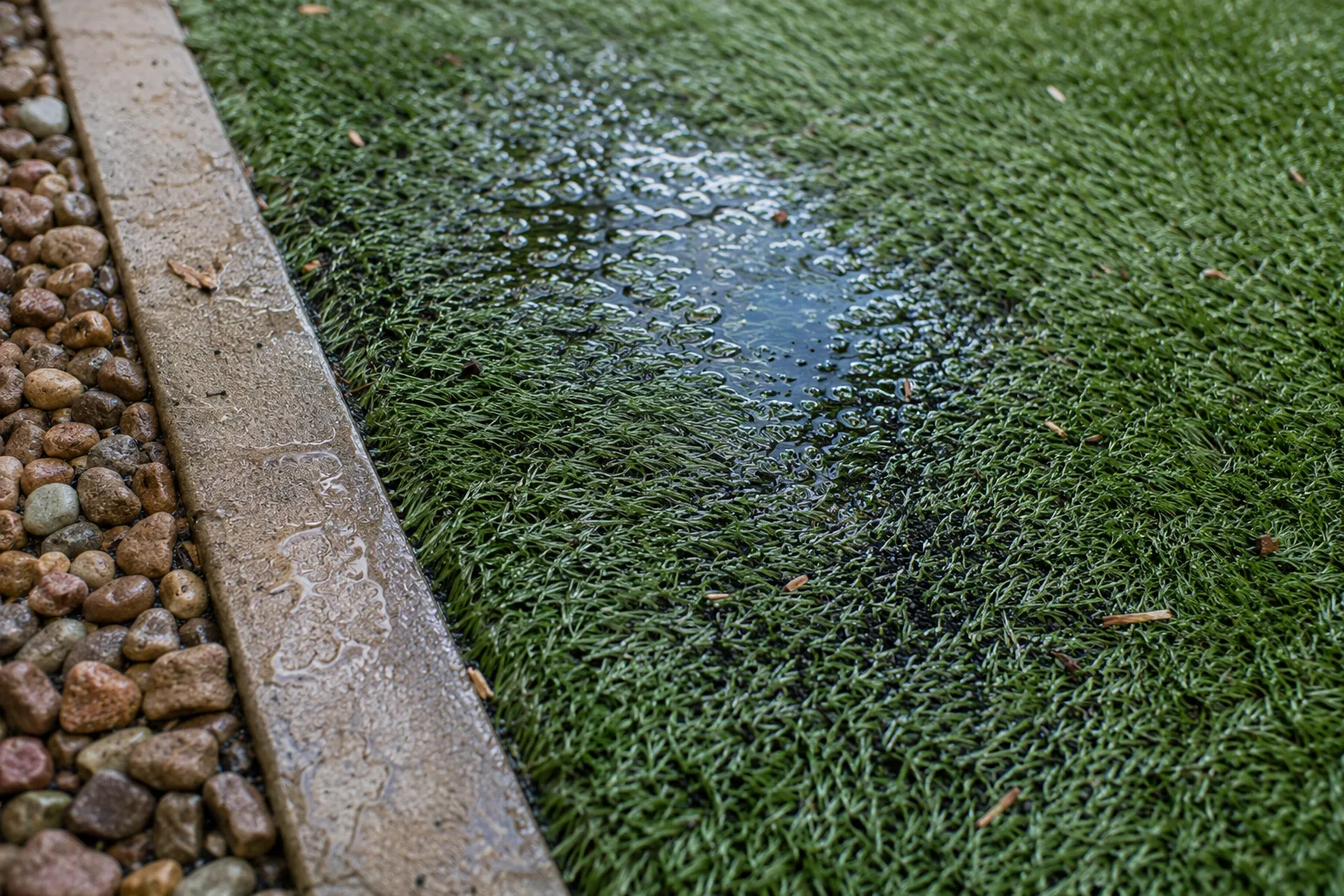
If water pools, runs sideways, or drains slowly, treat that as a clue. You may be dealing with compaction, slope, seam, edge, infill, or base-layer trouble rather than a simple cleaning problem.
4. Brush High-Traffic Areas
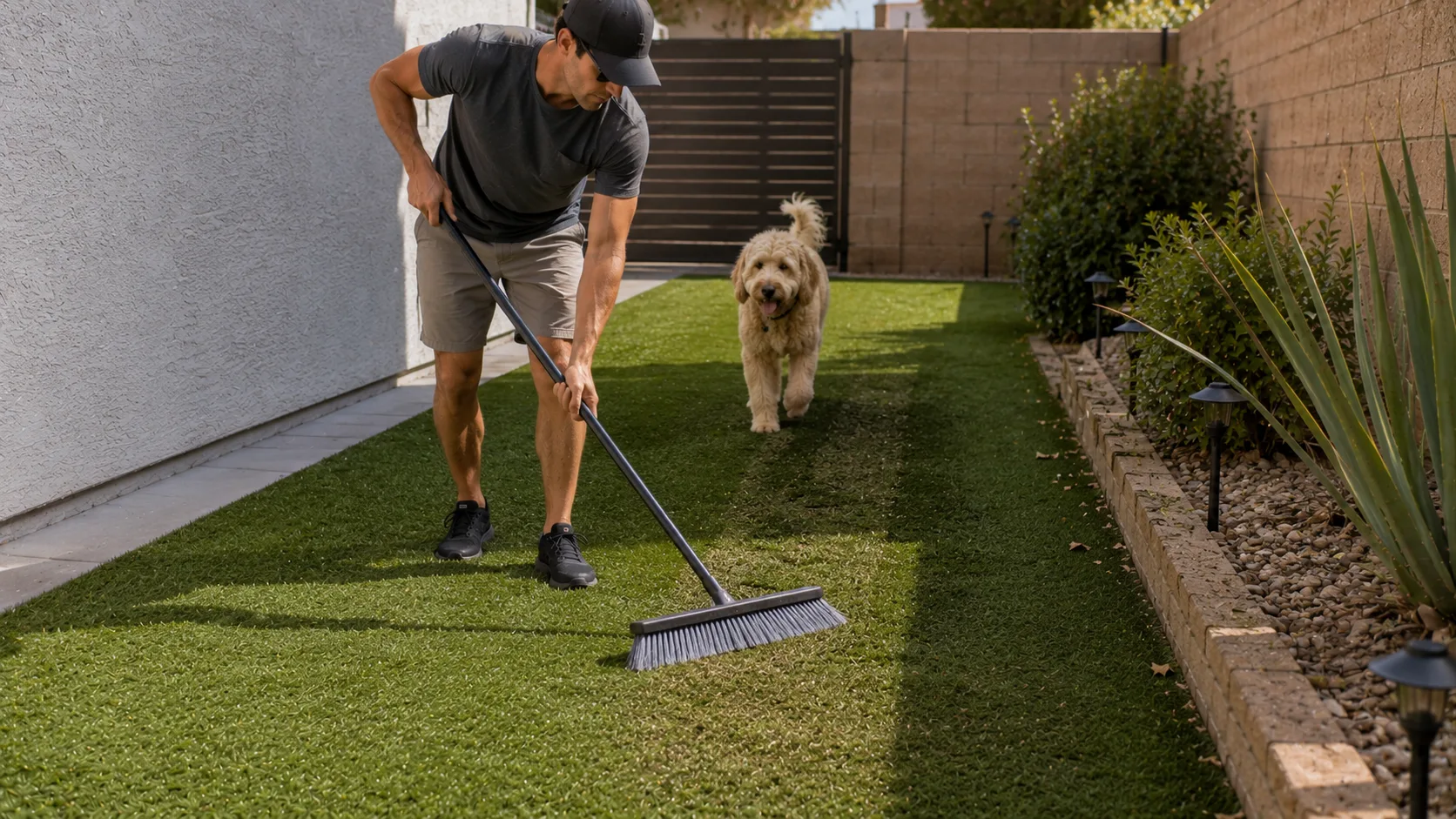
Use a turf-safe broom or brush that matches your turf guidance. Brush matted paths, favorite bathroom zones, and areas where the dog runs, turns, or lounges.
Brushing helps fibers stand back up, loosens debris, and keeps infill from becoming a compacted little odor archive. Avoid aggressive tools that damage fibers, backing, seams, or infill.
5. Use Cleaner Only When Water Is Not Enough
For routine maintenance, water and prompt cleanup may handle a lot. When odor needs more help, use only cleaners labeled for pet areas and compatible with artificial turf.
Follow the label for:
- Dilution.
- Dwell time.
- Rinsing.
- Ventilation or handling.
- Pet re-entry.
- Storage and disposal.
Do not mix cleaners. Do not combine bleach with ammonia, acids, vinegar, or other products. Do not assume something is pet-safe or turf-safe because the bottle looks friendly.
Summer And Heat Change The Rules
Artificial turf can get hot. Dog urine odor can also become more obvious in heat.
In hot weather:
- Rinse repeat-use areas more often.
- Check the turf surface before letting pets linger on it.
- Provide shade and water.
- Watch for hot hardscape or turf edges.
- Avoid cleaning in a way that leaves chemical residue where pets will return.
- Pay attention to smells that appear only during warm afternoons.
Shade planning matters for pet areas. A low-water yard still needs comfort zones. Shade in Low-Water Landscapes can help if the pet route is technically tidy but miserable in summer.
Drainage And Base-Layer Warning Signs
Some turf odor is not on the blades anymore.
Watch for:
- Smell returning within a day or two after cleaning.
- Odor strongest near seams, edges, corners, or low spots.
- Water pooling or draining slowly after rinsing.
- Turf feeling spongy, uneven, compacted, or sunken.
- Infill clumping, crusting, or smelling even after rinsing.
- One bathroom zone getting dramatically worse than the rest.
Those signs may point to infill contamination, poor drainage, backing issues, edge problems, seam trouble, or base material holding urine. Cleaning the visible turf can help temporarily, but it may not solve the source.
If the problem keeps returning, the next step may be professional turf cleaning, infill replacement, drainage evaluation, lifting a section, or base correction. That is installer/pro territory, not a place to freestyle with stronger chemicals.
A Simple Monthly Check
Once a month, walk the turf like you are looking for clues:
- Are fibers matted in the dog path?
- Does the bathroom zone smell after a warm day?
- Does water move through the turf or sit on top?
- Are seams or edges lifting?
- Is infill uneven, compacted, clumped, or missing?
- Are weeds, ants, or debris showing up at edges?
- Is nearby gravel, decomposed granite, mulch, or planting debris tracking onto the turf?
If the turf connects to a side yard, loose material matters. How to Use Decomposed Granite Without Tracking Dust Into the House explains why dusty edges and traffic paths can make cleanup harder.
What Not To Do
Avoid these unless your turf manufacturer, installer, and product labels clearly support them:
- Pressure washing that displaces infill or damages seams.
- Household cleaners not labeled for synthetic turf or pet areas.
- Bleach, ammonia, acids, solvents, or mixed cleaning products.
- Covering odor with fragrance instead of removing residue.
- Adding fresh infill over contaminated infill without diagnosing the source.
- Ignoring slow drainage because the surface looks dry later.
- Using metal rakes, stiff damaging brushes, or aggressive scrubbing.
The goal is not to overpower the turf. It is to keep the system clean enough that odor does not build in the first place.
When To Call A Turf Pro
Call a turf installer, specialty cleaner, or qualified pro if:
- Odor returns quickly after careful rinsing and cleaning.
- The same dog zone is always wet, smelly, or matted.
- Water drains slowly or pools.
- The turf has seam, edge, or low-spot problems.
- Infill smells, clumps, or looks contaminated.
- The base may be holding urine.
- The turf needs lifting, infill removal, drainage correction, or partial replacement.
- You are unsure whether a cleaner is compatible with your turf and pets.
There is no medal for turning a maintenance problem into a turf replacement. Get help when the source is below the surface.
The Bottom Line
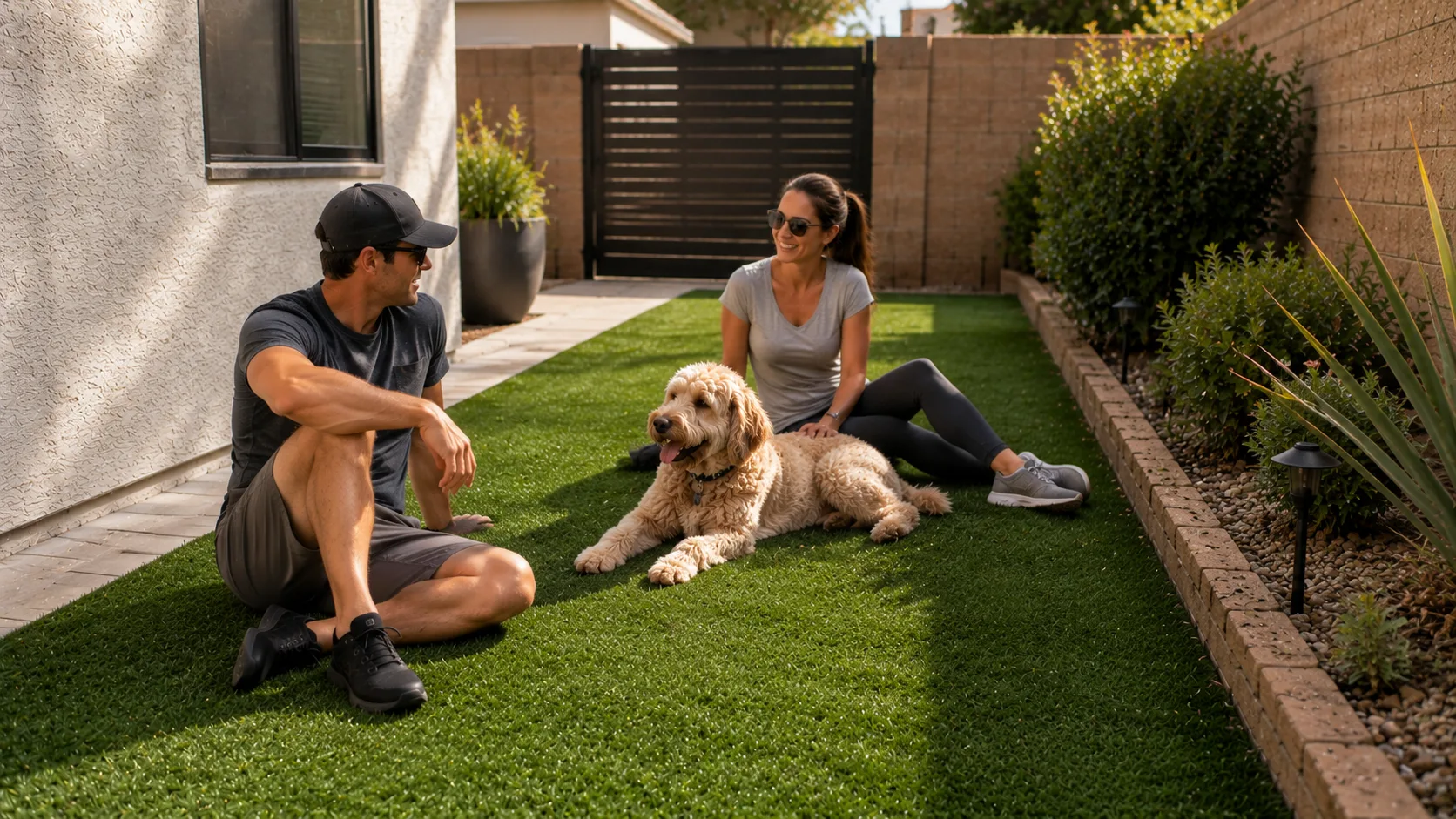
A dog-friendly artificial turf yard needs a rhythm: solids first, debris removal, slow rinsing, brushing, label-safe cleaning when needed, heat awareness, and honest drainage diagnosis.
The yard does not need perfume. It needs water moving through the right places, residue removed before it bakes in, and a clear line between normal homeowner maintenance and deeper turf-system problems.
Do that weekly, and artificial turf has a much better chance of staying useful instead of becoming the most expensive smell in the yard.