
A hot-climate backyard can look finished and still be functionally useless for half the day. The patio is too bright. The pool deck burns feet. The dog picks the only shadow in the yard. The seating area has furniture, technically, but nobody wants to sit there unless the sun apologizes first.
Shade is not just decoration in a hot yard. It is the difference between a backyard people use and a backyard people admire from inside while holding an iced drink in surrender.
This guide is product-neutral. Local climate guidance, qualified landscape professionals, arborists, structural professionals, utility rules, HOA requirements, building codes, fire/local restrictions, plant suitability, and manufacturer instructions still control what is appropriate for your actual yard.
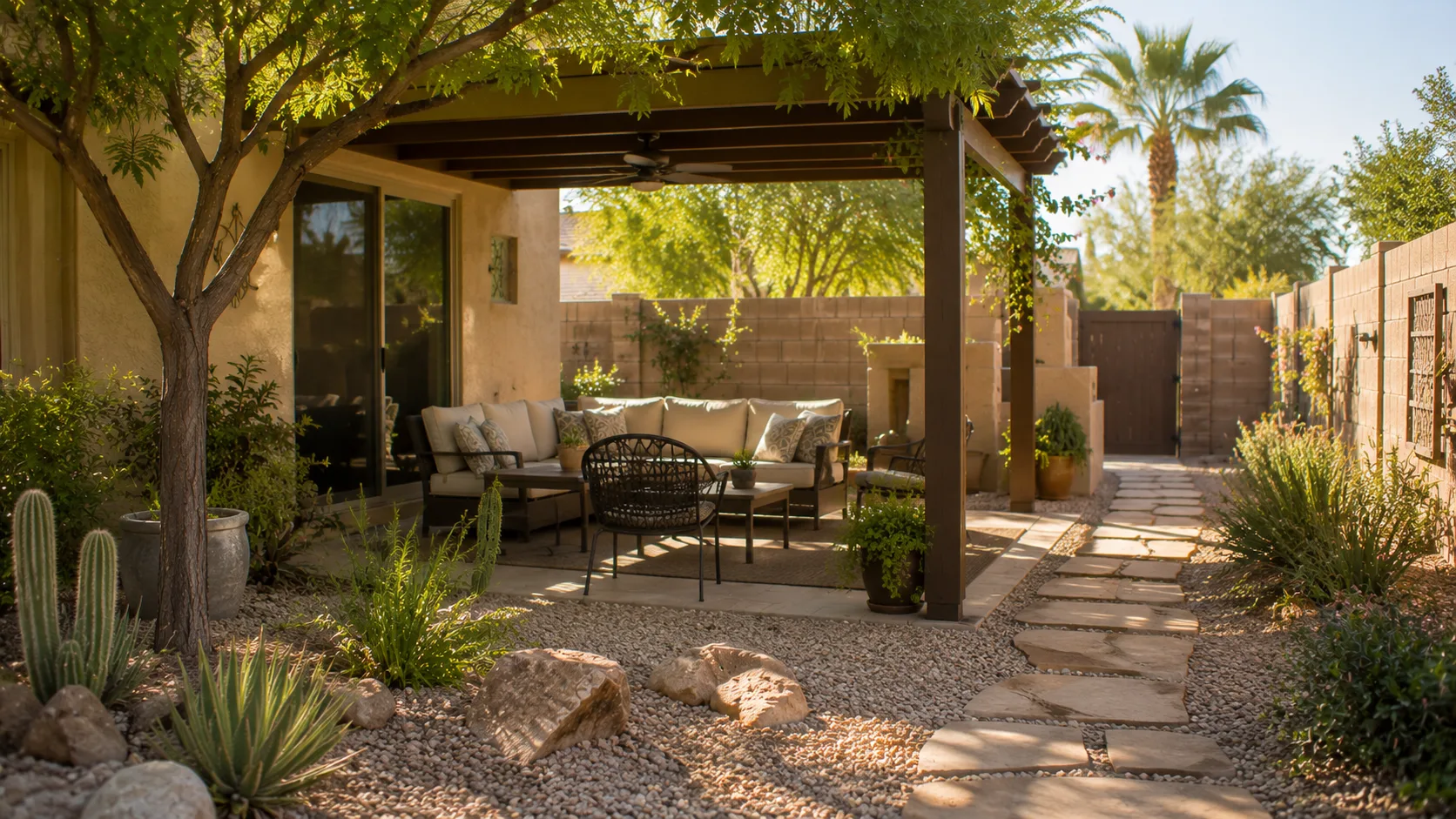
The Direct Answer
The best backyard shade plan in a hot climate starts with the places people, pets, plants, and hard surfaces are getting punished most.
Prioritize:
- The main seating area.
- The path from the house to the patio, pool, garden, or gate.
- Pool edges, lounging areas, and outdoor dining zones.
- Pet comfort zones and dog routes.
- West-facing walls, doors, and windows.
- Planting beds near reflected heat.
- Hardscape that radiates heat into the rest of the yard.
Then choose the right category of shade for each zone: living shade, built shade, temporary shade, vertical shade, or layout changes that reduce glare and heat. Most good hot-climate yards use more than one kind.
If your yard is already low-water, Shade in Low-Water Landscapes is the closest companion. This guide is the broader backyard-use version: how to make the patio, pool, pet area, and outdoor living zones feel survivable.
Start With Where The Yard Fails
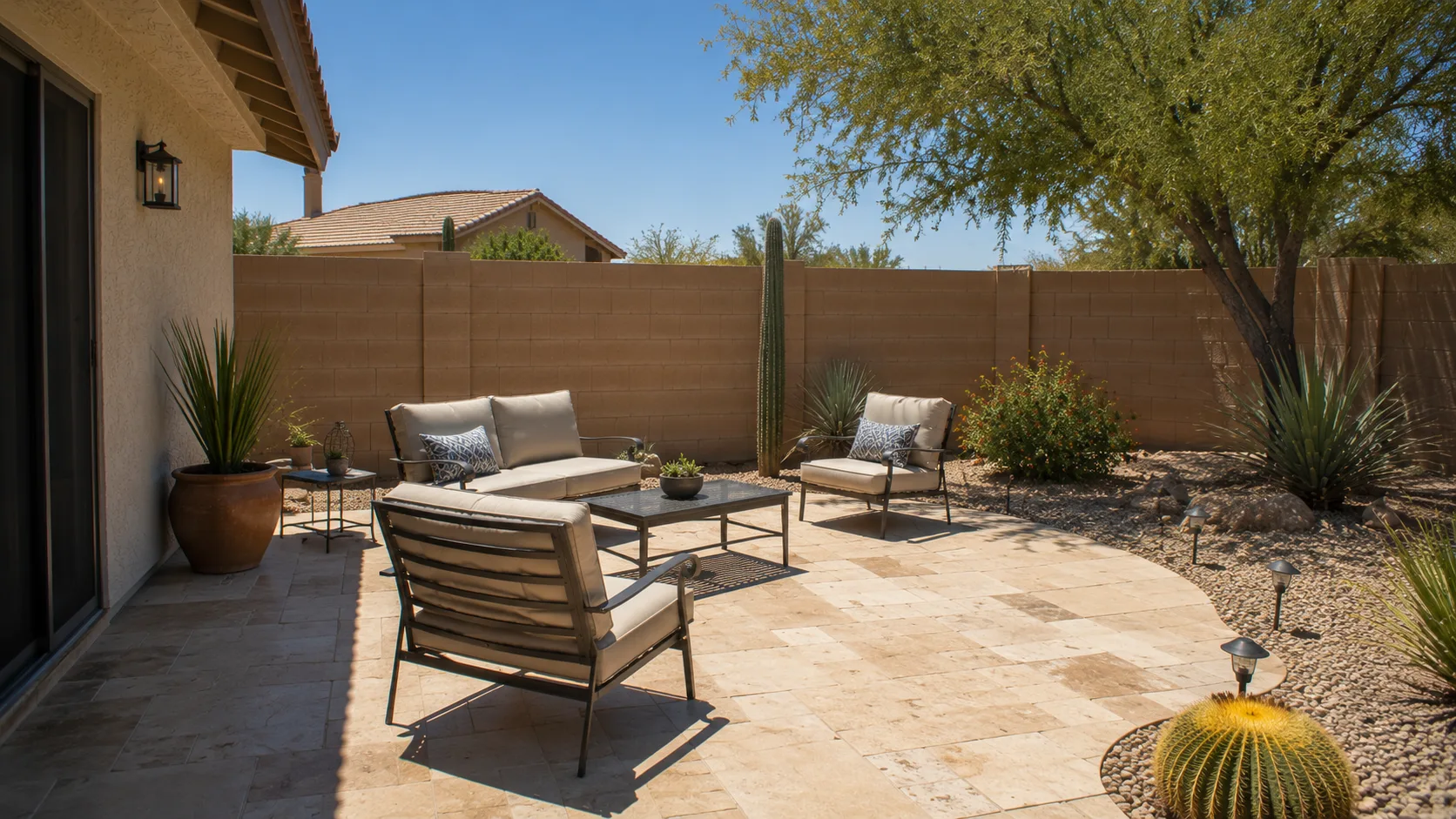
Do not start by shopping for a structure, tree, or fabric shape. Start with the moment the yard stops working.
Ask:
- Where does the patio become too bright?
- Which seats are empty by late morning?
- Where do people avoid walking barefoot?
- Which door, wall, or window radiates heat?
- Where does the dog try to hide?
- Which planting bed gets cooked by reflected heat?
- Which path feels like crossing a parking lot?
- Where would shade actually change daily life?
This is the useful part. Shade planning becomes much easier when you stop asking, "What can I buy?" and start asking, "Which part of the yard is being rude?"
Shade The Outdoor Rooms First
Hot-climate yards need outdoor rooms that are usable at real times of day, not just for photos.
Start with:
- Main seating.
- Outdoor dining.
- Grill or prep zones.
- Poolside lounging.
- Door-to-patio transitions.
- Garden work areas.
- Pet rest zones.
If the primary patio has no shade, the rest of the yard has to work too hard. A few plants around the edge will not fix a seating area that feels like a skillet with cushions.
For larger layout thinking, How to Plan a Low-Water Backyard Without Making It Look Barren can help organize zones before you make shade decisions.
Living Shade: Trees, Large Shrubs, And Planting Layers
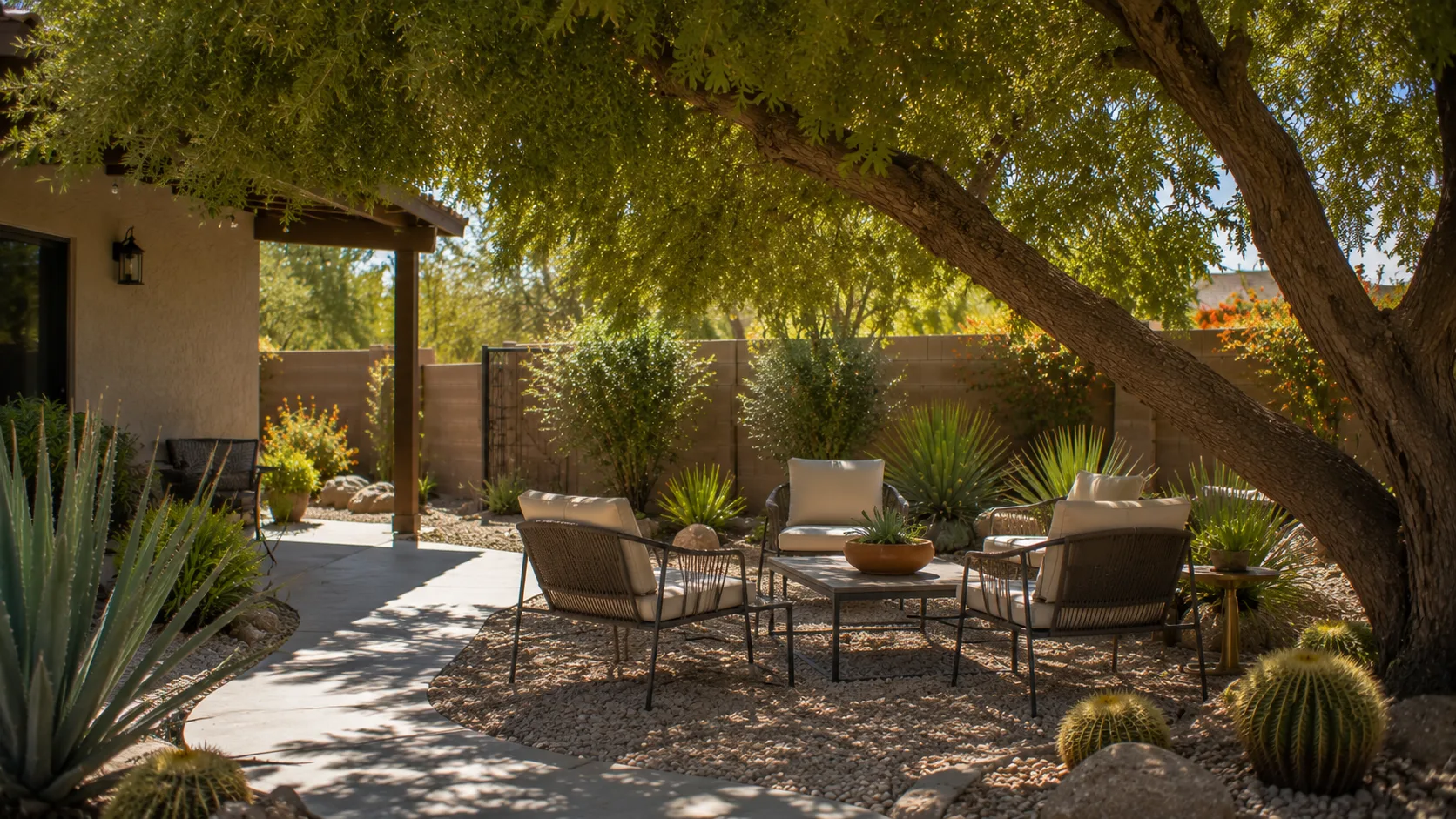
Living shade can make a yard feel cooler, softer, and more settled. Trees and large plants can frame a patio, protect a path, soften walls, and make a low-water yard feel alive instead of stripped.
But living shade is not instant, and it is not free of tradeoffs.
Plan for:
- Mature canopy size.
- Root space.
- Establishment water.
- Long-term irrigation.
- Leaf, flower, seed pod, thorn, or fruit drop.
- Proximity to pools, patios, roofs, walls, utilities, and walkways.
- Local climate, soil, pests, wind, fire, and regional suitability.
- Maintenance access.
The young tree is not the final tree. It is the opening act. Give the grown version enough room to be useful without becoming a future argument with the patio, wall, roof, pool, or neighbor.
For plant-selection logic, see How to Choose Plants for a Low-Water Landscape Without Making a Random Plant Collection. Keep species choices local, not internet-universal.
Built Shade: Patio Covers, Pergolas, Sails, Umbrellas, And Screens
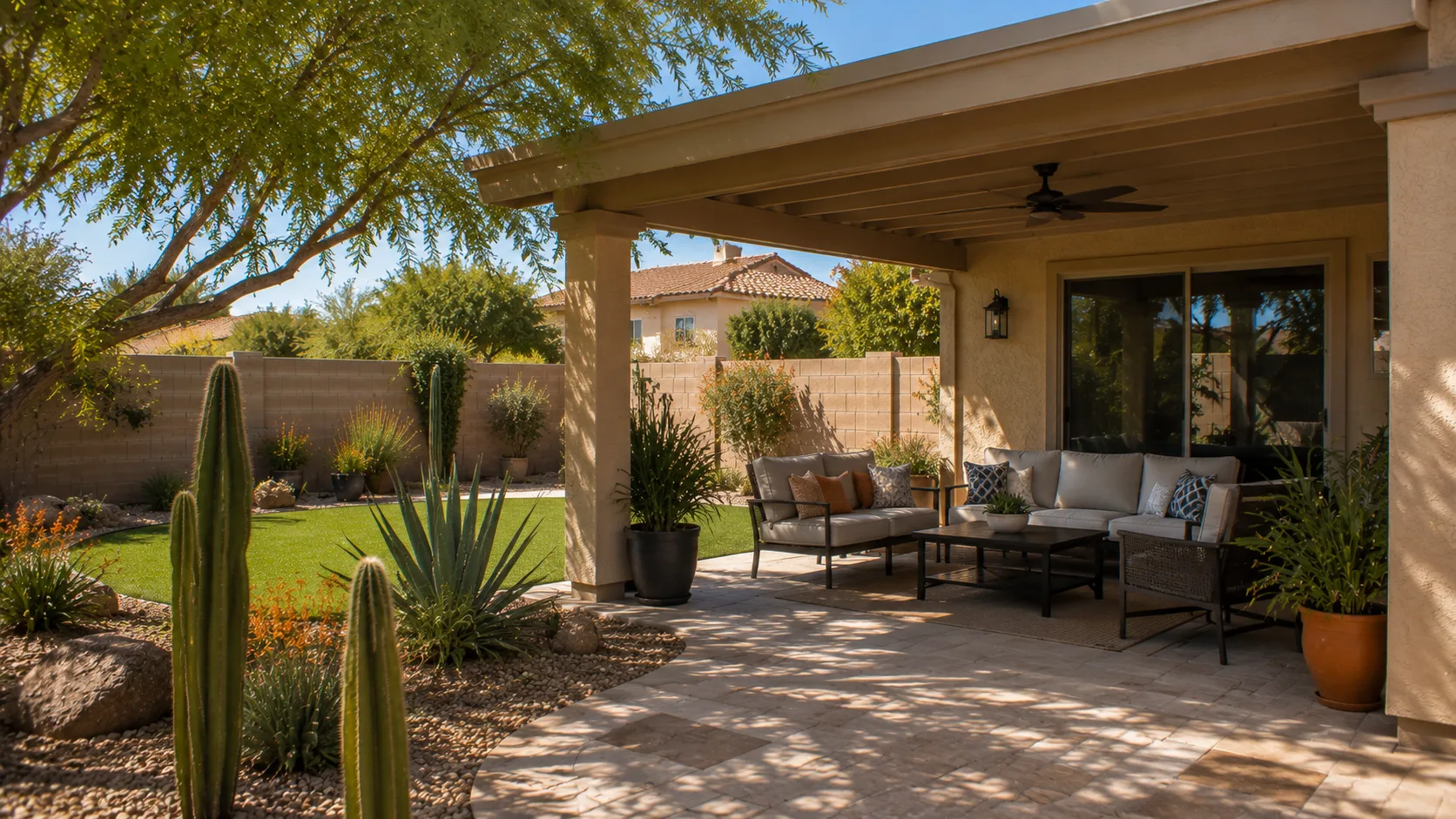
Built shade can help where trees are too slow, too large, poorly placed, or not enough by themselves.
Common categories include:
- Patio covers.
- Pergolas.
- Ramadas or freestanding covers.
- Shade sails.
- Umbrellas.
- Screens, trellises, and vertical shade.
- Covered side-yard or utility transitions.
This article treats those as categories, not shopping recommendations. Anchoring, footings, wind load, attachment to the house, utilities, drainage, fire/local rules, HOA requirements, and permits may matter. Permanent or load-bearing shade deserves qualified help.
Temporary shade can be useful while living shade grows. Permanent shade can make an outdoor room feel intentional. The wrong built shade can also cover the wrong part of the yard, fight the wind, trap heat, or make the patio feel like a waiting area behind a restaurant.
Pool And Patio Shade Need Different Thinking
Pool and patio areas often need shade in different places.
For patios, shade usually belongs over:
- Seating.
- Dining.
- Doors.
- Outdoor cooking or prep zones.
- The first few steps out of the house.
For pools, shade often matters around:
- Lounging areas.
- Baja shelves or shallow ledges.
- Steps and handrail zones.
- Nearby seating.
- Storage or towel zones.
- Walking paths across hot decking.
Avoid implying shade makes pool water safe, cooler, or low-maintenance by itself. Pool safety, chemistry, visibility, supervision, surfaces, and equipment remain separate issues. For dry-climate pool cleanup, Pool Care After a Dust Storm covers the maintenance side.
Pet Comfort Zones Matter
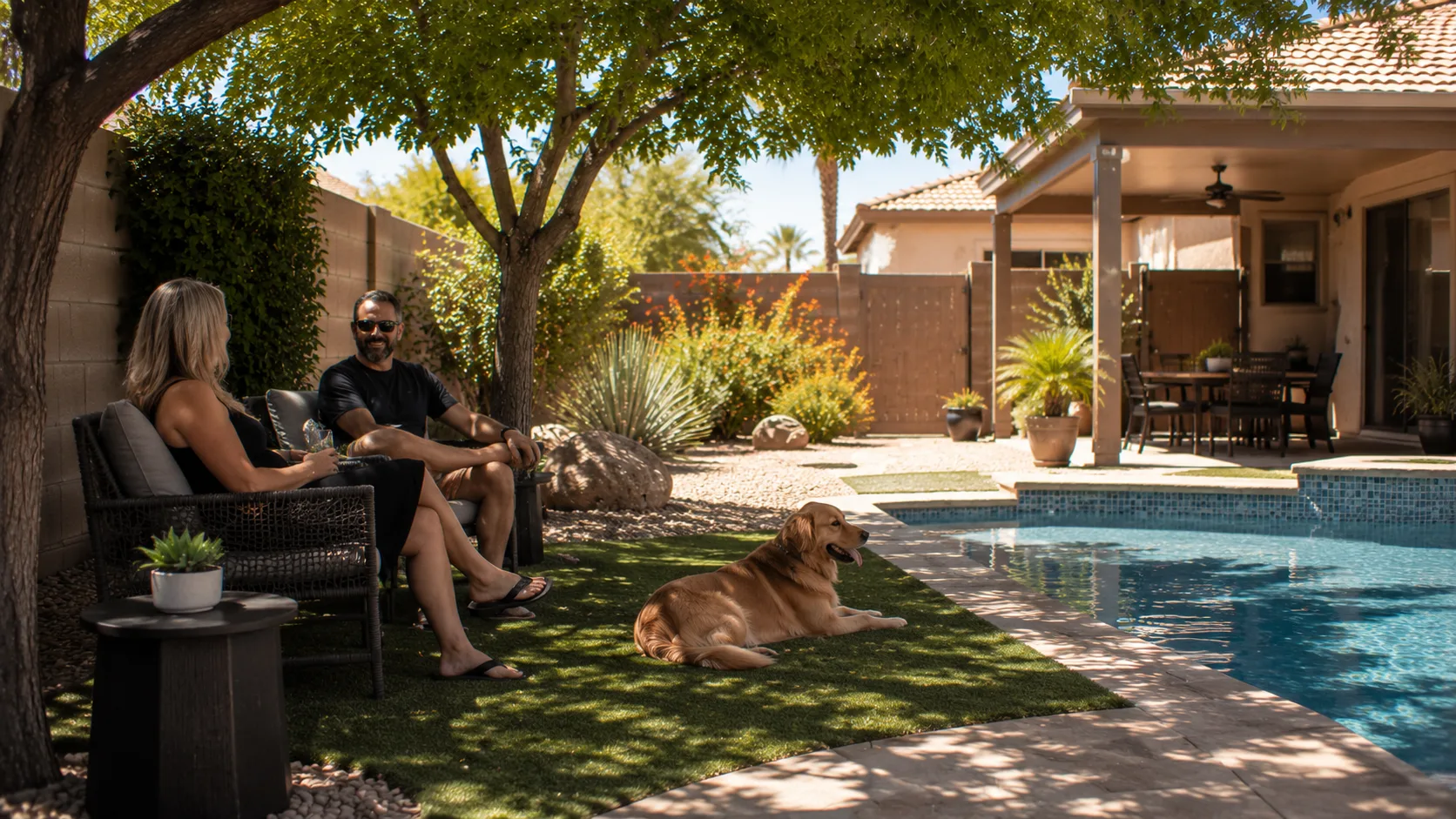
If a dog uses the yard every day, shade is not optional window dressing.
Pet areas need:
- Comfortable shade.
- Water access.
- Safer surface choices.
- Airflow.
- Cleanable routes.
- Honest heat checks.
- Drainage and odor awareness.
Artificial turf can become hot, and pet odor can become more obvious in heat. Shade can make a pet area more humane, but it does not replace cleaning, rinsing, drainage, or surface checks.
For dog-specific turf routines, see A Weekly Artificial Turf Maintenance Routine for Dog Owners. If odor appears in summer, Why Artificial Turf Smells Worse in Summer explains why heat exposes hidden residue.
Hardscape Heat Is Part Of The Shade Plan
Concrete, pavers, gravel, decomposed granite, walls, fences, and rock mulch can change how hot a backyard feels. Shade is not only about blocking overhead sun. It is also about reducing reflected heat and glare from surfaces that keep radiating long after the sun moves.
Pay attention to:
- West-facing walls.
- Large concrete patios.
- Gravel-heavy seating areas.
- Pool decking.
- Paver paths.
- Rock mulch near planting beds.
- Narrow side yards with walls on both sides.
- Material transitions where people and pets actually walk.
For groundcover choices, Mulch vs Gravel in Low-Water Landscapes explains why material selection changes comfort. If decomposed granite is part of the yard, How to Use Decomposed Granite Without Tracking Dust Into the House covers the practical edge of using it near doors and paths.
Airflow Is The Quiet Ingredient
Shade without airflow can still feel stale.
Walls, fences, dense shrubs, solid screens, and tight patio covers can block wind or trap warm air. In hot climates, a shaded spot that cannot breathe may feel better than full sun, but still not good enough to use.
Think about:
- Where breezes usually come from.
- Whether a screen blocks glare without stopping all air.
- Whether planting creates filtered shade instead of a solid wall.
- Whether seating is tucked into a dead corner.
- Whether a cover traps heat under a low roofline.
- Whether fans, electrical work, or lighting would require qualified help.
This is not a wiring guide. If electrical work, mounted fans, lighting, or permanent structures are involved, use qualified local help.
Shade And Planting Beds
Shade changes what plants can handle.
A planting bed near a hot wall may need shade, mulch, better spacing, or different plant choices. A bed under a tree may need plants that tolerate root competition, dappled light, leaf litter, and different watering patterns. A west-facing fence line may need tougher structure and less fantasy.
Use local extension guidance, botanical gardens, reputable regional nurseries, water providers, or qualified landscape professionals for final plant choices.
For hot fence-line conditions, Waterwise Planting Bed Ideas for Hot Fence Lines is the closest companion. For layout mistakes, Xeriscape Layout Mistakes That Make Yards Look Sparse explains why plant grouping and shade structure matter.
A Practical Shade Plan By Timeframe
Most yards need both immediate and long-term shade.
This Season
Focus on the places people already use:
- Patio seating.
- Pool lounging.
- Pet rest zones.
- Door-to-patio paths.
- Garden work areas.
Temporary or movable shade can be useful here, but treat it as category-level planning. Do not ignore wind, anchoring, storage, and manufacturer instructions.
The Next Few Years
Think about trees, larger shrubs, planting layers, permanent covers, and better material transitions. This is where mature size, irrigation, structure, and maintenance matter.
Long Term
Protect good shade assets. Mature trees, useful walls, established planting, and well-placed covers can become the backbone of the yard. Do not damage them with casual grading, root disturbance, paving, drainage changes, or utility work.
Common Mistakes To Avoid
Avoid these:
- Removing every tree because the yard is becoming low-water.
- Adding a tiny tree where immediate patio shade is needed.
- Buying movable shade without thinking about wind and storage.
- Installing permanent shade without checking local requirements.
- Shading the wrong part of the patio.
- Ignoring reflected heat from walls, pavers, gravel, and concrete.
- Creating shade that blocks airflow.
- Forcing shade plants into reflected heat.
- Forgetting pet comfort zones.
- Assuming shade solves drainage, odor, pool chemistry, or plant establishment.
Shade should make the yard more usable. If it only adds an expensive object that misses the chairs, the sun has won a paperwork victory.
A Simple Homeowner Shade Checklist
Use this before committing to a direction:
- Name the three hottest unusable zones.
- Check the yard in morning, afternoon, and evening.
- Watch where people, pets, and guests actually move.
- Identify reflected heat from walls, paving, gravel, and pool decks.
- Decide which areas need immediate shade.
- Decide which areas need long-term living shade.
- Check mature plant size and establishment water needs.
- Check whether structures, sails, covers, fans, or lighting need qualified help.
- Keep airflow in the plan.
- Revisit the layout after the first hot week.
The Bottom Line
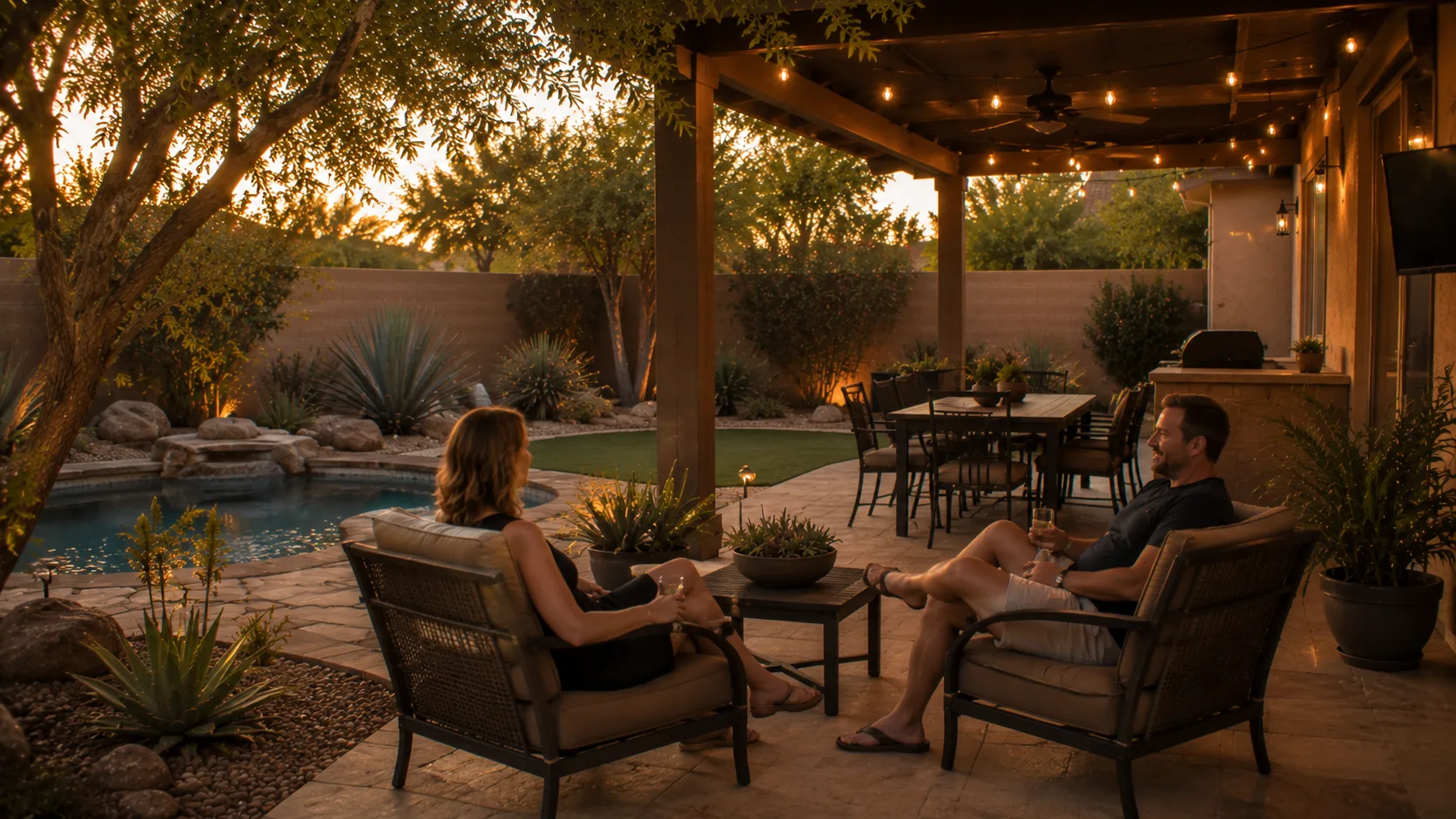
Backyard shade in a hot climate is not about making every square foot dark. It is about putting relief where the yard actually fails: patios, paths, pool edges, pet zones, planting beds, west-facing surfaces, and hardscape that radiates heat.
Use living shade where long-term canopy makes sense. Use built or temporary shade where you need faster, more predictable coverage. Keep airflow, maintenance, mature size, local rules, and professional boundaries in the decision.
A hot backyard does not become usable because it has furniture. It becomes usable when shade, surfaces, plants, and layout finally agree that people are supposed to be out there.