
The nursery is dangerous in the same way a dessert case is dangerous. Everything looks good when it is sitting by itself under flattering light.
That is how a low-water yard becomes a random plant collection. One sculptural plant here. One flowering thing there. A grass because it moved nicely in the breeze. A mystery shrub because the tag said "drought tolerant" and everyone briefly lost judgment.
Individually, the plants may be fine. Together, they can look like strangers waiting for different rides.
Choosing plants for a low-water landscape is not about memorizing one perfect plant list. It is about giving each plant a job, grouping plants that want similar conditions, repeating enough to create rhythm, and leaving room for mature size without making the yard look empty for years. The exact species should come from local guidance. The design logic can start here.
The Direct Answer
Choose plants for a low-water landscape by role first, species second.
Start with the layout: where you need structure, shade, screening, softness, movement, seasonal color, erosion-aware cover, or a cleaner view from the house. Then choose a smaller number of climate-appropriate plants that fit those jobs, repeat them in groups, match them to sun and water needs, and plan for mature size instead of nursery-pot size.
Do not build the yard from impulse purchases. Build it from plant roles: anchors, fillers, accents, ground-level plants, and seasonal interest. Then ask local extension offices, water providers, botanical gardens, reputable nurseries, or qualified landscape designers which plants fit your climate, soil, exposure, and maintenance tolerance.
If the yard already looks thin or random, read Xeriscape Layout Mistakes That Make Yards Look Sparse before buying more plants. More plants can help. Better plant logic helps more.
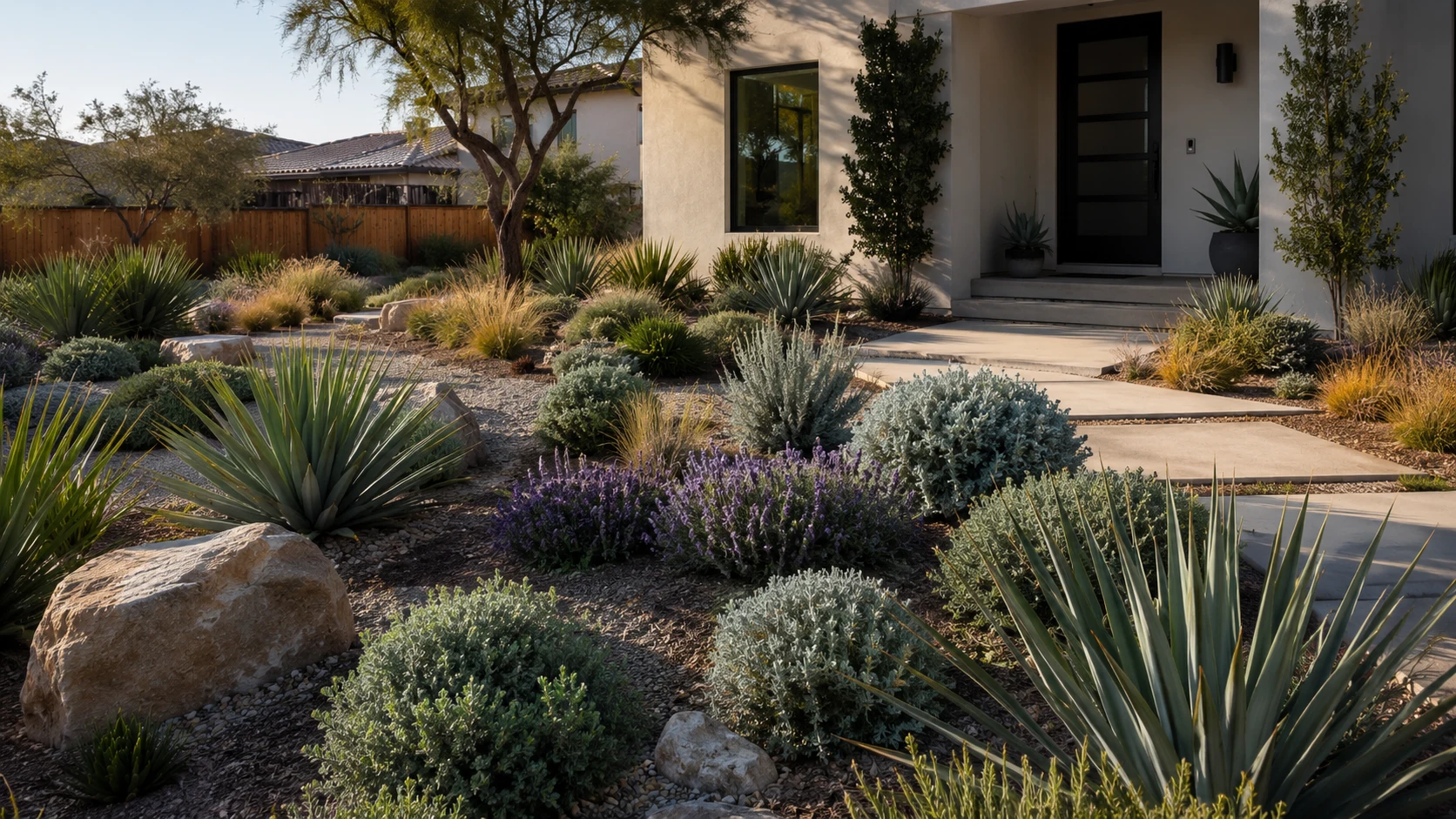
First, Stop Shopping By Plant Crush
A plant can be beautiful and still be wrong for the spot.
It may get too big. It may need more shade than the wall gives it. It may look lonely unless repeated. It may be spiny beside a walkway, brittle near a gate, messy beside a pool, or too thirsty for the plants around it. It may be perfectly climate-appropriate and still do nothing for the composition.
Before choosing a plant, ask what problem it is supposed to solve.
Useful plant jobs include:
- Anchor the corner of a bed.
- Screen a fence or soften a wall.
- Frame a path or entry.
- Add height near a patio.
- Create repetition across a front yard.
- Fill the middle layer between groundcover and trees.
- Add seasonal color without carrying the whole design.
- Reduce the amount of exposed gravel.
- Make a window view feel finished.
- Support a hydrozone with plants that want similar water.
That one question, "what job does this plant have?", prevents a shocking amount of landscape nonsense.
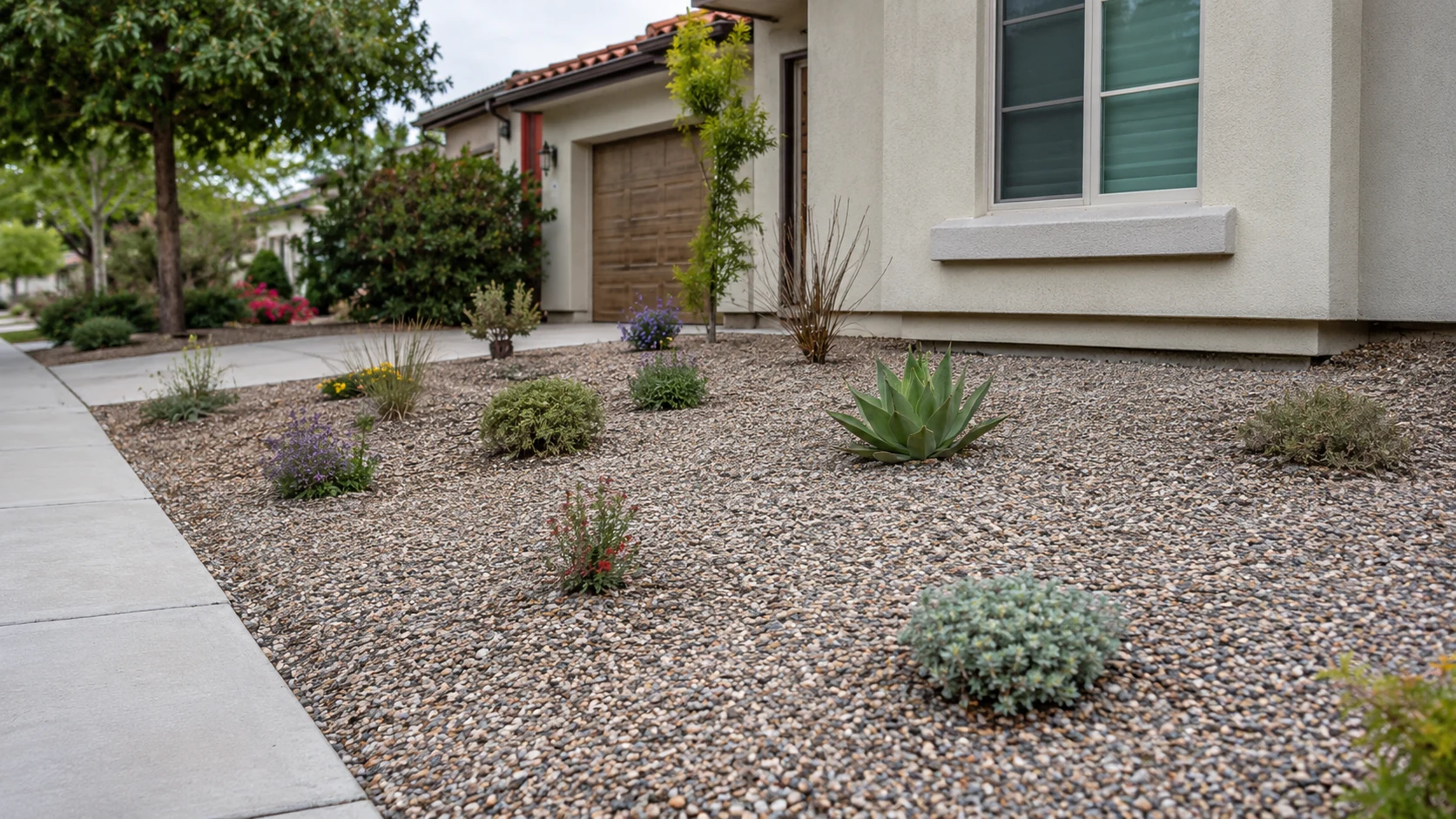
The Five Plant Roles That Keep A Yard From Looking Random
You do not need to use these labels forever. You do need the thinking behind them.
Anchors
Anchors are the plants that give the landscape bones. They might be larger shrubs, small trees where appropriate, upright desert-adapted forms, or other long-lived plants that define corners, entries, patios, views, and transitions.
They should not be chosen casually. An anchor plant in the wrong place becomes a future pruning argument with the house.
Choose anchors after thinking about mature size, shade, roots, doors, windows, paths, utilities, and irrigation zones. If mature trees or large shrubs are involved, local guidance matters. A plant that behaves politely in one region can become an oversized regret in another.
Fillers
Fillers are not boring. They are the reason the yard looks like a landscape instead of a museum of interesting specimens.
These are the repeated shrubs, grasses, mounding plants, or perennials that create mass and rhythm. They make paths feel intentional, soften gravel, connect the front of the bed to the back, and help the eye move through the yard.
Most homeowners underuse fillers because they feel less exciting in the nursery. That is the trap. In the ground, repeated fillers do the quiet work that makes the showier plants look planned.
Accents
Accents are the dramatic plants: sculptural forms, bold texture, strong color, or unusual silhouettes.
Use them carefully. If every plant is an accent, nothing is.
One accent at a path bend can look intentional. Seven unrelated accents sprinkled across gravel can look like a clearance table with irrigation.
Ground-Level Softness
Low plants, spreading forms, small grasses, low mounds, or other ground-level planting can soften edges and reduce the "rocks with dots" problem.
This does not mean covering every inch. Open space can be beautiful. But if the ground plane is all gravel, concrete, or decomposed granite, the yard may feel hard even when the plant list is technically waterwise.
Ground-level plants are especially useful near paths, patios, bed fronts, and transitions from hardscape to planting.
Seasonal Interest
Seasonal color is the dessert. It should not be the foundation.
Flowering plants, changing textures, seed heads, or seasonal movement can make a low-water yard feel alive. But if the yard only looks good when a few plants are blooming, it will spend too much of the year apologizing.
Build structure first. Add seasonal interest second.
Mature Size Is The Whole Game
Nursery plants are terrible narrators. They show you the beginning of the story and skip the part where the shrub becomes four feet wider than your path.
Low-water landscapes often look sparse because plants are spaced for mature size with no visual plan for the first few years. The opposite problem is just as common: plants are spaced for the first month and become a crowded maintenance mess later.
You need both truths at once:
- Young plants are small now.
- Mature plants need room later.
The fix is not to ignore mature spacing. The fix is to design the early years.
Use repeated groups, mulch, gravel, decomposed granite, boulders, paths, and bed shapes to make young planting look intentional while it grows in. Consider larger starter plants only where budget, logistics, and site conditions make sense. Do not use crowding as a shortcut unless you are happy to remove plants later.
For partial lawn conversions, this is especially important. How to Convert Part of a Lawn into a Waterwise Planting Bed explains why the new bed needs enough scale and structure to look deliberate before plants mature.
Repeat More Than Your Inner Collector Wants To
The plant collector brain wants one of everything.
The landscape brain wants rhythm.
In a small yard, three to seven plant types used well can often look stronger than fifteen different plants used once. That does not mean the planting has to be dull. Repetition can vary by size, texture, and placement while still feeling coherent.
Try repeating:
- One anchor form near major corners or transitions.
- One or two filler plants across multiple beds.
- One grass or fine-textured plant for movement.
- One flowering or seasonal plant in clusters.
- One sculptural accent where the eye should pause.
Repetition is what makes the yard look designed from the street, patio, and windows. Up close, individual plants can be interesting. From across the yard, repeated groups make the composition readable.
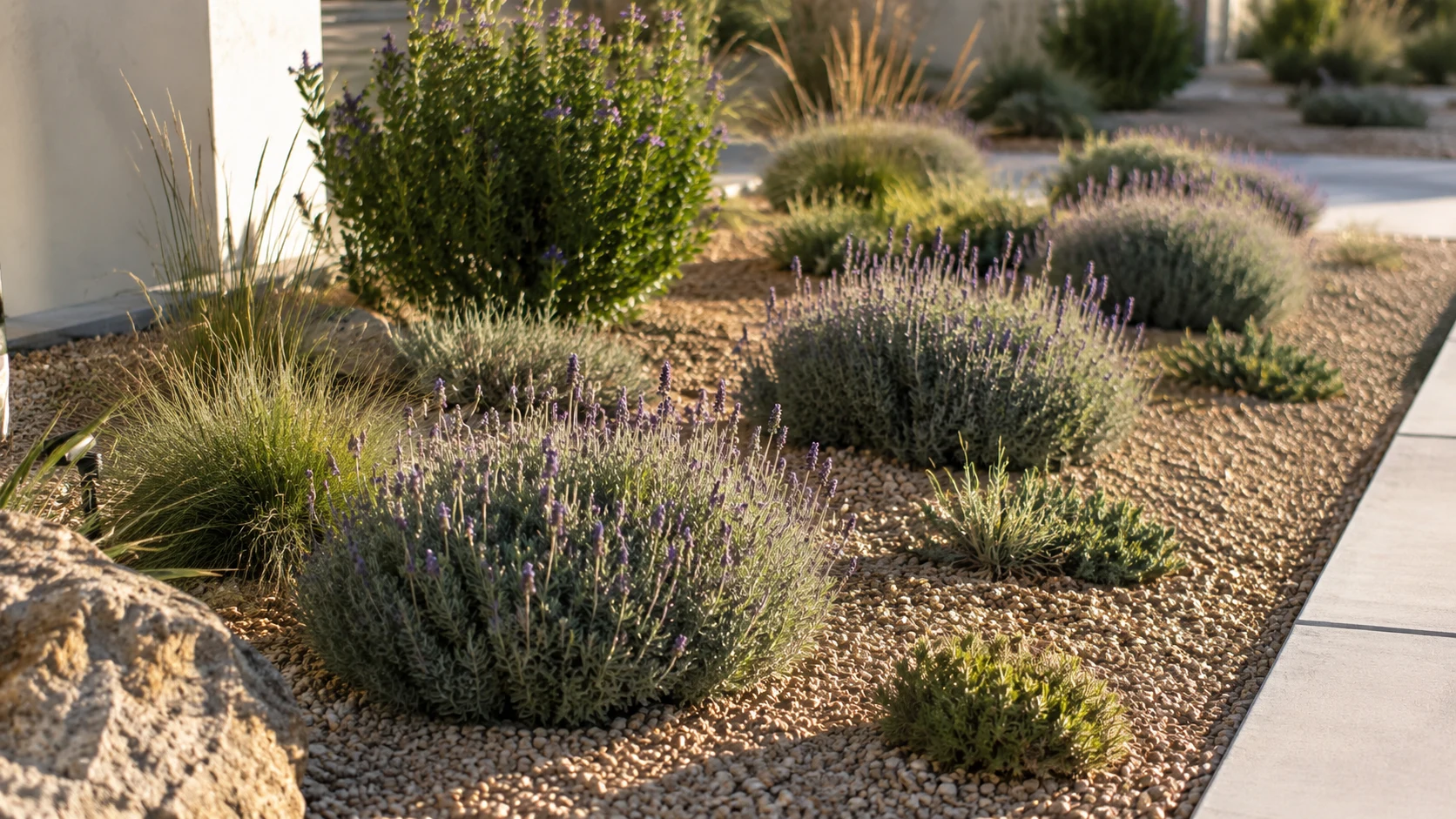
Match Plants By Water Need, Not Just Looks
A low-water planting bed can fail quietly when plants with different water needs are grouped together because they looked good in a cart.
This is where hydrozoning matters. Plants that need similar watering should generally be grouped together, especially in drip-irrigated beds. A thirsty plant tucked among very low-water plants can push the whole zone toward overwatering. A very dry-loving plant in a wetter bed may sulk for different reasons.
Think in zones:
- Hot, exposed, low-water planting.
- Part-shade planting near trees or structures.
- New establishment areas that need closer observation.
- Patio-adjacent beds where reflected heat and comfort matter.
- Existing trees or mature shrubs with their own root-zone needs.
Hydrozoning Basics for Homeowners covers the bigger water-grouping logic. Drip Irrigation Basics for Low-Water Yards is useful if the irrigation layout is part of the plant decision.
Do not use this article as an irrigation spec. Emitter counts, pressure, run times, valves, and local requirements need site-specific guidance.
Microclimates: The Yard Is Not One Place
Your yard has moods.
The south-facing wall may be harsh and reflective. The side yard may be narrow and windy. The patio edge may bake in afternoon sun. The bed under a tree may be dry shade. The front entry may get roof runoff. The gravel near a window may reflect heat back onto young plants.
Those are different planting conditions, even if they are only a few steps apart.
Before choosing plants, walk the yard and note:
- Full sun, part shade, and deep shade.
- Reflected heat from walls, windows, gravel, concrete, and pavers.
- Wind corridors.
- Low spots or runoff paths.
- Existing tree roots and canopy.
- Irrigation overspray.
- Narrow beds with limited soil volume.
- Areas viewed from indoors.
- Areas people brush against when walking.
This is where local plant guidance earns its keep. A plant tag can give broad clues. It cannot fully understand your west-facing stucco wall in July.
The Nursery Cart Test
Before buying, look at the plants together in the cart.
If every plant has a different shape, color, texture, mature size, water need, and maintenance habit, you may be building a plant talent show instead of a landscape.
Ask:
- Which plants are anchors?
- Which plants repeat?
- Which plants fill space quietly?
- Which plants are accents?
- Which plants share water and sun needs?
- Which plants will still look good when nothing is blooming?
- Which plants will outgrow paths, windows, or each other?
- Which plants are only here because they looked charming alone?
That last question is the rude one. It is also the useful one.
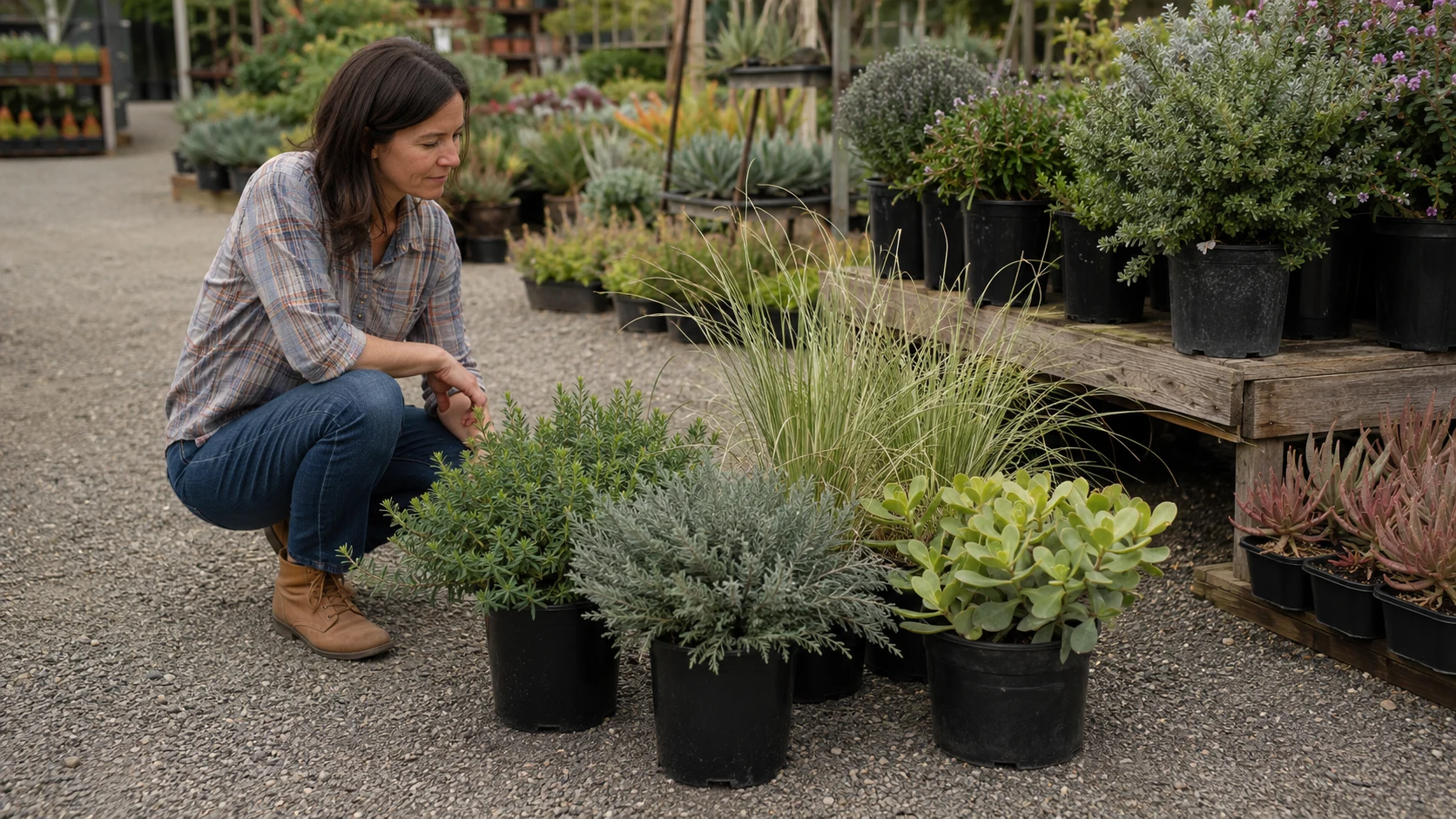
A Better Way To Build The Plant List
Start with the spaces that need the strongest structure.
For a front yard, that might be the entry path, street-facing bed, driveway edge, and window views. For a backyard, it might be the patio, seating area, side gate, fence line, and the view from the kitchen. For a side yard, it might be the walking line, service access, and a narrow planting strip that should not attack anyone's ankles.
Then build the plant list in layers:
- Choose the anchor roles.
- Choose repeated filler groups.
- Add ground-level softness where hard materials need relief.
- Add accents only where they help the layout.
- Add seasonal interest in groups, not one-off confetti.
- Check water needs and sun exposure.
- Check mature size and maintenance.
- Confirm local suitability before buying.
This order is less thrilling than wandering a nursery with a cart and optimism. It also produces fewer yards that look like a botanical yard sale.
What To Do When You Want Variety
Variety is not the enemy. Randomness is.
A low-water yard can have contrast, bloom, sculptural forms, fine textures, soft movement, and seasonal change. The trick is to repeat the design language.
Use variety inside a pattern:
- Repeat a few plant shapes, then vary flower color.
- Repeat a shrub group, then add one accent at key points.
- Use grasses for movement across multiple beds.
- Keep a limited color palette near the house and loosen it farther out.
- Use one bold plant type as punctuation, not wallpaper.
If the yard feels too strict, add seasonal plants in clusters. If it feels chaotic, remove one-off plants from the plan before adding more.
Plant Choice And Groundcover Have To Talk
Plants do not live in isolation. They live in mulch, gravel, decomposed granite, hardscape edges, reflected heat, shade, and maintenance routines.
Organic mulch can help many planting beds feel softer and more soil-focused. Gravel or rock can work in the right dry-climate zones, but it may increase heat and make small plants look even smaller. Decomposed granite can be useful for paths and transitions, but it is not a plant blanket.
Choose groundcover by plant needs and zone function, not by default.
If the ground layer is still undecided, read Mulch vs Gravel in Low-Water Landscapes. If the yard leans heavily on mineral surfaces, What Is Decomposed Granite? and How to Use Decomposed Granite Without Tracking Dust Into the House can keep the material plan honest.
Shade Changes The Plant List
Low-water does not mean full-sun everywhere.
Shade from trees, walls, pergolas, neighboring structures, or the house changes plant choice, irrigation needs, comfort, and how the yard feels. Some plants tolerate reflected heat. Some prefer filtered light. Some look tough on a tag and then behave like they have been personally insulted by a west-facing wall.
Use shade as a design condition, not an afterthought.
Near seating areas, shade may matter as much as plant choice. In hot side yards, shade and reflected heat can decide whether planting looks lush or stressed. Around mature trees, root zones and water needs may require local or professional guidance.
Shade in Low-Water Landscapes covers this comfort side of waterwise design.
Maintenance Is A Design Feature
Every plant comes with a future behavior.
Some need regular pruning. Some shed. Some spread. Some get woody. Some flop. Some look great for three weeks and anonymous for nine months. Some are lovely until placed beside a narrow path, where they become a weekly argument with your shins.
Before choosing a plant, ask what maintenance you are actually willing to do.
Consider:
- Pruning frequency.
- Deadheading or seasonal cleanup.
- Leaf, seed, or flower litter.
- Thorny or sharp growth near paths.
- Mature width near sidewalks, gates, windows, and utilities.
- Irrigation inspection access.
- Replacement risk if the plant is short-lived in your climate.
Low-water does not mean no-maintenance. It means the maintenance should match the design, climate, and your tolerance for weekend chores.
Two Homeowner Moments That Save The Planting Plan
The Front Yard From Across The Street
Stand across the street before finalizing the plant list.
If the plan reads as a few tiny plants floating in gravel, you probably need stronger massing, repeated groups, a clearer anchor, or a better bed shape. The street view compresses detail. It rewards structure and punishes plant clutter.
This is where a low-water front yard can go from "newly installed and hopeful" to "intentionally designed, even while young."
The Patio View At Sitting Height
Sit where people actually sit.
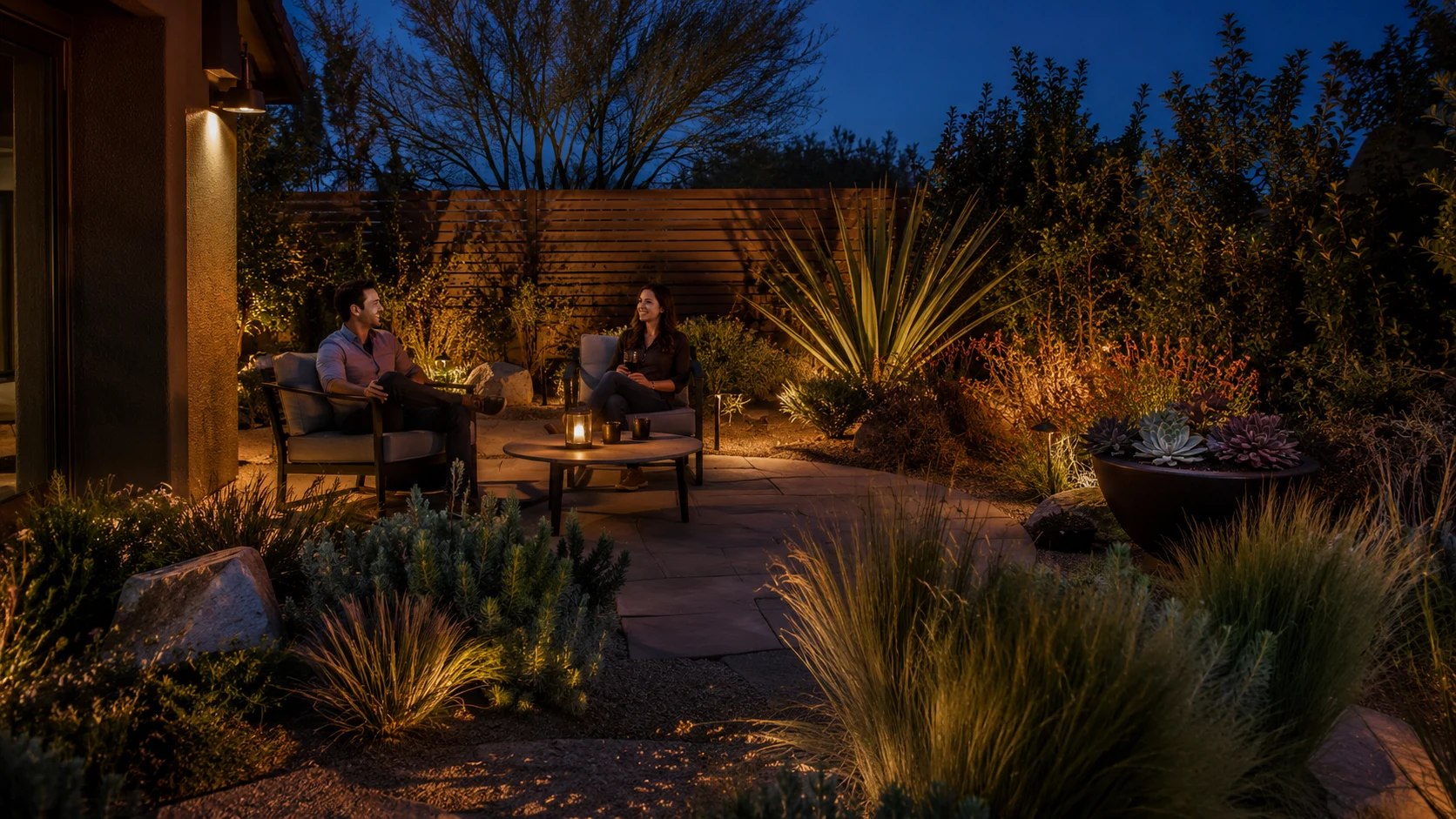
The plants near the patio should frame the space, soften hard edges, and make the yard feel usable. If everything interesting is along the fence, the patio may still feel exposed. If the plantings block movement or crowd the seating area, the yard may look lush but work badly.
People experience landscapes from eye level, not from a plant list.
Common Plant-Selection Mistakes
- Buying plants before deciding what each area needs to do.
- Choosing one of everything instead of repeating groups.
- Ignoring mature size because the nursery pot is adorable.
- Overcorrecting for mature size and leaving the yard empty for years.
- Mixing plants with very different water needs in the same zone.
- Ignoring reflected heat, shade, wind, and narrow soil volume.
- Using accents everywhere.
- Forgetting the middle layer.
- Depending on flowers for all visual interest.
- Placing thorny, brittle, or wide plants beside tight paths.
- Choosing plants that make irrigation maintenance hard to inspect.
- Assuming "drought tolerant" means no establishment care.
- Treating a regional plant list as universal truth.
A Practical Plant-Choice Framework
Use this sequence before buying:
- Define the zone: entry, patio edge, path, side yard, window view, slope-sensitive area, or background bed.
- Define the plant jobs needed there.
- Decide the mature height and width range that fits.
- Choose water and sun groups.
- Pick repeated fillers before accents.
- Check microclimates: heat, shade, wind, walls, roots, and hardscape.
- Choose groundcover that supports the plants.
- Check maintenance reality.
- Confirm local suitability with credible regional guidance.
- Buy less variety than your cart wants.
This is not about making the yard predictable. It is about making the yard legible.
Where To Get Local Plant Guidance
Use this article for design logic. Use local sources for final plant choices.
Good sources may include:
- University extension resources.
- Local water provider plant lists.
- Botanical gardens and demonstration gardens.
- Reputable independent nurseries.
- Qualified landscape designers or landscape professionals.
- Local arborists for tree-related decisions.
Ask about mature size in your region, water needs after establishment, heat tolerance, soil fit, cold tolerance where relevant, maintenance, invasiveness or nuisance behavior, and compatibility with nearby plants.
Be careful with generic online plant lists. "Low-water" is not a passport that lets a plant thrive anywhere with gravel nearby.
FAQ
How many different plants should a low-water yard use?
There is no universal number. Smaller yards usually look stronger with fewer plant types repeated well. Larger yards can handle more variety, but they still need repeated groups, layers, and clear roles.
Should I choose plants before designing the layout?
Usually no. Decide the major zones, paths, views, shade needs, and plant roles first. Then choose plants that fit those jobs and conditions.
Is it bad to use one of each plant?
Not always, but it often makes a yard feel random. One-off plants work best as intentional accents. The main structure should usually come from repeated groups.
Do drought-tolerant plants need water when new?
Most new plants need establishment care, even if they are low-water once established. The details depend on plant type, soil, season, climate, and local guidance. Avoid universal watering schedules.
Can I use a plant list from another region?
Use it as inspiration, not instruction. Climate, soil, cold tolerance, heat, humidity, pests, water rules, and maintenance expectations vary. Confirm final choices with local sources.
What makes a low-water planting look expensive?
Good layout usually matters more than rare plants. Clear bed shapes, repeated groups, mature-size planning, layered heights, clean groundcover decisions, and plants matched to the site make the yard feel intentional.
Bottom Line
A good low-water plant list is not a collection of attractive survivors. It is a cast of characters with jobs.
Choose anchors, fillers, accents, ground-level plants, and seasonal interest on purpose. Repeat more than feels exciting in the nursery. Match water needs and microclimates. Plan for mature size without abandoning the early years. Then use local expertise to pick the actual species.
That is how a yard stops looking like a random plant collection and starts looking like a landscape.