
Some xeriscape yards look calm, layered, expensive, and deeply at home in their climate.
Others look like someone removed the lawn, spread gravel, planted seven brave little shrubs, and hoped time would provide the design department.
The difference is usually not the word "xeriscape." It is layout. Low-water yards can look sparse when plants are scattered too far apart, gravel is asked to be the whole design, everything stays low and flat, and the yard has no real edges, paths, shade, focal points, or outdoor rooms. A waterwise yard still needs composition. The water bill may be practical, but the eye is still dramatic.
This guide explains the layout mistakes that make xeriscape yards look thin, random, harsh, or unfinished, and how to plan a fuller-looking low-water landscape without pretending one plant palette fits every region.
The Direct Answer
Most sparse-looking xeriscape yards fail because they are designed as a surface first and a landscape second.
The fix is to plan the yard around zones, views, paths, repeated plant groups, layered heights, shade, edges, and useful destinations before buying plants or gravel. Use gravel, decomposed granite, mulch, and open space as background and structure, not as the whole personality of the yard. Repeat fewer plant types in larger groups, leave room for mature size, add vertical structure, and give the eye a clear path through the space.
If you are still sorting out the bigger concept, start with What Is Xeriscaping?. If the yard already feels rock-heavy and unfinished, How to Make a Gravel Yard Look Designed, Not Deserted is the closest companion.
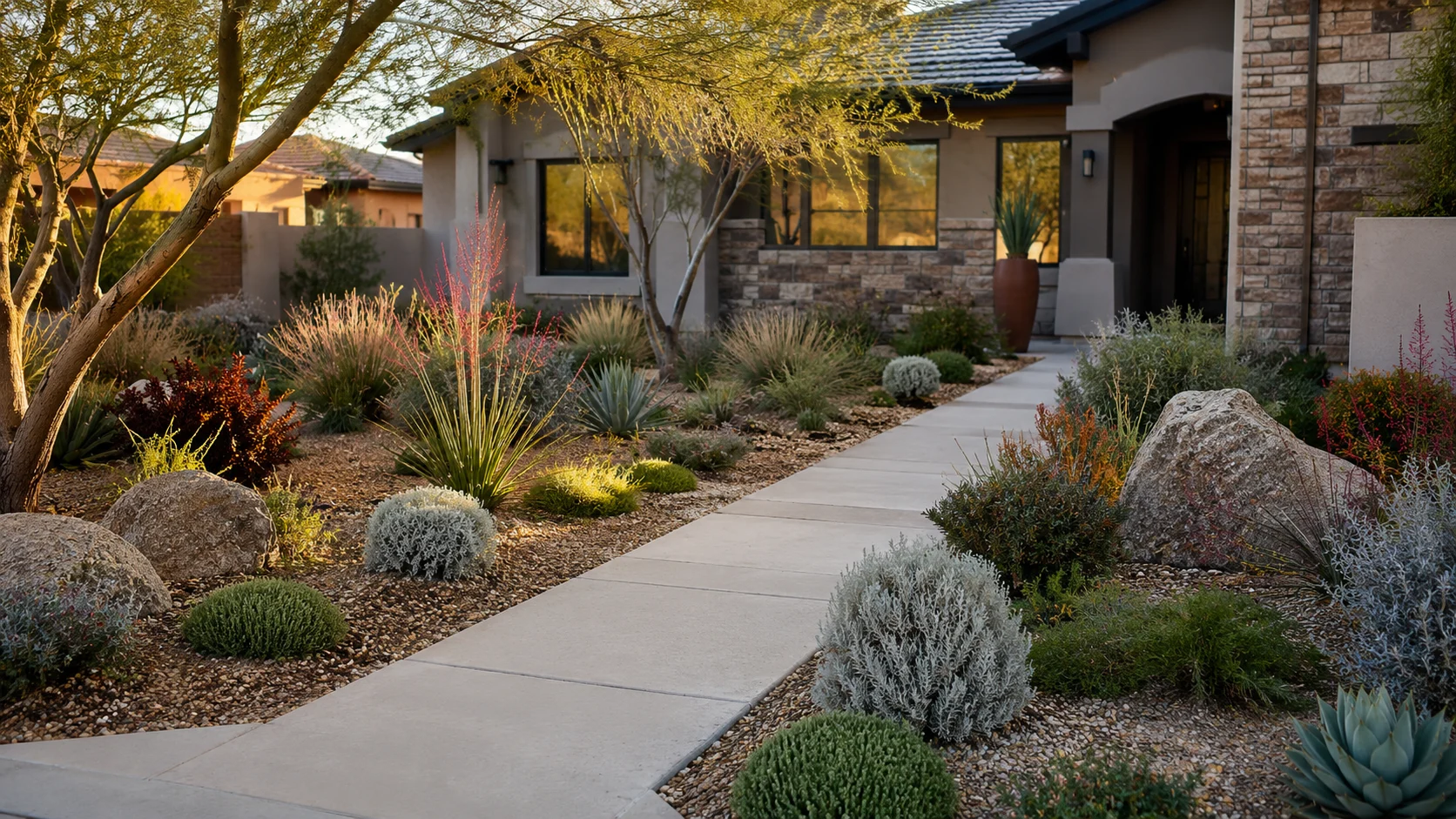
Why Sparse Xeriscape Happens
Sparse xeriscape rarely comes from one bad decision. It comes from several reasonable decisions stacked in the wrong order.
A homeowner wants to reduce lawn. Reasonable.
They choose lower-water plants. Reasonable.
They use gravel to cover exposed soil. Reasonable in the right place.
Then the plants are placed like dots on a map, the gravel becomes the dominant feature, every plant has a different shape and color, and the yard has no shade, massing, or path logic. Suddenly the landscape is technically waterwise but emotionally uninhabited.
The yard may need less water than before. It may also look like a waiting room for shrubs.
The layout is what makes xeriscape feel intentional. Plants matter, but placement matters first.
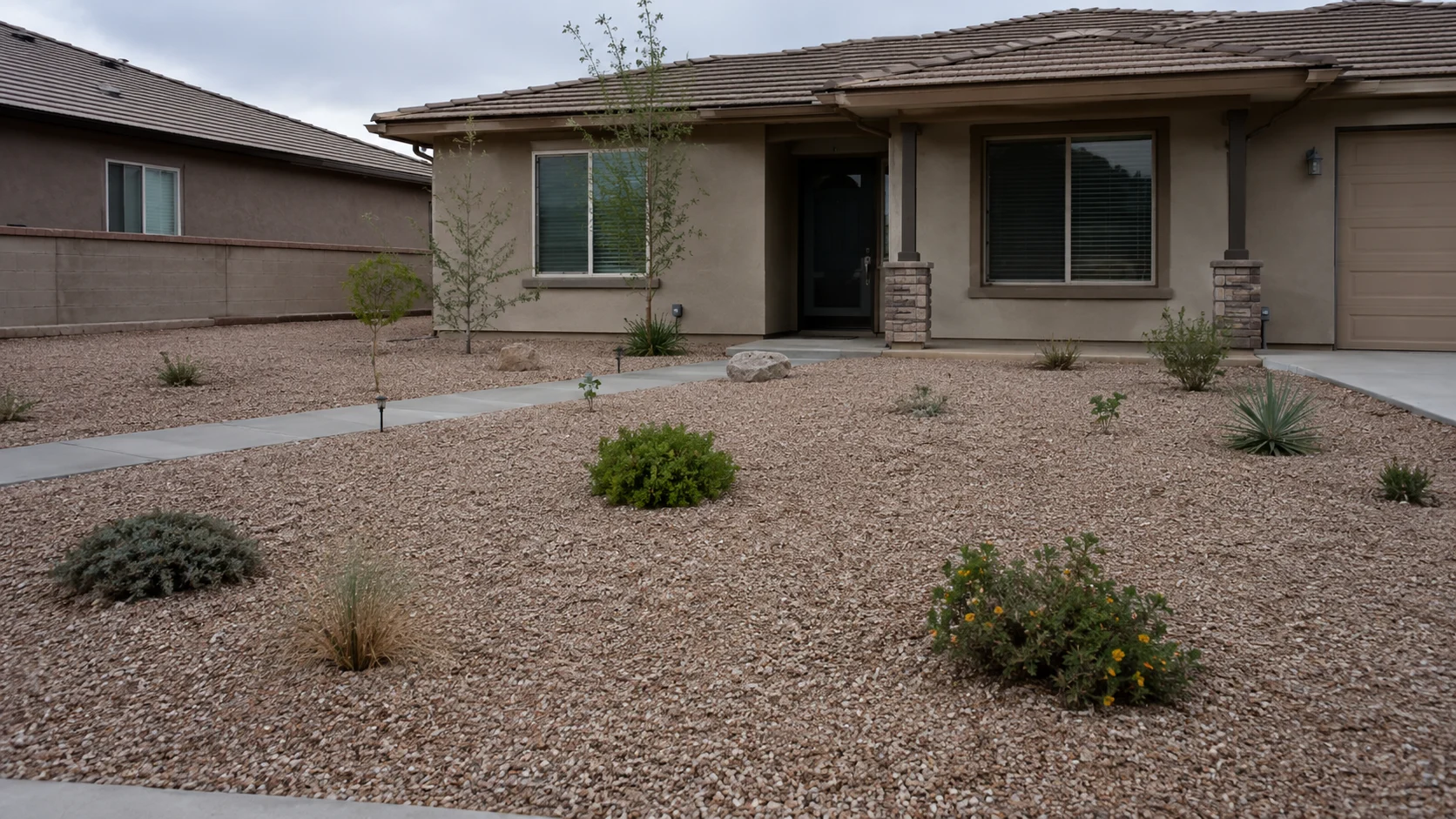
Mistake 1: Spreading Small Plants Like Confetti
The classic sparse xeriscape mistake is spacing young plants so far apart that the yard looks empty for years.
Yes, mature size matters. You should not cram plants together just because the nursery container is tiny. But a yard filled with isolated one-gallon and five-gallon plants can look unfinished if there is no massing, no temporary structure, and no plan for the awkward early years.
Better layout moves:
- Group plants in clusters or drifts instead of placing every plant alone.
- Use repeated plant masses to create visual weight.
- Combine lower plants, medium shrubs, and taller anchors so the bed has layers.
- Use mulch, gravel, boulders, paths, or temporary seasonal planting carefully so young beds do not feel abandoned.
- Think about how the yard looks from the street, windows, patio, and main walkway while plants mature.
This does not mean ignoring mature spacing. It means designing the in-between years instead of acting surprised that young plants are young.
For a phased yard change, How to Convert Part of a Lawn into a Waterwise Planting Bed covers why smaller, better-planned conversions often look stronger than all-at-once removals.
Mistake 2: Treating Gravel As The Design
Gravel is useful. Gravel is not a landscape plan.
It can define paths, create negative space, support dry-climate planting, reduce mud, and visually connect hardscape. But when gravel covers everything and plants appear as tiny interruptions, the yard can feel harsh and unfinished.
The problem is not gravel. The problem is asking gravel to do jobs that belong to layout, planting, shade, edges, and outdoor rooms.
Use gravel as background where it makes sense. Then give it partners:
- Planting islands with shape and scale.
- A path that connects real destinations.
- Organic mulch in plant root zones where appropriate.
- Edging between materials.
- Shade near seating or high-glare exposures.
- Focal points that are not just random boulders auditioning for importance.
Mulch vs Gravel in Low-Water Landscapes is useful if the ground layer decision is still driving the whole yard. The short version: choose materials by job, not by panic.
Mistake 3: Buying One Of Everything
One of everything is how a yard becomes a plant collection instead of a composition.
The nursery makes this hard. Every plant looks interesting in its own pot. But a xeriscape yard with twelve unrelated plants, each used once, can look busy and sparse at the same time. That is a special kind of landscape mischief: too much variety, not enough impact.
Repetition is the antidote.
Repeat plant forms, textures, and colors in groups. Use a few anchor plants to carry the layout through the yard. Repeat grasses, mounding shrubs, flowering accents, or sculptural plants where they fit the climate and site. The exact species should come from local guidance, reputable nurseries, extension offices, water provider resources, botanical gardens, or a qualified designer. The design principle is simple: repetition creates rhythm.
One plant says, "I found this."
Five plants placed well say, "I meant this."
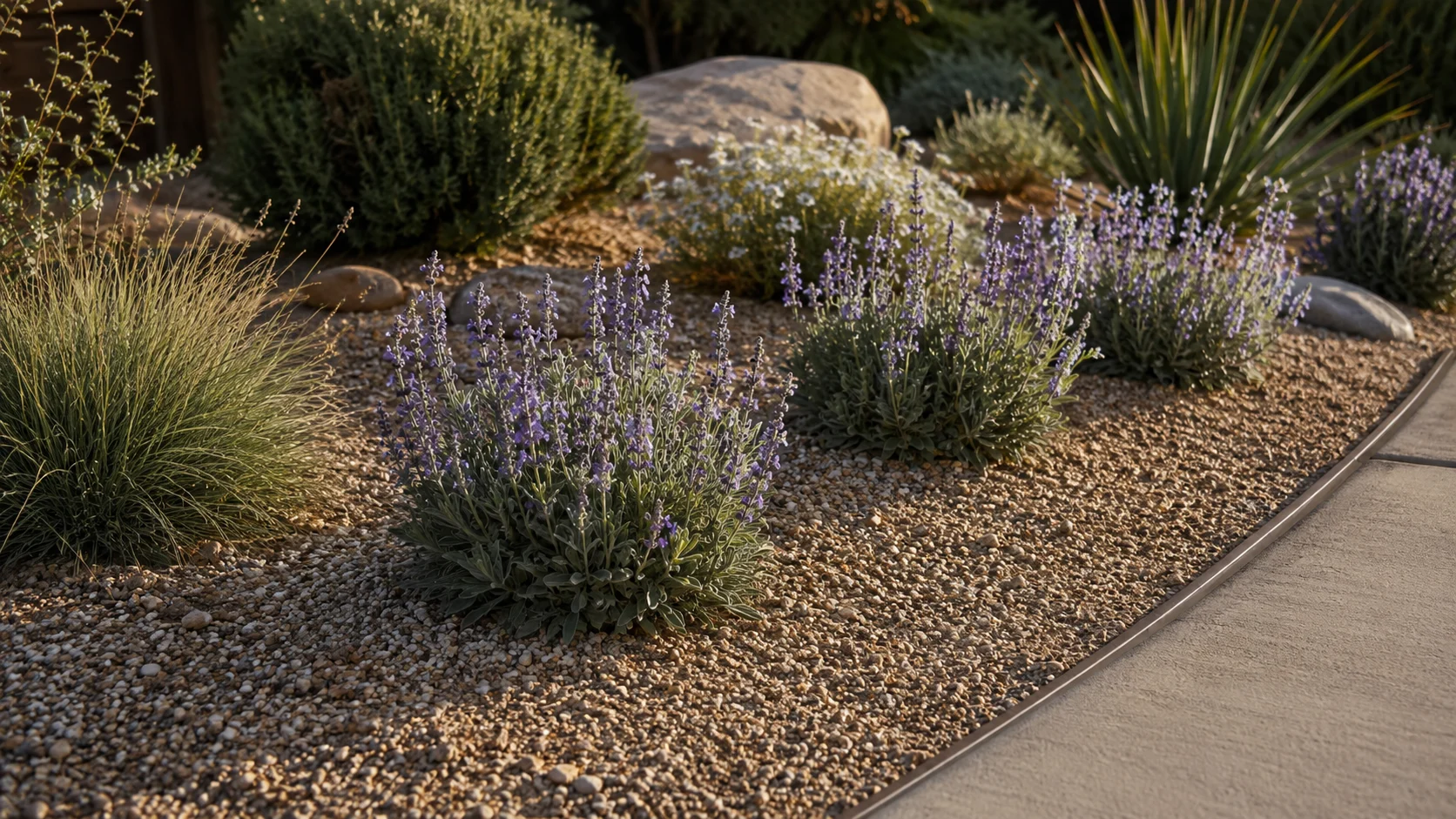
Mistake 4: Forgetting The Middle Layer
Many thin xeriscape yards have two layers: ground and sky.
There is gravel below. There are tiny plants slightly above it. Then nothing until the roofline, fence, or horizon. The result feels flat, even if the materials are expensive.
A fuller waterwise layout usually needs a middle layer:
- Medium shrubs.
- Upright grasses.
- Large perennials where regionally appropriate.
- Small trees or multi-trunk shrubs where the site supports them.
- Vines, screens, or wall-softening plants where local conditions and maintenance make sense.
- Boulders or low walls used with restraint, not as a substitute for plants.
The middle layer gives the yard depth. It frames paths, softens fences, creates privacy, and makes seating areas feel grounded. It also helps low plants make visual sense instead of floating in gravel like punctuation.
If shade is part of the missing layer, read Shade in Low-Water Landscapes. Waterwise should not mean exposed, flat, and uncomfortable.
Mistake 5: Choosing Plants Before Defining Zones
Plants are the fun part, which is exactly why they get people into trouble.
Before choosing plants, decide what the yard needs to do. A front entry bed, a window view, a dog route, a side-yard passage, a patio edge, and a low-use gravel field do not need the same layout. They may not need the same water, shade, surface, or maintenance strategy either.
Start with zones:
- Where do people walk?
- Where do people sit?
- What do you see from inside the house?
- Which areas are hot, shaded, windy, narrow, or reflective?
- Where does irrigation already exist?
- Which spaces need plants close enough to feel full?
- Which spaces need open access?
- Where would a path, edge, or focal point make the yard more legible?
Only then should plant selection begin.
Hydrozoning Basics for Homeowners explains the water side of this logic. Good layout and good irrigation planning are close relatives. They both prefer not to be figured out after everything is already planted.
Mistake 6: Leaving Too Much Exposed Rock
A large field of exposed rock can make a yard feel hot, bright, and unfinished, especially if the plants are small and the space has no shade.
Rock can be appropriate in many low-water landscapes. It can also amplify reflected heat, trap debris, and make young plants look even smaller. Around some plants and root zones, organic mulch may be more forgiving. In path areas, decomposed granite or compacted gravel may work better than decorative rock. In seating areas, hardscape, shade, and furniture placement matter.
Do not ask one mineral surface to solve every square foot.
A stronger layout might use:
- Gravel for path or negative space.
- Organic mulch in planting beds.
- Decomposed granite for a walkway or small destination.
- A clean edge where materials meet.
- Repeated plant groups that break up the rock.
- Shade or vertical structure near outdoor living areas.
If decomposed granite is part of the plan, What Is Decomposed Granite? and How to Use Decomposed Granite Without Tracking Dust Into the House can help keep the material decision realistic.
Mistake 7: No Edges, Paths, Or Transitions
A sparse yard often lacks boundaries. Gravel drifts into mulch. Plants float in rock. The patio bleeds into the planting area. The side yard feels like leftover space. The eye has nowhere to go and nothing to understand.
Edges make low-water yards look deliberate.
Paths create rhythm.
Transitions tell people where one zone ends and another begins.
That does not mean every line has to be rigid. Curves can be beautiful. Soft transitions can work. But the yard should look shaped, not spilled.
Useful layout tools include:
- A path from driveway to entry, gate to patio, or patio to garden.
- A clean border between gravel and mulched planting.
- A defined bed edge around grouped plants.
- A small landing where people pause or turn.
- A focal point visible from the house or street.
- A side-yard passage that looks like it belongs to the yard, not the utility company.
For material containment, Concrete Edging for Gravel, Mulch, and Planting Beds explains what edging can and cannot solve.
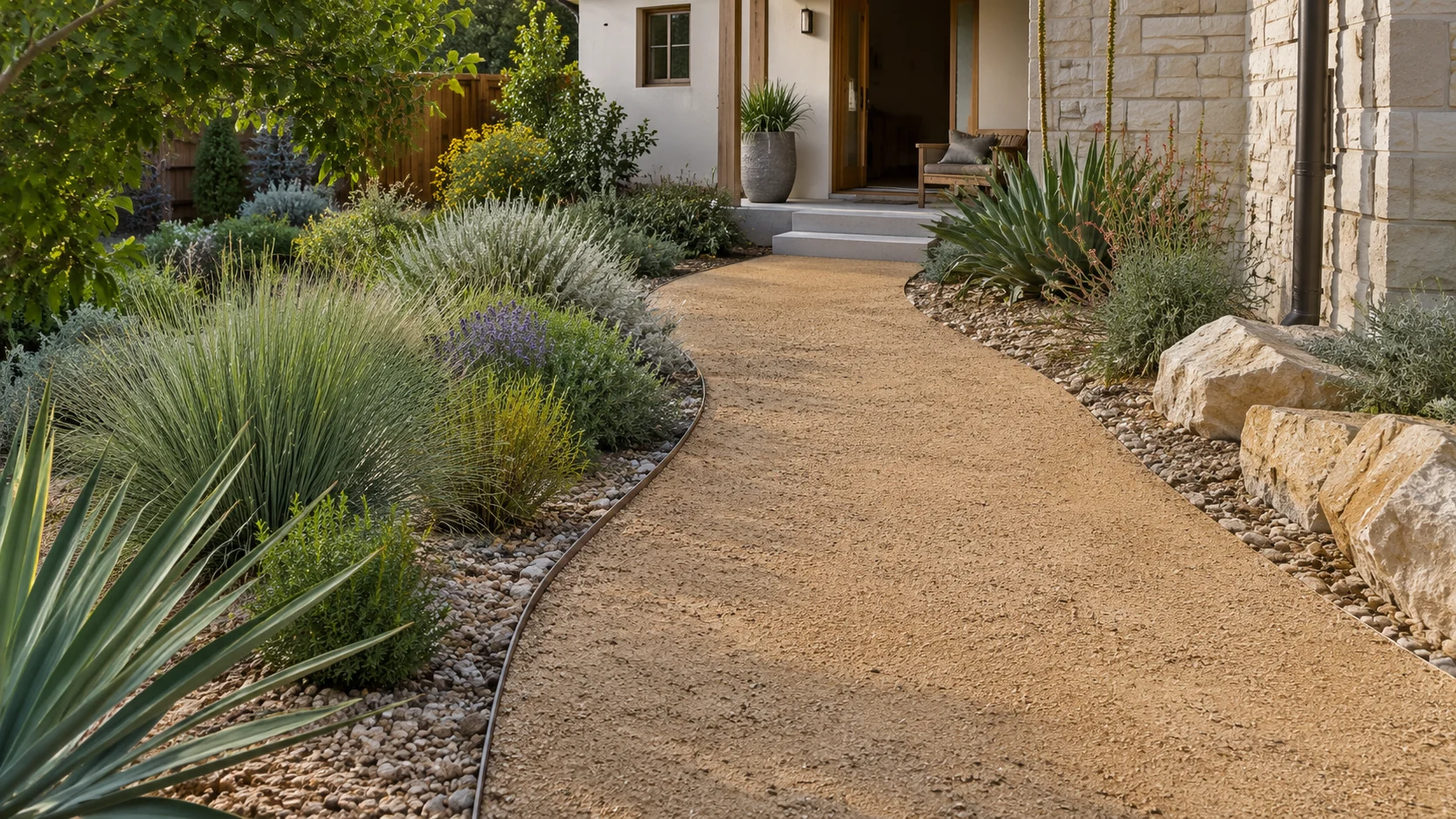
Two Homeowner Moments That Change The Plan
The Front Yard That Looks Empty From The Street
Up close, the plants may be interesting. From the sidewalk, they disappear.
This usually means the layout needs bigger visual masses, stronger repetition, and clearer layers. A few small plants in a wide field of gravel read as dots. Repeated groups, a defined path, a taller anchor, and a more intentional bed shape can read as a landscape.
Before buying more plants, stand across the street. If the yard looks like gravel with small green freckles, the issue is probably composition, not plant count alone.
The Backyard That Has Plants But No Place
Some yards have plenty of plants and still feel sparse because nothing frames a usable space.
There may be shrubs along the fence, gravel in the middle, and a patio that feels disconnected from everything. The fix might be a planting island near the patio, shade over seating, a path to the gate, repeated plants that pull the eye around the yard, or a focal point that makes the outdoor room feel intentional.
People do not experience a yard as a plant inventory. They experience it as places, views, shade, movement, and comfort.
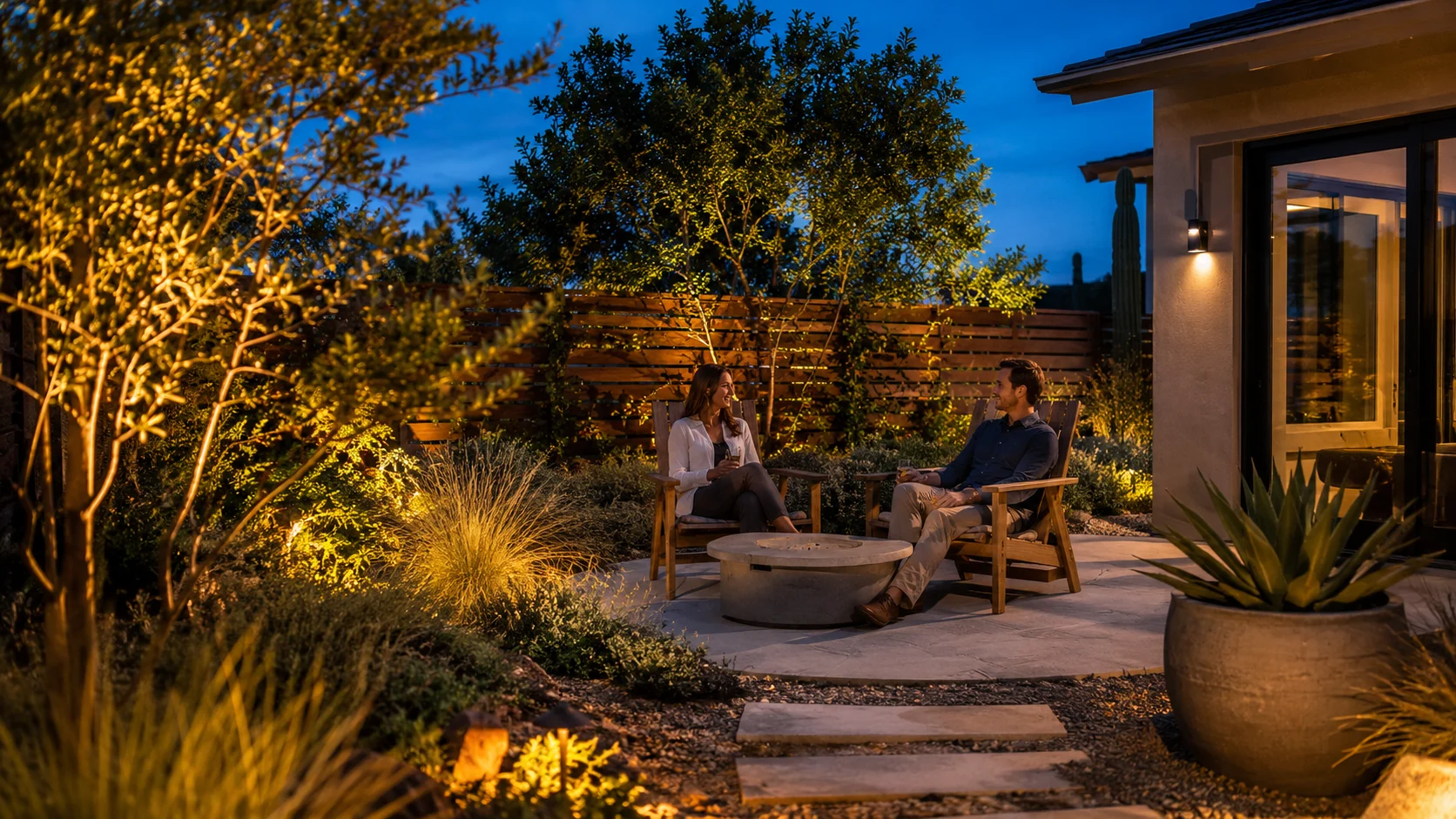
A Better Layout Framework
Use this order before buying plants, gravel, or another decorative boulder with main-character energy:
- Define the jobs of the yard.
- Mark the main views from windows, street, patio, and entry.
- Place paths and circulation first.
- Decide where the yard needs shade, privacy, or vertical structure.
- Shape planting beds with enough depth for mature plants.
- Group plants by water needs and site conditions.
- Repeat plant groups for rhythm and massing.
- Choose groundcover by zone: mulch, gravel, decomposed granite, hardscape, or mixed materials.
- Add edges and transitions where materials meet.
- Plan irrigation and establishment before planting.
This framework is not glamorous. Good layout rarely is at first. It is the quiet part that keeps the yard from looking like someone scattered nice materials over an unresolved problem.
For whole-yard planning, How to Plan a Low-Water Backyard Without Making It Look Barren gives the broader version of this logic.
What To Ask Before You Buy Plants
Bring these questions to a reputable local nursery, extension office, water provider plant resource, or landscape designer:
- What mature size will this plant reach in my climate?
- Does it tolerate my sun exposure, reflected heat, wind, and soil?
- Does it belong in the same hydrozone as nearby plants?
- Will it look good in a repeated group?
- Does it create structure, softness, color, movement, shade, or seasonal interest?
- Will it crowd a path, doorway, sidewalk, utility area, or window?
- How does it behave during establishment?
- What maintenance will it need after the honeymoon phase?
The goal is not to make the plant list boring. The goal is to make the yard coherent. A coherent low-water yard can still have variety, but the variety needs a backbone.
Common Sparse-Xeriscape Mistakes
- Replacing lawn with gravel before deciding how the yard will be used.
- Planting tiny plants in huge beds with no massing strategy.
- Using one of every plant instead of repeating groups.
- Ignoring mature size and then overcorrecting by spacing everything too far apart.
- Forgetting medium-height shrubs, grasses, trees, or vertical accents.
- Treating boulders as a design substitute.
- Using gravel everywhere, including areas where mulch or planting would be better.
- Skipping shade near patios, paths, and hot exposures.
- Forgetting paths and circulation.
- Letting materials bleed into each other without edges.
- Choosing plant colors and flowers before deciding views, zones, and structure.
- Assuming low-water means low-maintenance forever.
That last one deserves a small plaque. Xeriscape still needs care. It may need different care than lawn, but it is not a landscape that retires on installation day.
FAQ
Why does my xeriscape yard look so empty?
Most empty-looking xeriscape yards have too much exposed groundcover, plants spaced as isolated singles, too little repetition, and not enough vertical structure, shade, or path logic. The fix is usually layout first: group plants, add layers, define beds, create edges, and make open areas feel intentional.
Should I just add more plants?
Sometimes, but not always. More plants placed randomly can make the yard busier without making it better. Start by identifying where the yard needs massing, repeated groups, shade, a focal point, or a clearer path. Then add plants that fit those jobs and local growing conditions.
How do I make a young xeriscape look finished while plants mature?
Use stronger bed shapes, repeated plant groups, clean edges, mulch or gravel chosen by zone, and a few larger anchor plants where appropriate. Do not fill every gap permanently just because young plants are small. Design the early years, but leave room for mature growth.
Is gravel bad for xeriscaping?
No. Gravel can be useful for paths, negative space, mineral texture, and dry-climate structure. It becomes a problem when it covers everything, adds heat where plants need cooler root zones, drifts into other materials, or replaces planting, shade, and layout.
Can I use the same plant palette everywhere?
Usually no. Sun, shade, slope, reflected heat, soil, wind, irrigation, and local climate all change what works. Use local extension resources, reputable nurseries, water provider guidance, or qualified designers for plant selection instead of copying a universal list.
Does xeriscape mean no irrigation?
No. Many low-water plants still need establishment water, and some landscapes need ongoing supplemental irrigation depending on climate, soil, season, and plant choice. The goal is efficient, appropriate watering by zone, not pretending plants live on compliments.
When should I hire a landscape designer?
Consider professional help if the yard has major grade changes, drainage concerns, mature-tree issues, utility conflicts, HOA or local-rule questions, large-scale conversion needs, or if the layout feels stuck after several attempts. A good designer can often fix sparsity by changing structure before changing every plant.
Bottom Line
A sparse xeriscape is usually not a plant failure. It is a layout failure.
Low-water yards need the same design fundamentals as any good landscape: massing, repetition, layers, shade, paths, edges, focal points, and places people actually use. Gravel, mulch, decomposed granite, and low-water plants can all be excellent tools. They just need jobs.
Design the yard first. Then choose the plants. The nursery will still be there, whispering.