
Concrete edging is one of those backyard details that looks boring until it is missing.
Without a real edge, gravel wanders into planting beds, mulch drifts onto paths, decomposed granite softens at the sides, weeds find awkward little seams, and the whole yard starts to look like it was assembled by materials that are no longer speaking to each other.
Concrete edging can help. It can also make a small landscape problem much more permanent than it deserved.
This guide is about using concrete edging as a design and containment tool around gravel, mulch, decomposed granite, paths, and planting beds. It is not structural concrete guidance, retaining wall advice, drainage engineering, slope correction, tree-root surgery, or a code manual wearing garden gloves.
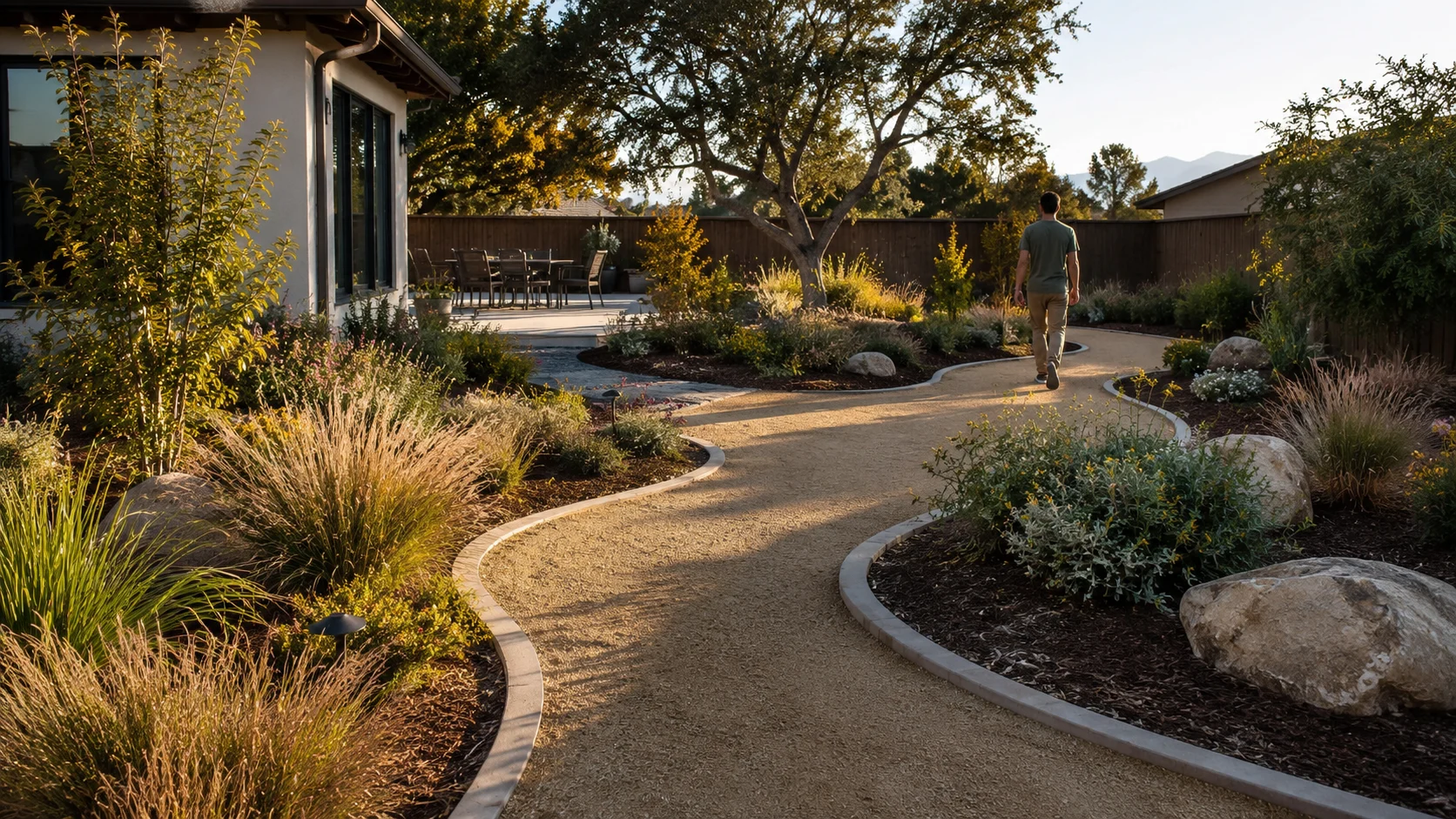
The Direct Answer
Concrete edging makes sense when you need a durable, visible, intentional boundary between materials.
It is especially useful when gravel keeps migrating into mulch, mulch keeps spilling across a walkway, decomposed granite needs a cleaner edge, or a planting bed needs definition in a yard that otherwise reads as "loose materials having a meeting."
It is the wrong answer when the real problem is drainage, erosion, slope, roots, soil movement, a retaining condition, or a path edge that people will trip over. Concrete edging is an edge. It is not a wall. It is not a drain. It is not a therapist for a badly graded yard.
Use it when the job is containment and design clarity. Pause when the job is structural, wet, steep, root-conflicted, or safety-sensitive.
What Concrete Edging Actually Solves
Concrete edging does three useful jobs when it is designed well.
First, it separates materials. Gravel stays mostly where gravel belongs. Mulch stays mostly where mulch belongs. Decomposed granite has a cleaner side instead of a ragged fade into soil.
Second, it gives the eye a line to follow. That matters more than people think. A crisp edge can make a low-water yard feel designed instead of deserted, especially when the yard uses gravel, rock, mulch, and drought-tolerant planting together. If the whole yard is a field of texture with no line work, the result can feel unfinished even when the materials are expensive.
Third, edging creates a maintenance boundary. It gives a rake, broom, blower, or gloved hand a place to stop. That does not mean maintenance disappears. It means the yard stops asking you to negotiate every inch.
That is the good version.
The bad version is a concrete strip poured because the yard looked messy and nobody wanted to decide why. Concrete will not make a weak layout strong. It will only make the weak layout harder to change.
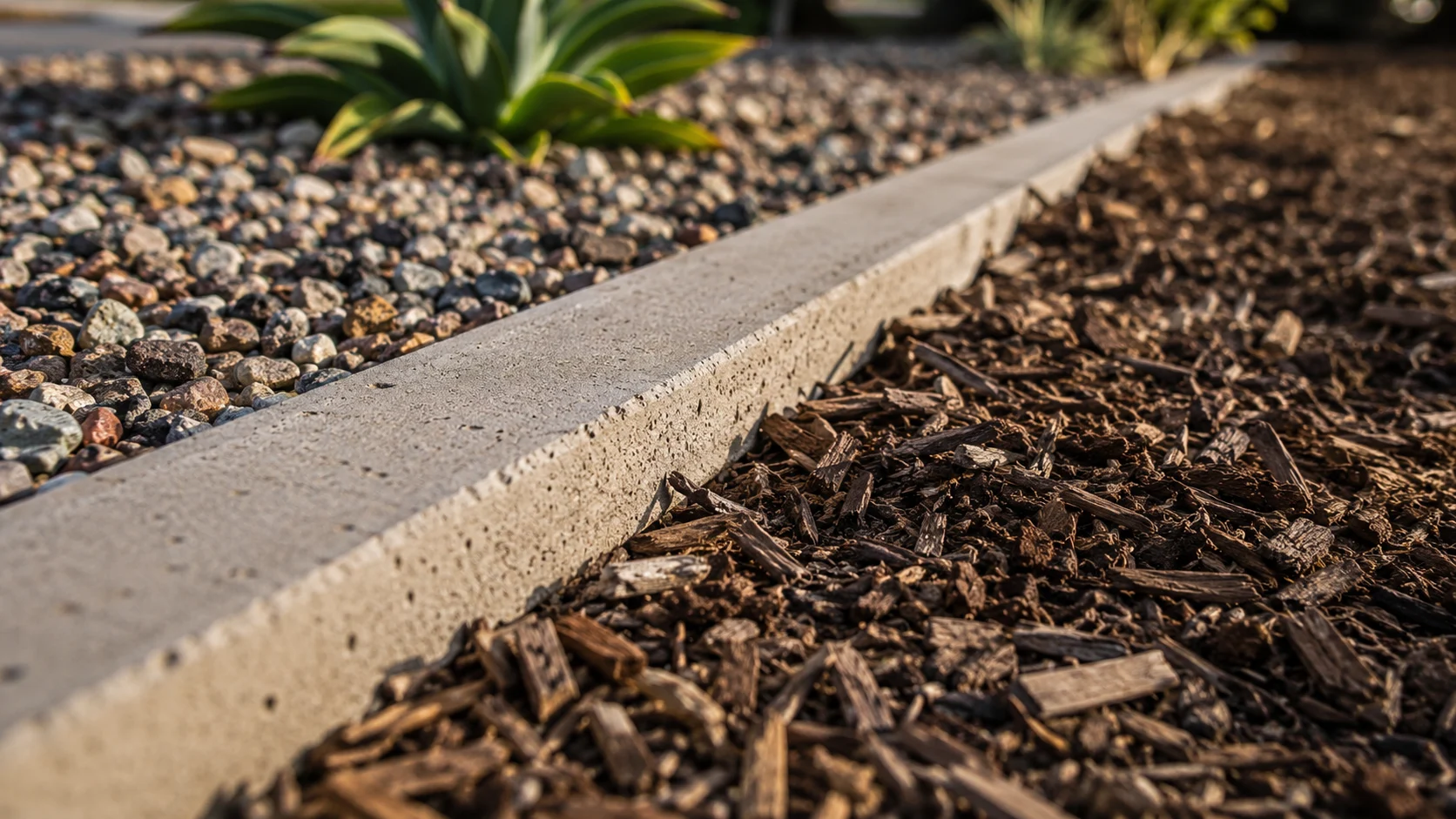
The Three Jobs of a Good Edge
A good edge should contain, clarify, and stay out of the way.
Containment is the obvious job. If gravel is spilling into a bed or mulch is sliding onto a decomposed granite path, edging can reduce the daily little migration. It is not a force field, especially if the materials are piled too high, the grade is wrong, or water keeps pushing everything around.
Clarity is the design job. The edge should make the path, bed, or transition easier to understand. Straight lines should look intentionally straight. Curves should look calm and confident, not like someone traced a garden hose during a mild disagreement.
Staying out of the way is the safety job. Edging near walking routes, doors, patios, gates, pool access, and side yards should not create a toe-catching ledge. If people will step across it often, roll bins over it, push a stroller near it, or carry groceries past it, the edge needs more thought than "this will look cute."
A Homeowner Decision Moment
Picture a side yard with decomposed granite down the middle, planting beds on both sides, and a gate at the end.
When the DG is new, it looks clean. Six months later, the edges soften. Mulch slides into the path. The path widens where people walk. A few plants flop into the route. Now the side yard still works, but it looks tired.
Concrete edging might be a good move there.
But change the scene slightly: the same side yard slopes toward the house, water already runs along one wall during storms, and a tree root has lifted a section of path. Now concrete edging is not the first fix. It may trap water, telegraph movement, create a trip edge, or lock in a drainage problem that should have been handled before the decorative line arrived.
Same material. Different yard. Very different answer.
Where Concrete Edging Makes Sense
Concrete edging can work beautifully in homeowner-scale landscapes when the site is simple and the job is clear.
It can separate gravel from planting beds. This is probably the classic use. A low concrete edge can keep decorative rock from sliding into soil or mulch, especially in beds with repeated plants and clean curves.
It can keep mulch out of paths. Organic mulch is useful around many plants, but it loves to wander when wind, pets, runoff, rakes, or enthusiastic feet get involved. Concrete edging gives the bed a defined stopping point.
It can frame decomposed granite paths. DG can look polished when the edges are crisp and the surface is compacted and maintained. It can look sad when the sides crumble into adjacent soil. For the DG-specific tradeoffs, start with What Is Decomposed Granite? and How to Use Decomposed Granite Without Tracking Dust Into the House.
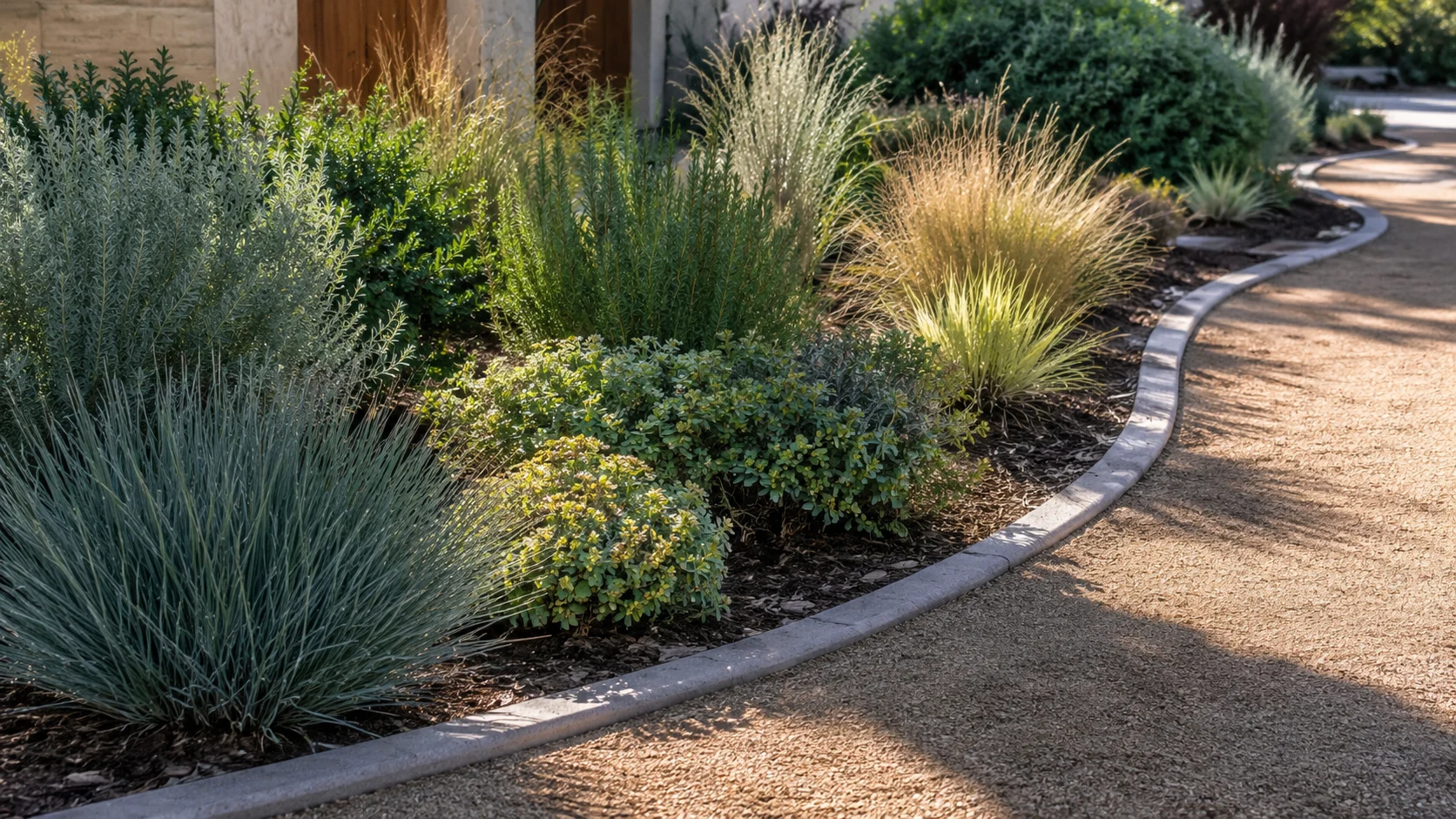
It can give low-water planting beds structure. In a waterwise yard, repeated edging can help mulch, gravel, boulders, planting islands, and paths read as one composition instead of a supply-yard sampler. For the groundcover side of that decision, Mulch vs Gravel in Low-Water Landscapes is the natural companion.
It can support small transitions. A concrete edge can help define where a path ends, a planting bed begins, or a utility zone changes material. It should not, however, become a surprise curb in a place where people walk fast, roll bins, or enter the house.
Where Concrete Edging Starts Causing Trouble
Concrete edging becomes a problem when it is asked to do work it was not designed to do.
Do not use concrete edging as a retaining wall. If soil needs to be held back, if grade changes meaningfully, or if the edge is resisting pressure from a slope, you are no longer talking about decorative edging. You are talking about a different project with different consequences.
Do not use it as a drainage fix. Edging may redirect a little surface material, but it should not be trusted to solve runoff, pooling, erosion, downspouts, slope, or water moving toward the house. If water already behaves badly, concrete can make the bad behavior more organized.
Do not force it around active tree roots. Roots and rigid edges are not natural roommates. Mature trees, large shrubs, lifted surfaces, and root-zone conflicts deserve local guidance before concrete starts making promises.
Do not create a trip edge near a path just because the line looks tidy on paper. A clean edge that catches toes is not clean. It is a future complaint with a hard surface.
And do not pour concrete edging just because the yard feels visually chaotic. Sometimes the real fix is fewer materials, better plant grouping, larger planting beds, repeated shapes, or a cleaner path layout. Edging can sharpen a design. It cannot invent one.
Poured, Precast, Stone, Metal, Or Flexible Edging?
This is not a product ranking. It is a fit check.
Poured-in-place concrete edging can look custom and permanent. It can follow curves, match other concrete, and create a strong visual line. It also requires formwork, placement, finishing, curing, and a level of commitment that makes future bed changes less casual. If the line is wrong, congratulations, it is wrong in concrete.
Precast concrete edging is modular. It can be easier to place in sections and may be more forgiving if the layout changes later. The tradeoff is that individual pieces can shift, settle, open gaps, or look busy if the pattern fights the landscape.
Pavers and stone borders can feel warmer and more flexible. They often pair well with patios, paths, and planting beds. They still need support and restraint, and they can move over time if the base or edge condition is weak.
Metal edging can be crisp, thin, and modern. It is often useful where the goal is a clean line without a bulky concrete presence. It can be less visually dominant, which is sometimes exactly the point. It can also bend, lift, corrode, or become a sharp-edged nuisance if poorly selected or installed.
Plastic or composite edging can be flexible and inexpensive-looking in equal measure. Sometimes it is perfectly practical for low-visibility beds. Sometimes it announces itself from across the yard like a bad belt.
The right choice depends on visibility, traffic, material depth, curve quality, permanence, budget, soil movement, future planting changes, and how formal the yard should feel.
Design Details That Make Edging Look Intentional
Concrete edging succeeds or fails in the small details.
Height matters. Too low, and materials jump the edge constantly. Too high, and the edge starts acting like a curb. In walking areas, height also becomes a trip conversation. Avoid universal numbers here; the right relationship depends on adjacent surfaces, material depth, grade, and use.
Width matters too. A thin line can look elegant but may be more vulnerable to movement or chipping if it is poorly supported. A wide edge can look substantial, but it can also look heavy in a small bed. The edge should fit the scale of the path and planting, not dominate it.
Curve quality is huge. A graceful curve can make a gravel path or planting bed feel professionally composed. A wobbly curve makes the whole yard look nervous. Before committing, lay out the line and view it from the patio, doorway, gate, and street-facing angle if relevant. The line that looks fine while standing over it may look bizarre from where people actually see the yard.
Finish texture should match the job. Broomed, lightly textured, or softened concrete often makes more sense outdoors than glossy or slick surfaces. For broader finish decisions, see Outdoor Concrete Finish Options for Patios, Paths, and Small Projects.
Color and visibility matter. Edging can blend in, contrast, or echo other concrete. None is automatically better. A pale edge in dark gravel may look sharp. It may also look like a chalk outline around a planting bed. Choose intentionally.
The Drainage, Root, And Trip-Edge Reality Check
This is the section that keeps the pretty edge from becoming the annoying edge.
Walk the line after irrigation runs or after rain if you can. Where does water go? Does it cross the proposed edge? Does it pool at the low side? Does it already carry mulch or gravel with it? If the edge will trap water where it should move away, pause.
Look for roots and future plant size. A tiny shrub today can become a woody argument later. A young tree can make a rigid edge look brave for a few years, then start negotiations from below.
Then walk the route like a person who lives there, not like someone admiring a landscape plan. Carry a laundry basket. Roll a bin. Open the gate. Step from the patio to the path. If your foot naturally lands on the proposed edge, that is information. Ignore it now and the yard will remind you later, usually when you are holding something breakable.
For small hardscape planning, Small Concrete Utility Pad for Bins, Hoses, and Side Yards covers the same truth from the pad side: concrete needs to work with movement, water, and access, not just look tidy on installation day.
Maintenance Reality
Concrete edging reduces mess. It does not retire maintenance.
Expect to clear leaves, gravel, mulch, and soil from the edge. Expect some weeds where dust and organic matter collect. Expect movement, hairline cracks, chips, or settlement to matter more in some soils and climates than others. Expect irrigation overspray and runoff to leave marks if the edge sits in the wrong wet zone.
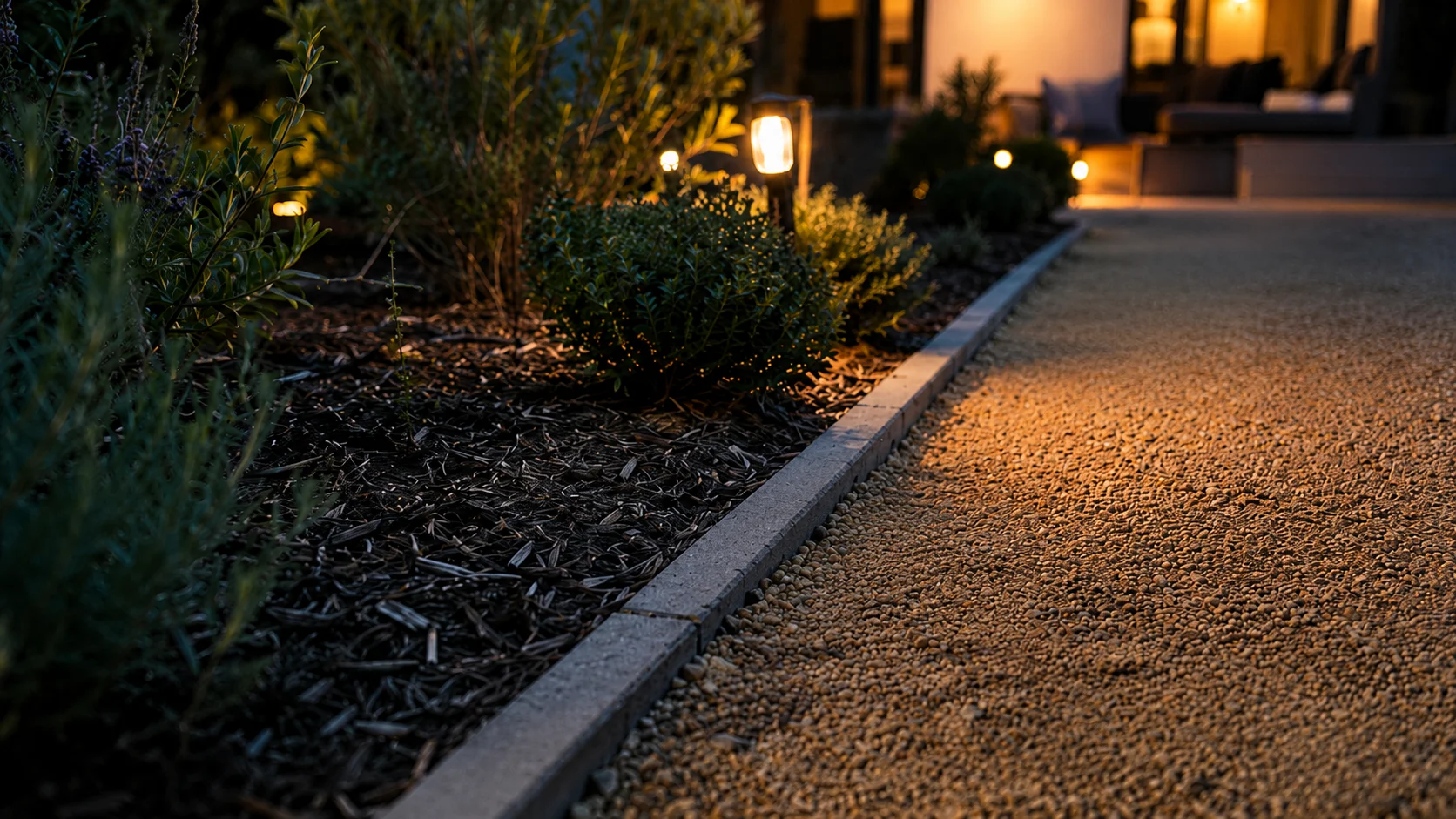
Maintenance is easier when the edge is visible and reachable. It is harder when plants engulf it, gravel buries it, mulch piles against it, or the line disappears under debris.
The best edges are not invisible. They are quiet. They do their job without demanding a weekly apology.
Common Mistakes
The usual mistakes are not glamorous.
- Making the line wobbly.
- Making the edge too tall near foot traffic.
- Making it too slight for the material it needs to contain.
- Forgetting base/support and expecting concrete to behave on soft ground.
- Trapping water against a wall, path, patio, or planting bed.
- Treating edging like a retaining wall.
- Ignoring roots.
- Creating a hard edge where future planting changes are likely.
- Choosing concrete when flexible edging would be easier to adjust.
- Letting gravel, DG, or mulch pile higher than the edge.
- Using a slick finish where feet, water, dust, or slope are involved.
- Assuming "permanent" means "better."
Concrete has confidence. That does not mean every landscape line deserves it.
A Practical Decision Framework
Use concrete edging when most of these are true:
- The job is material separation, not structural support.
- The grade is simple and drainage is already handled.
- The line will not create a trip hazard.
- Tree roots and large shrubs are not likely to fight it.
- The bed or path layout is settled enough to deserve a permanent edge.
- The edge will make maintenance easier, not just installation day prettier.
- The finish, color, and shape fit the rest of the yard.
Choose another edging approach when the line may need to move, the bed is temporary, roots are active, the area is low-visibility, or the yard needs flexibility more than permanence.
Call a qualified professional when the edge touches slope, erosion, retaining conditions, drainage correction, foundation-adjacent water movement, stairs, pool-adjacent safety, utilities, mature trees, vehicle loads, local code, permits, or anything where failure would be more than cosmetic.
FAQ
Is concrete edging good for gravel?
Concrete edging can work well for gravel when the goal is a durable, visible boundary that helps reduce material migration. It still needs a sensible layout, support, and drainage-aware placement. It will not stop gravel from moving if the gravel is piled too high, the grade is wrong, or water keeps carrying material across the edge.
Can concrete edging hold back soil?
Do not treat decorative concrete edging as a retaining wall. If soil needs to be held back, if there is a meaningful grade change, or if slope and erosion are involved, get qualified guidance. That is a different project.
Is poured concrete edging better than precast edging?
Neither is automatically better. Poured edging can look custom and continuous, but it is more permanent and less forgiving. Precast edging can be modular and easier to adjust, but individual pieces can shift or look busy. Choose based on layout, visibility, maintenance, future changes, and site conditions.
Does concrete edging stop weeds?
No. It can reduce messy material mixing and make maintenance easier, but weeds can still grow in cracks, dust, organic debris, or gaps along the edge. Anyone promising a weed-free yard forever is selling either optimism or plastic.
Can concrete edging be used around decomposed granite?
Yes, concrete edging can help define decomposed granite paths or seating areas, especially where DG edges soften or track into planting beds. It should be paired with good layout, compaction, drainage awareness, and maintenance. DG still has its own dust and tracking behavior.
When should I avoid concrete edging?
Avoid it when the real issue is drainage, erosion, slope, roots, structural support, retaining soil, trip-prone circulation, or a landscape layout that is still likely to change. Concrete is good at staying put. That is a benefit only when you are sure it belongs there.
Bottom Line
Concrete edging is a strong choice when a yard needs crisp material separation, cleaner planting-bed lines, and a more intentional relationship between gravel, mulch, decomposed granite, paths, and plants.
It is a poor choice when the yard is asking for drainage help, root-zone judgment, slope control, structural support, or flexibility.
Use concrete edging like punctuation. Put it where the landscape sentence needs clarity. Do not pour an exclamation point around every bed just because the yard feels unfinished.