
Xeriscaping gets a bad rap because too many yards translate "water-wise" as "cover everything in rock and hope nobody notices the house looks lonely."
That is not design. That is a material delivery.
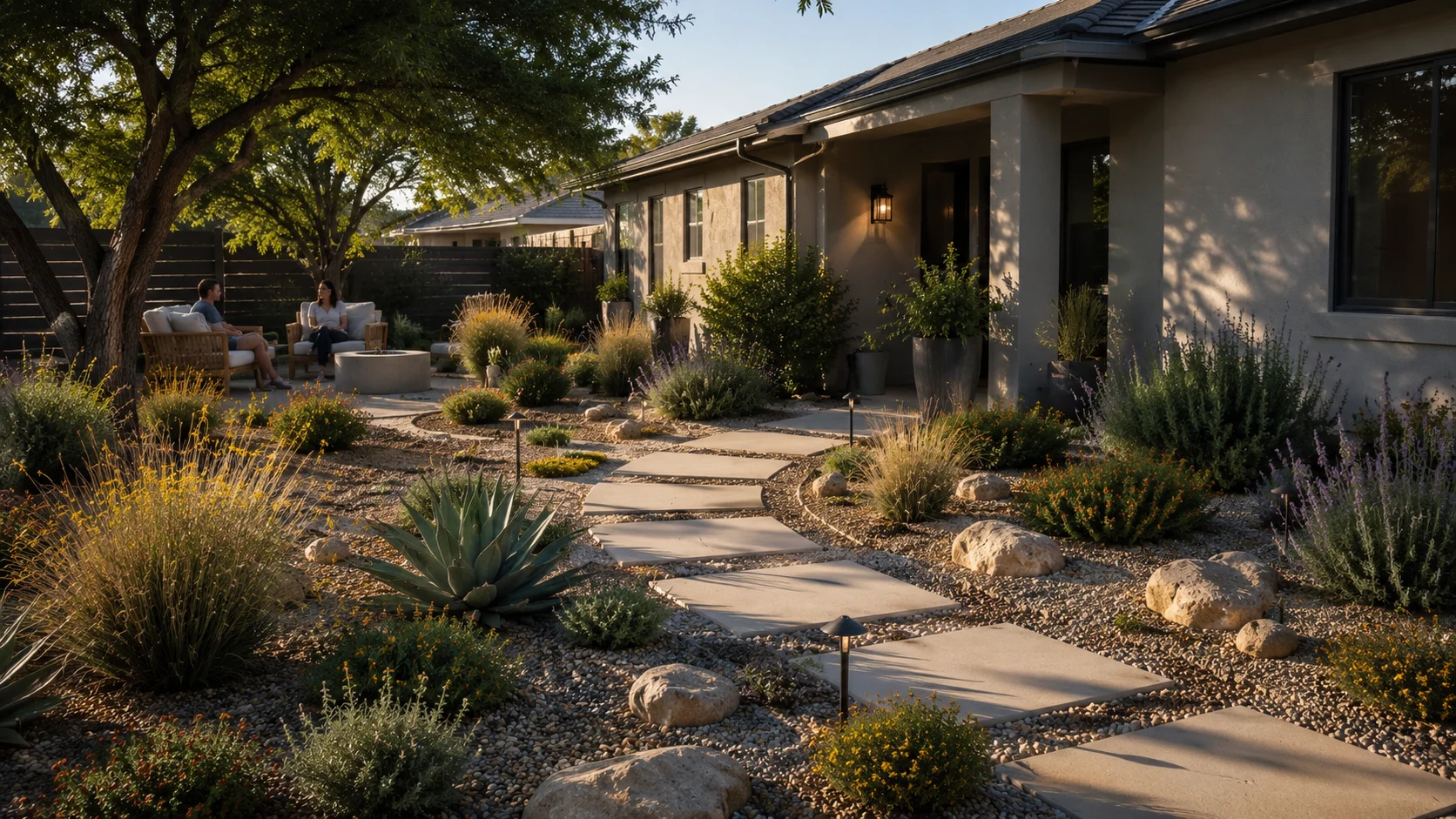
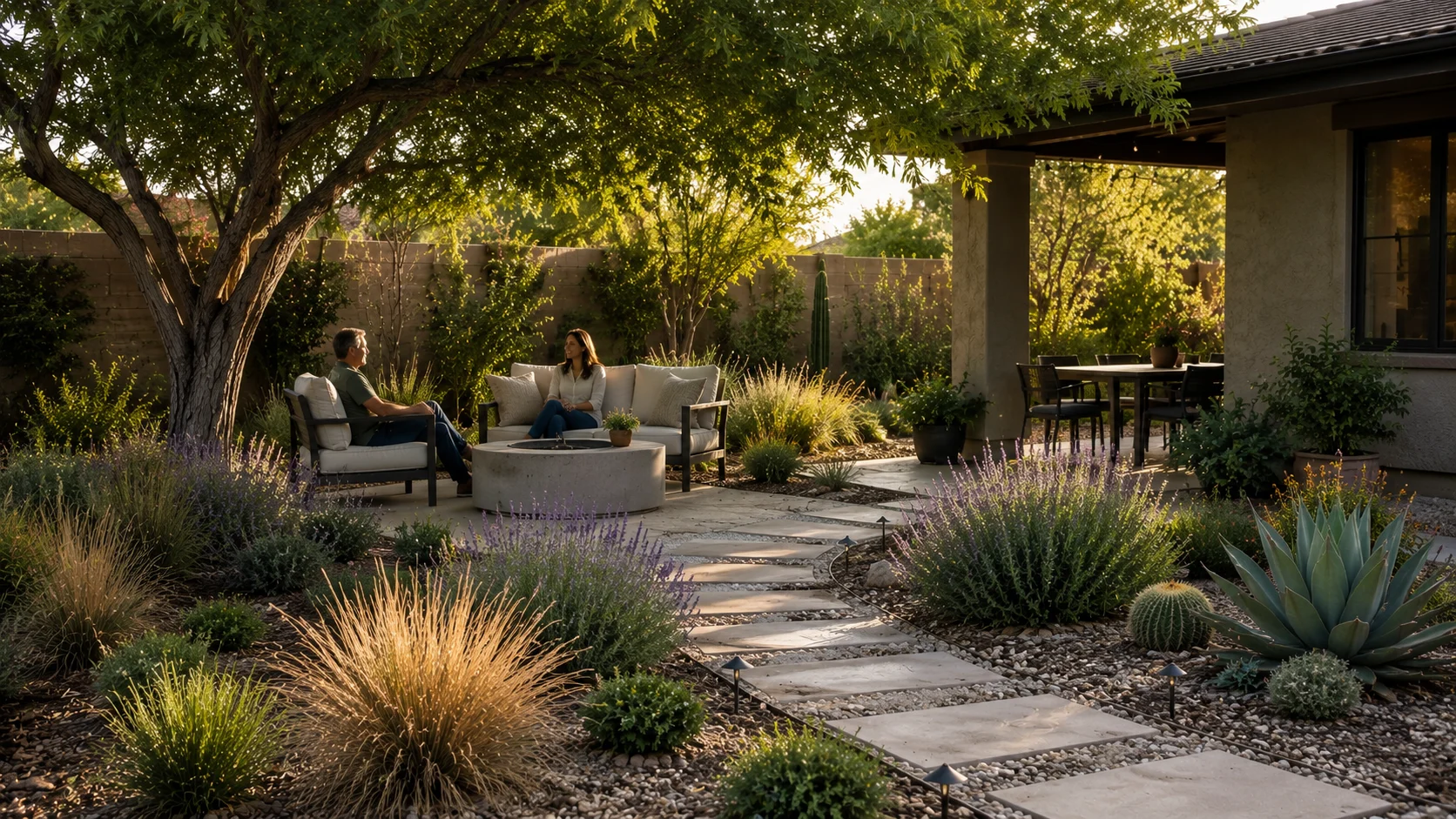
A better xeriscape saves water by planning around climate, plant needs, shade, soil, irrigation, and maintenance. It still needs shape, comfort, focal points, and enough living texture to feel like a yard instead of a holding area for gravel.
The Direct Answer
The easiest way to keep xeriscaping from looking sad is to design the yard before choosing the groundcover.
Start with how the space should work: where people walk, where shade matters, what view the house needs, where planting should frame the entry or patio, and which areas can stay simple. Then use gravel, decomposed granite, mulch, plants, paths, edging, and hardscape as parts of one plan.
If you are still sorting out the broader definition, start with What Is Xeriscaping?. If the yard is already mostly rock, How to Make a Gravel Yard Look Designed, Not Deserted is the closest companion.
What Xeriscaping Actually Means
Xeriscaping is landscape design built around lower water use. It does not mean zero plants, zero color, zero shade, or a front yard that looks like a municipal parking lot wearing a name tag.
A strong xeriscape usually includes:
- Climate-appropriate plants.
- Efficient irrigation where irrigation is needed.
- Plants grouped by similar water needs.
- Mulch, gravel, decomposed granite, or other groundcover used with purpose.
- Shade strategy.
- Hardscape structure.
- Seasonal interest.
- Clear paths or destinations.
- Maintenance expectations that match the homeowner's real life.
The lower water use comes from planning and plant fit, not from making the yard as empty as possible.
Why Some Xeriscapes Look Barren
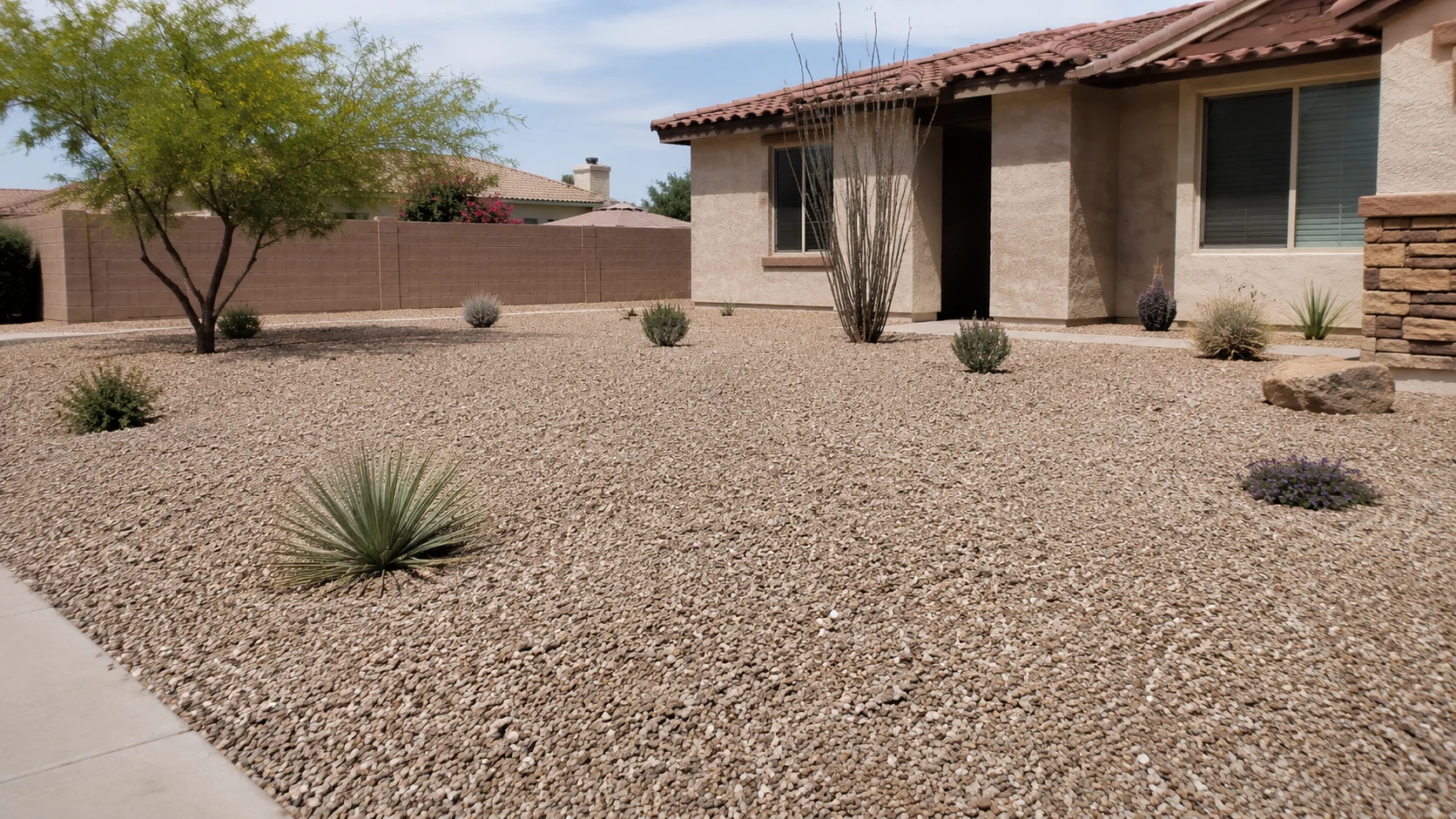
Most disappointing xeriscape yards have the same root problem: one material is asked to do the whole job.
Common symptoms include:
- Large uninterrupted areas of exposed gravel.
- Tiny plants spaced too far apart.
- No middle-height planting layer.
- No shade or vertical structure.
- No clear path, seating zone, or destination.
- Random boulders, pots, or accents with no relationship to the layout.
- One rock color and size used everywhere.
- Plants chosen one at a time instead of repeated in groups.
The yard may technically use less water, but it does not read as a landscape. It reads as a surface treatment.
Start With The Yard's Jobs
Before buying plants or ordering rock, decide what each part of the yard needs to do.
Useful zones might include:
- A clear entry path.
- A seating area.
- A view from a kitchen, bedroom, or patio door.
- A planting bed that softens a wall or fence.
- A low-maintenance utility side yard.
- A dog route.
- A drainage or runoff area.
- A focal point near the street or patio.
Once each area has a job, materials are easier to choose. Gravel might be right for a path, decomposed granite might work around a seating area, organic mulch might soften a planting bed, and pavers might make a transition feel finished.
Without zones, the yard becomes one big tray of intentions.
Use Gravel Like Background, Not The Whole Landscape
Gravel can be useful in a low-water yard. It can reduce mud, define paths, fit desert-adapted planting, and create visual calm around stronger plant groups.
The problem is overuse. A yard that is mostly exposed rock with a few isolated plants often looks hotter, flatter, and less finished than the lawn it replaced.
Better gravel moves:
- Use gravel as a ground plane around planting, not a substitute for planting.
- Break up large gravel areas with paths, beds, seating zones, or shade.
- Keep rock color and size restrained so the yard does not feel busy.
- Use clear edging where gravel meets mulch, soil, pavers, or concrete.
- Avoid narrow strips of decorative rock that are hard to maintain and easy to forget.
If you are choosing between mineral and organic materials, Mulch vs Gravel in Low-Water Landscapes covers the tradeoffs in more detail.
Build Planting Layers
Flat yards usually need layers more than they need more stuff.
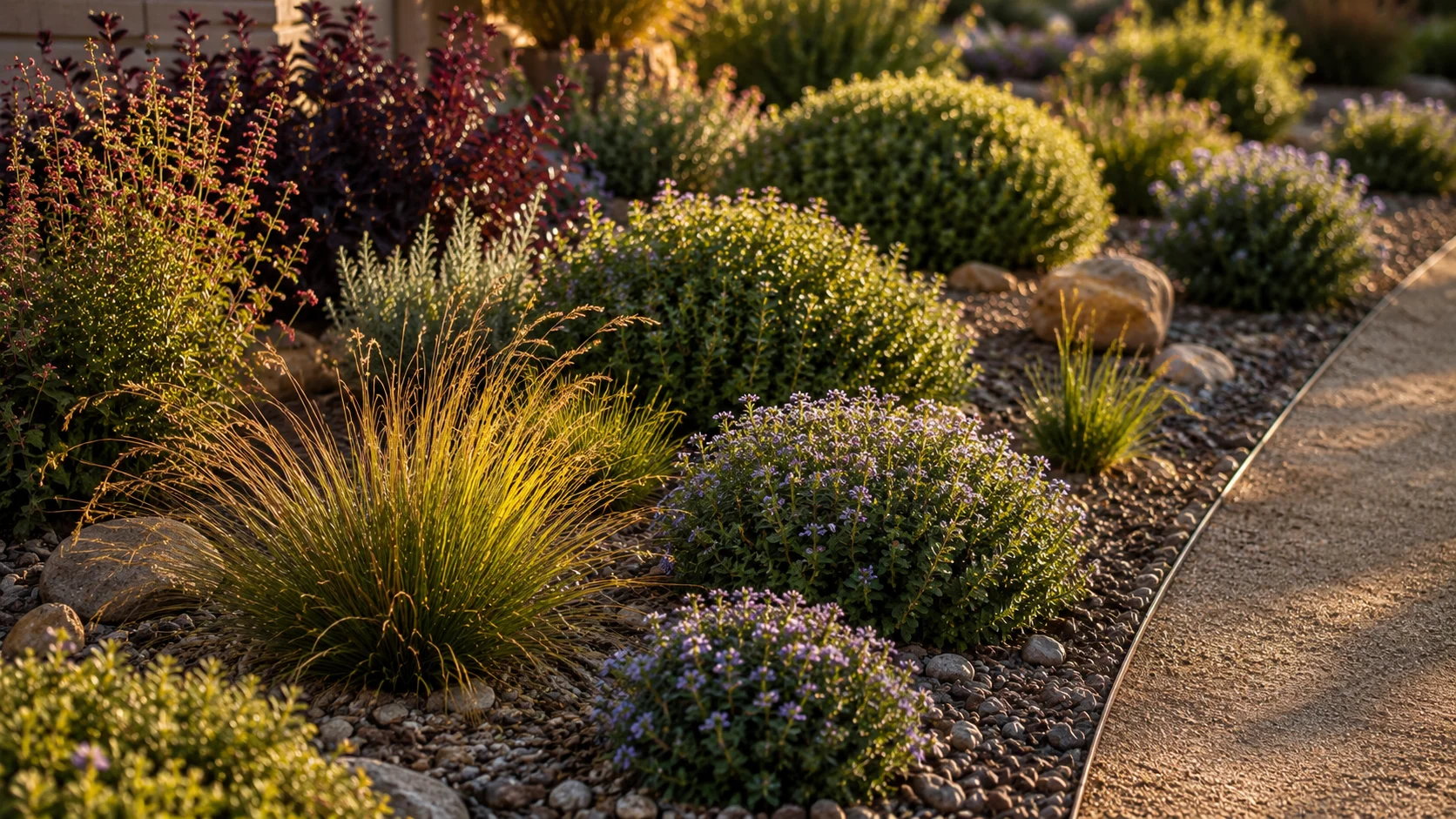
Think in heights:
- Ground-level mulch, gravel, decomposed granite, or low groundcover.
- Low plants that soften edges.
- Medium shrubs, grasses, or perennials that give the yard body.
- Taller accents, small trees, large shrubs, trellises, or architectural plants where the climate and site support them.
The exact plants should come from local guidance, mature size, sun exposure, soil, water needs, and maintenance tolerance. The design principle is simpler: do not let every plant live at ankle height.
For plant-selection logic, see How to Choose Plants for a Low-Water Landscape.
Repeat Fewer Plants
A dozen unrelated plants can make a yard feel nervous.
Repeating fewer plant types usually looks calmer and more deliberate. Repetition also makes irrigation easier because plants with similar water needs can be grouped together instead of scattered wherever the cart at the nursery happened to stop.
Try repeating:
- One anchor shrub or structural plant.
- One fine-textured plant, such as a grass or soft perennial where suitable.
- One seasonal color or flowering accent.
- One low plant or groundcover for edges.
- One taller feature where the space needs height.
This is not a rule to buy plants in exact sets. It is a reminder that the yard should look composed from the street or patio, not assembled from leftovers.
Add Shade Early
Shade is not decorative in hot climates. It is comfort infrastructure.
A low-water yard without shade can look finished on paper and still feel unusable at 3 p.m. Shade can come from regionally appropriate trees, larger shrubs, covered patios, pergolas, shade sails, or the house itself.
Plan shade around:
- Seating areas.
- West-facing walls or patios.
- Entry paths.
- Planting beds exposed to reflected heat.
- Views from inside the house.
Shade choices should respect local climate, mature plant size, root space, irrigation access, structures, and maintenance. A tiny tree in the wrong place can become a future clearance, root-space, or maintenance problem.
For more shade planning, see Shade in Low-Water Landscapes.
Make Paths And Edges Obvious
Paths and edges make a water-wise yard feel intentional.
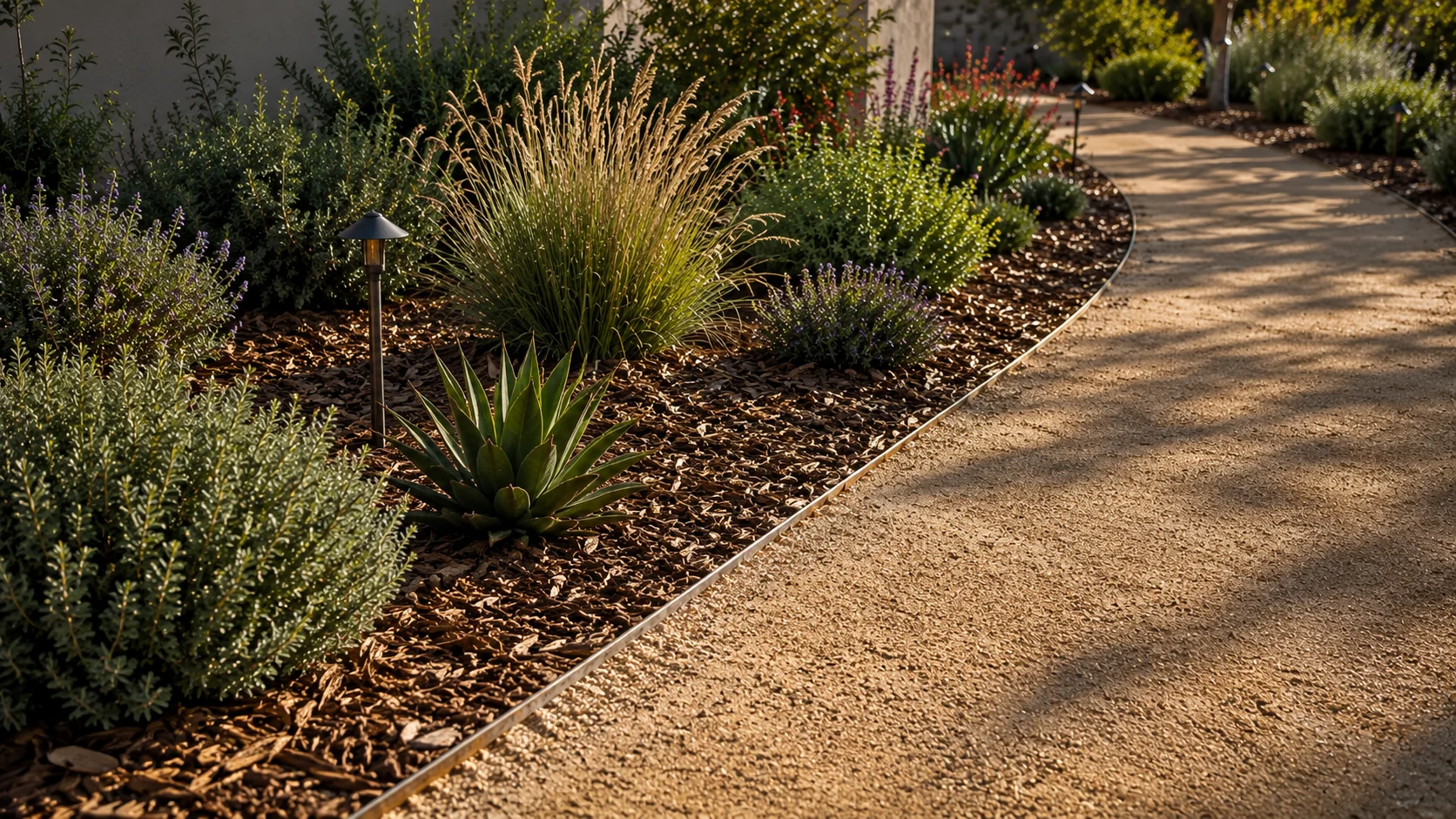
A path tells people where to walk. An edge tells gravel, mulch, plants, and soil where to stop negotiating. Without those cues, even good materials can look spilled.
Useful edge and path moves include:
- A clear route from driveway or sidewalk to the front door.
- A stable walking surface near entries and seating areas.
- Edging between gravel and planting beds.
- Bed shapes that relate to the house, patio, fence, or path.
- Enough width for actual use, not just a photo.
- Materials that fit the maintenance level the homeowner will tolerate.
For front-yard planning, Low-Water Front Yard Ideas That Don't Look Like a Gravel Lot goes deeper on entry paths and curb appeal.
Keep Water Groups Honest
Water-wise design gets harder when plants with different needs are mixed on the same irrigation schedule.
Group plants by hydrozone where practical:
- Very low-water areas.
- Low-water shrubs and perennials.
- Moderate-water focal areas.
- Trees and larger shrubs that may need deeper establishment watering.
- Containers, vegetables, or specialty areas with separate needs.
This does not mean the yard needs to look like a spreadsheet. It means the irrigation plan should support the design instead of fighting it. A beautiful plant in the wrong water zone is still a maintenance problem waiting politely.
For the basics, see Hydrozoning for Homeowners.
Plan For Maintenance Before You Fall In Love With The Look
Low-water does not mean no-maintenance.
A xeriscape yard may still need:
- Weed control.
- Seasonal pruning.
- Drip checks and irrigation adjustments.
- Mulch or gravel refreshes.
- Leaf cleanup.
- Plant replacement after heat, freeze, pests, or installation mistakes.
- Edging repairs.
- Occasional soil or drainage fixes.
The best design is one the homeowner can realistically maintain. If a yard only looks good for two weeks after installation, it is not low-maintenance. It is a temporary exhibit.
For one of the sneakiest maintenance zones, see Waterwise Planting Bed Ideas for Hot Fence Lines. Fence and wall beds are where reflected heat, narrow soil, irrigation misses, and access problems can make a low-water design feel harder than it should.
Quick Design Check
Before calling a xeriscape plan done, stand at the curb, the patio, and the main indoor view and ask:
- Is there a clear path or destination?
- Does the yard have foreground, middle, and taller layers?
- Is gravel supporting the design or dominating it?
- Are plants repeated enough to look intentional?
- Does any seating area have shade or a path to future shade?
- Are water needs grouped logically?
- Are edges and transitions clean?
- Is there a maintenance plan for weeds, pruning, irrigation, and mulch or gravel refreshes?
If the answer is mostly yes, the yard is probably on its way. If the answer is mostly "we bought rocks," pause before ordering the next load.
Final Take
A good xeriscape should look like a designed landscape that happens to use less water.
Not a yard that gave up.