
A gravel yard can be waterwise, tidy, and low-maintenance in the right places. It can also become a radiant heat machine with decorative rock and a seating area nobody uses after breakfast.
The problem is usually not that the yard has gravel. The problem is that the gravel is being asked to do everything: cover soil, define space, look finished, reduce maintenance, handle foot traffic, frame plants, and somehow feel comfortable in full sun. That is a lot to ask from small rocks with no emotional support.
This guide is about cooling down a gravel-heavy yard without ripping the whole thing out. It stays product-neutral and species-light. Local climate guidance, qualified landscape professionals, arborists, irrigation professionals, drainage professionals, utility rules, HOA requirements, building codes, fire/local restrictions, and plant suitability still control what is appropriate for your actual site.
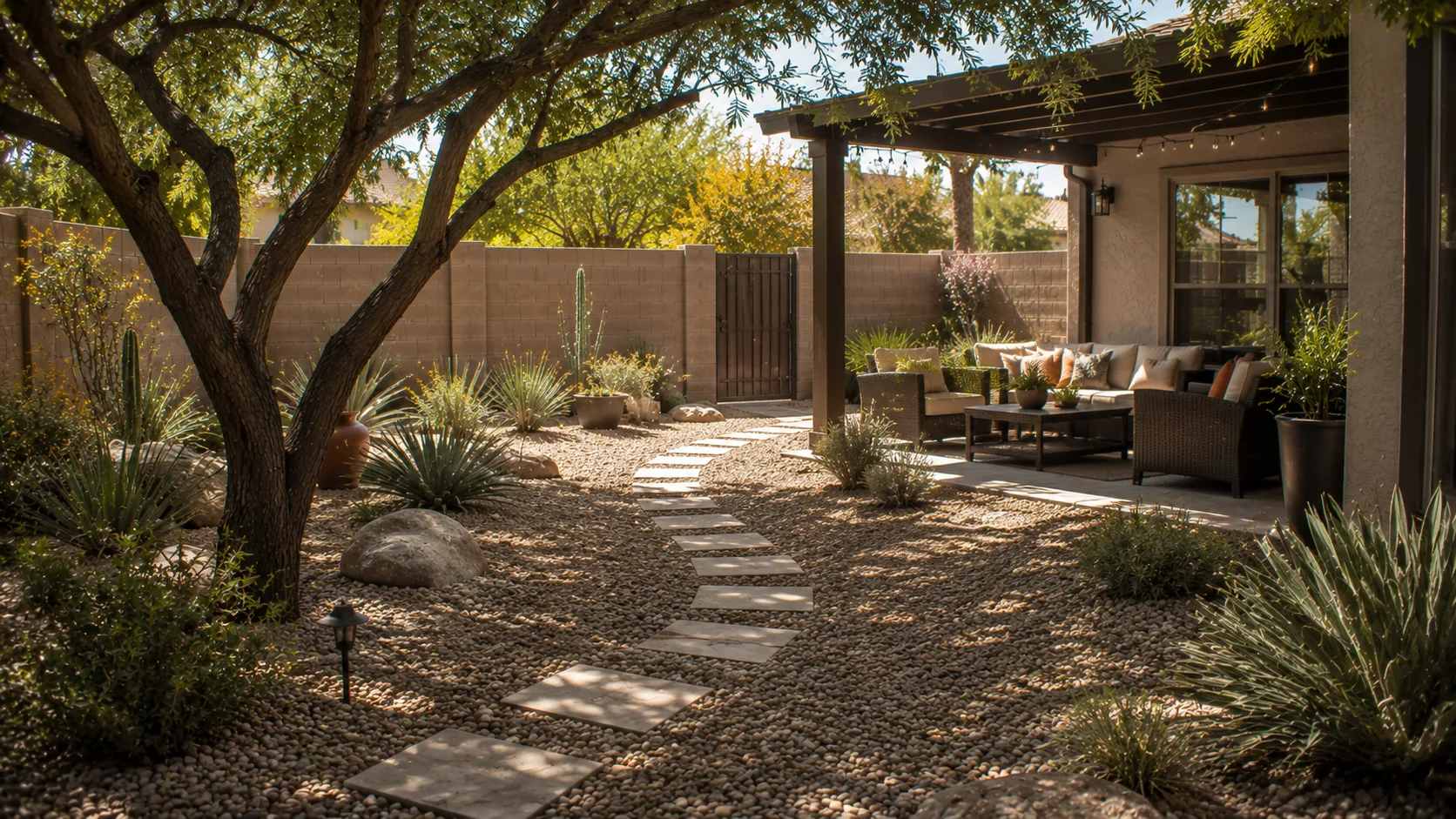
The Direct Answer
To cool down a gravel yard, do not start by replacing every surface. Start by breaking up the heat.
The most practical moves are:
- Add shade where people, pets, doors, and planting beds actually need relief.
- Create planting islands so gravel becomes background instead of the whole yard.
- Swap some rock-heavy plant beds to organic mulch where plants and soil need a softer root zone.
- Add material transitions near seating areas, paths, doors, and pet routes.
- Reduce glare and reflected heat from walls, fences, patios, and pale or dark hard surfaces.
- Improve edges so gravel stops drifting into every part of the yard like it owns the place.
- Phase changes by comfort zone instead of trying to redesign everything at once.
If your bigger problem is that the yard looks barren, start with How to Make a Gravel Yard Look Designed, Not Deserted. If shade is the main missing layer, Backyard Shade Ideas for Hot Climates and Shade in Low-Water Landscapes are the closest companions.
Why Gravel Yards Feel So Hot
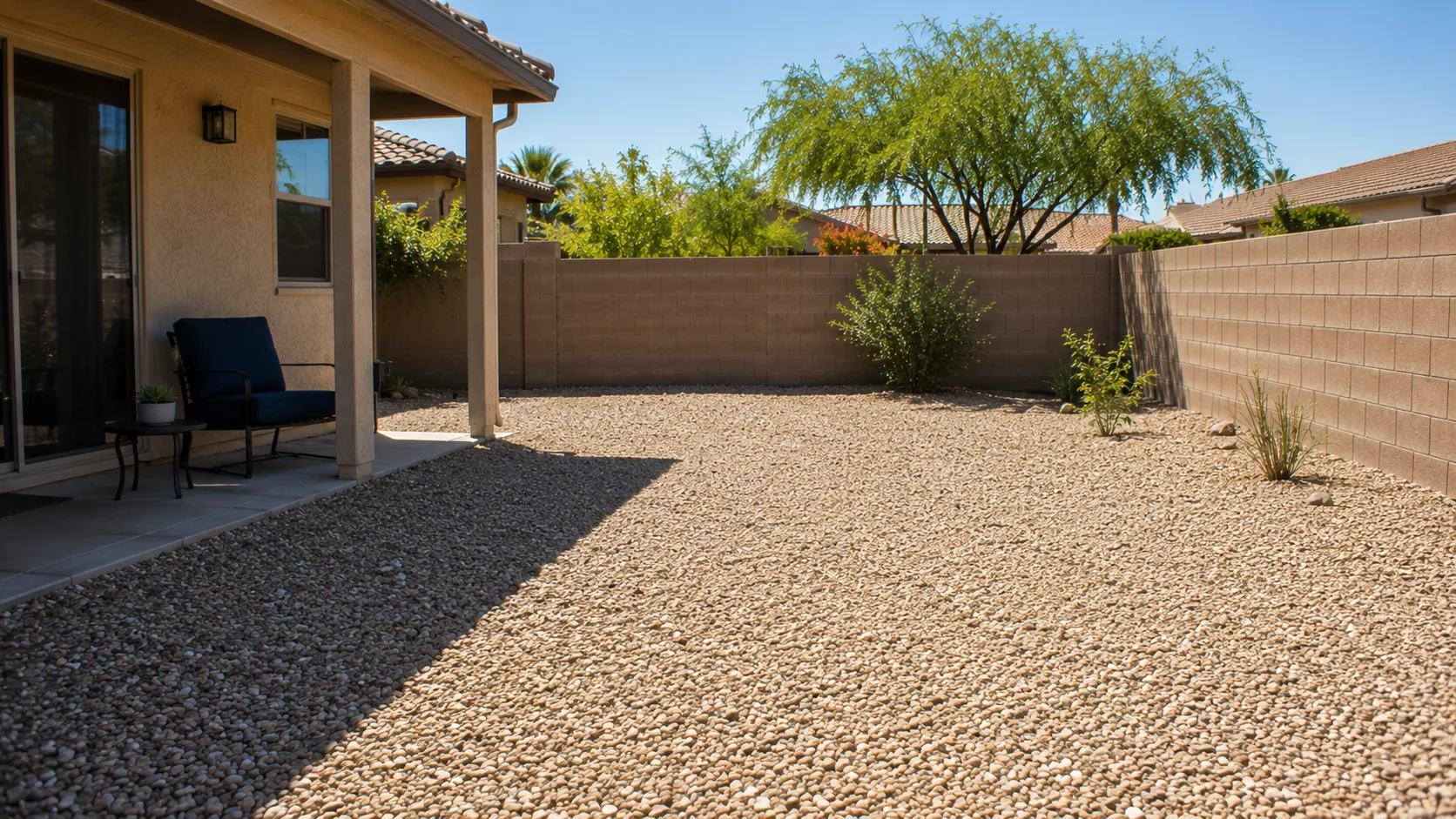
Gravel-heavy yards feel hot because they often combine three uncomfortable things: exposed mineral surfaces, too little shade, and too little living material.
Common heat triggers include:
- Large unbroken gravel areas in full sun.
- Rock mulch around young or stressed plants.
- West-facing walls and fences bouncing heat back into the yard.
- Concrete or paver patios next to exposed gravel.
- No tree canopy, covered seating, or vertical shade.
- Pale surfaces that create glare.
- Dark surfaces that absorb and radiate heat.
- Dog routes or seating areas placed where the yard is harshest.
- Bare planting beds with tiny plants that cannot visually or physically soften the space.
Gravel can be useful in a low-water landscape. It can reduce muddy spots, define paths, and support dry-climate design. But a yard that is mostly exposed rock can start acting like a heat amplifier.
The fix is usually not "no gravel." The fix is better distribution.
Map The Heat Before You Change Anything
Walk the yard at the times it actually fails: late morning, midafternoon, early evening, and after a hot day when the surfaces are still radiating.
Look for:
- The seating area people avoid.
- The door threshold that tracks heat and glare into the house.
- The pet route that stays exposed.
- The gravel bed where plants always struggle.
- The wall or fence that reflects heat into a narrow strip.
- The patio edge that feels harsher than the patio itself.
- The path that nobody wants to cross barefoot.
- The view from inside that looks flat, bright, and empty.
Do not guess from a single photo. Heat changes by time of day, season, shade angle, wall exposure, surface color, wind, and how the yard is used. One corner may need shade. Another may need mulch. Another may need a path, planting island, or simply less uninterrupted gravel.
This is where a gravel yard gets easier to improve: you are not fixing the entire yard. You are fixing the zones that make the yard unpleasant.
Start With Shade Where Life Actually Happens
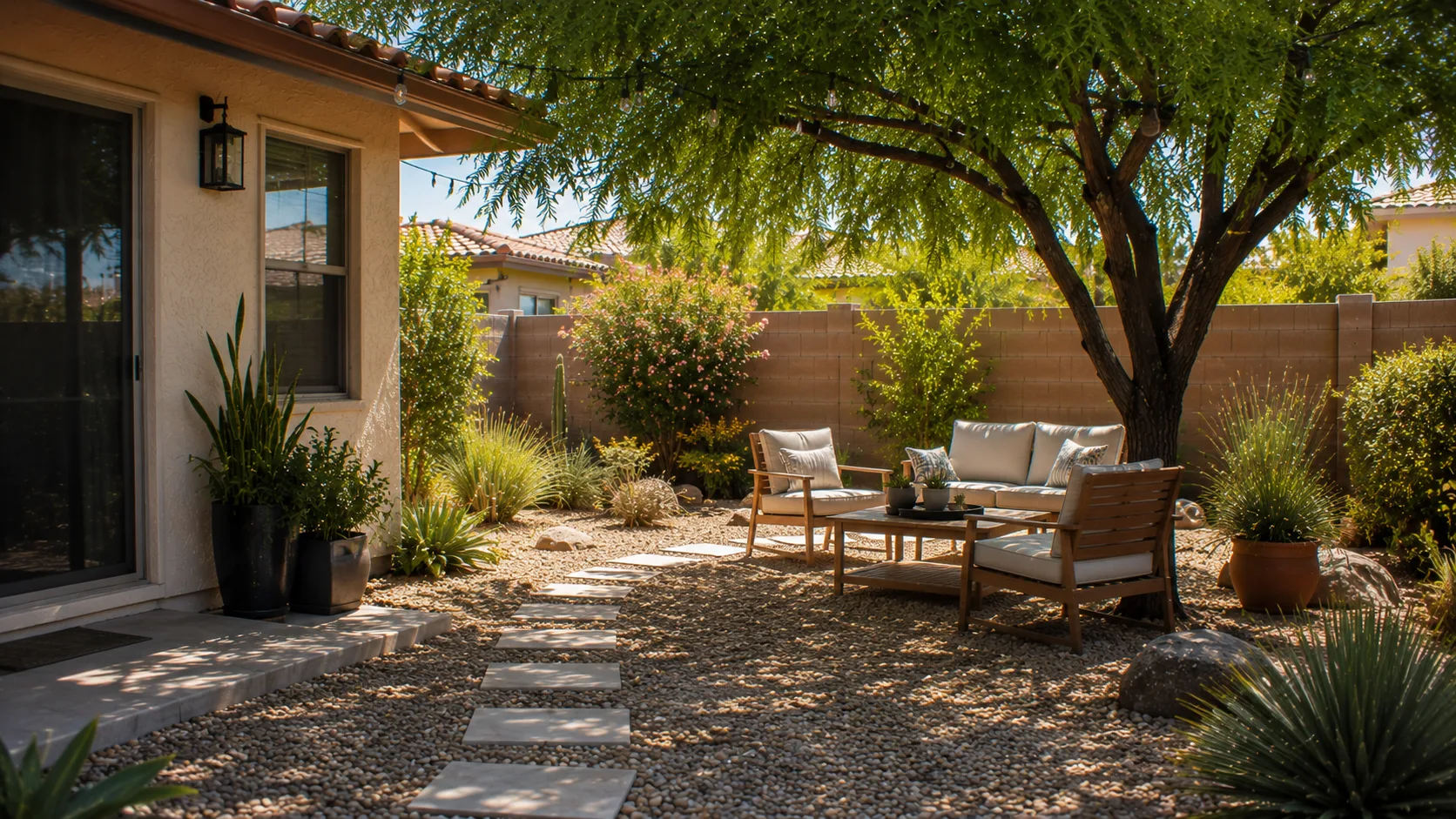
Shade is the fastest way to make a gravel-heavy yard feel less punishing.
Prioritize:
- Main seating areas.
- Patio-to-yard transitions.
- Door-to-gate paths.
- Pet rest zones.
- Pool or lounging edges.
- Planting beds next to reflected heat.
- Utility areas where people spend time working.
Shade can come from living shade, built shade, temporary shade, vertical shade, or the house itself. Each has tradeoffs. Trees and large shrubs need mature-size planning, establishment water, root room, litter tolerance, and local suitability. Built shade can require attention to wind, anchoring, drainage, utilities, structure, HOA rules, and permits. Temporary shade can help immediately, but it still has to be used safely and stored realistically.
The goal is not to shade every rock. It is to shade the places where comfort changes behavior.
If nobody wants to sit in the yard, shade the sitting area first. If the dog has one tiny shadow by the wall, fix the pet comfort zone. If the path from the house to the grill feels like a dare, start there.
Use Planting Islands To Break Up Heat
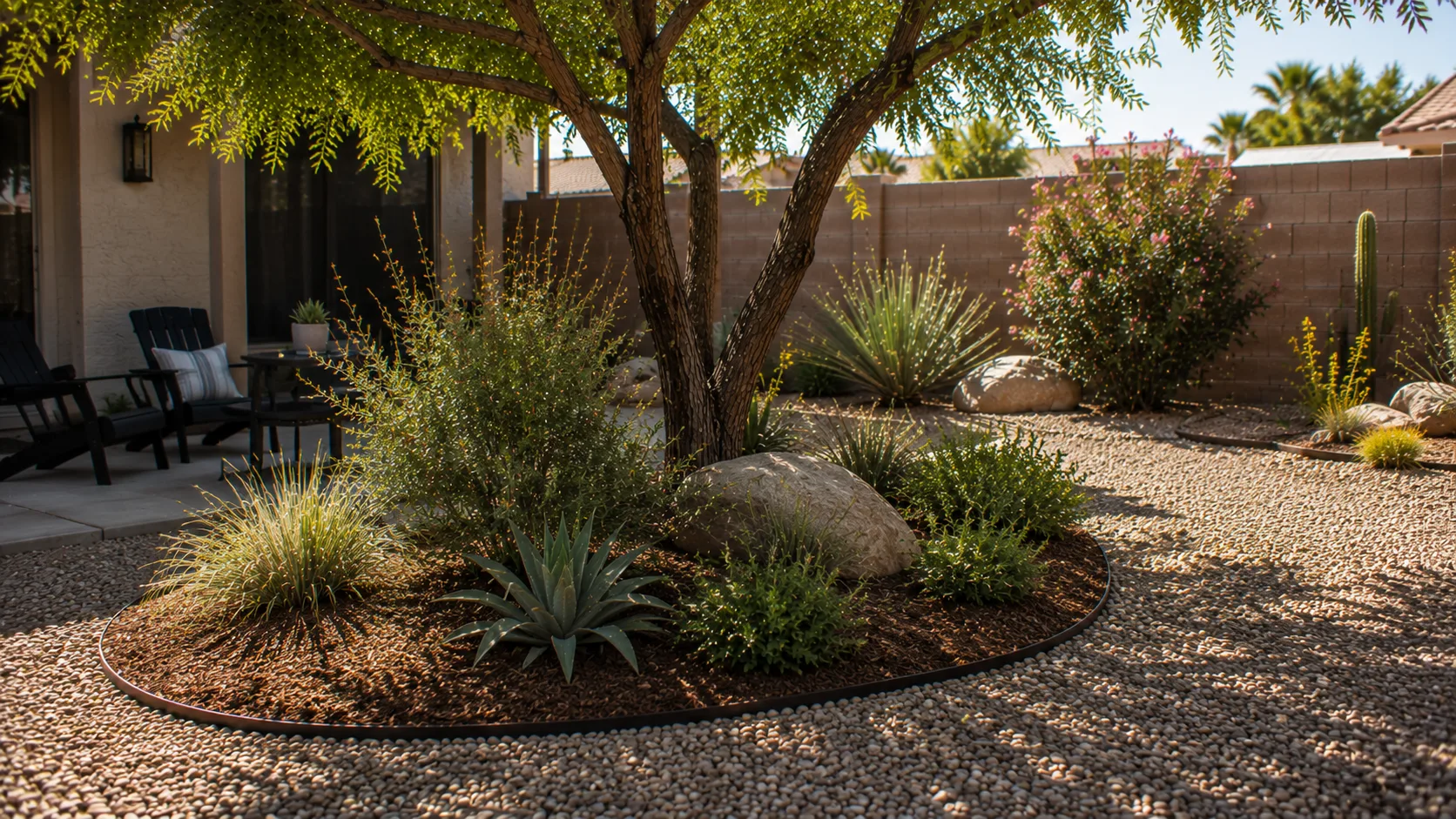
Planting islands are one of the best ways to make a gravel yard feel cooler without starting over.
Instead of scattering isolated plants across a gravel field, group plants into shaped beds or clusters that have visual weight.
Good planting islands can:
- Interrupt large exposed rock areas.
- Create foreground, middle, and taller layers.
- Give the eye somewhere to land.
- Soften patios, walls, and fence lines.
- Make shade feel intentional.
- Group plants by similar water and light needs.
- Make irrigation easier to understand and maintain.
The exact plants should come from local guidance. The design move is broader: stop making every plant survive alone in a mineral ocean.
For plant grouping logic, How to Choose Plants for a Low-Water Landscape covers why repeated, compatible plant groups usually look better than a random collection. For hot fence-line conditions, Waterwise Planting Bed Ideas for Hot Fence Lines is especially relevant.
Reconsider Rock Around Plants
Rock is not automatically bad around plants, but it is not automatically kind either.
In some dry-climate landscapes, gravel or rock mulch fits the plant palette and the design. In other beds, organic mulch may better protect soil, moderate surface conditions, and support establishment.
Pay extra attention where rock sits:
- Around young plants.
- Against west-facing walls.
- In narrow strips with low airflow.
- Near concrete, pavers, or reflective surfaces.
- Around trees or shrubs with wider root zones.
- In planting beds that already look stressed.
This does not mean every rock bed needs to become bark mulch. It means the groundcover should match the job. Gravel may be right for a path or dry-climate accent. Mulch may be better in a planting island where the root zone needs more protection.
Mulch vs Gravel in Low-Water Landscapes goes deeper on that decision. The short version: use gravel where structure and durability matter; use organic mulch where plants and soil need a more forgiving surface.
Add Material Transitions Near Seating And Doors
A gravel yard often feels hotter and harsher when every transition is loose rock.
Consider where a different surface would make the yard more usable:
- A path from the door to the seating area.
- A small landing outside a gate.
- A stable surface under chairs.
- A cleaner edge between gravel and patio.
- A transition from gravel to mulch at planting beds.
- A walkway through a dog route or utility side yard.
The material does not need to be fancy. It needs to be deliberate, stable, and appropriate for the site. Pavers, concrete, stepping stones, decomposed granite, mulch beds, and gravel can all work in the right place. The mistake is letting one material wander everywhere because nobody gave it boundaries.
For cleaner material edges, Concrete Edging Ideas for Gravel, Mulch, and Planting Beds explains when a more permanent edge helps and when it may create drainage, trip, or maintenance issues.
Reduce Glare, Not Just Heat
Sometimes a gravel yard feels uncomfortable because of glare as much as temperature.
Glare problems often show up around:
- Light-colored rock in full sun.
- Pale walls.
- Large concrete patios.
- Pool decks.
- South- or west-facing exposures.
- Open yards with no vertical interruption.
You do not have to make the yard dark. In hot climates, very dark rock can create its own heat problems. The better move is usually to add shade, planting height, material breaks, and softer surfaces where the glare is worst.
Think of the yard in layers:
- Overhead shade to reduce exposure.
- Vertical plants or screens to interrupt glare.
- Mulch or planting beds to soften ground-level brightness.
- Paths and edges to make open gravel feel intentional.
- Seating placed where the eye is not staring directly into a bright surface.
If the yard looks like it is yelling at noon, it probably needs more layers.
Make Pet And Barefoot Routes More Humane
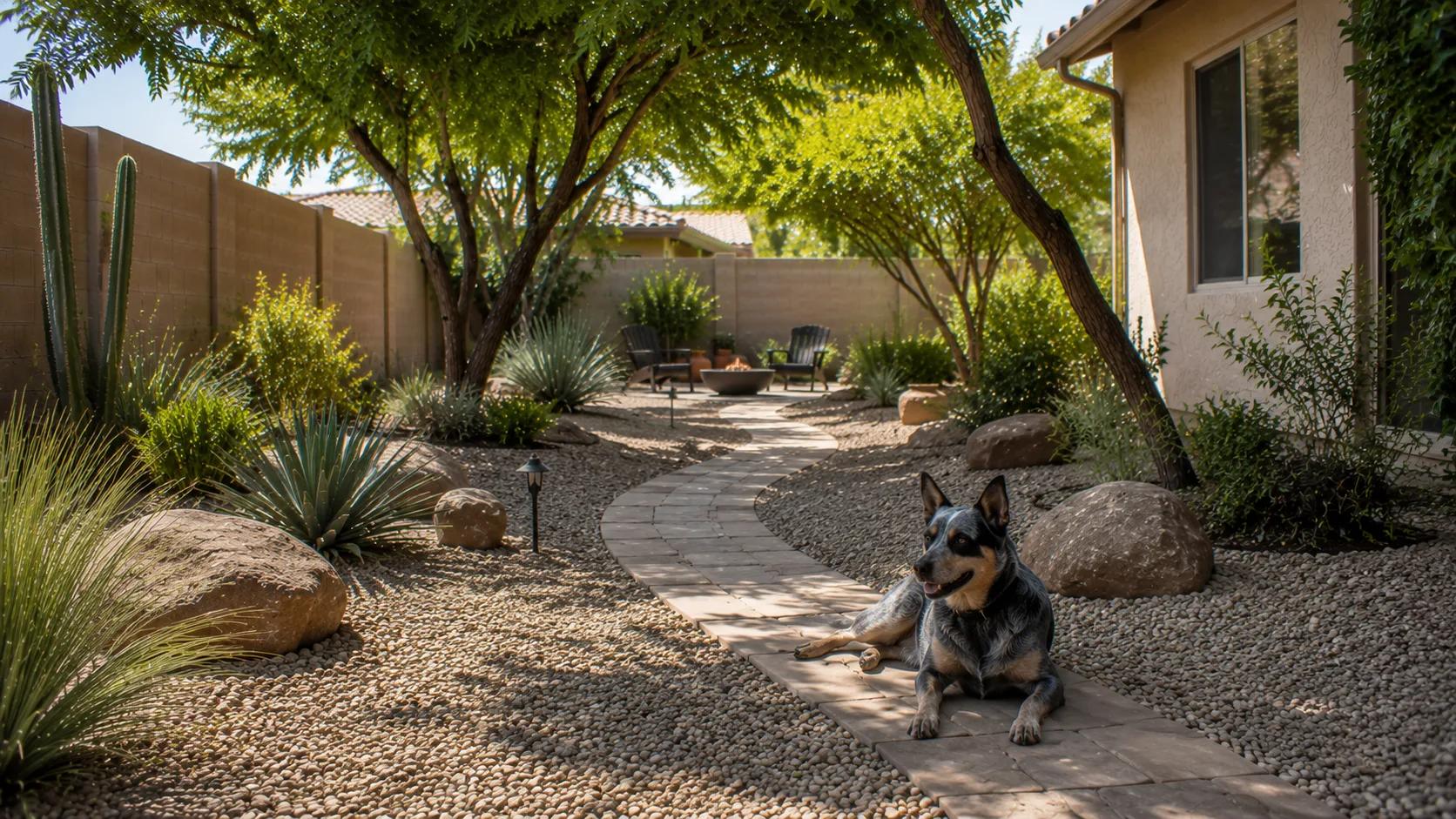
People and pets experience gravel-heavy yards at ground level.
Pay attention to:
- Where dogs travel repeatedly.
- Where paws, bare feet, or sandals cross loose rock.
- Whether artificial turf or pet zones sit next to hot rock.
- Whether shade reaches the pet area when it is actually used.
- Whether there is a cleanable, comfortable path from door to yard.
- Whether gravel migrates into turf, patios, or pool edges.
Do not assume shade alone makes a surface safe or comfortable. Check surfaces directly and use common sense. Pet health, paw comfort, and heat exposure are not places to make heroic assumptions.
For dog-specific outdoor maintenance, A Weekly Artificial Turf Maintenance Routine for Dog Owners and Why Artificial Turf Smells Worse in Summer cover the turf side of hot-yard reality.
Clean Up Edges So The Yard Feels Intentional
Messy edges make a hot yard feel worse because they add visual noise to an already harsh surface.
Watch for:
- Gravel drifting into mulch.
- Mulch spilling into gravel.
- Rock migrating onto patios.
- Planting beds with no shape.
- Paths with unclear borders.
- Thin spots where landscape fabric, soil, or base material shows.
- Rock piled against stems, trunks, walls, or thresholds.
Edges do not cool a yard by themselves. But they make every cooling improvement look more deliberate.
A shaded planting island with a clean edge looks like design. The same plants floating in loose rock can look like the nursery receipt escaped.
Improve Dust And Debris Control
Hot gravel yards often collect dust, leaves, seed pods, and debris that make the space feel even drier and less inviting.
Basic maintenance can help:
- Blow or rake debris before it breaks down into the rock.
- Keep gravel out of door thresholds.
- Refresh thin or mixed areas only after fixing the reason they are failing.
- Keep plant litter from collecting against walls and drains.
- Check that irrigation overspray is not creating weeds in the rock.
- Use edges where loose materials keep migrating.
If decomposed granite is part of the yard, How to Use Decomposed Granite Without Tracking Dust Into the House covers tracking, compaction, edges, and placement in more detail.
A Phased Plan That Does Not Require Starting Over
Most gravel yards can be improved in phases.
Phase 1: Fix One Comfort Zone
Choose the area where improvement would change daily use.
That might be:
- The main seating area.
- A dog route.
- A door-to-patio path.
- A bright fence-line bed.
- A poolside lounging edge.
Add shade, define the edge, and decide whether the ground surface still belongs there.
Phase 2: Add One Planting Island
Pick a large exposed gravel area and create a real bed shape. Use repeated plants, proper spacing, and a groundcover that fits the plants. Keep species choices local.
The goal is not instant jungle. The goal is a yard that finally has a middle layer.
Phase 3: Improve The Main Transition
Focus on the route people actually walk. A better path or landing can make a gravel yard feel cleaner, safer, and more finished.
Phase 4: Review The Whole Yard Again
After one or two changes, the next problem usually becomes obvious. That is good. It means the yard is becoming legible instead of being one big hot surface with a house attached.
Mistakes To Avoid
Replacing Every Rock With Another Rock
Switching rock color or size can help in some cases, but it does not solve a layout problem by itself. If the yard lacks shade, plants, edges, or destinations, new gravel may just become a more expensive version of the same heat.
Planting Tiny Plants Too Far Apart
Small starter plants are normal. A design that stays visually empty for years is not. Plan for mature size, repeated groups, and enough planting mass to break up the gravel.
Ignoring Reflected Heat
A plant that might handle full sun in open air may struggle against a hot wall, pale fence, or concrete edge. Microclimates matter.
Making Shade Too Random
A shade structure, tree, or umbrella only helps if it shades the right place at the right time. Shade the daily-use zone, not the spot that looked best in the shopping photo.
Assuming Gravel Means No Maintenance
Gravel still gets weeds, dust, leaves, migration, thin spots, and debris. Low-water does not mean no-work. It means the work should make sense.
When To Call A Pro
Get qualified help if the project involves:
- Drainage problems or water moving toward the house.
- Regrading.
- Retaining walls.
- Tree planting near structures, utilities, roofs, walls, or property lines.
- Irrigation redesign.
- Permanent shade structures.
- Electrical work.
- Large hardscape changes.
- Fire/local restriction questions.
- HOA, permit, or code uncertainty.
This guide can help you decide what kind of change the yard needs. It is not a structural, irrigation, drainage, arborist, legal, or code manual.
FAQ
Does gravel make a yard hotter?
Gravel can contribute to a hotter-feeling yard when it is used in large exposed areas, near reflective walls or patios, or around plants and seating zones without shade. The effect depends on color, exposure, climate, nearby surfaces, wind, shade, and how the area is used.
Is mulch cooler than gravel?
Organic mulch is often more forgiving around many plants because it helps protect soil and moderate surface conditions. Gravel may be better for paths, drainage-aware areas, and crisp mineral texture. Many low-water yards use both.
Should I remove all the gravel from my yard?
Usually, no. Start by fixing the worst comfort zones. Add shade, planting islands, better edges, and material transitions. Remove or replace gravel only where it is creating a real heat, plant, maintenance, or usability problem.
What is the fastest way to make a gravel yard more usable?
Shade the main seating or pet area, define a comfortable path, and add one planting island with enough visual mass to break up exposed rock. Those moves usually change how the yard feels faster than replacing every surface.
Can plants survive in gravel?
Some plants can work well with gravel or rock mulch in the right climate and exposure. Others struggle with reflected heat, root-zone stress, or establishment. Use local plant guidance and choose groundcover based on the plant's needs, not only the yard photo.
The Bottom Line
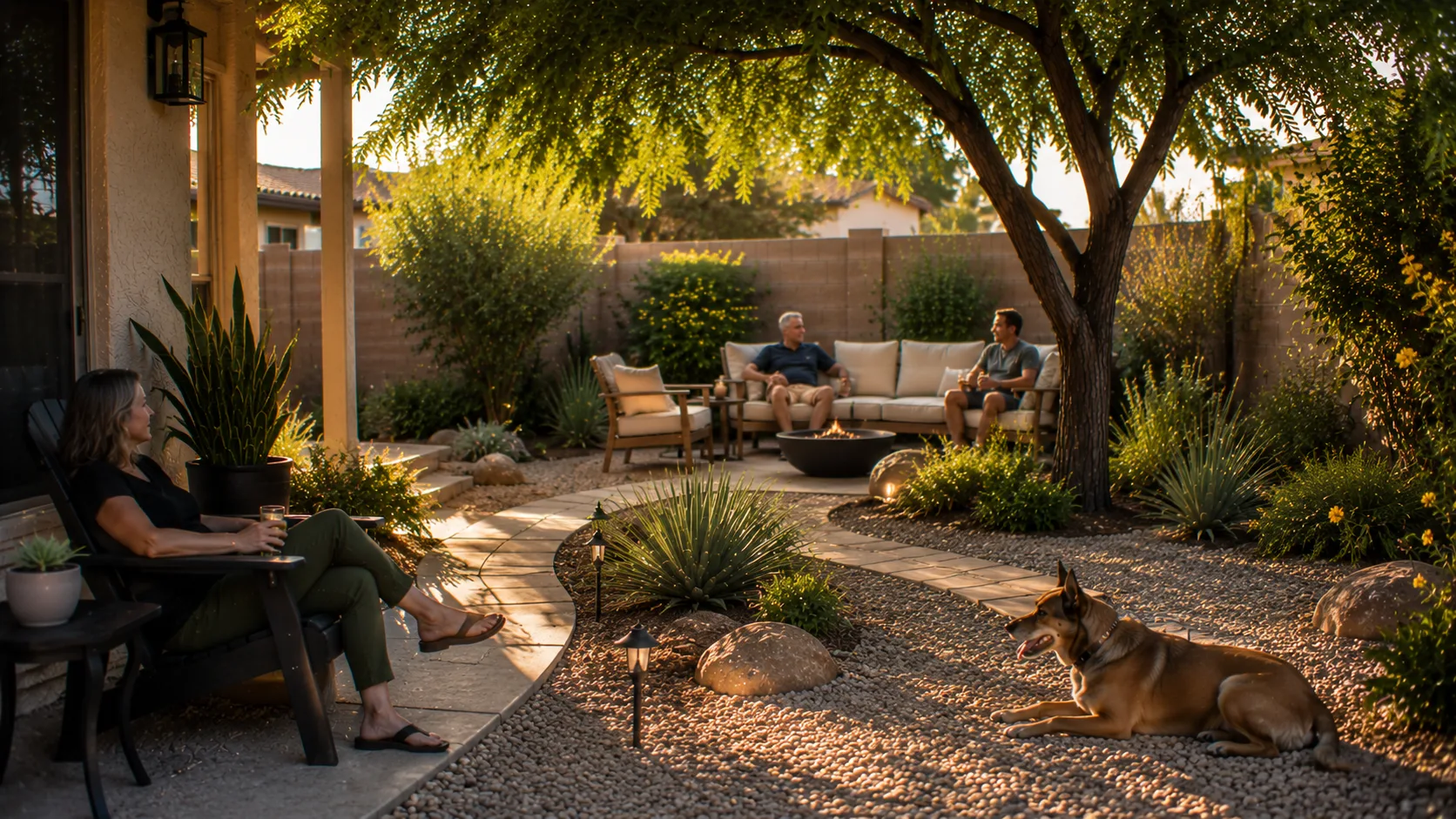
A gravel yard does not have to stay hot, flat, and unused.
The fix is usually not a dramatic tear-out. It is a smarter mix of shade, plants, edges, surfaces, and comfort zones. Keep gravel where it has a job. Add living material where the yard needs softness. Put shade where people and pets actually spend time.
The goal is simple: a low-water yard that feels like a place to live, not a mineral sample display with furniture.