
Most backyard projects start with shopping. A few patio chairs here, a few plants there, maybe a pallet of pavers because the corner by the back door looks sad and everyone is tired of looking at it.
That is understandable. It is also how a backyard becomes a collection of unrelated purchases instead of a place that works. The yard gets a sofa, a tree, a grill, six solar lights, and somehow still no obvious place to sit with a drink without feeling like you are hosting yourself in a storage area.
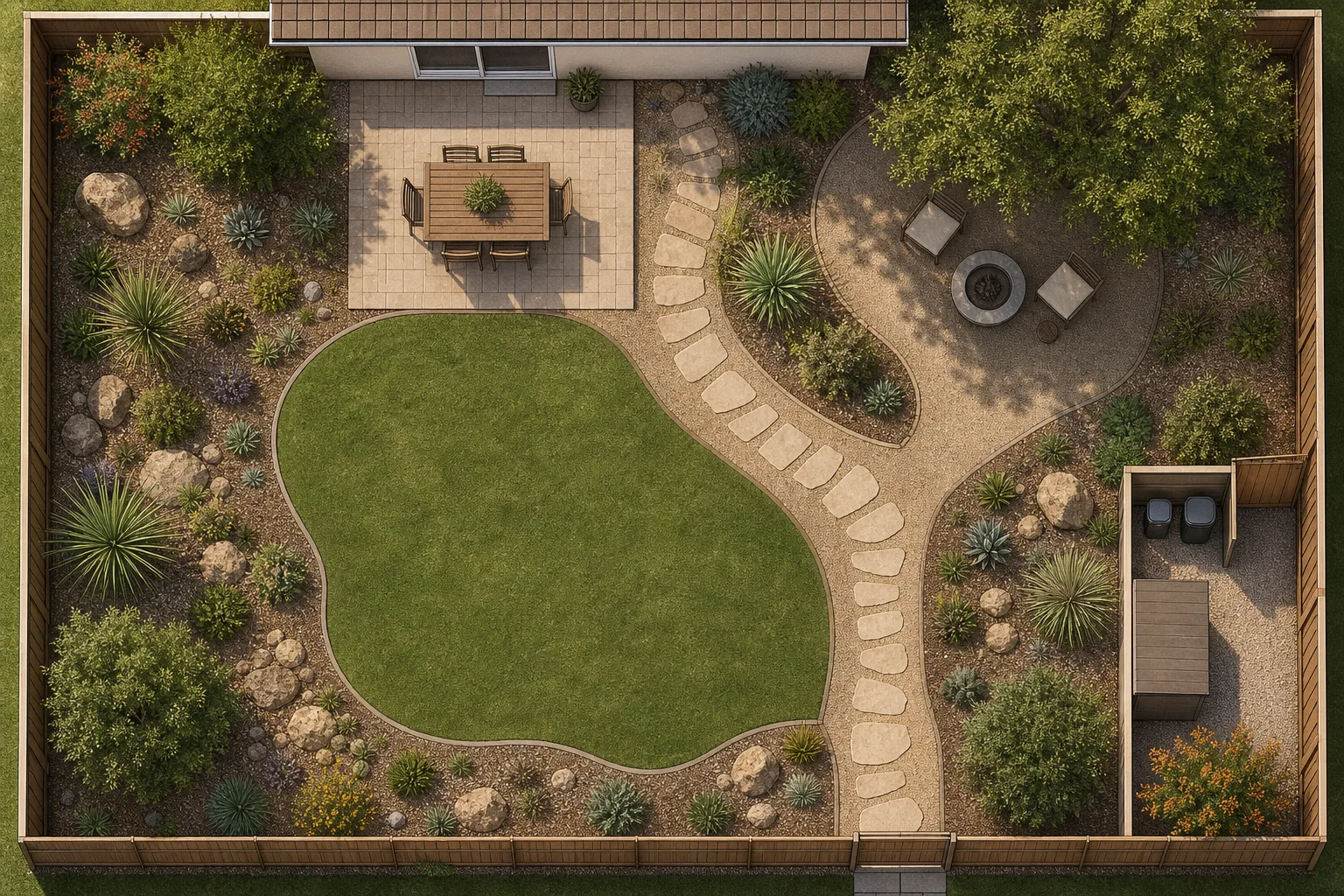
Before you pick plants, pavers, gravel, furniture, a pergola, or the heroic outdoor kitchen you may or may not use enough to justify its square footage, plan the yard in zones. A zone is simply an area with a job. Dining is a zone. Shade is a zone. A path is a zone. A dog run, garden bed, quiet chair, grill pad, storage corner, and kid landing zone all count.
The goal is not to make the yard precious. The goal is to make it legible. Once you know what each part of the yard is supposed to do, the materials become easier to choose and much harder to waste money on.
The Direct Answer
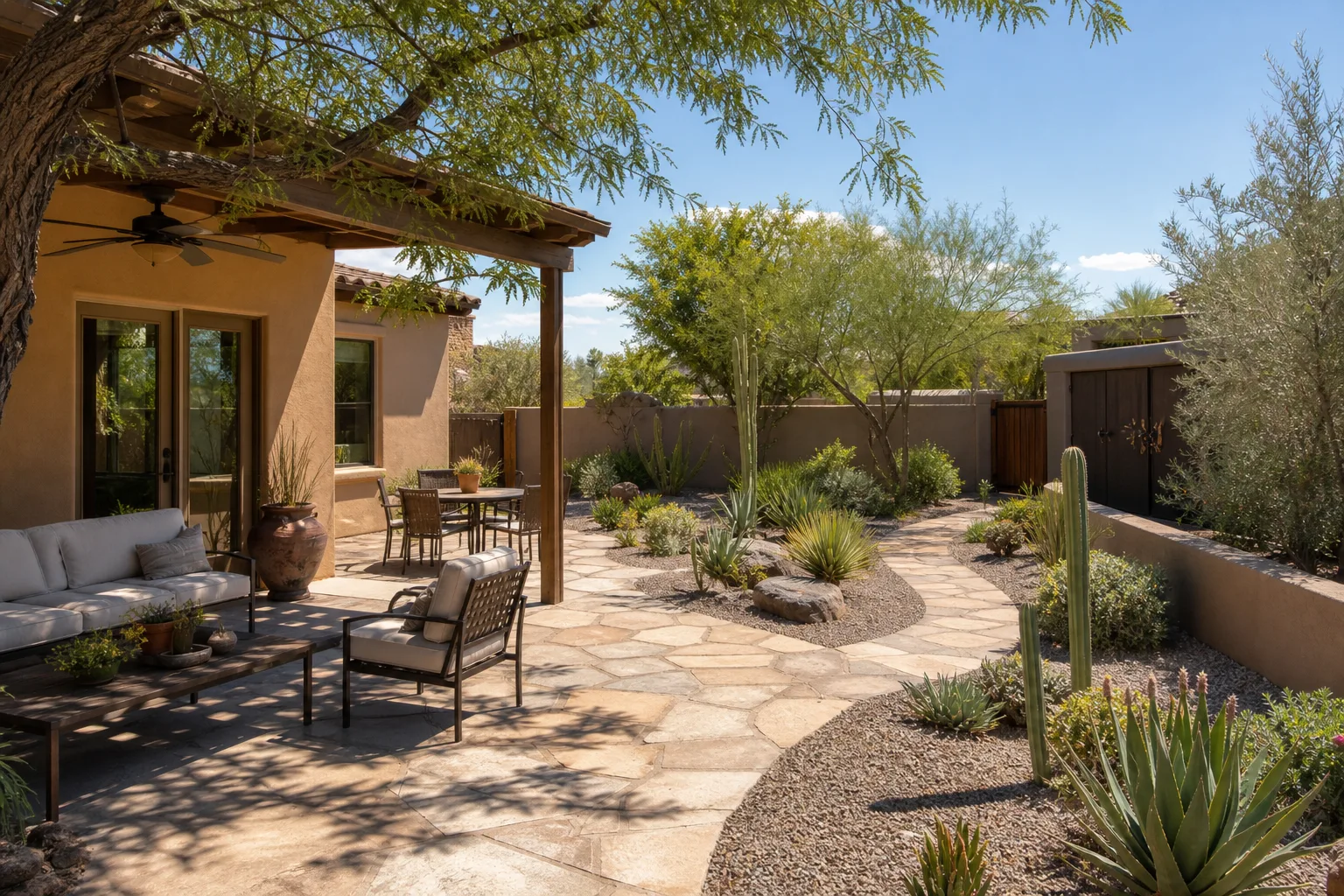
Plan backyard zones by deciding what each area needs to do before you pick finishes. Start with movement, shade, water access, seating, utility areas, planting areas, and maintenance paths. Then choose surfaces, plants, and furniture that support those jobs.
If you are working with a hot or dry yard, pair the zone plan with a low-water backyard layout, a real shade plan, and irrigation zones that make sense before you buy plants or hardscape. Your future self should not have to drag a chair around the yard like a sundial with cupholders.
Reader Problem
Backyards get expensive when the plan arrives after the purchases. A sofa ends up in full afternoon sun. A paver patio is built where nobody naturally walks. Plants go into a corner without water access. The grill lands too far from the kitchen. Gravel covers every empty space, then the yard feels hot, flat, and a little like the side yard at a dentist's office.
A simple zone plan helps you avoid those mistakes. It lets you decide where people move, sit, cook, cool off, garden, play, and maintain the yard before you commit to materials.
What To Know Before Starting
You do not need a formal landscape design to plan zones. You do need a clear picture of how the yard behaves.
Start by noticing five things:
- Sun and shade: Which areas are comfortable in the morning, afternoon, and evening?
- Movement: Where do people already walk from doors, gates, driveways, patios, pool areas, or side yards?
- Views: What do you want to look at, hide, frame, or avoid staring directly into?
- Water: Where are hose bibs, irrigation lines, drains, slopes, and low spots?
- Maintenance: Which areas need frequent access for trash bins, pool gear, tools, pets, or garden chores?
This pass is less glamorous than shopping for olive trees or lounge chairs. It is also the part that saves the most money. The yard does not need another cart full of hope. It needs a map.
Step 1: List The Jobs Your Backyard Has To Do
Write down the real jobs of the yard before you draw anything. Be plain about it.
Possible jobs might include:
- Eating outside with four to six people
- Sitting in shade after work
- Giving kids or dogs a durable play area
- Growing herbs or a few vegetables
- Moving from the house to the side gate without stepping through planting beds
- Keeping pool gear, tools, or bins out of the main view
- Creating one good-looking view from the kitchen window
- Cooling down a hot wall or reflective patio edge
Do not rank every dream equally. A yard that tries to be a restaurant patio, a resort pool deck, a sports field, a vegetable farm, and a meditation garden usually becomes none of those things particularly well. It becomes a group project where every idea got a vote and nobody was allowed to edit.
Pick the jobs that matter most for the way you actually live.
Step 2: Map Movement Before Materials
Paths are the skeleton of the yard. If the movement does not work, the pretty parts will constantly be in the way. This is how people end up tiptoeing through decorative gravel while carrying ribs, pool towels, or a bag of trash. Design should not require parkour.
Sketch the obvious routes first: back door to patio, patio to gate, gate to trash bins, house to pool equipment, driveway to side yard, kitchen to grill. These lines do not all need formal walkways, but they do need respect.
Once those routes are clear, you can decide where hardscape is actually needed. Some paths deserve pavers. Some only need compacted decomposed granite. Some can stay as a planted edge with stepping stones. The point is to avoid building a large patio in one place while everyone creates a dirt shortcut somewhere else.
If you are planning a low-water yard, this step matters even more. Gravel and decomposed granite can be useful, but they should support movement and maintenance. When they are used as default filler everywhere, the yard can start to feel hotter and less intentional, as if the design brief was "parking lot, but make it beige."
For surface decisions, compare the role of decomposed granite, pavers, concrete, mulch, and planting beds before letting one material take over the whole yard.
Step 3: Match Zones To Sun, Shade, And Water
A zone is only useful if it fits the conditions around it.
Dining zones usually need shade, room to pull out chairs, and a practical route from the kitchen. Lounge zones can be more flexible, but they still need comfort during the hours you will use them. Planting zones should match water access, sun exposure, and maintenance level. A kids or pet zone needs durability before delicacy.
This is where many backyards go sideways. A beautiful seating area in full western sun may photograph nicely and still be useless for most of the year. A garden bed tucked into the wrong irrigation zone may become a small daily guilt machine. A grill area without prep space becomes an obstacle course with tongs.
Let the yard's conditions tell you what belongs where.
For hot-climate yards, shade should usually be treated as infrastructure, not decoration. That might mean a tree, sail, pergola, covered patio, wall placement, or simply moving the seating zone to a place that already works better. Shade is not a vibe. Shade is permission to use the yard.
Water should be planned with the same seriousness. A useful zone map should line up with drip irrigation basics, plant groupings, and the parts of the yard that deserve more comfort or attention.
Step 4: Choose Surfaces For The Way Each Zone Gets Used
Once the zones are clear, surfaces become easier to choose. This is the moment to decide what deserves a hard surface, what can stay planted, and what should absolutely not become a mystery patch of rocks everyone pretends is intentional.
A dining zone needs a stable surface for chairs and table legs. A fire pit zone needs safe clearances and a material that handles heat and traffic. A garden path may only need compacted fines or stepping stones. A dog path may need something tougher than a delicate planting bed. A quiet chair under a tree may not need a full patio at all.
Use materials where they solve a job:
- Pavers or concrete for stable furniture and high-traffic areas
- Decomposed granite for informal paths and flexible low-water surfaces
- Mulch or planting beds where cooling and soil health matter more than foot traffic
- Gravel where drainage, texture, or utility makes sense
- Turf alternatives only where the use case justifies the water, heat, maintenance, or cost tradeoff
The best material is not always the most expensive one. It is the one that fits the zone's job. A beautiful paver is still wrong if it turns the only natural path into a detour. A humble mulch path is still right if it keeps people off the plants and out of the mud.
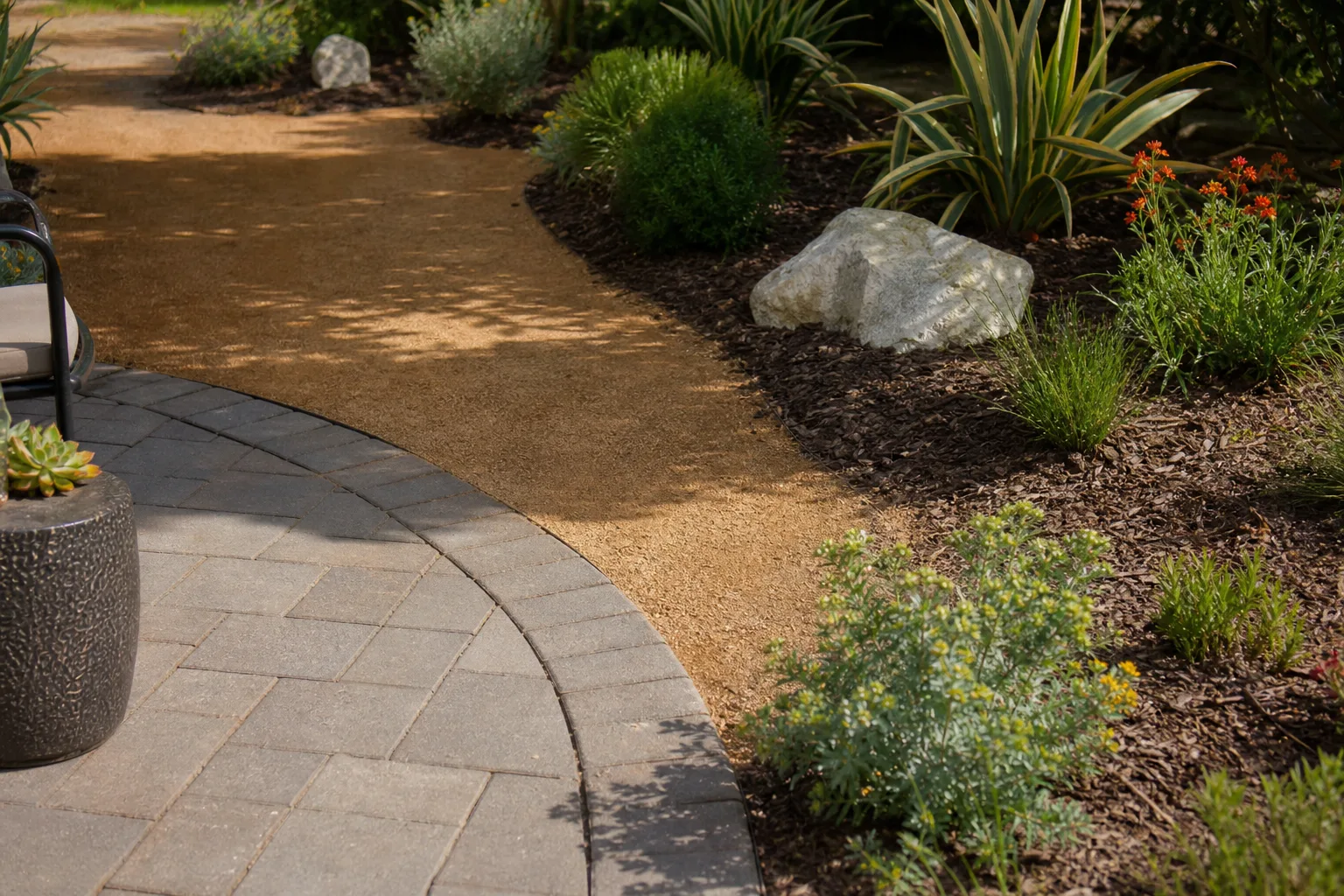
If the yard is small, this is where restraint matters most. A few clear zones usually work better than trying to squeeze in every idea at once, especially when hardscape choices create permanent traffic patterns.
Step 5: Add Plants And Furniture Last
Plants and furniture are easier to choose after the zones are settled.
A seating zone tells you whether you need a small bistro table, a sectional, a pair of chairs, or nothing more than a bench. A privacy zone tells you whether you need height, density, or just a better focal point. A planting zone tells you whether the plant palette needs to handle reflected heat, part shade, foot traffic, or low water.
This order also keeps you from buying the outdoor version of impulse furniture. The chair that looks great online may not survive the sun angle, fit the path, or make sense with the rest of the yard. Outdoor furniture is very good at looking confident in product photos. Your yard may have follow-up questions.
Let the plan shop for you.
For planting areas near patios, use the same zone logic: choose plants for heat, reflected light, water needs, and how close people will sit or walk. The plant palette should support the outdoor room rather than making the room harder to use.
Common Mistakes
Building One Oversized Patio
A large hardscape area can be useful, but only if it serves the way people gather and move. Otherwise it can become a hot, empty pad with furniture floating in the middle.
Forgetting The Awkward Jobs
Trash bins, hoses, pool tools, storage, side gates, and maintenance access are not glamorous. Ignoring them usually makes the finished yard harder to live with.
Treating Shade As A Finishing Touch
In warm climates, shade often decides whether a zone gets used. Plan it early.
Using Gravel As A Plan
Gravel can be useful. It is not a substitute for layout. Without zones, edges, shade, plants, and movement, gravel can make a yard feel unfinished. Gravel is a material, not a personality.
Buying Plants Before Solving Water
Planting zones should match irrigation, hose access, drainage, and exposure. A beautiful plant in the wrong water zone is just a delayed replacement cost.
Making Every Area Equally Important
A small yard especially needs priorities. Pick the zones that support real use, then let the rest of the design support those zones.