
Pool filters have a way of becoming invisible until the pool starts looking dull, the return flow weakens, or the pressure gauge starts behaving like it knows something you do not.
The filter is not the glamorous part of pool ownership. It is also not optional. It is the part of the system that helps catch the fine stuff your skimmer, baskets, brush, and cleaner do not fully solve. When it is neglected, a pool can look dirty even after the robot runs, test results can become harder to interpret, and storm cleanup can take longer than it should.
This guide is for homeowners who want to understand the basics of pool filter cleaning without pretending every filter works the same way. It is product-neutral. Pool equipment manuals, filter manufacturer instructions, pool surface guidance, chemical labels, safety data sheets, local requirements, and qualified pool professionals still control what you should do for your exact pool.
The Direct Answer
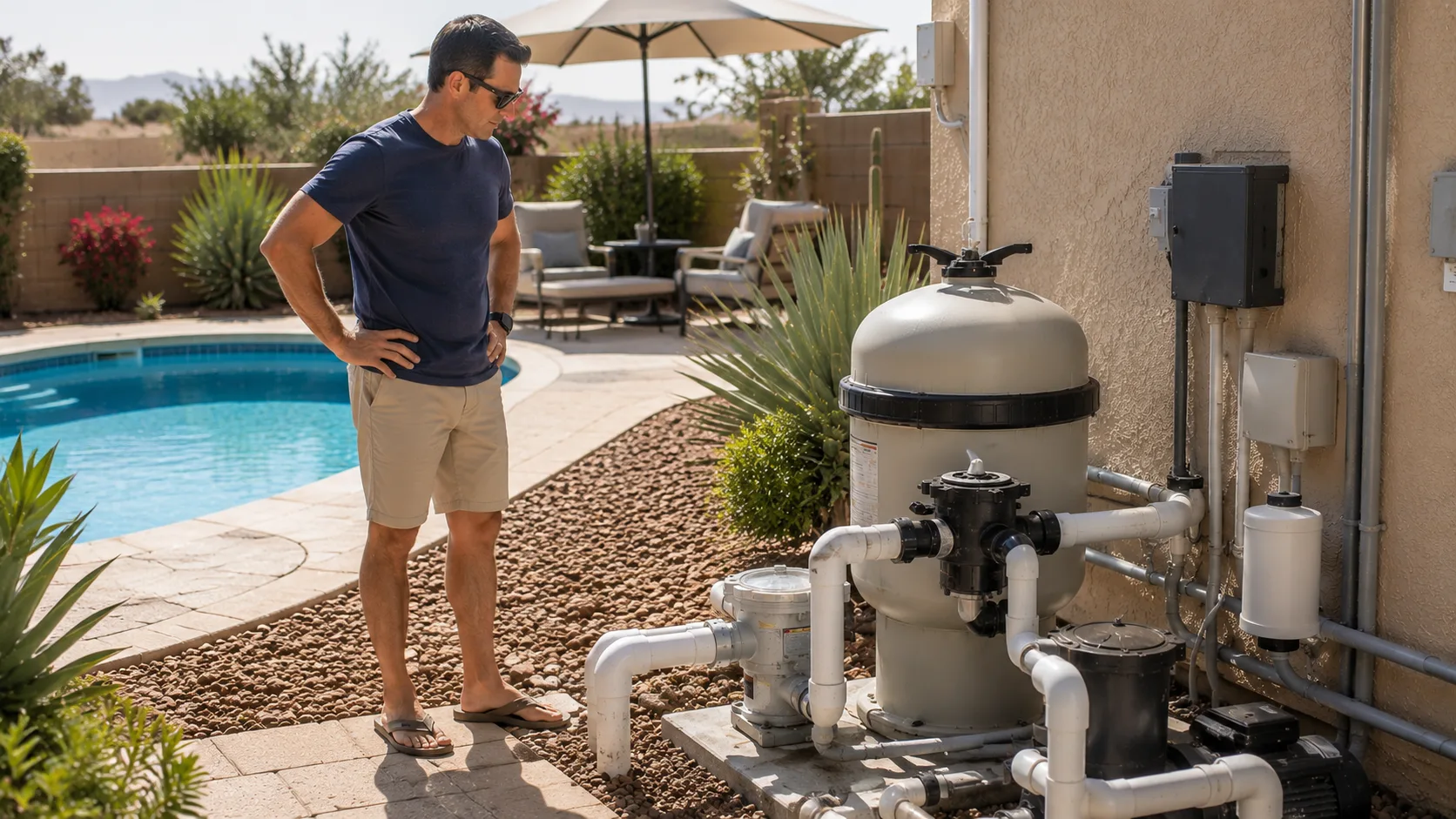
Clean or service your pool filter when your specific filter type, pressure behavior, water clarity, flow, debris load, and equipment manual say it is time. Do not clean only because the calendar says Saturday, and do not ignore a filter because the pool still looks blue from the kitchen window.
A homeowner-friendly filter routine looks like this:
- Know whether you have a cartridge, sand, or DE filter.
- Record the clean starting pressure after the filter has been properly serviced.
- Watch pressure, return flow, water clarity, and cleaner performance.
- Empty skimmer, pump, and cleaner baskets before blaming the filter.
- Clean or backwash only according to the filter type and equipment instructions.
- Avoid aggressive cleaning that damages cartridges, grids, laterals, seals, clamps, or plumbing.
- Call a pool professional if pressure, flow, leaks, cloudy water, algae, DE handling, equipment opening, or reassembly does not make sense.
If the filter question came up after wind or a messy yard day, start with Pool Care After a Dust Storm. If the pool still looks dirty after automation, Why Your Pool Still Looks Dirty After the Robot Runs explains why the filter is only one part of the system.
First, Know What Kind Of Filter You Have
Before cleaning anything, identify the filter type.
Most residential pool filters fall into three broad categories:
- Cartridge filters.
- Sand filters.
- DE filters.
Those are not interchangeable maintenance routines. A cartridge filter usually involves removing and rinsing cartridge elements according to the manual. A sand filter commonly uses backwashing and occasional deeper service, depending on the system. A DE filter has its own backwash, grid, powder, safety, and handling requirements.
If you do not know the filter type, stop and identify it before opening the system. Look for equipment labels, owner manuals, builder notes, service handoff documents, or a qualified pool professional. A mystery filter is not an invitation to start unscrewing things.
Pressure Is A Clue, Not A Universal Rule
The pressure gauge can be useful, but it only means something if you know your pool's normal.
After a filter is properly cleaned or serviced, note the clean starting pressure while the pump is running normally. That number gives you a baseline. Many systems need filter attention when pressure rises a certain amount above that clean baseline, but the correct threshold depends on the equipment and manufacturer guidance.
Pressure can also be misleading.
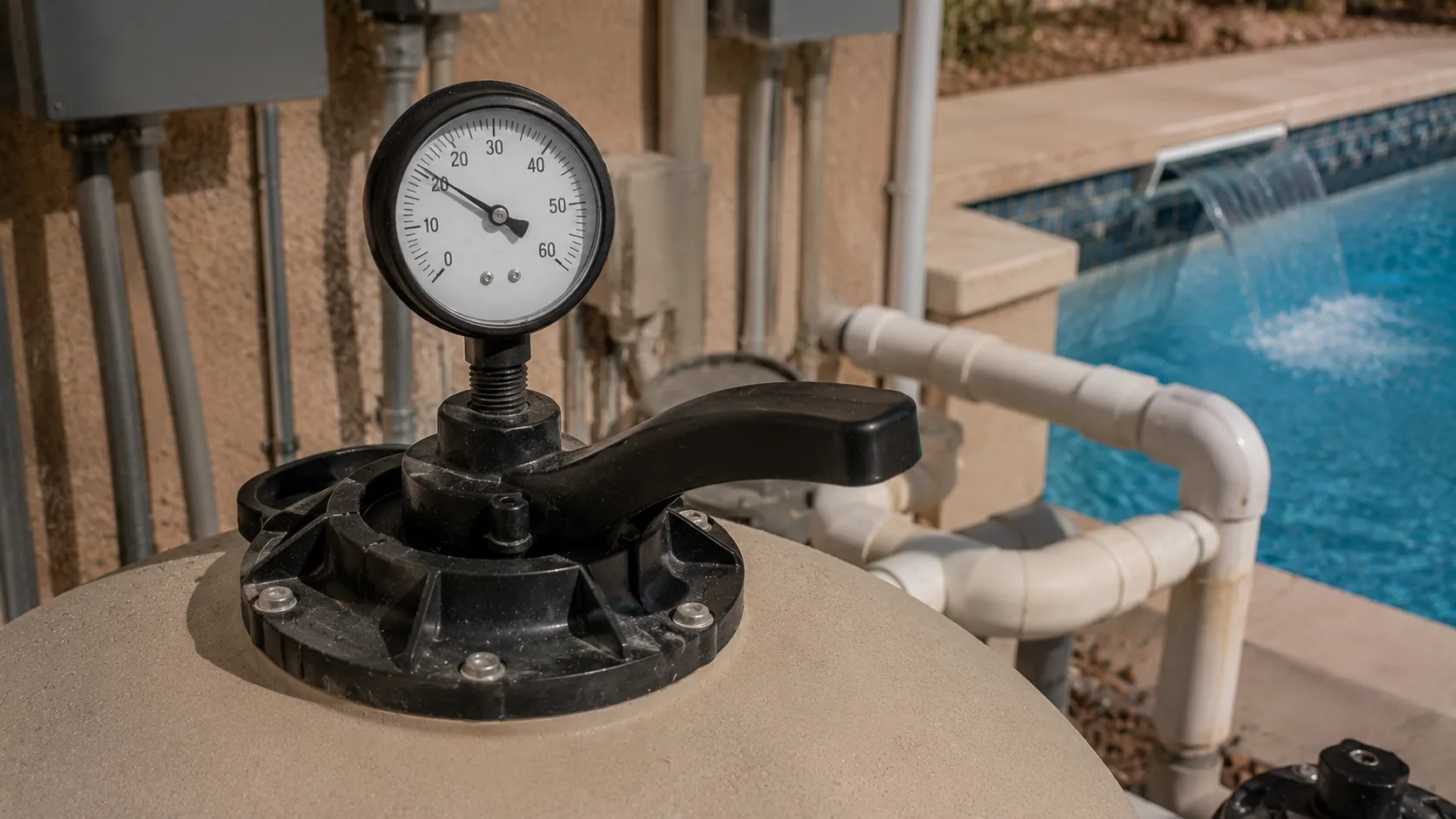
High pressure may point toward a dirty filter, blocked return path, closed valve, or other flow restriction. Low pressure may point toward a suction-side problem, low water level, clogged skimmer basket, clogged pump basket, air leak, pump issue, or gauge problem. A broken or stuck gauge can make the whole conversation useless.
Use pressure as one clue among several:
- Return flow feels weaker than normal.
- Water takes longer to clear after brushing or storms.
- The robot or cleaner behaves differently.
- The pump basket does not look right.
- Skimmer baskets fill quickly.
- The water looks dull, dusty, or cloudy.
- The gauge reading changes from your normal pattern.
The pressure gauge is helpful. It is not a fortune teller.
Do The Simple Checks First
Before opening or cleaning the filter, check the easy things:
- Is the pool water level high enough for proper skimming?
- Are skimmer baskets empty?
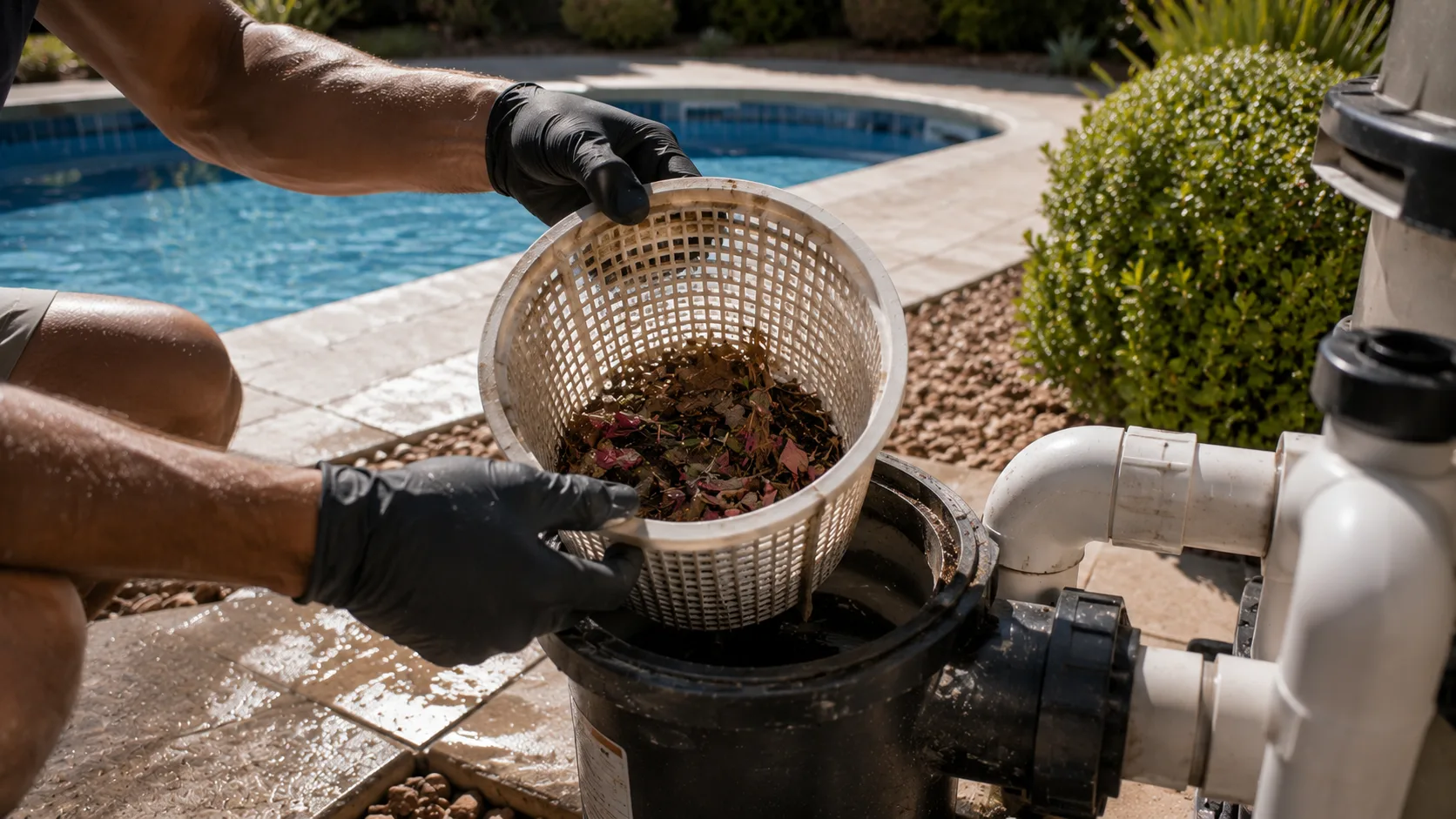
- Is the pump basket clean?
- Is the cleaner basket or debris canister loaded?
- Are return jets moving water normally?
- Are valves in their normal position?
- Did a storm, party, landscaping project, or heavy debris load happen recently?
- Does the pump sound normal?
A packed skimmer basket can make the system look worse than it is. A cleaner basket full of leaves can make the robot seem lazy. A pump basket full of debris can change flow before the filter is even the main issue.
The filter matters, but it should not become the scapegoat for every basket you forgot to empty.
Cartridge Filter Basics
Cartridge filters are common in residential pools because they can filter well without routine backwashing. They also need careful cleaning.
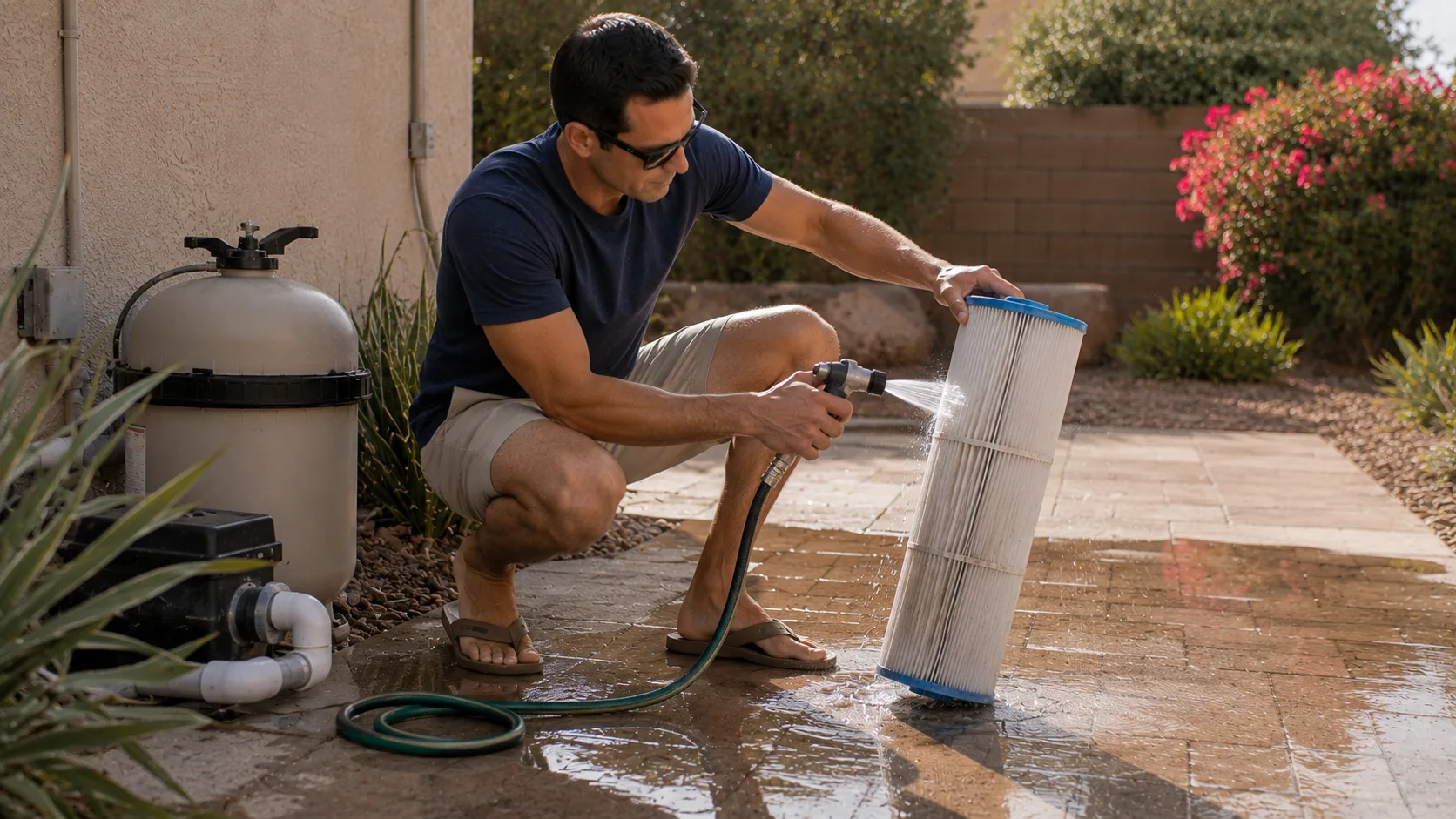
A conservative cartridge routine usually means:
- Turn off the pump and follow the equipment manual before opening anything.
- Relieve pressure only as the manual directs.
- Remove the cartridge elements carefully.
- Rinse from top to bottom and between pleats using the cleaning method the manufacturer allows.
- Inspect for tears, collapsed pleats, cracked end caps, broken bands, or damaged cores.
- Clean the filter tank, O-ring, and sealing surfaces only as directed.
- Reassemble correctly before restarting the system.
- Watch for leaks, abnormal pressure, or poor flow after restart.
Do not blast a cartridge with aggressive pressure if the manual warns against it. Do not use random cleaners, acids, degreasers, or household chemicals unless the filter instructions specifically allow them. Damaging the cartridge can make filtration worse, not better.
The goal is not to punish the cartridge. The goal is to remove debris while keeping the filter media intact.
Sand Filter Basics
Sand filters usually rely on backwashing to flush out trapped debris. The exact valve positions, timing, rinse step, and restart sequence depend on the filter and multiport valve instructions.
Homeowners should be especially careful here because a wrong valve move or skipped step can create new problems.
Before backwashing:
- Read the filter and valve instructions.
- Turn the pump off before changing valve positions if the manual requires it.
- Know where backwash water will discharge.
- Follow local rules about discharge water.
- Watch pressure and flow after the system returns to normal operation.
Sand filters may also need deeper professional service over time if the sand is channeled, calcified, contaminated, or no longer performing correctly. Backwashing is routine maintenance. It is not a cure for every filtration problem.
DE Filter Basics
DE filters can be effective, but they deserve extra respect. They involve filter grids or elements and diatomaceous earth powder, and the cleaning, backwashing, recharging, and disposal requirements are equipment-specific.
If you have a DE filter and you are not comfortable with the manual, this is a good place to use a professional handoff.
At minimum:
- Follow the DE filter manual exactly.
- Do not run the filter without the correct DE charge if the system requires it.
- Use appropriate protection and handling for DE powder.
- Follow local rules for backwash or waste discharge.
- Stop if grids, manifolds, clamps, seals, pressure behavior, or reassembly are confusing.
DE filter work can drift from homeowner maintenance into "please do not improvise around pressurized equipment" very quickly.
How Dust Storms And Yard Debris Change The Filter Load
A normal week and a dust-storm week are not the same week.
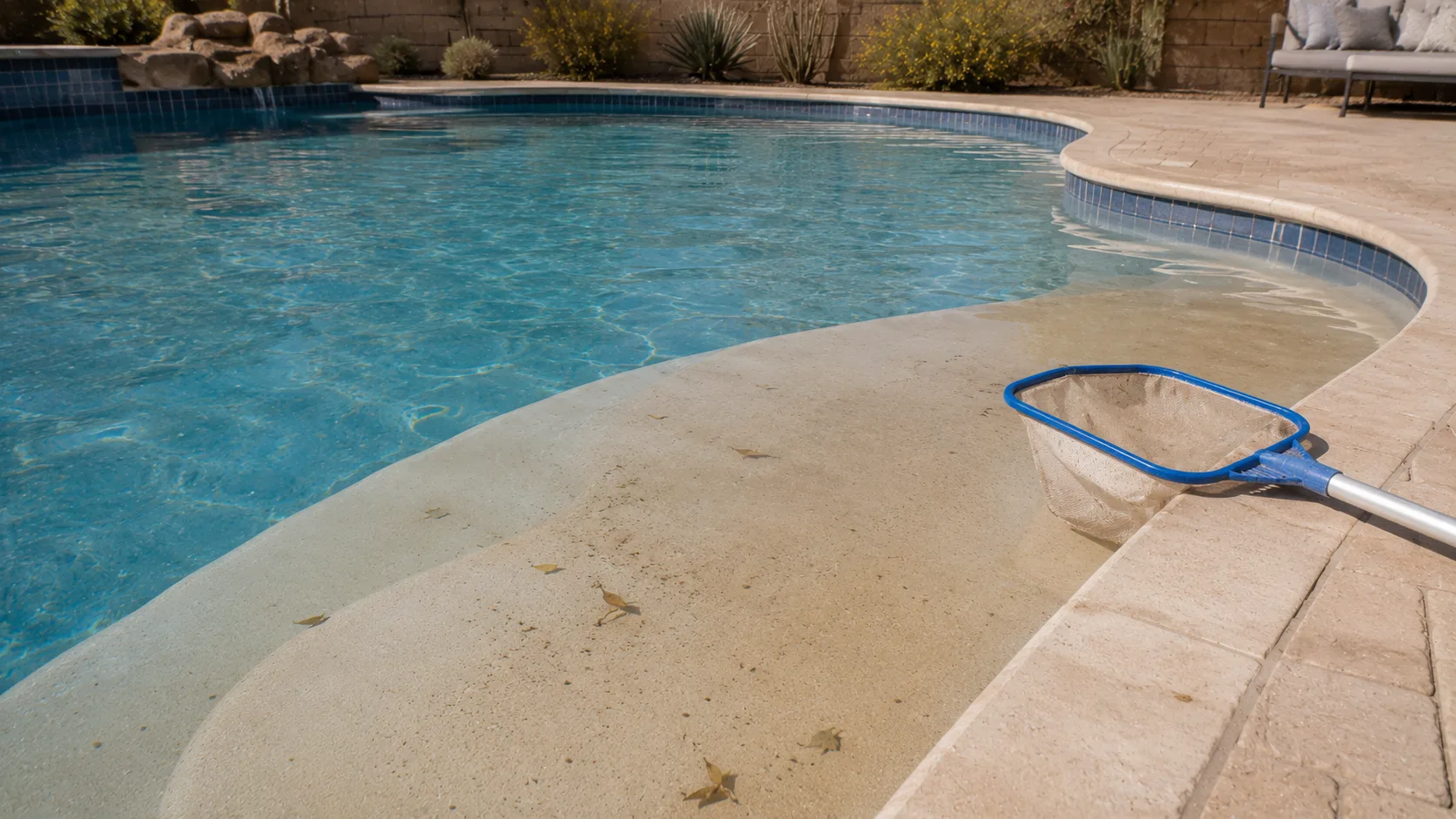
Dry-climate pools can collect fine dust, pollen, roof runoff, leaves, flowers, seed pods, bugs, and patio grit in waves. Some of that material floats. Some settles. Some gets brushed into suspension. Some ends up in baskets. Some reaches the filter.
After storms or heavy debris:
- Skim and remove large debris first.
- Empty baskets before running the system hard.
- Brush steps, benches, shelves, and corners.
- Let circulation and filtration help catch fine material.
- Watch pressure and return flow.
- Clean or backwash only according to the filter's cues and instructions.
Do not assume the filter needs immediate cleaning every time dust appears. Also do not ignore the filter after repeated brushing, storm cleanup, or cloudy water. The pool is a system, and dust makes every part of that system work harder.
Why Over-Cleaning Can Be A Problem
It is possible to clean a filter too aggressively or too often.
Over-cleaning can:
- Damage cartridge pleats.
- Wear out seals or O-rings.
- Lead to poor reassembly.
- Waste water through unnecessary backwashing.
- Create opportunities for leaks.
- Encourage homeowners to open equipment they do not fully understand.
- Distract from water chemistry, circulation, algae, or surface problems.
Some filters also perform differently when they are perfectly clean versus lightly loaded, depending on the system. That does not mean you should let a filter get dirty forever. It means filter care should follow pressure behavior, flow, water condition, and manufacturer guidance instead of anxiety.
The pool does not need constant tinkering. It needs a repeatable routine.
What The Robot Does Not Solve
A robotic pool cleaner can collect floor debris, leaves, dust, bugs, and grit. It can make the pool look dramatically better.
It does not clean the pool's main filter.
If the pool still looks dull after the robot runs, the cleaner may not be the problem. The issue may be circulation, filtration, dirty baskets, weak flow, fine dust, algae, water chemistry, waterline buildup, or a dead zone.
Use the robot as a helper, not as permission to ignore the equipment pad.
Chemical Safety Still Matters
Filter cleaning is mostly physical maintenance, but chemicals still sit nearby in many pool setups.
Keep the safety line simple:
- Do not mix pool chemicals.
- Keep chemical containers dry, labeled, closed, and separated.
- Follow product labels and safety data sheets.
- Do not store chemicals near open equipment work areas where water or debris can contaminate them.
- Do not use random household cleaners inside filter equipment.
- Stop if chemicals are wet, damaged, unlabeled, mixed, or giving off strong odor.
If your pool looks cloudy, green, oily, foamy, or irritating, do not treat filter cleaning as the whole answer. Test the water, follow labels, and call a professional when the result or response is not clear.
For the water side of the routine, use A Simple Pool Testing Routine for Homeowners.
A Simple Homeowner Filter Check Routine
Use this as a calm weekly or post-storm rhythm:
- Look at the water: clear, dull, dusty, cloudy, green, or oily?
- Empty skimmer baskets.
- Empty the pump basket according to the manual.
- Empty cleaner baskets or canisters.
- Check return flow.
- Note filter pressure while the pump is running normally.
- Compare pressure to your clean baseline.
- Brush the pool where dust or film collects.
- Test sanitizer and pH.
- Clean or backwash the filter only when the filter type and cues call for it.
- Record what you did.
That last step matters. A filter log helps you notice whether the pressure is rising faster than usual, whether storms are loading the system, or whether the same cloudy-water pattern keeps returning after every cleanup.
When To Call A Pool Professional
Call a qualified pool professional if:
- You do not know what filter type you have.
- You cannot find or understand the equipment manual.
- The filter clamp, band, lid, gauge, valve, plumbing, or pressure-relief process is confusing.
- Pressure is very high, very low, or behaving strangely.
- Return flow is weak after baskets are clean.
- Water remains cloudy after normal filtration and testing.
- Algae appears or keeps returning.
- You see leaks, cracks, damaged parts, loose plumbing, or equipment-pad problems.
- You are unsure how to clean, backwash, recharge, or reassemble the filter safely.
- DE handling, disposal, or recharging is unfamiliar.
- Opening the filter would put you near electrical, plumbing, pressure, or chemical risks you do not understand.
There is no prize for turning filter cleaning into a repair bill. A professional reset can be a smart part of a homeowner-maintenance system.
The Bottom Line
Pool filter care is not about scrubbing equipment every time the pool annoys you. It is about knowing your filter type, watching pressure and flow, emptying baskets, responding to dust and debris loads, and cleaning or backwashing according to the system you actually own.
The filter is one part of the whole rhythm: skim, brush, test, circulate, clean baskets, watch pressure, and call for help when the clues stop making sense.
That is how filter maintenance becomes less mysterious and a lot less dramatic.