
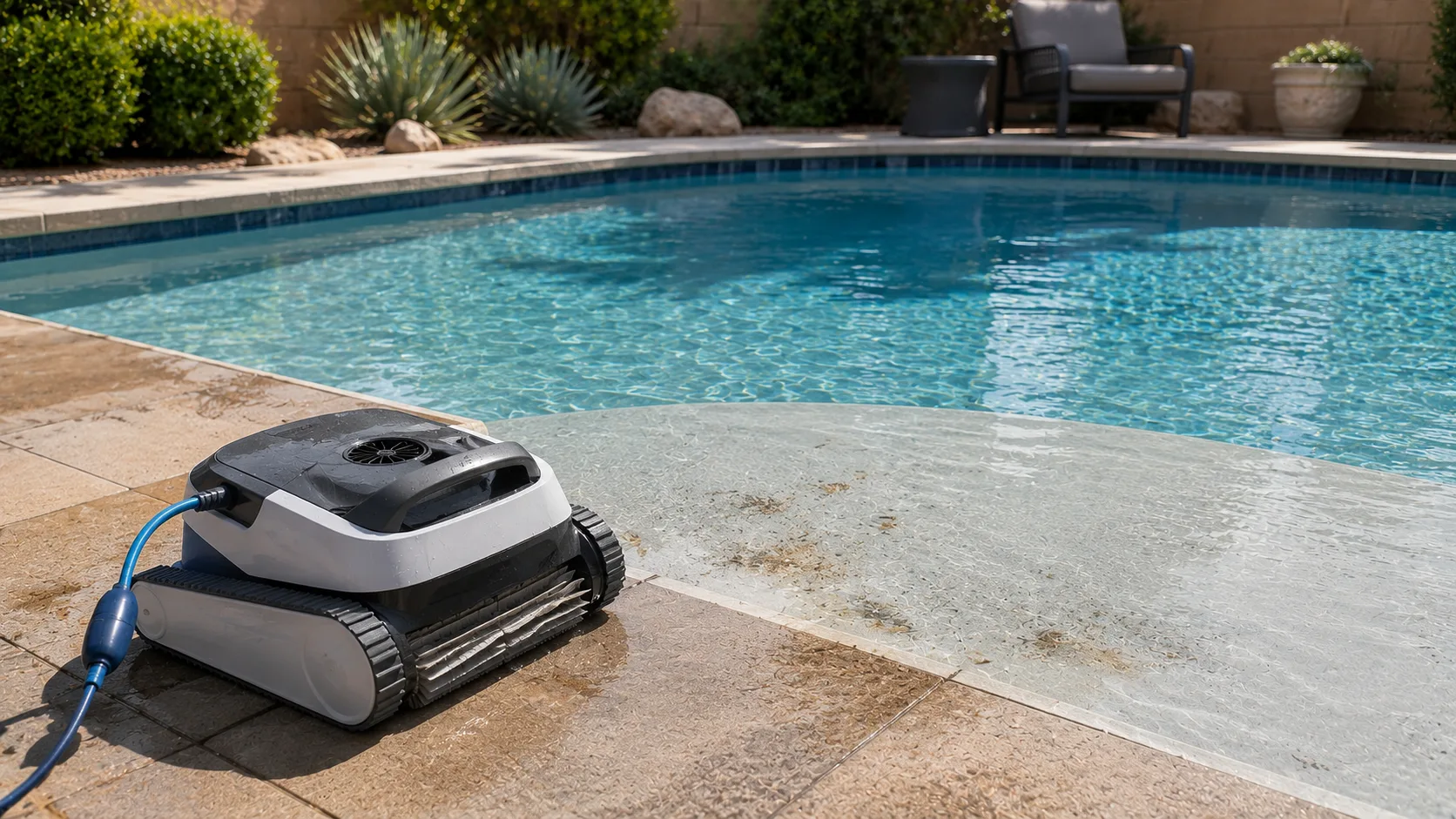
A robotic pool cleaner can make pool ownership feel wildly more civilized. You drop it in, let it work, and the pool looks better with far less manual effort. Then one afternoon you look down and the steps still have dust, the corners still look dull, the waterline still has a ring, and the floor somehow looks dirty five minutes after the robot finished.
That does not always mean the robot failed. It may mean the pool is asking for a different kind of maintenance.
This guide is for homeowners trying to understand why a pool can still look dirty after a robotic cleaner runs. It is product-neutral. It does not recommend a specific cleaner, brand, model, filter basket, chemical, store, or service provider. Robotic cleaner manuals, pool equipment manuals, pool chemical labels, surface instructions, safety data sheets, and qualified pool professionals still control what you should do for your exact pool.
The Direct Answer
If your pool still looks dirty after the robot runs, check these before blaming the machine:
- Fine dust may be resettling after the cleaner stirs it up.
- Steps, benches, ledges, corners, and waterline areas may need brushing.
- The cleaner basket, filter canister, or internal filter may be full or loaded with fine debris.
- The pool filter or circulation system may need attention.
- Surface debris may keep falling in faster than the cleaner can remove it.
- Dead zones may be keeping dirt in areas the cleaner does not reach well.
- Water chemistry or algae may be making the pool look dirty even after visible debris is removed.
- The problem may be scale, staining, plaster dust, pollen, or metal residue instead of ordinary dirt.
If the dirty look started after a wind event, begin with Pool Care After a Dust Storm. If the issue is a ring at the edge, use How to Deal With Pool Waterline Buildup Without Damaging the Surface. If you are taking over routine maintenance more broadly, start with Pool Care Without the Pool Guy.
A Robot Is Help, Not A Whole Pool-Care System
A robotic cleaner can reduce physical cleaning. It can pick up leaves, grit, bugs, flower debris, and some fine sediment depending on the pool, cleaner, debris type, filter setup, and maintenance condition.
It does not replace:
- Water testing.
- Chemical safety.
- Brushing.
- Skimming.
- Emptying baskets.
- Pool filtration.
- Waterline care.
- Equipment inspection.
- Surface-specific diagnosis.
- Professional help when the pool is outside routine homeowner care.
The mental shift is simple: the robot is part of the routine, not the routine.
Fine Dust Can Resettle
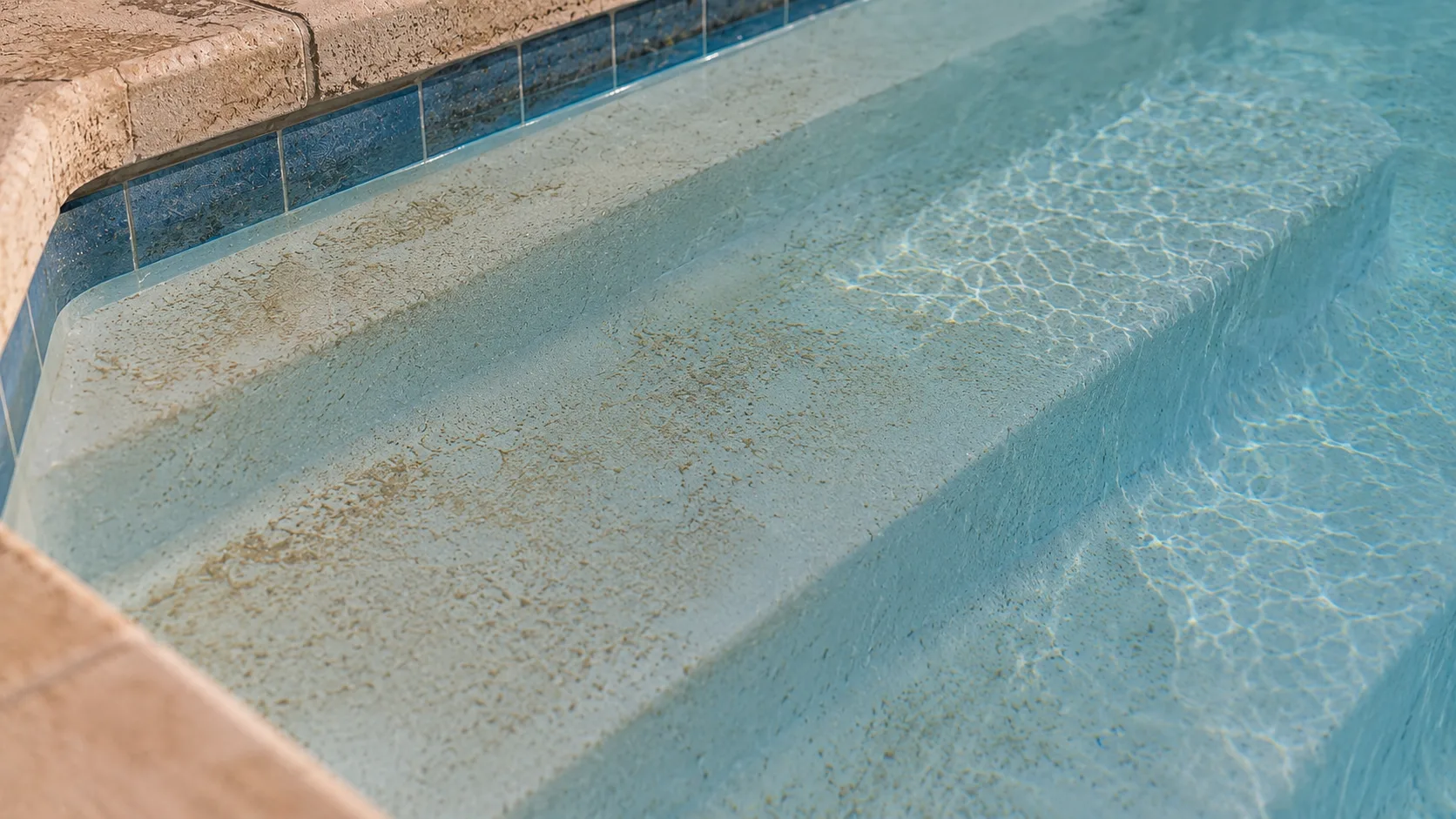
Dry-climate pools are especially good at humbling a cleaner. Fine dust can settle on steps, ledges, and the floor. A robot may pick up some of it, stir some of it into the water, and leave some behind in low-flow areas.
After the robot runs, the pool may look clean for a moment and then dusty again as fine material resettles. That is common after wind, dust storms, nearby yard work, roof runoff, pollen, or repeated debris waves from nearby plants.
The answer is usually a sequence:
- Remove large debris.
- Brush steps, ledges, corners, and waterline areas.
- Run circulation.
- Let filtration help catch suspended material.
- Run the cleaner again if appropriate.
- Clean baskets and cleaner filters.
- Watch whether the dust keeps returning.
That sequence matters more than one heroic robot cycle.
The Cleaner May Be Missing Pool Geometry
Robotic cleaners do not experience a pool the way a homeowner does. They navigate geometry, traction, brushes, tracks, wheels, cables, suction paths, programming, and debris load.
Areas that often need extra attention include:
- Steps.
- Benches.
- Baja shelves.
- Corners.
- Under ladders or rails.
- Behind curves.
- Deep-to-shallow transitions.
- Waterline areas.
- Places where returns do not move water well.
- Spots where debris always seems to collect.
If the same places look dirty every week, map them. A recurring dirty spot is a clue. It may need brushing, better circulation, a different cleaning sequence, or professional diagnosis.
Check The Basket Before You Judge The Result
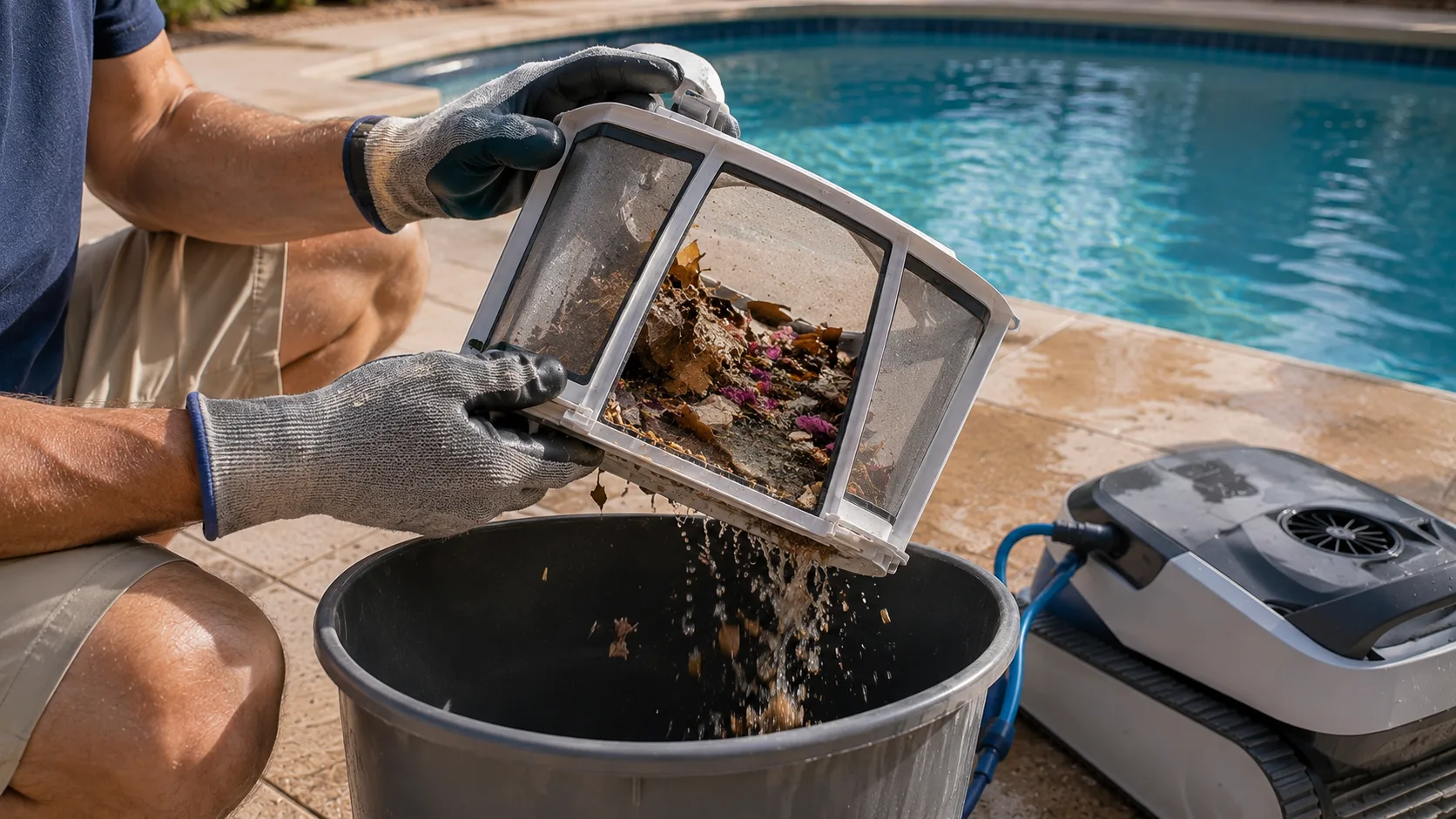
A robot with a packed basket is not the same robot.
Cleaner baskets, filter canisters, and internal filters can load up with leaves, flowers, bugs, hair, fine dust, and small debris. If they are full, clogged, oily, damaged, or poorly seated, performance can drop.
Before deciding the cleaner is the problem:
- Turn equipment off or remove the cleaner according to its manual.
- Empty the cleaner basket or filter canister.
- Rinse or clean the filter element only as the manual allows.
- Check for stuck leaves, hair, toys, seed pods, small stones, or bracts.
- Make sure the basket or filter is reinstalled correctly.
- Look for damaged parts, torn filter material, or blocked openings.
Do not improvise with the cleaner. Follow the manual for your exact equipment.
Your Pool Filter Still Matters
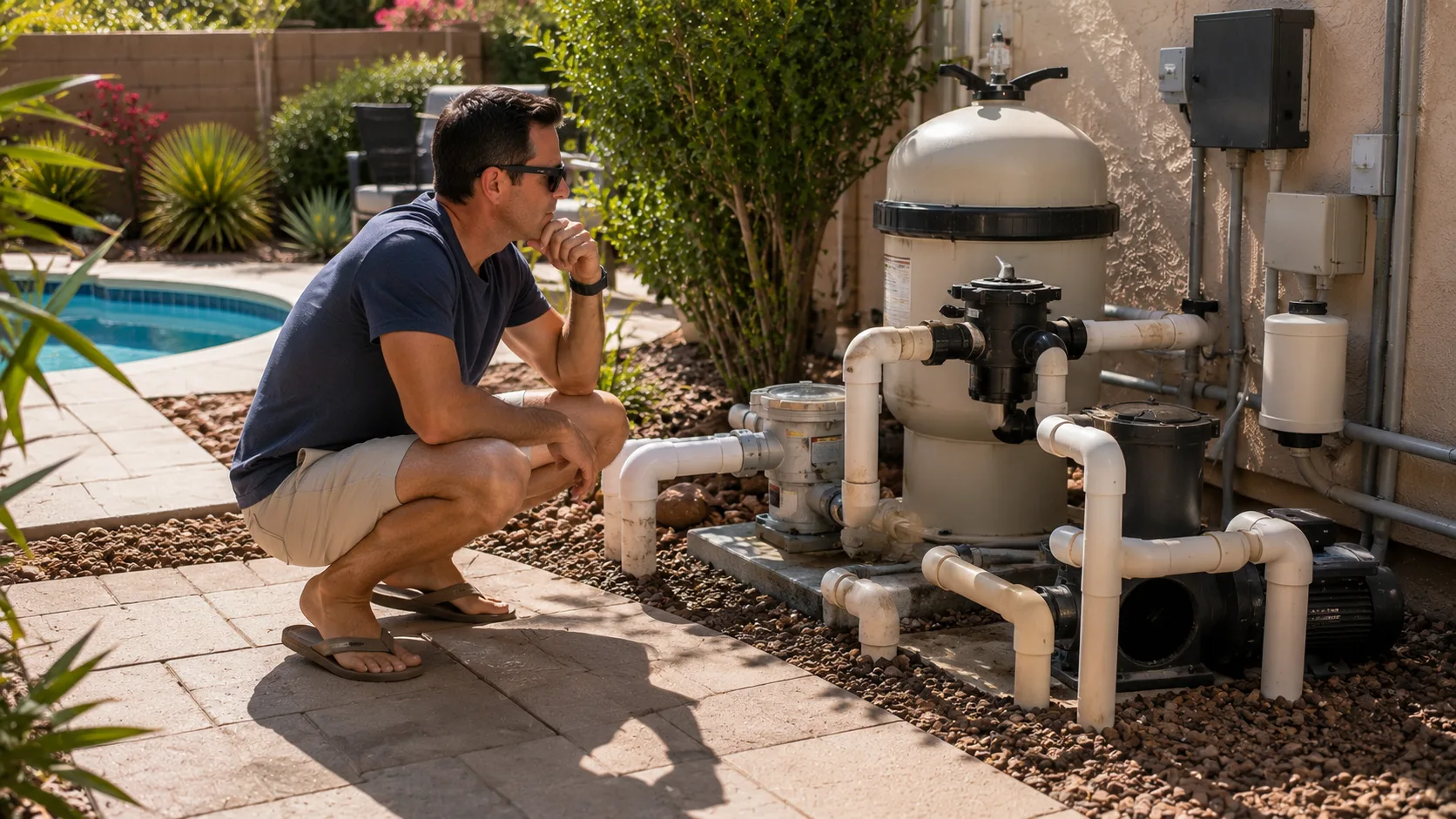
A robotic cleaner can collect debris inside itself, but the pool's circulation and filtration system still matters.
If the water looks dull, hazy, dusty, or cloudy after the robot runs, the issue may be bigger than the cleaner. The pool filter, pump basket, skimmer basket, water flow, runtime, filter pressure behavior, or water chemistry may need attention.
Watch for:
- Weak return flow.
- A pressure gauge behaving differently than normal.
- A pump basket that is not clean.
- Skimmer baskets filling quickly.
- Cloudy water that does not clear.
- Dust returning after brushing and filtration.
- Cleaner performance changing after storms or heavy debris loads.
Filter guidance depends on filter type and equipment. Cartridge, sand, and DE systems have different maintenance expectations. Follow the equipment manual and call a pro if the pressure, flow, or cleaning sequence does not make sense.
Brushing Still Earns Its Keep
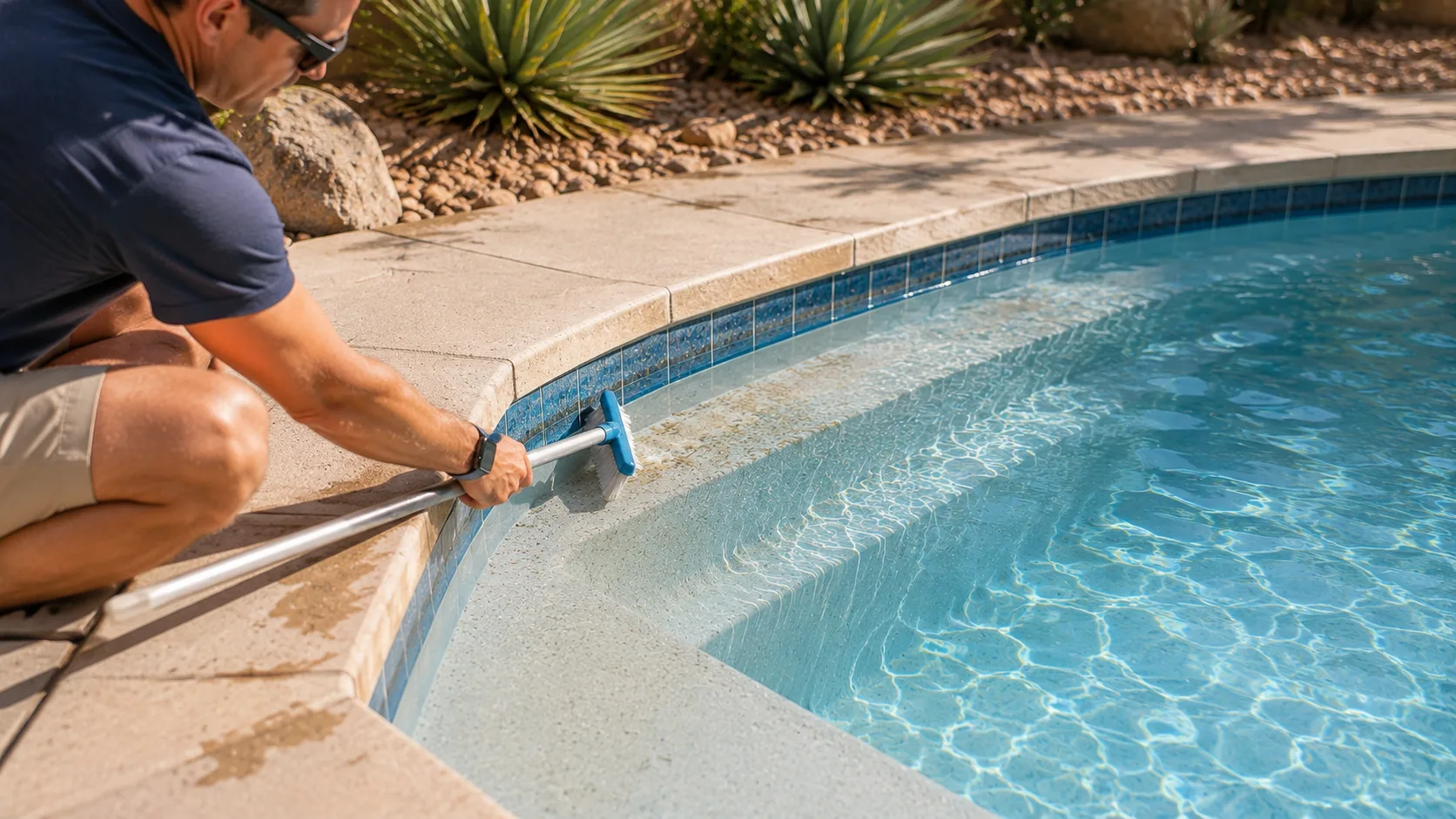
Brushing is the part of pool care that automation tempts people to skip.
That is a mistake.
Brushes move dust, film, and early buildup out of places where a cleaner may not grip or travel well. Brushing can help direct material toward circulation, reduce waterline neglect, and reveal whether a dirty-looking area is dust, algae, scale, staining, or surface trouble.
Pay attention to:
- Steps and benches.
- Corners.
- The waterline.
- Behind ladders.
- Places where the robot turns around.
- Areas with rough texture or buildup.
- Shaded or low-circulation spots.
Use the right brush for your pool surface. If you do not know what your surface allows, check the surface guidance before using aggressive tools.
Sometimes The Problem Is Not Dirt
Not every dirty-looking pool problem is removable debris.
The pool may be showing:
- Algae.
- Pollen.
- Calcium scale.
- Waterline buildup.
- Metal staining.
- Plaster dust.
- Surface deterioration.
- Poor water balance.
- Cloudiness from chemistry or filtration problems.
A robot cannot fix those by driving over them. If the pool looks dirty after the floor is physically clean, shift from cleaner blame to diagnosis.
That starts with testing. A Simple Pool Testing Routine for Homeowners explains how to slow down, read the result, log it, and avoid guessing with chemicals.
When To Call A Pro
Call a qualified pool professional if:
- The pool remains cloudy after physical cleaning and normal filtration.
- Algae appears or keeps returning.
- The same stains or scale keep showing up.
- The cleaner repeatedly gets stuck, flips, misses large areas, or behaves strangely.
- Filter pressure, flow, or equipment behavior is confusing.
- The pool surface looks etched, pitted, rough, discolored, or damaged.
- You are unsure what chemicals were added.
- You suspect electrical, plumbing, pump, filter, leak, surface, or equipment problems.
- The problem requires repair, draining, acid treatment, blasting, sanding, or aggressive surface work.
The goal is not to replace every professional visit with a robot. The goal is to know when the pool is asking for routine cleaning and when it is asking for actual diagnosis.
The Bottom Line
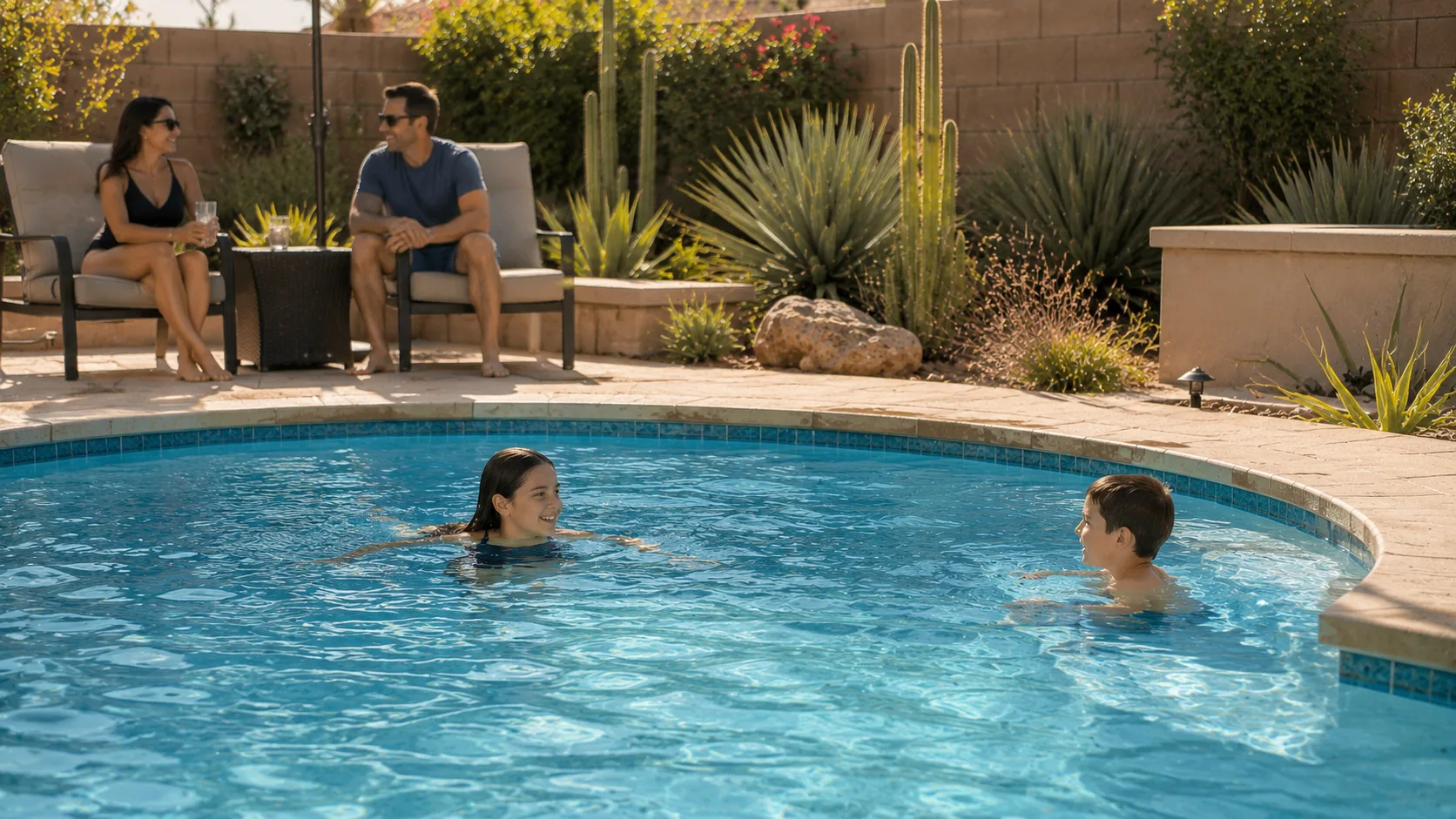
A robotic pool cleaner is a useful helper, not a magic pool employee. If the pool still looks dirty after it runs, look at the whole system: debris source, brushing, dead zones, baskets, filter behavior, circulation, waterline buildup, testing, and surface condition.
The best pool-care routine is not "run the robot and hope." It is remove debris, brush the places automation misses, keep baskets and filters clean, test the water, and call for help when the problem stops being routine.