
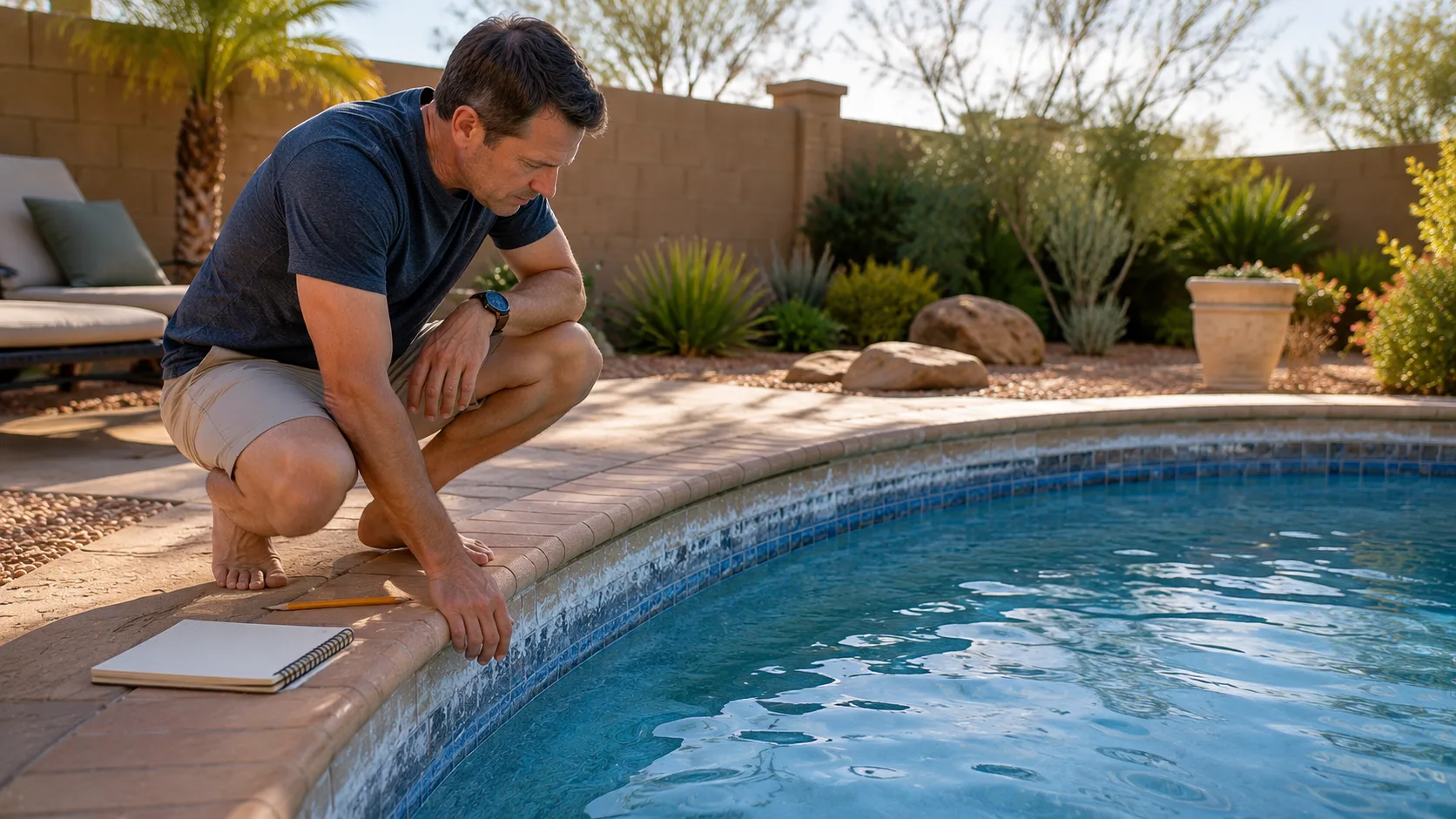
Pool waterline buildup is one of those problems that looks simple until you actually stand over it with a brush. Sometimes it is oily residue from sunscreen and debris. Sometimes it is mineral scale. Sometimes it is staining. Sometimes it is a warning that the water balance, surface, or cleaning routine needs attention.
The risky part is not noticing the line. The risky part is attacking it with the wrong cleaner, the wrong abrasive tool, or too much confidence for a surface you have not identified.
This guide is for homeowners who want a calm way to understand pool waterline buildup without damaging tile, plaster, pebble, fiberglass, vinyl, stone, grout, or nearby finishes. It is product-neutral. Pool surface instructions, installer guidance, chemical labels, safety data sheets, equipment manuals, warranty documents, and qualified pool professionals still control what you should do for your exact pool.
The Direct Answer
If you see buildup at the pool waterline, do this before you scrub aggressively:
- Identify the surface you are cleaning.
- Decide whether the line looks like oily scum, mineral scale, staining, or unknown buildup.
- Check surface, builder, installer, or manufacturer guidance before using any cleaner or abrasive tool.
- Start with the least aggressive surface-safe method allowed for your pool.
- Test a small, inconspicuous spot before treating a larger area.
- Keep pool chemicals, cleaners, and tools within label and safety-data-sheet directions.
- Stop if the buildup is hard, spreading, surface-specific, or not responding to gentle cleaning.
- Call a qualified pool professional before using acid, aggressive abrasives, pressure washing, blasting, draining, or surface-specific treatments.
If the waterline issue appeared after wind or debris, start with Pool Care After a Dust Storm. If you are taking over routine care more broadly, Pool Care Without the Pool Guy explains the larger maintenance rhythm.
What The Waterline Is Telling You
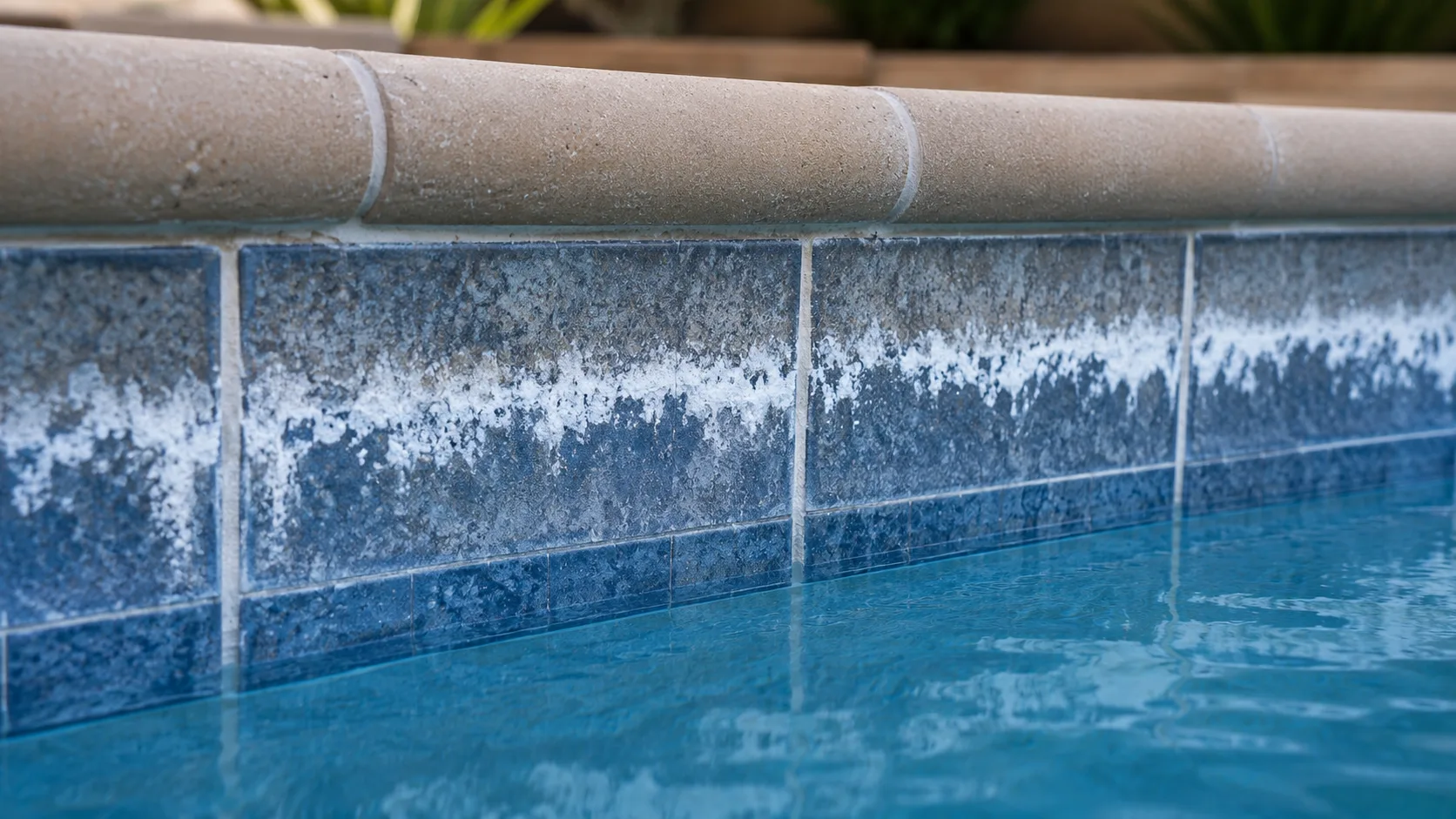
The waterline is where pool water, air, sunlight, swimmer residue, dust, oils, minerals, and surface material all meet. That makes it one of the first places a pool confesses that something is drifting.
Common waterline patterns include:
- A greasy or grayish film from sunscreen, body oils, pollen, dust, smoke residue, or organic debris.
- A chalky white line that may point toward calcium scale or mineral buildup.
- Tan, rusty, green, or dark staining that may involve metals, algae, organic material, or surface-specific issues.
- Rough texture that catches dirt even after the water looks clean.
- A ring that keeps returning because water balance, evaporation, fill water, or cleaning cadence has not been addressed.
Those are categories, not a diagnosis. The same pool can have more than one problem at the waterline.
First, Identify The Surface
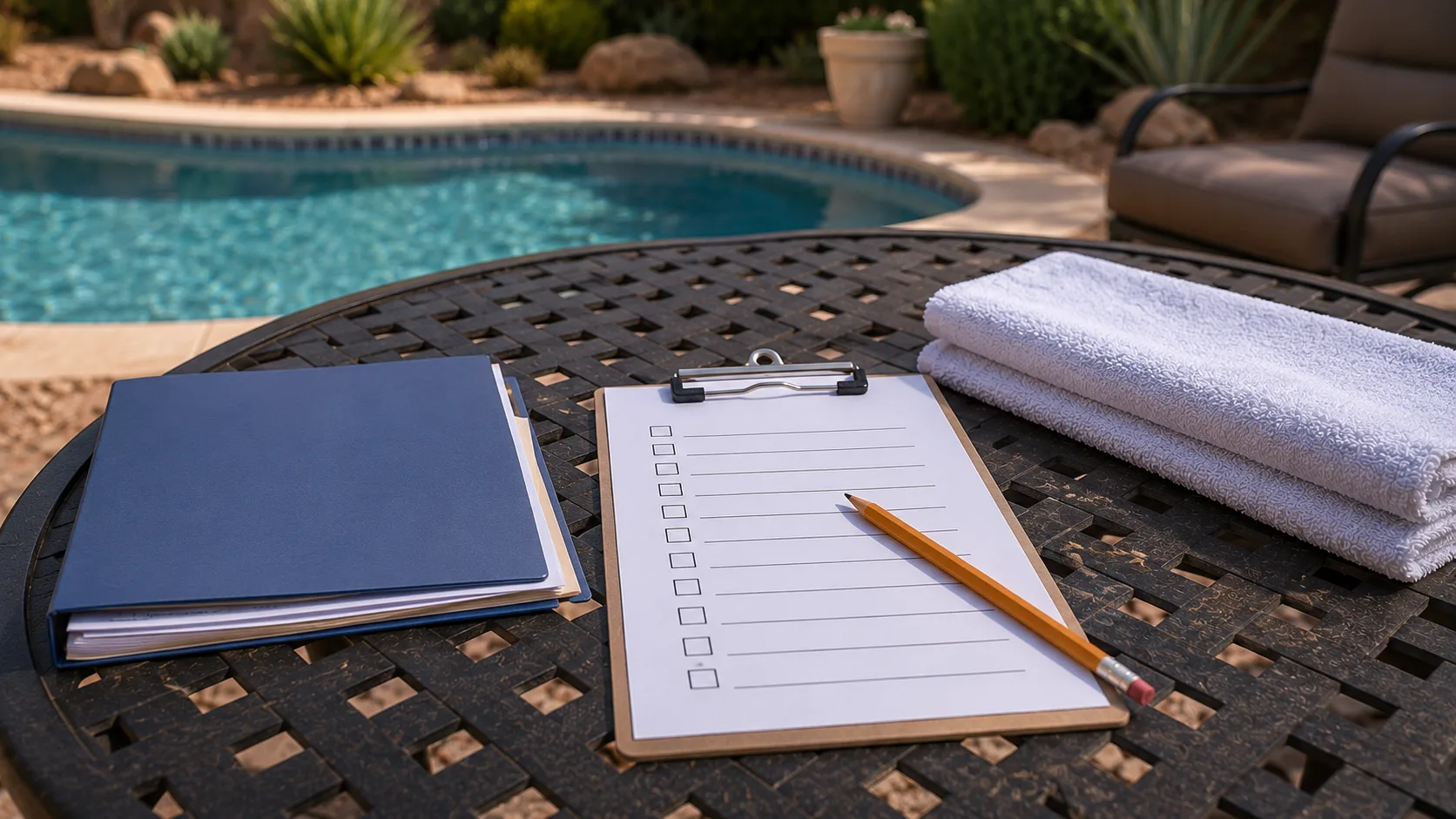
Do not choose a cleaning method until you know what you are cleaning.
Waterline areas may include:
- Ceramic or porcelain tile.
- Glass tile.
- Stone.
- Grout.
- Plaster.
- Pebble or exposed aggregate finish.
- Fiberglass.
- Vinyl liner.
- A raised spa spillway, feature wall, or decorative finish.
Each surface has different tolerance for brushes, pads, acids, abrasive tools, cleaners, and pressure. A method that seems ordinary on one surface can scratch, dull, etch, tear, haze, or void warranty coverage on another.
Before you clean:
- Look for pool finish paperwork, builder notes, installer instructions, warranty documents, and surface-care guidance.
- If you do not know the finish, ask the builder, installer, previous owner, or a qualified pool professional.
- Treat glass tile, vinyl liners, decorative finishes, stone, pebble finishes, and unknown surfaces as higher-risk until proven otherwise.
The safest sentence in this whole article is boring: check the instructions for the surface you actually own.
Why Hard-Water And Dry-Climate Pools Get Rings
In dry, sunny places, pools lose water to evaporation. Minerals do not evaporate with the water. Fill water, dust, splash-out, top-offs, and water-balance drift can all contribute to visible buildup over time.
That does not mean every white line is the same. But it does mean the waterline is often connected to more than just scrubbing. If you remove the visible ring but ignore testing, water balance, fill-water minerals, and brushing, the line may come back.
For the water side of the routine, use A Simple Pool Testing Routine for Homeowners as the calmer companion. The point is not to chase chemistry by memory. It is to test consistently, keep a log, and follow the right labels and professional guidance before making changes.
A Safe First Pass
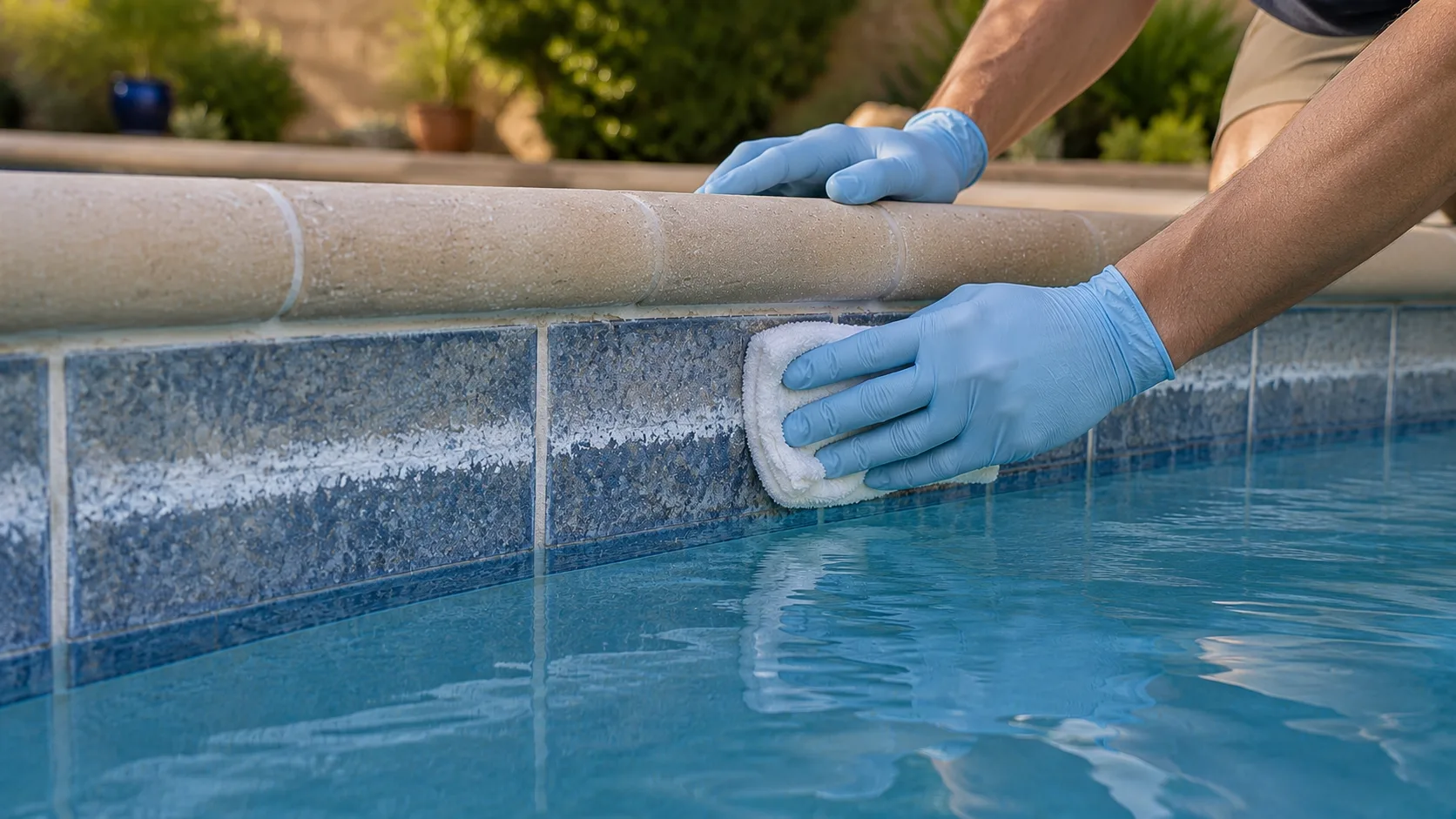
Start with the least aggressive approach your surface guidance allows.
A conservative first pass looks like this:
- Keep swimmers out while you inspect and clean.
- Remove floating debris and empty baskets so the pool is not adding more residue while you work.
- Use a soft cloth, sponge, or surface-approved brush only if your surface guidance allows it.
- Work a small section, not the whole pool.
- Use only cleaners that are approved for the surface and pool environment.
- Follow label directions exactly.
- Rinse or manage residue according to the cleaner and surface instructions.
- Retest pool water as directed if any cleaner or residue may affect water balance.
Do not turn a mild ring into a surface repair by escalating too quickly.
What Not To Do
Avoid these until you have surface-specific approval and the right safety setup:
- Metal scrapers.
- Wire brushes.
- Random abrasive pads.
- Household cleaners not labeled for the pool surface.
- Mixing cleaning products.
- Pouring acid or strong cleaners casually along the waterline.
- Pressure washing near fragile finishes, grout, loose tile, vinyl, unknown surfaces, or compromised areas.
- Draining the pool to attack the line without professional guidance.
- Copying a method from another pool with a different surface.
Pool chemical safety matters here. CDC and EPA pool-chemical guidance both support the same basic posture: keep chemicals in labeled containers, prevent incompatible chemicals from mixing, follow directions, and treat damaged, wet, unknown, or poorly stored chemicals as a stop sign.
When Buildup Is Probably Not A DIY Scrub
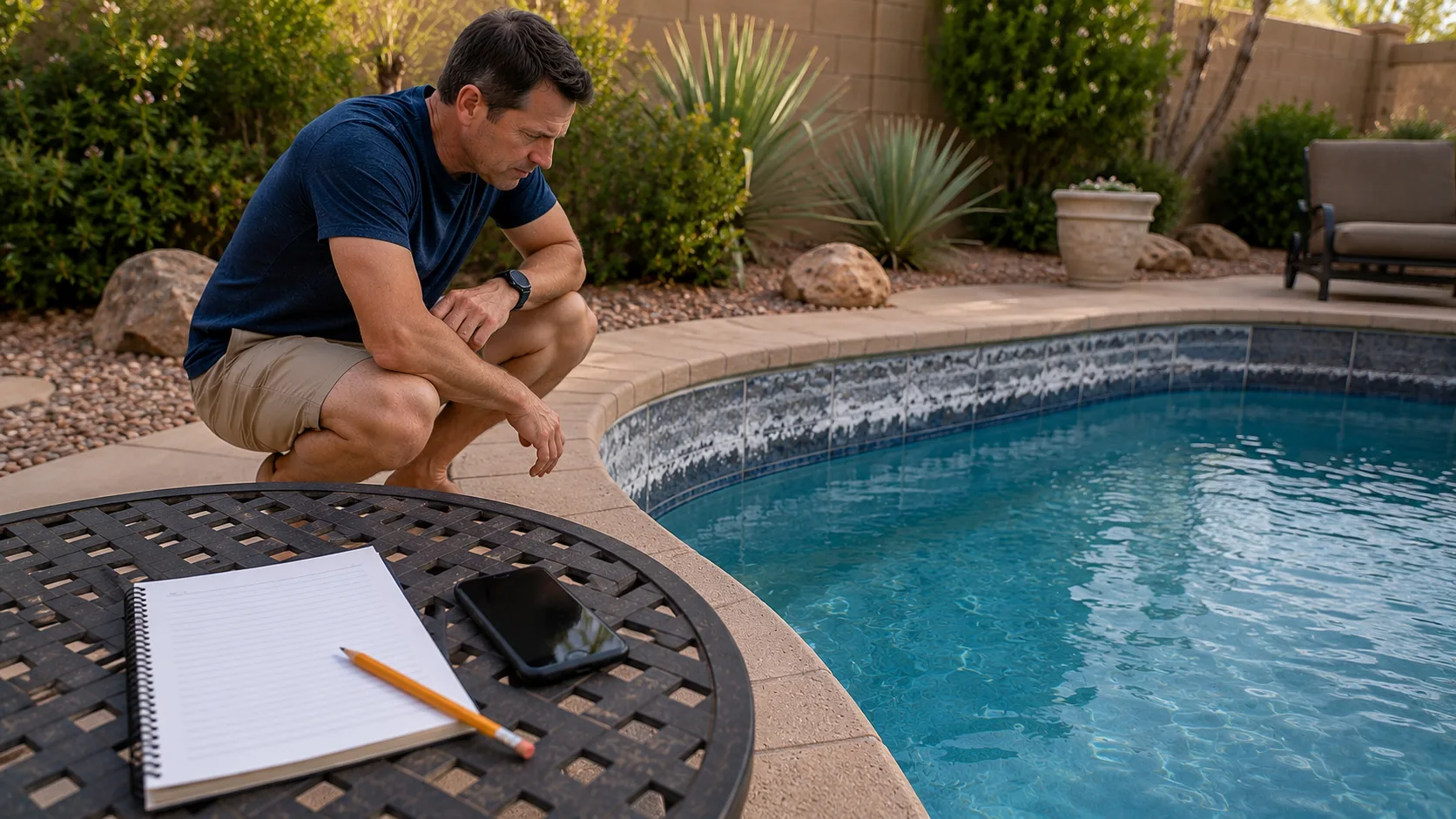
Call a qualified pool professional if:
- The buildup is hard, thick, sharp, or spreading.
- The pool has glass tile, vinyl, stone, decorative finishes, or unknown materials.
- The finish is new, under warranty, already damaged, or recently repaired.
- You see etching, pitting, discoloration, missing grout, loose tile, exposed aggregate loss, or liner damage.
- The proposed solution involves acid, blasting, sanding, draining, pressure washing, or aggressive abrasives.
- The line returns quickly after gentle cleaning.
- Test results keep drifting and you do not know why.
- You suspect metals, scale, algae, stains, or surface deterioration rather than simple residue.
This is especially important for pebble, plaster, tile, and vinyl systems where finish guidance and warranty posture can matter as much as cleaning technique.
Prevention Is Usually Less Dramatic Than Removal
The best waterline strategy is to make buildup less stubborn before it hardens.
Useful habits include:
- Skim and brush before debris sits at the waterline.
- Keep baskets from overflowing.
- Test and log sanitizer and pH consistently.
- Follow surface and equipment guidance for water balance.
- Watch hard-water top-offs and evaporation patterns.
- Clean small residue early, using surface-approved methods.
- Keep sunscreen, oils, leaves, flowers, dust, and floating debris from becoming a permanent ring.
- Ask for professional help before the line becomes a restoration project.
That is the same rhythm as the rest of pool care: small, regular steps beat heroic rescue cleaning.
How This Fits Into The Pool-Care System
Waterline buildup is not isolated from the rest of the pool.
It connects to:
- Testing and water balance.
- Skimming and brushing.
- Filter and circulation performance.
- Storm residue and dust.
- Swimmer load and sunscreen.
- Fill-water minerals.
- Surface age, material, and installation quality.
- Whether the pool is being maintained consistently or rescued occasionally.
If the pool still looks dirty after a robot runs, or if dust keeps settling after storms, the waterline can become one of the places that frustration shows up. The answer is usually not one magic tool. It is a better sequence: remove debris, brush correctly, test, maintain water balance, protect the surface, and get professional help when the problem is no longer routine.
The Bottom Line

Pool waterline buildup is not a contest to see how hard you can scrub. It is a surface and water-balance clue.
Identify the surface. Start gently. Follow the instructions for the pool you actually have. Avoid chemical improvisation and abrasive guessing. Call a pro before using aggressive methods or treating an unknown finish.
The goal is not just to make the line disappear today. It is to keep the pool surface intact while building a routine that makes the next ring less likely.