
Artificial turf odor is frustrating because the surface can look clean while the yard still smells like the dog has a grudge against one specific corner.
When that happens, the problem may not be the visible blades anymore. It may be water movement, compacted infill, seams, edges, low spots, or base-layer conditions that keep residue below the part you can brush.
This guide is product-neutral. Turf manufacturer instructions, installer guidance, cleaner labels, safety data sheets, pet re-entry directions, local water rules, and qualified turf professionals still control what you should do for your actual turf system.
The Direct Answer
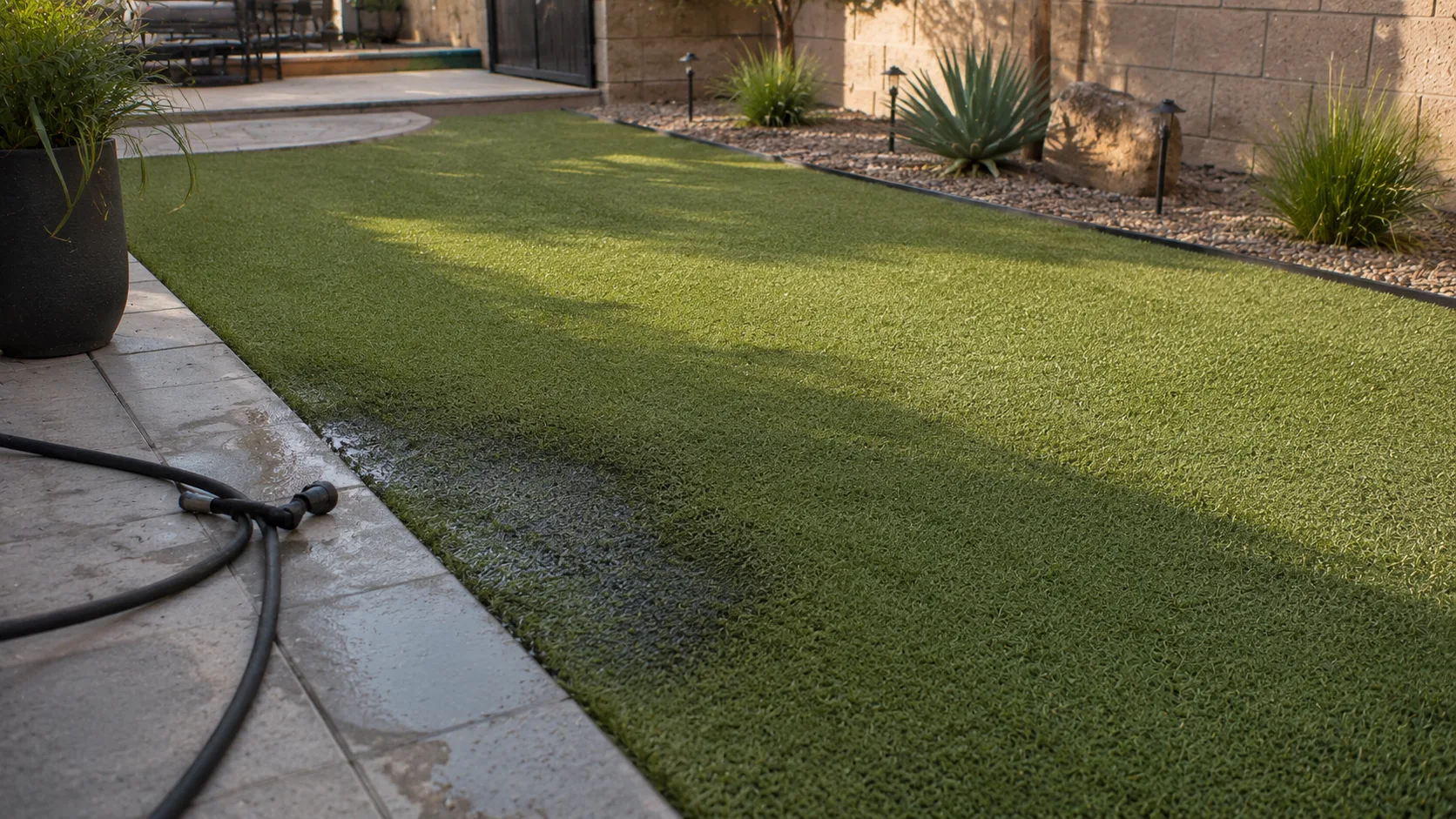
Artificial turf drainage problems often show up as recurring odor, damp edges, slow-drying seams, spongy low spots, compacted infill, water that runs sideways after rinsing, or dog-use zones that smell again soon after cleaning.
Start with this sequence:
- Identify the repeat odor zone.
- Rinse slowly and watch where the water moves.
- Check seams, edges, low spots, shaded strips, and favorite dog routes.
- Brush compacted turf and look for clumped or crusty infill.
- Recheck after the warmest part of the day.
- Stop escalating cleaners if the same spot keeps coming back.
- Call a turf installer or pro if the odor seems below the blades, drainage is slow, or the base may be holding residue.
If the problem is mostly routine dog-area maintenance, start with A Weekly Artificial Turf Maintenance Routine for Dog Owners. If heat is making odor more obvious, use Why Artificial Turf Smells Worse in Summer as the companion.
Drainage Problems Do Not Always Look Dramatic
Artificial turf drainage issues do not always announce themselves with standing water.
Sometimes the clue is smaller:
- One corner smells worse than the rest of the yard.
- Water disappears slowly after rinsing.
- A seam or edge stays damp longer than nearby turf.
- The dog keeps using the same low spot.
- The turf feels slightly spongy, sunken, or uneven.
- Infill looks compacted, crusted, or clumped.
- The odor returns after a hot afternoon even though the surface was rinsed.
That is what makes drainage problems tricky. The yard can pass a quick visual check and still fail the afternoon smell test.
The Hose Test
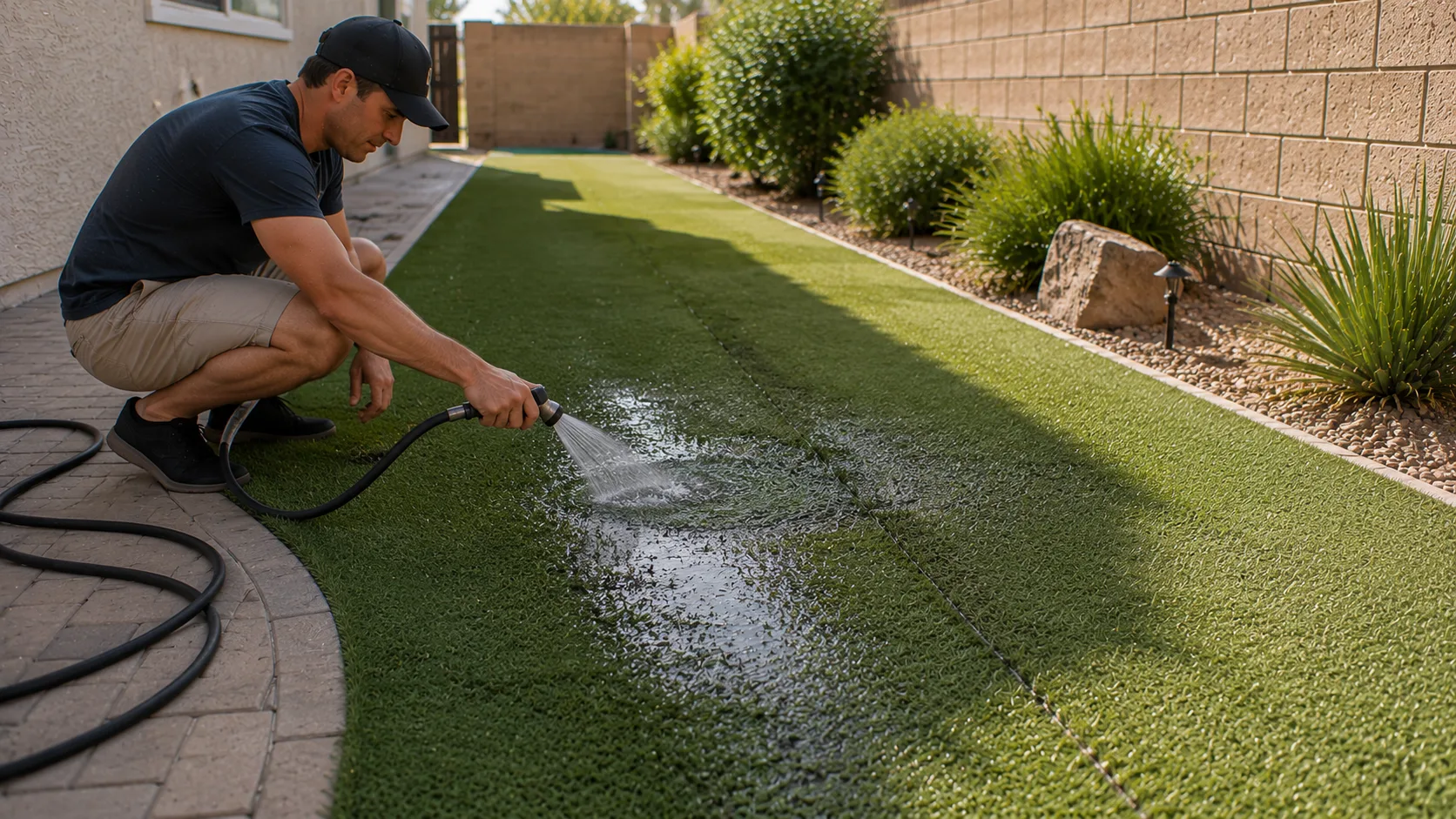
Use the hose test before assuming you need a stronger cleaner.
Pick the problem zone and run gentle, steady water over it. Do not blast the turf. Watch what happens for a few minutes.
Look for:
- Water soaking in evenly.
- Water running sideways toward an edge.
- Beading or lingering on the surface.
- A darker damp patch that stays behind.
- A seam or border that collects water.
- Debris or matted fibers blocking movement through the turf.
If the water moves through evenly and the smell improves, you may be dealing with surface residue and routine maintenance. If water stalls, redirects, or leaves the same sour zone behind, the issue may be deeper.
For the surface-cleaning version of this problem, use How to Remove Dog Urine Smell from Artificial Turf. This article is about the moments when surface cleaning stops explaining the pattern.
Favorite Dog Zones Can Create Drainage Clues
Dogs are not neutral inspectors. They create traffic patterns.
Over time, a favorite bathroom zone can collect urine residue, hair, dust, pollen, solids residue, and organic debris. The same route may also mat the blades and compact infill. If that zone sits near a wall, side yard, gate, patio edge, or shaded strip, the area may dry more slowly than the rest of the yard.
Watch for repeat-use zones that:
- Smell again within a day or two after rinsing.
- Look darker or flatter than nearby turf.
- Feel firmer, crustier, or more compacted.
- Stay damp after other turf is dry.
- Sit near an edge where water may not move freely.
The fix is not always more cleaning. Sometimes the first useful step is admitting the dog has turned one patch into the whole system's stress test.
Infill Can Hide The Problem
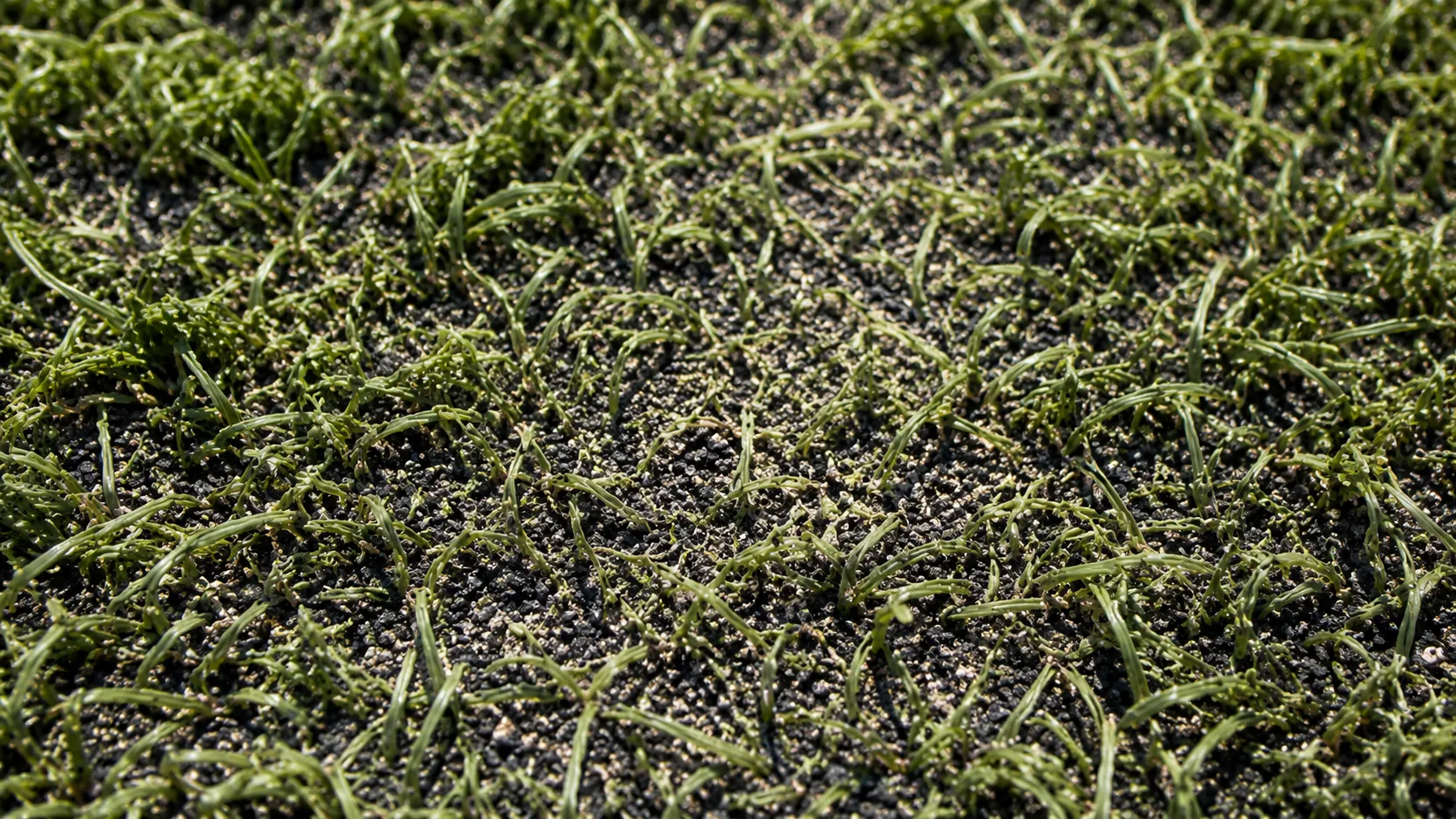
Infill is part of why turf stands up and feels less flat. It can also become a holding layer for residue.
In dog-use areas, infill may collect:
- Urine residue.
- Hair and dust.
- Pollen and plant debris.
- Cleaner residue.
- Tiny organic material.
- Fine grit from nearby gravel, decomposed granite, or hardscape edges.
When infill compacts, water may not move through the area evenly. The blades can look acceptable while the layer below them keeps holding odor.
Brush the area with a turf-safe broom or brush if your turf guidance allows it. Then rinse slowly and recheck later. If infill smells, clumps, looks contaminated, or keeps producing odor after careful maintenance, that is a pro-call clue.
Do not bury contaminated infill under fresh material without understanding the source. That can make the problem look better while moving it farther from easy cleaning.
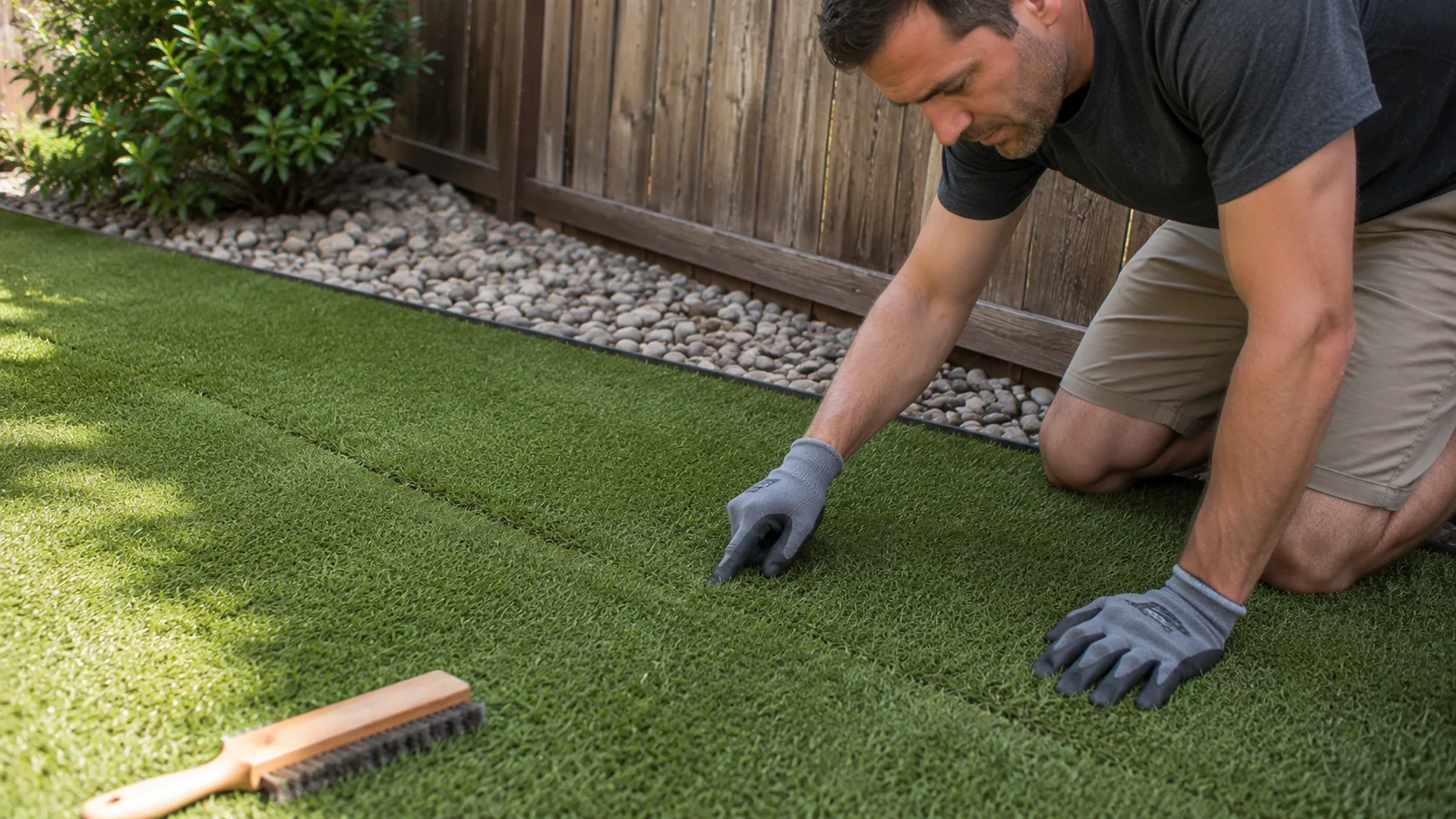
Seams, Edges, And Low Spots Matter
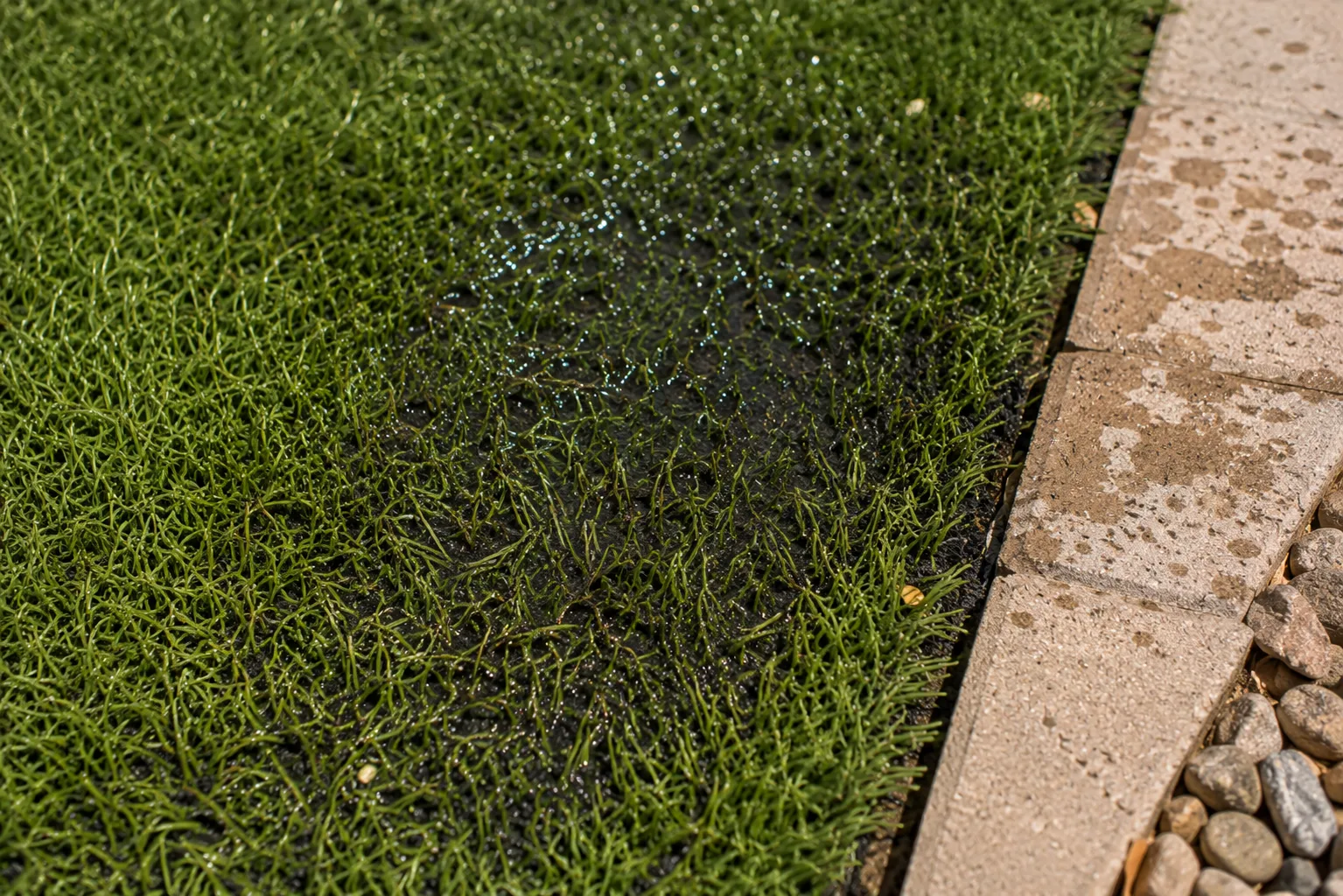
Artificial turf problems often concentrate at boundaries.
Check:
- Seams between turf sections.
- Edges against patios, walls, fences, gravel, or planting beds.
- Low spots where water settles.
- Corners where debris collects.
- Narrow side-yard strips with limited airflow.
- Places where the dog turns, stops, or repeatedly uses the same path.
Edges can collect runoff, dust, leaves, and pet residue. Seams can reveal weak drainage or installation issues. Low spots can keep moisture around longer than the rest of the yard.
If a seam lifts, an edge feels loose, or a low spot seems to be sinking, stop treating it like ordinary cleaning. That is when installer guidance matters.
Shade Can Slow Drying
Shade is useful in hot yards, especially for dogs. It can also hide a drainage or odor pattern.
A shaded strip may stay cooler and more comfortable, so the dog uses it more often. It may also dry more slowly, collect debris near a wall or fence, and get less airflow.
That does not make shade the villain. It means shaded dog-use zones deserve a closer check:
- Does the area smell fine in the morning and worse later?
- Does it stay damp after rinsing?
- Does debris collect there?
- Is airflow blocked by walls, shrubs, furniture, or narrow side-yard geometry?
- Is the dog using the shaded strip more often because it is the most comfortable spot?
For broader comfort planning, see Shade in Low-Water Landscapes. A pet area can be shaded and still need honest drainage inspection.
Nearby Materials Can Make Turf Odor Worse
Artificial turf does not live in a vacuum.
Nearby materials can add dust, organic debris, or slow-drying edges:
- Decomposed granite.
- Gravel.
- Mulch.
- Planting beds.
- Patio edges.
- Fence-line debris.
- Side-yard utility zones.
Dust and organic debris can settle into turf fibers and infill. Wet leaves can hold smell. Loose material can make dog-use zones harder to rinse cleanly.
If decomposed granite or dusty hardscape edges are part of the pattern, How to Use Decomposed Granite Without Tracking Dust Into the House is a useful companion.
What Not To Do
Do not respond to a drainage pattern by escalating blindly.
Avoid:
- Mixing cleaners.
- Using cleaners not labeled for pet areas and compatible with artificial turf.
- Assuming fragrance equals cleanup.
- Pressure washing unless your turf manufacturer and installer clearly allow it.
- Pulling up turf sections yourself without knowing how the system was installed.
- Adding infill over a recurring odor zone without diagnosis.
- Ignoring seams, edges, and low spots because the middle looks fine.
If the pattern is below the blades, stronger surface treatment may only make you feel busier.
When To Call A Turf Pro
Call a turf installer, specialty cleaner, or qualified pro if:
- Odor returns quickly after careful rinsing and label-safe cleaning.
- The same area stays damp or sour-smelling.
- Water pools, beads, or drains slowly.
- Infill smells, clumps, or appears contaminated.
- Turf feels spongy, sunken, uneven, or loose at the edge.
- A seam or edge is involved.
- You suspect the base layer is holding urine.
- You are considering turf lifting, infill replacement, drainage correction, base repair, or partial replacement.
The point is not to make the yard complicated. The point is to stop treating a layered turf-system problem like a surface wipe-down.
A Quick Homeowner Drainage Check
Use this simple check when odor keeps coming back:
- Find the repeat odor zone.
- Remove solids, hair, leaves, and debris.
- Rinse slowly with gentle water.
- Watch where water goes.
- Brush matted turf if your turf guidance allows it.
- Check seams, edges, shaded strips, and low spots.
- Recheck after the warmest part of the day.
- Note whether odor returns in the same place.
- Call a pro if the pattern points below the blades.
That rhythm keeps the decision practical: surface maintenance first, deeper diagnosis second, professional help when the system itself is the issue.
The Bottom Line
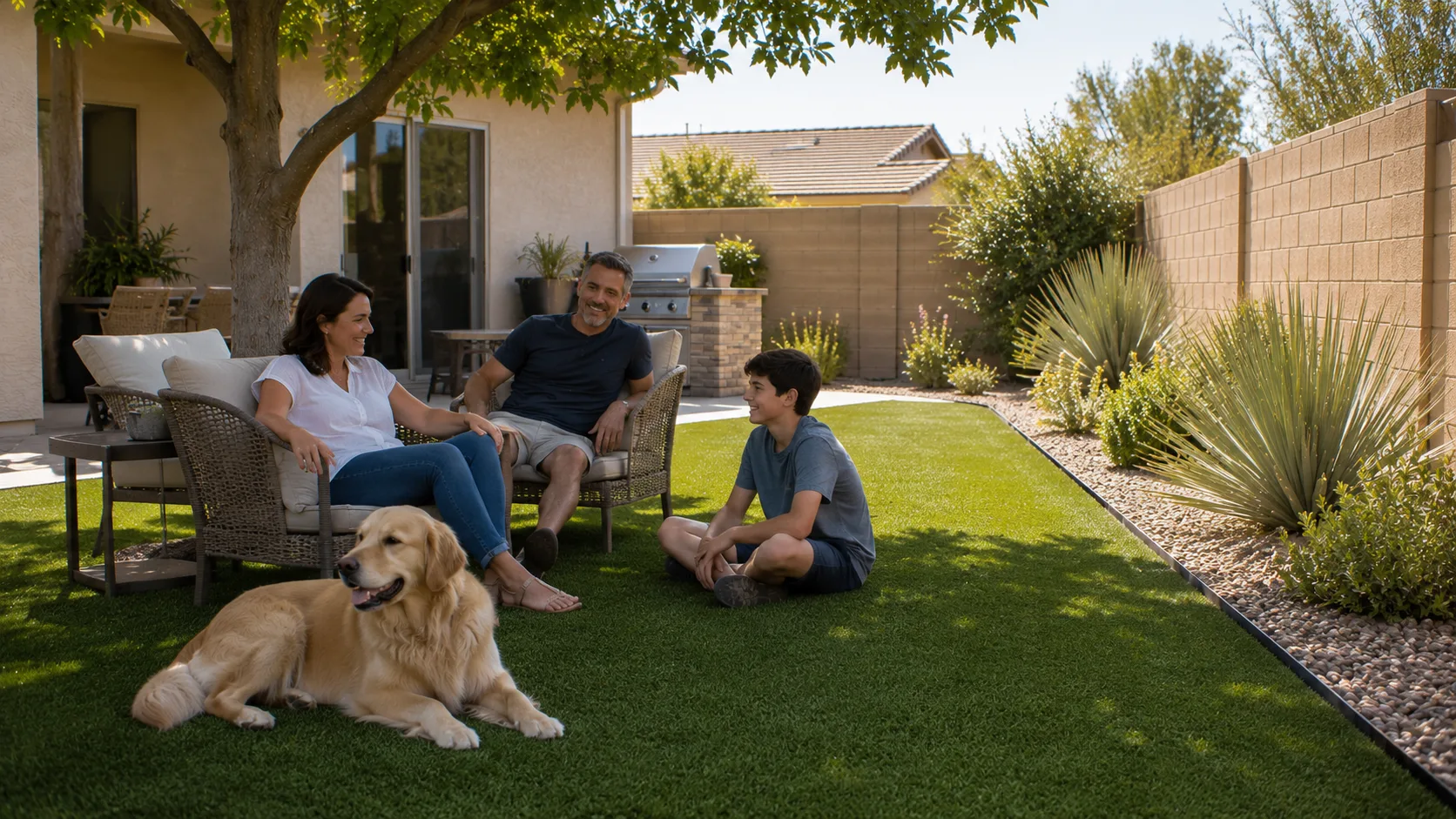
Artificial turf drainage problems usually show up as patterns: the same spot smells again, the same edge stays damp, the same dog route mats down, or the same low area refuses to dry like the rest of the yard.
Rinsing, brushing, and label-safe cleaning still matter. But if odor keeps returning from one place, the source may be in the infill, backing, seams, drainage layer, or base below the turf.
When the smell is deeper than the blades, stop chasing it with more fragrance. Find the pattern, respect the turf system, and bring in a qualified pro before a small odor problem becomes a rebuild conversation.