
A waterwise backyard should not feel like the yard got grounded.
It can be shaded, layered, useful, and good-looking. It can have a real place to sit, a path that does not fight your ankles, planting beds that look intentional, and enough comfort that you actually open the back door. The water savings come from making smarter choices, not from turning the whole yard into a gravel apology.
The trick is to plan the yard before you buy the plants, the pavers, the patio set, or the heroic shade structure that looked perfect online and may turn your side yard into a small municipal sailboat.
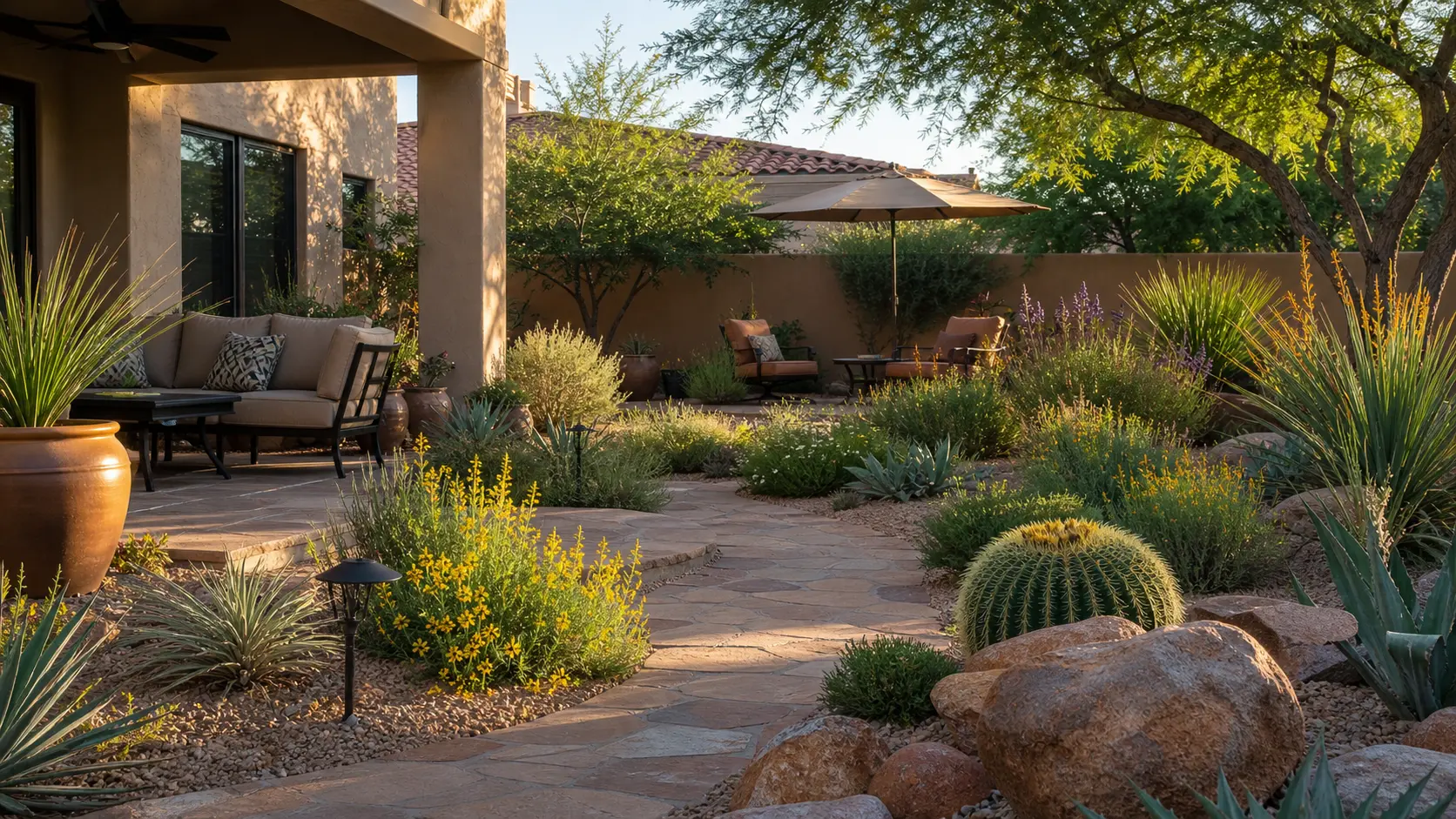
The Short Version
If you want the practical order, use this:
- Decide what the yard needs to do.
- Map sun, shade, heat, wind, drainage, and movement.
- Divide the yard into use zones and hydrozones.
- Put shade and seating where people will actually use them.
- Choose hardscape and groundcover by job, not by panic.
- Pick plants by mature size, water needs, and role.
- Keep the maintenance path visible before the pretty stuff arrives.
A low-water yard can still have outdoor rooms, texture, color, shade, and a place to sit with a drink. It just needs a plan that respects two stubborn truths: water is not free, and people will only use spaces that feel good.
Start With Use, Not Materials
Most expensive backyard mistakes begin with a shopping cart.
You see a plant. You like the plant. You buy the plant. Then you discover it wants different water, more room, more shade, or less reflected heat than the place you had in mind. The plant has not betrayed you. It simply read the job description and declined.
Before choosing materials, give the yard a job description. Keep it plain:
- Eat outside without dragging chairs through gravel.
- Sit in shade after work.
- Walk from the back door to the gate without stepping through a planting bed.
- Keep dogs, kids, bins, hoses, or pool gear from taking over the main view.
- Grow herbs, a few pollinator plants, or a small seasonal garden.
- Cool down a hot wall, fence line, or patio edge.
- Create one nice view from inside the house.
Then rank those jobs. A small backyard cannot be everything at full volume. If you ask it to be a dining room, lounge, sports field, sculpture garden, dog racetrack, orchard, and spa courtyard, it will not become ambitious. It will become clutter that needs irrigation.
Read The Yard Before You Redesign It
Spend a day or two watching how the yard behaves. This looks suspiciously like doing nothing, which is why people skip it and then install a seating area in the exact spot where afternoon sun goes to prove a point.
Look for:
- Morning shade and afternoon shade.
- Areas that feel brutally hot because of walls, fences, gravel, or paving.
- Natural walking routes between doors, gates, seating, trash bins, pool equipment, sheds, and side yards.
- Low spots, drainage paths, slopes, puddles, or places where water collects.
- Existing irrigation zones, hose bibs, valves, and controller limits.
- Views you want to frame, soften, or hide.
- Places where maintenance access matters more than beauty.
The yard is already telling you where the easy wins are. A good plan listens before it starts bossing the dirt around.
Build The Yard Around Zones
A zone is an area with a job. It does not need a wall, a label, or a dramatic reveal. It just needs to answer a normal backyard question: what happens here?
For a waterwise backyard, useful zones often include:
- A shaded sitting zone.
- A dining or grilling zone near the house.
- A movement zone for daily paths.
- A planting zone grouped by water needs.
- A utility zone for bins, hoses, tools, pool gear, or side-yard chores.
- A flexible open zone for kids, dogs, exercise, or temporary furniture.
- A focal zone that gives the yard one good view.
Once the zones are clear, the yard starts making decisions for you. Dining needs a stable surface. Seating needs shade or at least a believable path to shade. Planting zones need water logic. Utility areas need access and forgiveness. Flexible zones need surfaces that can handle real life without sulking.
Hydrozones: The Part That Saves You From Plant Drama
Hydrozoning means grouping plants with similar water needs together. It is not the glamorous part of landscape design, but it is the part that keeps one plant from being drowned while its neighbor files a complaint about drought.
Do not put thirsty plants, moderate-water plants, and very-low-water plants on the same irrigation schedule and hope everyone works it out in committee. One group will usually be unhappy, and the yard will make you guess which one.
Think in broad water zones:
- Moderate water near patios, entries, vegetable beds, or higher-use planting areas.
- Low water for most ornamental shrubs, grasses, and flowering perennials.
- Very low water for tougher dry-edge areas, gravel-adjacent beds, and hot perimeter zones.
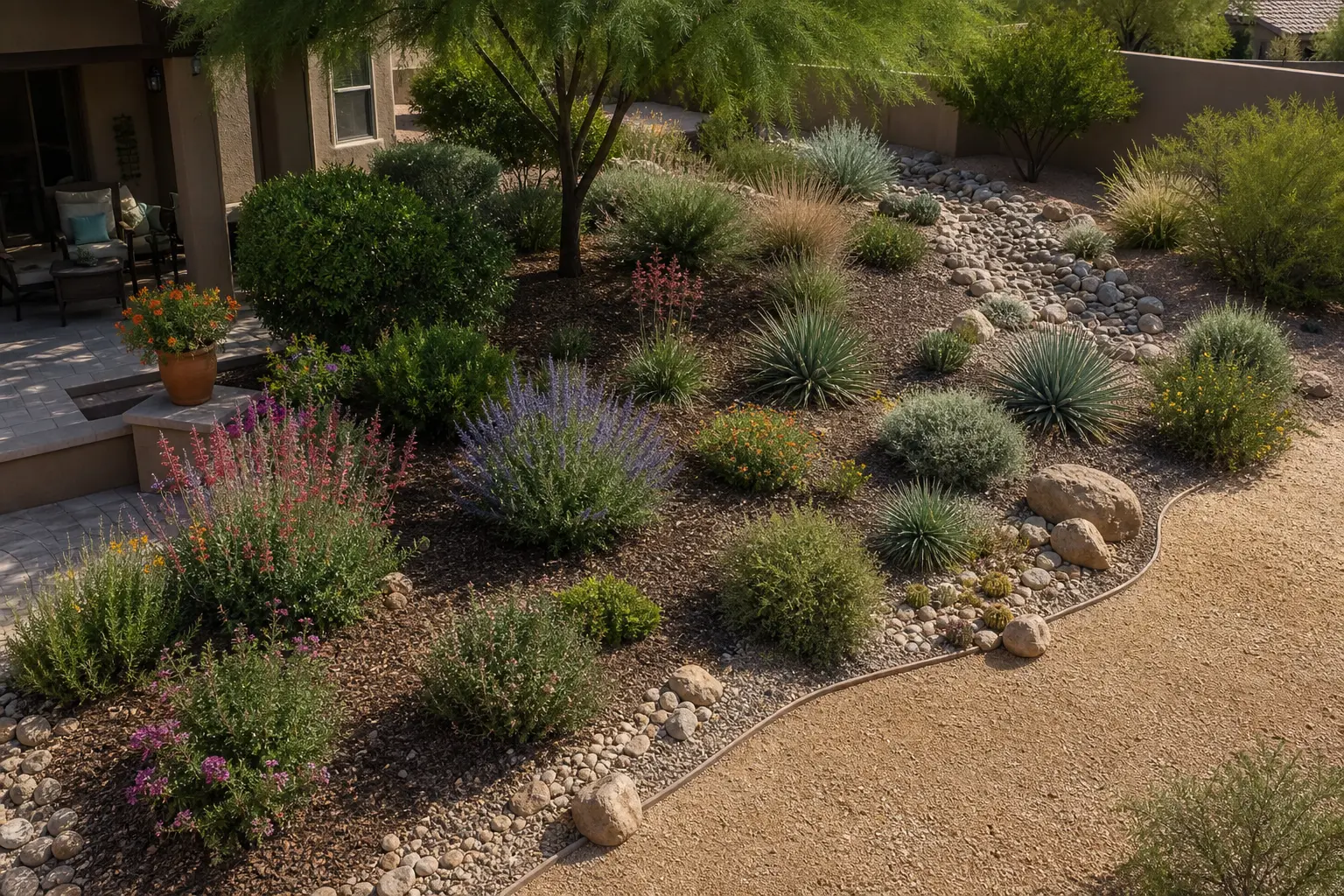
This is also where mature size matters. A small plant in a nursery pot can look very cooperative. Three years later it may have opinions, elbows, and a desire to block the path.
Before buying plants, check mature width, height, sun exposure, and local climate suitability. Local extension offices, water providers, botanical gardens, qualified landscape professionals, and reputable regional nurseries should outrank a generic plant tag when conditions are specific.
For more on the water-zone logic, see Hydrozoning Basics for Homeowners and Drip Irrigation Basics for Low-Water Yards.
Shade Is Infrastructure
In a hot yard, shade is not a finishing touch. Shade is the difference between a seating area and a decorative punishment zone.
Plan shade early:
- Use existing shade before adding new structures.
- Place seating where shade exists during the hours people will sit there.
- Give west-facing walls and hot fence lines extra respect.
- Use plants, trees, structures, umbrellas, and walls as comfort tools, not just decoration.
- Keep tree roots, utilities, foundations, drainage, wind, and local rules in the call-a-pro category.
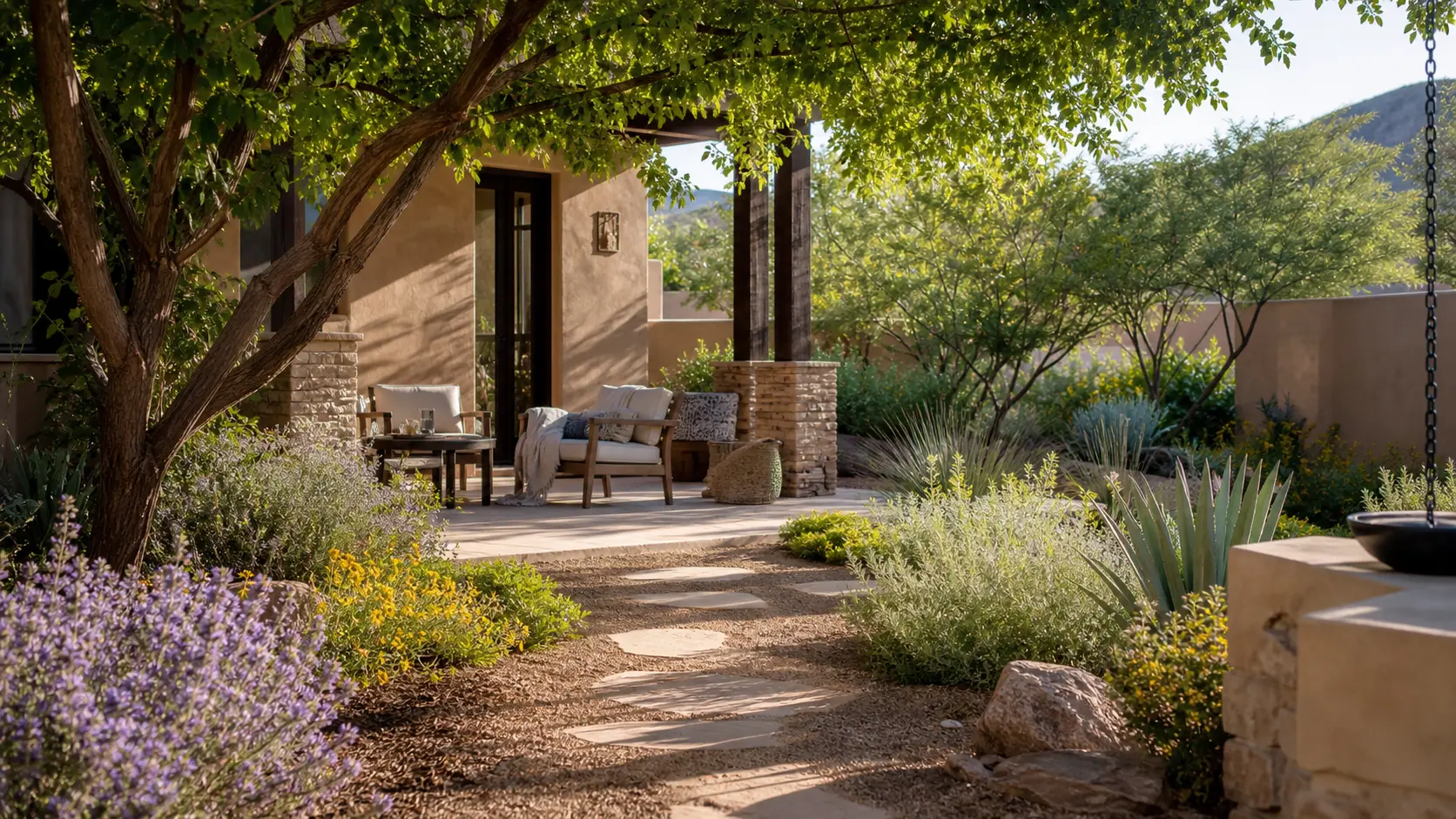
The goal is not to cover every square foot. The goal is to create enough comfortable places that the yard can be used when the weather is being its full self.
If shade is your main problem, pair this planning guide with Backyard Shade Ideas for Hot Climates and Shade in Low-Water Landscapes.
Choose Hardscape By Job
Hardscape is expensive, heavy, and extremely confident once installed. Make it earn its place.
Use stable paving where furniture, dining, grilling, or high traffic need it. Use decomposed granite, gravel, stepping stones, or mulch where the zone can be more flexible. Use planting beds where shade, cooling, soil protection, and visual softness matter more than foot traffic.
Common material roles:
- Concrete or pavers: stable seating, dining, grilling, and main entries.
- Decomposed granite: informal paths, secondary patios, side yards, and low-water movement zones.
- Gravel: drainage-friendly texture, utility edges, and dry-climate negative space when balanced with planting and shade.
- Mulch: planting beds, root-zone protection, and cooler plant environments.
- Stepping stones: light movement routes that do not need full paving.
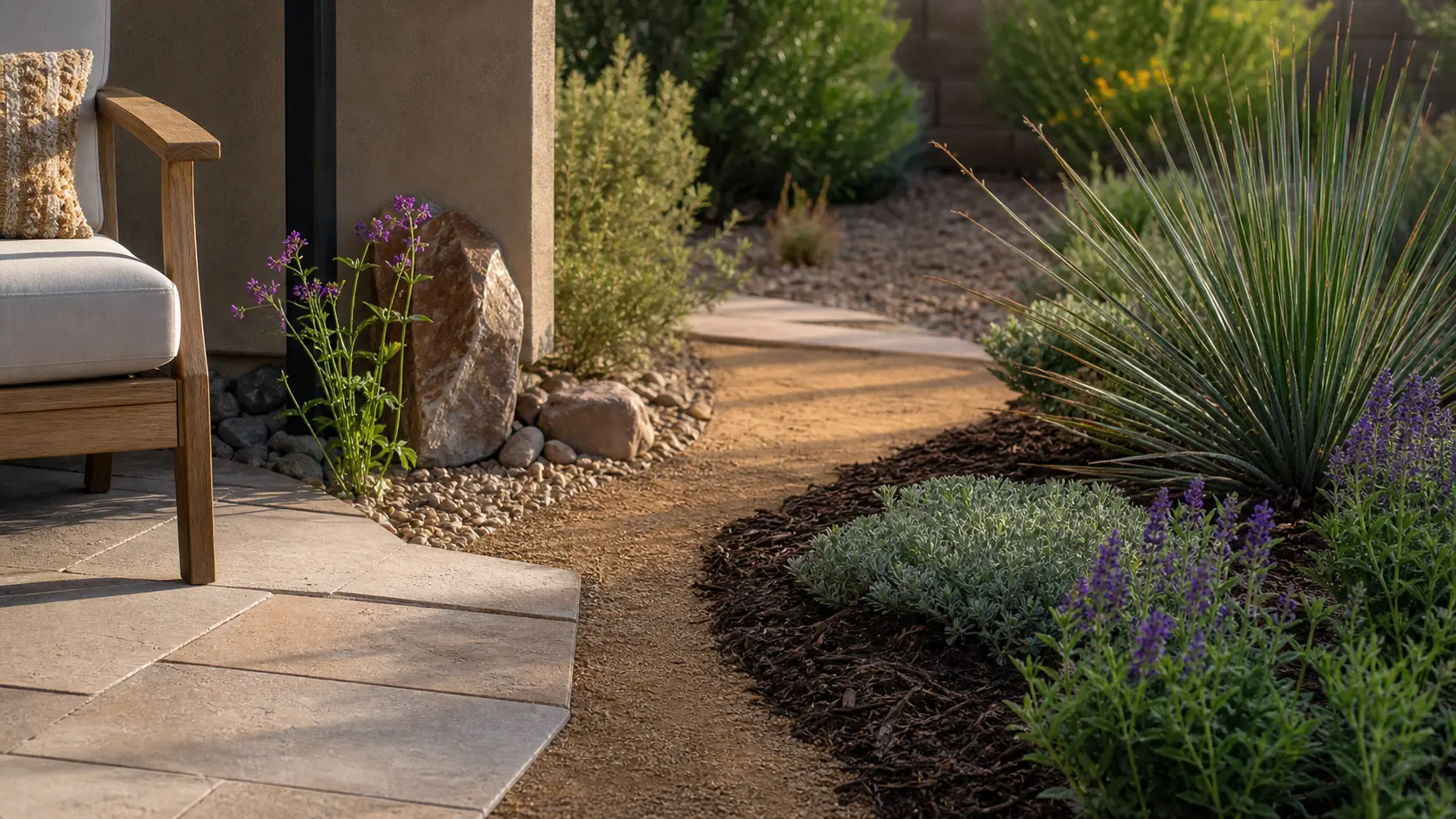
The mistake is not using gravel or hardscape. The mistake is asking one material to do the job of an entire design.
For related decisions, see How to Make a Gravel Yard Look Designed, Not Deserted, Mulch vs. Gravel in Low-Water Landscapes, and How to Use Decomposed Granite Without Tracking Dust Into the House.
Plan The Irrigation Before The Plant Shopping Trip
Waterwise does not mean no water. It means the right water in the right place. That sounds simple because the annoying true things usually do.
Before planting, confirm:
- Which areas already have irrigation.
- Whether existing zones can be adjusted without creating conflicts.
- Where drip irrigation makes sense.
- Where hose access is enough.
- Which areas should stay plant-light because water access is awkward.
- Whether drainage, slope, utility, or tree-root issues need professional help.
Smart controllers can help, but they cannot fix a confused layout. A controller can adjust a schedule. It cannot make a high-water shrub and a desert-adapted plant enjoy the same emitter party.
Make The Yard Look Designed, Not Merely Reduced
Lower-water yards often fail visually because they remove lawn but do not add structure. Something has to replace the old green carpet: shape, shade, planting rhythm, paths, edges, or a reason for the eye to stop wandering around asking what happened.
Add structure with:
- Repetition: use groups of plants instead of one of everything.
- Layers: combine low, medium, and taller forms.
- Edges: define where gravel, mulch, paving, and planting begin and end.
- Views: create one or two focal points from the house or patio.
- Shade: make comfort visible.
- Texture: mix foliage, material, and height so the yard does not read flat.
A waterwise yard should still have rhythm. If every plant is a lonely little specimen surrounded by a vast field of rock, the yard may technically be low-water, but emotionally it is waiting for a second draft.
The article Xeriscape Layout Mistakes That Make Yards Look Sparse is a useful companion here.
A Simple Planning Sequence
Use this sequence before spending real money:
- Sketch the yard roughly.
- Mark doors, gates, utility areas, windows, slopes, and existing shade.
- Draw the paths people already use.
- Circle the zones the yard needs: seating, dining, planting, utility, play, storage, or quiet view.
- Mark sun, shade, hot walls, and reflected-heat areas.
- Group planting areas by water needs.
- Pick surfaces for each zone.
- Decide where shade must be added or protected.
- Choose plants by role, mature size, water needs, and local fit.
- Buy materials only after the plan survives this pass.
This is not meant to make the yard fussy. It is meant to make the spending less random. The plan does not need to be architectural theater. It just needs to be clear enough that the next purchase has a reason to exist.
Mistakes To Avoid
Covering Everything In Gravel
Gravel has a job. It is not a personality. Without shade, planting, edges, and movement, a gravel-heavy yard can feel hotter and flatter than expected.
Treating Low-Water As Low-Comfort
Efficiency should not erase outdoor living. If the yard saves water but nobody wants to sit there, the plan is incomplete.
Mixing Water Needs In One Planting Bed
Plants with different water needs can sometimes live near each other, but they should not be forced into the same irrigation logic without careful planning.
Forgetting Maintenance Access
Bins, hoses, gates, tools, and equipment will still exist after the makeover. Give them a place to go, because they will not politely vanish for the photos.
Buying Tiny Plants Without Checking Mature Size
The one-gallon plant is not telling the whole story. Read the future version before you plant the present version.
Believing Technology Replaces Layout
Smart irrigation can support a good plan. It cannot rescue a bad one from itself.
FAQ
Does a waterwise backyard have to use gravel?
No. Gravel can be useful in low-water landscapes, but it is only one material. Waterwise yards can also use mulch, decomposed granite, pavers, concrete, stepping stones, planting beds, shade trees, shrubs, and outdoor living areas. The right mix depends on the yard's use, climate, drainage, and maintenance needs. If gravel is the whole plan, the plan is still hungry.
Should I remove all lawn to make my backyard waterwise?
Not automatically. Some yards benefit from reducing lawn, converting part of a lawn to planting beds, or replacing unused turf. Other yards may keep a smaller functional area if it genuinely supports kids, pets, cooling, or outdoor use. The important question is whether each square foot is earning its water.
What should I plan first: plants or irrigation?
Plan water logic before buying plants. You do not need every emitter selected, but you should know which areas will receive moderate, low, or very-low water and whether those areas match the plants you want.
Can a waterwise backyard still feel lush?
Yes, if "lush" means layered, shaded, textured, and comfortable. It does not need to mean tropical, thirsty, or overplanted. Repetition, mature-size spacing, shade, mulch, and smart plant grouping can make a lower-water yard feel full without pretending it lives in a rainforest.
Final Take
A good waterwise backyard is not about proving how little you can do. It is about making every gallon, plant, path, and patio square foot work harder.
Start with how you want to live outside. Then plan the zones, shade, water, and surfaces around that life. The result should save water, yes, but it should also make you want to open the back door.