
Small backyards do not forgive hardscape mistakes politely.
A huge patio can make the yard feel smaller. A narrow path can make every chair feel in the way. A beautiful paver pattern can still send guests through gravel, squeeze the grill against the door, trap heat against stucco, or create the kind of trip edge that makes everyone look down instead of enjoying the yard.
This guide is for homeowner planning before concrete, pavers, decomposed granite, gravel, stone, edging, seating areas, paths, and planting beds start locking the yard into place. It is not a product guide, construction specification, drainage engineering plan, accessibility standard, permit guide, or material ranking.
If you are still choosing between surface categories, start with Concrete Pavers vs. Poured Concrete for Backyard Projects. If the project involves a small pour, keep Concrete Projects for a Weekend Backyard Upgrade and How to Avoid Cracks in Small DIY Concrete Projects nearby.
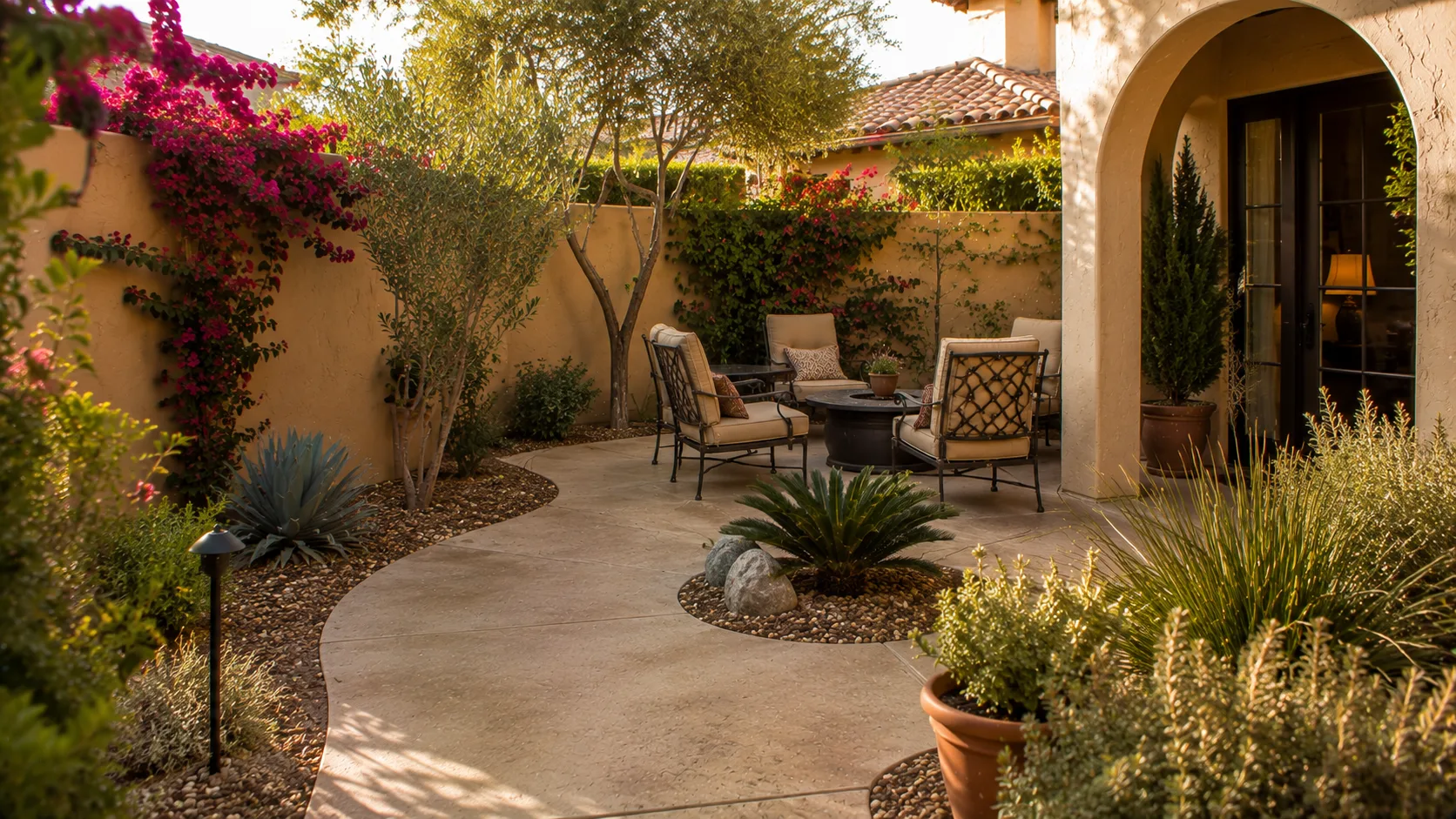
The Direct Answer
The most common small backyard hardscape mistake is treating the yard like a floor plan instead of a place people move through.
Before picking a material, walk the real routes:
- Door to seating.
- Door to grill.
- Seating to side gate.
- Patio to pool, if there is one.
- House to trash bins, hose bib, storage, or utility area.
- Main sitting area to planting, shade, and any future feature.
Then decide where hardscape needs to be stable, where it needs to pause, where it should stay narrow, where it should widen, where shade matters, where water moves, and where planting should soften the surface instead of blocking it.
In a small yard, hardscape should make outdoor living feel easier. It should not turn every chair, pot, grill, and path into a negotiation.
Mistake 1: Making The Patio Too Big For The Yard
It is tempting to maximize patio square footage in a small backyard. More hardscape sounds like more usable space.
Sometimes it is. Often it is just more surface.
An oversized patio can make a compact yard feel flat, hot, exposed, and unfinished. It can push planting into leftover strips, remove visual depth, and make the outdoor room feel like a slab with furniture on it instead of a yard with places to be.
Before enlarging the patio, ask:
- Will the added surface support a real activity?
- Does the yard still have enough planting or shade structure to feel comfortable?
- Does the patio leave room for doors, gates, bins, hoses, and maintenance?
- Will reflected heat or glare become worse?
- Does the patio relate to the house, or does it just fill the available rectangle?
A small patio can feel generous when it is shaped around real use. A large patio can feel awkward when it ignores scale.
For patio plant balance, Low-Water Patio Planting Ideas is a good companion.
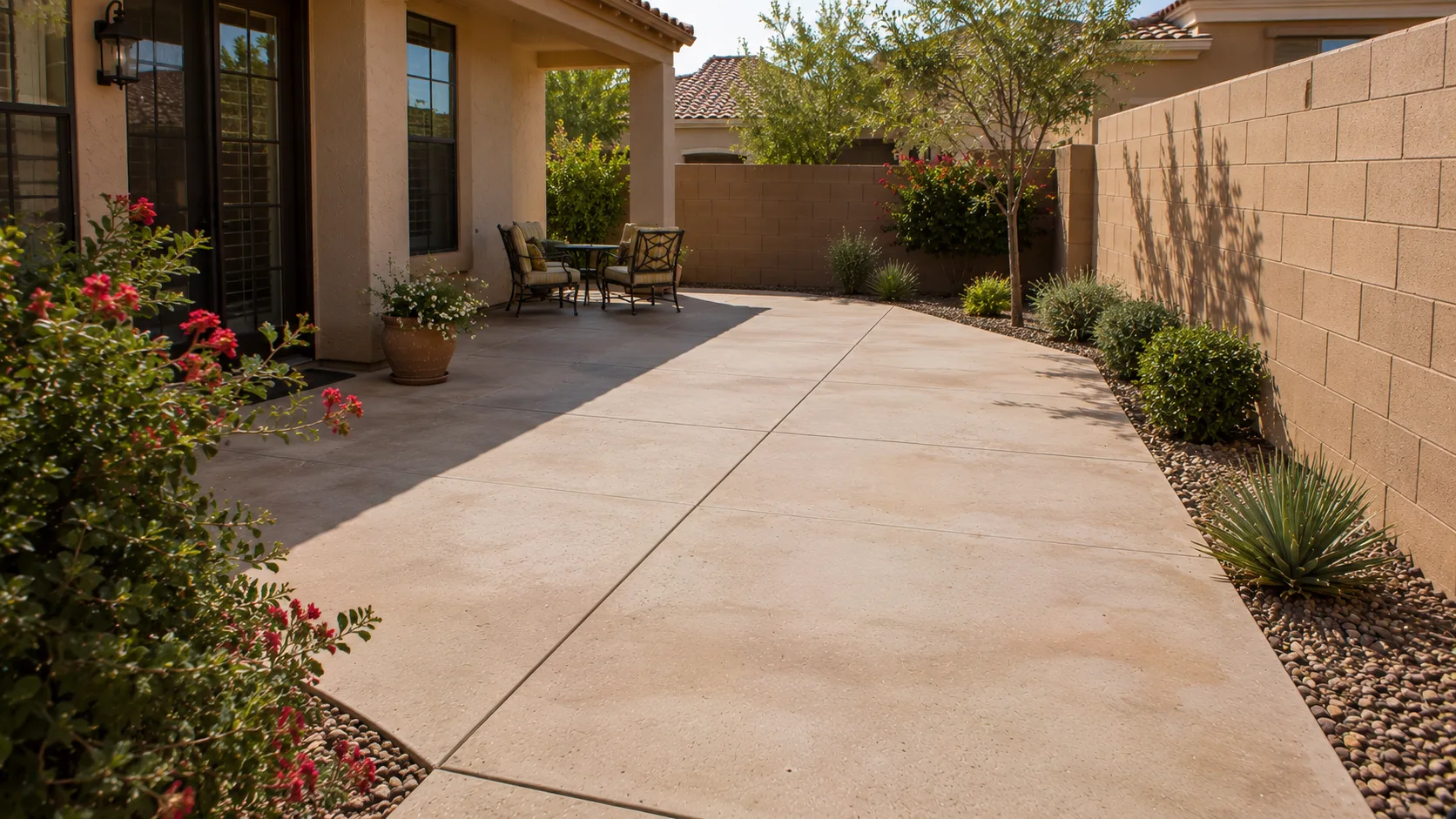
Mistake 2: Making The Patio Too Small For Real Furniture
The opposite mistake is drawing a tiny patio that technically fits a table but does not fit people using the table.
Furniture needs more than its footprint. People pull chairs back, walk around corners, set down drinks, move between door and grill, and try not to bump into planters every time they stand up. A patio that looks fine when empty can feel unusable once furniture arrives.
Avoid planning from catalog photos alone. Instead:
- Mark the furniture footprint with tape, cardboard, or temporary objects.
- Walk around it from every door and gate.
- Pretend someone is carrying a tray, towel, pool bag, or stack of cushions.
- Check whether the path still works when chairs are pulled out.
- Leave planting and pots out of the main walking line.
This does not require exact universal clearances. It requires testing the layout like a person who will actually live with it.
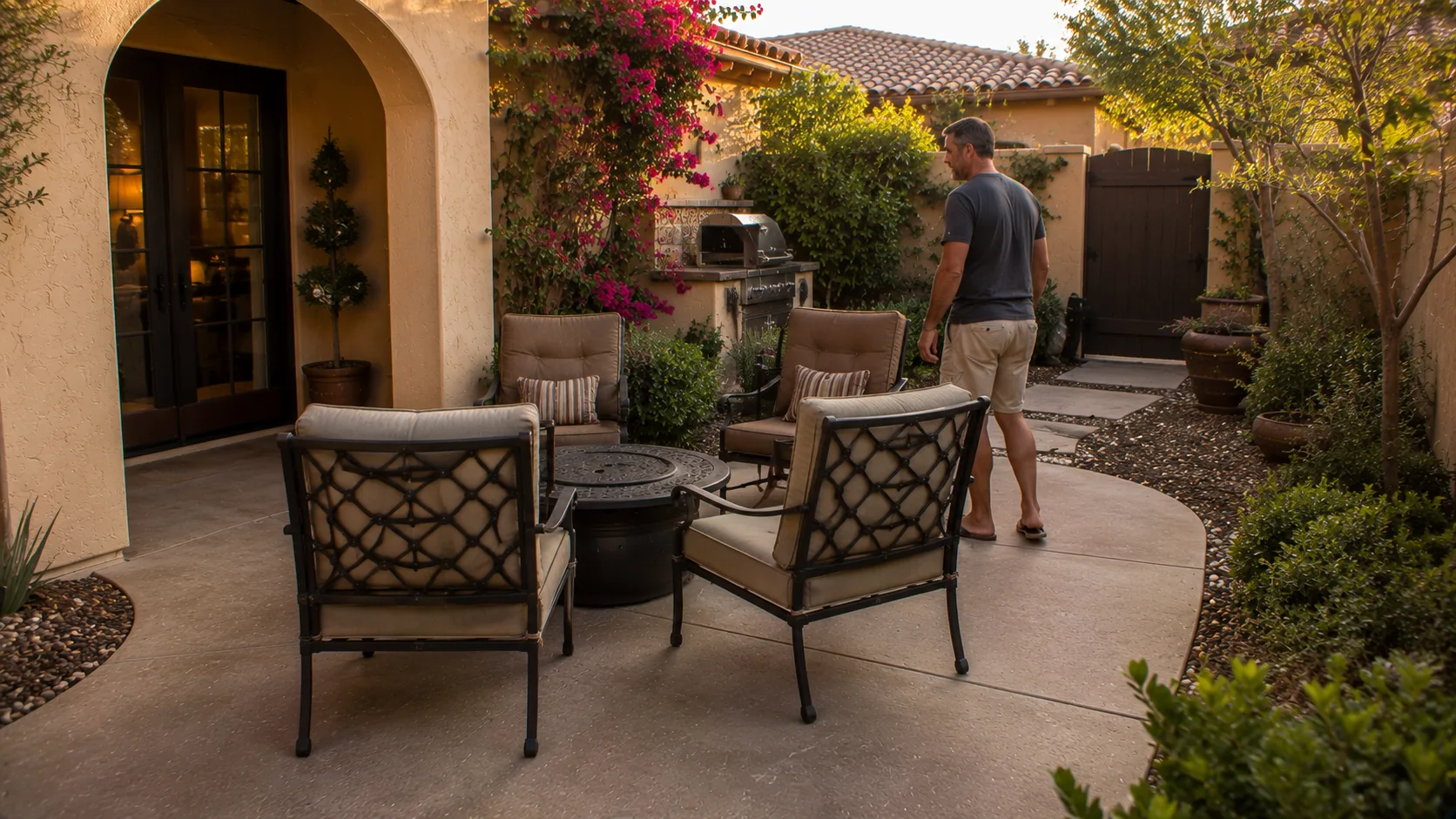
Mistake 3: Forgetting The Route From The Door
In small backyards, the first few steps from the house matter a lot.
If the door opens into a chair, grill, planter, step, loose gravel zone, or awkward turn, the whole yard feels clumsy. People need an obvious route from the house into the outdoor space before the design gets decorative.
Watch for:
- Doors that swing into furniture.
- A grill parked where everyone has to pass.
- A step down into loose material.
- A narrow strip between house and table.
- A path that looks good from above but feels strange underfoot.
- A sitting area that blocks the side-yard or pool route.
The door should connect to the yard like an invitation, not like an obstacle course with better cushions.
Mistake 4: Treating Paths As Decoration
Small backyard paths are easy to underbuild because they feel secondary. But the path to the side gate, pool equipment, trash bins, raised beds, storage box, hose area, or utility pad may be one of the most-used parts of the yard.
A decorative path can fail when:
- Stepping pads are spaced for looks, not walking.
- Loose gravel migrates onto a hard surface.
- A curve forces people to cut the corner.
- The route is too narrow beside planting.
- The path disappears behind furniture or pots.
- The transition creates a trip edge.
Paths do not need to be dramatic. They need to be readable, stable, and connected to where people actually go.
For compact utility zones, Small Concrete Utility Pad for Bins, Hoses, and Side Yards has useful planning boundaries even when your project is not a pad.
Mistake 5: Creating Trip Edges At Every Transition
Small yards often combine many surfaces: patio, pavers, decomposed granite, gravel, turf, mulch, stepping stones, edging, pool deck, and thresholds. Every transition is a chance to make the yard feel intentional or annoying.
Trip-edge problems can show up where:
- A patio meets gravel or decomposed granite.
- Pavers settle next to concrete.
- Edging rises too prominently beside a walkway.
- Stepping stones rock or sit proud of surrounding material.
- A threshold or step changes height unexpectedly.
- Loose material washes or kicks onto the walking surface.
This guide does not give accessibility or construction specifications. The homeowner takeaway is simpler: transitions deserve attention before installation, and qualified help is wise when grade changes, steps, slopes, pool areas, entries, drainage, or accessibility needs are involved.
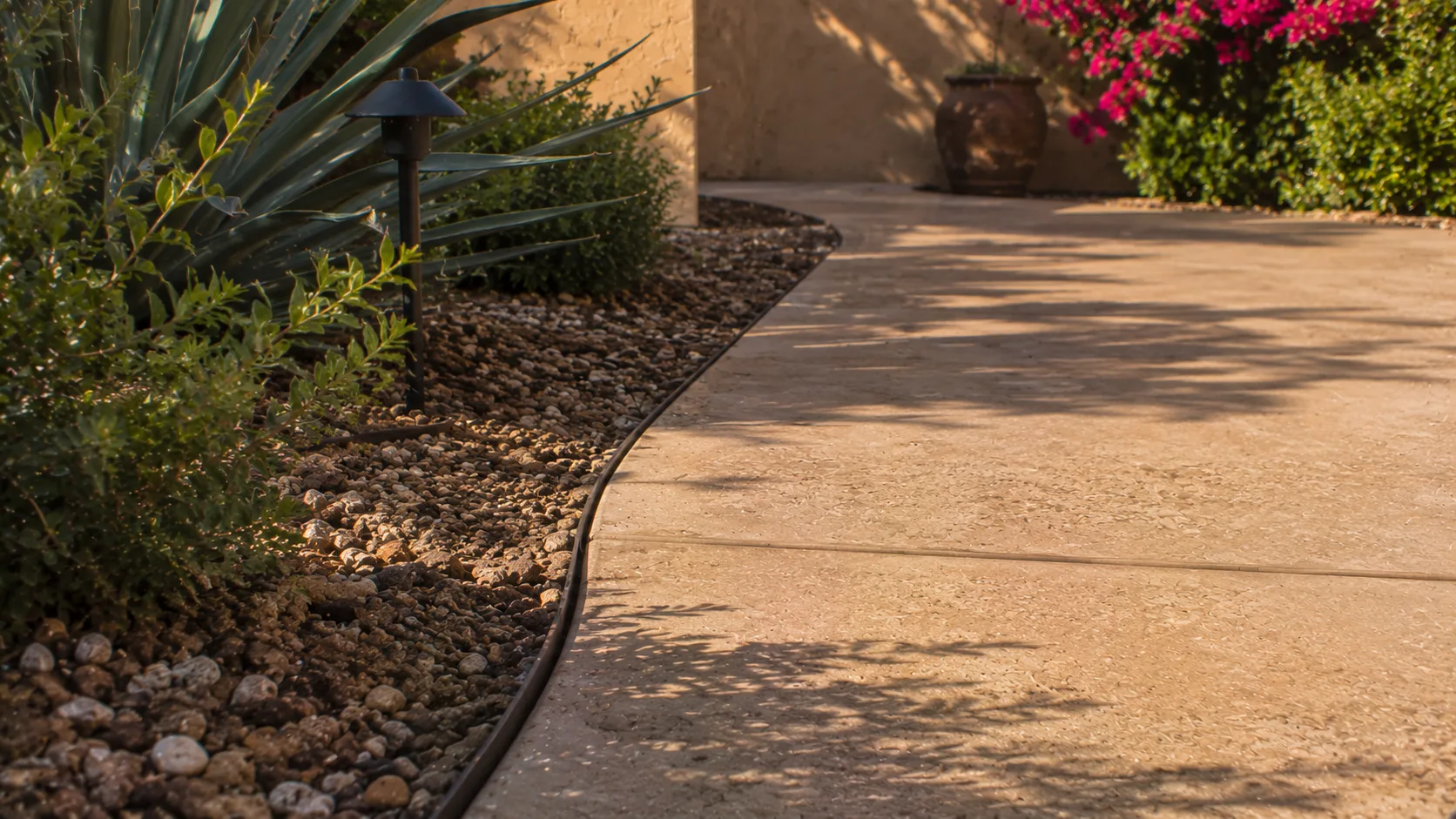
Mistake 6: Ignoring Reflected Heat
In hot, dry yards, hardscape is not only a surface. It is a heat experience.
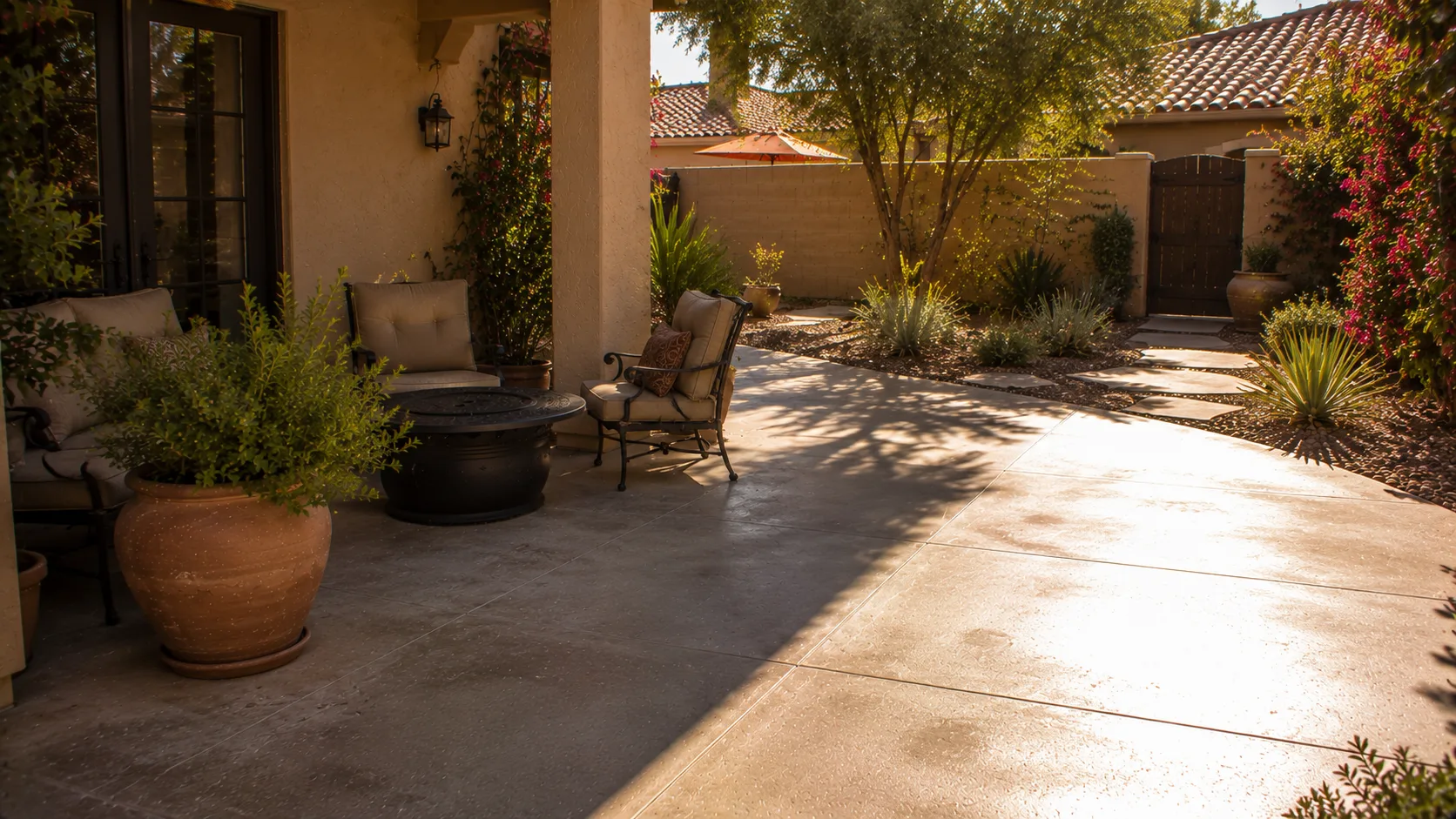
Concrete, pavers, walls, gravel, stucco, glass, and pool decks can all bounce light and heat into the same small space. A patio may look clean in the morning and feel punishing in late afternoon.
Look for:
- West-facing walls.
- Light gravel beside a seating area.
- Dark hardscape in full sun.
- Large unshaded concrete or paver zones.
- Seating backed against reflective stucco.
- Outdoor dining placed where the sun wins every evening.
Shade can come from architecture, umbrellas, shade structures, trees, vines, or future planting where locally appropriate. The right answer depends on the house, exposure, wind, utilities, roots, maintenance, and local growing conditions.
Start with Backyard Shade Ideas for Hot Climates and Shade in Low-Water Landscapes before pretending hardscape comfort is only about the ground.
Mistake 7: Leaving Planting As Leftovers
Hardscape often gets planned first and planting gets pushed to the edges. In a small yard, that can make the space feel boxed in, hot, and unfinished.
Planting should have a job:
- Soften a wall.
- Frame a seating area.
- Create depth beyond the patio edge.
- Filter glare.
- Separate a utility route from a lounge area.
- Make a small yard feel layered instead of paved.
The mistake is not using too little planting in every case. The mistake is using planting only where the hardscape forgot to stop.
For low-water planting roles, How to Choose Plants for a Low-Water Landscape is more useful than copying a one-size plant list from another region.
Mistake 8: Hiding Maintenance Access
Small backyards have practical needs that do not disappear because the patio looks good.
Leave access for:
- Hose bibs.
- Irrigation valves.
- Pool equipment.
- Gates.
- Storage.
- Trash and recycling bins.
- Drains or cleanouts where present.
- Planting maintenance.
- Furniture moving and seasonal cleanup.
Hardscape that blocks access may look clean for the first week and become irritating for years. The best small-yard layouts make maintenance feel boring. Boring is underrated.
Mistake 9: Forgetting Drainage Awareness
Hardscape changes how water moves. Even small changes can affect puddling, runoff, soil movement, gravel washout, staining, or where debris collects.
Before adding or expanding hardscape, notice:
- Where water goes after rain.
- Whether irrigation overspray hits hard surfaces.
- Whether downspouts dump into the planned patio area.
- Whether gravel or mulch washes across a path.
- Whether the yard slopes toward the house, pool, gate, or neighbor.
- Whether new surfaces could trap water at a threshold.
This is not drainage engineering advice. It is a reminder to slow down before covering the clue trail. If water already pools, washes, or moves toward the house, involve a qualified professional before hardscape makes the problem look more expensive.
Mistake 10: Choosing Materials Before Choosing The Experience
Concrete, pavers, gravel, decomposed granite, stone, turf, mulch, and edging can all be useful in the right situation. None of them automatically fixes a weak layout.
Choose the experience first:
- Do you want a quiet dining patio?
- A pool-adjacent lounge?
- A side-yard pass-through?
- A grill zone?
- A courtyard sitting area?
- A small garden path?
- A simple service route?
Then decide which surface category fits the use, maintenance tolerance, climate, drainage, shade, furniture, and installation realities.
If decomposed granite is in the mix, read How to Use Decomposed Granite Without Tracking Dust Into the House. If concrete is in the mix, Outdoor Concrete Finish Options can help with finish-level thinking without turning the choice into a product hunt.
A Better Small Backyard Hardscape Planning Sequence
Use this order before committing:
- Walk every route from the house, gate, pool, grill, storage, and utility areas.
- Mark the main sitting or dining zone at real scale.
- Place furniture temporarily before finalizing the patio outline.
- Identify shade, glare, and heat pressure.
- Watch how water moves after rain or irrigation.
- Decide where transitions need to be stable and readable.
- Reserve planting space before the whole yard becomes surface.
- Keep maintenance access open.
- Choose material categories only after the layout works.
- Call a pro when the project touches drainage, grade, steps, pool edges, utilities, structure, code, permits, accessibility needs, or large hardscape work.
Small Yard Scenarios
The Tiny Dining Patio
The table fits, but chairs hit the wall, the grill blocks the route, and planters crowd the corners.
Fix the use first. The patio may need a different shape, smaller furniture, a clearer route, or fewer decorative objects. Adding more material does not help if the layout is the problem.
The Pool-Adjacent Backyard
The surface looks clean but becomes crowded with towels, loungers, wet feet, furniture, and people moving between house and water.
Plan routes before decor. Pool-adjacent spaces need careful attention to slip, drainage, trip edges, heat, maintenance, and local safety requirements. Use qualified help where the work affects pool decks, barriers, electrical, drainage, steps, or code-sensitive areas.
The Side-Yard Connection
The backyard patio is pleasant, but the side route is a loose, narrow strip that everyone uses anyway.
Treat the side route as part of the backyard system. Low-Water Side Yard Ideas can help with narrow-space planning without turning the side yard into an afterthought.
FAQs
What is the biggest hardscape mistake in a small backyard?
The biggest mistake is usually ignoring circulation. If people cannot move from the house to seating, grill, gate, pool, storage, or utility areas without dodging furniture and trip edges, the yard will feel awkward even if the materials are attractive.
Should a small backyard have more patio or more planting?
It depends on use, climate, shade, maintenance, and the house. A small yard usually needs enough patio for real activity and enough planting to soften heat, edges, walls, and visual flatness. The mistake is letting either one consume the whole yard without a job.
Are pavers better than poured concrete for small yards?
Not automatically. Pavers can help with modular patterns, curves, repairs, and detailed transitions. Poured concrete can create a calmer continuous surface. The better choice depends on layout, drainage, base prep, finish goals, maintenance tolerance, and site conditions.
How do I make a small hardscape feel less cramped?
Start by removing layout friction. Keep the main routes clear, test furniture at real scale, reduce unnecessary material changes, soften edges with planting, add shade where appropriate, and avoid placing pots, grills, or storage in the walking line.
When should I call a professional?
Call a qualified professional when the project involves drainage, grade changes, steps, retaining conditions, utilities, pool areas, structural work, code or permit questions, accessibility needs, or a hardscape area large enough that mistakes would be expensive to undo.
Conclusion
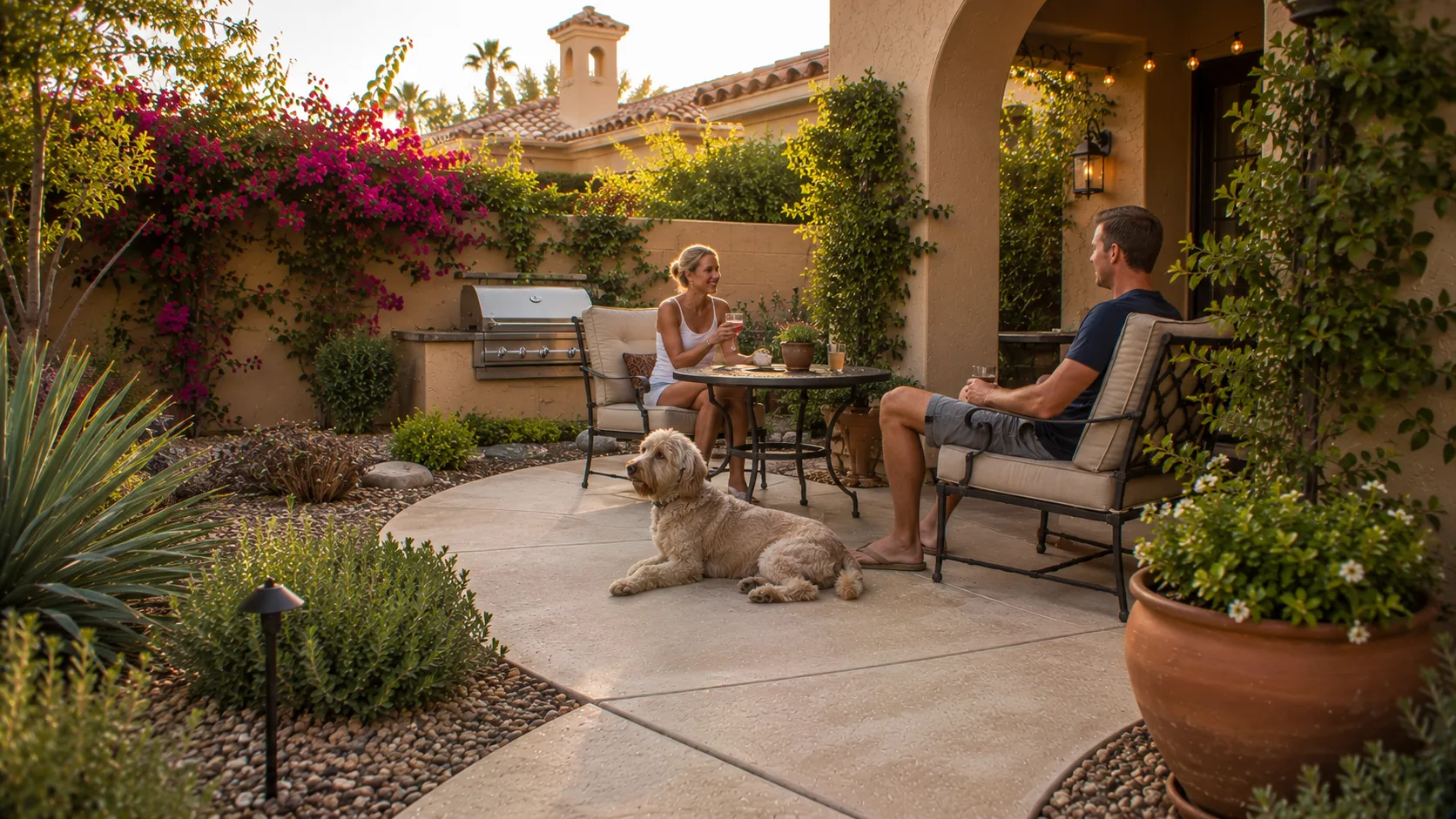
Small backyard hardscape should make the yard feel calmer, easier to use, and more connected to the house. The best layouts are not the ones with the most material. They are the ones where routes are clear, furniture fits real life, transitions behave, shade and heat are considered, drainage clues are respected, and planting still has room to make the yard feel alive.
Choose the layout before the material. The yard will tell you where the hardscape belongs if you walk it before you build it.