
The front entry path is the part of the yard that has to be decorative, practical, directional, weather-aware, guest-friendly, and forgiving of people carrying groceries like they are trying to set a personal record.
In a low-water front yard, the path matters even more. Without lawn, the walkway has to do a lot of visual work: it points people toward the door, organizes gravel and planting, softens the jump from driveway to porch, and keeps the front yard from looking like a rock field with a house attached.
This guide is product-neutral. It does not recommend specific pavers, stone, gravel, decomposed granite, concrete, edging, lighting, plant, nursery, installer, sealer, drainage, or irrigation products. Local codes, accessibility needs, HOA rules, utility clearances, drainage conditions, qualified landscape professionals, contractors, arborists, water providers, and local plant experts still control what is appropriate for your actual front yard.
The Direct Answer
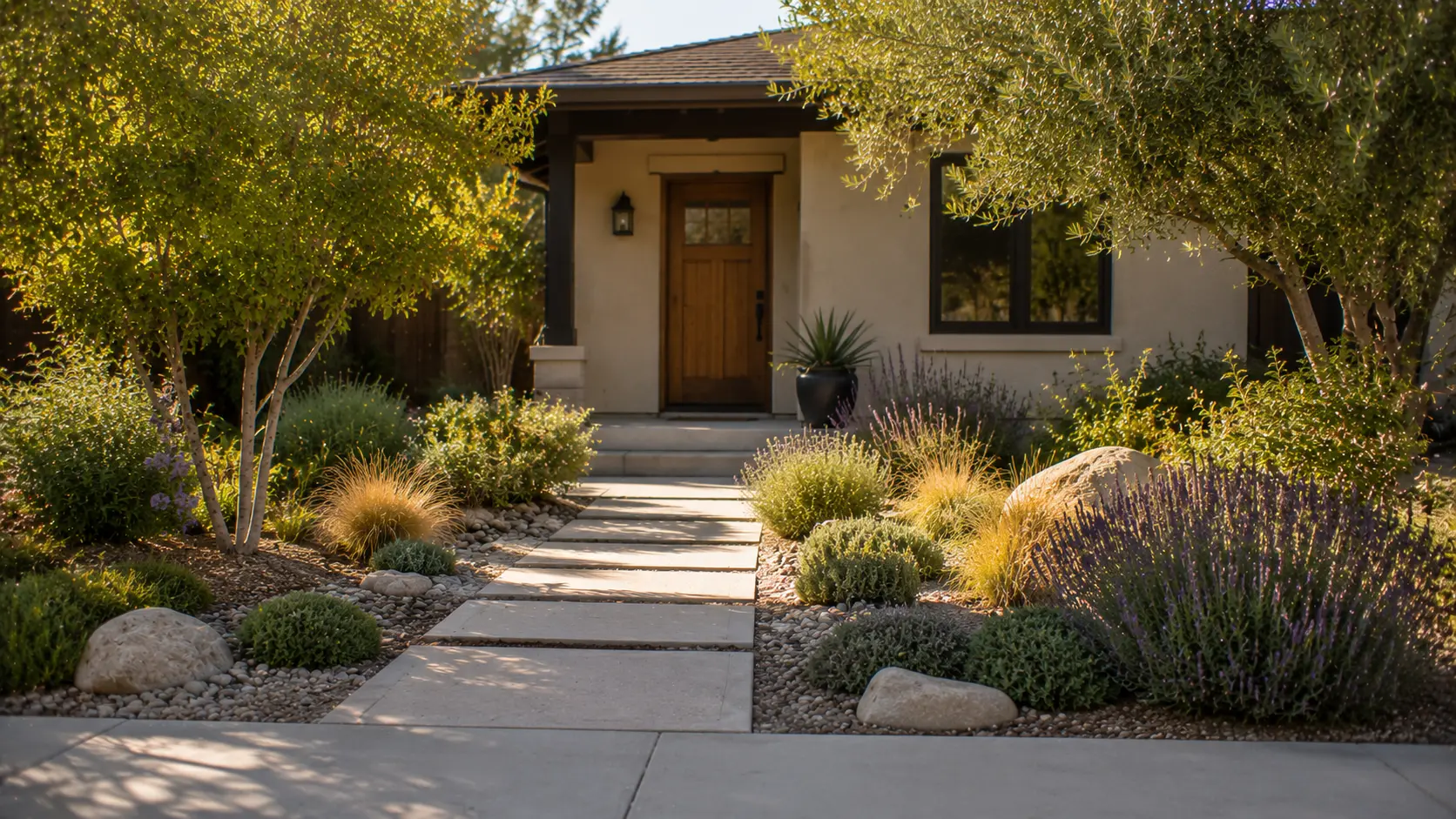
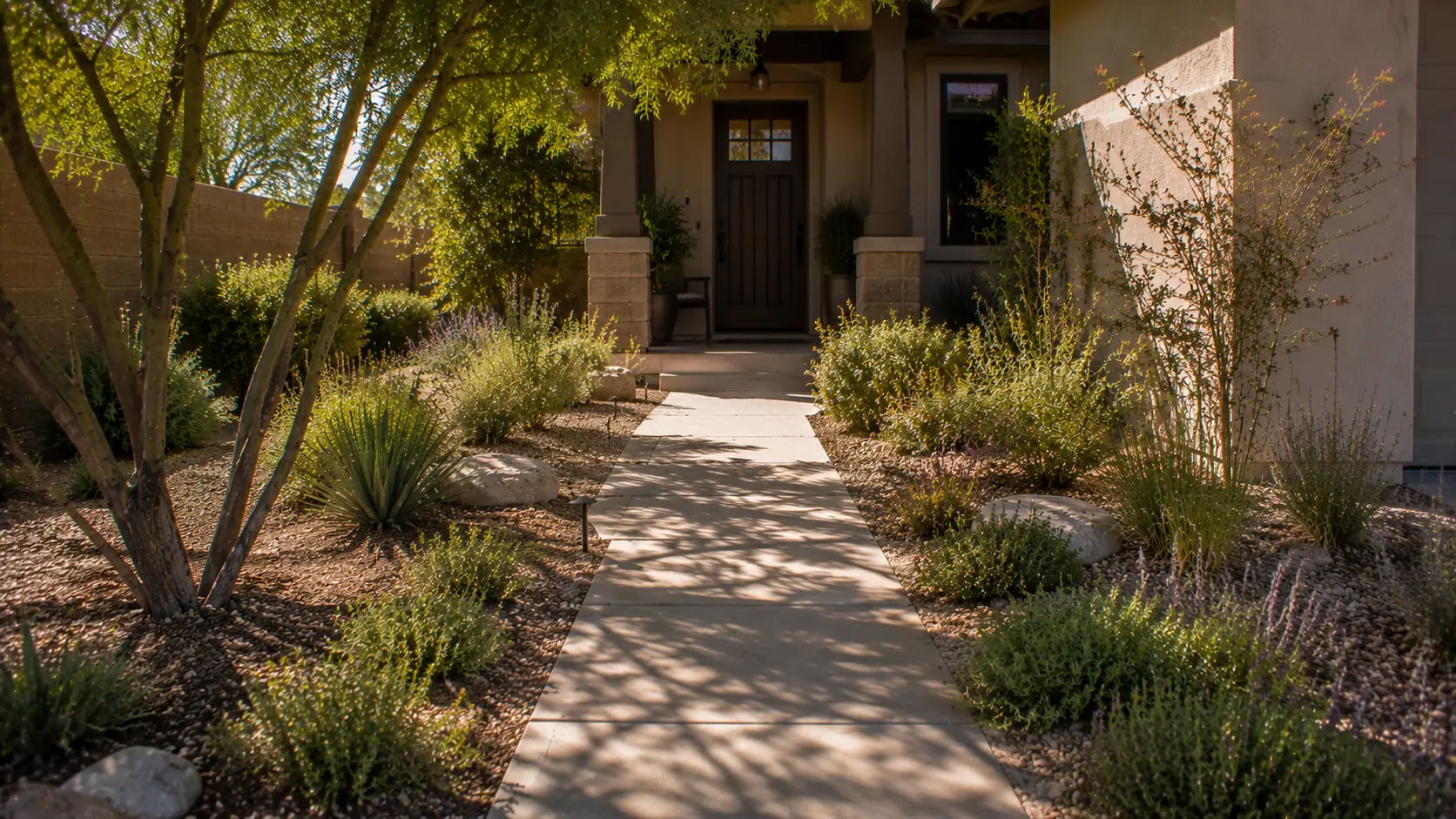
A good low-water front yard entry path should be easy to find, comfortable to walk, visually connected to the house, stable underfoot, and framed by planting or materials that make the route feel intentional.
Start with the walking line from street, sidewalk, driveway, or curb to the front door. Then decide where the path should widen, where it should cross gravel or planting, how loose materials will be contained, where shade or lighting would improve comfort, and how the entry will look from both the curb and the front door.
The path is not just a strip of hardscape. It is the sentence that tells visitors how to read the yard.
For the broader front-yard framework, start with Low-Water Front Yard Ideas. This guide narrows that idea down to the actual route people use.
Make The Door Obvious Before You Choose Materials
The first job of an entry path is wayfinding.
If the path is hidden behind gravel, broken into decorative stepping stones, or visually overpowered by the driveway, guests may not know where to walk. Delivery drivers will invent a shortcut. Kids will invent a better shortcut. Your carefully placed planting will learn about shortcuts.
Look at the house from the street and ask:
- Is the front door easy to identify?
- Does the path start where people naturally arrive?
- Does the route feel more important than the surrounding gravel?
- Does the path connect to the driveway, sidewalk, or curb without a weird gap?
- Are porch steps, gates, or thresholds clear?
- Does planting frame the entry, or does it hide the entrance?
A low-water yard can be informal and still have a clear path. Curves, angles, staggered pads, and decomposed granite can all work when the route reads as deliberate.
Match The Path To How People Actually Arrive
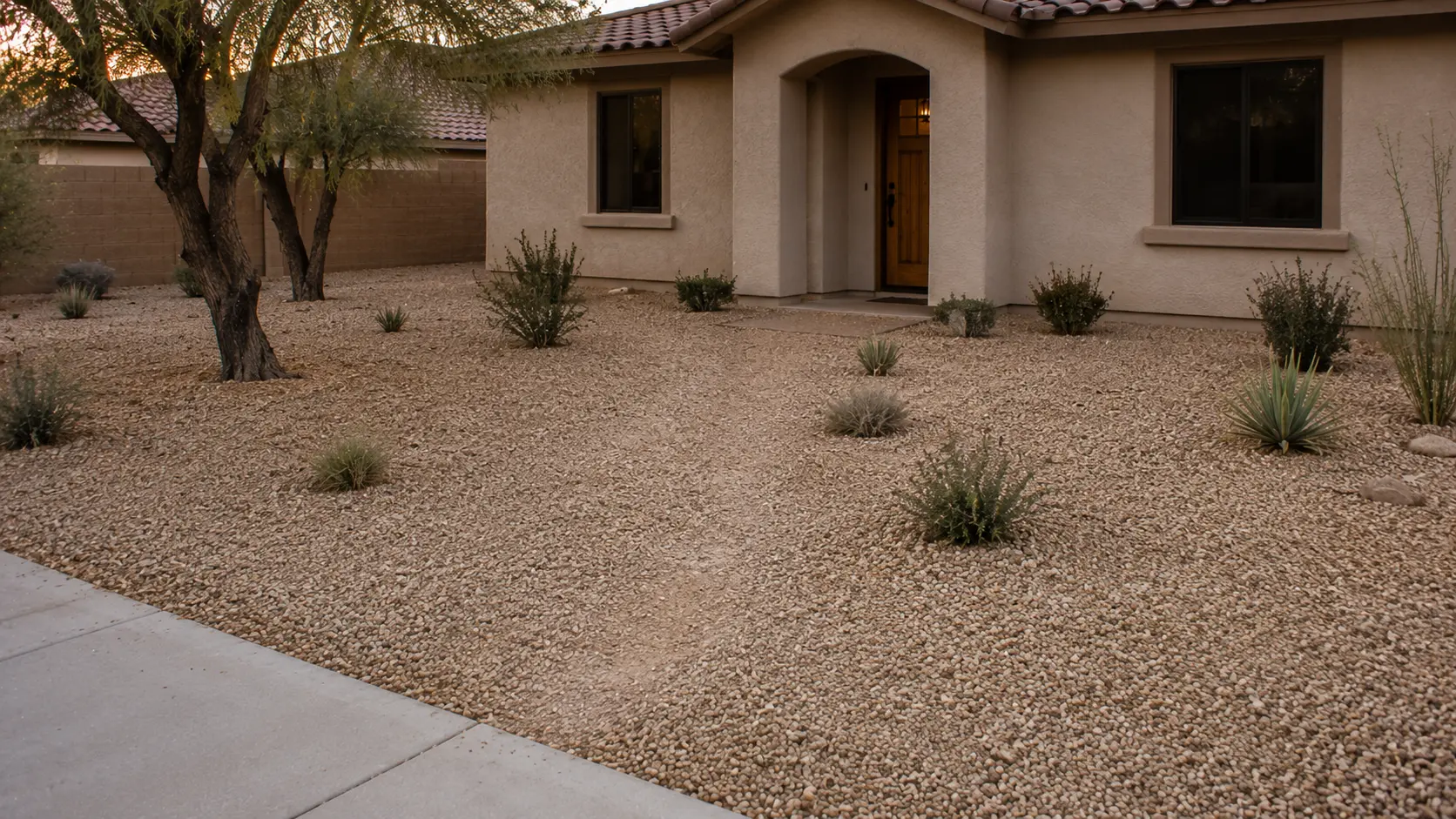
Some front entries are used from the sidewalk. Others are used almost entirely from the driveway. Some have a curb cut, a side gate, a garage-dominated approach, or a front porch that is technically visible but emotionally missing.
Plan for the real arrival pattern:
- From the driveway: make the transition from parked car to front door obvious.
- From the sidewalk: create a route that reads from the street, not just from the porch.
- From the curb: avoid asking guests to cross loose rock without a clear landing.
- From the side gate: keep the front path from fighting the side-yard access route.
- From a small porch: give the entry enough visual weight that it does not look accidental.
This is where many low-water entry paths go wrong. The homeowner installs a beautiful material, but the path begins in the wrong place. A path that ignores human behavior becomes front-yard decoration, not circulation.
If the entry connects to a narrow side route, Low-Water Side Yard Ideas can help keep that passage useful without overbuilding it.
Choose Stable Surfaces For The Main Walking Line
Front entry paths are not background texture. People walk them in sandals, dress shoes, work boots, wet weather, low light, and distracted moods.
For the main walking line, think about:
- Firmness underfoot.
- Trip edges.
- Loose material migration.
- Slope and grade changes.
- Door thresholds and porch steps.
- Wheel movement for strollers, carts, luggage, or bins.
- Cleanup after leaves, dust, gravel, and storm debris.
Concrete, pavers, stone slabs, compacted decomposed granite, and other hardscape approaches can all fit a low-water yard, depending on site conditions and installation quality. The key is not one perfect material. The key is a path that behaves like a path after the photo is taken.
If decomposed granite is part of the route, keep tracking and thresholds in mind. How to Use Decomposed Granite Without Tracking Dust Into the House covers that problem in more detail.
Use Gravel As Background, Not The Walkway's Boss
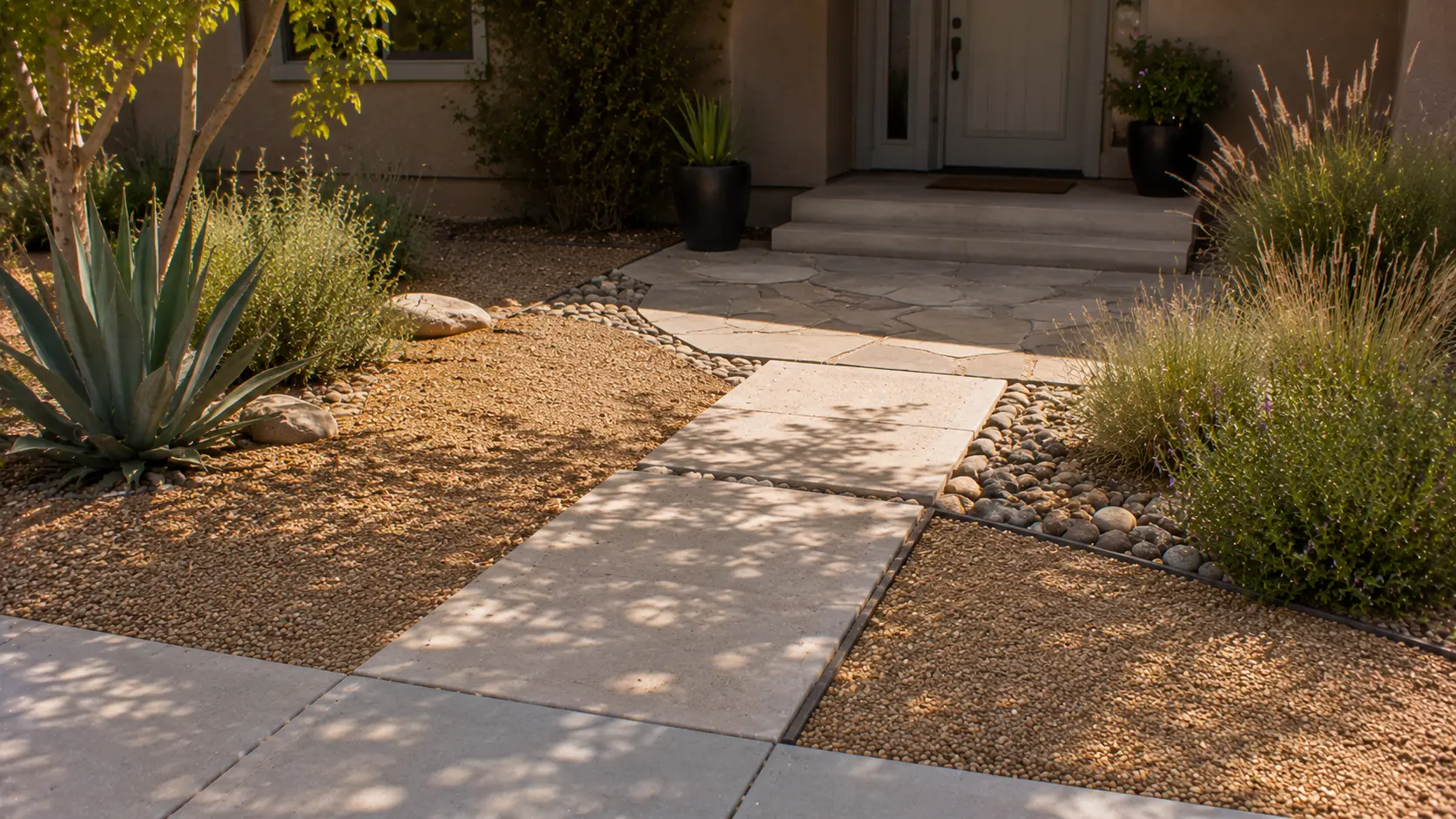
Gravel can make a low-water front yard feel calm, dry-climate appropriate, and visually clean. It can also erase the entry path if everything is the same color, texture, and height.
Use gravel to support the path:
- Let it frame planting beds.
- Keep it lower in visual priority than the main route.
- Contain it so it does not roll onto walking surfaces.
- Avoid deep or unstable gravel where people step frequently.
- Break up large gravel fields with planting, edges, or path geometry.
- Use contrast carefully so the walkway is legible without becoming loud.
A path surrounded by gravel should still feel like the invitation. Gravel should not make guests wonder whether they are allowed to walk across the yard.
For the broader groundcover tradeoff, Mulch vs Gravel in Low-Water Landscapes explains why rock, mulch, and planting zones need different jobs.
Give The Path A Real Edge
Edges make a front path look finished and keep materials from slowly negotiating with each other across the yard.
Useful edge roles include:
- Keeping gravel out of pavers or concrete joints.
- Separating mulch from decomposed granite.
- Defining planting beds beside the path.
- Making a curved route read clearly from the street.
- Reducing the chance that loose material creeps onto steps or thresholds.
Edges can be subtle. They do not need to shout. But if the path, gravel, and planting all blur together, the whole entry can look temporary.
Concrete, stone, metal, paver, or other edging approaches may work depending on the site. Treat edging as a boundary, not as a drainage fix, retaining wall, root barrier, or code workaround. For adjacent hardscape thinking, Concrete Edging for Gravel, Mulch, and Planting Beds is the cleaner companion.
Frame The Path With Planting, Not Plant Obstacles
Planting is what keeps a low-water entry path from feeling like a utility route. But plants near the front walk need restraint.
Good path-side planting should:
- Leave comfortable shoulder room.
- Stay out of the walking line at mature size.
- Avoid thorns, brittle stems, heavy litter, or aggressive spreading near the route.
- Repeat enough to create rhythm.
- Soften hardscape without hiding the front door.
- Respect windows, utilities, porch steps, and sightlines.
The path edge is not the place for one of every plant that looked interesting at the nursery. A few repeated roles usually work better: low foreground softness, medium structure, a limited accent, and possibly a larger anchor where local conditions and clearances support it.
For plant-role thinking without turning the yard into a species list, use How to Choose Plants for a Low-Water Landscape.
Make The Path Wider Where Life Gets Messy
Not every part of the entry path needs the same width or emphasis.
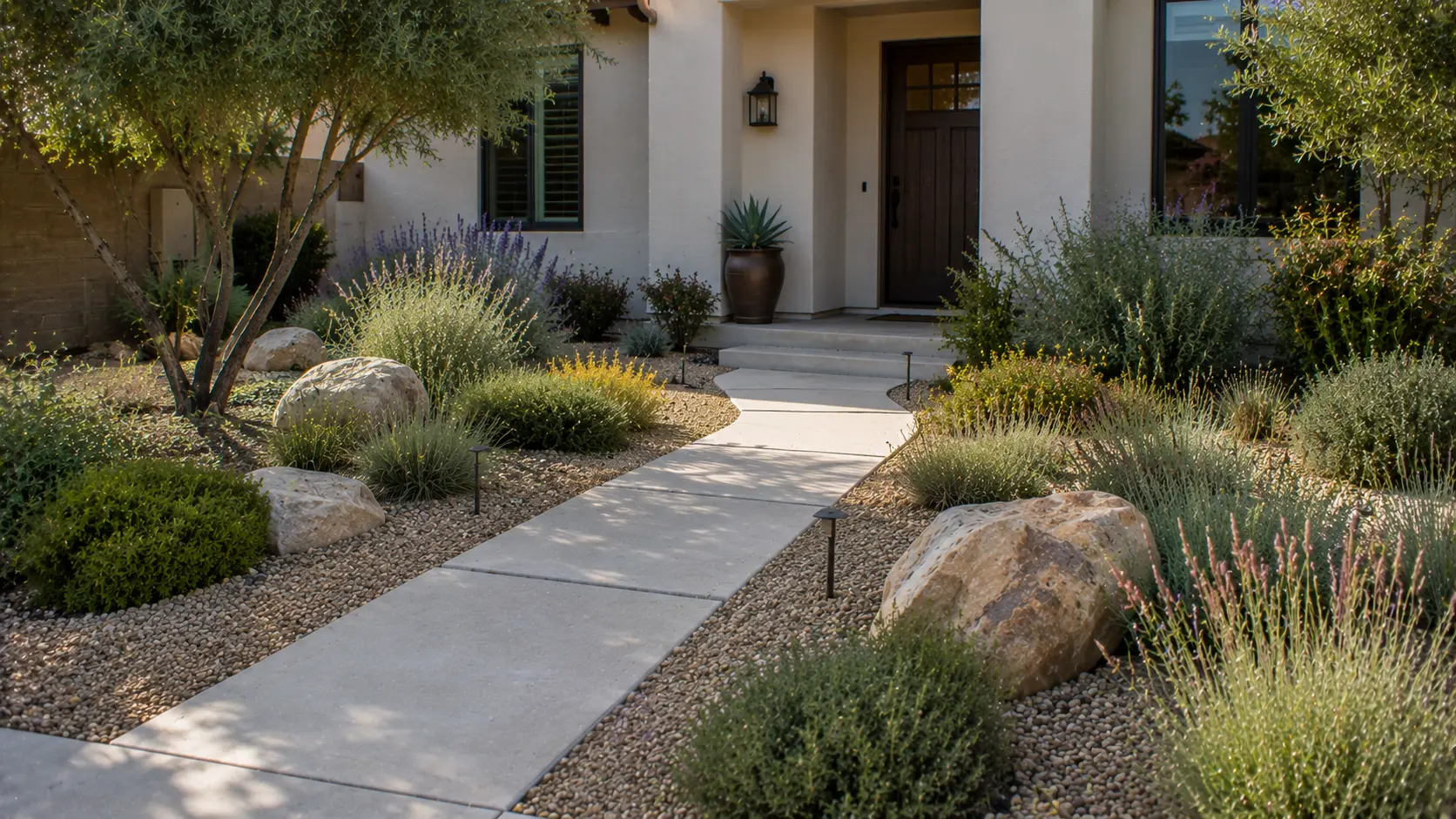
Widening can help at:
- The driveway transition.
- The porch or front step.
- A gate.
- A turn in the route.
- A place where guests pause.
- A bench, pot, or entry feature.
- A package drop zone.
The main mistake is making the whole path narrow because the drawing looked tidy. Real entries handle two people passing, someone carrying bags, a visitor waiting at the door, a delivery on the porch, or a person trying not to step into planting.
A small landing can be more useful than a dramatic path shape. For modest hard-surface zones, Small Concrete Utility Pad for Bins, Hoses, and Side Yards has relevant boundary thinking even when the project is not a side yard.
Think About Heat And Glare
Low-water entry paths often sit in full sun, near stucco walls, beside driveways, or across reflective gravel. That can make the approach feel harsher than it looks in a plan.
Watch for:
- Afternoon sun on the walking route.
- Light-colored gravel reflecting into the entry.
- Dark hardscape absorbing heat.
- West-facing walls or garage doors.
- Planting that is too small to soften glare.
- A porch that feels exposed rather than welcoming.
Shade can come from architecture, existing trees, carefully selected planting, or future canopy where locally appropriate. Do not plant trees or large shrubs casually near foundations, utilities, roofs, sidewalks, or driveways. Mature size, roots, clearance, water needs, and local suitability matter.
Shade in Low-Water Landscapes and Backyard Shade Ideas for Hot Climates both explain the comfort side of this decision, even though the front entry has its own curb-appeal constraints.
Keep Drainage And Thresholds Boring
Entry paths are where drainage problems become daily annoyances.
The path should not send water toward the front door, trap runoff at the porch, wash gravel into the walk, or create a low spot that gathers silt after every storm. This is not a drainage engineering guide, but it is a strong argument for caution.
Before changing the path, notice:
- Where water flows after rain or irrigation.
- Whether the current path puddles.
- Whether gravel washes across the route.
- Whether soil or mulch collects near the threshold.
- Whether the porch, steps, or driveway create a low spot.
- Whether any work could affect utilities, grading, or accessibility.
Call a qualified professional when slope, drainage, steps, structural work, retaining conditions, code, accessibility, or utility conflicts are involved. The front door is a poor place to discover that enthusiasm is not a grading plan.
Use Lighting As Wayfinding, Not Theater
If people use the front entry after dark, lighting is part of the path experience.
Keep the idea simple:
- Make the start of the route visible.
- Mark turns or steps.
- Avoid glare into eyes or windows.
- Keep the front door recognizable.
- Do not make the yard look like a runway unless planes are expected.
Lighting work can involve electrical safety, local codes, fixtures, transformers, wiring, and placement constraints. This guide stays conceptual. Use qualified help where electrical work, permanent fixtures, or local rules are involved.
Three Entry Path Scenarios
The Driveway-To-Door Shortcut
The official walkway exists, but everyone cuts across the gravel from the driveway.
That is not a moral failure. It is data.
Either strengthen the official path so it matches how people arrive, or create a secondary stable route from the driveway. Do not punish the natural walking line with fragile planting and then act surprised when the planting loses.
The Gravel Yard With A Disappearing Path
The lawn was removed, gravel went in, and now the entry path barely reads from the street.
Add hierarchy. A stronger path edge, contrasting but restrained material, repeated planting, or a widened entry landing can make the route visible again without turning the yard into a hardscape showroom.
The Tiny Front Yard
Small yards do not need tiny versions of every path idea.
Choose one clear route, one clean material palette, one or two planting masses, and an entry landing that feels generous enough for real use. Too many curves, colors, stones, and accent plants can make a small entry feel busy instead of welcoming.
What Not To Do
Do not make guests guess where to walk.
Do not rely on loose gravel as the main high-traffic entry surface.
Do not place thorny, brittle, messy, or fast-spreading plants where people brush past every day.
Do not let path materials bleed into planting beds, gravel fields, steps, or thresholds.
Do not ignore grade, drainage, utilities, accessibility, HOA rules, or local code constraints.
Do not choose a path material only because it looked good in one photo from a different climate, house style, and maintenance reality.
Do not turn a front entry into a trip-edge sampler.
Quick Planning Checklist
Before changing the front entry path, walk the route in this order:
- Stand at the street or sidewalk and find the front door.
- Walk from the driveway to the door.
- Walk from the curb or sidewalk to the door.
- Notice where your feet want to go.
- Mark where the path should widen.
- Identify loose material that would migrate.
- Look for hot, glaring, or exposed sections.
- Check where water moves after rain or irrigation.
- Decide which planting should frame the route without crowding it.
- Get qualified help for drainage, structural, electrical, code, or accessibility questions.
FAQs
What is the best material for a low-water front entry path?
There is no single best material. Concrete, pavers, stone, compacted decomposed granite, and other approaches can work when they are stable, locally appropriate, properly installed, and matched to drainage, slope, maintenance, and daily use. The main entry route should feel secure underfoot and easy to follow.
Can I use decomposed granite for a front walkway?
Decomposed granite can work in some front-yard paths when it is properly contained, compacted, and kept away from problem thresholds. It can also track, loosen, wash, or become dusty depending on the site and installation. Use local guidance and think carefully about doors, slope, runoff, and high-traffic areas.
How do I make a low-water entry path look welcoming?
Make the front door obvious, give the route a clean edge, repeat planting along the path, use gravel or mulch as background rather than confusion, widen the path where people pause, and soften exposed hardscape with locally appropriate planting or shade.
Should the front walkway be straight or curved?
Either can work. A straight path can feel formal and clear. A curved path can soften the yard and move through planting. The route should still be legible from the street and should not add awkward turns just to look designed.
When should I call a professional?
Call a qualified professional when the path involves slope, drainage, steps, retaining conditions, structural work, electrical lighting, accessibility, code, HOA rules, utilities, major concrete or paver installation, or tree and large-shrub placement. The more the path affects safety, water movement, or permanent hardscape, the less it should be improvised.
The Bottom Line
A low-water front entry path should make the house easier to approach and the yard easier to understand.

Start with the route people actually use. Make the front door obvious. Choose stable surfaces for the main walking line. Use gravel as background, planting as framing, edges as discipline, and shade or lighting where they improve comfort.
The best entry path does not beg for attention. It quietly tells everyone where to go, and makes the front yard look like it meant to welcome them.