
Gravel and concrete can be excellent neighbors. They can also spend years slowly arguing across the yard.
Loose gravel rolls onto patios. Decomposed granite dust creeps toward thresholds. Concrete edges chip, stain, or collect debris. Pavers settle at the border. Planting beds catch stray rock. The transition that looked clean on installation day becomes the place where every material shows its worst habit.
This guide is for planning cleaner transitions between gravel, decomposed granite, concrete, pavers, patios, side yards, paths, pads, planting beds, and door thresholds. It is product-neutral. It does not rank materials, recommend edging products, provide construction specifications, solve drainage engineering, or replace qualified local guidance.
For related planning, keep Concrete Edging for Gravel, Mulch, and Planting Beds, How to Use Decomposed Granite Without Tracking Dust Into the House, and Small Backyard Hardscape Mistakes That Make Projects Feel Awkward nearby.
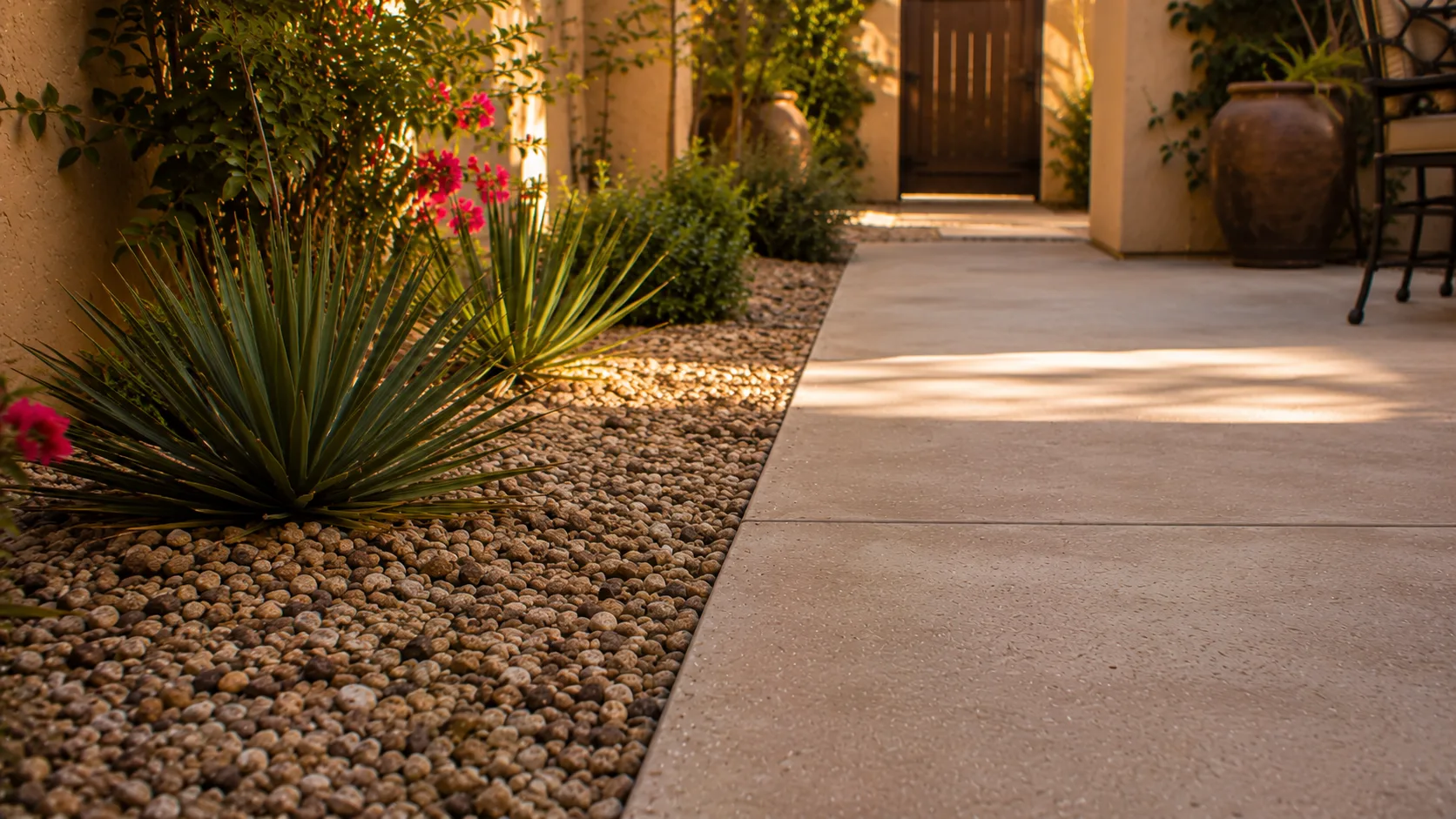
The Direct Answer
A clean gravel-to-concrete transition needs three things:
- A clear edge that tells each material where to stop.
- A surface relationship that does not create a trip edge.
- A maintenance plan for the dust, leaves, fines, gravel, water, and foot traffic that will keep arriving.
The best transition depends on the job. A patio edge may need visual clarity and broom-friendly cleanup. A side-yard route may need stable footing and bin access. A doorway may need a hard landing before anyone steps inside. A planting bed may need containment without trapping runoff or roots.
The transition is not a decorative line. It is where the yard proves whether the materials were planned together.
Start With The Real Walking Line
Before choosing an edge detail, walk the route.
Look at how people actually move:
- House to patio.
- Patio to side gate.
- Driveway to backyard.
- Pool to door.
- Grill to table.
- Trash bins to gate.
- Hose bib to planting bed.
- Storage area to concrete pad.
If everyone naturally steps across the gravel at one point, that point needs a real transition. If a side route carries bins, pets, guests, pool towels, or garden tools, do not treat it like background texture.
Decorative transitions fail when they ignore traffic. The cleanest edge in the world will not help if the walking line cuts around it.
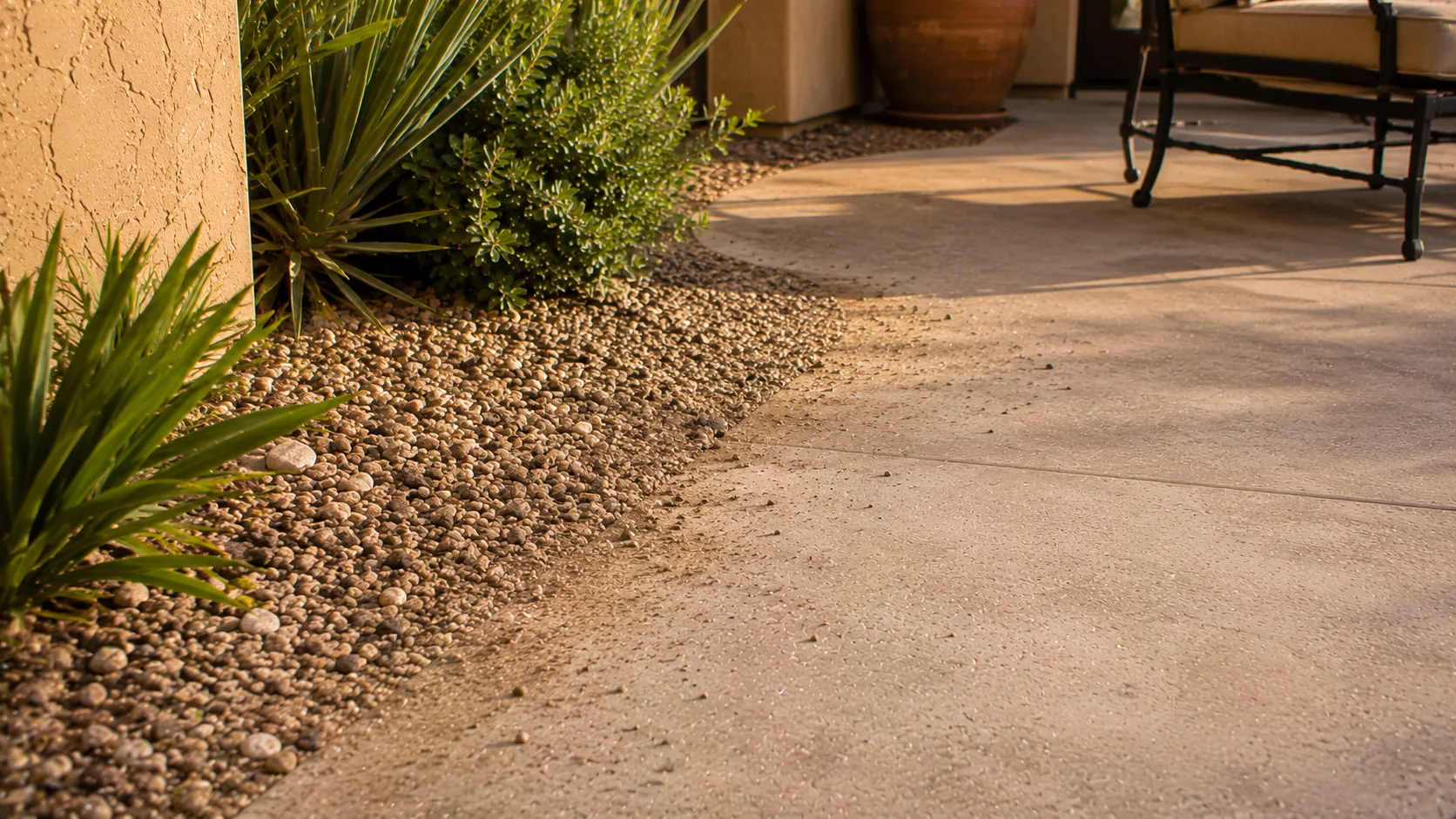
Make The Concrete Edge Read Clearly
Concrete can feel calm and finished when its edge has purpose. It can feel accidental when it simply ends and gravel begins.
Common ways to make the edge read clearly include:
- A straight or gently curved concrete edge that matches the patio shape.
- A narrow border or band between concrete and gravel.
- A paver or stone course that bridges the visual change.
- A planting strip between hard surface and loose material.
- A compacted decomposed granite shoulder beside concrete.
- A small landing where a path meets a patio or door.
This is not a ranking. Each choice has tradeoffs. The goal is to make the transition legible enough that people know where to walk, where gravel belongs, and where maintenance should stop.
If you are deciding whether concrete, pavers, or another hardscape surface fits the larger project, see Concrete Pavers vs. Poured Concrete for Backyard Projects.
Use A Border When Materials Need A Mediator
Sometimes gravel and concrete need a third material between them.
A border can help when:
- Gravel keeps rolling onto the patio.
- Decomposed granite fines collect at the concrete edge.
- The concrete edge looks too abrupt.
- A paver patio needs a cleaner perimeter.
- A side-yard path needs visual direction.
- A planting bed needs separation from both hardscape and loose rock.
Borders can be made from many material categories: concrete edging, pavers, stone, metal edging, a planting strip, or a compacted shoulder. The right choice depends on visibility, traffic, maintenance tolerance, slope, drainage, roots, and how permanent the line should be.
Do not use a border as a substitute for drainage correction, a retaining condition, or a structural edge. If water, soil, grade, or roots are already causing trouble, the border is not the first decision.
Watch The Height Relationship
Most transition annoyances happen at the height change.
If gravel sits too high, it spills onto concrete. If it sits too low, the concrete edge can become a toe-catching lip. If decomposed granite softens at the edge, the route can develop a small drop or crumbling shoulder. If pavers settle beside concrete, the transition becomes uneven.
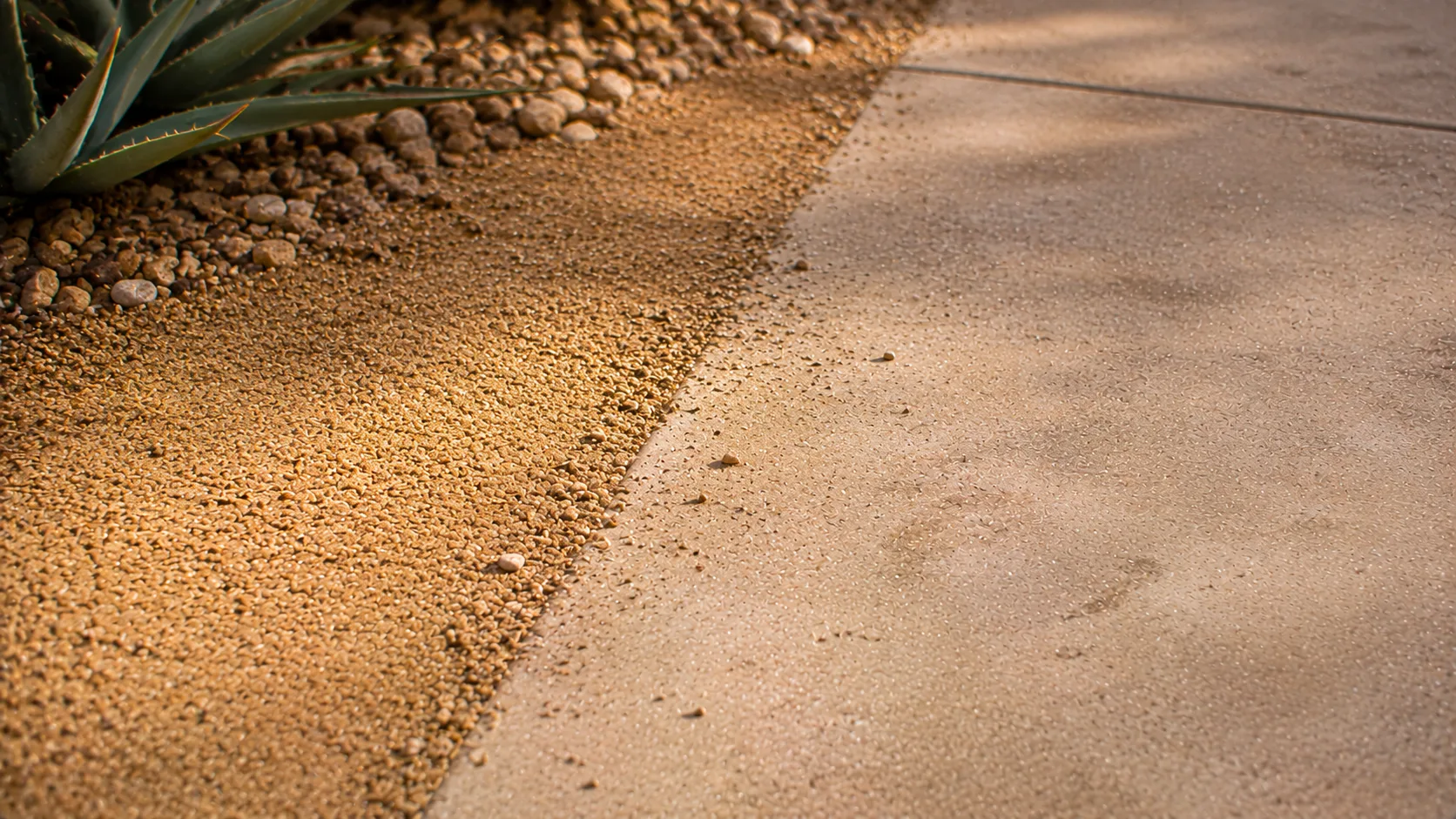
This guide does not provide exact clearance or accessibility standards. The homeowner planning point is simpler: check the height relationship before the materials go in, then check it again after use and weather.
Think about:
- Bare feet near pools or patios.
- Sandals and dress shoes at entries.
- Rolling bins in side yards.
- Kids moving fast.
- Pets cutting corners.
- Guests carrying food or bags.
- Low-light walking routes.
When a transition affects steps, slopes, door thresholds, pool areas, accessibility needs, public-facing entries, utilities, drainage, or code-sensitive work, bring in qualified help.
Keep Loose Material Away From Main Doors
Loose gravel or DG right against a main door is rarely as charming as it looks in a quiet photo.
Door-adjacent transitions should reduce tracking, not deliver grit indoors. A hard landing, pavers, stepping pads, concrete apron, compacted transition zone, planting buffer, or other stable pause point can help shoes, paws, wheels, and mats do their job.
High-risk spots include:
- Sliding glass doors.
- Kitchen entries.
- Pool doors.
- Dog doors.
- Mudroom or laundry doors.
- Doors used for trash, storage, or outdoor dining.
For the DG-specific version of this problem, How to Use Decomposed Granite Without Tracking Dust Into the House goes deeper.
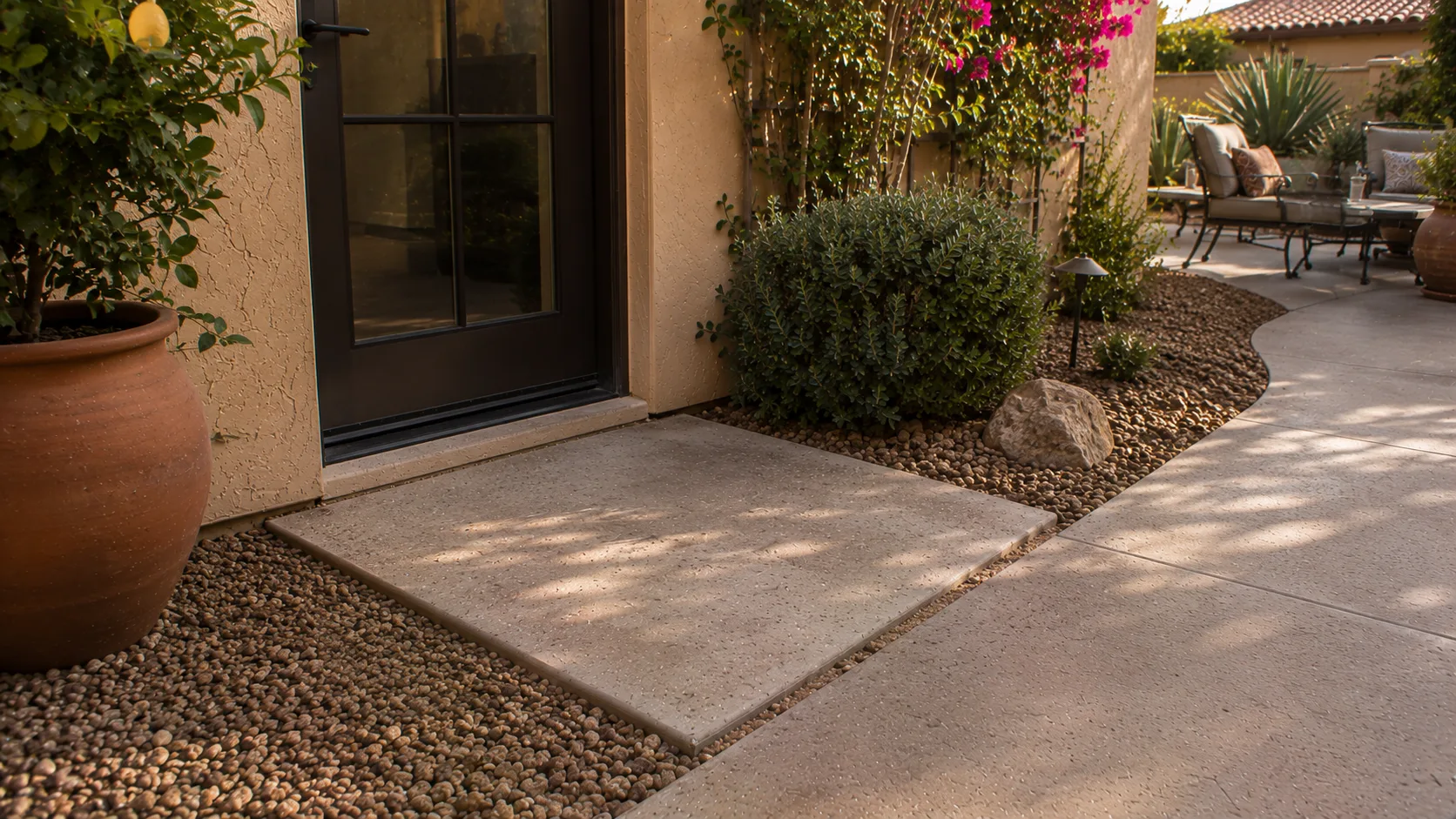
Let Planting Soften The Edge
Not every gravel-to-concrete transition needs another hard line.
Planting can soften the visual change between a patio and a gravel yard. A low-water bed can frame a concrete path, separate a seating area from a side route, or turn a harsh edge into a layered boundary.
Planting works best when it:
- Leaves the walking line clear.
- Respects mature plant size.
- Does not hide a trip edge.
- Does not shed constantly onto the main path.
- Does not block maintenance access.
- Does not trap water against hardscape or walls.
Planting is not a way to disguise a bad grade, unsafe edge, or drainage problem. It is a way to make a functional transition feel less abrupt.
For plant-role thinking, use How to Choose Plants for a Low-Water Landscape and Low-Water Patio Planting Ideas.
Plan For Drainage Before The Edge Looks Finished
Transitions collect evidence.
After rain or irrigation, gravel may wash onto concrete. DG fines may collect along the low side. Mulch may drift into a path. Water may pool at the patio edge. A concrete border may redirect water toward a door, wall, or planting bed.
Before locking in the transition, observe:
- Where water flows now.
- Whether loose material already migrates.
- Whether the concrete edge puddles or stains.
- Whether irrigation overspray hits the transition.
- Whether downspouts send water across the planned route.
- Whether the transition sits near a wall, threshold, slope, or pool deck.
This is drainage awareness, not drainage engineering. If water is already moving toward the house, eroding material, collecting at a threshold, or creating slope problems, call a qualified professional before making the edge prettier.
Design For Maintenance, Not Installation Day
The transition should be easy to maintain after the first month, not just neat for the first photo.
Ask:
- Can you sweep gravel off the concrete without scattering it into planting?
- Can a blower or broom clear leaves without removing DG fines?
- Can weeds be reached at the edge?
- Can bins or furniture roll across the transition without kicking material loose?
- Can you refresh gravel or DG without burying the edge?
- Can you see early settlement or material migration?
A clean transition is a system: surface, edge, grade, use, cleanup, and time. If maintenance requires tiny heroic rituals, the design is probably too fussy for the yard.
For routine concrete care, Concrete Patio Cleaning and Maintenance Basics is the better companion.
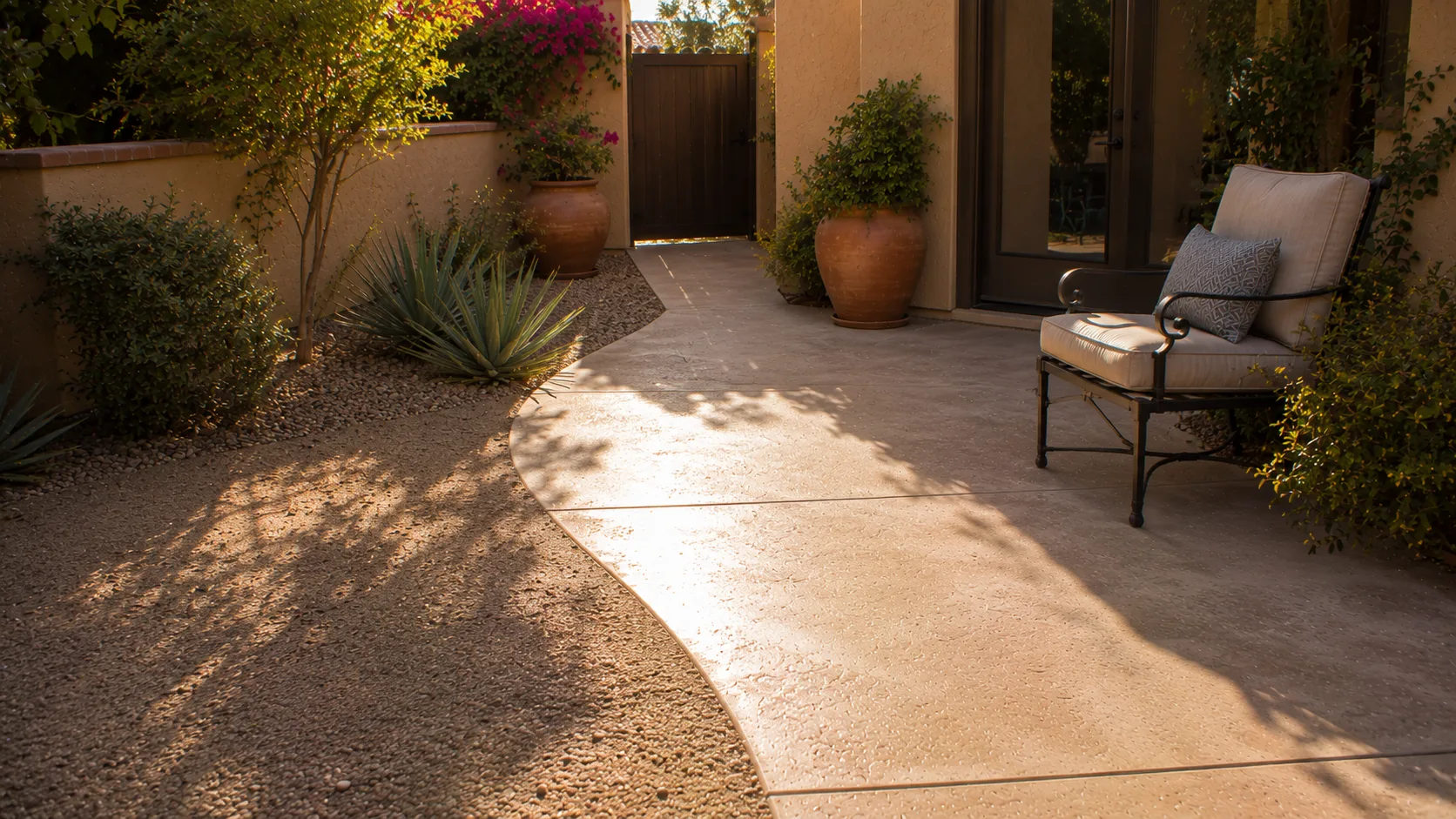
Transition Ideas By Yard Area
Patio To Gravel Yard
This transition needs visual clarity and cleanup ease.
A patio edge can look finished when gravel sits beside it at a controlled level, when a border defines the material change, or when planting creates a soft buffer. The mistake is letting gravel slowly climb onto the patio until every sweep feels like a reset.
Decomposed Granite Path To Concrete Patio
DG paths need a stable landing before they meet high-use concrete areas.
Watch for dust, fines, soft edges, and runoff. If the DG path is a main route to a door, consider a firmer transition before the threshold. The path should feel intentional, not like the DG ran out of courage near the patio.
Concrete Pad To Gravel Utility Area
Small pads for bins, hoses, storage, or service zones need practical edges.
The transition should handle rolling, turning, sweeping, and occasional mess. A beautiful edge that blocks bin movement is not a success. Small Concrete Utility Pad for Bins, Hoses, and Side Yards covers that use case more directly.
Side Yard Gravel To Concrete Walkway
Side yards punish weak transitions.
They often carry bins, pets, garden tools, hoses, and people walking quickly. Keep the route readable, stable, and boring in the best way. If the side yard has slope, drainage, roots, utility conflicts, or tight clearances, get help before hardscape makes the problem permanent.
Planting Bed To Patio Edge
A planting bed beside concrete can make a patio feel intentional and less harsh.
Keep mulch, gravel, and plant growth out of the walking line. Do not pile materials against the concrete edge in a way that traps moisture, hides cracking, or creates cleanup problems. Let plants soften the patio without swallowing it.
Heat And Glare Matter At The Transition
In Arizona and other hot, dry regions, the transition between gravel and concrete can be a heat zone.
Light gravel can bounce glare. Dark hardscape can absorb heat. Warm stucco can reflect afternoon sun. A path that feels fine in winter may feel sharp and exposed in late spring or summer.
Watch for:
- West-facing walls.
- Pale gravel beside seating.
- Dark concrete or pavers in full sun.
- Bare patio edges without planting or shade.
- Paths that force people through glare.
- Pet routes over hot materials.
Shade, planting, furniture placement, and material color all affect comfort, but this guide does not promise cooling results. For the broader comfort layer, see Backyard Shade Ideas for Hot Climates and How to Cool Down a Gravel Yard Without Starting Over.
What Not To Do
Do not let gravel pile higher than the concrete edge.
Do not make a raised border where people naturally step.
Do not run loose DG straight to a high-use door without a transition.
Do not use edging to hide a drainage problem.
Do not trap water against the house, patio, pool deck, or wall.
Do not choose a transition detail only because it looked clean in a cropped photo.
Do not assume concrete, pavers, metal edging, stone, or planting is automatically the best boundary for every yard.
Do not publish exact construction, code, accessibility, or drainage claims into a project that needs local professional judgment.
Quick Planning Checklist
Before committing to a gravel-to-concrete transition, walk through this sequence:
- Identify the real walking route.
- Check where loose material currently migrates.
- Watch water after rain or irrigation.
- Decide whether the edge needs to be hard, planted, or buffered.
- Check the height relationship between surfaces.
- Keep main doors and thresholds protected from grit.
- Leave maintenance access open.
- Consider shade, glare, and reflected heat.
- Use product-neutral material categories until the layout is settled.
- Call a pro when slope, drainage, roots, utilities, pool areas, thresholds, code, permits, accessibility needs, or structural concerns enter the project.
FAQs
What is the cleanest way to transition from gravel to concrete?
The cleanest transition is the one that matches the route, grade, drainage, and maintenance needs. It may be a clear concrete edge, a paver border, a compacted DG shoulder, a planting buffer, or another defined boundary. The important part is controlling material migration without creating a trip edge or drainage problem.
Should gravel be level with concrete?
The height relationship should be planned carefully so gravel does not constantly spill onto concrete and the concrete edge does not become a toe-catching lip. This guide does not provide universal height specs because site conditions, material depth, slope, traffic, and accessibility needs vary.
Can decomposed granite touch a concrete patio?
It can, but the edge needs attention. DG can soften, track dust, collect fines, or wash onto concrete if the transition is not contained and maintained. High-use doors, pool routes, and side yards usually need extra care.
Is concrete edging always best for gravel?
No. Concrete edging can be useful where a durable, visible boundary makes sense. Other yards may need pavers, stone, metal edging, planting, a compacted shoulder, or a more flexible edge. The right answer depends on the yard, not the material label.
When should I call a professional?
Call a qualified professional when the transition involves drainage problems, slope, erosion, retaining conditions, tree roots, utilities, pool areas, steps, thresholds, accessibility needs, code or permit questions, structural concerns, or any condition where failure would be more than cosmetic.
Conclusion
Gravel-to-concrete transitions look simple because they are small. They matter because they sit exactly where movement, water, dust, furniture, plants, pets, and people collide.
Plan the route first. Respect the height relationship. Keep loose material away from main doors. Watch drainage clues. Use planting and borders where they make the yard easier to use, not just prettier. Then choose the material category that fits the job.
The best transition is not the fanciest edge. It is the one that keeps the yard cleaner, clearer, safer to navigate, and easier to maintain after real life shows up.