
A side yard dog run sounds simple until the dog, the heat, the hose, the gravel, the gate, the drainage, and the smell all form a small committee.
In a dry-climate yard, the best side-yard dog run is not just a strip of rock with a fence and good intentions. It needs a surface the dog can actually use, a cleanup routine humans will actually follow, enough shade to keep the space from becoming a punishment corridor, and honest boundaries around odor, drainage, and base-layer problems.
This guide is product-neutral. It does not recommend specific turf, gravel, decomposed granite, cleaner, infill, edging, shade, gate, or installer products. Local climate guidance, qualified landscape professionals, turf installers, drainage professionals, veterinarians, animal behavior professionals, HOA rules, utility access requirements, and product labels still control what is appropriate for your actual site.
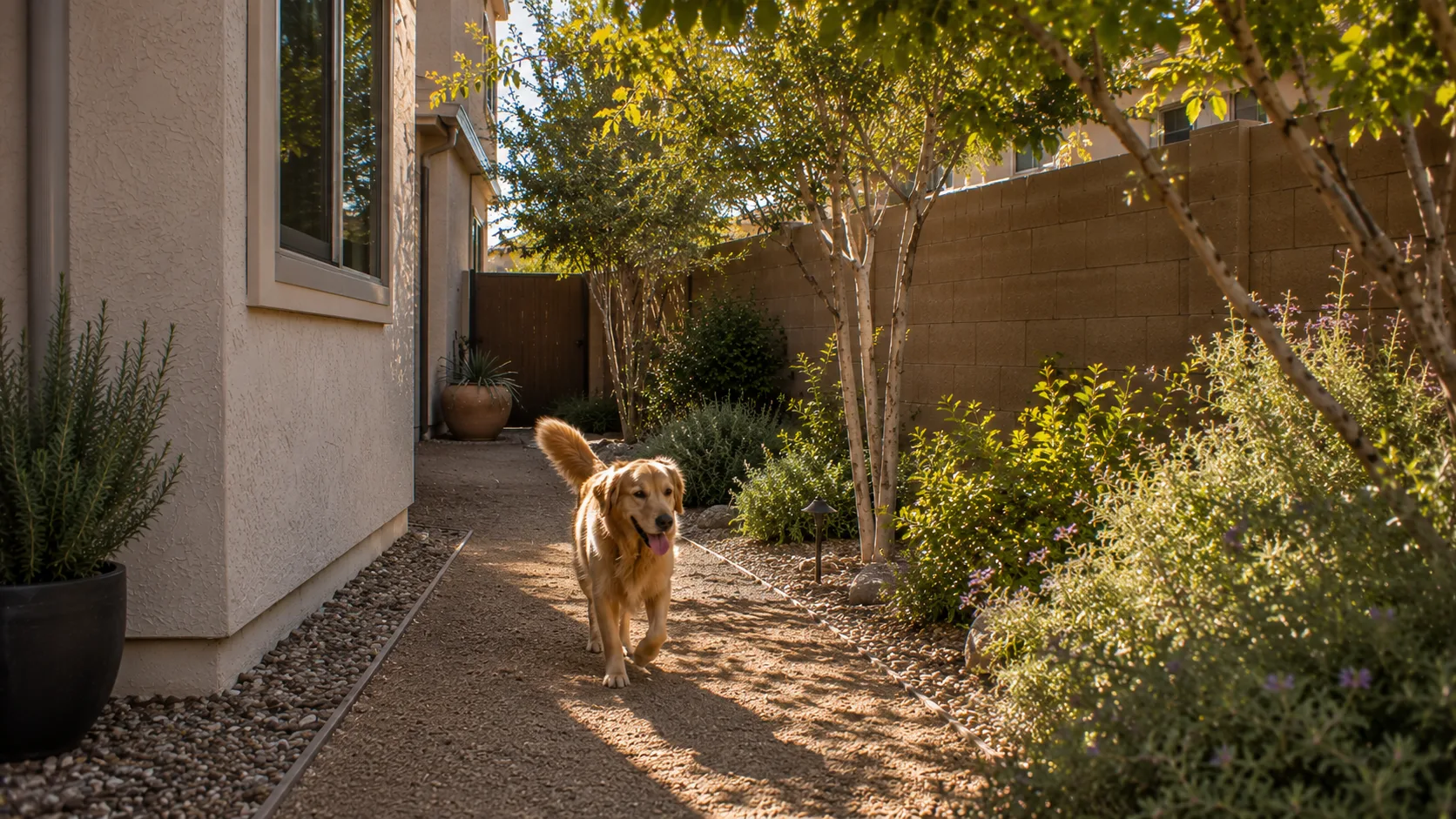
The Direct Answer
A good low-water side-yard dog run starts with four decisions:
- Where the dog naturally travels, stops, and eliminates.
- How water will move through or away from the surface.
- How the area will be cleaned without heroic effort.
- How shade, airflow, and access will make the route livable.
For many homeowners, the winning layout is a durable walking route, a cleanable dog-use zone, controlled edges, shade where the dog actually spends time, a hose or rinse point nearby, and materials chosen for the real maintenance routine.
The mistake is designing for the imaginary dog who politely uses the exact center of the run, never digs, never favors one corner, and apparently read the installation manual.
Start With The Dog's Actual Route
Before choosing turf, gravel, decomposed granite, mulch, pavers, or concrete, watch the dog.
Look for:
- The path from the door to the gate.
- The favorite bathroom spot.
- The place the dog turns around.
- Fence or wall lines the dog patrols.
- Shaded areas the dog already chooses.
- Hot surfaces the dog avoids.
- Corners that collect leaves, hair, dust, or odor.
- Places where rinsing would be easy or annoying.
The best dog run usually follows the route the dog is already trying to use. Fighting that route with fragile planting or awkward stepping stones is how side yards become expensive obstacle courses.
If the whole side yard needs a broader layout refresh, start with Low-Water Side Yard Ideas That Don't Look Like a Service Alley. This guide is the dog-run version of that problem.
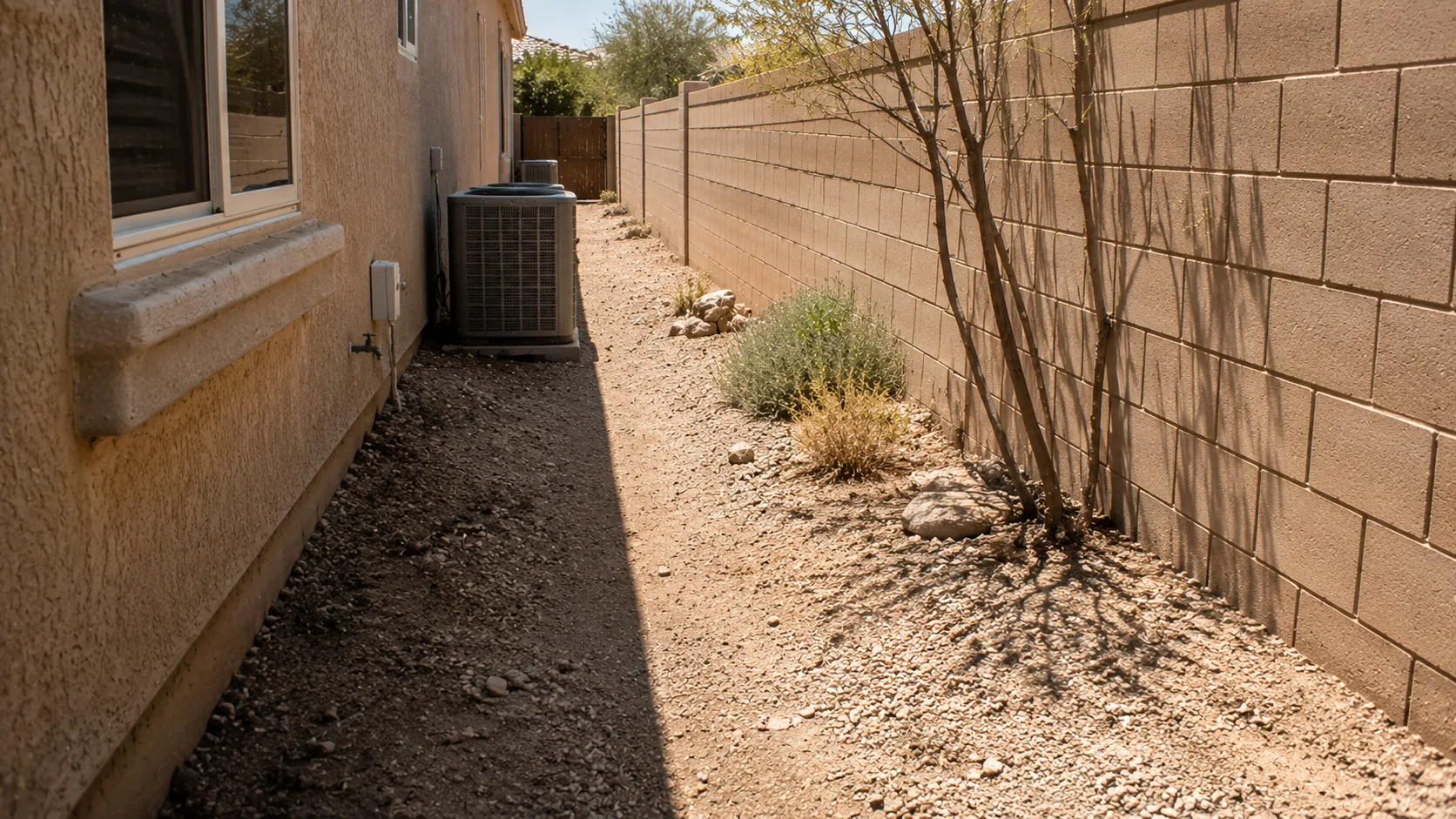
Separate The Travel Lane From The Bathroom Zone
Not every part of the dog run has the same job.
A travel lane handles movement. A bathroom zone handles repeated urine, solids pickup, rinsing, odor control, and drainage stress. If those jobs are mixed carelessly, the entire side yard can become the bathroom zone by default.
Try to plan:
- A clear route from door to yard or gate.
- A preferred dog-use area that is easy to rinse.
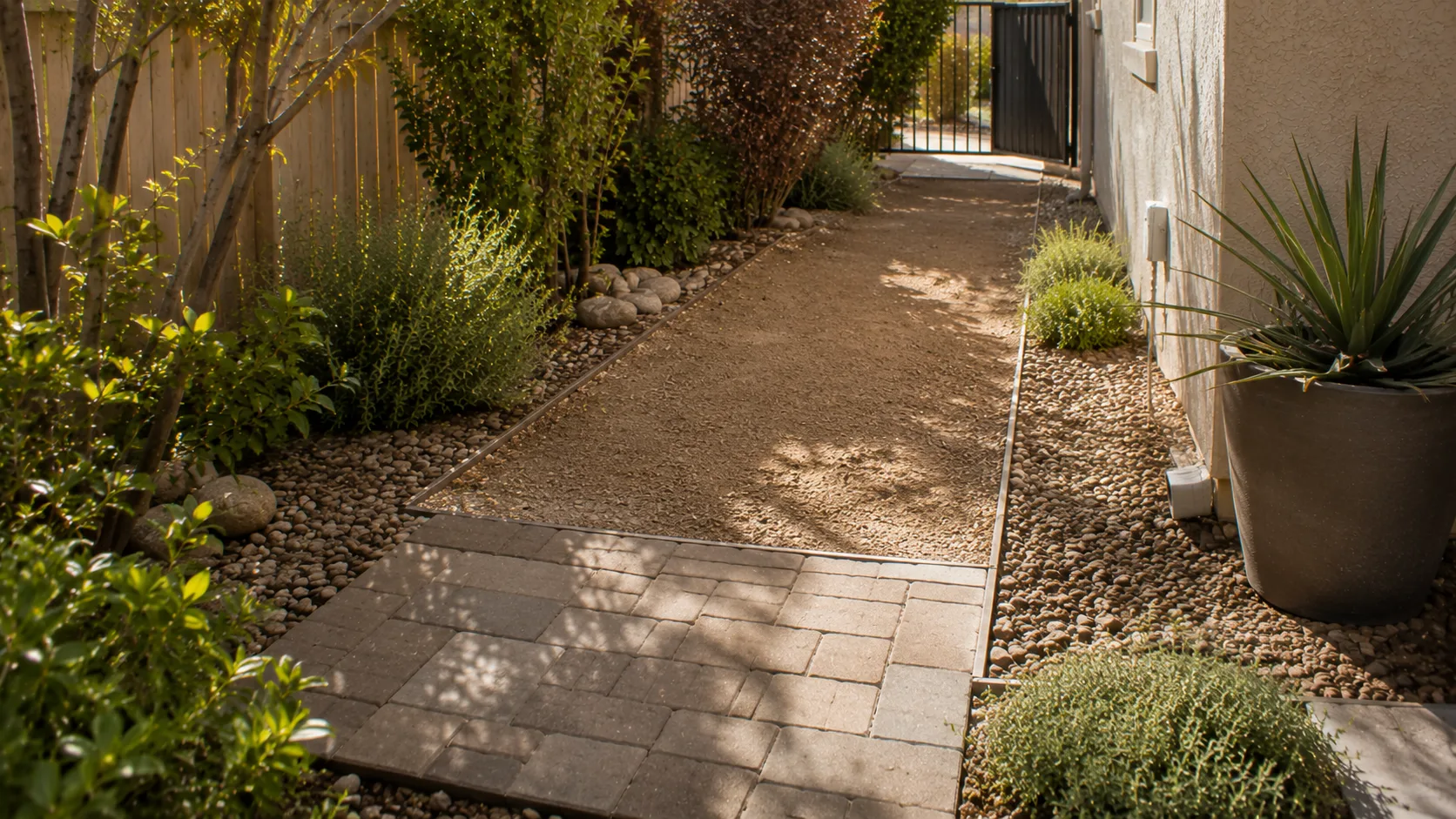
- A surface transition that does not trap debris.
- Edges that keep gravel, mulch, or infill from migrating everywhere.
- A hose-accessible cleanup path.
- Room for a person to pick up solids without stepping through plants or utility clutter.
The goal is not to train the dog through landscape design alone. It is to make the most likely behavior easier to maintain.
Surface Choices: Tradeoffs, Not Magic
Every dog-run surface has tradeoffs. The right answer depends on dog size, use intensity, shade, heat, drainage, budget, installer quality, cleaning habits, and whether the side yard also needs to carry bins, hoses, tools, or people.
Artificial Turf
Artificial turf can give a dog run a clean look and a consistent surface. It can also hold odor if urine collects in infill, seams, edges, or the base layer.
Turf makes the most sense when the system is designed for pet use, drains well, can be rinsed, and has a realistic maintenance routine. It makes less sense when the dog will hammer one narrow strip, the area has poor drainage, or the owner expects the surface to behave like self-cleaning carpet.
For maintenance, see A Weekly Artificial Turf Maintenance Routine for Dog Owners. For odor troubleshooting, use How to Remove Dog Urine Smell from Artificial Turf.
Decomposed Granite
Decomposed granite can work in a side yard when it is compacted, edged, and kept away from doors where dust tracking becomes a daily irritation. It can feel more natural than concrete and less formal than pavers.
But DG can track, soften, wash, or become dusty. In a dog run, that matters. Dogs turn, dig, sprint, and carry material on paws. If DG is part of the plan, think hard about containment, compaction, rinsing, and how close it sits to doors, turf, and patios.
How to Use Decomposed Granite Without Tracking Dust Into the House is the companion for that decision.
Gravel
Gravel can be useful for low-water yards, edges, and drainage-aware areas, but it is not automatically comfortable for dogs or easy for people to clean.
Loose, deep, round, or hot gravel can be unpleasant under paws and annoying underfoot. Gravel can also make solids pickup less tidy and can collect hair, leaves, and odor in repeat-use areas.
If gravel is used, keep it deliberate: contained, shallow enough for the use case, compatible with the dog, and not pretending to be a soft bathroom mat.
For the broader groundcover decision, Mulch vs Gravel in Low-Water Landscapes explains why rock is useful in some places and punishing in others.
Pavers, Stepping Pads, And Concrete Landings
Hard surfaces can make sense at gates, doors, hose areas, bin routes, or cleanup stations. They are easy to sweep and can create stable footing for humans.
They can also get hot, create runoff, and feel harsh if they dominate the dog run. Use them where stability matters, not as a universal solution.
For small utility surfaces, Small Concrete Utility Pad for Bins, Hoses, and Side Yards is the safer adjacent read.
Drainage Is The Odor Control Nobody Wants To Talk About
Dog-run odor is often a drainage and residue problem before it is a cleaner problem.
Watch for:
- Water pooling after rinsing.
- Smell returning within a day or two.
- Damp edges along fences, walls, or patios.
- A bathroom zone that stays darker than the surrounding surface.
- Infill, gravel, or DG that looks compacted or clumped.
- A low spot where solids, hair, dust, and rinse water collect.
- Odor strongest near seams, edges, corners, or shaded strips.
If water cannot move, odor gets a place to live. Adding fragrance, stronger cleaner, or fresh material over the top may hide the pattern briefly, but it does not fix the source.
For turf-specific drainage clues, see Artificial Turf Drainage Problems: Signs the Smell Is Deeper Than the Blades.
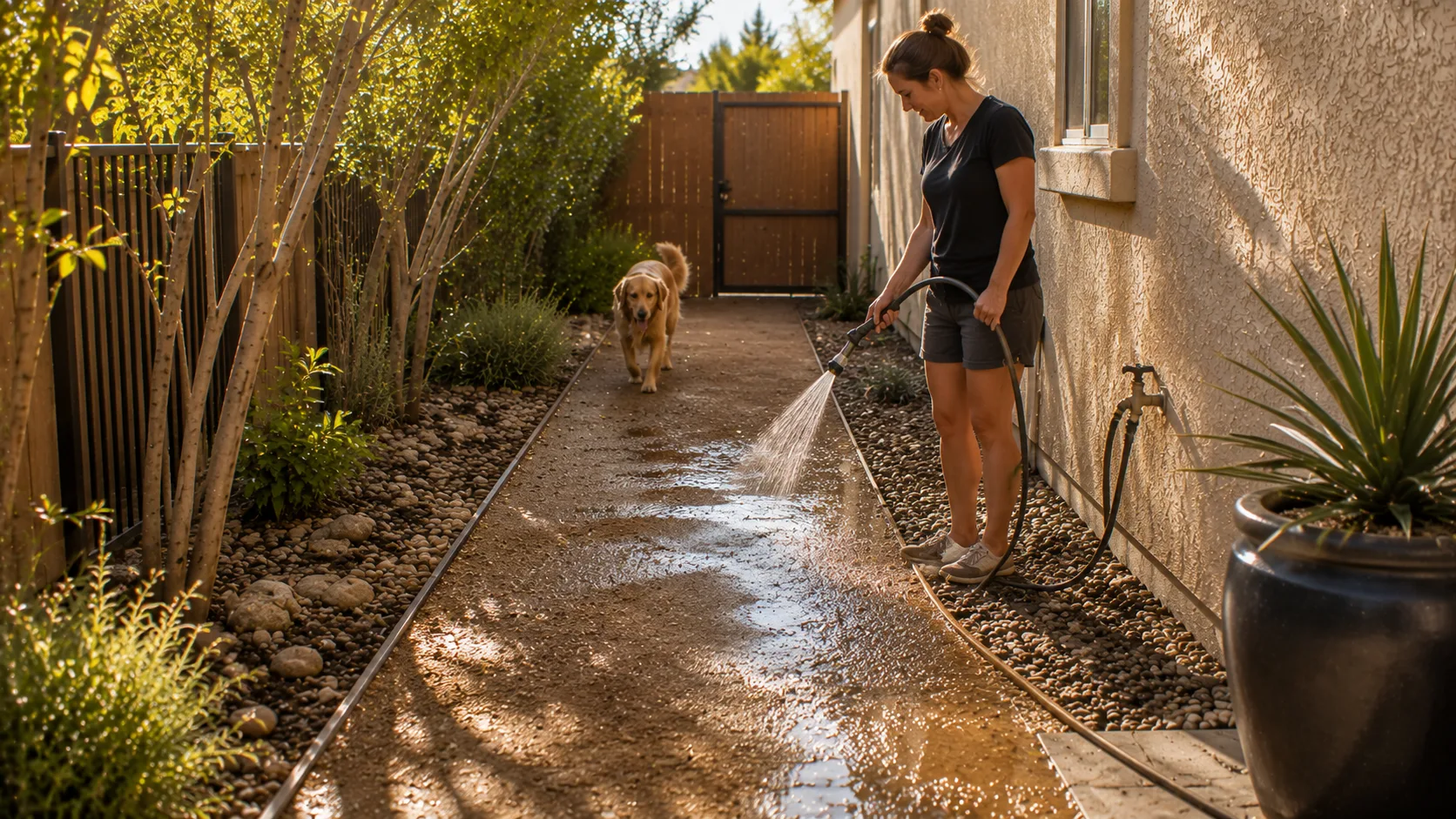
Plan For Rinsing Before You Need It
A dog run should be easy to rinse. If the hose is on the wrong side of the house, the gate is awkward, or the surface sends water toward a door, maintenance will quietly stop happening.
Think through:
- Where the hose reaches.
- Where rinse water goes.
- Whether rinsing pushes debris into a seam, edge, planting bed, or patio.
- Whether the surface drains fast enough after ordinary cleaning.
- Whether a person can rinse without stepping in the bathroom zone.
- Whether the cleanup routine still works during hot weather.
This is not about flooding the side yard. It is about designing a route where routine maintenance feels normal enough to keep doing.
Shade And Airflow Matter More Than They Look
A dog run in a hot side yard can become miserable fast. Walls, fences, reflected heat, and narrow airflow make the space harsher than a wider yard.
Shade helps, but shade alone is not the whole story. A shaded strip can also dry slowly if airflow is poor and drainage is weak.
Look for:
- Afternoon sun along walls and fences.
- Surfaces that hold heat.
- One tiny shaded corner the dog overuses.
- Planting or screens that block airflow.
- Gates or corners where debris gathers.
- Areas that stay damp after rinsing.
For broader hot-yard comfort, Backyard Shade Ideas for Hot Climates, Shade in Low-Water Landscapes, and How to Cool Down a Gravel Yard Without Starting Over are all relevant.
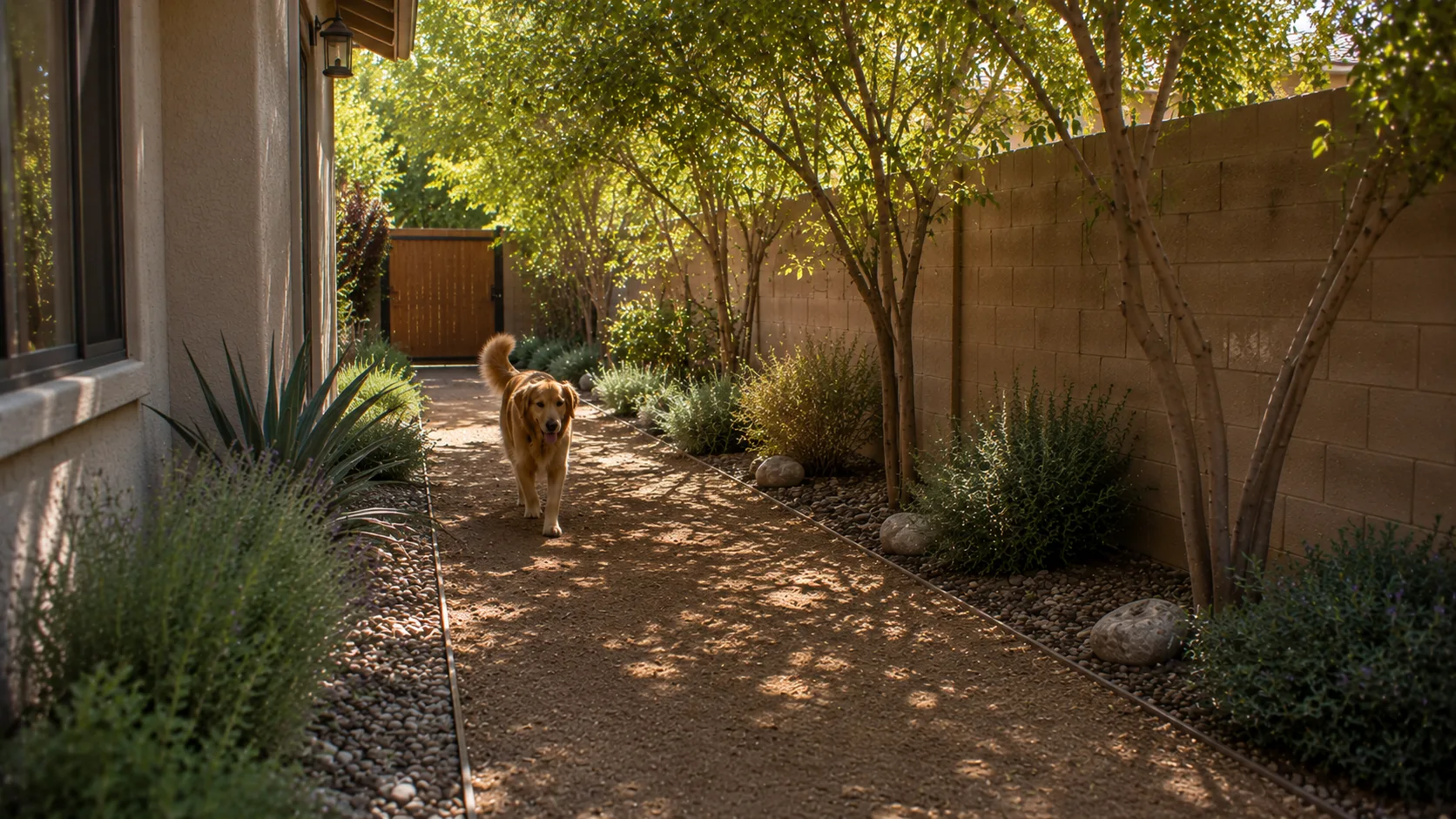
Keep Planting Durable And Out Of The Impact Zone
Plants can make a side-yard dog run feel less like a kennel corridor. They can soften fences, add shade, improve views, and help the space feel connected to the rest of the yard.
But plants in a dog run need placement discipline.
Avoid putting fragile, thorny, messy, toxic, or easily crushed plants right where the dog turns, digs, patrols, or eliminates. Use local experts, veterinary guidance, extension resources, reputable regional nurseries, or qualified landscape pros for plant suitability and pet-safety questions.
Good planting roles include:
- Softening a fence or wall outside the main run.
- Creating a buffer between the dog route and seating.
- Framing the entrance or gate.
- Adding shade where appropriate.
- Making the side-yard view from inside the house less bleak.
If plant selection is the sticking point, How to Choose Plants for a Low-Water Landscape keeps the decision species-light and role-based.
Design For Cleanup, Not Just The Photo
A dog run that photographs well but cleans poorly will age quickly.
Ask:
- Can solids be picked up without digging through loose material?
- Can hair, leaves, and seed pods be removed?
- Can the bathroom zone be rinsed slowly?
- Can the surface be brushed or refreshed if needed?
- Can the gate open without scraping gravel or turf?
- Can someone walk through with a leash, scoop, hose, or trash bag?
- Can odors be diagnosed without tearing the whole side yard apart?
The cleaner the routine, the less the space depends on heroic weekend rescues.
Privacy Without Turning The Run Into A Hot Box
Side-yard dog runs often sit near neighbors, walls, gates, and windows. Privacy matters, especially if the dog barks at movement or patrols the fence line.
But dense screening can trap heat and slow drying. In a narrow side yard, that can make odor and comfort worse.
Use privacy carefully:
- Keep airflow in mind.
- Avoid blocking utility access.
- Do not create hidden damp corners.
- Leave room to inspect seams, edges, and planting beds.
- Use professional help for structural screens, gates, walls, or electrical work.
The dog run should feel contained, not sealed like a storage unit with paws.
When To Call A Pro
Call a qualified landscape professional, turf installer, drainage professional, contractor, or other appropriate pro when:
- Water pools, drains slowly, or runs toward the house.
- Odor returns quickly after careful cleaning.
- Turf seams, edges, infill, or base layers may be involved.
- The side yard has slope, grading, utility, or access issues.
- You need structural shade, gate changes, electrical work, lighting, drainage correction, or hardscape installation.
- The dog is digging, escaping, overheating, limping, chewing plants, or showing behavior or health issues.
- You need region-specific material, plant, or pet-safety guidance.
There is a noble DIY line, and then there is "I accidentally built a hot urine channel beside my house." Know the difference.
What Not To Do
Do not make the entire side yard loose rock and call it a dog run.
Do not assume artificial turf is odor-proof.
Do not put the bathroom zone where rinse water runs toward a door, patio, or foundation.
Do not bury a drainage problem under fresh material.
Do not use cleaners, deodorizers, or disinfectants unless the label, turf guidance, and pet re-entry instructions support them.
Do not mix cleaners.
Do not block utility panels, meters, gates, cleanouts, hose bibs, or service access.
Do not use thorny or fragile planting where the dog and humans brush past it every day.
Do not claim a surface is pet-safe just because it looks tidy in a photo.
A Simple Planning Checklist
Before building or refreshing a side-yard dog run, answer these:
- Where does the dog naturally travel?
- Where does the dog actually eliminate?
- Where will solids be picked up?
- Where will rinse water go?
- Is there enough shade at the time the dog uses the space?
- Is there airflow after rinsing?
- Can the surface handle repeated use?
- Can the bathroom zone be cleaned without stepping through it?
- Are utilities, gates, hoses, and service areas accessible?
- Are planting and privacy outside the main impact zone?
- Is there a clear pro-call boundary for drainage, turf, structural, pet-health, or utility issues?
If the plan cannot answer those questions, it is still more of a hope strip than a dog run.
The Bottom Line
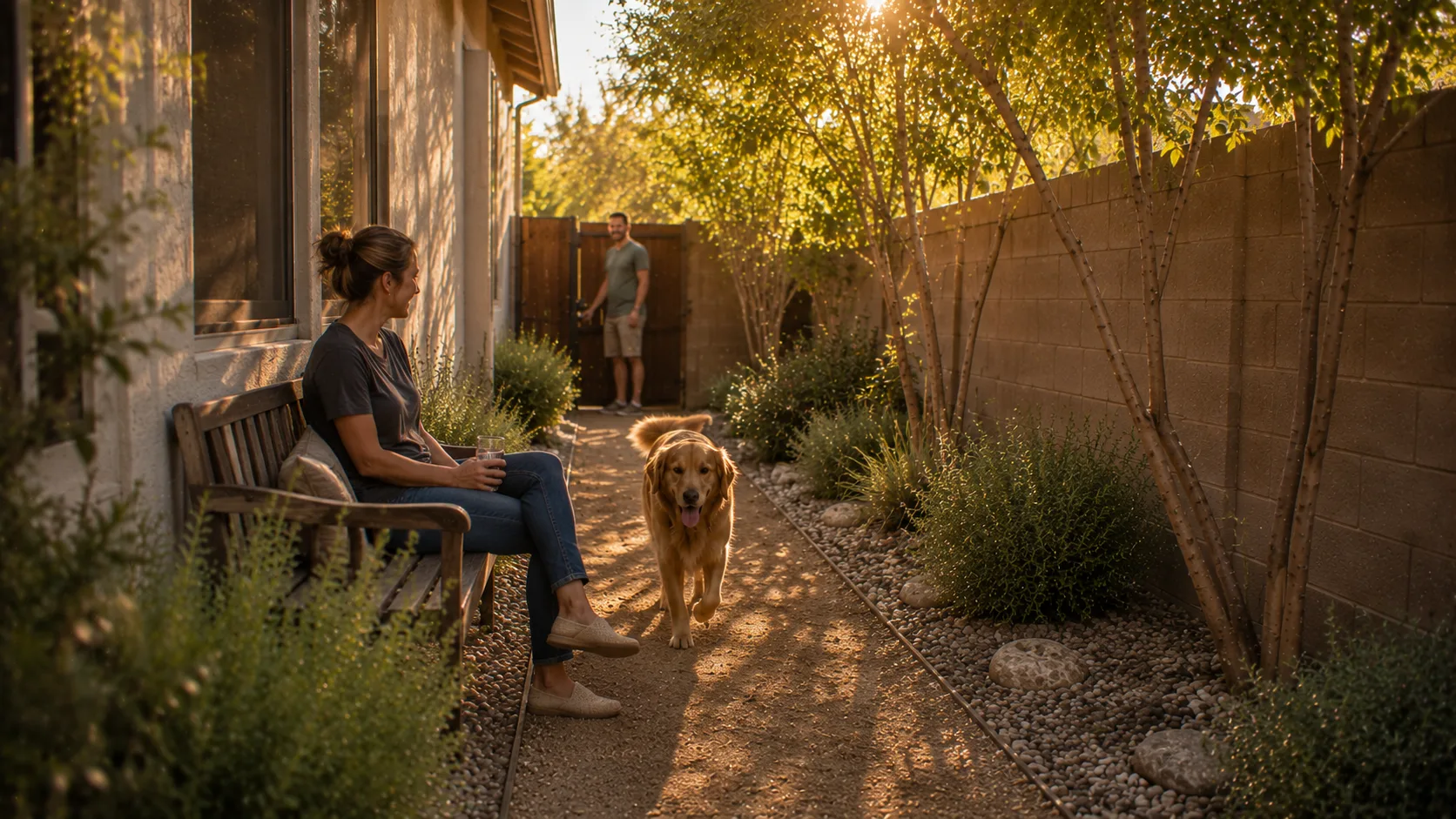
A low-water side-yard dog run needs to be designed around behavior, water movement, heat, cleanup, and access. The surface matters, but it is only one piece.
The best versions are boring in the right ways: easy to walk, easy to rinse, easy to inspect, shaded where it counts, and honest about odor and drainage.
Give the dog a route that works, give yourself a maintenance routine you will actually follow, and the side yard has a chance to become a useful pet zone instead of the narrow place where good intentions go to smell weird.