
A weekend yard reset is not a dramatic transformation. It is the outdoor-living version of putting the room back together before everyone starts pretending the mess is part of the design.
The best reset is short, visible, and honest. You clear the patio. You put gravel back near the gravel. You notice where water, dust, leaves, dog traffic, pool splash, and furniture have been making tiny decisions without you. You improve the yard enough that Monday does not inherit Saturday's neglect.
This guide is a homeowner-level weekend checklist for patios, paths, gravel or decomposed granite, planting beds, turf or dog-use zones where relevant, pool-adjacent areas, shade and furniture, drainage clues, maintenance access, and when to call a pro. It is not a product recommendation, chemical recipe, pool chemistry guide, equipment manual, irrigation schedule, construction spec, drainage plan, structural diagnosis, downloadable PDF, newsletter capture, or promise that one checklist works for every yard.
If you want the broader maintenance rhythm, start with A Low-Maintenance Backyard Routine That Actually Helps. If the yard feels too hot to use after cleanup, pair this with Backyard Shade Ideas for Hot Climates.
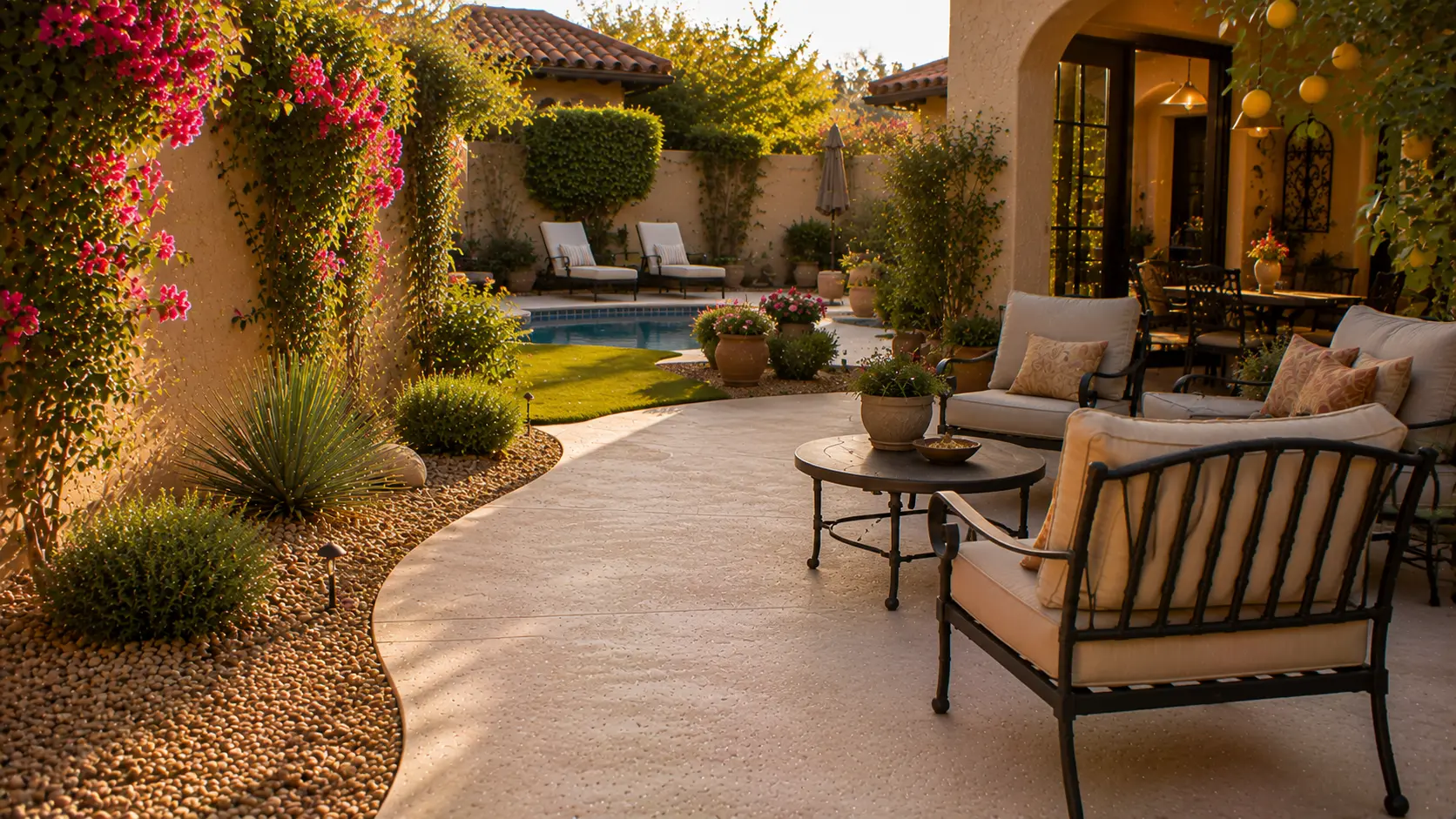
The Short Version
A useful weekend yard reset has six moves:
- Walk the yard before cleaning so you know what actually changed.
- Clear loose debris from high-use routes first.
- Reset patios, paths, thresholds, and seating areas.
- Put migrated gravel, decomposed granite, mulch, and plant litter back in bounds.
- Check dog zones, pool-adjacent surfaces, shade, furniture, and maintenance access.
- Stop before you turn a realistic reset into a pretend renovation.
The goal is not to make the backyard look staged. The goal is to make it usable, safer to move through, easier to inspect, and less likely to punish you next weekend.
Before You Start: Do A Five-Minute Scan
Do not start by grabbing the loudest tool. Walk first.
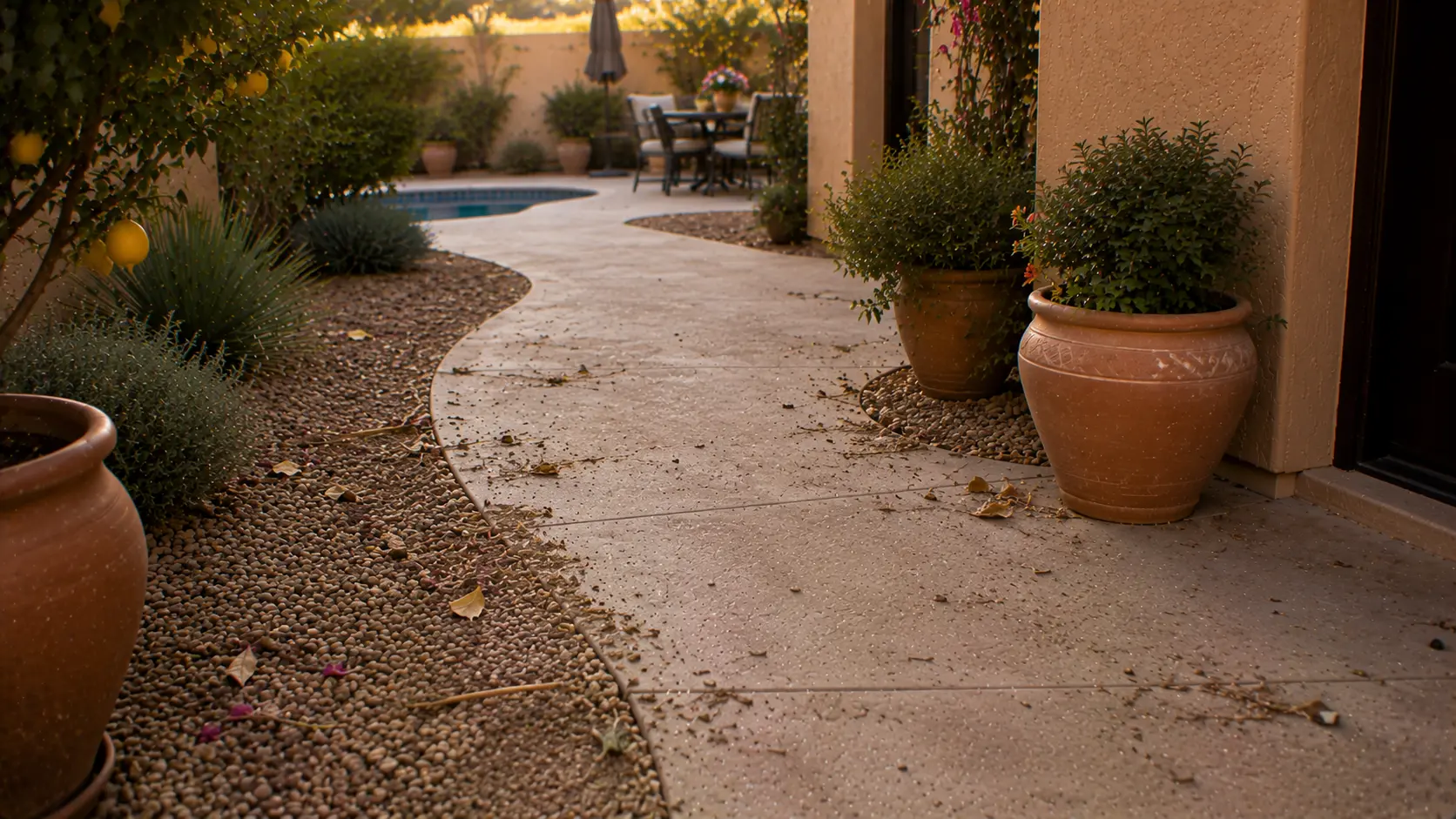
Look for:
- Debris on patios, paths, steps, and pool edges
- Gravel, decomposed granite, or mulch drifting onto hardscape
- Leaves, seed pods, or plant litter gathering in corners
- Furniture blocking the route people actually use
- Wet spots, slick surfaces, stains, odors, or ants
- Plants crowding paths, gates, hose routes, or pool equipment
- Dog-use areas that need attention
- Pool baskets, surface debris, or dusty waterline clues
- Shade gaps where people or pets avoid the yard
- Anything that looks structural, electrical, gas-related, drainage-related, or unsafe
The scan is how you avoid spending two hours polishing the wrong problem. If the yard has one genuinely concerning issue, do not bury it under cleanup energy. Mark it for qualified help.
Reset The Main Route First
Start with the route from the house to the places people actually use:
- Patio door
- Outdoor table
- Grill
- Pool or spa
- Dog route
- Side gate
- Trash or storage area
- Hose bib or utility zone
- Main seating area
Clear debris, move tripping clutter, and reset anything that narrows the route. If people keep cutting across gravel, planting beds, or turf to reach a destination, the reset should notice that. A worn shortcut is a design note, not a character flaw.
For cleaner material boundaries, see Gravel-to-Concrete Transition Ideas for Cleaner Yards. For small yards where the route never feels natural, Small Backyard Hardscape Mistakes That Make Projects Feel Awkward is the better planning companion.
Clear Dry Debris Before Rinsing
Dry debris is easier before water turns it into paste.
Handle:
- Leaves
- Seed pods
- Wind debris
- Dust on smooth patios
- Plant litter under chairs
- Gravel or DG fines at thresholds
- Pet hair or turf debris
- Grill crumbs, ash, or food bits
- Poolside leaves before they enter the water
Sweep, blow, or hand-clear in a way that fits the surface and site. Keep debris away from pool water, drains, planting beds that will trap it, and neighboring properties. Do not use water as a broom if runoff would carry dirt toward the house, pool, street, or a place it should not go.
For concrete-specific care, use Concrete Patio Cleaning and Maintenance Basics. For decomposed granite tracking, use How to Use Decomposed Granite Without Tracking Dust Into the House.
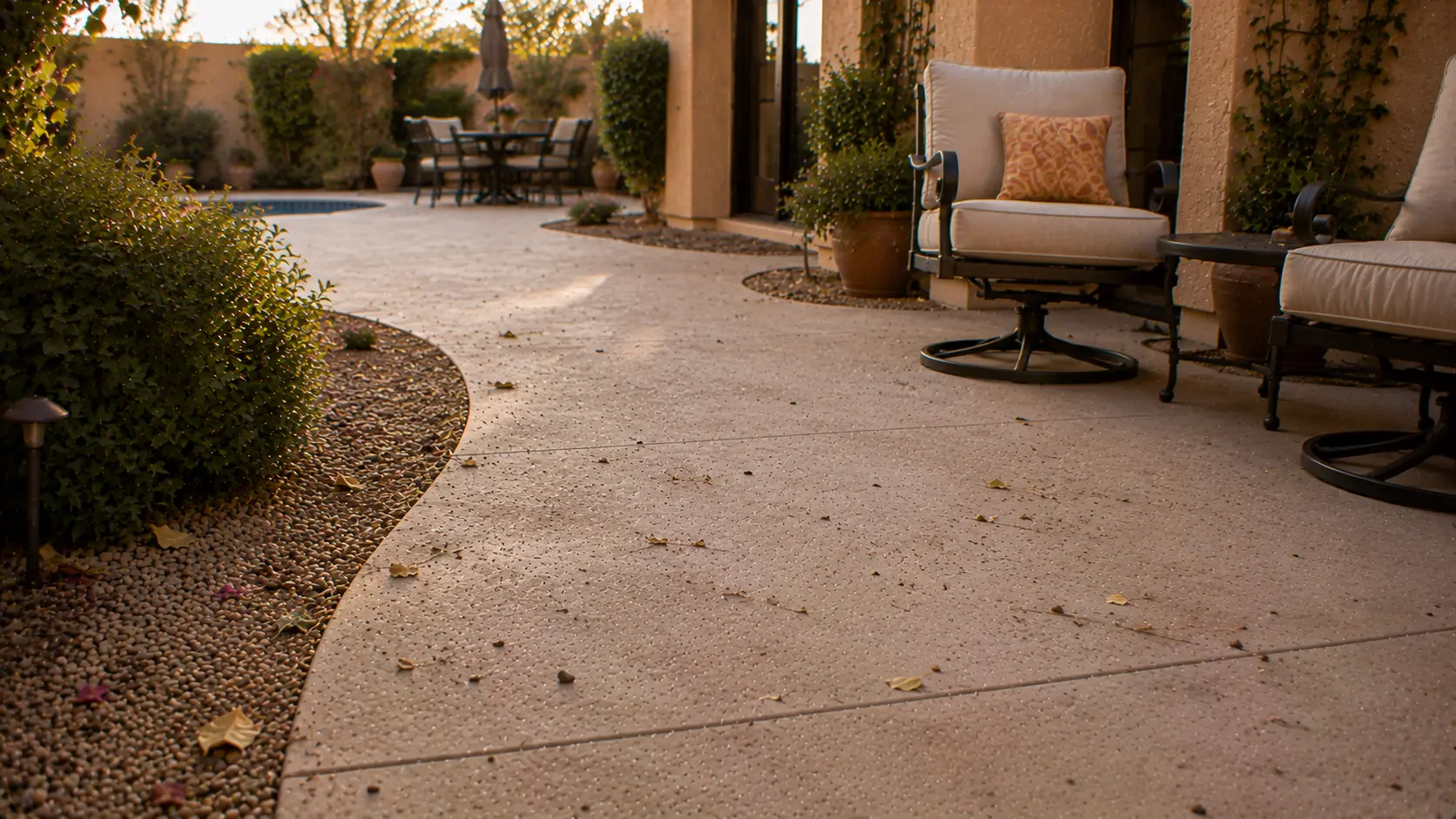
Patio And Path Reset
Once the loose mess is gone, look at the surfaces people use.
Checklist:
- Move furniture enough to clean beneath it.
- Check under planters and outdoor rugs.
- Look for grease, food residue, rust marks, mineral marks, and water outlines.
- Keep joints, steps, thresholds, and transitions visible.
- Notice slick areas near shade, pool splash, or irrigation overspray.
- Put chairs, tables, cushions, and small items back where they help movement instead of blocking it.
Use mild, surface-appropriate cleaning concepts only when the surface needs more than dry debris removal or a gentle rinse. This guide does not provide chemical recipes or pressure-washer specifications. Decorative concrete, sealed surfaces, old coatings, pavers, pool-adjacent surfaces, and unknown finishes deserve restraint.
The weekend reset should make the patio inviting. If it makes the patio patchy, etched, slippery, or over-cleaned, the yard has been promoted from maintenance to repair. Nobody asked for that promotion.
Gravel, DG, Mulch, And Edges
Material migration is one of the easiest things to ignore until the whole yard looks blurry.
Check where:
- Gravel meets concrete
- DG meets a door threshold
- Mulch meets a path
- Planting beds meet patios
- Turf meets gravel or pavers
- Pool decking meets loose material
- Side-yard paths meet utility pads
Reset loose material where practical. Brush gravel or fines off walking surfaces. Clear mulch or soil from concrete edges. Pull plant litter out of corners before it traps moisture or stains.
This is not an installation spec. If material keeps washing, sliding, pooling, or creating a trip edge, the problem may be slope, edge design, drainage, foot traffic, or layout. That is a planning clue, not a reason to keep sweeping the same square foot forever.
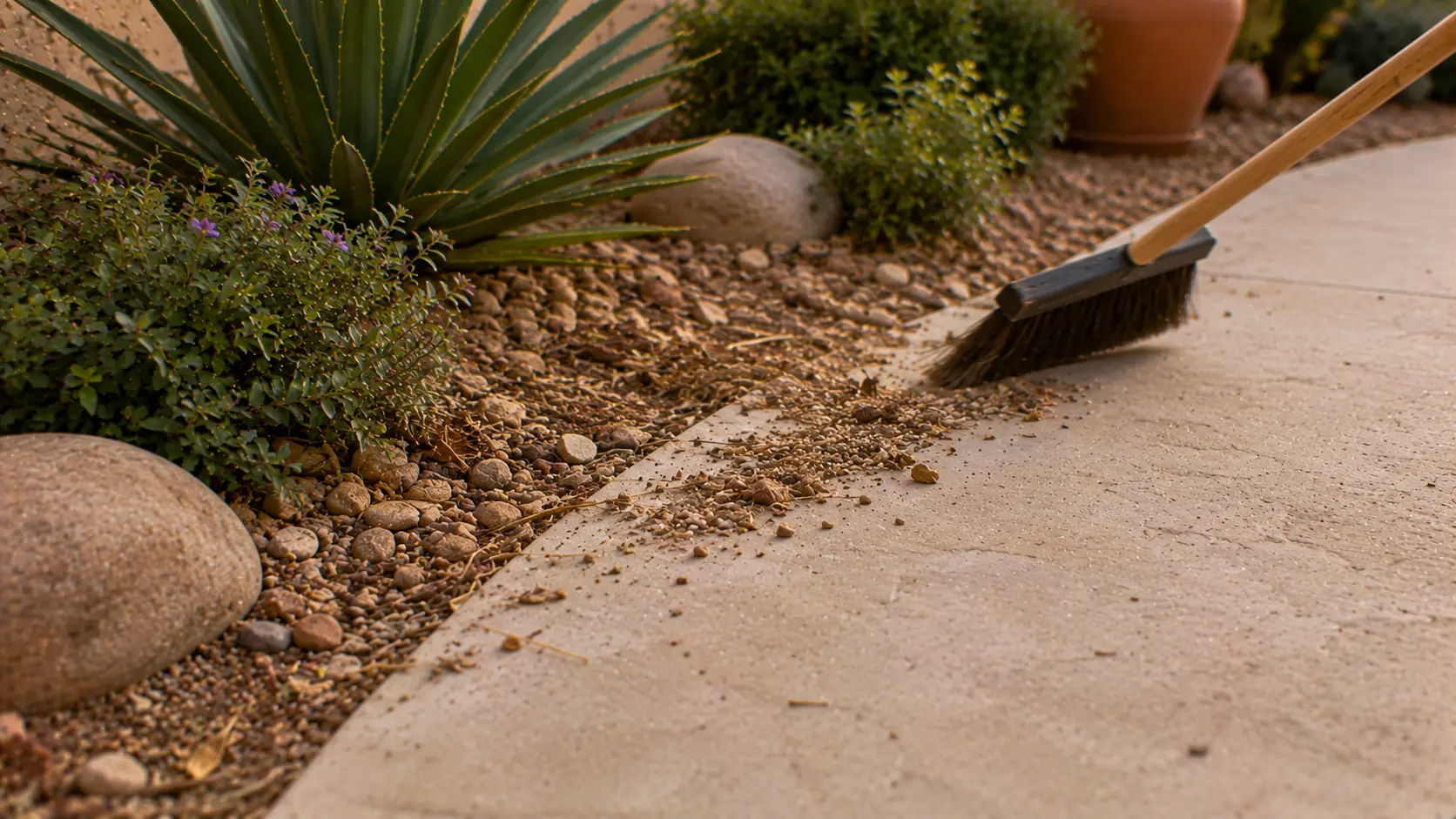
Planting Bed Cleanup
A weekend reset should make planting beds easier to read.
Look for:
- Dead leaves and broken stems
- Plants leaning into walking routes
- Mulch or soil washing onto hardscape
- Weeds getting established at edges
- Irrigation lines or emitters that are suddenly visible, buried, moved, or wet in the wrong place
- Plants struggling near reflected heat
- Shrubs blocking airflow, gates, equipment, or inspection access
Keep cleanup practical. Do not turn the weekend reset into universal pruning advice. Plants vary by species, season, climate, and site. Use local extension guidance, regional nursery guidance, arborists, and qualified landscape professionals when plant health, pruning, trees, roots, irrigation, or local suitability matters.
For design-level decisions, use How to Choose Plants for a Low-Water Landscape Without Making a Random Plant Collection and Xeriscape Layout Mistakes That Make Yards Look Sparse.
Turf And Dog-Zone Check
If the yard includes artificial turf, a dog run, or a repeat pet-use zone, do not leave it for last like a surprise.
Checklist:
- Pick up solids first.
- Remove leaves, hair, seed pods, and debris.
- Check favorite bathroom spots.
- Look for odor returning quickly after cleanup.
- Watch seams, edges, low spots, and shaded strips.
- Rinse only where appropriate and where water can move through correctly.
- Keep pets away from any treated area until labels or installer guidance say it is safe.
Do not mix cleaners. Do not improvise pet-safe claims. Do not treat fragrance as cleaning. Turf, infill, backing, drainage, cleaners, labels, and pet re-entry directions all matter.
For the full routine, use A Weekly Artificial Turf Maintenance Routine for Dog Owners. If odor keeps coming back, Artificial Turf Drainage Problems explains when the source may be below the visible surface.

Pool-Adjacent Reset
Pool areas often make the rest of the yard messier: wet footprints, sunscreen, dust, leaves, splash residue, gravel tracking, and furniture drift.
Weekend pool-adjacent checklist:
- Skim obvious surface debris.
- Clear leaves and plant litter from the deck before they enter the pool.
- Check skimmer baskets and visible debris loads if that is part of your normal routine.
- Keep poolside walking surfaces from becoming slick.
- Move furniture and storage out of main walking routes.
- Watch for dust, waterline buildup, or filter-load clues after wind.
- Follow pool equipment manuals, chemical labels, and qualified pool guidance for chemistry, filtration, and equipment care.
This guide does not provide pool dosing, chemical recipes, exact chemistry instructions, or equipment-specific maintenance. If the water looks unsafe, cloudy, algae-prone, chemically confusing, or equipment behavior seems wrong, do not turn a weekend reset into pool roulette.
For dry-climate cleanup, see Pool Care After a Dust Storm. For filter boundaries, use Pool Filter Cleaning Basics for Homeowners.
Shade, Furniture, And Use Zones
Once the surfaces are clean, put the yard back together around how people actually use it.
Ask:
- Are chairs in shade when people sit there?
- Does the table block the path from the house?
- Are cushions, umbrellas, or side tables making the patio easier to use?
- Is the dog route crossing hot surfaces?
- Are planters trapping water or stains under them?
- Is furniture hiding cracks, stains, weeds, or trip edges?
- Are tools, hoses, and storage blocking access?
Resetting furniture is not just styling. It changes circulation, shade, wear patterns, cleaning access, and whether the yard gets used.
If a clean patio still feels awkward, the problem may be layout rather than maintenance. If a clean gravel yard still feels hot, How to Cool Down a Gravel Yard Without Starting Over may help.
Maintenance Access Check
A weekend reset should make future maintenance easier.
Keep access to:
- Gates
- Hose bibs
- Irrigation valves
- Pool equipment
- Drains and visible cleanouts
- Trash, bins, and utility pads
- Storage areas
- Side yards
- Main walking routes
- Electrical, gas, and utility areas that should not be blocked
Do not stack furniture, pots, storage boxes, or yard clutter where they hide problems or block service. A tidy-looking yard that blocks equipment access is just a mess wearing nicer shoes.
What To Leave For A Pro
Stop and call qualified help when the reset reveals:
- Water draining toward the house
- Pooling near foundations, walls, thresholds, or equipment
- Significant concrete movement, lifting, settlement, scaling, or spalling
- Unsafe trip edges or slick surfaces
- Electrical, gas, plumbing, utility, or pool equipment conflicts
- Large tree or limb issues
- Retaining, grading, slope, or drainage concerns
- Persistent turf odor that routine cleanup does not resolve
- Unknown coatings, chemicals, stains, or surface failures
- Local-rule, permit, code, accessibility, utility, or safety-sensitive questions
The checklist is for ordinary homeowner maintenance. It is not a permission slip to diagnose structure, engineer drainage, handle utilities, invent pool chemistry, or solve code questions from a patio chair.
Keep The Reset Realistic
The best weekend reset is one you will actually repeat.
Keep it realistic:
- Pick a start and stop time.
- Start with the main route and patio.
- Handle dry debris before wet cleanup.
- Leave complex projects off the reset list.
- Write down larger repairs instead of half-starting them.
- Avoid buying a product because the yard made you feel behind.
- End by making one seating or use area genuinely pleasant.
A reset should give the yard back to the people who live there. If the checklist becomes a punishment ritual, it will not survive the month.
FAQ
What Should I Do First In A Weekend Yard Reset?
Walk the yard before cleaning. Look for debris, slick spots, material migration, dog-use issues, pool-adjacent mess, blocked access, and anything unsafe. Then start with the main route from the house to the patio, pool, seating, gate, or dog area.
How Long Should A Weekend Yard Reset Take?
There is no universal time. A realistic reset should fit the yard, the season, and the mess. The goal is to improve high-use areas, not rebuild the landscape. If the reset keeps turning into a full-day rescue mission, the yard may need better routines or layout changes.
Is A Weekend Yard Reset The Same As Deep Cleaning?
No. A reset is lighter and more repeatable. It clears debris, restores routes, checks edges, puts furniture back in useful places, and flags bigger issues. Deep cleaning, surface treatment, drainage work, pool chemistry, structural repair, and major pruning belong in separate, better-planned work.
Should I Make This A Downloadable Checklist?
Not in this current workflow. This guide keeps the checklist on the page and does not add PDF behavior, newsletter capture, forms, analytics, CMS work, or automation. Future downloadable assets need their own source, storage, accessibility, and approval gates.
The Bottom Line
A weekend yard reset should make the backyard easier to use by Sunday evening.

Clear the route. Reset the patio. Put materials back in bounds. Notice dog, pool, plant, shade, and access clues. Leave professional-scope work alone. Then sit somewhere that now looks like it was meant for a person, not just for storage between chores.