
A low-maintenance backyard is not a backyard that never needs attention. That yard exists mostly in real estate copy and the imagination of people who have not owned gravel.
The real goal is better: a backyard that tells you what it needs before small messes become projects. Dust gets swept before it turns into patio paste. Gravel stays near the gravel. Planting beds look intentional instead of feral. Turf and dog-use areas do not quietly build an odor empire. Pool-adjacent surfaces stay pleasant enough that people actually use them.
This guide gives homeowners a practical routine for patios, concrete, gravel or decomposed granite, planting beds, artificial turf or dog-use zones where relevant, pool-adjacent areas, shade, drainage clues, seasonal inspection, and maintenance access. It is not a product recommendation, chemical recipe, pool chemistry guide, equipment manual, irrigation schedule, construction spec, drainage plan, structural diagnosis, or promise that one routine works for every climate or yard.
If your yard is still in the planning stage, start with How to Plan a Low-Water Backyard Without Making It Look Barren. If the biggest issue is heat, pair this with Backyard Shade Ideas for Hot Climates.
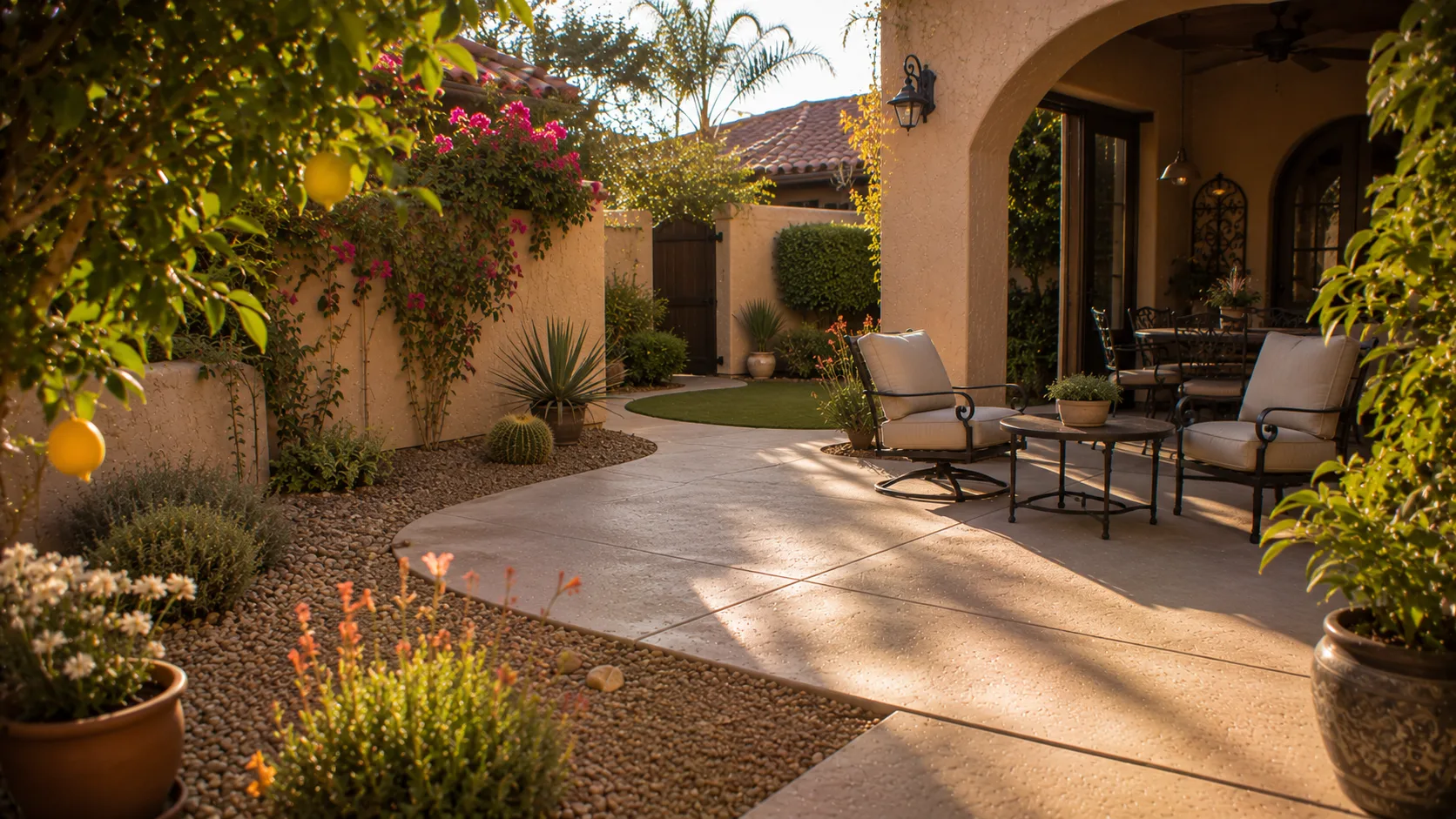
The Useful Version
A low-maintenance backyard routine works best when it is simple enough to repeat.
Think in four loops:
- Weekly: clear obvious debris, reset high-use areas, check the places people and pets actually use.
- Monthly: inspect edges, joints, transitions, turf zones, gravel migration, irrigation clues, and drainage patterns.
- Seasonally: clean deeper, adjust shade and furniture, review planting stress, and look for changes after storms or heavy use.
- As needed: call a pro when the issue involves drainage toward structures, structural movement, electrical, gas, pool systems, large trees, major irrigation changes, unsafe walking surfaces, or anything outside ordinary homeowner maintenance.
The routine should make the yard easier to enjoy, not turn Saturday into a municipal works program.
Start With The High-Use Route
Do not begin in the least-used corner just because it looks guilty. Start where the backyard earns its keep:
- The door to the patio
- The path to the pool, grill, trash area, gate, or side yard
- The dog route
- The outdoor dining area
- The seating area people actually choose
- The threshold where gravel, turf, concrete, pavers, or planting beds meet
High-use routes reveal most maintenance problems first. You will notice tracking, loose gravel, wet spots, odors, shade gaps, furniture pinch points, dusty patio edges, slippery areas, and plants crowding the route.
If a route is awkward, dirty, too hot, or always collecting debris, that is not just a cleaning issue. It is a design clue. A better edge, shade adjustment, planting trim, furniture move, or surface transition may reduce maintenance more than another round of scrubbing.
For transition problems, see Gravel-to-Concrete Transition Ideas for Cleaner Yards. For small-space layout issues, Small Backyard Hardscape Mistakes That Make Projects Feel Awkward is the companion piece.
The Weekly Reset
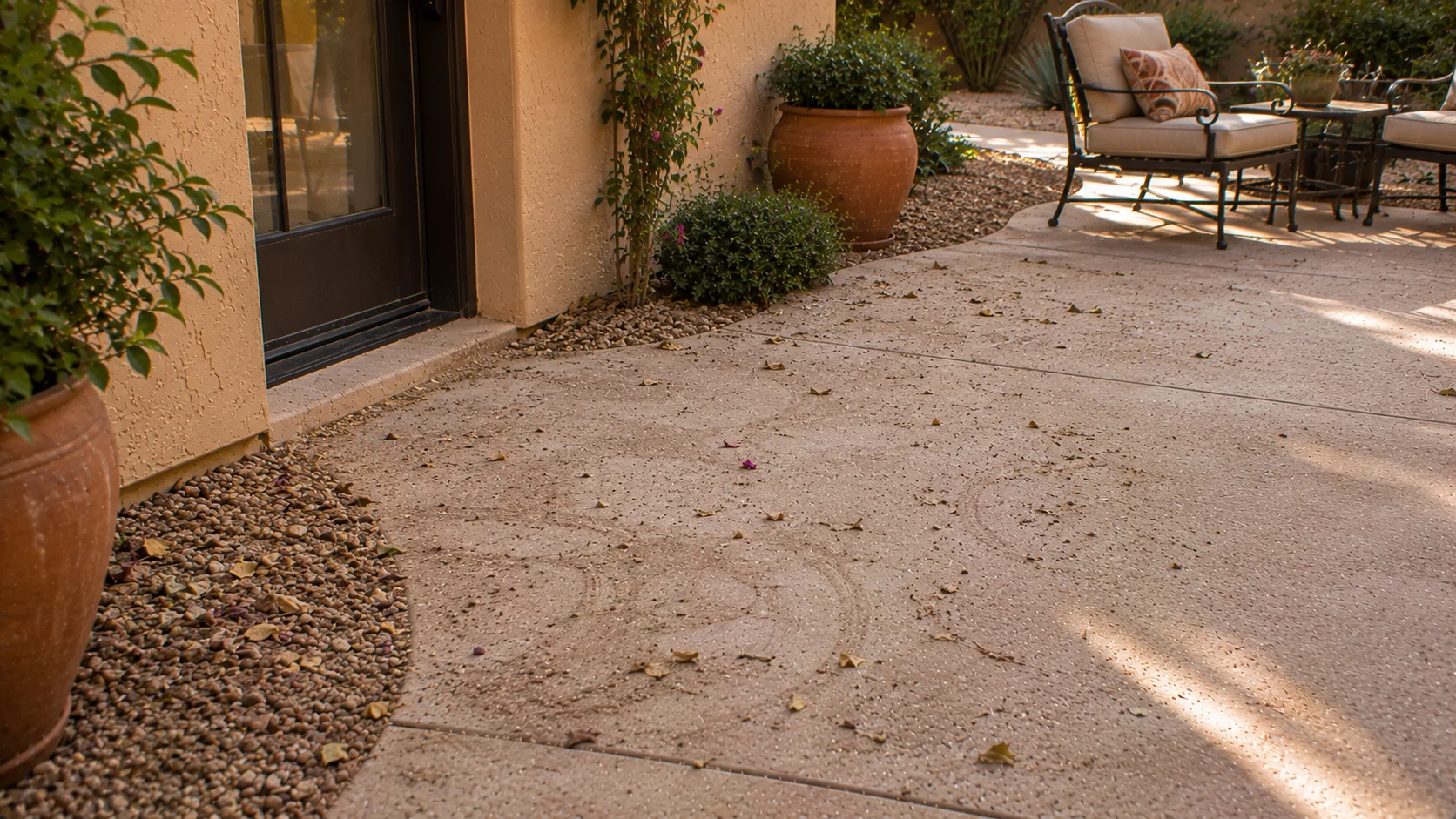
The weekly reset is not meant to be heroic. It is the maintenance equivalent of wiping the counter before it becomes archaeology.
Walk the yard once and handle the obvious:
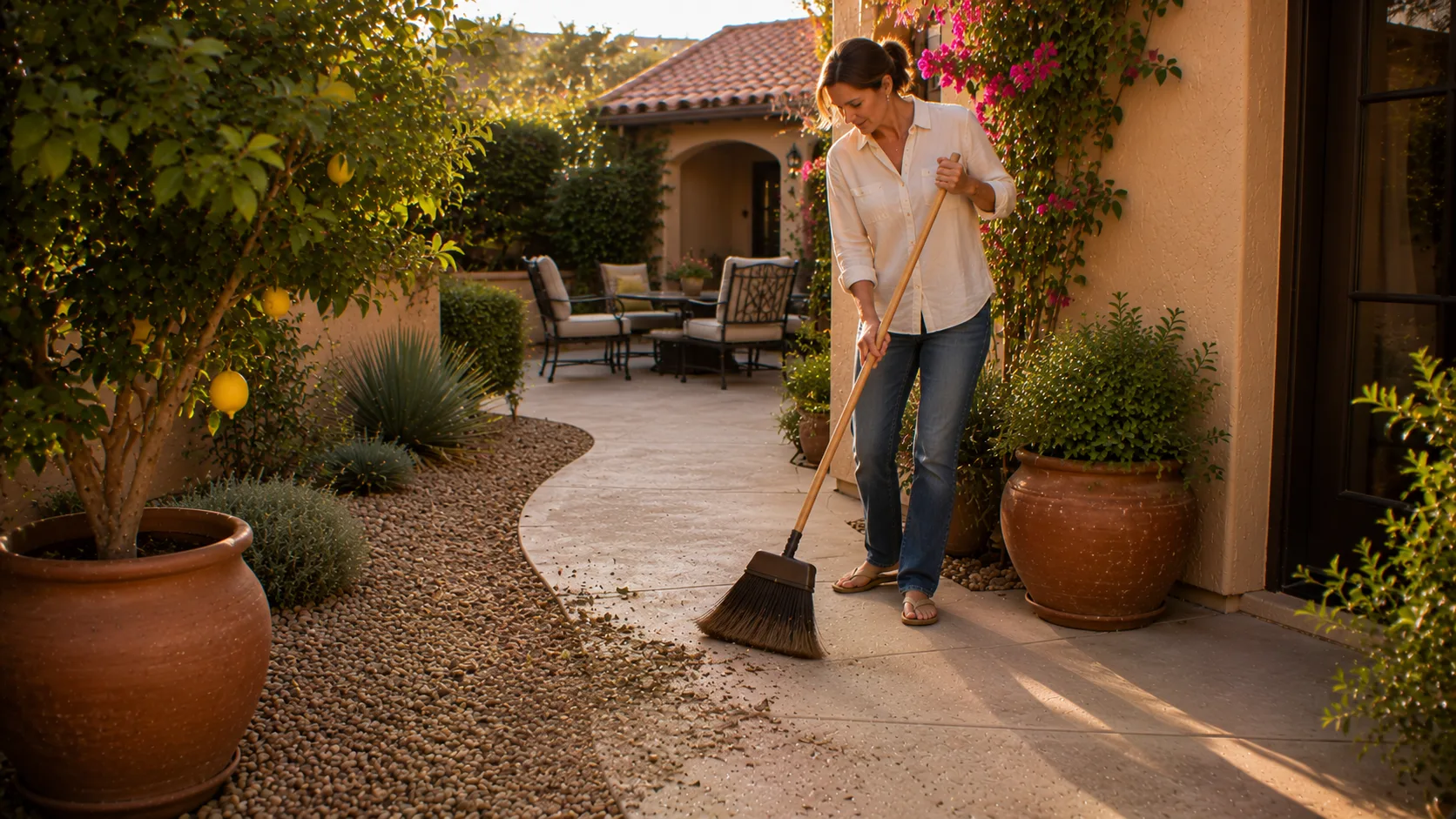
- Sweep or blow loose debris from patios, paths, and thresholds.
- Move leaves, seed pods, and plant litter out of corners.
- Pick up pet waste and check repeat-use dog areas.
- Rinse ordinary dust or residue where water can drain appropriately.
- Put furniture back where it belongs.
- Check that gravel or decomposed granite is not drifting onto concrete, turf, or door mats.
- Look for wet spots, smells, ants, weeds, slick areas, or fresh damage.
The point is not to detail the yard. The point is to prevent small messes from becoming the whole personality of the space.
In Arizona-style yards, dust and fine material can make a clean patio look tired quickly. Dry debris is usually easier to remove before water turns it into a thin slurry. Sweep first, rinse second, and pay attention to where rinse water travels.
Patios, Concrete, And Hardscape
Patios are where low-maintenance claims go to be tested.
A concrete patio, paver area, small pad, or hardscape landing needs a simple routine:
- Keep loose debris from sitting in texture, joints, and corners.
- Watch furniture feet, grill areas, planter rings, and rug outlines.
- Clean gently before choosing aggressive treatment.
- Keep edges visible so trip points, joint problems, and material migration are easier to notice.
- Avoid harsh cleaning when the surface is decorative, sealed, recently repaired, unknown, cracked, flaking, or pool-adjacent.
This is also where maintenance and comfort overlap. A patio that is clean but hot enough to discourage use is not succeeding. Reflected heat, glare, furniture placement, shade gaps, and adjacent gravel all affect how the yard feels.
For surface-specific care, use Concrete Patio Cleaning and Maintenance Basics. If sealing is being considered, When to Seal Outdoor Concrete explains the decision logic without turning it into product shopping.
Gravel And Decomposed Granite
Gravel and decomposed granite can make a yard simpler, but they are not invisible.
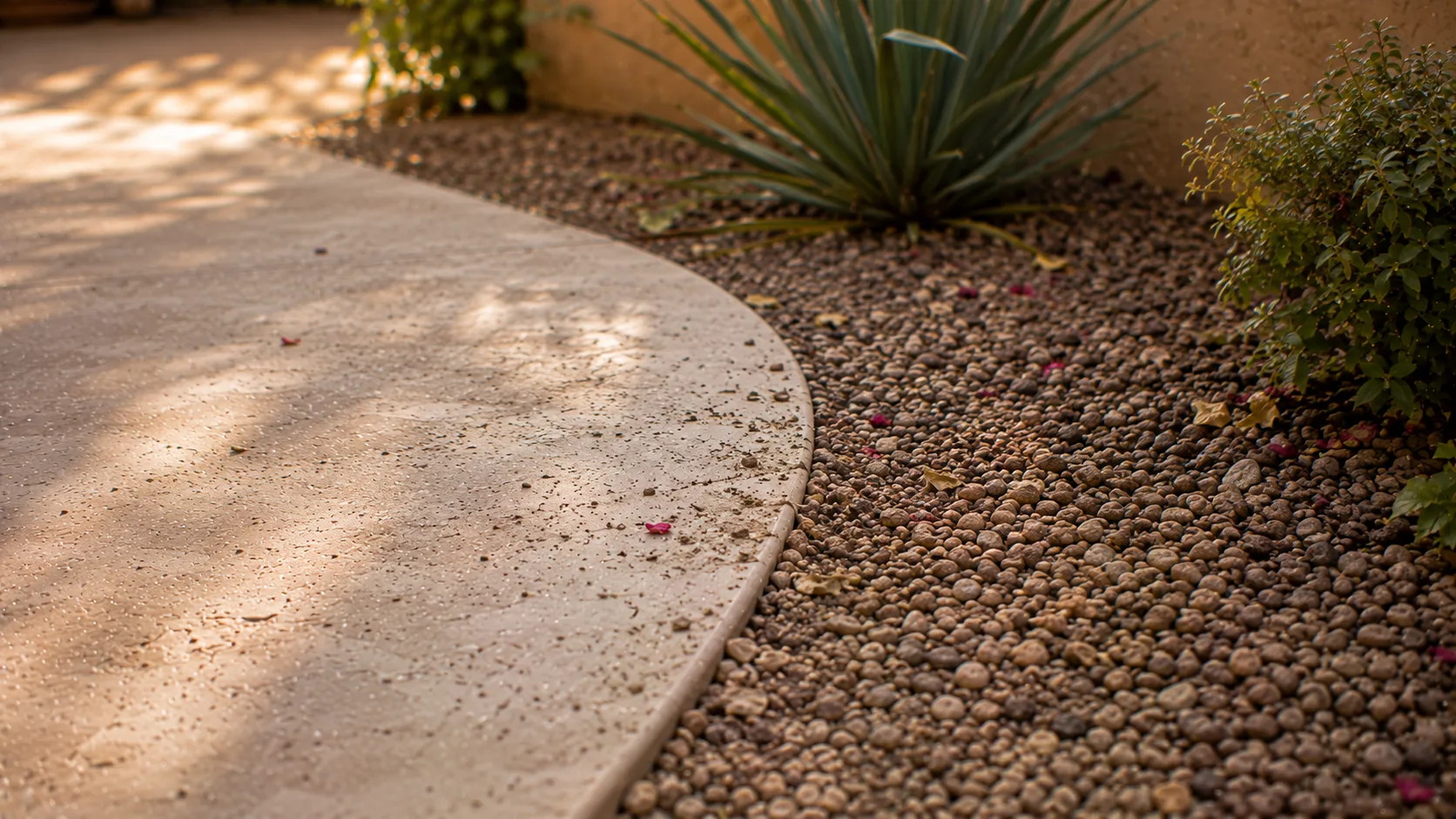
They migrate. They collect leaves. They reveal foot paths. Fine material can track onto patios, through doorways, into turf, and around pool areas. A low-maintenance routine should keep those materials where they belong.
Check:
- Edges where gravel meets concrete, pavers, turf, mulch, or planting beds
- Door thresholds and patio landings
- Dog routes and side-yard passages
- Low spots where fines collect after rinsing or rain
- Areas under plants where litter accumulates
- Places where people cut corners instead of using the path
If material keeps moving, the fix may be a cleaner transition, a better walking route, an edge reset, a landing, or a layout change. It is rarely solved by pretending the gravel will develop manners.
For more detail, read How to Use Decomposed Granite Without Tracking Dust Into the House and How to Make a Gravel Yard Look Designed, Not Deserted.
Planting Beds Without The Surprise Jungle
Low-water planting beds still need attention. They just need a different kind of attention than a thirsty lawn.
On a routine pass, look for:
- Plants leaning into walking routes
- Dead or dry material collecting near hardscape
- Mulch, gravel, or soil washing onto patios
- Irrigation lines, emitters, or wet patches that look different than usual
- Weeds getting established at edges
- Plants struggling in reflected heat
- Overgrown shrubs blocking visibility, airflow, or maintenance access
Do not turn this into universal pruning advice. Plants vary by species, climate, season, and site. Use local extension guidance, regional nursery guidance, arborists, qualified landscape professionals, and plant-specific care information when plant health or pruning decisions matter.
At the homeowner-routine level, the useful habit is visibility. Keep beds tidy enough that you can see irrigation clues, pests, dead material, edge creep, and plants that are outgrowing the space.
For plant selection and layout, use How to Choose Plants for a Low-Water Landscape Without Making a Random Plant Collection and Xeriscape Layout Mistakes That Make Yards Look Sparse.
Turf, Dog Areas, And Odor Clues
Artificial turf and dog-use zones deserve their own check because odor problems rarely announce themselves politely.
If you have turf, a dog run, or a repeat pet-use area, the routine should include:
- Prompt solids pickup
- Loose debris removal
- Gentle rinsing where appropriate and allowed
- Brushing or lifting matted high-traffic areas when compatible with the turf system
- Watching seams, edges, low spots, and shaded strips
- Checking whether odor returns quickly after cleaning
- Keeping pets away from treated areas until labels or installer guidance say it is safe
This is not a license to mix cleaners, use harsh chemistry, or improvise pet-safe claims. Turf systems, infill, backing, drainage, cleaners, and pet safety directions vary.
If dogs are the main issue, start with A Weekly Artificial Turf Maintenance Routine for Dog Owners. If odor is already returning, Artificial Turf Drainage Problems explains when the issue may be below the blades.
Pool-Adjacent Areas
Pool areas create their own maintenance clues: splash, sunscreen, dust, leaves, mineral residue, wet footprints, furniture movement, slick surfaces, and tracked material from nearby gravel or planting beds.
Keep this part simple and careful:
- Clear leaves and debris before they enter the pool.
- Keep poolside hardscape from becoming slick.
- Watch material migration from gravel, decomposed granite, or planting beds.
- Keep furniture and storage from blocking safe movement.
- Notice recurring dust, waterline, or filter-load patterns after storms.
- Follow pool equipment manuals, labels, and qualified pool guidance for chemistry, filtration, cleaning, and equipment care.
This guide does not provide pool dosing, chemical recipes, or equipment-specific instructions. Pool care has its own safety boundaries.
For related homeowner-level guidance, use Pool Care After a Dust Storm, Pool Filter Cleaning Basics for Homeowners, and A Simple Pool Testing Routine for Homeowners.
Shade, Heat, And Outdoor Comfort
Maintenance is easier when the yard is comfortable enough to use. Otherwise the patio becomes a place you clean for theoretical people.
On each routine pass, ask:
- Which areas are too hot or glaring during the times people use the yard?
- Is furniture placed where shade actually falls?
- Are plants or umbrellas creating comfort without blocking maintenance access?
- Do gravel, concrete, walls, or stucco reflect heat into seating areas?
- Are pets being routed through hot surfaces without shade or water?
- Do shaded corners stay damp, slick, or debris-heavy?
Shade is not just a design upgrade. It can change where people walk, sit, spill, rinse, and track debris. A well-placed shade decision can make a backyard lower maintenance because people stop fighting the space.
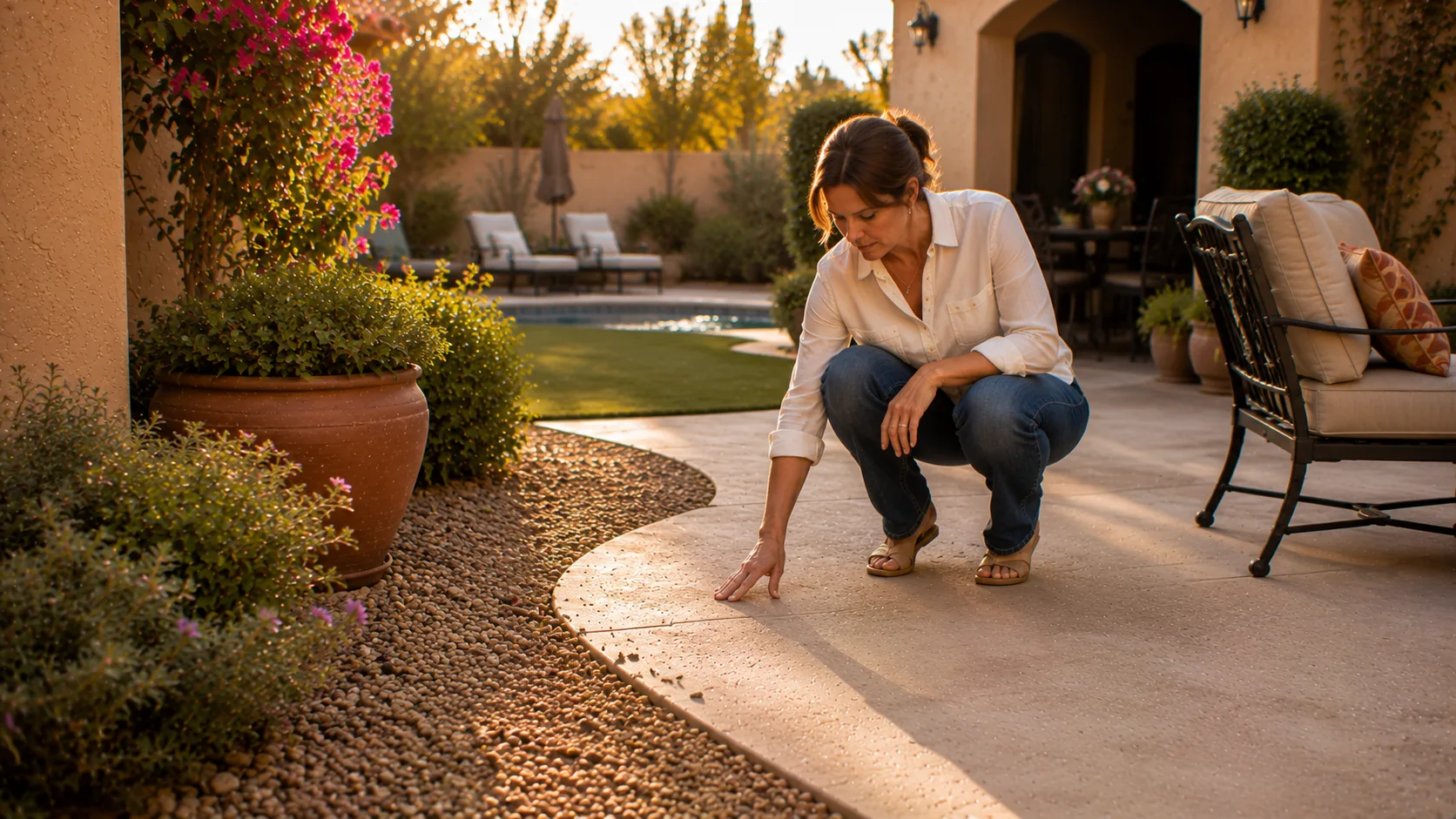
The Monthly Inspection
Once a month, slow down enough to inspect instead of only cleaning.
Look at:
- Concrete cracks, lifted edges, flaking, scaling, or surface changes
- Paver movement, joint loss, or uneven transitions
- Gravel migration and low spots
- Turf seams, edges, odor zones, and drainage behavior
- Planting bed edges and irrigation clues
- Poolside slickness, splash patterns, and debris routes
- Furniture feet, grill zones, planter rings, and outdoor rug edges
- Gates, side-yard access, hose routes, storage areas, and maintenance paths
You are looking for change. A backyard does not need to be perfect, but it should not be hiding problems under leaves, furniture, or decorative rock.
The Seasonal Reset
A seasonal reset is the bigger pass after storms, heat, heavy use, holidays, travel, or the part of the year when nobody wants to make eye contact with the yard.
Use it to:
- Deep-clean patios and hardscape gently.
- Refresh obvious gravel, DG, or mulch displacement.
- Trim plants that block routes or inspection access.
- Reposition furniture for shade and traffic.
- Check irrigation coverage, leaks, overspray, and clogged or damaged visible parts.
- Review turf or dog zones before odor season gets rude.
- Clear side-yard storage and utility paths.
- Note any drainage, slope, electrical, gas, pool equipment, structural, or tree issues that need qualified help.
Keep the cadence flexible. A dusty low-desert backyard, a leafy shaded yard, a pool-heavy yard, and a dog-heavy yard will not need the same rhythm. The right schedule is the one that matches the site without pretending every yard lives the same life.
When To Call A Pro
Call a qualified professional when the issue involves:
- Water draining toward the house or pooling in concerning places
- Significant concrete movement, settlement, scaling, spalling, or structural questions
- Unsafe walking surfaces, persistent slickness, or raised trip edges
- Electrical, gas, plumbing, pool equipment, or utility conflicts
- Large trees, root problems, major pruning, or unstable limbs
- Irrigation redesign, pressure issues, leaks, or controller problems beyond basic observation
- Turf odor that returns quickly after careful routine maintenance
- Drainage, grading, retaining, slope, or foundation-adjacent concerns
- Unknown coatings, sealers, chemicals, or surface treatments
Low-maintenance does not mean doing every job yourself. It means knowing which jobs should not become experiments.
What Not To Do
Avoid these common maintenance traps:
- Buying a stronger cleaner before identifying the source of the mess
- Pressure-washing every surface like it insulted you
- Letting gravel, DG, or mulch migrate because it is "just outside"
- Ignoring dog-use odor until the base layer may be involved
- Treating pool chemistry, turf chemistry, and patio chemistry as interchangeable
- Blocking access to irrigation, pool equipment, hose bibs, drains, gates, or utility areas
- Planting so tightly that routine inspection becomes impossible
- Calling a yard low-maintenance because it has fewer plants, even if it is hotter, dustier, and less usable
The best routines reduce friction. The worst routines create a larger chore later and then act surprised.

FAQ
What Is A Good Low-Maintenance Backyard Routine?
A good routine starts with high-use areas: patios, doors, paths, dog zones, pool edges, seating areas, and material transitions. Clear loose debris weekly, inspect edges and drainage clues monthly, and do a deeper seasonal reset after storms, heat, travel, or heavy use.
Does Low-Maintenance Mean No Plants?
No. A yard with no plants can still be hot, dusty, glare-heavy, and unpleasant to maintain. Low-maintenance usually means using plants, hardscape, shade, irrigation, gravel, and access routes intentionally so the yard stays usable without constant intervention.
How Often Should I Clean A Backyard Patio?
Use a general rhythm rather than a universal schedule. Sweep or clear debris often enough that it does not become grime, rinse when dust or residue builds up and water can drain appropriately, and inspect seasonally for stains, joints, drainage clues, slick areas, and surface changes.
When Is Backyard Maintenance More Than A DIY Job?
Bring in qualified help for drainage toward structures, structural movement, major cracking or settlement, unsafe walking surfaces, pool equipment issues, electrical or gas conflicts, large trees, significant irrigation problems, persistent turf odor, and any local-rule, utility, or safety-sensitive work.
The Bottom Line
A low-maintenance backyard is not effortless. It is legible.
You can see the routes, edges, surfaces, plants, dog zones, pool areas, and comfort problems before they become expensive. You know where dust collects, where gravel migrates, where shade matters, where water moves, and where ordinary cleaning ends.
That is the routine that actually helps: small, repeatable, realistic, and honest about when the yard is asking for more than a broom.